[ed. Thanks, Hilary]
Friday, October 7, 2011

A Game Plan for Effective Communication

The Ground Rules below are meant to give you tools to help your communication with one another.
Speaker Rule #1: Pick the right time
While there is no perfect time to raise a difficult issue, some times are more appropriate than others. Use care in determining what those times may be. Try to pick a time when you and your partner are free of other distractions. This time should be when both you and your partner can approach it positively and give your full attention. For example, this time is likely not during a favorite TV show, immediately upon coming home from work, or during another scheduled activity. As the speaker, you can initiate the discussion by gauging what the most appropriate time may be or simply asking your partner when a good time to discuss an important issue is.
Speaker Rule #2: How You Start is How You’ll Finish
The way in which the speaker raises an issue is often a big predictor of how the discussion will go. If you begin the conversation in a harsh way by attacking or blaming your partner, you are likely to have an angry discussion. It is important to avoid creating an environment where the listener feels they need to defend themselves rather than simply discuss. In these cases, your message is not being heard because the listener is too busy defending themselves. Softening the way you begin the conversation with a calm, positive approach will increase the likelihood that your communication will be viewed as non-threatening. A non-threatening or safe communication environment will make the discussion seem worth participating in to the listener. Think of it as a “soft-beginning” where your words and tone are free of criticism or attack. Here are examples of harsh and soft beginnings.
Harsh Beginning—“You didn’t put gas in the car and I was late for work this morning.”
Soft Beginning—“I appreciate it when you put gas in my car, but when you can’t do that for me, let me know so I can make time to stop before work.”
Speaker Rule #3: Speak for Yourself
Stick to talking about how you, the speaker, feels. Also, describe the issue at hand for you, rather than stating what you may assume, think or observe to be the problem with your partner. Use the words “I” and “me” to describe things from your point of view. Beginning a conversation with “you” statements, can feel like an attack or attempt to blame the listener. Let’s use the issue of housework as an example:
“I” statement—I get frustrated when I come home from work and the kitchen is messy. This statement conveys a feeling of frustration about a messy house.
“You” statement—You don’t ever clean up after yourself. What have you been doing all day? This statement assigns blame on the listener for the messy house and attacks the listener by implying that they are lazy.


Nervous American Voters Worried About Botching Another Election

"When I think about how bad things are already, I can't help but worry that it's going to get infinitely worse once we step into the voting booth next November," said Gavin Daniels, 34, of Columbus, OH, one of 1,200 registered voters who participated in the survey. "This country has repeatedly screwed itself over at the ballot box, and I have this really sickening, unshakable feeling we're going to do it again next year. That's just sort of what we do."
"I keep asking myself, 'Am I going to completely fuck things up by dropping the ball on my vote for president and sending someone patently corrupt or incompetent to Congress?" he continued. "And the answer for me and millions of other American voters is yeah, probably. God knows we do almost every time."
According to the poll, 9 out of 10 likely voters said they did not trust themselves to make choices that were in the nation's best interests, three-quarters said Election Day panic would likely cause them to base their votes entirely on hearsay, and 93 percent admitted that when it came to state and local races they would probably only recognize the names of candidates who had been featured prominently in attack ads.
In addition, almost all respondents said they feared being unable to summon the self-discipline required to read any proposition or ballot initiative running longer than 150 words.
The poll also suggested that despite a presidential campaign season that now lasts a full year and a half, American voters feel they still fail to acquire useful information about the relative merits of a candidate, acknowledging that on the whole, they cannot make the sound decisions required of a functioning electorate in a representative democracy.
"In the end, I just know I'm going to hear one catchy sound bite and make a terrible, emotionally driven decision that's going to screw us over for another two, four, or six years," said Kyla Simpson of Denver, a working mother of three who confirmed she routinely elects officials whose actions damage the health, safety, and economic security of her family. "I always wind up going with my gut instinct and making an impulsive choice that sends everything straight to hell."
"Goddammit, why do I keep doing that?" she added.
Read more:
Thursday, October 6, 2011


Beyond Brownies
by Matthew Kronsberg
 In her forward to the Alice B. Toklas Cook Book, M.F.K Fisher claims to have never eaten one of the pot brownies that made the book a countercultural touchstone. She writes that she is told that the brownies (or “Haschich Fudge,” as the recipe calls it) can taste, “slightly bitter, depending on how much pot is put into them, and that (1) they are absolutely without effect and (2) they are potentially lethal.” Her description pretty neatly sums up the common expectation of eating marijuana: a bit of psychoactive Russian roulette with a strange aftertaste.
Marijuana’s use in food and drink, of course, didn’t start with the Toklas cookbook’s publication in 1954, nor did it stop there. In the United States, medicinal use of marijuana is now permitted in 16 states, and that permission has spawned the rise of “medibles,” or medical marijuana in edible or drinkable form. Variants on the Toklas brownie abound, but visitors to cannabis dispensaries can also expect to find a near limitless variety of cutely named goods ranging from “High Mountain Trail Mix” to “RedEye Pies” to “LaGanga” (lasagna), all designed to swiftly deliver a dose of THC with none of the smoke or taste typically associated with pot.
Should marijuana ever become completely legalized, however, this strong dose/weak taste approach to ingestion may prove to be the exception, rather than the rule. Examples from the traditional cuisines of Southeast Asia and the vanguard of New American cooking point intriguingly to possibilities of a culinary style that embraces the plant’s grassy, herbal flavor profile while moderating its psychoactive effects. And even more than at the table, the future of marijuana ingestion may be found at the bar; liquid extracts allow nearly any drink to be infused with cannabis, and beer and winemakers have already begun to embrace the possibilities of fusion.
Beer probably has the most natural affinity with marijuana; after all, hops and marijuana are botanically speaking, kissing cousins. Boutique brewers in Europe and home brewers in the U.S. have been known to use cannabis tincture and plant matter to create THC-infused beer. Within the bounds of American law, Nectar Ales in Paso Robles, California, makes Humboldt Brown Ale with denatured hemp seeds (containing no measurable THC). The toastier, nuttier quality of the seed is highlighted rather than the herbal, funky character one would get from the plant itself. It is an interesting, unexpected expression of hemp, enjoyable even without its famous effects.
Jeremiah Tower, seminal in the creation of New American cuisine, first during his time as a chef/owner at Chez Panisse (1972–78) and later at Stars, knows a thing or two about letting ingredients speak for themselves, and letting them kick, if that’s what they want. He gives cannabis a clear, though not overpowering, voice in his Consommé Marijuana, recalled (with recipe!) in his 2004 memoir California Dish. The consommé was created in the spring of 1969 as the third course of a “self-consciously decadent” 11-course meal he prepared in Cambridge, Massachusetts. Made with 1 cup of marijuana stems steeped in 6 cups of rich chicken stock, it was strained and served over a chiffonade of nasturtium flowers and basil. As Tower recalls, the dish: “provided another level of stimulation. But not stoned. The brew takes forty-five minutes to reach the brain, by which time (as the menu planned) we were on to dessert, tasting strawberries and cream as we’d never tasted them before.”
Read more:
 In her forward to the Alice B. Toklas Cook Book, M.F.K Fisher claims to have never eaten one of the pot brownies that made the book a countercultural touchstone. She writes that she is told that the brownies (or “Haschich Fudge,” as the recipe calls it) can taste, “slightly bitter, depending on how much pot is put into them, and that (1) they are absolutely without effect and (2) they are potentially lethal.” Her description pretty neatly sums up the common expectation of eating marijuana: a bit of psychoactive Russian roulette with a strange aftertaste.
 Marijuana’s use in food and drink, of course, didn’t start with the Toklas cookbook’s publication in 1954, nor did it stop there. In the United States, medicinal use of marijuana is now permitted in 16 states, and that permission has spawned the rise of “medibles,” or medical marijuana in edible or drinkable form. Variants on the Toklas brownie abound, but visitors to cannabis dispensaries can also expect to find a near limitless variety of cutely named goods ranging from “High Mountain Trail Mix” to “RedEye Pies” to “LaGanga” (lasagna), all designed to swiftly deliver a dose of THC with none of the smoke or taste typically associated with pot.
Should marijuana ever become completely legalized, however, this strong dose/weak taste approach to ingestion may prove to be the exception, rather than the rule. Examples from the traditional cuisines of Southeast Asia and the vanguard of New American cooking point intriguingly to possibilities of a culinary style that embraces the plant’s grassy, herbal flavor profile while moderating its psychoactive effects. And even more than at the table, the future of marijuana ingestion may be found at the bar; liquid extracts allow nearly any drink to be infused with cannabis, and beer and winemakers have already begun to embrace the possibilities of fusion.
Beer probably has the most natural affinity with marijuana; after all, hops and marijuana are botanically speaking, kissing cousins. Boutique brewers in Europe and home brewers in the U.S. have been known to use cannabis tincture and plant matter to create THC-infused beer. Within the bounds of American law, Nectar Ales in Paso Robles, California, makes Humboldt Brown Ale with denatured hemp seeds (containing no measurable THC). The toastier, nuttier quality of the seed is highlighted rather than the herbal, funky character one would get from the plant itself. It is an interesting, unexpected expression of hemp, enjoyable even without its famous effects.
Jeremiah Tower, seminal in the creation of New American cuisine, first during his time as a chef/owner at Chez Panisse (1972–78) and later at Stars, knows a thing or two about letting ingredients speak for themselves, and letting them kick, if that’s what they want. He gives cannabis a clear, though not overpowering, voice in his Consommé Marijuana, recalled (with recipe!) in his 2004 memoir California Dish. The consommé was created in the spring of 1969 as the third course of a “self-consciously decadent” 11-course meal he prepared in Cambridge, Massachusetts. Made with 1 cup of marijuana stems steeped in 6 cups of rich chicken stock, it was strained and served over a chiffonade of nasturtium flowers and basil. As Tower recalls, the dish: “provided another level of stimulation. But not stoned. The brew takes forty-five minutes to reach the brain, by which time (as the menu planned) we were on to dessert, tasting strawberries and cream as we’d never tasted them before.”
Read more:
Current Events: Hit List
by Glenn Greenwald
Here is what the Democratic President has created and implemented, and what many party loyalists explicitly endorse (when there’s a Democrat in the White House) — from Reuters:
Read more:
Here is what the Democratic President has created and implemented, and what many party loyalists explicitly endorse (when there’s a Democrat in the White House) — from Reuters:
American militants like Anwar al-Awlaki are placed on a kill or capture list by a secretive panel of senior government officials, which then informs the president of its decisions . . . . There is no public record of the operations or decisions of the panel, which is a subset of the White House’s National Security Council . . . . Neither is there any law establishing its existence or setting out the rules by which it is supposed to operate. . . . The role of the president in ordering or ratifying a decision to target a citizen is fuzzy. White House spokesman Tommy Vietor declined to discuss anything about the process. . . .
Representative Dutch Ruppersberger, was asked by reporters about the killing. The process involves “going through the National Security Council, then it eventually goes to the president” . . . .Other officials said the role of the president in the process was murkier than what Ruppersberger described. They said targeting recommendations are drawn up by a committee of mid-level National Security Council and agency officials. Their recommendations are then sent to the panel of NSC “principals,” meaning Cabinet secretaries and intelligence unit chiefs, for approval . . . But one official said Obama would be notified of the principals’ decision. If he objected, the decision would be nullified, the official said.So a panel operating out of the White House — that meets in total secrecy, with no known law or rules governing what it can do or how it operates — is empowered to place American citizens on a list to be killed by the CIA, which (by some process nobody knows) eventually makes its way to the President, who is the final Decider. It is difficult to describe the level of warped authoritarianism necessary to cause someone to lend their support to a twisted Star Chamber like that; I genuinely wonder whether the Good Democrats doing so actually first convince themselves that if this were the Bush White House’s hit list, or if it becomes Rick Perry’s, they would be supportive just the same. Seriously: if you’re willing to endorse having White House functionaries meet in secret — with no known guidelines, no oversight, no transparency — and compile lists of American citizens to be killed by the CIA without due process, what aren’t you willing to support?
Read more:

Wednesday, October 5, 2011

88 Important Truths
[ed. Good list. Also worth checking out another post about the miraculous things we take for granted.]
by David Cain
Everyone gets drilled with certain lessons in life. Sometimes it takes repeated demonstrations of a given law of life to really get it into your skull, and other times one powerful experience drives the point home once forever. Here are 88 things I’ve discovered about life, the world, and its inhabitants by this point in my short time on earth.
 1. You can’t change other people, and it’s rude to try.
2. It is a hundred times more difficult to burn calories than to refrain from consuming them in the first place.
3. If you’re talking to someone you don’t know well, you may be talking to someone who knows way more about whatever you’re talking about than you do.
4. The cheapest and most expensive models are usually both bad deals.
5. Everyone likes somebody who gets to the point quickly.
6. Bad moods will come and go your whole life, and trying to force them away makes them run deeper and last longer.
7. Children are remarkably honest creatures until we teach them not to be.
8. If everyone in the TV show you’re watching is good-looking, it’s not worth watching.
9. Yelling always makes things worse.
10. Whenever you’re worried about what others will think of you, you’re really just worried about what you’ll think of you.
11. Every problem you have is your responsibility, regardless of who caused it.
12. You never have to deal with more than one moment at a time.
13. If you never doubt your beliefs, then you’re wrong a lot.
14. Managing one’s wants is the most powerful skill a person can learn.
15. Nobody has it all figured out.
16. Cynicism is far too easy to be useful.
17. Every passing face on the street represents a story every bit as compelling and complicated as yours.
18. Whenever you hate something, it hates you back: people, situations and inanimate objects alike.
19. Ralph Waldo Emerson’s works alone can teach you everything you need to know about living with grace and happiness.
20. People embellish everything, as a rule.
21. Anger reveals weakness of character, violence even moreso.
22. Humans cannot destroy the planet, but we can destroy its capacity to keep us alive. And we are.
23. When people are uncomfortable with the present moment, they fidget with their hands or their minds. Watch and see.
24. Those who complain the most, accomplish the least.
25. Putting something off makes it instantly harder and scarier.
26. Credit card debt devours souls.
27. Nobody knows more than a minuscule fraction of what’s going on in the world. It’s just way too big for any one person to know it well.
28. Most of what we see is only what we think about what we see.
29. A person who is unafraid to present a candid version of herself to the world is as rare as diamonds.
30. The most common addiction in the world is the draw of comfort. It wrecks dreams and breaks people.
31. If what you’re doing feels perfectly safe, there is probably a better course of action.
32. The greatest innovation in the history of humankind is language.
by David Cain
Everyone gets drilled with certain lessons in life. Sometimes it takes repeated demonstrations of a given law of life to really get it into your skull, and other times one powerful experience drives the point home once forever. Here are 88 things I’ve discovered about life, the world, and its inhabitants by this point in my short time on earth.
1. You can’t change other people, and it’s rude to try.2. It is a hundred times more difficult to burn calories than to refrain from consuming them in the first place.
3. If you’re talking to someone you don’t know well, you may be talking to someone who knows way more about whatever you’re talking about than you do.
4. The cheapest and most expensive models are usually both bad deals.
5. Everyone likes somebody who gets to the point quickly.
6. Bad moods will come and go your whole life, and trying to force them away makes them run deeper and last longer.
7. Children are remarkably honest creatures until we teach them not to be.
8. If everyone in the TV show you’re watching is good-looking, it’s not worth watching.
9. Yelling always makes things worse.
10. Whenever you’re worried about what others will think of you, you’re really just worried about what you’ll think of you.
11. Every problem you have is your responsibility, regardless of who caused it.
12. You never have to deal with more than one moment at a time.
13. If you never doubt your beliefs, then you’re wrong a lot.
14. Managing one’s wants is the most powerful skill a person can learn.
15. Nobody has it all figured out.
16. Cynicism is far too easy to be useful.
17. Every passing face on the street represents a story every bit as compelling and complicated as yours.
18. Whenever you hate something, it hates you back: people, situations and inanimate objects alike.
19. Ralph Waldo Emerson’s works alone can teach you everything you need to know about living with grace and happiness.
20. People embellish everything, as a rule.
21. Anger reveals weakness of character, violence even moreso.
22. Humans cannot destroy the planet, but we can destroy its capacity to keep us alive. And we are.
23. When people are uncomfortable with the present moment, they fidget with their hands or their minds. Watch and see.
24. Those who complain the most, accomplish the least.
25. Putting something off makes it instantly harder and scarier.
26. Credit card debt devours souls.
27. Nobody knows more than a minuscule fraction of what’s going on in the world. It’s just way too big for any one person to know it well.
28. Most of what we see is only what we think about what we see.
29. A person who is unafraid to present a candid version of herself to the world is as rare as diamonds.
30. The most common addiction in the world is the draw of comfort. It wrecks dreams and breaks people.
31. If what you’re doing feels perfectly safe, there is probably a better course of action.
32. The greatest innovation in the history of humankind is language.


The Benjamin Franklin Effect
The Misconception: You do nice things for the people you like and bad things to the people you hate.
The Truth: You grow to like people for whom you do nice things and hate people you harm.
 Benjamin Franklin knew how to deal with haters.
Born in 1706 as the eighth of 17 children to a Massachusetts soap and candlestick maker, the chances Benjamin would go on to become a gentleman, scholar, scientist, statesman, musician, author, publisher and all-around general bad-ass were astronomically low, yet he did just that and more because he was a master of the game of personal politics.
Like many people full of drive and intelligence born into a low station, Franklin developed strong people skills and social powers. All else denied, the analytical mind will pick apart behavior, and Franklin became adroit at human relations. From an early age, he was a talker and a schemer – a man capable of guile, cunning and persuasive charm. He stockpiled a cache of cajolative secret weapons, one of which was the Benjamin Franklin Effect, a tool as useful today as it was in the 1730s and still just as counterintuitive. To understand it, let’s first rewind back to 1706.
Franklin’s prospects were dim. With 17 children, Josiah and Abiah Franklin could only afford two years of schooling for Benjamin. Instead, they made him work, and when he was 12 he became an apprentice to his brother James who was a printer in Boston. The printing business gave Benjamin the opportunity to read books and pamphlets. It was as if Ben Franklin was the one kid in the neighborhood who had access to the Internet. He read everything, and taught himself every skill and discipline one could absorb from text.
At 17, Franklin left Boston and started his own printing business In Philadelphia. At age 21, he formed a “club of mutual improvement” called the Junto. It was a grand scheme to gobble up knowledge. He invited working-class polymaths like himself who wanted to experiment in 1700s lifestyle design the chance to pool together their books and trade thoughts and knowledge of the world on a regular basis. They wrote and recited essays, held debates, and devised ways to acquire currency. Franklin used the Junto like a private consulting firm, a think tank, and he bounced ideas off of them so he could write and print better pamphlets. Franklin eventually founded the first subscription library in America and wrote it would make “the common tradesman and farmers as intelligent as most gentlemen from other countries,” not to mention, give him access to whatever books he wanted to buy. Genius.
By the 1730s Franklin was riding down an information superhighway of his own construction, and the constant stream of information made him a savvy politician in Philadelphia. A celebrity and an entrepreneur who printed both a newspaper and an almanac, Franklin had collected a few enemies by the time he ran for the position of clerk of the general assembly, but Franklin knew how to deal with haters.
As clerk, he could step into a waterfall of data coming out of the nascent government. He would record and print public records, bills, vote totals and other official documents. He would also make a fortune literally printing the state’s paper money. He won the race, but the next election wasn’t going to be as easy. Franklin’s autobiography never mentions this guy’s name, but according to the book when Franklin ran for his second term as clerk, one of his colleagues delivered a long speech to the legislature lambasting Franklin. Franklin still won his second term, but this guy truly pissed him off. In addition, this man was “a gentleman of fortune and education” who Franklin believed would one day become a person of great influence in the government. So, Franklin knew he had to be dealt with, and thus he launched his human behavior stealth bomber.
Franklin set out to turn his hater into a fan, but he wanted to do it without “paying any servile respect to him.” Franklin’s reputation as a book collector and library founder gave him a reputation as a man of discerning literary tastes, so Franklin sent a letter to the hater asking if he could borrow a selection from the his library, one which was a “very scarce and curious book.” The rival, flattered, sent it right away. Franklin sent it back a week later with a thank you note. Mission accomplished.
The next time the legislature met, the man approached Franklin and spoke to him in person for the first time. Franklin said the hater “ever after manifested a readiness to serve me on all occasions, so that we became great friends, and our friendship continued to his death.”
What exactly happened here? How can asking for a favor turn a hater into a fan? How can requesting kindness cause a person to change his or her opinion about you? The answer to what generates The Benjamin Franklin Effect is the answer to much more about why you do what you do.
As a primate, you are keen to social cues which portend your possible ostracism from an in-group. In the wild, banishment equals death. So, it follows you work to feel included because the feeling of being left out, being the last to know, being the only one not invited to the party is a deep and severe slice into your emotional core. Anxiety over being ostracized, over being an outsider has driven the behavior of billions for millions of years. Impression management theory says you are always thinking about how you appear to others, even when there are no others around. In the absence of onlookers, deep in your mind, a mirror reflects back that which you have done, and when you see a person who has behaved in a way which could get you booted from your in-group, the anxiety drives you to seek a re-alignment. But, which came first? Your display or your belief? As a professional, do you feel compelled to wear a suit, or after donning a suit do you conduct yourself in a professional manner? Do you vote Democrat because you champion social programs, or do you champion social programs because you voted Democrat? The research says the latter in both cases. When you become a member of a group, or the fan of a genre, or the user of a product – those things have more influence on your attitudes than your attitudes have on them, but why?
Read more:
The Truth: You grow to like people for whom you do nice things and hate people you harm.
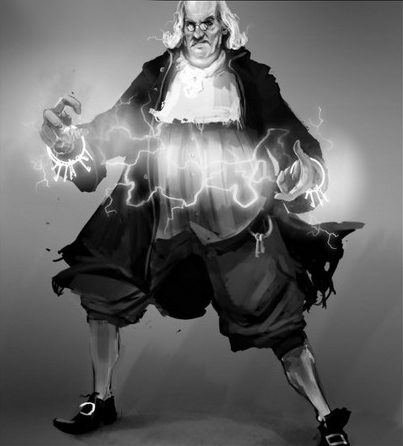 Benjamin Franklin knew how to deal with haters.
 Born in 1706 as the eighth of 17 children to a Massachusetts soap and candlestick maker, the chances Benjamin would go on to become a gentleman, scholar, scientist, statesman, musician, author, publisher and all-around general bad-ass were astronomically low, yet he did just that and more because he was a master of the game of personal politics.
Like many people full of drive and intelligence born into a low station, Franklin developed strong people skills and social powers. All else denied, the analytical mind will pick apart behavior, and Franklin became adroit at human relations. From an early age, he was a talker and a schemer – a man capable of guile, cunning and persuasive charm. He stockpiled a cache of cajolative secret weapons, one of which was the Benjamin Franklin Effect, a tool as useful today as it was in the 1730s and still just as counterintuitive. To understand it, let’s first rewind back to 1706.
Franklin’s prospects were dim. With 17 children, Josiah and Abiah Franklin could only afford two years of schooling for Benjamin. Instead, they made him work, and when he was 12 he became an apprentice to his brother James who was a printer in Boston. The printing business gave Benjamin the opportunity to read books and pamphlets. It was as if Ben Franklin was the one kid in the neighborhood who had access to the Internet. He read everything, and taught himself every skill and discipline one could absorb from text.
At 17, Franklin left Boston and started his own printing business In Philadelphia. At age 21, he formed a “club of mutual improvement” called the Junto. It was a grand scheme to gobble up knowledge. He invited working-class polymaths like himself who wanted to experiment in 1700s lifestyle design the chance to pool together their books and trade thoughts and knowledge of the world on a regular basis. They wrote and recited essays, held debates, and devised ways to acquire currency. Franklin used the Junto like a private consulting firm, a think tank, and he bounced ideas off of them so he could write and print better pamphlets. Franklin eventually founded the first subscription library in America and wrote it would make “the common tradesman and farmers as intelligent as most gentlemen from other countries,” not to mention, give him access to whatever books he wanted to buy. Genius.
By the 1730s Franklin was riding down an information superhighway of his own construction, and the constant stream of information made him a savvy politician in Philadelphia. A celebrity and an entrepreneur who printed both a newspaper and an almanac, Franklin had collected a few enemies by the time he ran for the position of clerk of the general assembly, but Franklin knew how to deal with haters.
As clerk, he could step into a waterfall of data coming out of the nascent government. He would record and print public records, bills, vote totals and other official documents. He would also make a fortune literally printing the state’s paper money. He won the race, but the next election wasn’t going to be as easy. Franklin’s autobiography never mentions this guy’s name, but according to the book when Franklin ran for his second term as clerk, one of his colleagues delivered a long speech to the legislature lambasting Franklin. Franklin still won his second term, but this guy truly pissed him off. In addition, this man was “a gentleman of fortune and education” who Franklin believed would one day become a person of great influence in the government. So, Franklin knew he had to be dealt with, and thus he launched his human behavior stealth bomber.
Franklin set out to turn his hater into a fan, but he wanted to do it without “paying any servile respect to him.” Franklin’s reputation as a book collector and library founder gave him a reputation as a man of discerning literary tastes, so Franklin sent a letter to the hater asking if he could borrow a selection from the his library, one which was a “very scarce and curious book.” The rival, flattered, sent it right away. Franklin sent it back a week later with a thank you note. Mission accomplished.
The next time the legislature met, the man approached Franklin and spoke to him in person for the first time. Franklin said the hater “ever after manifested a readiness to serve me on all occasions, so that we became great friends, and our friendship continued to his death.”
What exactly happened here? How can asking for a favor turn a hater into a fan? How can requesting kindness cause a person to change his or her opinion about you? The answer to what generates The Benjamin Franklin Effect is the answer to much more about why you do what you do.
***
At the lowest level, behavior-into-attitude conversion begins with impression management theory which says you present to your peers the person you wish to be. You engage in something economists call signaling by buying and displaying to your peers the sorts of things which give you social capital. If you live in the Deep South you might buy a high-rise pickup and a set of truck nuts. If you live in San Fransisco you might buy a Prius and a bike rack. Whatever are the easiest to obtain, loudest forms of the ideals you aspire to portray become the things you own, like bumper stickers signaling to the world you are in one group and not another. Those things then influence you to become the sort of person who owns them.As a primate, you are keen to social cues which portend your possible ostracism from an in-group. In the wild, banishment equals death. So, it follows you work to feel included because the feeling of being left out, being the last to know, being the only one not invited to the party is a deep and severe slice into your emotional core. Anxiety over being ostracized, over being an outsider has driven the behavior of billions for millions of years. Impression management theory says you are always thinking about how you appear to others, even when there are no others around. In the absence of onlookers, deep in your mind, a mirror reflects back that which you have done, and when you see a person who has behaved in a way which could get you booted from your in-group, the anxiety drives you to seek a re-alignment. But, which came first? Your display or your belief? As a professional, do you feel compelled to wear a suit, or after donning a suit do you conduct yourself in a professional manner? Do you vote Democrat because you champion social programs, or do you champion social programs because you voted Democrat? The research says the latter in both cases. When you become a member of a group, or the fan of a genre, or the user of a product – those things have more influence on your attitudes than your attitudes have on them, but why?
Read more:
Take Shelter
by A.O. Scott
“You’ve got a good life, Curtis,” says Dewart, Curtis’s best friend and co-worker. (Dewart is played by Shea Whigham, Curtis by the amazing Michael Shannon.) “I think that’s the best compliment you can give a man: take a look at his life and say, ‘That’s good.’ ”
 A sinister corollary to Dewart’s homespun truism might be that the greatest fear a man can experience is that of losing the good life he has. It is this anxiety, which afflicts Curtis in especially virulent form, that defines the mood of “Take Shelter,” Jeff Nichols’s remarkable new film. It is a quiet, relentless exploration of the latent (and not so latent) terrors that bedevil contemporary American life, a horror movie that will trouble your sleep not with visions of monsters but with a more familiar dread.
We like to think that individually and collectively, we have it pretty good, but it is harder and harder to allay the suspicion that a looming disaster — economic or environmental, human or divine — might come along and destroy it all. Normalcy can feel awfully precarious, like a comforting dream blotting out a nightmarish reality.
What if everything that Curtis values were to be suddenly swept away? We are not talking about a life of luxury and ease, but about modest comforts and reasonable expectations: a decent job with health benefits and vacation time, a loving family, a house of your own. Curtis has all of this. He works in heavy construction and comes home to the tidy home he shares with his wife, Samantha (Jessica Chastain), and their daughter, Hannah (Tova Stewart), who is deaf.
Without being a hokey paragon of proletarian virtue — Mr. Shannon’s scarecrow frame and sharply angled features seem designed to repel sentimentality — Curtis is clearly a dedicated employee, a loyal friend, a doting husband and a gentle father. This makes the intensity of his terror, and his helpless, potentially destructive reactions to it, all the more alarming.
Read more:
“You’ve got a good life, Curtis,” says Dewart, Curtis’s best friend and co-worker. (Dewart is played by Shea Whigham, Curtis by the amazing Michael Shannon.) “I think that’s the best compliment you can give a man: take a look at his life and say, ‘That’s good.’ ”
A sinister corollary to Dewart’s homespun truism might be that the greatest fear a man can experience is that of losing the good life he has. It is this anxiety, which afflicts Curtis in especially virulent form, that defines the mood of “Take Shelter,” Jeff Nichols’s remarkable new film. It is a quiet, relentless exploration of the latent (and not so latent) terrors that bedevil contemporary American life, a horror movie that will trouble your sleep not with visions of monsters but with a more familiar dread. We like to think that individually and collectively, we have it pretty good, but it is harder and harder to allay the suspicion that a looming disaster — economic or environmental, human or divine — might come along and destroy it all. Normalcy can feel awfully precarious, like a comforting dream blotting out a nightmarish reality.
What if everything that Curtis values were to be suddenly swept away? We are not talking about a life of luxury and ease, but about modest comforts and reasonable expectations: a decent job with health benefits and vacation time, a loving family, a house of your own. Curtis has all of this. He works in heavy construction and comes home to the tidy home he shares with his wife, Samantha (Jessica Chastain), and their daughter, Hannah (Tova Stewart), who is deaf.
Without being a hokey paragon of proletarian virtue — Mr. Shannon’s scarecrow frame and sharply angled features seem designed to repel sentimentality — Curtis is clearly a dedicated employee, a loyal friend, a doting husband and a gentle father. This makes the intensity of his terror, and his helpless, potentially destructive reactions to it, all the more alarming.
Read more:
Taken by Pirates
by Jeffrey Gettleman
“It wasn’t really a pretty night,” Rachel Chandler recalled. Small, sloshing waves were coming from the southeast, and a trickle of wind blew from the southwest. There was no moon, and the stars were shrouded by clouds.
 The boat was slowly edging away from Mahé, the main island in the Seychelles archipelago, for Tanga, Tanzania, the beginning of a two-week passage across the Indian Ocean. The wind was pushing them farther north than they’d planned to be. With no ships or land in sight, the Chandlers’ 38-foot sailboat, the Lynn Rival, bobbed along all alone.
Rachel, who is 57, was on watch — it was her turn to do the four-hour shift — and her husband, Paul, was asleep below deck. It was about 2:30 a.m., and she sat in a T-shirt and light trousers at the stern, feeling seasick. Because the wind was so faint, Rachel turned on the sailboat’s small engine, which chugged along at five knots, just loud enough to drown out other noise.
By the time she heard the high-pitched whine of outboard motors at full throttle, she had only seconds to react. Two skiffs suddenly materialized out of the murk, and when she swung the flashlight’s beam onto the water, two gunshots rang out.
“No guns! No guns!” she screamed.
The crack of assault rifles jarred Paul awake. He had been sleeping naked — as he often does on tropical nights — and hesitated before jumping out of the cabin. “The first thing I thought,” said Paul, who is 61, “was pirates.”
Within seconds, eight scruffy Somali men hoisted themselves aboard, their assault rifles and rocket-propelled-grenade launchers clanging against the hull. Paul activated an emergency beacon, which immediately started emitting an S.O.S., and then went up on deck. The men stank of the sea and nervous musk, and they jabbed their guns at the Chandlers.
“Stop engine!” they shouted. “Crew, crew! How many crew number?”
One pirate was particularly concerned about anything flashing, and Paul’s heart sank when the pirate stomped below deck and discovered the emergency beacon, blinking like a strobe, and promptly switched it off. The pirates ordered the Chandlers not to touch anything else, and then they demanded a shower.
This was Oct. 23, 2009. The Chandlers would be held for the next 388 days. In the past few years, loosely organized gangs of Somali pirates, kitted out with Fiberglas skiffs, rusty Kalashnikovs and flip-flops, have waylaid hundreds of ships — yachts, fishing boats, freighters, gigantic oil tankers, creaky old Indian dhows, essentially anything that floats — and then extracted ransom in exchange for their return. As a result, the worldwide shipping industry now spends billions of dollars on higher insurance premiums, armed guards and extra fuel to detour thousands of miles away from the Gulf of Aden, a congested shipping lane just off Somalia’s coast leading to the Red Sea. Navies from more than two dozen countries patrol Somalia’s coast, burning around a million dollars of fuel per day. And yet 2011 is on track to be another banner year for piracy, with more than 20 ships already seized, hundreds of seamen in captivity and the average ransom now fetching upward of $5 million, a fortune anywhere but especially in a country with no government and an economy that has been decimated by decades of war. Of all the thousands of people who have been held for ransom, though, few, if any, would endure as long — and as intimate — an experience behind pirate lines as Paul and Rachel Chandler.
Read more:
Illustration by Wesley Allsbrook
“It wasn’t really a pretty night,” Rachel Chandler recalled. Small, sloshing waves were coming from the southeast, and a trickle of wind blew from the southwest. There was no moon, and the stars were shrouded by clouds.
 The boat was slowly edging away from Mahé, the main island in the Seychelles archipelago, for Tanga, Tanzania, the beginning of a two-week passage across the Indian Ocean. The wind was pushing them farther north than they’d planned to be. With no ships or land in sight, the Chandlers’ 38-foot sailboat, the Lynn Rival, bobbed along all alone.
 Rachel, who is 57, was on watch — it was her turn to do the four-hour shift — and her husband, Paul, was asleep below deck. It was about 2:30 a.m., and she sat in a T-shirt and light trousers at the stern, feeling seasick. Because the wind was so faint, Rachel turned on the sailboat’s small engine, which chugged along at five knots, just loud enough to drown out other noise.
By the time she heard the high-pitched whine of outboard motors at full throttle, she had only seconds to react. Two skiffs suddenly materialized out of the murk, and when she swung the flashlight’s beam onto the water, two gunshots rang out.
“No guns! No guns!” she screamed.
The crack of assault rifles jarred Paul awake. He had been sleeping naked — as he often does on tropical nights — and hesitated before jumping out of the cabin. “The first thing I thought,” said Paul, who is 61, “was pirates.”
Within seconds, eight scruffy Somali men hoisted themselves aboard, their assault rifles and rocket-propelled-grenade launchers clanging against the hull. Paul activated an emergency beacon, which immediately started emitting an S.O.S., and then went up on deck. The men stank of the sea and nervous musk, and they jabbed their guns at the Chandlers.
“Stop engine!” they shouted. “Crew, crew! How many crew number?”
One pirate was particularly concerned about anything flashing, and Paul’s heart sank when the pirate stomped below deck and discovered the emergency beacon, blinking like a strobe, and promptly switched it off. The pirates ordered the Chandlers not to touch anything else, and then they demanded a shower.
This was Oct. 23, 2009. The Chandlers would be held for the next 388 days. In the past few years, loosely organized gangs of Somali pirates, kitted out with Fiberglas skiffs, rusty Kalashnikovs and flip-flops, have waylaid hundreds of ships — yachts, fishing boats, freighters, gigantic oil tankers, creaky old Indian dhows, essentially anything that floats — and then extracted ransom in exchange for their return. As a result, the worldwide shipping industry now spends billions of dollars on higher insurance premiums, armed guards and extra fuel to detour thousands of miles away from the Gulf of Aden, a congested shipping lane just off Somalia’s coast leading to the Red Sea. Navies from more than two dozen countries patrol Somalia’s coast, burning around a million dollars of fuel per day. And yet 2011 is on track to be another banner year for piracy, with more than 20 ships already seized, hundreds of seamen in captivity and the average ransom now fetching upward of $5 million, a fortune anywhere but especially in a country with no government and an economy that has been decimated by decades of war. Of all the thousands of people who have been held for ransom, though, few, if any, would endure as long — and as intimate — an experience behind pirate lines as Paul and Rachel Chandler.
Read more:
Illustration by Wesley Allsbrook
That vs. Which
by Ali Hale
One of our readers, Justin, recently wrote to ask:
When To Use “That” and When To Use “Which”
Before I come on to the “that”/”which” rule, just a reminder that “who” should always be used when referring to people.
A restrictive clause is one which is essential to the meaning of a sentence – if it’s removed, the meaning of the sentence will change. For example:
One of our readers, Justin, recently wrote to ask:
When proofreading a peer’s article on the solar system, I realized that she, and I, are unsure of the proper use of “that” and “which” in a sentence. Below is [SIC] two examples of the same sentence, one using “that” and the other “which.”Justin, I’ll give you the answer now, rather than making you read to the end of the whole article: the second version of that sentence, using that is correct.
Which is the correct sentence, and what is the general rule of thumb?
- “To our knowledge, it is the only body in the solar system which currently sustains life, although several other bodies are under investigation.”
- “To our knowledge, it is the only body in the solar system that currently sustains life, although several other bodies are under investigation.”
When To Use “That” and When To Use “Which”
Before I come on to the “that”/”which” rule, just a reminder that “who” should always be used when referring to people.
- The boy who threw the ball.
- This is the woman who always wears a black shawl.
- THAT should be used to introduce a restrictive clause.
- WHICH should be used to introduce a non-restrictive or parenthetical clause.
A restrictive clause is one which is essential to the meaning of a sentence – if it’s removed, the meaning of the sentence will change. For example:
- Chairs that don’t have cushions are uncomfortable to sit on.
- Card games that involve betting money should not be played in school.
- To our knowledge, it is the only body in the solar system that currently sustains life…
- Chairs, which are found in many places of work, are often uncomfortable to sit on.
- I sat on an uncomfortable chair, which was in my office.
Subscribe to:
Posts (Atom)