Sunday, January 26, 2020

The Myth of the “Millennial-Friendly City”

If there is one thing that is true about Millennials, it is that we are mystifying, and therefore constantly being asked to explain ourselves. This is the premise, I think, behind Angela Lashbrook’s recent viral article for OneZero titled “Millennials Love Zillow Because They’ll Never Own a Home.” The piece rightly points out that often, our wish to escape our terrible lives leads to us fantasizing about buying nice houses in cities where we do not, and, due to the circumstances of our personal lives and/or careers, probably could not, live. In fact, there is an entire genre of internet content — some of it reputable, some of it laughably not so — that seemingly exists to either supplement these fantasies of skipping town or to actively encourage them.

The most recent example of this phenomenon came from the commercial real estate listings start-up, which last week proclaimed that it had objectively determined the most Millennial-friendly cities in the country. Judging by things like population trends, affordability, average commute times, and the number of young people in a city whose jobs offer health insurance, Commercial Cafe determined that the metro areas surrounding places like Denver, Austin, Seattle, and Portland were, definitively, friendly to Millennials. Of course, I already knew these cities were Millennial-friendly through another methodology: being friends with people who aren’t boring as hell, since if you’re friends with any kind of young, cool or cool enough person, you’ll invariably hear one of them talking about how they’re thinking about moving to that city, if they haven’t already.

Still, this is not the only study that claims to have figured out what makes a city Millennial-friendly, a concept I find fascinating because of how arbitrary it seems. Politico believes that Millennials choose which city to live in based on the number of other young people, especially those with college degrees or who have recently relocated there, as well as the average GDP and the possibility of taking an “alternative commute” to work. Business Insider has its own rankings, based on population changes, increases in median wages, and decreases in unemployment rate. The Penny Hoarder developed a formula for Millennial-friendliness which factored in “Millennial happiness” and ended up placing St. Louis, MO and Grand Rapids, MI at one and two, respectively. This is just random enough for me to believe that these places might secretly be tight.

But these lists, including Penny Hoarder’s (whose counterintuitive conclusions I honestly do appreciate), fail to grasp what makes a city a genuinely compelling place to live. Cities like New York, Berlin, and Austin are not “cool” because of their public transportation or how many jobs there are there; instead, they were all direct beneficiaries of a cycle in which artists, punks, and general counterculture types ended up moving there when they were still cheap, treating these underpopulated cities as places where they could live affordably and in close quarters with likeminded people, together producing the sort of radical art and culture that end up being cool enough to get vacuumed into the city’s self-conception, after which a bunch of yuppies move in and fuck it all up. (I don’t have specific numbers to back this up, but my landlord once told me if I ever wanted to buy an investment property, I should buy something in a town where an anarchist bookstore just opened up.)

This isn’t a great cycle, especially since the arrival of the artists and punks is the first sign that the local population — in these neighborhoods, that most often means people of color and immigrants — is only a decade or two away from being priced out. Think of it as Lenin’s theory of the two-stage revolution, except in reverse, and instead of communism, it’s a path for gentrifying a city until it sucks ass.

Since 2016, I’ve lived in the Raleigh-Durham municipal area, which is frequently pegged as one of the most Millennial-friendly locales in the nation. Durham in particular has seen its star rise dramatically, to the point that all the artists and punks barely had a chance to set up shop before everybody else started moving in. Case in point: About a year ago, I was sitting in the backyard of a local bar when I ended up talking to a bro wearing a Patagonia sweater and Sperry boat shoes who told me that he and his roommates from architecture school had all moved down to the area after graduation because a friend had told them that, “the job market was poppin’.” (In case I have not been clear enough: this person was white and very fratty.)

Ever since then, I have noticed an influx of “that type” of person — preppy out-of-towners who flock to an area during a boom period and, through sheer force of numbers, end up changing its character in increasingly generic ways. Previously fun bars where adult people can simply relax while drinking an adult beverage either get overrun or run out of the neighborhood, with “experiential” bars that Millennials allegedly enjoy (read: bars where you can throw axes, play arcade games, or do mini-golf) popping up in their place. Music venues start booking different acts who appeal to this growing market of kinda-generic Millennials, letting local scenes languish in the background.

When people treat the place they live as a giant AirBnB they can check out of after a few years working as a “creative lead” at a mid-sized start-up before moving elsewhere, they become less attuned to local issues, specifically the problems faced by those outside their specific, transplant-y milieu. In other words, there are two types of people: those for whom such lists apply, and those who are negatively affected by those for whom such lists apply.

by Drew Millard, The Conversation |  Read more:
Image: uncredited

Why Some Kids Wear Shorts All Winter

Lindsey Miller first took note of the boys who refused to wear long pants when she was in grade school. At her elementary school in Maryland, a few particular boys made a habit of wearing shorts to school all winter, even though January temperatures in the mid-Atlantic state routinely drop below freezing. And it was always boys, she told me, never female students—“Girls made fun of them, but other guys cheered them on,” she recalled. One kid she knew in third grade, whose name has escaped her memory in the decade-plus since, “wore basically the same pair of shorts all year,” Miller, now 20, remembered.

The “one kid who wears shorts to school all year”: In regions that get cold and snowy in the winter, he’s a figure that’s equal parts familiar and bewildering to kids and teachers alike, and his clothing choices present an annual hassle for his parents. On Twitter, where Lindsey Miller once joked about the middle-school winter-shorts boy, he is in fact the butt of a number of observational jokes, many of them from classmates and beleaguered moms and dads: “There’s really this dude wearing shorts at school… IN THE WINTER.” “Have kids so you can argue with tiny, opinionated people about why they can’t wear shorts in winter and then coats when it’s 80 degrees.” Educators at a middle school and high school in Minnesota confirmed to me that they can count on having two or three of him every year, arriving at school after braving the morning windchill with bare calves. (In the interest of transparency, both were former teachers of mine, who I’m sure were perplexed to hear from me for the first time in more than a decade only to be asked about this.)

In other words, the Boy Who Wears Shorts All Winter is a highly recognizable but largely inscrutable character, and when I asked parents, teachers, child psychologists, and a former B.W.W.S.A.W. himself to try to explain what exactly motivates such a plainly impractical clothing choice, they all offered different answers.

by Ashley Fetters, The Atlantic |  Read more:
Image: Charles Rex Arbogast/AP Images
[ed. It's not just boys. I used to see schoolgirls in Alaska skittering across freezing, wind-whipped sidewalks and parking lots in shorts and mini-skirts. I figured they were braving short-term pain for later long-term gain inside a warm school building.] 

GoFish Cam


[ed. No doubt these will probably get much smaller. Not sure how I feel about this. On the one hand you're taking a relaxing, contemplative activity and turning it into a video game. On the other, it is kind of cool to see what's going on underwater and how close you might be to actually getting a strike. See also: Catch more fish with this underwater camera attachment (Boing Boing).]

Saturday, January 25, 2020

Eliane Elias


[ed. Bravura performance.]

Who’s Afraid of the IRS? Not Facebook.

In March 2008, as Facebook was speeding toward 100 million users and emerging as the next big tech company, it announced an important hire. Sheryl Sandberg was leaving Google to become Facebook’s chief operating officer. CEO Mark Zuckerberg, then 23 years old, told The New York Times that Sandberg would take the young company “to the next level.”

Based on her time at Google, Sandberg soon decided that one area where Facebook was behind its peers was in its tax dodging. “My experience is that by not having a European center and running everything through the US, it is very costly in terms of taxes,” she wrote other executives in an April 2008 email, which hasn’t been previously reported. Facebook’s head of tax agreed, replying that the company needed to find “a low taxed jurisdiction to park profits.”

Later that year, Facebook named Dublin as its international headquarters, just as Google had done when Sandberg was there. And just like Google, Facebook concocted an intra-company deal to “park profits” in Ireland, where it would pay a tax rate near zero.

Like its Big Tech peers, Facebook wasn’t much afraid of the IRS. But, as it happened, the same year that Facebook started moving profits to Ireland, the IRS launched a team to crack down on deals like that. The effort started aggressively. As we recently reported, the IRS threw everything it had at Microsoft in the largest audit in the agency’s history.

But shortly after the IRS showed this new ambition, Republicans in Congress, after taking the House in 2010, began forcing cuts to the IRS’ budget. Over the years, as Facebook grew into one of the world’s largest companies, with 2 billion users, the IRS was shrinking. By the time the IRS finally took on Facebook over its Irish deal a few years later, the agency was in over its head.

ProPublica pieced together the story of the Facebook audit from court documents filed by the two sides in their yearslong battle. (Both the IRS and the company declined to comment.) The picture revealed by the documents provides a crucial window into the IRS’ struggles to check large corporations’ tax schemes.

At one point in the audit, the exam stalled for months because there was no money to hire an expert. Agents tried for five years to pick apart the deal’s complexities and were still scrambling when the statute of limitations expired in July 2016. Like a student forced, when the bell rings, to turn in a test with unanswered questions, the IRS sent Facebook the results of its incomplete audit. Based on the work it had done, the IRS thought Facebook had massively mispriced its Irish deal and should have paid billions more in taxes.

Today the fight continues before the U.S. Tax Court, and the conflict is about to reach a climax: A trial is scheduled for February, and the IRS is trying to convince a judge that it has a firm basis for its conclusions. For its part, Facebook has defended its actions in court filings, calling the IRS’ conclusions “arbitrary, capricious, or unreasonable.”

If the IRS prevails in court, it could cost Facebook up to $9 billion more in taxes, based on estimates in the company’s securities filings. It would be a notable defeat for a company that, when it comes to risky tax avoidance, has been more aggressive “than almost any other U.S. corporation,” said Matt Gardner, a senior fellow at the nonprofit Institute on Taxation and Economic Policy. According to Facebook’s public filings, from 2010 through 2017 (when the U.S. corporate tax rate was 35%), the company paid a total of $3.9 billion in taxes on $50 billion of pre-tax income, a rate of about 8%.

by Paul Kiel, ProPublica |  Read more:
Image: Glenn Harvey

Friday, January 24, 2020


Chie Yoshii

via:

Clair Hartmann
via:

Ling Ma's "Severance" Captures the Bleak, Fatalistic Mood of 2018

[ed. And a world-wide pandemic.]

There is a scene early on in George Romero’s horror classic “Dawn of the Dead,” from 1978, in which a great tide of zombies converges on a once sacred American institution: the shopping mall. Romero had more or less invented the modern zombie a decade before, in “Night of the Living Dead,” set mostly at a farmhouse in rural Pennsylvania. At the mall, the creatures—stiff, as always, with frozen expressions—resemble the mannequins that surround them. When a still-living character asks, bewildered, “What are they doing? Why do they come here?” another answers, “Instinct, memory of what they used to do. This was an important place in their lives.” Romero’s satire, like the violence in his movies, could be blunt. When “Dawn” was remade, in 2004, the Times called the unimaginative update “a cautionary tale for those dying to shop.”

A shopping mall also features prominently in “Severance” (Farrar, Straus & Giroux), Ling Ma’s zombie apocalypse of a début, which was published in August, won the Kirkus Prize for fiction in October, and has begun to pop up, as the year nears its end, on various best-of-2018 lists. In “Severance,” the mall reads as a knowing gesture: Romero’s work, and the waves of subsequent entrants to the genre that he created, are, one gathers, part of the world that her characters inhabit. When the novel opens, a group is fleeing an epidemic that has decimated the global population; one man says that life has come to feel like a “zombie or vampire flick.” The group’s leader replies, “Let’s think about the zombie narrative. It’s not about a specific villain. One zombie can be easily killed, but a hundred zombies is another issue. Only amassed do they really pose a threat. This narrative, then, is not about any individual entity, per se, but about an abstract force: the force of the mob, of mob mentality. Perhaps it’s better known these days as the hive mind.”

This blowhard, a former I.T. guy named Bob, “who has played every iteration of Warcraft with near a religious fervor,” is not the hero of the book. No one is, really, but the protagonist is Candace Chen, a quiet, dispassionate twentysomething who, in the years leading up to the apocalypse, lives in Brooklyn and works in Manhattan, at a publishing company, where she oversees the manufacture of Bibles, mostly in China. (“Of any book,” Candace notes, “the Bible embodies the purest form of product packaging, the same content repackaged a million times over, in new combinations ad infinitum.”) “Severance” is set not in the near-future typical of dystopian fantasies but in a reimagined version of the recent past—specifically, autumn, 2011, around the time of the Occupy Wall Street protests in Zuccotti Park. The epidemic that has befallen the globe is called Shen Fever—it is believed to have originated in Shenzhen, China, the world capital of electronics manufacturing—and it is contracted through the inhalation of “microscopic fungal spores.” Before it kills its victims, it sends them into a zombie-like cycle of repetition, endlessly performing familiar tasks unto death. Candace is one of the last survivors in New York: even as the city’s infrastructure starts to collapse, making it nearly impossible to get to the office, she stays, roaming the streets with a camera and uploading pictures to a blog that she created years before, called NY Ghost, in the hope that her images of the dying city will spur others to contribute nostalgic visions of the place they once called home. (...)

Ma’s prose is, for the most part, understated and restrained, somewhat in the manner of Kazuo Ishiguro, and particularly his classic “The Remains of the Day,” from 1989, which Ma has cited as an influence. As in that book—and in Ishiguro’s subsequent novel “Never Let Me Go,” published in 2005, about human clones who lead quiet lives until their organs are harvested—one has the sense that the protagonist’s disaffected personality is symptomatic of a deeply troubled system, the horrors of which she has been unable, or unwilling, to face. “At work, they knew me to be capable but fragile,” Candace says. “Quiet, clouded up with daydreams. Usually diligent, though sometimes inconsistent, moody. But also something else, something implacable: I was unsavvy in some fundamental, uncomfortable way.” (...)

Such reveries can be dangerous. Bob, the I.T. guy, leads the group of survivors west, to a mysterious place he calls the Facility, located somewhere near Chicago. On the way, a member of the group sneaks off to her childhood home, in Ohio, and contracts Shen Fever while trying on teen-age outfits still hanging in her old bedroom. Nostalgia, Candace realizes, may play a role in the onset of the fever. “The past is a black hole, cut into the present day like a wound, and if you come too close, you can get sucked in,” Bob says. “You have to keep moving.” This is precisely what the peripatetic Candace has always done, leaving China, Utah, New York. No wonder that she seems to be immune.

In this zombie novel, though, there is nothing particularly heroic about survival. On the way to the Facility, the group must navigate a world ravaged by disease; to stock up on supplies, they ransack homes, favoring those whose inhabitants are already dead. When the occupants are still in the throes of the fever, Bob drills his group to harvest usable supplies with maximum efficiency and, before leaving, to shoot the fevered residents in the head. He sees this as mercy killing, though Candace wonders at his real motivations. Still, she knows how to assimilate—how to survive by adopting new, discomfiting customs. When Bob inquires if she has adequately integrated herself into the group, she marvels at how he “asks the question in all seriousness, as if I had any choice.” It’s taken some adjustment, she answers finally. “I’ve been alone for a long time.” For all her particularity as a character, Candace comes to seem emblematic after all—adrift, without allegiances, embodying the atomization of late-capitalist humans in a society stripped to its bones.

The Facility, we discover when the group finally reaches it, is, inevitably, a mall. The remaining survivors pick abandoned stores—Aldo, Bath & Body Works, Journeys—to convert into personal living spaces. They eat out of vending machines and live in as much fear of each other as of the fever. When the fever does strike, it is not because anyone was dying to shop but because the mall, it turns out, was a part of someone’s past. The desire to return to cozier memories makes people vulnerable to the disease destroying the world.

by Jiayang Fan, New Yorker | Read more:
Image: Sally Deng
[ed. See also: What People In China Are Saying About The Outbreak On Social Media (NPR).]

That Pro-Gun Rally in Virginia? It Wasn’t Exactly “Peaceful”

On Monday, the streets of Richmond, Virginia, were flooded with a spectacular arsenal of weaponry; some 22,000 people from all over the country had turned up to protest the gun control laws recently passed by the Virginia State Senate. Fearing a repeat of the deadly violence that had gripped the city of Charlottesville, Virginia, three years earlier, governor Ralph Northam declared a state of emergency and barred weapons from the Capitol grounds. Some 6,000 protesters grumblingly abided. But just outside the legions of police barricades, twice that number of people roamed the streets of Richmond bearing a bristling mass of rifles, from AR-15s to massive Barrett sniper rifles. Some wore skull masks; others waved Confederate flags. Members of hate groups like the League of the South and the American Guard, as well as the Proud Boys, mingled openly; some of the latter were wearing patches that said “RWDS”—an acronym for “Right-Wing Death Squad.” Conspiracy theorist Alex Jones gave a speech from a Terradyne battle tank. Adding to the bellicose mood, some attendees paraded with a massive guillotine as a prop, and others held up an effigy strung on a noose, emblazoned with the slogan, “Thus always to tyrants.”

No one was shot—a frankly extraordinary turn of events given the sheer amount of weaponry, the density of the crowd, and the weapons stuffed casually into backpacks or held loosely in the crooks of pale arms. This happy vicissitude of fate led right-wing groups to declare the event a triumph—in the words of fringe-right publications Gateway Pundit and InfoWars, a “peaceful protest.” Mainstream media, too, bought into this analysis: “Pro-gun rally by thousands in Virginia ends peacefully,” was the assessment of the Washington Post. Having made Northam the butt of their rhetorical ire during the rally, conservative groups further condemned his choice to declare a state of emergency in the state’s capital: “Gov. Northam fantasizes he saved Virginia from volatile situation,” crowed a headline at Breitbart.

All this confidence belied the fact that bloodshed—great and heavy and perhaps unprecedented on American soil—was narrowly averted. A federal motion for detention released Tuesday revealed that three members of neo-Nazi terror group The Base had planned to attend Monday’s rally in Virginia, kitted out with a home-built, functioning fully-automatic rifle capable of firing several rounds at a time; survival gear; and 1,500 rounds of ammunition. They had planned to open fire into the crowd.

According to the affidavit, one of the men had postulated that there were enough “radicalized” individuals slated to be in Richmond that “all you gotta do is start making things go wrong and Virginia can spiral out to fucking full blown civil war.” Their goal, one of the men stated in a video, was to “bring the collapse…If you want the white race to survive, you’re going to have to do your fucking part.” The three men were arrested four days before the Richmond rally—held at bay from fulfilling the fantasies they had described of “literally hunting people” in a heavily armed crowd, and setting into motion a chain of violent events that would extend far beyond Richmond.

But even with the Base threat—which was thoroughly ignored by right-wing media—neutralized, it seems myopic at best to describe the Monday event as “peaceful.” There was, it was true, an absence of immediate bloodshed; but what abounded, in that armed and insurrectionist sea of humanity, was the promise that bloodshed might happen at any time, should the will of the mob be thwarted. America’s exceptional tolerance towards armed white gunmen—its brooking of gun-toting militias around the country, and the po-faced seriousness with which the media takes claims of “freedom” when it comes to the right to own weapons of mass slaughter—is entirely restricted to this demographic. Famously, California enacted gun-control legislation prohibiting the open carrying of firearms after a demonstration of armed Black Panthers on the steps of the state house; this swift reactive prohibition was enacted by then-governor Ronald Reagan. The threat of white supremacist violence, despite resulting in multiple shooting massacres against black people, Jews, and Latinos in the last several years, has yet to pierce the national consciousness as the vast and threatening specter it is. Terrorists were intercepted on the way to this rally with the open goal of sparking civil war; the thousands of armed individuals roaming the streets of an American city openly proclaimed their intent not to obey laws they might disagree with. Yet their very whiteness rendered them invisible as a threat: in America, if you are white, you can wear a mask and carry a gun and hang a governor in effigy, and go home quietly at the end of the day, unmolested.

by Talia Lavin, GQ |  Read more:
Image: Molly Conger via

Thursday, January 23, 2020

Outrage Culture Is Ruining Foreign Policy

August and September 2018 were two significant months for the outrage culture that has afflicted the U.S. public square in recent years. In August, the California Democratic Party called for a boycott of In-N-Out Burger because of a $25,000 donation that company made to the state Republican Party. A few weeks later, some Americans burned their sneakers over a Nike television ad featuring the blackballed NFL quarterback Colin Kaepernick.

Ever since, I have wondered how foreign diplomats posted in Washington try to capture the current moment in U.S. politics. Do they and the foreign ministers, prime ministers, presidents, kings, and queens they serve grasp the near-constant state of indignation that has gripped society, fueling polarization and even fear in recent years? It seemed absurd to me that a beloved burger joint became the object of political ire among Democrats and that people, the majority of whom seemed to be supporters of President Donald Trump, were burning their sneakers. I cannot even imagine what those diplomatic cables say.

These episodes were no doubt regarded as the oddities and excesses of the current moment in American politics and may have been a source of confusion and dismay for U.S. allies, but the Kaepernick story and the burger boycott (which failed) had no effect on foreign policy. Yet this may be changing. In recent months, outrage—and its cousin, virtue signaling—have made it harder and harder to have a conversation about U.S. foreign policy. At a time when the world and U.S. priorities in it are changing, this sad state of affairs is putting Americans at a disadvantage.

There are already countries in the Middle East that elites in the United States tend to view through their own ideological prisms. As I wrote last summer: Egypt, Israel, the United Arab Emirates, and Saudi Arabia are “red” in the sense that Republicans tend to be—or are perceived to be—more supportive of these governments than Democrats. In turn, Iran, the 2015 nuclear deal, and Palestine are—or are perceived to be—“blue” given that Democrats tend to support engagement with the Iranians, back the nuclear agreement, and express sympathy with the Palestinians in greater numbers than Republicans. This state of affairs, I argued, was not a positive development. Looking back, I was a bit too Pollyannish for fear of giving offense—it is actually ludicrous, moronic, and dangerous.

In Washington these days there is no conversation or debate about foreign policy; there is only politics. The appreciation of a complex world in fine-grained shades of gray—the recognition of which once indicated an active and fertile mind—has given way to a binary world of absolutes. Folks choose teams and advocate for what is best for their side, not necessarily what is in the best interest of the United States. This seemed clear as the conversation— though it was more like people talking in their own echo chambers—about the U.S. killing of the Iranian general Qassem Suleimani unfolded. There was far greater interest among journalists, analysts, and activists in scoring points. That is how you get fury over a manufactured controversy in which Sen. Elizabeth Warren, a presidential candidate challenging Trump, allegedly changed her position on Suleimani’s demise. She did no such thing. I suppose that this type of nonsense is to be expected in a political campaign season, but it is precisely because the stakes in a confrontation with Iran are so high that the indignation and trolling were inappropriate.

There were a bevy of interesting analyses written over the last two weeks, but the overall quality of the discourse over the Suleimani hit was diminished by partisanship in which two basic facts seemed to get lost. First, Suleimani was the leader of the Quds Forces who had copious amounts of American, Syrian, and Iraqi blood on his hands, and he had devoted his violent life to doing the bidding of a regime built on a worldview that is hostile to the United States and American ideals. Second, killing Suleimani contained serious risks. Acknowledging the former should not qualify as support for the Trump administration, and recognizing the latter does not make one an apologist for Iran’s leaders. It should be ok to use the conjunction “but” or caveat a declaratory statement with a complicating factor. The world is maddeningly complicated (and interesting), and unless Americans can acknowledge that in their public discourse, they will have a foreign policy built on the defective assumptions of ideologues. (...)

There are a variety of compelling reasons to rethink the U.S.-Saudi relationship, but that is hard to do if one team believes that the Saudis are the root of all evil and the other is not willing to acknowledge there is a problem. It may very well be that smart individuals on both sides recognize the complexities and nuance of the Saudi issue but are constrained from publicly discussing them for fear of retribution and opprobrium from fellow team members. In other words, ideological purity tests. How did we get here? That is a rhetorical question. We all know how.

by Steven A. Cook, Foreign Policy |  Read more:
Image: Win McNamee/Getty Images

Pentagon Racks Up $35 Trillion in Accounting Changes in One Year

The Pentagon made $35 trillion in accounting adjustments last year alone -- a total that’s larger than the entire U.S. economy and underscores the Defense Department’s continuing difficulty in balancing its books.

The latest estimate is up from $30.7 trillion in 2018 and $29 trillion in 2017, the first year adjustments were tracked in a concerted way, according to Pentagon figures and a lawmaker who’s pursued the accounting morass.

The figure dwarfs the $738 billion of defense-related funding in the latest U.S. budget, a spending plan that includes the most expensive weapons systems in the world including the F-35 jet as well as new aircraft carriers, destroyers and submarines.

“Within that $30 trillion is a lot of double, triple, and quadruple counting of the same money as it got moved between accounts,” said Todd Harrison, a Pentagon budget expert with the Center for Strategic and International Studies.

The Defense Department acknowledged that it failed its first-ever audit in 2018 and then again last year, when it reviewed $2.7 trillion in assets and $2.6 trillion in liabilities. While auditors found no evidence of fraud in the review of finances that Congress required, they flagged a laundry list of problems, including accounting adjustments.

Although it gets scant public attention compared with airstrikes, troop deployments, sexual assault statistics or major weapons programs, the reliability of the Pentagon’s financial statement is an indication of how effectively the military manages its resources considering that it receives over half of discretionary domestic spending.

The military services make adjustments, some automatic and some manual, on a monthly and quarterly basis, and those actions are consolidated by the Pentagon’s primary finance and accounting service and submitted to the Treasury.

There were 546,433 adjustments in fiscal 2017 and 562,568 in 2018, according to figures provided by Representative Jackie Speier, who asked the Government Accountability Office to investigate. The watchdog agency will release a report on the subject Wednesday after reviewing more than 200,000 fourth-quarter 2018 adjustments totaling $15 trillion.

by Anthony Capaccio, Bloomberg | Read more:
Image: via
[ed. Mind boggling, on 35 trillion levels.]

Google’s Latest User-Hostile Design Change Makes Ads and Search Results Look Identical

Did you notice a recent change to how Google search results are displayed on the desktop?

I noticed something last week — thinking there must be some kind of weird bug messing up the browser’s page rendering because suddenly everything looked similar: A homogenous sea of blue text links and favicons that, on such a large expanse of screen, come across as one block of background noise.

I found myself clicking on an ad link — rather than the organic search result I was looking for.

Here, for example, are the top two results for a Google search for flight search engine ‘Kayak’ — with just a tiny ‘Ad’ label to distinguish the click that will make Google money from the click that won’t…


Turns out this is Google’s latest dark pattern: The adtech giant has made organic results even more closely resemble the ads it serves against keyword searches, as writer Craig Mod was quick to highlight in a tweet this week.


Last week, in its own breezy tweet, Google sought to spin the shift as quite the opposite — saying the “new look” presents “site domain names and brand icons prominently, along with a bolded ‘Ad’ label for ads”: (...)

But Google’s explainer is almost a dark pattern in itself.

If you read the text quickly you’d likely come away with the impression that it has made organic search results easier to spot since it’s claiming components of these results now appear more “prominently” in results.

Yet, read it again, and Google is essentially admitting that a parallel emphasis is being placed — one which, when you actually look at the thing, has the effect of flattening the visual distinction between organic search results (which consumers are looking for) and ads (which Google monetizes).

Now a user of Google’s search engine has — essentially — only a favicon between them and an unintended ad click. Squint or you’ll click it.

This visual trickery may be fractionally less confusing in a small screen mobile environment — where Google debuted the change last year. But on a desktop screen these favicons are truly minuscule. And where to click to get actual information starts to feel like a total lottery.

A lottery that’s being stacked in Google’s favor because confused users are likely to end up clicking more ad links than they otherwise would, meaning it cashes in at the expense of web users’ time and energy.

by Natasha Lomas, TechCrunch |  Read more:
Images: Google and Twitter
[ed. I thought I'd screwed up my settings and fiddled around for a while trying to get the old Google back. No luck. Deception - not a good look.]

Bill Evans

Wednesday, January 22, 2020

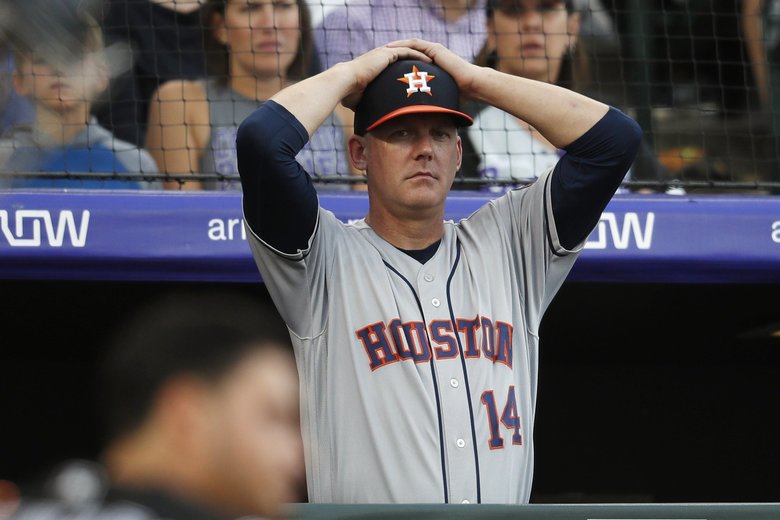
Sign Stealing Fallout: Like the Steroids Scandal

So, have you caught baseball fever yet?

Pitchers and catchers report for spring training in a month, which usually is cause for celebration. But the carnage from baseball’s cheating scandal continues to grow, casting a pall on what should be a joyous time of pleasant anticipation.

Instead, the darkest week in recent memory took another victim Thursday when Carlos Beltran departed as rookie manager of the New York Mets, before he had even begun.

There were lots of euphemisms to describe Beltran’s exit, just as there had been with Red Sox manager Alex Cora two days earlier. But the reality, when all the platitudes are stripped away, is they were both fired. Just as Astros manager A.J. Hinch and general manager Jeff Luhnow had been Monday, for their entanglement in the plot to use center-field cameras and replay-room monitors to steal signs during the 2017 and ’18 seasons. Cora was the Astros’ bench coach in 2017, and Beltran played for Houston that season.

What we have now is a burgeoning crisis that in many ways parallels the steroids scandal of the late 1980s and into the 1990s.

In both cases, the credibility of the sport takes a substantial hit. The most vital element for any professional sport, its lifeblood, is the inherent belief from the public that the competition is on the up and up.

Anything that compromises that trust poses a grave threat – and steroids certainly did that. Fans were left to wonder who was using, who was clean and whether the eye-popping offensive statistics of the era had any validity.

And now, with the World Series champions in both 2017 (Astros) and ’18 (Red Sox) having been implicated in cheating plots, the core integrity of the game once again is in question. The pursuit of a title is what fans invest the bulk of their emotional energy into; now, two of the past three titles are tainted.

So, for that matter, are the achievements of an Astros team that is obviously hugely talented. But we will always wonder how much of their success must be attributed to the benefits of having someone bang a trash can when an offspeed pitch was coming.

As it was with steroids, the collateral damage is substantial. The Dodgers may have been jobbed out of two World Series championships, having lost to the Astros in seven games in 2017 and the Red Sox in five games in 2018. Maybe the narrative that their manager, Dave Roberts, can’t win the big one is based on an entirely false premise.

Dodger pitchers Yu Darvish and Clayton Kershaw both were accused of choking under pressure after getting thrashed in World Series games in Houston. You have to look at that much differently now. There are young pitchers around baseball who may have had their careers derailed because they had the misfortune to face an Astros team that knew exactly what they were going to throw.

Teams may have missed the playoffs, and managers fired, for the same reason. Joe Girardi was let go as Yankees manager in 2017 just five days after losing the ALCS in seven games to the Astros. In that series, the Yankees dropped a pair of one-run games in Houston. Who knows how much of that was attributable to the Astros’ cheating?

The ripple effect of all this is massive. The tentacles are far-reaching and intertwined. And just as was the case during the heart of the steroids era, there is a deep suspicion that the whole business is far more widespread than just the parties getting the publicity and punishment. There has been much insinuation, in fact, that this kind of sign-stealing goes back further than 2017, and reaches much deeper than just two teams.

by Larry Stone, Seattle Times |  Read more:
Image: David Zalubowski / The Associated Press

Nike Air Force The Great Wave off Kanagawa

Tuesday, January 21, 2020

Uncanny Valley

Morale is down. We are making plenty of money, but the office is teeming with salespeople: well-groomed social animals with good posture and dress shoes, men who chuckle and smooth their hair back when they can’t connect to our VPN. Their corner of the office is loud; their desks are scattered with freebies from other start-ups, stickers and koozies and flash drives. We escape for drinks and fret about our company culture. “Our culture is dying,” we say gravely, apocalyptic prophets all. “What should we do about the culture?”

It’s not just the salespeople, of course. It’s never just the salespeople. Our culture has been splintering for months. Members of our core team have been shepherded into conference rooms by top-level executives who proceed to question our loyalty. They’ve noticed the sea change. They’ve noticed we don’t seem as invested. We don’t stick around for in-office happy hour anymore; we don’t take new hires out for lunch on the company card. We’re not hitting our KPIs, we’re not serious about the OKRs. People keep using the word paranoid. Our primary investor has funded a direct competitor. This is what investors do, but it feels personal: Daddy still loves us, but he loves us less.

We get ourselves out of the office and into a bar. We have more in common than our grievances, but we kick off by speculating about our job security, complaining about the bureaucratic double-downs, casting blame for blocks and poor product decisions. We talk about our IPO like it’s the deus ex machina coming down from on high to save us — like it’s an inevitability, like our stock options will lift us out of our existential dread, away from the collective anxiety that ebbs and flows. Realistically, we know it could be years before an IPO, if there’s an IPO at all; we know in our hearts that money is a salve, not a solution. Still, we are hopeful. We reassure ourselves and one another that this is just a phase; every start-up has its growing pains. Eventually we are drunk enough to change the subject, to remember our more private selves. The people we are on weekends, the people we were for years.

This is a group of secret smokers, and we go in on a communal pack of cigarettes. The problem, we admit between drags, is that we do care. We care about one another. We even care about the executives who can make us feel like shit. We want good lives for them, just like we want good lives for ourselves. We care, for fuck’s sake, about the company culture. We are among the first twenty employees, and we are making something people want. It feels like ours. Work has wedged its way into our identities, and the only way to maintain sanity is to maintain that we are the company, the company is us. Whenever we see a stranger at the gym wearing a T-shirt with our logo on it, whenever we are mentioned on social media or on a client’s blog, whenever we get a positive support ticket, we share it in the company chat room and we’re proud, genuinely proud.

But we see now that we’ve been swimming in the Kool-Aid, and we’re coming up for air. We were lucky and in thrall and now we are bureaucrats, punching at our computers, making other people — some kids — unfathomably rich. We throw our dead cigarettes on the sidewalk and grind them out under our toes. Phones are opened and taxis summoned; we gulp the dregs of our beers as cartoon cars approach on-screen. We disperse, off to terrorize sleeping roommates and lovers, to answer just one, two more emails before bed. Eight hours later we’ll be back in the office, slurping down coffee, running out for congealed breakfast sandwiches, tweaking mediocre scripts and writing halfhearted emails, throwing weary and knowing glances across the table.

I skim recruiter emails and job listings like horoscopes, skidding down to the perks: competitive salary, dental and vision, 401k, free gym membership, catered lunch, bike storage, ski trips to Tahoe, off-sites to Napa, summits in Vegas, beer on tap, craft beer on tap, kombucha on tap, wine tastings, Whiskey Wednesdays, Open Bar Fridays, massage on-site, yoga on-site, pool table, Ping-Pong table, Ping-Pong robot, ball pit, game night, movie night, go-karts, zip line. Job listings are an excellent place to get sprayed with HR’s idea of fun and a 23-year-old’s idea of work-life balance. Sometimes I forget I’m not applying to summer camp. Customized setup: design your ultimate work station with the latest hardware. Change the world around you. Help humanity thrive by enabling — next! We work hard, we laugh hard, we give great high-fives. We have engineers in TopCoder’s Top 20. We’re not just another social web app. We’re not just another project-management tool. We’re not just another payment processor. I get a haircut and start exploring.

Most start-up offices look the same — faux midcentury furniture, brick walls, snack bar, bar cart. Interior designers in Silicon Valley are either brand-conscious or very literal. When tech products are projected into the physical world they become aesthetics unto themselves, as if to insist on their own reality: the office belonging to a home-sharing website is decorated like rooms in its customers’ pool houses and pieds-à-terre; the foyer of a hotel-booking start-up has a concierge desk replete with bell (no concierge); the headquarters of a ride-sharing app gleams in the same colors as the app itself, down to the sleek elevator bank. A book-related start-up holds a small and sad library, the shelves half-empty, paperbacks and object-oriented-programming manuals sloping against one another. It reminds me of the people who dressed like Michael Jackson to attend Michael Jackson’s funeral.

But this office, of a media app with millions in VC funding but no revenue model, is particularly sexy. This is something that an office shouldn’t be, and it jerks my heart rate way, way up. There are views of the city in every direction, fat leather loveseats, electric guitars plugged into amps, teak credenzas with white hardware. It looks like the loft apartment of the famous musician boyfriend I thought I’d have at 22 but somehow never met. I want to take off my dress and my shoes and lie on the voluminous sheepskin rug and eat fistfuls of MDMA, curl my naked body into the Eero Aarnio Ball Chair, never leave.

It’s not clear whether I’m here for lunch or an interview, which is normal. I am prepared for both and dressed for neither. My guide leads me through the communal kitchen, which has the trappings of every other start-up pantry: plastic bins of trail mix and Goldfish, bowls of Popchips and miniature candy bars. There’s the requisite wholesale box of assorted Clif Bars, and in the fridge are flavored water, string cheese, and single-serving cartons of chocolate milk. It can be hard to tell whether a company is training for a marathon or eating an after-school snack. Once I walked into our kitchen and found two Account Mana­gers pounding Shot Bloks, chewy cubes of glucose marketed to endurance athletes. (...)

Ours is a "pickax-during-the-gold-rush" product, the kind venture capitalists love to get behind. The product provides a shortcut to database infrastructure, giving people information about their apps and websites that they wouldn’t necessarily have on their own. All our customers are other software companies. This is a privileged vantage point from which to observe the tech industry. I would say more, but I signed an NDA.

I am the inaugural customer support rep, or Support Engineer. My job involves looking at strangers’ codebases and telling them what they’ve done wrong in integrating our product with theirs, and how to fix it. There are no unsolvable problems. Perhaps there are not even problems, only mistakes. After nearly three years in book publishing, where I mostly moved on instinct, taste, and feeling, the clarity of this soothes me.

I learn the bare minimum, code-wise, to be able to do my job well — to ask questions only when I’m truly in over my head. Still, I escalate problems all the time. I learn how to talk to our customers about the technology without ever touching the technology itself. I find myself confidently discussing cookies, data mapping, the difference between server-side and client-side integrations. “Just add logic!” I advise cheerfully. This means nothing to me but generally resonates with engineers. It shocks me every time someone nods along.

This is not to confuse confidence with pride. I doubt myself daily. I feel lucky to have this job; I feel desperately out of place. My previous boss — breezy and helpful, earnest in the manner of a man in his early twenties bequeathed $4 million to disrupt libraries — had encouraged me to apply for the role; I had joined his publishing start-up too early and needed something new. “This is the next big company,” he had said. “It’s a rocket ship.” He was right. I had been banking on him being right. Still, there are days when all I want is to disembark, eject myself into space, admit defeat. I pander and apologize and self-deprecate until my manager criticizes me for being a pleaser, at which point it seems most strategic to stop talking.

by Anna Wiener, N+1 |  Read more:
Image: Jennifer Murphy, Gold and Black Circles. 2007. Courtesy Clint Roenisch Gallery.

How Dick Cavett Brought Sophistication to Late Night Talk Shows

270 Classic Interviews, Now Online

Just as the avuncular presence of Ed Sullivan helped ease middle America into accepting Elvis Presley and The Beatles, the aw-shucks midwestern charm of Dick Cavett made Woodstock hippies seem downright cuddly when he had Jefferson Airplane, David Crosby, and Joni Mitchell on just after the legendary music festival in 1969. He had a way of making everyone around him comfortable enough to reveal just a little more than they might otherwise. (See Jimi Hendrix talk about his National Anthem performance, below.)

Born in Nebraska in 1937, “the only persona [Cavett] bothered to, or needed to, develop for working on camera was of a boy from Nebraska dazzled by the bright lights of New York,” as Clive James writes in an appreciation of the TV host. As he interviewed the biggest stars of late sixties, seventies, and eighties on the long-running Dick Cavett Show, Cavett’s easygoing Midwestern demeanor disarmed both his guests and audiences. He kept them engaged with his erudition, quick wit, and breadth of cultural knowledge. (...)


Cavett, writes James, was “the most distinguished talk-show host in America… a true sophisticate with a daunting intellectual range.” He was also an empathic interviewer who could lead his guests beyond the stock responses they were used to giving in TV interviews. (David Bowie, below, reveals how he was influenced by his fans.)

Once he had his own late-night talk show, however, which ran opposite Johnny Carson’s Tonight Show, it became clear that he was doing something very different. “Cavett never mugged, never whooped it up for the audience, rarely told a formally constructed joke, and listened to the guest,” writes James. He became “famous enough not to be able to go out except in disguise,” but “his style did not suit a mass audience.” This is what made—and still makes—Cavett worth watching.

by Open Culture |  Read more:
Image: YouTube
[ed. If you're not that familiar with Mr. Cavett's work and cultural impact, do read the Clive James link above. Also this and this. See also: Dozens of Classic Interviews from The Dick Cavett Show (Kotke.org): Some of the other videos feature John Lennon on why The Beatles ended, Jimmy Hendrix talking about performing at Woodstock, Orson Welles recounting a dinner with Adolf Hitler, Janis Joplin’s final TV interview, Joni Mitchell, Jefferson Airplane, and David Crosby fresh off of their appearances at Woodstock, Robin Williams on depression, and Carly Simon talks about stage fright. Wikipedia has a list of most notable shows and moments.]