via:
Saturday, March 12, 2011
Warm Signal
A short abstract movie dealing with nature and maritime creatures, metamorphosis and transformation – it connects art and science. Strong emphasis on sound, related to the idea of visual music. Silke Sieler is a motion graphics designer based in Hamburg, Germany.
via:
via:


Ennui

I have of late--but wherefore I know not--lost all my mirth, forgone all custom of exercises; and indeed it goes so heavily with my disposition that this goodly frame, the earth, seems to me a sterile promontory, this most excellent canopy, the air, look you, this brave o'erhanging firmament, this majestical roof fretted with golden fire, why, it appears no other thing to me than a foul and pestilent congregation of vapours. What a piece of work is a man! how noble in reason! how infinite in faculty! in form and moving how express and admirable! in action how like an angel! in apprehension how like a god! the beauty of the world! the paragon of animals! And yet, to me, what is this quintessence of dust? man delights not me: no, nor woman neither, though by your smiling you seem to say so.
Hamlet ~ Shakespeare

On Intimacy

What does intimacy mean?
And how can it be reached?
I've been thinking a lot lately about sexual intimacy. I've been thinking about what sexual intimacy is, and how it's different from sex. And I've been thinking about why it's often so elusive... and what we can do to create it.
I think there's a paradox in creating sexual intimacy. Or maybe just a balance. On the one hand, intimacy can't be forced. You can't make someone open up to you; I'm not sure you can even make yourself open up. Moments of connection -- moments of feeling present with someone else, and feeling them present with you; moments of feeling the world fall away leaving only the two of you (or the three of you, or six, or whatever); moments where the chattering in your brain quiets down and your anxieties about the future and regrets about the past fade into the mist and all you're aware of is the time and place you're experiencing together right now; moments of looking up from whatever pleasures you're engaged in and making eye contact and feeling yourself shining out through your eyes, and feeling your partner shining out through theirs; moments of knowing with an almost telepathic certainty exactly where and how your partner wants to be stroked/ licked/ hit/ whatever -- these don't happen because you will them to. In fact, in an important (albeit irritating) paradox, trying to force these moments usually has the exact opposite effect. Trying to force them will chase them away. One of the whole points of intimacy is that it means letting things be what they are: letting your partner be who they are, letting yourself be who you are, being present with each other as you are. Trying to force intimacy is the exact opposite of that.
But at the same time, intimacy doesn't happen without work. It takes work to listen carefully to what your partner wants... whether they're saying it in words, or without words. It takes work to let go of expectations, and to let experiences and people be what they are. It takes work to let go of anxieties and regrets, and let the present moment be what it is. It takes work to let go of self-consciousness and overthinking; to put a gag and a blindfold on the detached observer in your head who's constantly sitting back offering running commentary on your life, and to just let yourself fucking well experience your life already. (She said bitterly, knowing way the hell too much about this one.)
And while a huge part of intimacy is letting things be, that isn't the same as being passive. Part of letting things be is letting yourself be -- and part of letting yourself be is being willing to put yourself out into the world. Asking for what you want; being honest about what your partner wants and how you feel about that; letting yourself not only feel what you feel but express those feelings... all of that's a huge part of intimacy. It isn't just about being open to your partner. It's about being someone your partner can be open to. If you don't put your sexual self into the world, there won't be anyone there for your partner to connect with. There's nobody to be inside; nobody to go inside the other. Intimacy requires both selfishness and selflessness. It requires the willingness to be one's self... and the willingness to let the other person's self be.
So where is that balance between control and laziness? Where is the balance between trying to force sexual intimacy, and passively lying back waiting for it to happen?
I've been thinking about this a lot lately. And the concept that keeps coming to mind is readiness. I don't think we can make intimate sexual moments happen. As my Facebook friend Elin said when we were talking about last week's masochism piece: "That's one of the really exciting (and maddening) things about sex, isn't it... getting completely in the moment and then one second later realizing you're completely in the moment... at which point, of course, you're not anymore. " That's what I was getting at a few paragraphs ago when I said that intimacy can't be forced, or captured and preserved. Trying to force it chases it away; trying to capture it makes it slip through our fingers.
more:

Tumbleweed
A Master equation approach to modeling an artificial protein motor
(Submitted on 7 Apr 2010)
Abstract: Linear bio-molecular motors move unidirectionally along a track by coordinating several different processes, such as fuel (ATP) capture, hydrolysis, conformational changes, binding and unbinding from a track, and center-of-mass diffusion. A better understanding of the interdependencies between these processes, which take place over a wide range of different time scales, would help elucidate the general operational principles of molecular motors. Artificial molecular motors present a unique opportunity for such a study because motor structure and function are a priori known. Here we describe use of a Master equation approach, integrated with input from Langevin and molecular dynamics modeling, to stochastically model a molecular motor across many time scales. We apply this approach to a specific concept for an artificial protein motor, the Tumbleweed.Full report here (pdf):
Zuppa Arcidossana

2 tablespoons olive oil
1/4 pound sweet Italian sausage, removed from casings
1 cup 1/2-inch-diced carrots
1 large onion, chopped
3 or 4 cloves garlic, chopped
Salt and black pepper
1 cup stale bread (use coarse, country-style bread), cut in 1/2-inch cubes
1/2 pound spinach, trimmed, washed and roughly chopped
1/4 to 1/2 cup ricotta salata, cut in 1/2-inch cubes (feta may be substituted)
1/4 cup freshly chopped parsley, optional.
1. Put oil in a large pot or deep skillet and brown sausage over medium-low heat, stirring occasionally. When sausage is cooked through and leaving brown bits in pan, add carrots, onion and garlic, and continue to cook until vegetables begin to soften and brown, about 10 minutes. Sprinkle with salt and pepper.
2. Add bread to pan and stir for a minute or 2; add spinach and continue cooking just until it wilts, a couple of minutes.
3. Add about 2 cups water and stir to loosen any remaining brown bits from pan. This is more of a stew than a soup, but there should be some broth, so add another cup of water if necessary. When broth is consistency of thin gravy, ladle stew into serving bowls and top with cheese and some freshly chopped parsley if you have it. Serve immediately.
Yield: 4 servings.
via:
Friday, March 11, 2011
Aftershocks
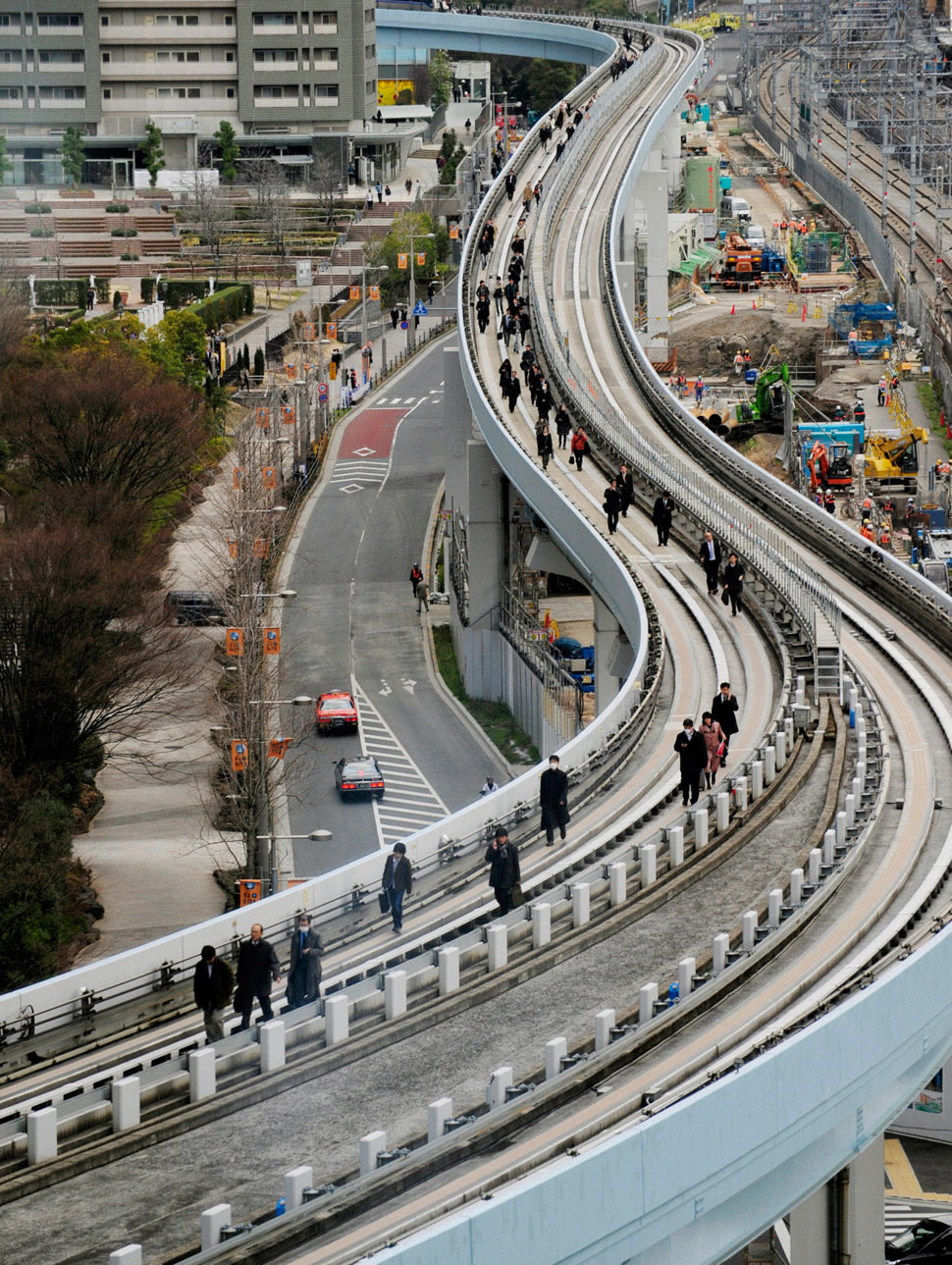 The only thing more disconcerting than the typical calm Japanese people so often exhibit in the face of all manner of outlandish occurrences is actually seeing the normally buttoned-up, retrained populace lose their cool en masse. That is truly scary. And that is what I saw happen Friday afternoon, when Japan experienced what some seismologists are calling the strongest earthquake to hit Japan in a thousand years.
How strong was the earthquake? I would like to now point out that even as I'm writing this at 1 a.m. Tokyo time (the major quake hit at 2:46 p.m.) we are still experiencing very strong aftershocks about once an hour. So excuse me if my observations are still tinged by frantic concern that the ceiling may still come falling down around my head.
It began as a light tremor, something that one becomes oddly accustomed to when living in Japan. But then the deceptively gentle tremor kept going... and going... and going. Until the bemused giggles of my Japanese office mates gradually turned into full on screams of fear as everyone tried to duck under the nearest desk. But what really brought the thought that this might be my last Friday was the fact that the quake didn't obey the rules of good luck and suddenly stop once we all ducked under the desks. No. The quake lasted a very, very long time. Not unlike an animal's howl, the quake went from a deep rumble and gradually built up to a thunderous and sustained wave of rhythmic, humming, physical chaos. It lasted about five minutes by my guess. And if you've ever experienced an earthquake, you know that five minutes is an eternity compared to the run-of-the-mill quake. It was scary.
read the rest:


Going Nuclear

Japan Orders Evacuation Near 2nd Nuclear Plant
WASHINGTON — Japanese officials issued broad evacuation orders on Saturday for people living near two nuclear power plants whose cooling systems broke down as a result of the earthquake. The officials warned that small amounts of radioactive material were likely to leak from the plants.
The power plants, known as Daiichi and Daini and operated by Tokyo Electric Power, experienced critical failures of the backup generators needed to power cooling systems after the plants were shut down, as they were during the quake.
About 45,000 people were affected by the evacuation order at the Daiichi plant, where those living within a six-mile radius were told to leave. The evacuation of the second plant was for a one-mile radius because “there is no sign that radiation has been emitted outside,” an official said.
Failure of the cooling systems allowed pressure to build up beyond the design capacity of the reactors. Small amounts of radioactive vapor were expected to be released into the atmosphere to prevent damage to the containment systems, safety officials said. They said that the levels of radiation were not large enough to threaten the health of people outside the plants, and that the evacuations had been ordered as a precaution. Nuclear safety officials focused initially on the Daiichi plant. But by Saturday morning Japan had declared states of emergency for five reactors at the two plants, an escalation that added to worries about the safety of nuclear facilities in the quake-prone Japanese islands.
via:
Scratching Fleas
The New American Pessimism
A protester at a march and rally at the Wisconsin State Capitol in Madison, March 5, 2011
 I can’t remember when I last heard someone genuinely optimistic about the future of this country. I discount politicians, investment bankers and generals since their line of work requires that they offer upbeat assessments of everything from our deteriorating economy to our suicidal wars, and assorted narcissists accustomed to shutting their eyes to the plight of their fellow Americans. The outright prophets of doom and gloom among our friends and acquaintances tended to be a rare breed until recently. They were mostly found among the elderly, whose lives had an inordinate share of tragedies and disappointments, so one didn’t take their bleak outlook as applicable to the rest of us. One encountered inveterate optimists, idealists, or even Niebuhrian realists in the past; now, one finds people of all ages and backgrounds eager to tell you how screwed up everything is, and, on a more personal note, what a difficult time they are having—not just making ends meet, but understanding why the country they thought they knew has become unrecognizable.
Just look at the assault on the rights of state workers that Wisconsin’s new governor Scott Walker and a group of state senators have rammed through a rump legislature without any debate. The same approach is now spreading to several other states in the heartland. In the new USA, teachers, union workers, women, children, the unemployed and the hopeless are the cause of unsustainable deficits, and a dog-eat-dog philosophy that is supposed to make us great again prevails.
It must be difficult for any hostess nowadays to stop her dinner guests from reciting to each other over the course of an evening the endless examples of lies and stupidities they’ve come across in the press and on TV. As they get more and more wound up, they try to outdo each other, losing all interest in the food on their plates. I know that when I get together with friends, we make a conscious effort to change the subject and talk about grandchildren, reminisce about the past and the movies we’ve seen, though we can’t manage it for very long. We end up disheartening and demoralizing each other and saying goodnight, embarrassed and annoyed with ourselves, as if being upset about what is being done to us is not a subject fit for polite society.
In an atmosphere of growing anxiety and hysteria, in which the true causes and the scale of our dire national predicament are deliberately concealed and obfuscated by our political establishment and by the corporate media, no wonder there’s confusion and anger everywhere. As anyone who has traveled around this country and talked to people knows, Americans are not just badly informed, but downright ignorant about most things that affect their lives. How nice it would be if our President leveled with us and told us that our deficit is caused in significant part by the wars we are fighting in Afghanistan and Pakistan, the hundreds of military bases we are maintaining around the world, the huge tax breaks for the rich, and the bailout of Wall Street. As we know, we are not about to hear anything of the kind.
By the president’s calculation, telling the truth to the American people would doom his reelection campaign, since he would not be able to raise the billion dollars he needs this time around. The kind of people who have that kind of money and will agree to contribute to his campaign know very well what informed voters in a working democracy would to do to them once they understood just who has depleted the national treasury to line their own pockets. No doubt, he and his political party will do anything to avoid the truth and will propose outwardly attractive solutions—like the health care bill that not only expands coverage but greatly benefits insurance companies and does little to reduce healthcare costs. They hope that these kinds of measures will lure the majority of voters who won’t bother to learn the details, but they will also send a clear signal to the moneyed classes that they won’t be inconvenienced in the least.
As for those who continue to insist that there’s something fundamentally wrong with a democracy that doesn’t address the ever-growing income inequality the sheer madness of our open-ended military ventures in Afghanistan, the miseries of the sick and unemployed, the suffering of the near destitute and of the children and the old, they’ll be dismissed as being unrealistic in present circumstances and reminded that with the other party in power things would be even worse. The reason pessimists are multiplying is that we dishonor the intellect and the knowledge of history in this country by refusing to admit that corruption is the source of our ills. It takes no great mental effort to realize that there’s no effective political forces either in Washington or locally that are able to do anything serious to correct our self-delusions about being the world’s policeman, because any sensible solution would seriously cut into profits of this or that interest group.
They say the monkey scratches its fleas with the key that opens its cage. That may strike one as being very funny or very sad. Unfortunately, that’s where we are now.
via:

Amazonian Guard

The Amazonian Guard is an elite group of 30-40 (reports differ) virginal women who are tasked with protecting the leader of Libya, Muammar al-Gaddafi.
Candidates for the Amazonian Guard undergo extensive firearms and martial arts training at a special academy and must be hand picked by Gaddafi himself. Members of this elite group are allowed privileges not deemed acceptable in the Muslim world, such as dressing in Western-style fatigues and wearing makeup, or displaying Western hair styles and high heels.
The existence of this elite group has created controversy as it challenges the role of women in the Muslim world.
[ed. note. as noted on another blog, he's like a real-life James Bond villian!]
Going, going, gone...
The second most common element in the universe is increasingly rare on Earth—except, for now, in America.

Helium’s rarity on Earth and relative abundance in America are cosmic and planetary accidents. After hydrogen, helium is the second most common element in the universe, with the bulk of it formed during the big bang. This primordial material suffuses space, occasionally condensing to form dust, stars, and eventually planets. The Sun is rich in helium, as are the solar system’s gas giant planets. Earth likely once had a wealth of helium too, but this was boiled off by sunlight eons ago. Our modern supply of helium has gradually built up over billions of years in subterranean pockets of natural gas as a byproduct of decaying radioactive elements.
The same tectonic processes that led to the formation of the Rocky Mountains and of North America’s ancient inland sea also created one of the largest and most helium-rich natural gas pockets on the planet, beneath the Great Plains. It was discovered in 1903, when a Kansas oil field jetted a helium-spiked gas plume that wouldn’t burn. Only providence placed the helium in the geographic center of a rapidly industrializing nation that had just gained a capacity to efficiently extract it. The United States has provided the majority of the world’s supply ever since. For more than a century, helium has been as American as apple pie.
Helium’s “Fort Knox” is the Federal Helium Reserve (FHR) near Amarillo, created in 1925 to supply a fleet of military dirigibles that never fully materialized. During the Cold War, when helium was crucial for military and civilian space programs, the FHR linked up to a larger network of gas fields, pipelines, and refineries, growing to contain roughly a billion cubic meters of helium and accruing a $1.4 billion debt in the process. Though the FHR still holds more helium than any other stockpile by far, its stores are rapidly diminishing. Since 2003, the US Bureau of Land Management has been methodically selling off the FHR’s hoard (and repaying the $1.4 billion debt) in compliance with a 1996 Congressional act that called for phasing out the reserve by 2015.
Echoing years of complaints from the scientific community, in January the US National Research Council (NRC) released a report condemning the liquidation of the FHR as a shortsighted blunder that has thrown the global market into turmoil and hindered scientific research. The flood of federal helium, initially priced substantially higher than other sources, perversely contributed to helium’s commercial price increasing to meet and then exceed the FHR’s fixed price point. Consequently, the report says many university science laboratories (and, yes, purveyors of festive balloons) have seen their expenditures on helium more than double since 2006, and work-stifling shortages are common. Purchasing helium may now account for half of total operating costs at some US labs, leaving little left over for researcher salaries and other expenses. The report suggests that changing the price point of federal helium and allowing small-scale science labs to make collective purchases from the FHR could mitigate these effects.
Another contributor to helium’s rising price is a soaring global demand. Emerging powers such as China and India are ramping up helium-hungry activities like chipset fabrication, space programs, and cryogenic research. The failure to foresee this flattening of global commerce speaks volumes about the carefree buoyancy of America in the 1990s, when it was the planet’s sole superpower and stockpiling helium seemed more wasteful than squandering it. Now, the NRC report warns, if the US does not soon cease selling off its reserves, within 10 to 15 years the country will be forced to import most of its helium from the only other near-term sources, gas fields in the Middle East and Russia.
Beyond such mundane geopolitical rivalries, the US has a more profound reason to conserve its helium: Every balloon inevitably deflates. Optimistically assuming that demand for the substance continues to grow only a few percent each year, and that the entirety of the globe’s remaining natural gas reserves will be processed for their helium, the NRC report estimates there will only be enough to last another 40 years. It stands to reason that as supplies diminish, helium will be used more efficiently and investments in recycling technologies will grow. But the fact that the Earth’s four-billion year bounty has been so reduced in scarcely a century suggests that helium is sadly not long for this world.
here:
Unmistaken Child
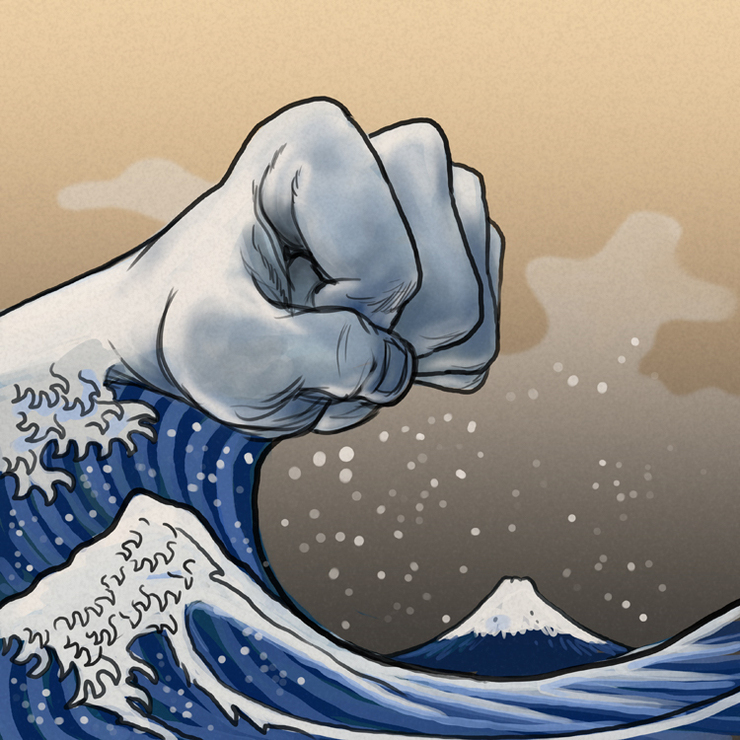
Unmistaken Child - When his master Lama Konchog passed away, Tenzin Zopa, his disciple of 21 years was barefoot and lonely. At the instruction of the Dalai Lama, Zopa searches for his master’s reincarnation, who is expected to be embodied in a little boy and might be anywhere in the world. This “unmistaken child” must be found before it becomes too difficult to remove him from his parents’ care—within four years.
Full movie (in chapters) here:
Subscribe to:
Posts (Atom)