Saturday, July 23, 2011


U.S. Wastes 34 Billion in Afghan and Iraq Contracting
[ed. Surprised? Think about this when you read how social spending cuts are needed as a concession to raising the debt ceiling.]
by Phil Stewart
WASHINGTON (Reuters) - The United States has wasted some $34 billion on service contracts with the private sector in the wars in Iraq and Afghanistan, according to a study being finalized for Congress.
The findings by a bipartisan congressional commission were confirmed to Reuters by a person familiar with the draft of the study, which is due to be completed in coming weeks.
The analysis by the Commission on Wartime Contracting, details of which were first reported by the Wall Street Journal, offers the most complete look so far at the misuse of U.S. contracting funds in Afghanistan and Iraq, where more than $200 billion has been doled out in the contracts and grants over nearly a decade.
It also gives the most complete picture of the magnitude of the U.S. contracting workforce in the two countries.
The source, who declined to be named, said more than 200,000 contractors have been on the U.S. payroll at times in Iraq and Afghanistan -- outstripping the number of U.S. troops currently on the ground in those countries.
The United States has fewer than 100,000 troops in Afghanistan and some 46,000 forces in Iraq.
The tally of private sector contractors in Iraq and Afghanistan can be surprisingly difficult to obtain since many U.S. contractors are outsourced to subcontractors who depend on temporary labor, the source said.
The report blames a lack of oversight by federal agencies for misuse of funds and warns of further waste when the programs are transferred to Iraqi or Afghan control as the United States withdraws its troops.
The U.S. military is on course to withdraw all of its troops from Iraq by the end of the year and started drawing down its force in Afghanistan this month.
via:
by Phil Stewart
WASHINGTON (Reuters) - The United States has wasted some $34 billion on service contracts with the private sector in the wars in Iraq and Afghanistan, according to a study being finalized for Congress.
The findings by a bipartisan congressional commission were confirmed to Reuters by a person familiar with the draft of the study, which is due to be completed in coming weeks.
The analysis by the Commission on Wartime Contracting, details of which were first reported by the Wall Street Journal, offers the most complete look so far at the misuse of U.S. contracting funds in Afghanistan and Iraq, where more than $200 billion has been doled out in the contracts and grants over nearly a decade.
It also gives the most complete picture of the magnitude of the U.S. contracting workforce in the two countries.
The source, who declined to be named, said more than 200,000 contractors have been on the U.S. payroll at times in Iraq and Afghanistan -- outstripping the number of U.S. troops currently on the ground in those countries.
The United States has fewer than 100,000 troops in Afghanistan and some 46,000 forces in Iraq.
The tally of private sector contractors in Iraq and Afghanistan can be surprisingly difficult to obtain since many U.S. contractors are outsourced to subcontractors who depend on temporary labor, the source said.
The report blames a lack of oversight by federal agencies for misuse of funds and warns of further waste when the programs are transferred to Iraqi or Afghan control as the United States withdraws its troops.
The U.S. military is on course to withdraw all of its troops from Iraq by the end of the year and started drawing down its force in Afghanistan this month.
via:


A Goodbye to Ambien in Dubai
by Amy Schumer
I look in the mirror one more time to see if I can get away without wearing a bra, and decide it's fine. Then I'm in the back of some sweaty cab that smells like chicken noodle soup, suggesting alternate routes and half-yelling at a cabbie. I need to get to JFK in under an hour. Fuck, why do I always do this?
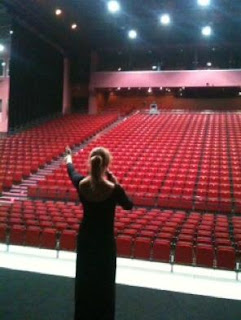 I don't plan well. I think it's because secretly I hope I miss my flight. Actually, I'm mad I ever have to go anywhere. I got this offer to perform one night in Dubai at the Palladium theater about a month ago. Images of different rap videos flashed through my head: Puffy on a tank in the desert. Kanye in a Range Rover with dunes behind him. Biggie in Bed-Stuy, standing in a sandbox. Plus, my layover is in Istanbul. Scenes from Midnight Express appear in my mind and then I remember how delicious Turkish delight sounded in The Lion, The Witch, & The Wardrobe. Food wins."Yes" I say.
This is a new thing I’m doing. My first instinct is always to say no (which certainly isn't reflected in the number of people I've had sex with). But I was ready for this. I was in the mood to see some shit, to hand someone my passport in a foreign land and feel alive. About three days before I leave, more paperwork comes in. I sign a contract saying that while on stage I won't talk about their political leader. Um, no problem. I don't know who their leader is. Don't talk about religion. Done and done.
Still, it’s a foreign concept to censor my material, and it takes traveling halfway around the world to understand just how oppressive that country can be. It literally and figuratively keeps me up at night, too; in the coming two weeks, I’ll struggle with an Ambien addiction while claiming my independence in a country that treats women as possessions.
First I have to get there. My cab arrives at JFK and I immediately walk to the biz class lounge, putting cheddar wedges and water crackers on my plate the way I think a rich person would. The goal is to match everyone else’s silent snobbery and act like I'm always in these privileged shit holes. I now realize I should have worn a bra. I'm trying to look regal balancing chardonnay, cheese and a laptop and flopping all over the place near children and possible diplomats. I open up my computer after a healthy sip of vino, deciding now will be a good time to Google the places I'm going. This is my normal routine. Like I said, I don’t plan well. I don't look at the weather of my destination until my bags are checked, which has meant borrowing coats in Denver and buying gross bathing suits in Virginia Beach. It’s 120 degrees in Dubai, and apparently I have to cover up all my lady parts. Oh well, too late. Other topics pop up, and the one that catches my eye (other than the indoor ski slope) is the one with the words, "Arrested for Ambien.”
My stomach drops. I specifically Google “Ambien in Dubai.” I discover it's illegal there. Of course it is. Even people who come with their pills in the prescription bottle and a note from their doctor? Jail time. It's a gray area, some people say on the message boards. I am pretty sure “Gray Area” is not a term used in Sharia Law. (I have been following Amanda Knox since day one and she is innocent.) I’d rather not do a real life reenactment of Brokedown Palace. I don't want to be a story people learn from.
Why is this alarming? Amy, don't you know you're not supposed to take Ambien every night? Yes, yes I have heard that. But no one ever told me that if you take it every night and want to get off of it, the withdrawal is comparable to that of heroin.
I look in the mirror one more time to see if I can get away without wearing a bra, and decide it's fine. Then I'm in the back of some sweaty cab that smells like chicken noodle soup, suggesting alternate routes and half-yelling at a cabbie. I need to get to JFK in under an hour. Fuck, why do I always do this?
 I don't plan well. I think it's because secretly I hope I miss my flight. Actually, I'm mad I ever have to go anywhere. I got this offer to perform one night in Dubai at the Palladium theater about a month ago. Images of different rap videos flashed through my head: Puffy on a tank in the desert. Kanye in a Range Rover with dunes behind him. Biggie in Bed-Stuy, standing in a sandbox. Plus, my layover is in Istanbul. Scenes from Midnight Express appear in my mind and then I remember how delicious Turkish delight sounded in The Lion, The Witch, & The Wardrobe. Food wins."Yes" I say.
 This is a new thing I’m doing. My first instinct is always to say no (which certainly isn't reflected in the number of people I've had sex with). But I was ready for this. I was in the mood to see some shit, to hand someone my passport in a foreign land and feel alive. About three days before I leave, more paperwork comes in. I sign a contract saying that while on stage I won't talk about their political leader. Um, no problem. I don't know who their leader is. Don't talk about religion. Done and done.
Still, it’s a foreign concept to censor my material, and it takes traveling halfway around the world to understand just how oppressive that country can be. It literally and figuratively keeps me up at night, too; in the coming two weeks, I’ll struggle with an Ambien addiction while claiming my independence in a country that treats women as possessions.
First I have to get there. My cab arrives at JFK and I immediately walk to the biz class lounge, putting cheddar wedges and water crackers on my plate the way I think a rich person would. The goal is to match everyone else’s silent snobbery and act like I'm always in these privileged shit holes. I now realize I should have worn a bra. I'm trying to look regal balancing chardonnay, cheese and a laptop and flopping all over the place near children and possible diplomats. I open up my computer after a healthy sip of vino, deciding now will be a good time to Google the places I'm going. This is my normal routine. Like I said, I don’t plan well. I don't look at the weather of my destination until my bags are checked, which has meant borrowing coats in Denver and buying gross bathing suits in Virginia Beach. It’s 120 degrees in Dubai, and apparently I have to cover up all my lady parts. Oh well, too late. Other topics pop up, and the one that catches my eye (other than the indoor ski slope) is the one with the words, "Arrested for Ambien.”
My stomach drops. I specifically Google “Ambien in Dubai.” I discover it's illegal there. Of course it is. Even people who come with their pills in the prescription bottle and a note from their doctor? Jail time. It's a gray area, some people say on the message boards. I am pretty sure “Gray Area” is not a term used in Sharia Law. (I have been following Amanda Knox since day one and she is innocent.) I’d rather not do a real life reenactment of Brokedown Palace. I don't want to be a story people learn from.
Why is this alarming? Amy, don't you know you're not supposed to take Ambien every night? Yes, yes I have heard that. But no one ever told me that if you take it every night and want to get off of it, the withdrawal is comparable to that of heroin.
Mastering the Machine
by John Cassidy
Ray Dalio, the sixty-one-year-old founder of Bridgewater Associates, the world’s biggest hedge fund, is tall and somewhat gaunt, with an expressive, lined face, gray-blue eyes, and longish gray hair that he parts on the left side. When I met him earlier this year at his office, on the outskirts of Westport, Connecticut, he was wearing an open-necked blue shirt, gray corduroy pants, and black leather boots. He looked a bit like an aging member of a British progressive-rock group. After a few pleasantries, he grabbed a thick briefing book and shepherded me into a large conference room, where his firm was holding what he described as its weekly “What’s going on in the world?” meeting.
 Of the fifty or so people present, most were clean-cut men in their twenties or thirties. Dalio sat down near the front of the room. A colleague began describing how the European Central Bank had just bought some Greek bonds from investors at a discount to their face value—a move that the speaker described as a possible precursor to an over-all restructuring of Greece’s vast debts. Dalio interrupted him. He said, “Here’s where you are being imprecise,” and then explained at length what a proper debt restructuring would entail, dismissing the E.C.B.’s move as an exercise in “kicking it down the road.”
Dalio is a “macro” investor, which means that he bets mainly on economic trends, such as changes in exchange rates, inflation, and G.D.P. growth. In search of profitable opportunities, Bridgewater buys and sells more than a hundred different financial instruments around the world—from Japanese bonds to copper futures traded in London to Brazilian currency contracts—which explains why it keeps a close eye on Greece. In 2007, Dalio predicted that the housing-and-lending boom would end badly. Later that year, he warned the Bush Administration that many of the world’s largest banks were on the verge of insolvency. In 2008, a disastrous year for many of Bridgewater’s rivals, the firm’s flagship Pure Alpha fund rose in value by nine and a half per cent after accounting for fees. Last year, the Pure Alpha fund rose forty-five per cent, the highest return of any big hedge fund. This year, it is again doing very well.
The discussion in the conference room moved on to Spain, the United Kingdom, and China, where, during the previous week, the central bank had raised interest rates in an attempt to slow inflation. Dalio said that the Chinese economy was in danger of overheating, and somebody asked how a Chinese slowdown would affect the price of oil and other commodities. Greg Jensen, Bridgewater’s co-chief executive and co-chief investment officer, who is thirty-six, said he thought that even a stuttering China would still grow fast enough to push world commodity prices upward.
Dalio asked for another opinion. From the back of the room, a young man dressed in a black sweatshirt started saying that a Chinese slowdown could have a big effect on global supply and demand. Dalio cut him off: “Are you going to answer me knowledgeably or are you going to give me a guess?” The young man, whom I will call Jack, said he would hazard an educated guess. “Don’t do that,” Dalio said. He went on, “You have a tendency to do this. . . . We’ve talked about this before.” After an awkward silence, Jack tried to defend himself, saying that he thought he had been asked to give his views. Dalio didn’t let up. Eventually, the young employee said that he would go away and do some careful calculations.
After the meeting, Dalio told me that the exchange had been typical for Bridgewater, where he encourages people to challenge one another’s views, regardless of rank, in what he calls a culture of “radical transparency.” Dalio had no qualms about upbraiding a junior employee in front of me and dozens of his colleagues. When confusions arise, he said, it is important to discuss them openly, even if that involves publicly pointing out people’s mistakes—a process he referred to as “getting in synch.” He added, “I believe that the biggest problem that humanity faces is an ego sensitivity to finding out whether one is right or wrong and identifying what one’s strengths and weaknesses are.”
Dalio is rich—preposterously rich. Last year alone, he earned between two and three billion dollars, and reached No. 55 on the Forbes 400 list. But what distinguishes him more from other hedge-fund managers is the depth of his economic analysis and the pretensions of his intellectual ambition. He is very keen to be seen as something more than a billionaire trader. Indeed, like his sometime rival George Soros, he appears to aspire to the role of worldly philosopher. In October, 2008, at the height of the financial crisis, he circulated a twenty-page essay immodestly titled “A Template for Understanding What’s Going On,” which said the economy faced not just a common recession but a “deleveraging”—a period in which people cut back on borrowing and rebuild their savings—the impact of which would be felt for a generation. This line of analysis wasn’t unique to Dalio, but almost three years later, with economic growth stagnating again, it does not seem off the mark.
Read more:
Ray Dalio, the sixty-one-year-old founder of Bridgewater Associates, the world’s biggest hedge fund, is tall and somewhat gaunt, with an expressive, lined face, gray-blue eyes, and longish gray hair that he parts on the left side. When I met him earlier this year at his office, on the outskirts of Westport, Connecticut, he was wearing an open-necked blue shirt, gray corduroy pants, and black leather boots. He looked a bit like an aging member of a British progressive-rock group. After a few pleasantries, he grabbed a thick briefing book and shepherded me into a large conference room, where his firm was holding what he described as its weekly “What’s going on in the world?” meeting.
 Of the fifty or so people present, most were clean-cut men in their twenties or thirties. Dalio sat down near the front of the room. A colleague began describing how the European Central Bank had just bought some Greek bonds from investors at a discount to their face value—a move that the speaker described as a possible precursor to an over-all restructuring of Greece’s vast debts. Dalio interrupted him. He said, “Here’s where you are being imprecise,” and then explained at length what a proper debt restructuring would entail, dismissing the E.C.B.’s move as an exercise in “kicking it down the road.”
Dalio is a “macro” investor, which means that he bets mainly on economic trends, such as changes in exchange rates, inflation, and G.D.P. growth. In search of profitable opportunities, Bridgewater buys and sells more than a hundred different financial instruments around the world—from Japanese bonds to copper futures traded in London to Brazilian currency contracts—which explains why it keeps a close eye on Greece. In 2007, Dalio predicted that the housing-and-lending boom would end badly. Later that year, he warned the Bush Administration that many of the world’s largest banks were on the verge of insolvency. In 2008, a disastrous year for many of Bridgewater’s rivals, the firm’s flagship Pure Alpha fund rose in value by nine and a half per cent after accounting for fees. Last year, the Pure Alpha fund rose forty-five per cent, the highest return of any big hedge fund. This year, it is again doing very well.
The discussion in the conference room moved on to Spain, the United Kingdom, and China, where, during the previous week, the central bank had raised interest rates in an attempt to slow inflation. Dalio said that the Chinese economy was in danger of overheating, and somebody asked how a Chinese slowdown would affect the price of oil and other commodities. Greg Jensen, Bridgewater’s co-chief executive and co-chief investment officer, who is thirty-six, said he thought that even a stuttering China would still grow fast enough to push world commodity prices upward.
Dalio asked for another opinion. From the back of the room, a young man dressed in a black sweatshirt started saying that a Chinese slowdown could have a big effect on global supply and demand. Dalio cut him off: “Are you going to answer me knowledgeably or are you going to give me a guess?” The young man, whom I will call Jack, said he would hazard an educated guess. “Don’t do that,” Dalio said. He went on, “You have a tendency to do this. . . . We’ve talked about this before.” After an awkward silence, Jack tried to defend himself, saying that he thought he had been asked to give his views. Dalio didn’t let up. Eventually, the young employee said that he would go away and do some careful calculations.
After the meeting, Dalio told me that the exchange had been typical for Bridgewater, where he encourages people to challenge one another’s views, regardless of rank, in what he calls a culture of “radical transparency.” Dalio had no qualms about upbraiding a junior employee in front of me and dozens of his colleagues. When confusions arise, he said, it is important to discuss them openly, even if that involves publicly pointing out people’s mistakes—a process he referred to as “getting in synch.” He added, “I believe that the biggest problem that humanity faces is an ego sensitivity to finding out whether one is right or wrong and identifying what one’s strengths and weaknesses are.”
Dalio is rich—preposterously rich. Last year alone, he earned between two and three billion dollars, and reached No. 55 on the Forbes 400 list. But what distinguishes him more from other hedge-fund managers is the depth of his economic analysis and the pretensions of his intellectual ambition. He is very keen to be seen as something more than a billionaire trader. Indeed, like his sometime rival George Soros, he appears to aspire to the role of worldly philosopher. In October, 2008, at the height of the financial crisis, he circulated a twenty-page essay immodestly titled “A Template for Understanding What’s Going On,” which said the economy faced not just a common recession but a “deleveraging”—a period in which people cut back on borrowing and rebuild their savings—the impact of which would be felt for a generation. This line of analysis wasn’t unique to Dalio, but almost three years later, with economic growth stagnating again, it does not seem off the mark.
Read more:
Spirits of the South Pole

Aboard the Nimrod, from left, Frank Wild, Ernest Shackleton, Eric Marshall and Jameson Adams.
by Charles McGrath
“It’s daft,” a man settled in a Glasgow pub said to me not long ago, talking about the sums that rare Scotch whiskies sometimes fetch at auction — the bottle of Dalmore 64-year-old, for example, that sold last month for nearly $200,000. “If you pay that much, you canna drink it, and wha’s the use a just lookin’ at the bottle?”
But just as there are wine geeks, there are people who get carried away over Scotch. The rituals are the same — the swirling, the sniffing, the mouth sluicing — and so is much of the vocabulary. Hint of pear, cinnamon, crushed almonds, marzipan; whiff of tobacco, leaf-smoke, moist leather. Geography matters for whisky just as much as for wine. Not only are the products of Scotland’s main whisky-making regions — Lowland, Highland, Speyside, Islay and Campbeltown — characteristically distinct, but even whiskies from distilleries just a couple of miles apart can taste vastly different. This one is sweet and grassy, with a hint of barn straw and damp car seat; that one smoky and peaty, with notes of dried moss and wet sheepdog. There are no vintages for whisky — the distiller’s aim is a product that is consistent from year to year — and once bottled, whisky doesn’t age. But before bottling, it does age in the cask, taking on flavor from the wood and the bourbon or sherry that used to be stored there. So as with wine, older is generally better, and whisky collectors regularly shell out huge sums for rare bottles.
For $160 or so, collectors in America will shortly be able to buy, nestled in a little crate made in China to look authentically Scottish, not a rarity, exactly, but a replica of one: whisky fabricated to resemble the whisky that the explorer Ernest Shackleton took with him to the Antarctic so long ago that people had forgotten all about it. In February 2007, workers trying to restore Shackleton’s hut there accidentally came across three cases of Scotch — “Rare old Highland malt whisky, blended and bottled by Chas. Mackinlay & Co.” — frozen in the permafrost. The labels on the whisky say it was intended for what Shackleton was planning to call the Endurance expedition but ended up being known as the Nimrod expedition of 1907, which was the earlier and lesser-known of his two great journeys but the more successful. He actually got to within about 100 miles of the South Pole, farther south than anyone had gone previously.
Shackleton would have loved the idea of a replica whisky. An improvident man, always in debt, he was partial to get-rich-quick schemes, including a Hungarian gold mine. By today’s standards, he was an unlikely explorer, with little scientific training or interest. He wasn’t even particularly enthralled by snow and ice. What motivated him was the lure of fame and wealth, and exploration was the best way he knew to get them. Shackleton’s great gift was his personality. He was irresistibly charming, especially to women, and for his time — he was born in 1874 — was a highly advanced adulterer, who liked sharing his girlfriends with their husbands. Men adored him, too, in part because he ignored social hierarchy and treated everyone the same. He was an instinctive, natural leader who somehow inspired others to share impossible hardships with him.
The whole Nimrod expedition was almost comically ill equipped, partly because it was underfinanced but also because of Shackleton’s stubbornness. He believed in doing things the hard way — in manly, British fashion. Norwegian explorers like Fridtjof Nansen and Roald Amundsen had already demonstrated that the best way to get around in the polar regions was to use cross-country skis and to have sled dogs pull the supplies. Shackleton had skis, but neither he nor anyone on his team could be bothered to really learn how to use them. Robert Scott, whose 1901 Discovery expedition included Shackleton, detested dogs, because they had the ungentlemanly habit of eating their own excrement, and Shackleton seems to have inherited the prejudice. For the Nimrod expedition, he took along Manchurian ponies, who sank in the snow up to their bellies and proved more useful as food than as transport, and a motorcar, which repeatedly became stuck in the drifts. For most of the journey, he and his men pulled their own sledges, as Scott’s team had, sometimes trudging through waist-deep snow.
There was no fresh fruit or vegetables, but in all there were 25 cases of whisky — for warmth and a little perk-up, presumably — along with 12 of brandy and 6 of port. They were a hard-drinking crowd. The excellent and helpful “Shackleton,” by Roland Huntford, describes how at a midwinter Christmas party in June 1908, the men wore paper hats and funny noses; Alistair Mackay, the second surgeon, passed out after drinking two-thirds of a bottle of whisky; another of the team, Frank Wild, got moody and tried to pick a fight, as he tended to do. Shackleton himself liked to pull a cork, and heavy drinking and smoking may account for his death of a heart attack at age 47.
Why was the whisky found under the hut and not inside with the other rations? One theory is that Shackleton himself put it there in the fall of 1908, before setting off for the pole, in anticipation of a victory celebration when he returned. But the fact that one case was found pried open, with a bottle missing, suggests that the whisky there may have been someone’s secret stash. Wild, who was known to have a drinking problem, is a possible candidate.
Whisky lovers also like to imagine that the occasional bracing, restorative tot helped Shackleton and his three companions — Wild, Eric Marshall and Jameson Adams — withstand the hardship of their 1,700-mile trek south and back. On Christmas Day, we know, they celebrated with crème de menthe. It’s unlikely, though, especially on the return leg, when exhausted and malnourished and racing to get back before the Nimrod left, that they would have wanted the burden of whisky bottles. What really got them through was cocaine — in the form of pills called Forced March, which at one point Marshall fed the group every hour or so.
Read more:

The Master’s as the New Bachelor’s

William Klein’s story may sound familiar to his fellow graduates. After earning his bachelor’s in history from the College at Brockport, he found himself living in his parents’ Buffalo home, working the same $7.25-an-hour waiter job he had in high school.
It wasn’t that there weren’t other jobs out there. It’s that they all seemed to want more education. Even tutoring at a for-profit learning center or leading tours at a historic site required a master’s. “It’s pretty apparent that with the degree I have right now, there are not too many jobs I would want to commit to,” Mr. Klein says.
So this fall, he will sharpen his marketability at Rutgers’ new master’s program in Jewish studies (think teaching, museums and fund-raising in the Jewish community). Jewish studies may not be the first thing that comes to mind as being the road to career advancement, and Mr. Klein is not sure exactly where the degree will lead him (he’d like to work for the Central Intelligence Agency in the Middle East). But he is sure of this: he needs a master’s. Browse professional job listings and it’s “bachelor’s required, master’s preferred.”
Call it credentials inflation. Once derided as the consolation prize for failing to finish a Ph.D. or just a way to kill time waiting out economic downturns, the master’s is now the fastest-growing degree. The number awarded, about 657,000 in 2009, has more than doubled since the 1980s, and the rate of increase has quickened substantially in the last couple of years, says Debra W. Stewart, president of the Council of Graduate Schools. Nearly 2 in 25 people age 25 and over have a master’s, about the same proportion that had a bachelor’s or higher in 1960.
“Several years ago it became very clear to us that master’s education was moving very rapidly to become the entry degree in many professions,” Dr. Stewart says. The sheen has come, in part, because the degrees are newly specific and utilitarian. These are not your general master’s in policy or administration. Even the M.B.A., observed one business school dean, “is kind of too broad in the current environment.” Now, you have the M.S. in supply chain management, and in managing mission-driven organizations. There’s an M.S. in skeletal and dental bioarchaeology, and an M.A. in learning and thinking.
Read more:
How Google Makes the Big Bucks

[click for larger graphic]
You might wonder how that’s possible, and who’s spending that much money on search ads.
The answer, according to Larry Kim — the founder of a company that sells software to analyze text ad campaigns — is in industries where a customer is worth a lot of money over the long-term.
Wordstream, Kim’s company, analyzed search terms that advertisers pay the most to have their ads show up next to, and grouped the top 10,000 by industry, using its own software. They multiplied the so-called cost-per-click — what advertisers pay Google for each time someone clicks on their ads — times the number of times people search on that word. They then divided that pie up by keywords that fit different industries.
The top industry? Insurance, where companies eager to outbid their rivals for new customers pay Google more than $54 for a click. Together they make up 24 percent of Google’s revenues from search advertising, according to Wordstream’s calculations. Companies in the business of issuing loans come second, with CPC rates of more than $44 — providing nearly 13 percent of Google’s revenues.
“There are lots of lawyers finding clients,” Kim said. “Even if they have to pay for 50 to 100 clicks to get a client, they can get that back in a court case that last for years, all the while billing $500 an hour. The same thing happens with CRM software, where companies pay a high month fee.”
(For more on how Google prices ads and tries to ensure ads are relevant, check out this great feature story from Wired Magazine about the money-making machine that is Google ad auctions.)
Read more:
Monroe or Einstein

You probably know whether or not you're near-sighted, but some people get so used to seeing things a certain way that they ignore a vision problem, squint a lot, and end up with unnecessary eye strain at the computer. The double-image above cuts straight to the point: If you see Albert Einstein while sitting a normal distance from your computer, you're seeing things as you should. If you see Marilyn Monroe, you should probably be wearing glasses or contacts.
I've got glasses, so I can easily A/B test by taking my glasses off (I see Monroe) and putting them back on (I see Einstein). If you aren't near-sighted and you want to see the image how near-sighted folks do, you can squint or just walk away from your computer until you see Monroe.
We're no optometrists, but it's easy to ignore a vision problem that's snuck up a little bit at a time and doesn't hurt to check.
via:
Friday, July 22, 2011
The Loudness Wars
by Mike Barthel
The loudest album of 2010 was almost certainly Sleigh Bells' acclaimed Treats, a collection of songs with the volume and distortion of nearly every element pushed into the red. Drums became blasts of noise, the lyrics were nearly impossible to decipher, and even though it was very much a pop album, it was almost painful to listen to. That, of course, was precisely why it thrilled.
 Sleigh Bells had designed the album to sound that way. "I love the physical aspect of music," guitarist Derek E. Miller said in an email to The Atlantic. "I want people to have that experience of standing in front of a rack of sub-woofers, being blasted with air and feeling the center of your chest crush a little. I usually blur the vocals so people spend less time thinking about the lyrics and more time responding on a purely emotional level. Overdubs, hard pans, extremely short delays."
Then one day, his own music took him by surprise. "Our song 'Tell 'Em' came on a friend's playlist once sandwiched between a few songs, and I jumped," he said. "It kind of annoyed me."
The phenomenon Miller experienced with his own song is familiar to anyone who's put their iPod on shuffle. You turn the volume up for an older song like Bruce Springsteen's "Thunder Road," but then you have to turn it way down again if, say, Cee-Lo Green's "Fuck You" comes on next. That effect is the outcome of what's been called "the Loudness Wars," a phenomenon that NPR saw fit to include as one of the major stories of music in the '00s. Through a technique called brick-wall limiting, songs are engineered to seem louder by bringing the quiet parts to the same level as the loud parts and pushing the volume level of the entire song to the highest point possible.
"I'm done blowing things out," Sleigh Bells' Derek Miller says. "Not a single thing is in the red, and I couldn't be more excited about it."Think of a song like the Beach Boys' "Good Vibrations." Without limiting, the volume of the loud parts in the chorus would be at a 7 and the volume of the quiet parts in the breakdown would be at a 4. With limiting, it's like someone's sitting next to your stereo, playing with the volume knob so that both the quiet and loud parts are at 10. They still have the same emotional feel—Brian Wilson isn't playing the piano any differently—but everything sounds louder.
This dynamic limiting both tires the ears and makes instruments sound worse, turning bright drums into dull thuds and letting small details get lost in a blaring wash of sound. But because of the need to stand out on radio and other platforms, there's a strategic advantage to having a new song sound just a little louder than every other song. As a result, for a period, each new release came out a little louder than the last, and the average level of loudness on CDs crept up to such a degree that albums actually sounded distorted, as if they were being played through broken speakers. It's a phenomenon that began with the advent of CDs and digital sound processors in the early '90s, and only got worse as time went on. (This is the sort of thing that's better explained through sounds than words, so you may want to give a quick watch to a good YouTube video on the subject before moving on.)
Read more:
The loudest album of 2010 was almost certainly Sleigh Bells' acclaimed Treats, a collection of songs with the volume and distortion of nearly every element pushed into the red. Drums became blasts of noise, the lyrics were nearly impossible to decipher, and even though it was very much a pop album, it was almost painful to listen to. That, of course, was precisely why it thrilled.

Then one day, his own music took him by surprise. "Our song 'Tell 'Em' came on a friend's playlist once sandwiched between a few songs, and I jumped," he said. "It kind of annoyed me."
The phenomenon Miller experienced with his own song is familiar to anyone who's put their iPod on shuffle. You turn the volume up for an older song like Bruce Springsteen's "Thunder Road," but then you have to turn it way down again if, say, Cee-Lo Green's "Fuck You" comes on next. That effect is the outcome of what's been called "the Loudness Wars," a phenomenon that NPR saw fit to include as one of the major stories of music in the '00s. Through a technique called brick-wall limiting, songs are engineered to seem louder by bringing the quiet parts to the same level as the loud parts and pushing the volume level of the entire song to the highest point possible.
"I'm done blowing things out," Sleigh Bells' Derek Miller says. "Not a single thing is in the red, and I couldn't be more excited about it."Think of a song like the Beach Boys' "Good Vibrations." Without limiting, the volume of the loud parts in the chorus would be at a 7 and the volume of the quiet parts in the breakdown would be at a 4. With limiting, it's like someone's sitting next to your stereo, playing with the volume knob so that both the quiet and loud parts are at 10. They still have the same emotional feel—Brian Wilson isn't playing the piano any differently—but everything sounds louder.
This dynamic limiting both tires the ears and makes instruments sound worse, turning bright drums into dull thuds and letting small details get lost in a blaring wash of sound. But because of the need to stand out on radio and other platforms, there's a strategic advantage to having a new song sound just a little louder than every other song. As a result, for a period, each new release came out a little louder than the last, and the average level of loudness on CDs crept up to such a degree that albums actually sounded distorted, as if they were being played through broken speakers. It's a phenomenon that began with the advent of CDs and digital sound processors in the early '90s, and only got worse as time went on. (This is the sort of thing that's better explained through sounds than words, so you may want to give a quick watch to a good YouTube video on the subject before moving on.)
Read more:

Friday Book Club - Will You Please Be Quiet, Please?
by Geoffry Wolfe
In most of these 22 short fictions, the objects of Raymond Carver's close attention are men and women out of work, or between jobs, at loose ends, confused and often terrified. If they are kids, they play hooky. Husbands and wives lie beside each other in bed, touch cautiously, retreat, feign sleep, lie, each bewildered by what has just happened and by what might happen next. The stories themselves are not at all confused; they have been carefully shaped, shorn of ornamentation and directed away from anything that might mislead. They are brief stories but by no means stark: they imply complexities of action and motive and they are especially artful in their suggestion of repressed violence.
 No human blood is shed in any of these stories, yet almost all of them hold a promise of mayhem, of some final, awful breaking out from confines, and breaking through to liberty. In the title story a man extracts from his wife the confession that years earlier, following a drunken party, she betrayed him with a friend. The husband goes on a bender, returns to his house and stands above his sleeping wife. He is capable now of anything: "How should a man act, given these circumstances? He understood things had been done. He did not understand what things now were to be done. The house was very quiet."
In the event, he and his wife make love. Such turmoils are, as in all of these stories, elliptically revealed, and potent with division as well as coupling. They are menacing, as are the spells of quiet and tensed apprehension that characterize Mr. Carver's method. His prose, for all its simplicity, carries his mark everywhere: I would like to believe that having read these stories I could identify him on the evidence of a paragraph, or at most two. His effect, which suggests but does not in any way duplicate the effect of Harold Pinter, is a function of accumulation. No single sentence lodges in the memory, but, taken together, Mr. Carver's locutions, exact and suggestive as they are, insinuate themselves into a reader's imagination and provoke startling, even shameful, expectations.
In his choice of plots and materials Mr. Carver is in the modernist train of Kafka. Odd and threatening messages come as though by magic through the mails or by telephone. Strangers invade one another's lives and offer preposterous challenges to one another. In the customary literary execution of such procedures, identities shift, characters are misled into taking enemies as friends, conspiracies develop or are, at the least, apprehended. Mr. Carver, by contrast, anchors his men and women, his children, even his dogs and cats, in stable identities. With a speed common to all his stories he fixes the special tic or manner he wishes to develop: "I was out of work," says the narrator of "Collectors" in the story's first sentence. "But any day I expected to hear from up north. I lay on the sofa and listened to the rain. Now and then I'd lift up and look through the curtain for the mailman."
That rain and lassitude, the dangerous quality of expectation and delay, is "Collectors'" signature. A vacuum-cleaner salesman invades the house, moves busily through it and occupies it. The salesman's disjunction is revealed by a few phrases and gestures. He wears slippers: "He saw me staring at the slippers and said, W.H. Auden wore slippers all through China on his first visit there. Never took them off. Corns." In its context, the observation is comical, but for some entirely magical reason, having to do with Mr. Carver's control, it is also terrifying, and in this conjunction of the comical and the ominous these fictions resemble Thomas Pynchon's.
Except that Mr. Carver is more sparing in his reliance on the surreal; once only, in "What's in Alaska?", conventional causalities are upset: "Carl set the glass on the coffee table, but the coffee table smacked it off..." And in this comic turn, drugs have disrupted the predictable flow of action and consequence, as they have jumbled language and correspondence of every kind. And once again Mr. Carver's tact and precision are marvelous: he indulges in no psychedelic effects, no light shows or undersea swims, no anti-gravitational hocus-pocus, but rather a clean shearing off of sequence.
Mt favorites among these stories are "Why, Honey?" (notice how often the titles form questions), about a governor who may have been a murderer as a child and whose mother fears for her life so long as her son knows where to find her, and "Nobody Said Anything," a perfectly realized story about a kid faking sickness to give the slip to school and spend a day fishing. This story has in its few pages two wholly realized characters, a suggestion of potential murder, accurately adolescent dialogue and one of the best erotic sequences (unrealized sexuality, as usual here) that I have ever read. Also it has an ending that is both astonishing and just. But the essential Carver curtain-close is that in "Ducks": a husband tries to awaken his wife beside him in bed: "She kept on sleeping. 'Wake up,' he whispered. 'I hear something outside.'" What he hears, what it means, what will happen next, is for you to imagine. Mr. Carver's work here is done, and wonderfully.
via:
In most of these 22 short fictions, the objects of Raymond Carver's close attention are men and women out of work, or between jobs, at loose ends, confused and often terrified. If they are kids, they play hooky. Husbands and wives lie beside each other in bed, touch cautiously, retreat, feign sleep, lie, each bewildered by what has just happened and by what might happen next. The stories themselves are not at all confused; they have been carefully shaped, shorn of ornamentation and directed away from anything that might mislead. They are brief stories but by no means stark: they imply complexities of action and motive and they are especially artful in their suggestion of repressed violence.
 No human blood is shed in any of these stories, yet almost all of them hold a promise of mayhem, of some final, awful breaking out from confines, and breaking through to liberty. In the title story a man extracts from his wife the confession that years earlier, following a drunken party, she betrayed him with a friend. The husband goes on a bender, returns to his house and stands above his sleeping wife. He is capable now of anything: "How should a man act, given these circumstances? He understood things had been done. He did not understand what things now were to be done. The house was very quiet."
In the event, he and his wife make love. Such turmoils are, as in all of these stories, elliptically revealed, and potent with division as well as coupling. They are menacing, as are the spells of quiet and tensed apprehension that characterize Mr. Carver's method. His prose, for all its simplicity, carries his mark everywhere: I would like to believe that having read these stories I could identify him on the evidence of a paragraph, or at most two. His effect, which suggests but does not in any way duplicate the effect of Harold Pinter, is a function of accumulation. No single sentence lodges in the memory, but, taken together, Mr. Carver's locutions, exact and suggestive as they are, insinuate themselves into a reader's imagination and provoke startling, even shameful, expectations.
In his choice of plots and materials Mr. Carver is in the modernist train of Kafka. Odd and threatening messages come as though by magic through the mails or by telephone. Strangers invade one another's lives and offer preposterous challenges to one another. In the customary literary execution of such procedures, identities shift, characters are misled into taking enemies as friends, conspiracies develop or are, at the least, apprehended. Mr. Carver, by contrast, anchors his men and women, his children, even his dogs and cats, in stable identities. With a speed common to all his stories he fixes the special tic or manner he wishes to develop: "I was out of work," says the narrator of "Collectors" in the story's first sentence. "But any day I expected to hear from up north. I lay on the sofa and listened to the rain. Now and then I'd lift up and look through the curtain for the mailman."
That rain and lassitude, the dangerous quality of expectation and delay, is "Collectors'" signature. A vacuum-cleaner salesman invades the house, moves busily through it and occupies it. The salesman's disjunction is revealed by a few phrases and gestures. He wears slippers: "He saw me staring at the slippers and said, W.H. Auden wore slippers all through China on his first visit there. Never took them off. Corns." In its context, the observation is comical, but for some entirely magical reason, having to do with Mr. Carver's control, it is also terrifying, and in this conjunction of the comical and the ominous these fictions resemble Thomas Pynchon's.
Except that Mr. Carver is more sparing in his reliance on the surreal; once only, in "What's in Alaska?", conventional causalities are upset: "Carl set the glass on the coffee table, but the coffee table smacked it off..." And in this comic turn, drugs have disrupted the predictable flow of action and consequence, as they have jumbled language and correspondence of every kind. And once again Mr. Carver's tact and precision are marvelous: he indulges in no psychedelic effects, no light shows or undersea swims, no anti-gravitational hocus-pocus, but rather a clean shearing off of sequence.
Mt favorites among these stories are "Why, Honey?" (notice how often the titles form questions), about a governor who may have been a murderer as a child and whose mother fears for her life so long as her son knows where to find her, and "Nobody Said Anything," a perfectly realized story about a kid faking sickness to give the slip to school and spend a day fishing. This story has in its few pages two wholly realized characters, a suggestion of potential murder, accurately adolescent dialogue and one of the best erotic sequences (unrealized sexuality, as usual here) that I have ever read. Also it has an ending that is both astonishing and just. But the essential Carver curtain-close is that in "Ducks": a husband tries to awaken his wife beside him in bed: "She kept on sleeping. 'Wake up,' he whispered. 'I hear something outside.'" What he hears, what it means, what will happen next, is for you to imagine. Mr. Carver's work here is done, and wonderfully.
via:
In Rural Alaska, a Promise Unfulfilled
By Robert O'Harrow Jr.
[ed. An extensive four-part report on Alaska Native Corporations' special SBA 8(a) contracting exemption.]
[ed. An extensive four-part report on Alaska Native Corporations' special SBA 8(a) contracting exemption.]

They came by their holdings in the Sitnasuak Native Corp. as a birthright, when Congress established more than 200 Alaska native corporations, or ANCs, 40 years ago to provide land and money for indigenous people who had long been mired in deprivation and dislocation.
Each of the 75,000 original Alaska native shareholders received a stake in one of the new corporations, which held out the promise of economic development and a better life. The corporations have received extraordinary exemptions that have enabled them to receive $29 billion in federal contracts in the past decade.
But the original promise remains largely unfulfilled.
Native shareholders have gotten relatively little of the contracting largess. In many cases, the bulk of the money and jobs has gone to nonnative executives, managers, employees and traditional federal contractors in the lower 48 states, a Washington Post examination has found.
Under pressure to spend quickly after the terrorist attacks of Sept. 11, 2001, the Pentagon and other federal agencies took unprecedented advantage of the special contracting privileges given to the ANC-owned firms, including the ability to receive contracts of any size without competition. The result was one of the largest contracting booms for a minority group in U.S. history.
The Defense Department and civilian agencies have used the Alaska corporations as a shortcut for a dizzying array of work: intelligence analysis, base security, satellite support, janitorial services, bioterrorism research, computer systems, water tanks in Iraq, support for the drug war in Colombia.
Few addressed the obvious question: How could small, inexperienced native companies handle giant government contracts? The answer was to hire nonnative executives and workers and partner with established firms, including major Pentagon contractors. ANC-owned firms won contracts and passed on much of the work and revenue to the nonnatives and major contractors, audits and other records show.
Child’s Play, Grown-Up Cash
[ed. Words fail. Slideshow here.]
by Kate Murphy
Apart from the open bar by the swimming pool, the main attraction at parties held at the Houston home of John Schiller, an oil company executive, and his wife, Kristi, a Playboy model turned blogger, is the $50,000 playhouse the couple had custom-built two years ago for their daughter, Sinclair, now 4.
 Cocktails in hand, guests duck to enter through the 4 ½-foot door. Once inside, they could be forgiven for feeling as if they’ve fallen down the rabbit hole.
Built in the same Cape Cod style as the Schillers’ expansive main house, the two-story 170-square-foot playhouse has vaulted ceilings that rise from five to eight feet tall, furnishings scaled down to two-thirds of normal size, hardwood floors and a faux fireplace with a fanciful mosaic mantel.
The little stainless-steel sink in the kitchen has running water, and the matching stainless-steel mini fridge and freezer are stocked with juice boxes and Popsicles. Upstairs is a sitting area with a child-size sofa and chairs for watching DVDs on the 32-inch flat-screen TV. The windows, which all open, have screens to keep out mosquitoes, and there are begonias in the window boxes. And, of course, the playhouse is air-conditioned. This is Texas, after all.
“I think of it as bling for the yard,” said Ms. Schiller, 40.
Read more:
by Kate Murphy
Apart from the open bar by the swimming pool, the main attraction at parties held at the Houston home of John Schiller, an oil company executive, and his wife, Kristi, a Playboy model turned blogger, is the $50,000 playhouse the couple had custom-built two years ago for their daughter, Sinclair, now 4.
 Cocktails in hand, guests duck to enter through the 4 ½-foot door. Once inside, they could be forgiven for feeling as if they’ve fallen down the rabbit hole.
 Built in the same Cape Cod style as the Schillers’ expansive main house, the two-story 170-square-foot playhouse has vaulted ceilings that rise from five to eight feet tall, furnishings scaled down to two-thirds of normal size, hardwood floors and a faux fireplace with a fanciful mosaic mantel.
The little stainless-steel sink in the kitchen has running water, and the matching stainless-steel mini fridge and freezer are stocked with juice boxes and Popsicles. Upstairs is a sitting area with a child-size sofa and chairs for watching DVDs on the 32-inch flat-screen TV. The windows, which all open, have screens to keep out mosquitoes, and there are begonias in the window boxes. And, of course, the playhouse is air-conditioned. This is Texas, after all.
“I think of it as bling for the yard,” said Ms. Schiller, 40.
Read more:
Subscribe to:
Posts (Atom)