Thursday, September 22, 2011

Doublethink
You are entitled to your own opinion, but not your own facts. There certianly exist societies that lay claim to their own set of facts, independent of proof and unverifiable, but they are toxic when they exist in a democracy. This is the real danger of the ideologue. When I hear the “debate” surrounding climate change, I can’t but think of this, from Orwell’s 1984:
via:
“To know and not to know, to be conscious of complete truthfulness while telling carefully constructed lies, to hold simultaneously two opinions which cancelled out, knowing them to be contradictory and believing in both of them, to use logic against logic, to repudiate morality while laying claim to it, to believe that democracy was impossible and that the Party was the guardian of democracy, to forget, whatever it was necessary to forget, then to draw it back into memory again at the moment when it was needed, and then promptly to forget it again, and above all, to apply the same process to the process itself — that was the ultimate subtlety; consciously to induce unconsciousness, and then, once again, to become unconscious of the act of hypnosis you had just performed. Even to understand the word ‘doublethink’ involved the use of doublethink.”Science has the advantage of being true whether you believe in it or not.
via:


Land Grab
[ed. I put a post up last April, titled The Great African Land Rush. Given the systemic nature of this process it's hard not to conclude that corporations and governments are in active collusion to sever local land ownership rights on a massive scale, driving tens of thousands of people into poverty. And, adding insult to injury, using these lands for carbon credits to balance out pollution abuses elsewhere. Sad.]
by John Vidal
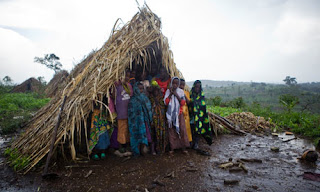 Francis Longoli, a small farmer from Kiboga district of central Uganda, is tearful: "I remember my land, three acres of coffee, many trees – mangoes and avocados. I had five acres of bananas, 10 beehives, two beautiful permanent houses. My land gave me everything. People used to call me 'omataka' – someone who owns land. Now that is no more. I am one of the poorest now," he says.
Longoli and his family of six lost everything last year when, with three months notice, the Ugandan government evicted him and thousands of others from the Mubende and Kiboga districts to make way for the UK-based New Forests Company to plant trees, to earn carbon credits and ultimately to sell the timber.
Today, the village school in Kiboga is a New Forests Company headquarters. More than 20,000 people have been made homeless and Longoli rents a small house in Lubaali village. He says he cannot go back for fear of being attacked.
"I no longer own any land. It's impossible to feed my children – they have suffered so much. Some days all they eat is porridge from maize flour. When people can't eat well their bodies become weak – there have been lots of cases of malaria and diarrhoea. Some days we don't eat anything at all," says Longoli.
Christine, a farmer in her mid-40s, who lived in Kiboga district before the evictions, says: "All our plantations were cut down – we lost the banana and cassava. We lost everything we had. They won't let us back in to look for the things we left behind."
Land tenure in Uganda is frequently disputed, with the government handing out parcels and then trying to take it back. In this case, the land was originally a government forest reserve and some of the people evicted claim they were given deeds by the Idi Amin government because their families fought for Britain in the second world war. Others say they had bought the land legally.
Their land claims were being considered by the Ugandan courts when, they allege, the army and police forced them out in several waves of violent evictions which took place up to last year.
NFC – which is 20% owned by HSBC bank and describes itself as a sustainable and socially responsible forestry company – has licenses to grow trees in Uganda, Tanzania, Mozambique, and Rwanda. It strongly denies allegations that they had any involvement in any Ugandan evictions or violence, and told Oxfam: "There were no incidences of injury, physical violence, or destruction of property during the voluntary vacation process that have been brought to the attention of NFC."
Read more:
by John Vidal
 Francis Longoli, a small farmer from Kiboga district of central Uganda, is tearful: "I remember my land, three acres of coffee, many trees – mangoes and avocados. I had five acres of bananas, 10 beehives, two beautiful permanent houses. My land gave me everything. People used to call me 'omataka' – someone who owns land. Now that is no more. I am one of the poorest now," he says.
Longoli and his family of six lost everything last year when, with three months notice, the Ugandan government evicted him and thousands of others from the Mubende and Kiboga districts to make way for the UK-based New Forests Company to plant trees, to earn carbon credits and ultimately to sell the timber.
Today, the village school in Kiboga is a New Forests Company headquarters. More than 20,000 people have been made homeless and Longoli rents a small house in Lubaali village. He says he cannot go back for fear of being attacked.
"I no longer own any land. It's impossible to feed my children – they have suffered so much. Some days all they eat is porridge from maize flour. When people can't eat well their bodies become weak – there have been lots of cases of malaria and diarrhoea. Some days we don't eat anything at all," says Longoli.
Christine, a farmer in her mid-40s, who lived in Kiboga district before the evictions, says: "All our plantations were cut down – we lost the banana and cassava. We lost everything we had. They won't let us back in to look for the things we left behind."
Land tenure in Uganda is frequently disputed, with the government handing out parcels and then trying to take it back. In this case, the land was originally a government forest reserve and some of the people evicted claim they were given deeds by the Idi Amin government because their families fought for Britain in the second world war. Others say they had bought the land legally.
Their land claims were being considered by the Ugandan courts when, they allege, the army and police forced them out in several waves of violent evictions which took place up to last year.
NFC – which is 20% owned by HSBC bank and describes itself as a sustainable and socially responsible forestry company – has licenses to grow trees in Uganda, Tanzania, Mozambique, and Rwanda. It strongly denies allegations that they had any involvement in any Ugandan evictions or violence, and told Oxfam: "There were no incidences of injury, physical violence, or destruction of property during the voluntary vacation process that have been brought to the attention of NFC."
Read more:
Physics Wobbled by Faster-Than-Light-Speed Experiments
by Uri Friedman
 Scientists at CERN, the famous Geneva-based physics lab, have just called into question one of the most hallowed equations in physics: E = MC2. Scientists, the AP explains, have clocked subatomic particles called neutrinos traveling faster than the speed of light. The BBC summarizes the magnitude of the finding, if true: "The speed of light is the Universe's ultimate speed limit, and the entirety of modern physics--as laid out in part by Albert Einstein in his theory of relativity--depends on the idea that nothing can exceed it."
Understandably, reports are using adjectives like "baffled" and "astounded" to describe the scientists. "This would be such a sensational discovery if it were true that one has to treat it extremely carefully," a theoretical physicist at CERN named John Ellis tells the AP. CERN found that a neutrino beam fired from a particle accelerator near Geneva to a lab 454 miles away in Italy traveled 60 nanoseconds faster than the speed of light, a difference that is statistically significant even with the margin of error. The lab's researchers have checked and rechecked their work and are still asking scientists in the U.S. and Japan to confirm the results.
What hangs in the balance? Oh, just the laws of nature and our understanding of the universe.
via:
 Scientists at CERN, the famous Geneva-based physics lab, have just called into question one of the most hallowed equations in physics: E = MC2. Scientists, the AP explains, have clocked subatomic particles called neutrinos traveling faster than the speed of light. The BBC summarizes the magnitude of the finding, if true: "The speed of light is the Universe's ultimate speed limit, and the entirety of modern physics--as laid out in part by Albert Einstein in his theory of relativity--depends on the idea that nothing can exceed it."
Understandably, reports are using adjectives like "baffled" and "astounded" to describe the scientists. "This would be such a sensational discovery if it were true that one has to treat it extremely carefully," a theoretical physicist at CERN named John Ellis tells the AP. CERN found that a neutrino beam fired from a particle accelerator near Geneva to a lab 454 miles away in Italy traveled 60 nanoseconds faster than the speed of light, a difference that is statistically significant even with the margin of error. The lab's researchers have checked and rechecked their work and are still asking scientists in the U.S. and Japan to confirm the results.
What hangs in the balance? Oh, just the laws of nature and our understanding of the universe.
via:

Dr. Don
 The life of a small town druggist.
by Peter Hessler
In the southwestern corner of Colorado, where the Uncompahgre Plateau descends through spruce forest and scrubland toward the Utah border, there is a region of more than four thousand square miles which has no hospitals, no department stores, and only one pharmacy. The pharmacist is Don Colcord, who lives in the town of Nucla. More than a century ago, Nucla was founded by idealists who hoped their community would become the “center of Socialistic government for the world.” But these days it feels like the edge of the earth. Highway 97 dead-ends at the top of Main Street; the population is around seven hundred and falling. The nearest traffic light is an hour and a half away. When old ranching couples drive their pickups into Nucla, the wives leave the passenger’s side empty and sit in the middle of the front seat, close enough to touch their husbands. It’s as if something about the landscape—those endless hills, that vacant sky—makes a person appreciate the intimacy of a Ford F-150 cab.
Don Colcord has owned Nucla’s Apothecary Shoppe for more than thirty years. In the past, such stores played a key role in American rural health care, and this region had three more pharmacies, but all of them have closed. Some people drive eighty miles just to visit the Apothecary Shoppe. It consists of a few rows of grocery shelves, a gift-card rack, a Pepsi fountain, and a diabetes section, which is decorated with the mounted heads of two mule deer and an antelope. Next to the game heads is the pharmacist’s counter. Customers don’t line up at a discreet distance, the way city folk do; in Nucla they crowd the counter and talk loudly about health problems.
“What have you heard about sticking your head in a beehive?” This on a Tuesday afternoon, from a heavyset man suffering from arthritis and an acute desire to find low-cost treatment.
“It’s been used, progressive bee-sting therapy,” Don says. “When you get stung, your body produces cortisol. It reduces swelling, but it goes away. And you don’t know when you’re going to have that one reaction and go into anaphylactic shock and maybe drop dead. It’s highly risky. You don’t know where that bee has been. You don’t know what proteins it’s been getting.”
“You’re a helpful guy. Thank you.”
“I would recommend hyaluronic acid. It’s kind of expensive, about twenty-five dollars a month. But it works for some people. They make it out of rooster combs.”
Somebody else asks about decongestants; a young woman inquires about the risk of birth defects while using a collagen stimulator. A preacher from the Abundant Life Church asks about drugs for a paralyzed vocal cord. (“When I do a sermon, it needs to last for thirty minutes.”) Others stop by just to chat. Don, in addition to being the only pharmacist, is probably the most talkative and friendly person within four thousand square miles. The first time I visited his counter, he asked about my family, and I mentioned my newborn twin daughters. He filled a jar with thick brown ointment that he had recently compounded. “It’s tincture of benzoin,” he said. “Rodeo cowboys use it while riding a bull or a bronc. They put it on their hands; it makes the hands tacky. It’s a respiratory stimulant, mostly used in wound care. You won’t find anything better for diaper rash.”

Microsoft Introduces "Rightwingnuts" Font
by Jeanette DeMain
In a bold move, Microsoft today unveiled a font that will now be available on all of its new computers, as well as being made available free of charge for uploading to existing PCs.
A Microsoft spokesman explained that, "In an effort help our more conservative Windows users save time when writing to activist judges, overpaid government workers, leftist media outlets, misguided liberal relatives, and secretly Muslim and/or Communist elected officials, the new Rightwingnuts font will provide an unmistakable way to get their point across, as well as offering extra assistance with spelling, grammar, and punctuation."
"Now, in addition to the old tried-and-true Times New Roman, Tahoma, and Arial, and the wild-and-wacky Chiller, Stencil, and Magneto fonts, Rightwingnuts gives true patriots a way to quickly and forcefully make an impact on the, and I'm using their words now, latte-drinking, Prius-driving, baby-killing, gay-sexing, Face-Spacing, class-warfare-waging denizens of nanny-state America."
"Rightwingnuts font is, basically, just really big and really dark. All the time. No more having to use the Caps Lock key, a separate command for bolding, or changing the font size. This is the font equivalent of shouting, 'Get off my lawn!' to that kid with the tattoos and pierced ears. We think it will be a real hit with those on Medicare who want to keep the government out of our health care system, those who think that people like Lloyd Blankfein already pay too much in taxes, and those who think George Soros sacrifices goats to Beelzebub."
Other features of Rightwingnuts include:
via:
In a bold move, Microsoft today unveiled a font that will now be available on all of its new computers, as well as being made available free of charge for uploading to existing PCs.
A Microsoft spokesman explained that, "In an effort help our more conservative Windows users save time when writing to activist judges, overpaid government workers, leftist media outlets, misguided liberal relatives, and secretly Muslim and/or Communist elected officials, the new Rightwingnuts font will provide an unmistakable way to get their point across, as well as offering extra assistance with spelling, grammar, and punctuation."
"Now, in addition to the old tried-and-true Times New Roman, Tahoma, and Arial, and the wild-and-wacky Chiller, Stencil, and Magneto fonts, Rightwingnuts gives true patriots a way to quickly and forcefully make an impact on the, and I'm using their words now, latte-drinking, Prius-driving, baby-killing, gay-sexing, Face-Spacing, class-warfare-waging denizens of nanny-state America."
"Rightwingnuts font is, basically, just really big and really dark. All the time. No more having to use the Caps Lock key, a separate command for bolding, or changing the font size. This is the font equivalent of shouting, 'Get off my lawn!' to that kid with the tattoos and pierced ears. We think it will be a real hit with those on Medicare who want to keep the government out of our health care system, those who think that people like Lloyd Blankfein already pay too much in taxes, and those who think George Soros sacrifices goats to Beelzebub."
Other features of Rightwingnuts include:
- Three exclamation points for every one the user types.
- Typing the letters "D-e-m" automatically results in "Democrap." Likewise, typing the letters "l-i-b" automatically results in "libtard," thus saving thousands of keystrokes per week.
- The names of any Democratic elected officials will be underlined in red. When you run a spell check, the only offered alternative will be "Fascist."
- If you type in a temperature, it is automatically lowered to prove that global warming doesn't exist. (Warning: Using Rightwingnuts for recipes may result in undercooked food and subsequent death.)
- Whenever the letter "O" appears in "Obama," it will have awesome little devil horns and a tail on it.
- In Rightwingnuts, the words "Socialist," "Communist," and "Nazi" all mean exactly the same thing.
- Names like "Reagan," "Bush," "Limbaugh," and "Hannity" automatically turn Republican red and, when you hold your cursor over them, angels sing.
- Frownie face always appears after the words "tax," "spend," "regulation," "union," and "Michael Moore."
- If you ever deviate from the talking points, a cheery little paper clip will appear in the corner and ask if you really mean that. If you persist, the paper clip will actually hop out of the computer and stab you in the eye. (Clippy very angry!)
via:
Jose Padilla
by Glenn Greenwald
 The story of Jose Padilla, continuing through the events of yesterday, expresses so much of the true nature of the War on Terror and especially America's justice system. In 2002, the American citizen was arrested at Chicago's O'Hare Airport, publicly labeled by John Ashcroft as The Dirty Bomber, and then imprisoned for the next three years on U.S. soil as an "enemy combatant" without charges of any kind, and denied all contact with the outside world, including even a lawyer. During his lawless incarceration, he was kept not just in extreme solitary confinement but extreme sensory deprivation as well, and was abused and tortured to the point of severe and probably permanent mental incapacity (Bush lawyers told a court that they were unable to produce videos of Padilla's interrogations because those videos were mysteriously and tragically "lost").
Needless to say, none of the government officials responsible for this abuse of a U.S. citizen on American soil has been held accountable in any way. That's because President Obama decreed that Bush officials shall not be criminally investigated for War on Terror crimes, while his Justice Department vigorously defended John Yoo, Donald Rumsfeld and other responsible functionaries in civil suits brought by Padilla seeking damages for what was done to him.
As usual, the Obama DOJ cited national security imperatives and sweeping theories of presidential power to demand that Executive Branch officials be fully shielded from judicial scrutiny (i.e., shielded from the rule of law) for their illegal acts (the Obama DOJ: "Here, where Padilla's damage claims directly relate, inter alia, to the President’s war powers, including whether and when a person captured in this country during an armed conflict can be held in military detention under the laws of war, it would be particularly inappropriate for this Court to unnecessarily reach the merits of the constitutional claims" (emphasis added)). With one rare exception, federal courts, as usual, meekly complied. Thus, a full-scale shield of immunity has been constructed around the high-level government officials who put Padilla in a hermetically sealed cage with no charges and then abused and tortured him for years.
The treatment Padilla has received in the justice system is, needless to say, the polar opposite of that enjoyed by these political elites. Literally days before it was required to justify to the U.S. Supreme Court how it could imprison an American citizen for years without charges or access to a lawyer, the Bush administration suddenly indicted Padilla -- on charges unrelated to, and far less serious than, the accusation that he was A Dirty Bomber -- and then successfully convinced the Supreme Court to refuse to decide the legality of Padilla's imprisonment on the grounds of "mootness" (he's no longer being held without charges so there's nothing to decide).
At Padilla's trial, the judge excluded all evidence of the abuse to which he was subjected and even admitted statements he made while in custody before he was Mirandized. Unsurprisingly, Padilla was convicted on charges of "supporting Islamic terrorism overseas" -- but not any actual Terrorist plots ("The government’s chief evidence was an application form that government prosecutors said Mr. Padilla, 36, filled out to attend an Al Qaeda training camp in Afghanistan in 2000") -- and then sentenced to 17 years in prison, all above and beyond the five years he was imprisoned with no due process.
Not content with what was done to Padilla, the Bush DOJ -- and then the Obama DOJ -- contested the sentence on appeal, insisting that it was too lenient; Padilla also appealed, arguing that the trial court made numerous errors in excluding his evidence while allowing the Government's. Yesterday, a federal appeals panel of the 11th Circuit issued a ruling, by a 2-1 vote, rejecting each and every one of Padilla's arguments. It then took the very unusual step of vacating the 17-year-sentence imposed by the trial court as too lenient and, in effect, ordered the trial judge to impose a substantially harsher prison term:
Read more:
AP Photo/J. Pat Carter
Wednesday, September 21, 2011



Beyond Oktoberfest
by Mark Garrison
Oktoberfest began on Saturday, Sept. 17, which means tourist hordes have begun staggering through Munich hoisting 9-euro beers to wash down pretzels the size of infants, weisswurst, and a menagerie of roasted meats. They'll be served by locals diligently playing along in dirndls and lederhosen. Elsewhere in the world, bartenders will try to cash in by offering up Oktoberfest-themed food and beer, or poor facsimiles of the like. Corporate brewers will lend a hand, supplying crates of decorations, gamely attempting to link their flavorless macrobrews with hundreds of years of German beer craftsmanship.
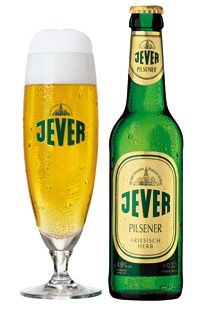 Oktoberfest is a bad thing for good beer.
Don't get me wrong, there will be some world-class beer served in the overstuffed Oktoberfest tents (though most of the tipsy tourists will be too wasted to notice). But every drop of it will be Munich-style beer. The enduring prominence of Oktoberfest in the global imagination means many outside Germany tend to think what happens for a few weeks on a field in southern Bavaria represents the nation's finest brewing accomplishments. It's as if everyone in Germany thought American culture and cuisine begins and ends with the Iowa State Fair.
You can see this pernicious misimpression at work in German-themed bars around the world. My colleagues in Slate's New York offices need only walk a few blocks to a West Village bar called Lederhosen, which is stuffed from floor to ceiling with Bavarian kitsch. Many "German" bars abroad are really Bavarian, with taps that rarely venture beyond the six major Munich brewers. This tendency to equate Germany with Bavaria is a shame, because Germany is a diverse country with 81 million people spread across distinct regions with distinct cuisines, cultures, and brewing traditions.
Many Germans proudly declare that they have never been and will never go to Oktoberfest. (Though it should be noted that for all the grief some Germans give Oktoberfest, they don't discourage foreigners from checking it out. Fierce regional rivalries can be set aside in the common interest of a tourism-revenue bonanza.) Being equated with Oktoberfest drives the rest of Germany nuts. It doesn't help that Oktoberfest is just one of a long list of grievances Germans have with Munich, from the region's strict social conservatism to Bayern Muenchen, the local soccer powerhouse with a reputation for using its deep pockets to steal the best players from other teams.
So unless you're actually celebrating Oktoberfest in Bavaria this year, why not make a point of enjoying everything else Germany has to offer by drinking the products of breweries far from the festival's beer tents? There will be plenty of time later to sample the great wheat beers and lagers coming from Munich.
Below are five great German beers to get you started. The list is absolutely not intended to crown these individual beers as champions of their particular style. Some may very well be best in class, but I chose these beers because they are high quality and accessible outside Germany.
Read more:
Oktoberfest began on Saturday, Sept. 17, which means tourist hordes have begun staggering through Munich hoisting 9-euro beers to wash down pretzels the size of infants, weisswurst, and a menagerie of roasted meats. They'll be served by locals diligently playing along in dirndls and lederhosen. Elsewhere in the world, bartenders will try to cash in by offering up Oktoberfest-themed food and beer, or poor facsimiles of the like. Corporate brewers will lend a hand, supplying crates of decorations, gamely attempting to link their flavorless macrobrews with hundreds of years of German beer craftsmanship.
Oktoberfest is a bad thing for good beer.Don't get me wrong, there will be some world-class beer served in the overstuffed Oktoberfest tents (though most of the tipsy tourists will be too wasted to notice). But every drop of it will be Munich-style beer. The enduring prominence of Oktoberfest in the global imagination means many outside Germany tend to think what happens for a few weeks on a field in southern Bavaria represents the nation's finest brewing accomplishments. It's as if everyone in Germany thought American culture and cuisine begins and ends with the Iowa State Fair.
You can see this pernicious misimpression at work in German-themed bars around the world. My colleagues in Slate's New York offices need only walk a few blocks to a West Village bar called Lederhosen, which is stuffed from floor to ceiling with Bavarian kitsch. Many "German" bars abroad are really Bavarian, with taps that rarely venture beyond the six major Munich brewers. This tendency to equate Germany with Bavaria is a shame, because Germany is a diverse country with 81 million people spread across distinct regions with distinct cuisines, cultures, and brewing traditions.
Many Germans proudly declare that they have never been and will never go to Oktoberfest. (Though it should be noted that for all the grief some Germans give Oktoberfest, they don't discourage foreigners from checking it out. Fierce regional rivalries can be set aside in the common interest of a tourism-revenue bonanza.) Being equated with Oktoberfest drives the rest of Germany nuts. It doesn't help that Oktoberfest is just one of a long list of grievances Germans have with Munich, from the region's strict social conservatism to Bayern Muenchen, the local soccer powerhouse with a reputation for using its deep pockets to steal the best players from other teams.
So unless you're actually celebrating Oktoberfest in Bavaria this year, why not make a point of enjoying everything else Germany has to offer by drinking the products of breweries far from the festival's beer tents? There will be plenty of time later to sample the great wheat beers and lagers coming from Munich.
Below are five great German beers to get you started. The list is absolutely not intended to crown these individual beers as champions of their particular style. Some may very well be best in class, but I chose these beers because they are high quality and accessible outside Germany.
Read more:
How To Prevent a Second Great Depression
by Nouriel Roubini, via Project Syndicate
 The latest economic data suggest that recession is returning to most advanced economies, with financial markets now reaching levels of stress unseen since the collapse of Lehman Bros. in 2008. The risks of an economic and financial crisis even worse than the previous one—now involving not just the private sector, but also near-insolvent governments—are significant. So, what can be done to minimize the fallout of another economic contraction and prevent a deeper depression and financial meltdown?
First, we must accept that austerity measures, necessary to avoid a fiscal train wreck, have recessionary effects on output. So, if countries in the Eurozone's periphery such as Greece or Portugal are forced to undertake fiscal austerity, countries able to provide short-term stimulus should do so and postpone their own austerity efforts. These countries include the United States, the United Kingdom, Germany, the core of the Eurozone, and Japan. Infrastructure banks that finance needed public infrastructure should be created as well.
Second, while monetary policy has limited impact when the problems are excessive debt and insolvency rather than illiquidity, credit easing, rather than just quantitative easing, can be helpful. The European Central Bank should reverse its mistaken decision to hike interest rates. More monetary and credit easing is also required for the U.S. Federal Reserve, the Bank of Japan, the Bank of England, and the Swiss National Bank. Inflation will soon be the last problem that central banks will fear, as renewed slack in goods, labor, real estate, and commodity markets feeds disinflationary pressures.
Third, to restore credit growth, Eurozone banks and banking systems that are undercapitalized should be strengthened with public financing in a European Union-wide program. To avoid an additional credit crunch as banks deleverage, banks should be given some short-term forbearance on capital and liquidity requirements. Also, since the U.S. and EU financial systems remain unlikely to provide credit to small and medium-size enterprises, direct government provision of credit to solvent but illiquid SMEs is essential.
Read more:
"Americans [ed. and politicians everywhere] can always be counted on to do the right thing...after they have exhausted all other possibilities." -
-- Winston Churchill
 The latest economic data suggest that recession is returning to most advanced economies, with financial markets now reaching levels of stress unseen since the collapse of Lehman Bros. in 2008. The risks of an economic and financial crisis even worse than the previous one—now involving not just the private sector, but also near-insolvent governments—are significant. So, what can be done to minimize the fallout of another economic contraction and prevent a deeper depression and financial meltdown?
First, we must accept that austerity measures, necessary to avoid a fiscal train wreck, have recessionary effects on output. So, if countries in the Eurozone's periphery such as Greece or Portugal are forced to undertake fiscal austerity, countries able to provide short-term stimulus should do so and postpone their own austerity efforts. These countries include the United States, the United Kingdom, Germany, the core of the Eurozone, and Japan. Infrastructure banks that finance needed public infrastructure should be created as well.
Second, while monetary policy has limited impact when the problems are excessive debt and insolvency rather than illiquidity, credit easing, rather than just quantitative easing, can be helpful. The European Central Bank should reverse its mistaken decision to hike interest rates. More monetary and credit easing is also required for the U.S. Federal Reserve, the Bank of Japan, the Bank of England, and the Swiss National Bank. Inflation will soon be the last problem that central banks will fear, as renewed slack in goods, labor, real estate, and commodity markets feeds disinflationary pressures.
Third, to restore credit growth, Eurozone banks and banking systems that are undercapitalized should be strengthened with public financing in a European Union-wide program. To avoid an additional credit crunch as banks deleverage, banks should be given some short-term forbearance on capital and liquidity requirements. Also, since the U.S. and EU financial systems remain unlikely to provide credit to small and medium-size enterprises, direct government provision of credit to solvent but illiquid SMEs is essential.
Read more:
"Americans [ed. and politicians everywhere] can always be counted on to do the right thing...after they have exhausted all other possibilities." -
-- Winston Churchill


Private Jets, at Public Prices

Flying in a private jet may not be as far out of reach as you think. Though it’s still not cheap, prices are rivaling first- and business-class tickets — and even, occasionally, coach — thanks in part to new Web sites, social media and a greater willingness by charter companies and private jet brokers to negotiate in an era of high fuel prices.
Here’s how you can land a seat on a private plane for less.
Search for last-minute, one-way discounts: Air Partner, a charter broker based in London, introduced emptysectors.com last year, to help fill so-called empty legs (when the aircraft flies without passengers back to base or between jobs) at discounted rates. Travelers can view which flights are available online but must call for pricing. Other brokers and private jet operators like JetSuite also make empty legs available to individual travelers, so it can pay to shop around.
“The dirty little secret of the industry is, about a third of our flights are empty,” said Alex Wilcox, chief executive of JetSuite, based in Southern California, which recently began posting last-minute $499 deals on Facebook for empty legs on the company’s four-passenger Embraer Phenom aircraft. “Say a Gulfstream pulls into San Francisco and is going back to Vegas empty,” he said. “A few years ago, if you were to say, ‘if I give you $500 will you take me and my family?’ you would get laughed at.” But the recession changed such attitudes, Mr. Wilcox said. Now, he said, more companies are saying, “Sure, it’ll help pay for the gas.”
But empty-leg flights involve a bit of a gamble. If the private jet owner’s arrangements change (say, the client they were planning to meet in Miami cancels at the last minute), you’re out of luck.
You also need to be flexible to get the best deals. Last month, Mike Lewis, chief executive of a property management company in Los Angeles, was able to score one of JetSuite’s $499 Facebook deals for himself and his girfriend for a last-minute empty leg on a four-passenger plane to Tucson. It was just six hours between the time he booked the flight and takeoff. Still, he said, the deal was so good — at roughly the same cost as he paid to fly back in coach on US Airways — without connections, security hassles and time lost waiting around at the airport, that he hopes to snap up similar bargains in the future.
“For $500 it’s a no-brainer to me,” he said.
Read more:
Subscribe to:
Posts (Atom)