The Misconception: You do nice things for the people you like and bad things to the people you hate.
The Truth: You grow to like people for whom you do nice things and hate people you harm.

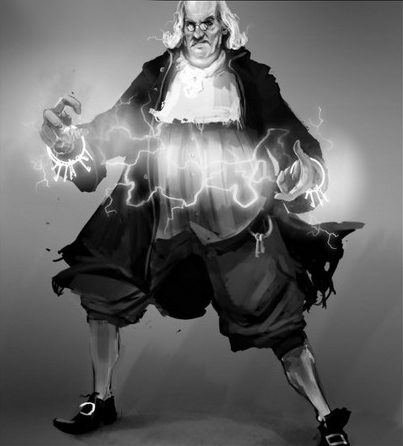
Benjamin Franklin knew how to deal with haters.
Born in 1706 as the eighth of 17 children to a Massachusetts soap and candlestick maker, the chances Benjamin would go on to become a gentleman, scholar, scientist, statesman, musician, author, publisher and all-around general bad-ass were astronomically low, yet he did just that and more because he was a master of the game of personal politics.
Like many people full of drive and intelligence born into a low station, Franklin developed strong people skills and social powers. All else denied, the analytical mind will pick apart behavior, and Franklin became adroit at human relations. From an early age, he was a talker and a schemer – a man capable of guile, cunning and persuasive charm. He stockpiled a cache of cajolative secret weapons, one of which was the Benjamin Franklin Effect, a tool as useful today as it was in the 1730s and still just as counterintuitive. To understand it, let’s first rewind back to 1706.
Franklin’s prospects were dim. With 17 children, Josiah and Abiah Franklin could only afford two years of schooling for Benjamin. Instead, they made him work, and when he was 12 he became an apprentice to his brother James who was a printer in Boston. The printing business gave Benjamin the opportunity to read books and pamphlets. It was as if Ben Franklin was the one kid in the neighborhood who had access to the Internet. He read everything, and taught himself every skill and discipline one could absorb from text.
At 17, Franklin left Boston and started his own printing business In Philadelphia. At age 21, he formed a “club of mutual improvement” called the Junto. It was a grand scheme to gobble up knowledge. He invited working-class polymaths like himself who wanted to experiment in 1700s lifestyle design the chance to pool together their books and trade thoughts and knowledge of the world on a regular basis. They wrote and recited essays, held debates, and devised ways to acquire currency. Franklin used the Junto like a private consulting firm, a think tank, and he bounced ideas off of them so he could write and print better pamphlets. Franklin eventually founded the first subscription library in America and wrote it would make “the common tradesman and farmers as intelligent as most gentlemen from other countries,” not to mention, give him access to whatever books he wanted to buy. Genius.
By the 1730s Franklin was riding down an information superhighway of his own construction, and the constant stream of information made him a savvy politician in Philadelphia. A celebrity and an entrepreneur who printed both a newspaper and an almanac, Franklin had collected a few enemies by the time he ran for the position of clerk of the general assembly, but Franklin knew how to deal with haters.
As clerk, he could step into a waterfall of data coming out of the nascent government. He would record and print public records, bills, vote totals and other official documents. He would also make a fortune literally printing the state’s paper money. He won the race, but the next election wasn’t going to be as easy. Franklin’s autobiography never mentions this guy’s name, but according to the book when Franklin ran for his second term as clerk, one of his colleagues delivered a long speech to the legislature lambasting Franklin. Franklin still won his second term, but this guy truly pissed him off. In addition, this man was “a gentleman of fortune and education” who Franklin believed would one day become a person of great influence in the government. So, Franklin knew he had to be dealt with, and thus he launched his human behavior stealth bomber.
Franklin set out to turn his hater into a fan, but he wanted to do it without “paying any servile respect to him.” Franklin’s reputation as a book collector and library founder gave him a reputation as a man of discerning literary tastes, so Franklin sent a letter to the hater asking if he could borrow a selection from the his library, one which was a “very scarce and curious book.” The rival, flattered, sent it right away. Franklin sent it back a week later with a thank you note. Mission accomplished.
The next time the legislature met, the man approached Franklin and spoke to him in person for the first time. Franklin said the hater “ever after manifested a readiness to serve me on all occasions, so that we became great friends, and our friendship continued to his death.”
What exactly happened here? How can asking for a favor turn a hater into a fan? How can requesting kindness cause a person to change his or her opinion about you? The answer to what generates The Benjamin Franklin Effect is the answer to much more about why you do what you do.
***
At the lowest level, behavior-into-attitude conversion begins with impression management theory which says you present to your peers the person you wish to be. You engage in something economists call signaling by buying and displaying to your peers the sorts of things which give you social capital. If you live in the Deep South you might buy a high-rise pickup and a set of truck nuts. If you live in San Fransisco you might buy a Prius and a bike rack. Whatever are the easiest to obtain, loudest forms of the ideals you aspire to portray become the things you own, like bumper stickers signaling to the world you are in one group and not another. Those things then influence you to become the sort of person who owns them.
As a primate, you are keen to social cues which portend your possible ostracism from an in-group. In the wild, banishment equals death. So, it follows you work to feel included because the feeling of being left out, being the last to know, being the only one not invited to the party is a deep and severe slice into your emotional core. Anxiety over being ostracized, over being an outsider has driven the behavior of billions for millions of years. Impression management theory says you are always thinking about how you appear to others, even when there are no others around. In the absence of onlookers, deep in your mind, a mirror reflects back that which you have done, and when you see a person who has behaved in a way which could get you booted from your in-group, the anxiety drives you to seek a re-alignment. But, which came first? Your display or your belief? As a professional, do you feel compelled to wear a suit, or after donning a suit do you conduct yourself in a professional manner? Do you vote Democrat because you champion social programs, or do you champion social programs because you voted Democrat? The research says the latter in both cases. When you become a member of a group, or the fan of a genre, or the user of a product – those things have more influence on your attitudes than your attitudes have on them, but why?
Read more: