Tuesday, March 5, 2013

My Father, the Smoker
 It was in the month of May, by a hospital bed in Columbus, Ohio, where my father was recovering from what was supposed to have been a quintuple bypass operation but became, on the surgeon's actually seeing the heart, a sextuple. His face, my father's face, was pale. He was thinner than I had seen him in years. A stuffed bear that the nurses had loaned him lay crooked in his lap; they told him to hug it whenever he stood or sat down, to keep the stitches in his chest from tearing. I complimented him on the bear when I walked in and he gave me one of his looks, dropping his jaw and crossing his eyes as he rolled them back in their sockets. It was a look he assumed in all kinds of situations but that always meant the same thing: can you believe this? (...)
My father was desperately addicted to cigarettes. It is hard for me to think about him, to remember him, without a ghostly neural whiff of tobacco smoke registering in my nostrils, and when I have trouble seeing him clearly, I can bring him into focus by summoning the yellowed skin on the middle and index fingers of his left hand, or the way the hairs of his reddish brown moustache would brush the filter of the cigarette as he drew it in to inhale, or the way he pursed his lips and tucked in his chin when exhaling through his nose, which he made a point of doing in company.
About once a year he would decide to stop, but it was rare he could go a full day without a "puff" and as long as he was sneaking puffs, the abyss of total regression was only a black mood away. He tried to keep his failures a secret, even allowing us to congratulate him for having gone two days or a week without smoking, when in fact the campaign had ended within hours, as I realise now with adulthood's slightly less gullible eye: the long walks, "to relax", from which he would come back chewing gum, or the thing he would be stuffing into his pocket as he left the store. Sooner or later he would tire of the effort involved in these shams and simply pull out a pack while we sat in the living room, all of us, and there would be a moment, which grew familiar over time, when we would be watching him sidelong, looks of disappointment barely contained in our faces, and he would be staring ahead at the television, a look of shame barely contained in his, and then, just as the tension neared the point of someone speaking, he would light the cigarette and that would be it. We would go back to our books.
 The trip to the hospital – or, rather, the vow he made when he got home, that enough was finally enough – seemed different. Before that afternoon his body had been weirdly impervious to insult. This was a man who never got a cold, and who was told by a radiologist, after 30 years of constant, heavy smoking, that his lungs were "pink", which almost made my mother cry with frustration. But now the whole neighbourhood had seen him being loaded into the ambulance, and the enforced silence surrounding the question of his health – which, if it could only be maintained, would keep consequence at bay – had been broken. He lasted four or five days.
The thing they say about a man like my father, and a great many sportswriters match the description, is that he "did not take care of himself". I cannot think of more than one or two conventionally healthy things that he did in my lifetime, unless I were to count prodigious napping and laughter. In addition to the chain-smoking, he drank a lot, rarely ordering beer except by the pitcher and keeping an oft-replaced bottle of whiskey on top of the fridge, though he showed its effects – when he showed them at all – in only the most good-natured way. He also ate badly and was heavy, at times very heavy, though strangely, especially taking into consideration a total lack of exercise, he retained all his life the thin legs and powerful calves of a runner. He was one of those people who are not meant to be fat, and I think it took him by surprise when his body at last began to give up: it had served him so well.
Anyone with a mother or father who possesses fatalistic habits knows that the children of such parents endure a special torture during their school years, when the teachers unspool those horror stories of what neglect of the body can do; it is a kind of child abuse, almost, this fear. I recall as a boy of five or six creeping into my parents' room on Sunday mornings, when he would sleep late, and standing by the bed, staring at his shape under the sheets for the longest time to be sure he was breathing; a few times, or more than a few times, I dreamed that he was dead and went running in, convinced it was true.
One night I lay in my own bed and concentrated as hard as I could, believing, under the influence of some forgotten work of popular pseudoscience, that if I did so, the age at which he would die would be revealed to me: six and three were the numerals that floated before my eyelids. That seemed far enough into the future and, strange to say, until the day he died, eight years short of the magic number, it held a certain comfort.
We pleaded with him, of course, to treat himself better – though always with trepidation, since the subject annoyed him and, if pressed, could send him into a rage. Most of the time we did not even get to the subject, he was so adept at heading it off with a joke: when a man who is quite visibly at risk of heart attack, stroke and cancer crushes out what is left of a six-inch mentholated cigarette before getting to work on a lethal fried meal ("a hearty repast" as he would have called it), clinks his knife and fork together, winks at you, and says, with a brogue, "Heart smart!" you are disarmed.
And still we would ask him to cut back, to come for a walk, to order the salad. I asked him, my brother and sisters asked him, my mother practically begged him until they divorced.
His own father had died young, of a heart attack; his mother had died of lung cancer when I was a child. But it was no use. He had his destiny. He had his habits, no matter how suicidal, and that he change them was not among the things we had a right to ask.
by John Jerimiah Sullivan, Guardian | Read more:
Photograph: Frank and Helena/Gallery Stock, and John Jerimiah Sullivan


Up All Night
Nathaniel Kleitman, known as the “father of modern sleep research,” was born in 1895 in Bessarabia—now Moldova—and spent much of his youth on the run. First, pogroms drove him to Palestine; then the First World War chased him to the United States. At the age of twenty, he landed in New York penniless; by twenty-eight, he’d worked his way through City College and earned a Ph.D. from the University of Chicago. Soon after, he joined the faculty there. An early sponsor of Kleitman’s sleep research was the Wander Company, which manufactured Ovaltine and hoped to promote it as a remedy for insomnia.
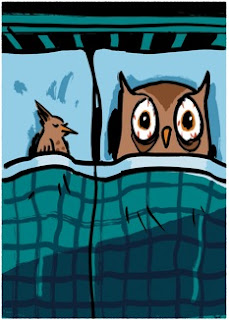 Until Kleitman came along, sleep was, as one commentator has put it, “a huge blind spot in the science of physiology.” No one bothered to study it because it was defined by what it wasn’t—sleep was a state of not being awake and, at the same time, of not being comatose or dead. (It’s unclear what exactly attracted Kleitman to this academically marginal topic, but it has been suggested that it fitted with his own marginalized background.)
In one of Kleitman’s first experiments, he kept half a dozen young men awake for days at a stretch, then ran them through a battery of physical and psychological tests. Frequently, he used himself as a subject. As a participant in the sleep-deprivation experiment, Kleitman stayed awake longer than anyone else—a hundred and fifteen hours straight. At one point, exhausted and apparently hallucinating, he declared, apropos of nothing in particular, “It is because they are against the system.” (Asked what he meant, he said he’d been under the impression that he was “having a heated argument with the observer on the subject of labor unions.”) In another self-administered experiment, Kleitman spent six weeks underground, in Mammoth Cave, Kentucky, trying to live according to a twenty-eight-hour day. (He found that he could not.)
In the early nineteen-fifties, Kleitman’s research was sponsored in part by Swift, the meatpacking company, which was interested in finding out whether feeding babies a high-protein diet would make them sleep more soundly. It was at this point that he—or, really, one of his graduate students—stumbled onto a great discovery. Casting around for a dissertation topic, the student, Eugene Aserinsky, decided to hook sleepers up to an early version of an electroencephalogram machine, which scribbled across half a mile of paper each night. In the process, Aserinsky noticed that several times each night the sleepers went through periods when their eyes darted wildly back and forth. Kleitman insisted that the experiment be repeated yet again, this time on his daughter, Esther. In 1953, he and Aserinsky introduced the world to “rapid eye movement,” or rem sleep. Another of Kleitman’s graduate students, William C. Dement, now a professor of psychiatry at the Stanford medical school, has described this as the year that “the study of sleep became a true scientific field.”
The discovery of rem sleep led to the elaboration of a whole taxonomy of sleep. In Stage 1, the brain emits what are known as theta waves, which are slower and more regular than the waves emitted by a brain that’s awake; in Stage 3, it emits delta waves, which are even slower and have a much higher amplitude. (A person can be woken from Stage 1 sleep by a slight noise; by Stage 3, he might sleep through a loud crash.) Primates, marine mammals, birds, even fish have their own sleep patterns. Mouse lemurs, from Madagascar, snooze for more than fifteen hours a day, but only an hour of this is rem sleep. Bottlenose dolphins sleep with half their brains; this prevents them from drowning. Thrushes catch up on sleep by taking “catnaps” of less than thirty seconds apiece.
New technologies have made the study of sleep cheaper, easier, and less intrusive. In 2003, one expert in the field announced the “dawn of the golden age of sleep research.” Since then, hundreds, perhaps thousands, of academic papers have been written on topics ranging from “sleep problems among Chinese school-aged children” to the “sleep behavior of the wild black rhinoceros.” Currently, in the United States alone, more than two thousand sleep clinics are in operation. All of which raises the question: If this is sleep research’s golden age, then why are we all so tired?
by Elizabeth Kolbert, New Yorker | Read more:
 Until Kleitman came along, sleep was, as one commentator has put it, “a huge blind spot in the science of physiology.” No one bothered to study it because it was defined by what it wasn’t—sleep was a state of not being awake and, at the same time, of not being comatose or dead. (It’s unclear what exactly attracted Kleitman to this academically marginal topic, but it has been suggested that it fitted with his own marginalized background.)
In one of Kleitman’s first experiments, he kept half a dozen young men awake for days at a stretch, then ran them through a battery of physical and psychological tests. Frequently, he used himself as a subject. As a participant in the sleep-deprivation experiment, Kleitman stayed awake longer than anyone else—a hundred and fifteen hours straight. At one point, exhausted and apparently hallucinating, he declared, apropos of nothing in particular, “It is because they are against the system.” (Asked what he meant, he said he’d been under the impression that he was “having a heated argument with the observer on the subject of labor unions.”) In another self-administered experiment, Kleitman spent six weeks underground, in Mammoth Cave, Kentucky, trying to live according to a twenty-eight-hour day. (He found that he could not.)
In the early nineteen-fifties, Kleitman’s research was sponsored in part by Swift, the meatpacking company, which was interested in finding out whether feeding babies a high-protein diet would make them sleep more soundly. It was at this point that he—or, really, one of his graduate students—stumbled onto a great discovery. Casting around for a dissertation topic, the student, Eugene Aserinsky, decided to hook sleepers up to an early version of an electroencephalogram machine, which scribbled across half a mile of paper each night. In the process, Aserinsky noticed that several times each night the sleepers went through periods when their eyes darted wildly back and forth. Kleitman insisted that the experiment be repeated yet again, this time on his daughter, Esther. In 1953, he and Aserinsky introduced the world to “rapid eye movement,” or rem sleep. Another of Kleitman’s graduate students, William C. Dement, now a professor of psychiatry at the Stanford medical school, has described this as the year that “the study of sleep became a true scientific field.”
The discovery of rem sleep led to the elaboration of a whole taxonomy of sleep. In Stage 1, the brain emits what are known as theta waves, which are slower and more regular than the waves emitted by a brain that’s awake; in Stage 3, it emits delta waves, which are even slower and have a much higher amplitude. (A person can be woken from Stage 1 sleep by a slight noise; by Stage 3, he might sleep through a loud crash.) Primates, marine mammals, birds, even fish have their own sleep patterns. Mouse lemurs, from Madagascar, snooze for more than fifteen hours a day, but only an hour of this is rem sleep. Bottlenose dolphins sleep with half their brains; this prevents them from drowning. Thrushes catch up on sleep by taking “catnaps” of less than thirty seconds apiece.
New technologies have made the study of sleep cheaper, easier, and less intrusive. In 2003, one expert in the field announced the “dawn of the golden age of sleep research.” Since then, hundreds, perhaps thousands, of academic papers have been written on topics ranging from “sleep problems among Chinese school-aged children” to the “sleep behavior of the wild black rhinoceros.” Currently, in the United States alone, more than two thousand sleep clinics are in operation. All of which raises the question: If this is sleep research’s golden age, then why are we all so tired?
by Elizabeth Kolbert, New Yorker | Read more:
Illustration by Nishant Choksi.

Google Debuts 'Art Talks' Series

Find yourself musing about Mona Lisa's mysterious smile? Google is debuting "Art Talks," a new online series that sheds insight into the stories behind famous masterpieces and artists.
The Internet giant announced its creative venture, which viewers can access via Hangouts on Air on Google Art Project's Google+ page, Monday.
Art Talks will feature curators, museum directors, historians and educators who will effectively act as gallery guides, providing an in-depth view of various artworks. Following its launch on March 6 at 8 p.m. ET from New York City's Museum of Modern Art, the series will continue taking place every month. For its inaugural talk, Deborah Howes, MoMA's director of digital learning, will explain how to teach art online.
The next talk, on depictions of the female nude, will be from the National Gallery in London on March 20. Future talks are slated to include institutions such as the Metropolitan Museum of Art, the Museum of Contemporary Art in Los Angeles, the Museo Nacional de Arte in Mexico and the Museum of Islamic Art in Qatar.
"We hope that Art Talks is the next step in bringing art to your armchair, wherever you are in the world, with just a click of a button," Google Cultural Institute's Lucy Schwartz said in a blog post.
by Anita Li, Mashable | Read more:
Image: Google


Step Inside the Real World of Compulsive Hoarders

Traveling a little farther down the hallway would have brought you to the common space that Shuer shared with his two roommates—a space that they had come to call "the museum room." In addition to Shuer's extensive collection of vintage Atari video games and related paraphernalia—Pac-Man board games and action figures—the room contained numerous bobble heads and kitsch from 1970s and '80s; nine milk crates stuffed with hundreds of eight-track tapes; furniture that he planned to refurbish; pile of newspapers, magazines and his artwork; and an assemblage of curious salt and pepper shakers—a mouse and slice of cheese, a dog and fire hydrant.
Like many people, Shuer collected things in his youth—baseball cards, coins, cool rocks—but his childhood collections never became unusually large or disorderly. After college he bounced from place to place with few possessions. But when he settled down in an apartment in Northampton, Mass., in 2000 he began collecting much more avidly than in the past. He spent his weekends and spare time visiting Goodwill, the Salvation Army and tag sales in search of his next acquisition—the more intriguing and unusual, the better. Sometimes he would visit a thrift shop on his lunch break rather than eat.
The objects and bric-a-brac that Shuer collected provided a sense of comfort, helping him overcome his social anxiety. He was not confident that he was interesting and likeable—but he knew his collection was. If he offered a guest a cup of coffee in an eccentric mug, for example, he could depend on the mug itself to spark a conversation. Soon enough, Shuer had filled his newfound space with enormous piles of stuff. His roommates were remarkably patient, given the circumstances, but they repeatedly gave Shuer an ultimatum: Clear up this mess or we will throw everything out. Shuer would move some items from the common space into his room and continue collecting. The thought of discarding even a single item caused him too much pain—a mingling of sadness and worry that he might need the object one day.
Today, Shuer, 38, lives with his wife Becca in a three-bedroom house in Easthampton that Shuer describes as 85 percent decluttered. When they first moved into the house in 2006 Shuer brought just about everything from his previous apartments with him. His collection completely filled one of the bedrooms on the second story, so that barely an inch of floor space was visible; it spilled out along the stairways, found resting spots on top of the fridge and kitchen cabinets, crowded the living room and claimed half the basement. Now, their living room needs only a little tidying here and there when guests come over. The stairwell leading to the second story is completely free of mess. The kitchen is for kitchen stuff. And Shuer is making good progress on the basement. Through an innovative series of peer-organized workshops designed to help people with excessive clutter—the Buried in Treasures program—Shuer has learned to catch himself in the act of acquiring something he does not have the space for, to challenge his beliefs about the true value of his possessions, and to gradually get rid of things he does not need without mourning their loss.
Most psychiatrists would diagnose Shuer with compulsive hoarding, which is defined as the excessive accumulation of stuff and the refusal to discard it, resulting in problematic clutter. In addition to interfering with daily activities such as cooking and sleeping, extreme clutter often increases health risks from poor sanitation, makes it more difficult to get out of the house in a fire or other emergency and puts the hoarder in danger of eviction. Compulsive hoarders often have other mental illnesses as well: 50 percent have major depressive disorder and 48 percent have either anxiety or social phobia, according to various surveys. In recent years the general public has become more aware of hoarding than ever before, thanks in part to shows such as A&E's Hoarders and TLC's Hoarding: Buried Alive. Many researchers and hoarders—who often prefer to call themselves collectors or clutter bugs—argue, however, that such shows focus on extreme examples and that their sensationalism obscures the reality of day-to-day life for most hoarders. Studies published in the last 10 years have changed the way psychologists and psychiatrists think about compulsive hoarding and contradicted a number of popular assumptions about people with extensive clutter.
by Ferris Jabr, Nature/Scientifc American | Read more:
Photo: Michael Maloney/San Francisco Chronicle/Corbis
Return to River Town

“This is the most expensive museum in the Three Gorges region,” Huang says, answering his phone again. The ringtone is a woman’s voice that urgently repeats the phrase “Jia you—go, go, go, go, go!”
The last time I saw Huang, this was all dry land, and the $34 million museum didn’t exist, and the Three Gorges Dam was still under construction 280 miles downstream. I lived in Fuling from 1996 to 1998, when I was a Peace Corps volunteer at the local college. Back then the population was around 200,000, which was small by Chinese standards. Most people strongly supported the dam, although they didn’t talk about it much. It was scheduled for completion in 2009, which seemed an eternity in a place where so much was already happening. In China the reform era had begun in 1978, but it wasn’t until the mid-1990s that free market ideas started to have a major impact on smaller cities like Fuling. Locals coped with overwhelming change: the end of government-assigned jobs, the sudden privatization of housing.
In those days the White Crane Ridge gave me a different perspective on time. The strip of sandstone emerged only in winter, when the water level dropped. Low-water season was treacherous for boatmen in ancient times, and somebody carved two fish into the side of the ridge. They served as a gauge, allowing pilots to anticipate the shoals and rapids downstream.
Locals associated the stone fish with good fortune, and it became a tradition to mark their annual emergence with a carved message. The earliest dated engraving was from A.D. 763, during the Tang dynasty, and eventually more than 30,000 characters decorated the sandstone. The calligraphy was stunning, and messages had the rhythm of incantations: “The water of the river retreats. The stone fish are seen. Next year there will be a bumper harvest.”
In the 1990s admission to the ridge was three yuan, about 35 cents, which included a ride on a rickety sampan manned by an off-season fisherman. Huang Dejian used to sit on the ridge for hours, wrapped in a surplus People’s Liberation Army overcoat. He would note the water level and tell stories about the most famous carvings. During one of my last visits, on January 30, 1998, the Yangtze was exactly two inches higher than it had been at the time of the first inscription in 763. Two inches in 1,235 years—that put the changes of the reform era in a new light.
Time moved differently on the river. The Yangtze remained a creature of cycles, even as life along the banks marched to the straight line of history and progress. And both kinds of time, natural and human, intersected at the White Crane Ridge every year. The river retreated; the words emerged; the messages and dates lined up neatly on the rock. And then the spring snowmelt would come, and the water would rise, and all that history would disappear once more beneath the timeless river.
Now that the dam is closed, the Yangtze no longer falls anywhere near the old levels. To protect against the high water of the reservoir, Fuling has surrounded itself with a dike that is nearly three miles long and 190 feet tall. The White Crane Ridge Museum is set into the side of this massive concrete wall. Today Huang Dejian takes me to the underwater viewing gallery, where portholes face the submerged ridge. The scene is dreamlike: I recognize places where I once stood and engravings that I touched. But even familiar words seem to have a new meaning: “Pillar Rock in Midstream,” “The River Runs Forever.” What’s the significance of these inscriptions now that they lie 20 fathoms deep?
Huang Dejian smiles when I ask if he ever feels a sense of loss. His days of sitting on a cold Yangtze rock are long gone, and so is the People’s Liberation Army overcoat; today he wears a neat gray suit. In addition to handling the constant phone calls, he’s juggling my visit with that of a China Central Television film crew. “They weren’t able to do this at the Aswan Dam in Egypt,” he tells me, noting that Egyptian authorities had to move relics before they were flooded. “It makes me proud. I don’t have any feeling of loss when I come here; I feel like it’s a success. We were able to build the Three Gorges Dam and also successfully protect the White Crane Ridge.” And then Huang heads off to the television crew, and his cell phone rings its modern incantation: “Go, go, go, go, go!”
by Peter Hessler, National Geographic | Read more:
Photograph by Anastasia Taylor-Lind
Monday, March 4, 2013
Income Inequality in America
[ed. Succinctly lays out the disparity in income that exists in America today. 1% of Americans have 40% of the nation's wealth, the bottom 80% have 7%.]

by John Aravosis, Americablog | Read more:

Vanity Or Sanity? Self-Publishing In The Modern Age

It took two years of methodically going through the Writers’ and Artists’ Year Book, not once but twice, before I gave up on the idea of getting an agent. Received wisdom instructs that getting an agent is the only route to getting a publisher, because publishers’ slush piles (their teetering skyscrapers of unread manuscripts) have become agents’ slush piles - presumably because publishers no longer have the time or energy to pan the odd nugget of gold from the tons of slushy gravel. So, no agent; no publisher.
But why couldn’t I get an agent? Was there anything ostensibly wrong with my novel Etc Etc Amen? Obviously it’s impossible to be objective; I am a professional writer (The Independent, theartsdesk.com) and so technically it should have passed muster. And by the time I was taking my second trawl through the W&AY I’d picked up a fair number of extremely enthusiastic comments from other writers which I’d hoped would at least arouse some curiosity from these people. Alas, the general response was a template-rejection on the strength of the synopsis or opening chapter alone. I can categorically state that not a single agent I approached read the novel that they unanimously rejected.
As bad luck would have it, I completed EEA just as the country went into recession meltdown, so maybe that was a factor: almost immediately I got wind of the fact that no, that’s NO, first-time novelists were being offered contracts at the moment. Also one of the novel’s main themes might have counted against me: EEA has no truck with organised religion, frequently pointing at its absurdities and anachronisms in a blackly comic manner. Was the industry still running scared – post Satanic Verses - of publishing any fiction that could be perceived as anti-Islamic? Nick Cohen in his excellent You Can’t Read This Book certainly thinks so:
“Before Rushdie, publishers praised themselves for their business acumen in buying books that offended the authorities. After Rushdie, the smart business move was for a publishing house to turn down books that might offend religious zealots.”EEA isn’t anti-Islamic – it’s simply anti-all deity-specific religions. But one thing I learnt early on in this process is that publishers want to quickly land on reasons not to publish your book rather than reasons to publish it. In other words, the job of that work experience kid just down from Oxford is to move on to the next manuscript as quickly as possible, because that next manuscript might be the next Hunger Games - or whatever other current success one publisher has that the other wants to replicate.
What else might have put them off? Well, there was my synopsis. In retrospect, the sorry 300-word effort I eventually squeezed out made EEA sound like a cliché-ridden rock novel that even I wouldn’t have touched with a mic stand. I agonised over writing this synopsis for weeks but could never find a way of conveying the full spirit of the book without going on for thousands of words. Unfortunately the briefest plot summary is all agents want, even if such a summary is doomed to make any novel sound like a great deal less than the sum of its parts.
Finally, EEA’s worst crime in their eyes is probably that it’s not easily categorisable: is it an airport novel with ideas above its station or a literary novel that’s too much fun for its own good? EEA is part murder mystery, part conspiracy thriller, part love story, part hate story and part religious satire. Not a problem in my eyes, but try convincing someone who’s unwilling to even read it that this is the case. I’d had arts critics from various broadsheet newspapers as well as a Whitbread Prize-winning novelist all say that EEA is something special. And only the other day an Italian woman informed me that she was translating it into Italian for her sister; she was so enamored by it. So why didn’t agents take the bait? Why didn’t they care that Jim Bob and Patrick Neate had registered their approval? One day I put this question to an agent whose rejection email had just landed in my inbox. His response was immediate:
“If you could get a quote from David Beckham saying he loved your book I could get you a publishing deal tomorrow.”I doubt that these proudly cynical words tell you anything you didn’t know already about our stultifying celebrity culture, but placed on the table like that with such brutal finality made them seem quite shocking to me. After all, this is a novel not a pair of trainers. It was at this juncture that I started to think about Plan B. In recent years we have been told repeatedly that Plan B no longer has the credibility problem it used to. Plan B used to have to cower under the moniker ‘Vanity Publishing’, but now it’s stepped out into to the light as ‘Self Publishing’: what a difference a word makes. And what a difference a financial crisis makes.
Now that so few first-time novelists are being picked up by publishing houses - yet conversely it’s become relatively easy to get a book formatted for the increasingly popular Kindle and iPad - everyone and their …er…. cat can put their masterpiece out there for the world to either ignore or embrace. Not only that; a few of these authors are actually making money from their books. Admittedly it’s likely to be the writers who are industriously churning out teen vampire novels, chick litter (sic), or S&M lite, but one can still live in hope.
Girlfriend Leads Photographer Around the World

Murad Osmann (@muradosmann on Instagram) is a Russian photographer and film producer (Hype Production) who has seen his personal photo series #followmeto on Instagram explode online in recent days. First it made the front page of Reddit, eventually spreading outwards to the likes of Mashable and other publications.
The story goes that Osmann’s girlfriend, Nataly Zakharova (@yourleo on Instagram), was getting tired of him always being preoccupied with his camera, literally resorting to dragging him by the hand to keep moving. This lead to the perspective we see in each shot of the series.
While many may find the photos a little ‘too’ over-processed, the concept is playful and a creative way to capture different places around the world. For the latest, follow Murad on Instagram @muradosmann
via: Twisted Sifter, Read more:
Back on the Trail

It was only four years ago, in early 2009, that the couple were approaching their twentieth wedding anniversary and Sanford, a popular two-term Republican governor, was laying the groundwork for a presidential campaign. That was when, one afternoon in the governor’s mansion, Jenny went searching through some of her husband’s work papers and discovered a printed e-mail exchange between Mark and Maria Belén Chapur, the Argentine former television journalist with whom he was having an affair. (A sample of Sanford’s correspondence to Chapur: “I could digress and say that … I love your tan lines or that I love the curves of your hips, the erotic beauty of you holding yourself (or two magnificent parts of yourself) in the faded glow of night’s light.”) The rest of the world came to learn of Sanford’s infidelity five months later, at a surreal press conference in the South Carolina capital’s marble rotunda. There, Sanford admitted that he had not been “hiking along the Appalachian Trail,” as his office had told reporters who’d been inquiring about the awol governor’s whereabouts, but rather he had “spent the last five days of my life crying in Argentina” while visiting Chapur and “trying to get my heart right.” Sanford’s marriage was soon over—Jenny and the Sanfords’ four boys moved out of the governor’s mansion, and she filed for divorce—and so, it seemed, was his political career. By the time he left office at the end of his second term in 2011, Sanford recently told me, “I genuinely thought that was it for me in politics, and I don’t think it would take a rocket scientist to come up with that conclusion.”
But last December, Sanford says, a “rather miraculous chain of events” occurred: South Carolina senator Jim DeMint announced his resignation; then Governor Nikki Haley appointed as DeMint’s successor Congressman Tim Scott, who represented South Carolina’s First District—the same congressional district Sanford represented from 1995 to 2001 and whose vacant seat would be filled through a special election, with party primaries in March and the general election in May. Sanford began to prepare for a return to politics. The electoral sprint, he realized, would favor a candidate who started with high name recognition and deep coffers, and he has both.

Since their divorce, the Sanfords have barely been on speaking terms; when they do talk, it’s usually about the boys. But Mark went to meet with Jenny at her house this past December to discuss the congressional race. As he later explained it to reporters, he wanted to be magnanimous. “I sat down with her on the porch,” he told one, “and said, ‘If you have any thoughts about running for this, then I’m out, because I can’t think of anything more disastrous than for a husband and wife to run against each other.” He explained that it was only after he’d ascertained that Jenny wasn’t going to run that he decided to proceed with his campaign.
But Mark wanted more than just his ex-wife’s disavowal of interest. When he first ran for Congress in 1994, he installed Jenny as his campaign manager. He did this for reasons of economy—“You’re free,” he told her at the time—but she proved a natural at the job. She blossomed into a shrewd political strategist, running Mark’s subsequent campaigns and becoming his top adviser. Will Folks, a former Sanford press secretary, says, “There’s absolutely no way he would have ever won the congressional seat or been governor without her.”
According to Jenny, she had already told Mark she would be taking a pass on the race the day before, at the funeral of a mutual friend. So when Mark came to visit her, he arrived with a proposal. “Since you’re not running, I want to know if you’ll run my campaign,” he said. “We could put the team back together.”
Jenny told him, in so many words, that wasn’t going to happen. Mark made one last appeal.
“I could pay you this time,” he said.
by Jason Zengerle, New York Magazine | Read more:
Photos: Chuck Grant, and Anne McQuary/Hey Baby Smile
The Perils of Perfection
"When your heart stops beating, you’ll keep tweeting” is the reassuring slogan greeting visitors at the Web site for LivesOn, a soon-to-launch service that promises to tweet on your behalf even after you die. By analyzing your earlier tweets, the service would learn “about your likes, tastes, syntax” and add a personal touch to all those automatically composed scribblings from the world beyond.
 LivesOn may yet prove to be a parody, or it may fizzle for any number of reasons, but as an idea it highlights the dominant ideology of Silicon Valley today: what could be disrupted should be disrupted — even death.
Barriers and constraints — anything that imposes artificial limits on the human condition — are being destroyed with particular gusto. Superhuman, another mysterious start-up that could enliven any comedy show, promises to offer, as its co-founder recently put it, an unspecified service that “helps people be superhuman.” Well, at least they had the decency not to call it The Übermensch.
Recent debates about Twitter revolutions or the Internet’s impact on cognition have mostly glossed over the fact that Silicon Valley’s technophilic gurus and futurists have embarked on a quest to develop the ultimate patch to the nasty bugs of humanity. If they have their way, no individual foibles would go unpunished — ideally, technology would even make such foibles obsolete.
Even boredom seems to be in its last throes: designers in Japan have found a way to make our train trips perpetually fun-filled. With the help of an iPhone, a projector, a GPS module and Microsoft’s Kinect motion sensor, their contrivance allows riders to add new objects to what they see “outside,” thus enlivening the bleak landscape in their train windows. This could be a big hit in North Korea — and not just on trains.
Or, if you tend to forget things, Silicon Valley wants to give you an app to remember everything. If you occasionally prevaricate in order to meet your clashing obligations as a parent, friend or colleague, another app might spot inconsistencies in your behavior and inform your interlocutors if you are telling the truth. If you experience discomfort because you encounter people and things that you do not like, another app or gadget might spare you the pain by rendering them invisible.
Sunny, smooth, clean: with Silicon Valley at the helm, our life will become one long California highway.
Last month Randi Zuckerberg, Facebook’s former marketing director, enthused about a trendy app to “crowdsource absolutely every decision in your life.” Called Seesaw, the app lets you run instant polls of your friends and ask for advice on anything: what wedding dress to buy, what latte drink to order and soon, perhaps, what political candidate to support.
Seesaw offers an interesting twist on how we think about feedback and failure. It used to be that we bought things to impress our friends, fully aware that they might not like our purchases. Now this logic is inverted: if something impresses our friends, we buy it. The risks of rejection have been minimized; we know well in advance how many Facebook “likes” our every decision would accumulate.
Jean-Paul Sartre, the existentialist philosopher who celebrated the anguish of decision as a hallmark of responsibility, has no place in Silicon Valley. Whatever their contribution to our maturity as human beings, decisions also bring out pain and, faced with a choice between maturity and pain-minimization, Silicon Valley has chosen the latter — perhaps as a result of yet another instant poll.
The only exception to the pain-minimization rule is when pain — or at least discomfort — must be induced to ensure that we behave honestly and consistently.
LivesOn may yet prove to be a parody, or it may fizzle for any number of reasons, but as an idea it highlights the dominant ideology of Silicon Valley today: what could be disrupted should be disrupted — even death.Barriers and constraints — anything that imposes artificial limits on the human condition — are being destroyed with particular gusto. Superhuman, another mysterious start-up that could enliven any comedy show, promises to offer, as its co-founder recently put it, an unspecified service that “helps people be superhuman.” Well, at least they had the decency not to call it The Übermensch.
Recent debates about Twitter revolutions or the Internet’s impact on cognition have mostly glossed over the fact that Silicon Valley’s technophilic gurus and futurists have embarked on a quest to develop the ultimate patch to the nasty bugs of humanity. If they have their way, no individual foibles would go unpunished — ideally, technology would even make such foibles obsolete.
Even boredom seems to be in its last throes: designers in Japan have found a way to make our train trips perpetually fun-filled. With the help of an iPhone, a projector, a GPS module and Microsoft’s Kinect motion sensor, their contrivance allows riders to add new objects to what they see “outside,” thus enlivening the bleak landscape in their train windows. This could be a big hit in North Korea — and not just on trains.
Or, if you tend to forget things, Silicon Valley wants to give you an app to remember everything. If you occasionally prevaricate in order to meet your clashing obligations as a parent, friend or colleague, another app might spot inconsistencies in your behavior and inform your interlocutors if you are telling the truth. If you experience discomfort because you encounter people and things that you do not like, another app or gadget might spare you the pain by rendering them invisible.
Sunny, smooth, clean: with Silicon Valley at the helm, our life will become one long California highway.
Last month Randi Zuckerberg, Facebook’s former marketing director, enthused about a trendy app to “crowdsource absolutely every decision in your life.” Called Seesaw, the app lets you run instant polls of your friends and ask for advice on anything: what wedding dress to buy, what latte drink to order and soon, perhaps, what political candidate to support.
Seesaw offers an interesting twist on how we think about feedback and failure. It used to be that we bought things to impress our friends, fully aware that they might not like our purchases. Now this logic is inverted: if something impresses our friends, we buy it. The risks of rejection have been minimized; we know well in advance how many Facebook “likes” our every decision would accumulate.
Jean-Paul Sartre, the existentialist philosopher who celebrated the anguish of decision as a hallmark of responsibility, has no place in Silicon Valley. Whatever their contribution to our maturity as human beings, decisions also bring out pain and, faced with a choice between maturity and pain-minimization, Silicon Valley has chosen the latter — perhaps as a result of yet another instant poll.
The only exception to the pain-minimization rule is when pain — or at least discomfort — must be induced to ensure that we behave honestly and consistently.
by Evgeny Morozov, NY Times | Read more:
Illustration: Gary Taxal


Sunday, March 3, 2013
Subscribe to:
Posts (Atom)