[ed. Hey YouTube and Vevo, those ads at the beginning of every video are very annoying.]
Wednesday, July 24, 2013
Lost in the Forest
The new edition of the DSM replaces DSM-IV, which appeared in 1994. The DSM is the standard – and standardising – work of reference issued by the American Psychiatric Association, but its influence reaches into every nook and cranny of psychiatry, everywhere. Hence its publication has been greeted by a flurry of discussion, hype and hostility across all media, both traditional and social. Most of it has concerned individual diagnoses and the ways they have changed, or haven’t. To invoke the cliché for the first time in my life, most critics attended to the trees (the kinds of disorder recognised in the manual), but few thought about the wood. I want to talk about the object as a whole – about the wood – and will seldom mention particular diagnoses, except when I need an example.
 Many worries have already been aired. In mid-May an onslaught was delivered by the Division of Clinical Psychology of the British Psychology Society, which is sceptical about the very project of standardised diagnosis, especially of schizophrenia and bipolar disorders. More generally, it opposes the biomedical model of mental illness, to the exclusion of social conditions and life-course events. On a quite different score, Allen Frances, the chief editor of DSM-IV, has for years been blogging his criticisms of the modifications leading to DSM-5. More and more kinds of behaviour are now being filed as disorders, opening up vast fields of profit for drug companies. I shall discuss none of these important issues, and will try to be informative and even supportive until the very end of this piece, where I address a fundamental flaw in the enterprise.
Who needs the 947 pages of the DSM-5? All that most consumers need is the DSM-5 Diagnostic Criteria Mobile App. The more interesting question is who needs the DSM anyway? First of all, bureaucracies. Everyone in North America who hopes their health insurance will cover or at least defray the cost of treatment for their mental illness must first receive a diagnosis that fits the scheme and bears a numerical code. For example, opening the book at random, I find 308.3 for Acute Stress Disorder. The coding is required both by American private insurers and by Medicare. It is also required for the universal health insurance plans provided in Canadian provinces.
There is another quite different bureaucratic use. Why is this a ‘statistical’ manual? Because its classifications can be used for studying the prevalence of various types of illness. For that one requires a standardised classification. In a sense, the manual has its origins in 1844, when the American Psychiatric Association, in the year of its founding, produced a statistical classification of patients in asylums. It was soon incorporated into the decennial US census. During the First World War it was used for assessing army recruits, perhaps the first time it was put to diagnostic use.
Many worries have already been aired. In mid-May an onslaught was delivered by the Division of Clinical Psychology of the British Psychology Society, which is sceptical about the very project of standardised diagnosis, especially of schizophrenia and bipolar disorders. More generally, it opposes the biomedical model of mental illness, to the exclusion of social conditions and life-course events. On a quite different score, Allen Frances, the chief editor of DSM-IV, has for years been blogging his criticisms of the modifications leading to DSM-5. More and more kinds of behaviour are now being filed as disorders, opening up vast fields of profit for drug companies. I shall discuss none of these important issues, and will try to be informative and even supportive until the very end of this piece, where I address a fundamental flaw in the enterprise.Who needs the 947 pages of the DSM-5? All that most consumers need is the DSM-5 Diagnostic Criteria Mobile App. The more interesting question is who needs the DSM anyway? First of all, bureaucracies. Everyone in North America who hopes their health insurance will cover or at least defray the cost of treatment for their mental illness must first receive a diagnosis that fits the scheme and bears a numerical code. For example, opening the book at random, I find 308.3 for Acute Stress Disorder. The coding is required both by American private insurers and by Medicare. It is also required for the universal health insurance plans provided in Canadian provinces.
There is another quite different bureaucratic use. Why is this a ‘statistical’ manual? Because its classifications can be used for studying the prevalence of various types of illness. For that one requires a standardised classification. In a sense, the manual has its origins in 1844, when the American Psychiatric Association, in the year of its founding, produced a statistical classification of patients in asylums. It was soon incorporated into the decennial US census. During the First World War it was used for assessing army recruits, perhaps the first time it was put to diagnostic use.
by Ian Hacking, London Review of Books | Read more:
Image: APA


Tuesday, July 23, 2013


On Tour

Friends often ask which were my favourite places to visit, but the truth is I can’t hold them all in my mind. What makes a place nice to visit, anyway? The pleasure it provides for its visitors? Who am I that Thailand must delight me? I’m horrified when a country is described as having a ‘warm people’, as though each citizen must please the sweaty strangers who choke the streets. Thailand — or any other place — can only exist. And by existing can only remind the traveller that other modalities are possible, that no way of living is a natural consequence of being alive on this planet. That should be enough.
by Claire Evans, Aeon | Read more:
Photo courtesy: Claire Evans


The Blip
Picture this, arranged along a time line.
 For all of measurable human history up until the year 1750, nothing happened that mattered. This isn’t to say history was stagnant, or that life was only grim and blank, but the well-being of average people did not perceptibly improve. All of the wars, literature, love affairs, and religious schisms, the schemes for empire-making and ocean-crossing and simple profit and freedom, the entire human theater of ambition and deceit and redemption took place on a scale too small to register, too minor to much improve the lot of ordinary human beings. In England before the middle of the eighteenth century, where industrialization first began, the pace of progress was so slow that it took 350 years for a family to double its standard of living. In Sweden, during a similar 200-year period, there was essentially no improvement at all. By the middle of the eighteenth century, the state of technology and the luxury and quality of life afforded the average individual were little better than they had been two millennia earlier, in ancient Rome.
Then two things happened that did matter, and they were so grand that they dwarfed everything that had come before and encompassed most everything that has come since: the first industrial revolution, beginning in 1750 or so in the north of England, and the second industrial revolution, beginning around 1870 and created mostly in this country. That the second industrial revolution happened just as the first had begun to dissipate was an incredible stroke of good luck. It meant that during the whole modern era from 1750 onward—which contains, not coincidentally, the full life span of the United States—human well-being accelerated at a rate that could barely have been contemplated before. Instead of permanent stagnation, growth became so rapid and so seemingly automatic that by the fifties and sixties the average American would roughly double his or her parents’ standard of living. In the space of a single generation, for most everybody, life was getting twice as good.
At some point in the late sixties or early seventies, this great acceleration began to taper off. The shift was modest at first, and it was concealed in the hectic up-and-down of yearly data. But if you examine the growth data since the early seventies, and if you are mathematically astute enough to fit a curve to it, you can see a clear trend: The rate at which life is improving here, on the frontier of human well-being, has slowed.
If you are like most economists—until a couple of years ago, it was virtually all economists—you are not greatly troubled by this story, which is, with some variation, the consensus long-arc view of economic history. The machinery of innovation, after all, is now more organized and sophisticated than it has ever been, human intelligence is more efficiently marshaled by spreading education and expanding global connectedness, and the examples of the Internet, and perhaps artificial intelligence, suggest that progress continues to be rapid.
But if you are prone to a more radical sense of what is possible, you might begin to follow a different line of thought. If nothing like the first and second industrial revolutions had ever happened before, what is to say that anything similar will happen again? Then, perhaps, the global economic slump that we have endured since 2008 might not merely be the consequence of the burst housing bubble, or financial entanglement and overreach, or the coming generational trauma of the retiring baby boomers, but instead a glimpse at a far broader change, the slow expiration of a historically singular event. Perhaps our fitful post-crisis recovery is no aberration. This line of thinking would make you an acolyte of a 72-year-old economist at Northwestern named Robert Gordon, and you would probably share his view that it would be crazy to expect something on the scale of the second industrial revolution to ever take place again.
“Some things,” Gordon says, and he says it often enough that it has become both a battle cry and a mantra, “can happen only once.”
 For all of measurable human history up until the year 1750, nothing happened that mattered. This isn’t to say history was stagnant, or that life was only grim and blank, but the well-being of average people did not perceptibly improve. All of the wars, literature, love affairs, and religious schisms, the schemes for empire-making and ocean-crossing and simple profit and freedom, the entire human theater of ambition and deceit and redemption took place on a scale too small to register, too minor to much improve the lot of ordinary human beings. In England before the middle of the eighteenth century, where industrialization first began, the pace of progress was so slow that it took 350 years for a family to double its standard of living. In Sweden, during a similar 200-year period, there was essentially no improvement at all. By the middle of the eighteenth century, the state of technology and the luxury and quality of life afforded the average individual were little better than they had been two millennia earlier, in ancient Rome.
Then two things happened that did matter, and they were so grand that they dwarfed everything that had come before and encompassed most everything that has come since: the first industrial revolution, beginning in 1750 or so in the north of England, and the second industrial revolution, beginning around 1870 and created mostly in this country. That the second industrial revolution happened just as the first had begun to dissipate was an incredible stroke of good luck. It meant that during the whole modern era from 1750 onward—which contains, not coincidentally, the full life span of the United States—human well-being accelerated at a rate that could barely have been contemplated before. Instead of permanent stagnation, growth became so rapid and so seemingly automatic that by the fifties and sixties the average American would roughly double his or her parents’ standard of living. In the space of a single generation, for most everybody, life was getting twice as good.
At some point in the late sixties or early seventies, this great acceleration began to taper off. The shift was modest at first, and it was concealed in the hectic up-and-down of yearly data. But if you examine the growth data since the early seventies, and if you are mathematically astute enough to fit a curve to it, you can see a clear trend: The rate at which life is improving here, on the frontier of human well-being, has slowed.
If you are like most economists—until a couple of years ago, it was virtually all economists—you are not greatly troubled by this story, which is, with some variation, the consensus long-arc view of economic history. The machinery of innovation, after all, is now more organized and sophisticated than it has ever been, human intelligence is more efficiently marshaled by spreading education and expanding global connectedness, and the examples of the Internet, and perhaps artificial intelligence, suggest that progress continues to be rapid.
But if you are prone to a more radical sense of what is possible, you might begin to follow a different line of thought. If nothing like the first and second industrial revolutions had ever happened before, what is to say that anything similar will happen again? Then, perhaps, the global economic slump that we have endured since 2008 might not merely be the consequence of the burst housing bubble, or financial entanglement and overreach, or the coming generational trauma of the retiring baby boomers, but instead a glimpse at a far broader change, the slow expiration of a historically singular event. Perhaps our fitful post-crisis recovery is no aberration. This line of thinking would make you an acolyte of a 72-year-old economist at Northwestern named Robert Gordon, and you would probably share his view that it would be crazy to expect something on the scale of the second industrial revolution to ever take place again.
“Some things,” Gordon says, and he says it often enough that it has become both a battle cry and a mantra, “can happen only once.”
by Benjamin Wallace-Wells, NY Magazine | Read more:
Illustration by Mario Hugo
Is Conservation Extinct?
Conservationists are used to justifying their work. Since the movement first took shape in the 1800s, they’ve provided a litany of contemporary arguments for conserving the natural world, from economic (protecting forests for wood) to spiritual (preserving places that stir the soul) to scientific (safeguarding biological systems). But lately they’ve been wrestling internally with another fundamental question about their task: not why we should save nature, but what exactly we should save and how we should save it. Against a backdrop of growing global resource demand and climate change — as well as emerging technologies, such as synthetic biology — that are wreaking philosophical havoc, finding the answers is urgent.
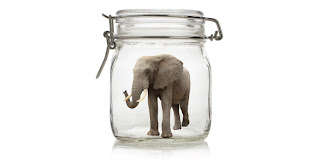 At issue is how to modernize a predominantly 20th-century enterprise. Since at least the 1960s, biodiversity conservation has largely taken its cue from the health of particular species. It’s been reactive, focused on stopping things: habitat loss, habitat fragmentation, extinction. But despite valiant efforts, billions of dollars and years of long-fought battles, conservation seems perpetually on the losing side of a war.
“We know absolutely that something has to be different,” says Jon Hoekstra, chief scientist at the World Wildlife Fund. “In the 21st century, instead of starting with only 2 or 3 billion people, we start with 6 and go to 9, and do it under changing climate conditions and intense resource demands. The context of conservation is going to be profoundly different.” (...)
Chat with a conservation leader today and you’re likely to hear some fairly surprising things. We can’t do it species by species. Protected areas aren’t going to be enough. Saving the last place or the last of the species is not our focus.
The exact messages may differ — after all, there may be as many distinct conservation agendas as there are places, creatures and ways of life — but the theme is constant: Something needs to change. Conservation today is in need of a far more potent approach.
Answering those looming questions — what to save, how to save it — has sparked heated debate among practitioners. Last year the Breakthrough Institute, the pragmatic think tank that’s been a thorn in the side of traditional environmentalism since its inception in 2003, published an essay by Peter Kareiva, chief scientist of The Nature Conservancy; Robert Lalasz, TNC’s director of science communications; and Michelle Marvier, an ecologist at Santa Clara University. Titled “Conservation in the Anthropocene,” the essay argued that conservation is failing in its efforts to save both biodiversity and ecosystems, despite setting aside an impressive number of protected areas. To succeed, the authors wrote,
Hoekstra’s pivot is a 180-degree turn, shifting conservation to face the future. Population trends and global warming will leave the world looking very different than it does now, and no amount of money or effort seems destined to stop that. But we can, Hoekstra believes, try to ensure that a changed planet isn’t a less healthy one. The way forward is to look forward: “Anticipating some of the trends that will be driving that change,” Hoekstra says, “how can we influence it so as much nature comes with it as possible?” In other words, we can’t stop progress, but we can shape it.
by Hillary Rosner, Ensia | Read more:
 At issue is how to modernize a predominantly 20th-century enterprise. Since at least the 1960s, biodiversity conservation has largely taken its cue from the health of particular species. It’s been reactive, focused on stopping things: habitat loss, habitat fragmentation, extinction. But despite valiant efforts, billions of dollars and years of long-fought battles, conservation seems perpetually on the losing side of a war.
“We know absolutely that something has to be different,” says Jon Hoekstra, chief scientist at the World Wildlife Fund. “In the 21st century, instead of starting with only 2 or 3 billion people, we start with 6 and go to 9, and do it under changing climate conditions and intense resource demands. The context of conservation is going to be profoundly different.” (...)
Chat with a conservation leader today and you’re likely to hear some fairly surprising things. We can’t do it species by species. Protected areas aren’t going to be enough. Saving the last place or the last of the species is not our focus.
The exact messages may differ — after all, there may be as many distinct conservation agendas as there are places, creatures and ways of life — but the theme is constant: Something needs to change. Conservation today is in need of a far more potent approach.
Answering those looming questions — what to save, how to save it — has sparked heated debate among practitioners. Last year the Breakthrough Institute, the pragmatic think tank that’s been a thorn in the side of traditional environmentalism since its inception in 2003, published an essay by Peter Kareiva, chief scientist of The Nature Conservancy; Robert Lalasz, TNC’s director of science communications; and Michelle Marvier, an ecologist at Santa Clara University. Titled “Conservation in the Anthropocene,” the essay argued that conservation is failing in its efforts to save both biodiversity and ecosystems, despite setting aside an impressive number of protected areas. To succeed, the authors wrote,
conservation could promise instead … a new vision of a planet in which nature — forests, wetlands, diverse species, and other ancient ecosystems — exists amid a wide variety of modern, human landscapes. For this to happen, conservationists will have to jettison their idealized notions of nature, parks, and wilderness — ideas that have never been supported by good conservation science — and forge a more optimistic, human-friendly vision. (...)Reactive and defensive almost by definition, conservation has long made its living by explicitly looking backward. It’s an approach that made perfect sense, for a time. “We wanted to restore a species so that it spanned the breadth of its historic range,” says Hoekstra. “We would look to the past and say, ‘We should have this much of this habitat back again, or it should look this way.’” But while this strategy may still work in certain specific cases, as an overarching vision it no longer fits. You can’t “dial back time” in a world of 9 billion people demanding water, food and energy.
by Hillary Rosner, Ensia | Read more:
Image: ©iStockphoto.com/Taalvi & ©iStockphoto.com/Jasmina81


The Constant Traveler

What's the first thing the spy does after arriving in a new city? You and I haul our bags to the hotel and stand shifting our weight while a bored clerk pecks at a keyboard; the spy is led briskly to an all-white room where he's left alone with a safety deposit box. Inside the box: multiple passports, a wad of cash in different currencies, a gun with a silencer, an envelope with the name of a contact — everything he needs to navigate his new surroundings. If we see his hotel, it's luxurious. If we see him on a plane, he's either flying it himself or it's a private jet. We are repeatedly shown — more often, or at least more indelibly, than in the books some of these stories are based on — that the elements of travel we ourselves find exhausting and stressful have been magically made easy for the spy. The spy never worries about not understanding a language; whatever it is, he already speaks it, and fluently, with no trace of an accent. Instead of sitting around in train stations and dealing with subway platforms, something he'll do only if it's part of a chase, the spy procures a car (who knows how) or a helicopter, or a speedboat, or whatever vehicle he needs, which he always knows how to operate expertly, even if it's a Soviet tank. And you'd better believe he knows his way around at 100 miles an hour — he'll take shortcuts the locals haven't discovered yet. None of your panicked on-the-fly deciphering of Parisian road signs in your rented Renault Twingo.
When you and I pack for a trip, we're so preemptively defeated by the thought of weather and strange places that we take crushable hats and wicking layers and comfort-fit pants with legs that zip off at the knee. The spy, whether he's stylish like Bond or casual like Jason Bourne, never looks like he's traveling. But rain or shine, he always has just the right outfit. That may be why, whereas we stick to tourist areas and look in a guidebook to figure out where to have dinner, the spy can go anywhere he wants. He strolls into the classiest and most dangerous bars, the finest and grimiest restaurants, the ritziest and seediest casinos. He may pay for this freedom by being, say, attacked by komodo dragons. But doesn't that only guarantee that, unlike our own vacations, the spy's trip will never become tedious or disappointing, but will always see him living each moment to the fullest?
The link between the spy movie and tourism has been obvious since 1962, if not before — that was the year Bob Hope and Bing Crosby spoofed Dr. No in The Road to Hong Kong, the last entry in their long-running travel series. But I've never seen spy films that give away the game quite as happily as the Red franchise, the second of which opens Friday. The gimmick of Red, which is made even more explicit in Red 2, is that Bruce Willis, a retired CIA operative, just wants to live a normal life, while Mary-Louise Parker, his girlfriend, is a normal person who wants to be a spy. At the start of the second movie, they're in a Costco, and the joke is that Willis is bursting with enthusiasm for every average-joe implement of suburban routine, and Parker is bored and wants to go on another spy mission. He wants a backyard grill and some new bed linens; she just wants a vacation. And of course the movie gives her one, and because this is 2013 she doesn't even have to be chastised for it — never has to learn a bogus lesson about how home and safety are better than risk and excitement. She has none of the lethal repertoire of black-ops skills that the other characters possess; she misfires her gun, and when the team disguises her as a Russian security guard she can barely remember her one line. But she has a blast, because the movie is as much a travel fantasy for her as it is for the audience. The first film uses postcards as intertitles to establish scene changes. At one point in the second, when Willis is convalescing from a sedative a rival spy has dosed him with, she treats herself to a Parisian shopping spree on one of his mysterious rolls of cash. It's a pure prank, a movie built on the architecture of escapism while openly flourishing the blueprints. You think you want to be a character in a spy movie, it seems to be telling us. This is what it would look like if you really were.
by Brian Philips, Grantland | Read more:
Image: Digital Trends

The Crystalline Wall

Shyness has no logic: it impinges randomly on certain areas of my life and not others. What for most people is the biggest social fear of all, public speaking, I find fairly easy. Lecturing is a performance that allows me simply to impersonate a ‘normal’, working human being. Q&As, however, are another matter: there the performance ends and I will be found out. That left-field question from the audience, followed by brain-freeze and a calamitous attempt at an answer that ties itself up in tortured syntax and dissolves into terrifying silence. Though this rarely happens to me in real life, it has occurred often enough to fuel my catastrophising imagination. (...)
In her recent book Quiet: The Power of Introverts in a World That Can’t Stop Talking (2012), Susan Cain worries about a world ruled by what she calls the ‘extrovert ideal’. This, she suggests, found its most malign expression in the excessive risk-taking of those who brought about the banking crisis of 2008. Much of Quiet consists of telling introverts how wonderful they are: how we think more deeply and concentrate better than extroverts, are less bothered about money and status, are more sensitive, moral, altruistic, clear-sighted and persistent. If you’re an extrovert, the book probably isn’t for you.
Yet introversion is not the same as shyness, as Cain is careful to point out, although the two do often overlap. Introverts are people whose brains are overstimulated when in contact with too many other human beings for too long — in which case I am most definitely a shy introvert. If I’m in a noisy group of people for more than about an hour, my brain simply starts to scramble like a computer with a system error, and I end up feeling mentally and physically drained. Introverts such as me need to make frequent strategic withdrawals from social life in order to process and make sense of our experiences.
Shyness is something different: a longing for connection with other people which is foiled by fear and awkwardness. The danger in simply accepting it, as Cain urges us to do with introversion, is that shyness can easily turn into a self-fulfilling persona — the pose becomes part of you, like a mask that melds with your face. There is always something we cling to in an unhappy situation that stops us escaping from it. In my case, it is the belief that lots of voluble people do not really listen to each other, that they simply exchange words as though they were pinging them over a tennis net — conducting their social life entirely on its surface. A small, self-regarding part of me thinks there is something glib about easy articulacy and social skill.
by Joe Moran, Aeon | Read more:
Image: A shy Yves Saint Laurent is pushed onstage to be acclaimed for his Spring-Summer collection, Paris, January 1986. Photo by Abbas/Magnum
Subscribe to:
Posts (Atom)