Saturday, April 12, 2014

Health Care Nightmares

When it comes to health reform, Republicans suffer from delusions of disaster. They know, just know, that the Affordable Care Act is doomed to utter failure, so failure is what they see, never mind the facts on the ground.

Thus, on Tuesday, Mitch McConnell, the Senate minority leader, dismissed the push for pay equity as an attempt to “change the subject from the nightmare of Obamacare”; on the same day, the nonpartisan RAND Corporation released a study estimating “a net gain of 9.3 million in the number of American adults with health insurance coverage from September 2013 to mid-March 2014.” Some nightmare. And the overall gain, including children and those who signed up during the late-March enrollment surge, must be considerably larger.

But while Obamacare is looking like anything but a nightmare, there are indeed some nightmarish things happening on the health care front. For it turns out that there’s a startling ugliness of spirit abroad in modern America — and health reform has brought that ugliness out into the open.

Let’s start with the good news about reform, which keeps coming in. First, there was the amazing come-from-behind surge in enrollments. Then there were a series of surveys — from Gallup, the Urban Institute, and RAND — all suggesting large gains in coverage. Taken individually, any one of these indicators might be dismissed as an outlier, but taken together they paint an unmistakable picture of major progress. (...)

Republicans clearly have no idea how to respond to these developments. They can’t offer any real alternative to Obamacare, because you can’t achieve the good stuff in the Affordable Care Act, like coverage for people with pre-existing medical conditions, without also including the stuff they hate, the requirement that everyone buy insurance and the subsidies that make that requirement possible. Their political strategy has been to talk vaguely about replacing reform while waiting for its inevitable collapse. And what if reform doesn’t collapse? They have no idea what to do.

At the state level, however, Republican governors and legislators are still in a position to block the act’s expansion of Medicaid, denying health care to millions of vulnerable Americans. And they have seized that opportunity with gusto: Most Republican-controlled states, totaling half the nation, have rejected Medicaid expansion. And it shows. The number of uninsured Americans is dropping much faster in states accepting Medicaid expansion than in states rejecting it.

What’s amazing about this wave of rejection is that it appears to be motivated by pure spite. The federal government is prepared to pay for Medicaid expansion, so it would cost the states nothing, and would, in fact, provide an inflow of dollars. The health economist Jonathan Gruber, one of the principal architects of health reform — and normally a very mild-mannered guy — recently summed it up: The Medicaid-rejection states “are willing to sacrifice billions of dollars of injections into their economy in order to punish poor people. It really is just almost awesome in its evilness.” Indeed.

by Paul Krugman, NY Times |  Read more:
Image: piperreport.com via:

Thursday, April 10, 2014

Lindsey Buckingham

Dave Matthews and Tim Reynolds


[ed. Note to advertisers just so you know... whoever inserts an insipid advertisement before a YouTube video automatically gets my animosity.] 

“Every path is the right path. Everything could’ve been anything else. And it would have just as much meaning.”

                                                                                         ~ Mr. Nobody (2009) dir. Jaco Van Dormael
via:

Massive Security Bug In OpenSSL Could Affect A Huge Chunk Of The Internet

[ed. Before you go bonkers, read this... the true spirit of the internet (I hope). Also this: What You Need to Know.]

I saw a t-shirt one time. “I’m a bomb disposal technician,” it read. “If you see me running, try to keep up.”

The same sort of idea can be applied to net security: when all the net security people you know are freaking out, it’s probably an okay time to worry.

This afternoon, many of the net security people I know are freaking out. A very serious bug in OpenSSL — a cryptographic library that is used to secure a very, very large percentage of the Internet’s traffic — has just been discovered and publicly disclosed.

Even if you’ve never heard of OpenSSL, it’s probably a part of your life in one way or another — or, more likely, in many ways. The apps you use, the sites you visit; if they encrypt the data they send back and forth, there’s a good chance they use OpenSSL to do it. The Apache web server that powers something like 50% of the Internet’s web sites, for example, utilizes OpenSSL.

Through a bug that security researchers have dubbed “Heartbleed“, it seems that it’s possible to trick almost any system running any version of OpenSSL from the past 2 years into revealing chunks of data sitting in its system memory.

Why that’s bad: very, very sensitive data often sits in a server’s system memory, including the keys it uses to encrypt and decrypt communication (read: usernames, passwords, credit cards, etc.) This means an attacker could quite feasibly get a server to spit out its secret keys, allowing them to read to any communication that they intercept like it wasn’t encrypted it all. Armed with those keys, an attacker could also impersonate an otherwise secure site/server in a way that would fool many of your browser’s built-in security checks.

And if an attacker was just gobbling up mountains of encrypted data from a server in hopes of cracking it at some point? They may very well now have the keys to decrypt it, depending on how the server they’re attacking was configured (like whether or not it’s set up to utilize Perfect Forward Secrecy.)

by Greg Kumparak, TechCrunch | Read more:
Image: uncredited

Decoding Nature's Soundtrack

[ed. I'm not sold on the practical applications of this type of research, but I'm kind of glad somebody's doing it.]

One of most immediately striking features about Bernie Krause is his glasses. They’re big—not soda-bottle thick, but unusually large, and draw attention to his eyes. Which is ironic, as Krause’s life has been devoted to what he hears, but also appropriate, since it’s the weakness of his eyes that compelled Krause to engage with sound: first with music, and later the music of nature. Nearsighted and astigmatic, Krause has spent most of the last half-century recording biological symphonies to which most of us are deaf. (...)

At this particular moment in Earth’s history—the morning of what some scientists call the Anthropocene, an age in which human influence on natural processes is ubiquitous and immense—we have many tools to measure our ecological impacts: by eye, generally, focusing on particular species or guilds of interest, counting them in the field, peering by satellite at changes in land use, and translating our observations into the language of habitat type and biodiversity.

To Krause, these are measurements best made by listening to natural soundscapes. In a career of listening and recording, he’s amassed a veritable Library of Alexandria of nature’s sounds, and he emphasizes that they’re not merely recordings of individual creatures. The traditional approach of bioacoustics, focusing on single animals and species, is anathema. It’s “decontextualizing and fragmenting,” he says, like trying to extract a single violin from Beethoven’s Fifth Symphony. “Take an instrument out of the performance, and try to understand the whole performance, and you don’t get very much,” he says.

Inevitably Krause has captured the players—bearded seals with voices that echo geomagnetic storms, baboons booming in granite amphitheaters, a fox kit playing with a microphone—but they’re incidental to recording whole habitats and communities.

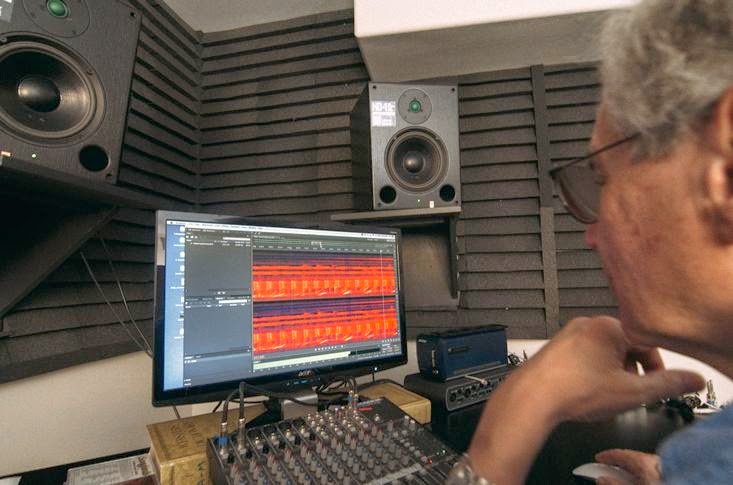
In his home studio, perched on an oak-covered hillside in Glen Ellen, Calif., Krause plays me some of his favorites: a Florida swamp, old-growth forest in Zimbabwe, intertidal mangroves in Costa Rica, and a Sierra Nevada mountain meadow. As the sounds pour from speakers mounted above his computer, spectrograms scroll across the screen, depicting visually the timing and frequency of every individual sound. They look like musical scores.


In each spectrogram, Krause points something out: No matter how sonically dense they become, sounds don’t tend to overlap. Each animal occupies a unique frequency bandwidth, fitting into available auditory space like pieces in an exquisitely precise puzzle. It’s a simple but striking phenomenon, and Krause was the first to notice it. He named it biophony, the sound of living organisms, and to him it wasn’t merely aesthetic. It signified a coevolution of species across deep biological time and in a particular place. As life becomes richer, the symphony’s players find a sonic niche to play without interference.

by Brandon Keim, Nautilus |  Read more:
Image: Brandon Keim

Gemma Hayes

In the End, People May Really Just Want to Date Themselves


Opposites attract. That’s how the cliché goes, and people really believe they are attracted to those different from them: 86 percent say they want a partner who “complements them” rather than one who “resembles them.”

There’s only one problem with this idea: It’s false. I studied 1 million matches made by the online dating website eHarmony’s algorithm, which aims to pair people who will be attracted to one another and compatible over the long term; if the people agree, they can message each other to set up a meeting in real life. eHarmony’s data on its users contains 102 traits for each person — everything from how passionate and ambitious they claim to be to how much they say they drink, smoke and earn.

The data reveals a clear pattern: People are interested in people like themselves. Women on eHarmony favor men who are similar not just in obvious ways — age, attractiveness, education, income — but also in less apparent ones, such as creativity. Even when eHarmony includes a quirky data point — like how many pictures are included in a user’s profile — women are more likely to message men similar to themselves. In fact, of the 102 traits in the data set, there was not one for which women were more likely to contact men with opposite traits.1

Men were a little more open-minded. For 80 percent of traits, they were more willing to message those different from them. They still preferred mates who were similar in terms of height or attractiveness2, but they cared less about these traits — and they didn’t care much at all about other things women cared about, like similarity in education level or number of photos taken.3They cared less about whether their match shared their ethnicity.4


Women prefer similarity in subtler ways as well: A woman shows a small but highly statistically significant preference for a man who uses similar adjectives to describe himself, with “physically fit,” “intelligent,” “creative” and “funny” having the strongest effects. Men showed no such preference.

by Emma Pierson, 538 |  Read more:
Image: uncredited

Living Organ Regenerated for First Time


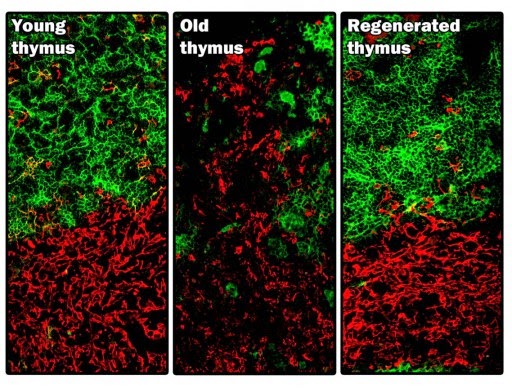
A team of scientists at the University of Edinburgh has rebuilt the thymus of an old mouse — the first regeneration of a living organ.

After treatment, the regenerated organ had a structure similar to that found in a young mouse.

The thymus is an organ in the body located next to the heart that produces important immune cells. The advance could pave the way for new therapies for people with damaged immune systems and genetic conditions that affect thymus development.

The function of the thymus was also restored and the mice began making more white blood cells called T cells, which are important for fighting off infection. However, it is not yet clear whether the immune system of the mice was improved.

The study was led by researchers from the Medical Research Council Centre for Regenerative Medicine at the University of Edinburgh.

The researchers targeted a protein produced by cells of the thymus called FOXN1, which helps to control how important genes are switched on. By increasing levels of FOXN1, the team instructed stem cell-like cells to rebuild the organ.

by Kurzweil AI |  Read more:
Image: N. Bredenkamp et al./MRC Centre for Regenerative Medicine, University of Edinburg

Wednesday, April 9, 2014

Céu

Pat Metheny


Washington State to Start Selling Pot in June

Washington State Liquor Board has received a total of 7,046 applications, with 2,206 for retail which they will limit to 334.

The cannabis will be priced at $3 per gram for producers, $6 for processors and a pre-tax $12 per gram for retailers. “The board anticipates tax revenue of up to $2 billion during the first five years as a result of a 25% tax on each level. That’s right, ultimately this cannabis will have been taxed 75% by the time it reaches the customer.”

It's, The Masters!


[ed. I know... you're just as excited as I am, it's The Masters! The one tournament each year when the drama is nearly guaranteed on a hushed and breathless Sunday afternoon at Augusta National Golf Club. The dogwoods and azaleas are in full bloom, commercials are kept to a minimum (4 minutes an hour), and the course is fast and tricky. Can't wait.] 

We can always be certain of a few things about the Masters Tournament, which starts Thursday at the Augusta National Golf Club: The azaleas will be in bloom. The course will be pristine. The post-tournament sit-down in Butler Cabin will be awkward. But who will win? Let’s see which factors, if any, correlate with success under the Georgia pines.

Full disclosure: Attempting to forecast the outcome of any single golf tournament is, in many ways, a fool’s errand. The PGA Tour’s leading winner in each season since 19801 has averaged 4.6 victories in 21 events, a rate of just under 22 percent. Even Tiger Woods, who may be the greatest golfer of all time, has won only 26 percent of the tournaments he’s entered. The field regularly beats the best golfers in the world, and this is especially true in the tiny sample of a four-round tournament.

Complicating matters, the Masters (one of the more prestigious of the four majors) has seen plenty of fluke winners in recent years, at least based on their perceived status the year before they won the tournament. Going back to 2003, the earliest year for which the PGA Tour website has end-of-year Official World Golf Ranking data, only U.S. Open winners have a lower end-of-year OWGR point average2 than Masters champions in the season before their major victory.3


But despite the inherent uncertainty of golf and especially the Masters, some numbers emerge as predictors of success at Augusta. Specifically, long hitters appear to have an advantage — and pure ball-strikers less so — than would be expected from their performance across all tournaments.

To isolate those predictive factors, I borrowed a technique I first used for last year’s NCAA Giant Killers project at ESPN.com. The idea is to start with a base rating for each player that loosely represents his talent level relative to others’ in the field. Then I look for discrepancies between what that measurement predicted and what happened, and try to determine whether those gaps are related to a particular attribute of a player’s game.

by Neil Paine, 538 | Read more:
Image: Getty Images

Tuesday, April 8, 2014

Why Buying a Corporate Jet Pays for Itself

Lots of American companies have private jets, and the government gives them a pretty good reason to buy one: They can pay for themselves in just a few years.

The reason is that the American government pretends a jet only lasts five years, when in reality you can use it for decades. The government is pretending that other long-lived corporate investments—train cars, broadcast antennae, oil rigs and satellite tracking equipment—will also become useless far sooner than they will, five or seven years into a much longer working life. This willful blindness is an attempt to fool businesses into buying more expensive stuff, thus goosing the economy, but there’s not a lot of evidence that it actually works.

“As a result, businesses holding these assets are able to recoup the entire cost of acquiring the asset long before it’s ceased to produce value,” Dean Sonderegger, an executive at Bloomberg BNA who builds software that allows companies to track these write-offs. “Take private jets, for example, which have an IRS-specified useful life of five years, allowing firms to write off 70% of their cost within the first three years.”

The term of art here is depreciation, and it serves a useful purpose. You shouldn’t have to pay taxes on your necessary business expenses, but it doesn’t make sense to let companies deduct the entire cost of something they buy in the first year if it will last for years. So companies are allowed to deduct a percentage of the equipment’s cost over time, as its value depreciates. But when these rates were set in the 1986 tax reform, they were, for some reason—probably last-minute political horse-trading—often based on lifespans much shorter than the real ones.

Today, businesses can also add in bonus depreciation—who doesn’t love a bonus?—that was first instituted as stimulus after the recession in 2000, renewed and subsequently increased in the years that followed; it currently speeds up depreciation by 50%.

by Tim Fernholz, Quartz |  Read more:
Image: Reuters/Gene Blevins

I'm a Raccoon


i’m a raccoon. i like going through the garbage. i like washing discarded things, i like loving unbeloved ideas...
                                                                                                                    ~ Ariana Reines

Fake Hawaii: Your American Jungle


Misunderstandings, stereotypes and hypergeneralizations are common when referencing the ins and outs of Hawaii in print, film and television. In the recent "Top Chef" finale on Maui, host Padma Lakshmi said that spam "is lovingly referred to by the locals as 'Hawaiian steak.’" Though it’s no joke that locals have a great fondness for the congealed pork cube and I’ll admit that "Hawaiian steak" does have a nice soundbitish ring to it, spam is known as nothing else but spam in the islands and is mostly served with fried eggs and rice, or wrapped in nori for musubi, like a sushi present.

Hawaii is an ocean apart from the continental U.S., in the margins of the coastal media outposts and the peripheries of social-justice Twitter monitors. The voice of Hawaii and its people (locals!) is often muted. But maybe the Hollywood-media complex doesn’t think it needs to be accountable in its accuracy of Hawaii because, for the most part, it depicts the islands as a mellow, chill, pina-colada-slurping, spam-barbecuing paradise where everyone wants to vacation forever, right?

Not exactly. Hawaii's had a big year. Four shows have aired in the last season that are 100 percent set in the islands—"Hawaii Five-O," four seasons and running; and "Hawaii Life," "Wild Hawaii" and "American Jungle"—with a fifth show currently being shot, tentatively titled "The Ark." And not all are glowing or accurate. (...)

Before the flawed and filthy rich, or the flawed and bumpkin-like, became TV’s bread and butter, there was the idyllic and the cookie-cutter. Hawaii was both the symbol of serene beauty and American-suburban escape. It was a safe exoticism, our country’s pit-stop paradise, saved for sitcom vacation episodes or tiki murder mysteries, packed with luaus, shirtless dudes saying "brah" and flirtatious hula dancers. In film, it provided the backdrop for a long history of easy-breezy surf movies—from "Blue Hawaii" and "Gidget Goes Hawaiian" in the 60s to "Blue Crush" and "Soul Surfer" in the aughts—because Hawaii is the place where you Hang 10, pray to the Big Kahuna and avoid the kooks. Hawaii didn’t become a national television staple until the original "Hawaii Five-O’"s 12-year run, paving the way for everyone’s favorite ’80s hunk, "Magnum P.I.," both of which were kind of hokey and not necessarily ethnically accurate but harmless nonetheless, and then there was my fave in high school, "Byrds of Paradise," starring a teenage Jennifer Love Hewitt as a Hawaii transplant, Timothy Busfield as her dad and a lot of young, local eye candy in between (fun fact: a friend of a friend took J.Love to prom). Then the reality shows arrived: "The Real World Hawaii," a.k.a. the one with Ruthie, which, like all the other seasons, no one expected to be real; MTV’s "Maui Girls," as vapid and phony as "The Hills"; and, of course, the original local-trash reality show, A&E’s "Dog the Bounty Hunter." "Dog" may be the least flattering to local life, but in some ways it was the most accurate of the bunch, as meth is no joke in islands; not every nook and cranny comes up desirable. But mostly, I give whatever sensationalism Dog provided a pass because any right-minded viewer could see that the most ludicrous things about the series were the non-natives—the overly tan, navel-bearing bounty hunter and his wife with the ginormous breasts. Compared to "American Jungle," "'Bounty Hunter' wasn’t that much better," Aila said. "But at least, conceptually, it employed someone who was bounty hunter mechanically correct."

I can think of only one mainstream film that has done a fair-enough job in portraying the complications of race, culture and how people live in Hawaii while capturing the islands’ natural beauty—2011’s The Descendants. Beneath a universal story of loss, there were the quiet politics between native Hawaiians, locals, local haoles who’ve lived there for generations but still don’t feel totally local, and the people who move there but never quite get the culture. Based on generation, time-and-place appropriateness and socio-economics, pidgin was spoken accordingly. Locals were cast as extras. Set designers added touches like Hawaiian sea-turtle quilts and shoyu bottles on restaurant tables. The whole thing was done quite thoughtfully because the director, Alexander Payne, worked closely with Kaui Hart Hemmings, the island-born writer of the book he adapted, to ensure accuracy in the details.

by Jessica Machado, The Awl |  Read more:
Image: AP