Monday, May 5, 2014


Serf Board
In the summer of 2009, the U.S. economy lost 9 million jobs: between April and October of that year, the national unemployment rate would rise to 10 percent as the stock market plummeted to nearly half its value.
 Money stood at the forefront of collective anxiety: every day seemed to generate new tales of friends getting laid off or of more companies’ having closed up shop. That summer, I discovered people were resorting to making money online using a service called Amazon Mechanical Turk, or “MTurk” as it’s colloquially known. MTurk was started in 2005 by Amazon CEO Jeff Bezos and director of Amazon Web services Peter Cohen as a way to solve problems with Amazon’s ever-expanding data set. The premise was that a distributed crowd of humans could easily complete tasks that computers found too challenging. The jobs, called Human Intelligence Tasks (HITs) on the service, might be to match the name of an item—say a 95-ounce box of Tide detergent—to the correct product image. The typical pay for HITs like this range from $0.01 to $0.20 and often need to be completed within a limited amount of time.
With my curiosity piqued, I began surveying workers on MTurk, asking them to tell their stories through short memoirs. What started as research about a tool I might use in my artistic practice became a much deeper experience. The stories I heard were parables of everyday life, success, and struggle. Now, five years later, I came back to them to see if the story of crowdsourced labor has changed.
MTurk drew its name and conceptual model from the 18th- entury invention created by Hungarian nobleman Wolfgang von Kempelen, who created a mechanical chess-playing automaton that supposedly “defeated nearly every opponent it faced.” In truth, it was a hoax: A real, human chess master was hiding inside the machine.
To extend this conceit to Amazon’s platform, Bezos coined a clever, glossy euphemism, describing the service as “artificial artificial intelligence.” Looking through the FAQ page for MTurk gives a better sense of what this artificial artificial intelligence might entail:
When we think of interfaces between human beings and computers, we usually assume that the human being is the one requesting that a task be completed, and the computer is completing the task and providing the results. What if this process were reversed and a computer program could ask a human being to perform a task and return the results? What if it could coordinate many human beings to perform a task?At first, MTurk seemed appealing as a tool that could complete work like any other software with the unique exception of being powered by an unnamed, globally distributed group of people. I envisioned doing a kind of conceptual exploration of this virtual workspace, which could then lead to future collaborative projects with the platform. But soon, I found myself preoccupied by a truly basic question: Who were the people fulfilling these requests? Who were the chess players within the machine?
My hunch was that the workers using MTurk were middle-class skilled workers like myself. To test this hypothesis, I used MTurk to hire some of them to tell me why they were on it. Since MTurk tasks needed to take only minutes to complete, I requested a brief, 250-word account and let them know that I would share their story on a Tumblr, which I titled The Mechanical Turk Diaries. I decided to pay $0.25 per story, which at the time seemed like a high rate relative to other HITs on the platform.
by Jason Huff, TNI | Read more:
Image: uncredited


A Brief History of Auto-Tune
A recording engineer once told me a story about a time when he was tasked with “tuning” the lead vocals from a recording session (identifying details have been changed to protect the innocent). Polishing-up vocals is an increasingly common job in the recording business, with some dedicated vocal producers even making it their specialty. Being able to comp, tune, and repair the timing of a vocal take is now a standard skill set among engineers, but in this case things were not going smoothly. Whereas singers usually tend towards being either consistently sharp or flat (“men go flat, women go sharp” as another engineer explained), in this case the vocalist was all over the map, making it difficult to always know exactly what note they were even trying to hit. Complicating matters further was the fact that this band had a decidedly lo-fi, garage-y reputation, making your standard-issue, Glee-grade tuning job decidedly inappropriate.
 Undaunted, our engineer pulled up the Auto-Tune plugin inside Pro-Tools and set to work tuning the vocal, to use his words, “artistically” – that is, not perfectly, but enough to keep it from being annoyingly off-key. When the band heard the result, however, they were incensed – “this sounds way too good! Do it again!” The engineer went back to work, this time tuning “even more artistically,” going so far as to pull the singer’s original performance out of tune here and there to compensate for necessary macro-level tuning changes elsewhere.
The product of the tortuous process of tuning and re-tuning apparently satisfied the band, but the story left me puzzled… Why tune the track at all? If the band was so committed to not sounding overproduced, why go to such great lengths to make it sound like you didn’t mess with it? This, I was told, simply wasn’t an option. The engineer couldn’t in good conscience let the performance go un-tuned. Digital pitch correction, it seems, has become the rule, not the exception, so much so that the accepted solution for too much pitch correction is more pitch correction.
Since 1997, recording engineers have used Auto-Tune (or, more accurately, the growing pantheon of digital pitch correction plugins for which Auto-Tune, Kleenex-like, has become the household name) to fix pitchy vocal takes, lend T-Pain his signature vocal sound, and reveal the hidden vocal talents of political pundits. It’s the technology that can make the tone-deaf sing in key, make skilled singers perform more consistently, and make MLK sound like Akon. And at 17 years of age, “The Gerbil,” as some like to call Auto-Tune, is getting a little long in the tooth (certainly by meme standards.) The next U.S. presidential election will include a contingent of voters who have never drawn air that wasn’t once rippled by Cher’s electronically warbling voice in the pre-chorus of “Believe.” A couple of years after that, the Auto-Tune patent will expire and its proprietary status will dissolve into to the collective ownership of the public domain.
Growing pains aside, digital vocal tuning doesn’t seem to be leaving any time soon. Exact numbers are hard to come by, but it’s safe to say that the vast majority of commercial music produced in the last decade or so has most likely been digitally tuned. Future Music editor Daniel Griffiths has ballpark-estimated that, as early as 2010, pitch correction was used in about 99% of recorded music. Reports of its death are thus premature at best. If pitch correction is seems banal it doesn’t mean it’s on the decline; rather, it’s a sign that we are increasingly accepting its underlying assumptions and internalizing the habits of thought and listening that go along with them.
Headlines in tech journalism are typically reserved for the newest, most groundbreaking gadgets. Often, though, the really interesting stuff only happens once a technology begins to lose its novelty, recede into the background, and quietly incorporate itself into fundamental ways we think about, perceive, and act in the world. Think, for example, about all the ways your embodied perceptual being has been shaped by and tuned-in to, say, the very computer or mobile device you’re reading this on. Setting value judgments aside for a moment, then, it’s worth thinking about where pitch correction technology came from, what assumptions underlie the way it works and how we work with it, and what it means that it feels like “old news.”
Undaunted, our engineer pulled up the Auto-Tune plugin inside Pro-Tools and set to work tuning the vocal, to use his words, “artistically” – that is, not perfectly, but enough to keep it from being annoyingly off-key. When the band heard the result, however, they were incensed – “this sounds way too good! Do it again!” The engineer went back to work, this time tuning “even more artistically,” going so far as to pull the singer’s original performance out of tune here and there to compensate for necessary macro-level tuning changes elsewhere.The product of the tortuous process of tuning and re-tuning apparently satisfied the band, but the story left me puzzled… Why tune the track at all? If the band was so committed to not sounding overproduced, why go to such great lengths to make it sound like you didn’t mess with it? This, I was told, simply wasn’t an option. The engineer couldn’t in good conscience let the performance go un-tuned. Digital pitch correction, it seems, has become the rule, not the exception, so much so that the accepted solution for too much pitch correction is more pitch correction.
Since 1997, recording engineers have used Auto-Tune (or, more accurately, the growing pantheon of digital pitch correction plugins for which Auto-Tune, Kleenex-like, has become the household name) to fix pitchy vocal takes, lend T-Pain his signature vocal sound, and reveal the hidden vocal talents of political pundits. It’s the technology that can make the tone-deaf sing in key, make skilled singers perform more consistently, and make MLK sound like Akon. And at 17 years of age, “The Gerbil,” as some like to call Auto-Tune, is getting a little long in the tooth (certainly by meme standards.) The next U.S. presidential election will include a contingent of voters who have never drawn air that wasn’t once rippled by Cher’s electronically warbling voice in the pre-chorus of “Believe.” A couple of years after that, the Auto-Tune patent will expire and its proprietary status will dissolve into to the collective ownership of the public domain.
Growing pains aside, digital vocal tuning doesn’t seem to be leaving any time soon. Exact numbers are hard to come by, but it’s safe to say that the vast majority of commercial music produced in the last decade or so has most likely been digitally tuned. Future Music editor Daniel Griffiths has ballpark-estimated that, as early as 2010, pitch correction was used in about 99% of recorded music. Reports of its death are thus premature at best. If pitch correction is seems banal it doesn’t mean it’s on the decline; rather, it’s a sign that we are increasingly accepting its underlying assumptions and internalizing the habits of thought and listening that go along with them.
Headlines in tech journalism are typically reserved for the newest, most groundbreaking gadgets. Often, though, the really interesting stuff only happens once a technology begins to lose its novelty, recede into the background, and quietly incorporate itself into fundamental ways we think about, perceive, and act in the world. Think, for example, about all the ways your embodied perceptual being has been shaped by and tuned-in to, say, the very computer or mobile device you’re reading this on. Setting value judgments aside for a moment, then, it’s worth thinking about where pitch correction technology came from, what assumptions underlie the way it works and how we work with it, and what it means that it feels like “old news.”
by Owen Marshall, Sounding Out | Read more:
Image: Ethan Hein
Sunday, May 4, 2014

WHCD 2014
[ed. Too funny. Apparently the annual White House Correspondents Dinner circle jerk took place again last night. I love Joe Biden and JL-D.]
Trust But Verify - How Airbnb and Lyft Finally Got Americans to Trust Each Other
In about 40 minutes, Cindy Manit will let a complete stranger into her car. An app on her windshield-mounted iPhone will summon her to a corner in San Francisco’s South of Market neighborhood, where a russet-haired woman in an orange raincoat and coffee-colored boots will slip into the front seat of her immaculate 2006 Mazda3 hatchback and ask for a ride to the airport. Manit has picked up hundreds of random people like this. Once she took a fare all the way across the Golden Gate Bridge to Sausalito. Another time she drove a clown to a Cirque du Soleil after-party.
 “People might think I’m a little too trusting,” Manit says as she drives toward Potrero Hill, “but I don’t think so.”
Manit, a freelance yoga instructor and personal trainer, signed up in August 2012 as a driver for Lyft, the then-nascent ride-sharing company that lets anyone turn their car into an ad hoc taxi. Today the company has thousands of drivers, has raised $333 million in venture funding, and is considered one of the leading participants in the so-called sharing economy, in which businesses provide marketplaces for individuals to rent out their stuff or labor. Over the past few years, the sharing economy has matured from a fringe movement into a legitimate economic force, with companies like Airbnb and Uber the constant subject of IPO rumors. (One of these startups may well have filed an S-1 by the time you read this.) No less an authority than New York Times columnist Thomas Friedman has declared this the age of the sharing economy, which is “producing both new entrepreneurs and a new concept of ownership.”
The sharing economy has come on so quickly and powerfully that regulators and economists are still grappling to understand its impact. But one consequence is already clear: Many of these companies have us engaging in behaviors that would have seemed unthinkably foolhardy as recently as five years ago. We are hopping into strangers’ cars (Lyft, Sidecar, Uber), welcoming them into our spare rooms (Airbnb), dropping our dogs off at their houses (DogVacay, Rover), and eating food in their dining rooms (Feastly). We are letting them rent our cars (RelayRides, Getaround), our boats (Boatbound), our houses (HomeAway), and our power tools (Zilok). We are entrusting complete strangers with our most valuable possessions, our personal experiences—and our very lives. In the process, we are entering a new era of Internet-enabled intimacy.
This is not just an economic breakthrough. It is a cultural one, enabled by a sophisticated series of mechanisms, algorithms, and finely calibrated systems of rewards and punishments. It’s a radical next step for the person-to-person marketplace pioneered by eBay: a set of digital tools that enable and encourage us to trust our fellow human beings.
Manit is 30 years old but has the delicate frame of an adolescent. She wears a thin kelly-green hoodie and distressed blue jeans, and her cropped dark hair pokes out from under her purple stocking cap. Yet despite her seemingly vulnerable appearance, she says she has never felt threatened or uneasy while driving for Lyft. “It’s not just some person off the street,” she says, tooling under the 101 off-ramp and ticking off the ways in which driving for Lyft is different from picking up a random hitchhiker. Lyft riders must link their account to their Facebook profile; their photo pops up on Manit’s iPhone when they request a ride. Every rider has been rated by their previous Lyft drivers, so Manit can spot bad apples and avoid them. And they have to register with a credit card, so the ride is guaranteed to be paid for before they even get into her car. “I’ve never done anything like this, where I pick up random people,” Manit says, “but I’ve gotten used to it.”
Then again, Manit has what academics call a low trust threshold. That is, she is predisposed to engage in behavior that other people might consider risky. “I don’t want to live my life always guarding myself. I put it out there,” she says. “But when I told my friends and family about it—even my partner at the time—they were like, uh, are you sure? This seems kind of creepy.”
“People might think I’m a little too trusting,” Manit says as she drives toward Potrero Hill, “but I don’t think so.”Manit, a freelance yoga instructor and personal trainer, signed up in August 2012 as a driver for Lyft, the then-nascent ride-sharing company that lets anyone turn their car into an ad hoc taxi. Today the company has thousands of drivers, has raised $333 million in venture funding, and is considered one of the leading participants in the so-called sharing economy, in which businesses provide marketplaces for individuals to rent out their stuff or labor. Over the past few years, the sharing economy has matured from a fringe movement into a legitimate economic force, with companies like Airbnb and Uber the constant subject of IPO rumors. (One of these startups may well have filed an S-1 by the time you read this.) No less an authority than New York Times columnist Thomas Friedman has declared this the age of the sharing economy, which is “producing both new entrepreneurs and a new concept of ownership.”
The sharing economy has come on so quickly and powerfully that regulators and economists are still grappling to understand its impact. But one consequence is already clear: Many of these companies have us engaging in behaviors that would have seemed unthinkably foolhardy as recently as five years ago. We are hopping into strangers’ cars (Lyft, Sidecar, Uber), welcoming them into our spare rooms (Airbnb), dropping our dogs off at their houses (DogVacay, Rover), and eating food in their dining rooms (Feastly). We are letting them rent our cars (RelayRides, Getaround), our boats (Boatbound), our houses (HomeAway), and our power tools (Zilok). We are entrusting complete strangers with our most valuable possessions, our personal experiences—and our very lives. In the process, we are entering a new era of Internet-enabled intimacy.
This is not just an economic breakthrough. It is a cultural one, enabled by a sophisticated series of mechanisms, algorithms, and finely calibrated systems of rewards and punishments. It’s a radical next step for the person-to-person marketplace pioneered by eBay: a set of digital tools that enable and encourage us to trust our fellow human beings.
Manit is 30 years old but has the delicate frame of an adolescent. She wears a thin kelly-green hoodie and distressed blue jeans, and her cropped dark hair pokes out from under her purple stocking cap. Yet despite her seemingly vulnerable appearance, she says she has never felt threatened or uneasy while driving for Lyft. “It’s not just some person off the street,” she says, tooling under the 101 off-ramp and ticking off the ways in which driving for Lyft is different from picking up a random hitchhiker. Lyft riders must link their account to their Facebook profile; their photo pops up on Manit’s iPhone when they request a ride. Every rider has been rated by their previous Lyft drivers, so Manit can spot bad apples and avoid them. And they have to register with a credit card, so the ride is guaranteed to be paid for before they even get into her car. “I’ve never done anything like this, where I pick up random people,” Manit says, “but I’ve gotten used to it.”
Then again, Manit has what academics call a low trust threshold. That is, she is predisposed to engage in behavior that other people might consider risky. “I don’t want to live my life always guarding myself. I put it out there,” she says. “But when I told my friends and family about it—even my partner at the time—they were like, uh, are you sure? This seems kind of creepy.”
by Jason Tanz, Wired | Read more:
Image: Gus Powell
Glenn Greenwald and Michael Hayden Debate Surveillance
Every year, Canada's Munk debates feature high-level, high-profile debates on burning policy issues. This year, they debated surveillance, and the participants were Glenn Greendwald and Reddit co-founder Alexis Ohanian on the anti-surveillance side and former NSA and CIA chief Michael Hayden and Harvard law professor Alan Dershowitz on the pro-surveillance side. Although the debating partners do a lot in this, the real freight is carried by Hayden and Greenwald, both of whom are more fact-intensive than the others.
I have a bias here, but I think that Greenwald wiped up the floor with Hayden (the post-debate polls from the room support this view). It was particularly useful to have Hayden being grilled by a well-informed opponent who was allowed to go after the easy dismissals and glib deflections. Normally, he gets to deliver some well-polished talking points and walk away -- this was something I hadn't seen before.
This is just about the best video you're going to watch on the surveillance debate. It kicks off around the 30m mark.
by Cory Doctorow, Boing Boing

The Life of a Stolen Phone
Alex called AT&T, said he'd figured out who'd stolen his phone, and asked if the company could help get it back — perhaps by flagging the phone if the thief tried to register it in a new name. No dice. AT&T gave him two options: Either deactivate the phone and buy a new one, or find a cop willing to subpoena AT&T for information, file a lengthy police report, and go through a long bureaucratic process.
 It was, Alex says, "the most B.S. story I've ever heard."
He called Apple and was invited to try the same "find my phone" app he'd already been using.
Alex realized that if he wanted the phone back, he'd have to get it himself. He got in his car and headed to Clayton.
It turns out the dismissive responses that Alex received in his quest to find the stolen iPhone were typical of telecom companies and service carriers. Apple and AT&T have little reason to help someone recover a device — even if it's within reach. Smartphone theft is a lucrative business, and not just for the small-time crooks who lift gadgets off of BART seats. The manufacturer profits by hawking a replacement phone; the carrier profits double, by locking the crime victim into a new contract, then opening an account with whomever ends up with the stolen phone. Telecom companies even profit from the specter of phone theft, by selling expensive insurance policies to protect their users.
"We've tried to blow the whistle on this for years," Capt. Jason Cherniss of the San Francisco Police Department says. "And these companies have had the ability to prevent it for years." In the meantime, he adds, people have been violently robbed — even killed — and millions of dollars have changed hands on the black market.
Alex would quickly find out that the entire smartphone industry functions as a protection racket. And culpability doesn't just lie with the unhelpful customer service representatives.
It was, Alex says, "the most B.S. story I've ever heard."He called Apple and was invited to try the same "find my phone" app he'd already been using.
Alex realized that if he wanted the phone back, he'd have to get it himself. He got in his car and headed to Clayton.
It turns out the dismissive responses that Alex received in his quest to find the stolen iPhone were typical of telecom companies and service carriers. Apple and AT&T have little reason to help someone recover a device — even if it's within reach. Smartphone theft is a lucrative business, and not just for the small-time crooks who lift gadgets off of BART seats. The manufacturer profits by hawking a replacement phone; the carrier profits double, by locking the crime victim into a new contract, then opening an account with whomever ends up with the stolen phone. Telecom companies even profit from the specter of phone theft, by selling expensive insurance policies to protect their users.
"We've tried to blow the whistle on this for years," Capt. Jason Cherniss of the San Francisco Police Department says. "And these companies have had the ability to prevent it for years." In the meantime, he adds, people have been violently robbed — even killed — and millions of dollars have changed hands on the black market.
Alex would quickly find out that the entire smartphone industry functions as a protection racket. And culpability doesn't just lie with the unhelpful customer service representatives.
by Rachel Swan, SF Weekly | Read more:
Image: uncredited
Saturday, May 3, 2014

Documenting Darkness
How a Thug State Operates
Here, at least, is a place to start: intelligence officials have weighed in with an estimate of just how many secret files National Security Agency contractor Edward Snowden took with him when he headed for Hong Kong last June. Brace yourself: 1.7 million. At least they claim that as the number he or his web crawler accessed before he left town. Let’s assume for a moment that it’s accurate and add a caveat. Whatever he had with him on those thumb drives when he left the agency, Edward Snowden did not take all the NSA’s classified documents. Not by a long shot. He only downloaded a portion of them. We don’t have any idea what percentage, but assumedly millions of NSA secret documents did not get the Snowden treatment.
 Such figures should stagger us and what he did take will undoubtedly occupy journalists for months or years more (and historians long after that). Keep this in mind, however: the NSA is only one of 17 intelligence outfits in what is called the U.S. Intelligence Community. Some of the others are as large and well funded, and all of them generate their own troves of secret documents, undoubtedly stretching into the many millions.
And keep something else in mind: that’s just intelligence agencies. If you’re thinking about the full sweep of our national security state (NSS), you also have to include places like the Department of Homeland Security, the Energy Department (responsible for the U.S. nuclear arsenal), and the Pentagon. In other words, we’re talking about the kind of secret documentation that an army of journalists, researchers, and historians wouldn’t have a hope of getting through, not in a century.
We do know that, in 2011, the whole government reportedly classified 92,064,862 documents. If accurate and reasonably typical, that means, in the twenty-first century, the NSS has already generated hundreds of millions of documents that could not be read by an American without a security clearance. Of those, thanks to one man (via various journalists), we have had access to a tiny percentage of perhaps 1.7 million of them. Or put another way, you, the voter, the taxpayer, the citizen -- in what we still like to think of as a democracy -- are automatically excluded from knowing or learning about most of what the national security state does in your name. That’s unless, of course, its officials decide to selectively cherry-pick information they feel you are capable of safely and securely absorbing, or an Edward Snowden releases documents to the world over the bitter protests, death threats, and teeth gnashing of Washington officialdom and retired versions of the same.
Summoned From the Id of the National Security State
So far, even among critics, the debate about what to make of Snowden’s act has generally focused on “balance”; that is, on what’s the right equilibrium between an obvious governmental need for secrecy, the security of the country, and an American urge for privacy, freedom, and transparency -- for knowing, among other things, what your government is actually doing. Such a framework (“a meaningful balance between privacy and security”) has proven a relatively comfortable one for Washington, which doesn't mind focusing on the supposedly knotty question of how to define the “limits” of secrecy and whistle-blowing and what “reforms” are needed to bring the two into line. In the present context, however, such a debate seems laughable, if not absurd.
After all, it’s clear from the numbers alone that the urge to envelop the national security state in a blanket of secrecy, to shield its workings from the eyes of its citizens (as well as allies and enemies) has proven essentially boundless, as have the secret ambitions of those running that state. There is no way, at present, to limit the governmental urge for secrecy even in minimal ways, certainly not via secret courts or congressional committees implicated and entangled in the processes of a secret system.
In the face of such boundlessness, perhaps the words “whistleblower” and “leaker” -- both traditionally referring to bounded and focused activities -- are no longer useful. Though we may not yet have a word to describe what Chelsea (once Bradley) Manning, Julian Assange, and Edward Snowden have done, we should probably stop calling them whistleblowers. Perhaps they should instead be considered the creations of an overweening national security state, summoned by us from its id (so to speak) to act as a counterforce to its ambitions. Imagine them as representing the societal unconscious. Only in this way can we explain the boundlessness of their acts. After all, such massive document appropriations are inconceivable without a secret state endlessly in the process of documenting its own darkness.
One thing is for certain, though no one thinks to say it: despite their staggering releases of insider information, when it comes to the true nature and extent of the NSS, we surely remain in the dark. In the feeling that, thanks to Manning and Snowden, we now grasp the depths of that secret state, its secret acts, and the secret documentation that goes with it, we are undoubtedly deluded.
Here, at least, is a place to start: intelligence officials have weighed in with an estimate of just how many secret files National Security Agency contractor Edward Snowden took with him when he headed for Hong Kong last June. Brace yourself: 1.7 million. At least they claim that as the number he or his web crawler accessed before he left town. Let’s assume for a moment that it’s accurate and add a caveat. Whatever he had with him on those thumb drives when he left the agency, Edward Snowden did not take all the NSA’s classified documents. Not by a long shot. He only downloaded a portion of them. We don’t have any idea what percentage, but assumedly millions of NSA secret documents did not get the Snowden treatment.
Such figures should stagger us and what he did take will undoubtedly occupy journalists for months or years more (and historians long after that). Keep this in mind, however: the NSA is only one of 17 intelligence outfits in what is called the U.S. Intelligence Community. Some of the others are as large and well funded, and all of them generate their own troves of secret documents, undoubtedly stretching into the many millions.And keep something else in mind: that’s just intelligence agencies. If you’re thinking about the full sweep of our national security state (NSS), you also have to include places like the Department of Homeland Security, the Energy Department (responsible for the U.S. nuclear arsenal), and the Pentagon. In other words, we’re talking about the kind of secret documentation that an army of journalists, researchers, and historians wouldn’t have a hope of getting through, not in a century.
We do know that, in 2011, the whole government reportedly classified 92,064,862 documents. If accurate and reasonably typical, that means, in the twenty-first century, the NSS has already generated hundreds of millions of documents that could not be read by an American without a security clearance. Of those, thanks to one man (via various journalists), we have had access to a tiny percentage of perhaps 1.7 million of them. Or put another way, you, the voter, the taxpayer, the citizen -- in what we still like to think of as a democracy -- are automatically excluded from knowing or learning about most of what the national security state does in your name. That’s unless, of course, its officials decide to selectively cherry-pick information they feel you are capable of safely and securely absorbing, or an Edward Snowden releases documents to the world over the bitter protests, death threats, and teeth gnashing of Washington officialdom and retired versions of the same.
Summoned From the Id of the National Security State
So far, even among critics, the debate about what to make of Snowden’s act has generally focused on “balance”; that is, on what’s the right equilibrium between an obvious governmental need for secrecy, the security of the country, and an American urge for privacy, freedom, and transparency -- for knowing, among other things, what your government is actually doing. Such a framework (“a meaningful balance between privacy and security”) has proven a relatively comfortable one for Washington, which doesn't mind focusing on the supposedly knotty question of how to define the “limits” of secrecy and whistle-blowing and what “reforms” are needed to bring the two into line. In the present context, however, such a debate seems laughable, if not absurd.
After all, it’s clear from the numbers alone that the urge to envelop the national security state in a blanket of secrecy, to shield its workings from the eyes of its citizens (as well as allies and enemies) has proven essentially boundless, as have the secret ambitions of those running that state. There is no way, at present, to limit the governmental urge for secrecy even in minimal ways, certainly not via secret courts or congressional committees implicated and entangled in the processes of a secret system.
In the face of such boundlessness, perhaps the words “whistleblower” and “leaker” -- both traditionally referring to bounded and focused activities -- are no longer useful. Though we may not yet have a word to describe what Chelsea (once Bradley) Manning, Julian Assange, and Edward Snowden have done, we should probably stop calling them whistleblowers. Perhaps they should instead be considered the creations of an overweening national security state, summoned by us from its id (so to speak) to act as a counterforce to its ambitions. Imagine them as representing the societal unconscious. Only in this way can we explain the boundlessness of their acts. After all, such massive document appropriations are inconceivable without a secret state endlessly in the process of documenting its own darkness.
One thing is for certain, though no one thinks to say it: despite their staggering releases of insider information, when it comes to the true nature and extent of the NSS, we surely remain in the dark. In the feeling that, thanks to Manning and Snowden, we now grasp the depths of that secret state, its secret acts, and the secret documentation that goes with it, we are undoubtedly deluded.
by Tom Englehardt, TomDispatch | Read more:
Image: uncredited

Solo in Paris
Some go to La Coupole, the 87-year-old Art Deco brasserie in Montparnasse, to commune with friends; others, to dine with ghosts — Picasso, Piaf, Sartre, all former patrons. I went alone, to live in the present.
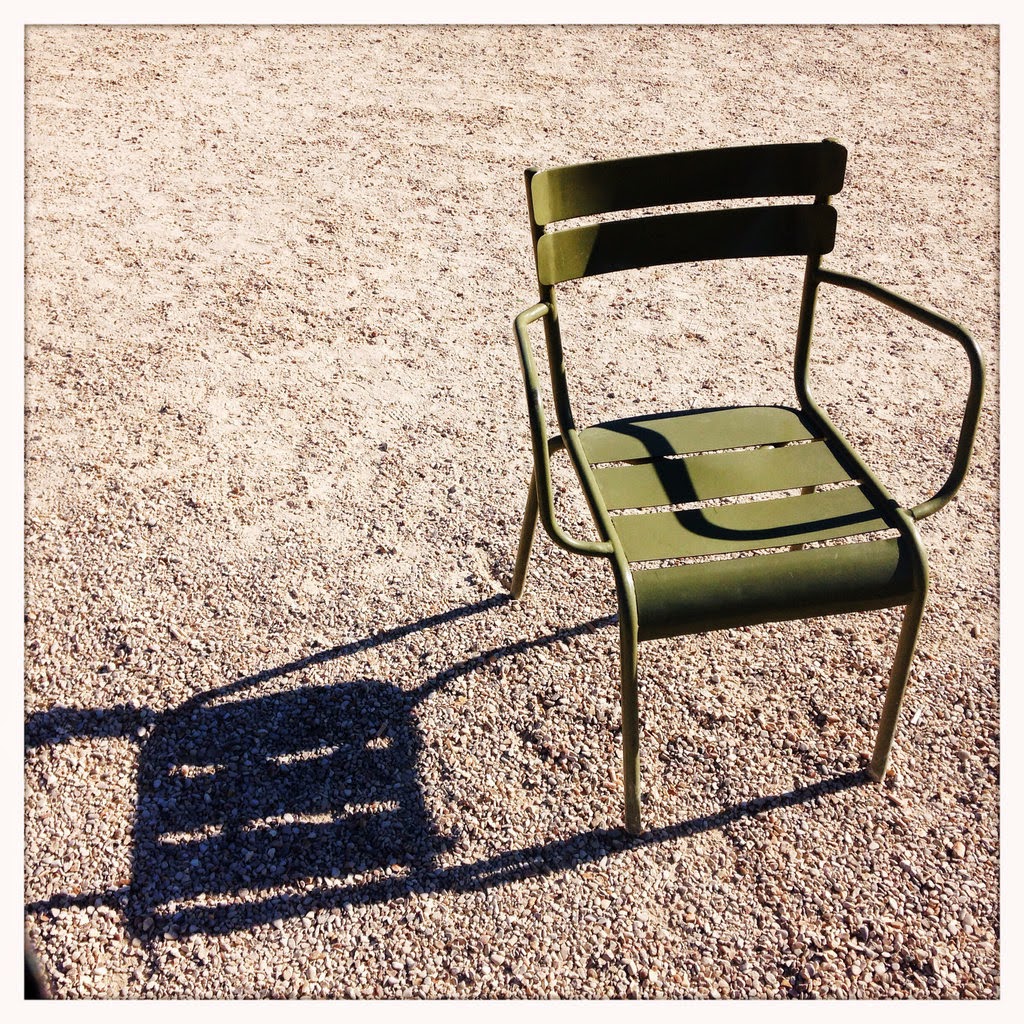 I sliced through an oyster with my cocktail fork, loosening it from its shell. A pulpy Utah Beach, it was brimming with lemon juice and its own slightly salty liquor. I lifted it with a thumb and forefinger, and tilted it to my lips.
It was early spring in Paris. To my left, a white-haired woman with red lipstick disappeared behind a newspaper. To my right, a man and a woman flirted over starters. We were at the center of one of the last sprawling brasseries of the 1920s, where a large basin into which the artists’ model Kiki de Montparnasse used to climb has been replaced with a comparatively demure sculpture of a couple forming an orb with their outstretched limbs. A waiter paused at my table to rotate the platter of oysters so that the overturned shells faced the empty chair across from me.
“Voilà,” he said.
I leaned back against the banquette, bathed in the whir of nearby tête-à-têtes, sipping my Chablis.
It was easy in Paris to surrender to the moment. But why? What alchemy transmuted ordinary activities, be it a walk across a bridge or the unwrapping of butter, into a pleasure? My default speed in New York is “hurtle,” yet in Paris I dragged the edge of a fork across an oyster with a care better suited to sliding a bow across a violin.
This was not simply because I was in Paris, though it has long held a kind of magic for many Americans. It was because I was there on my own. In a city that has been perfecting beauty since the reign of Napoleon III, there are innumerable sensual details — patterns, textures, colors, sounds — that can be diluted, even missed, when chattering with someone or collaborating on an itinerary. Alone one becomes acutely aware of the hollow clack of pétanque balls in a park; the patina of Maillol’s bronze “Baigneuse se Coiffant” that makes her look wet even on a cloudless day in the Tuileries; how each of the empty wine bottles beside sidewalk recycling bins is the embodiment of someone’s good time. There is a Paris that deeply rewards the solo traveler.
Indeed, the city has a centuries-old tradition of solo exploration, personified by the flâneur, or stroller. Flânerie is, in its purest form, a goal-less pursuit, though for some it evolved into a purposeful art: Walking and observing became a method of understanding a city, an age. Baudelaire described the flâneur as a passionate spectator, one who was fond of “botanizing on the asphalt,” as the essayist Walter Benjamin would later put it. Typically, it was a man. No longer.
To be a sidewalk botanist, one must walk. But please, no sneakers. C’est Paris. A fashion journalist friend suggested I be slightly transgressive and don a men’s shoe. A nod to my predecessors. This is how I came to average 20 miles a day in bronze cap-toe oxfords.
I sliced through an oyster with my cocktail fork, loosening it from its shell. A pulpy Utah Beach, it was brimming with lemon juice and its own slightly salty liquor. I lifted it with a thumb and forefinger, and tilted it to my lips.It was early spring in Paris. To my left, a white-haired woman with red lipstick disappeared behind a newspaper. To my right, a man and a woman flirted over starters. We were at the center of one of the last sprawling brasseries of the 1920s, where a large basin into which the artists’ model Kiki de Montparnasse used to climb has been replaced with a comparatively demure sculpture of a couple forming an orb with their outstretched limbs. A waiter paused at my table to rotate the platter of oysters so that the overturned shells faced the empty chair across from me.
“Voilà,” he said.
I leaned back against the banquette, bathed in the whir of nearby tête-à-têtes, sipping my Chablis.
It was easy in Paris to surrender to the moment. But why? What alchemy transmuted ordinary activities, be it a walk across a bridge or the unwrapping of butter, into a pleasure? My default speed in New York is “hurtle,” yet in Paris I dragged the edge of a fork across an oyster with a care better suited to sliding a bow across a violin.
This was not simply because I was in Paris, though it has long held a kind of magic for many Americans. It was because I was there on my own. In a city that has been perfecting beauty since the reign of Napoleon III, there are innumerable sensual details — patterns, textures, colors, sounds — that can be diluted, even missed, when chattering with someone or collaborating on an itinerary. Alone one becomes acutely aware of the hollow clack of pétanque balls in a park; the patina of Maillol’s bronze “Baigneuse se Coiffant” that makes her look wet even on a cloudless day in the Tuileries; how each of the empty wine bottles beside sidewalk recycling bins is the embodiment of someone’s good time. There is a Paris that deeply rewards the solo traveler.
Indeed, the city has a centuries-old tradition of solo exploration, personified by the flâneur, or stroller. Flânerie is, in its purest form, a goal-less pursuit, though for some it evolved into a purposeful art: Walking and observing became a method of understanding a city, an age. Baudelaire described the flâneur as a passionate spectator, one who was fond of “botanizing on the asphalt,” as the essayist Walter Benjamin would later put it. Typically, it was a man. No longer.
To be a sidewalk botanist, one must walk. But please, no sneakers. C’est Paris. A fashion journalist friend suggested I be slightly transgressive and don a men’s shoe. A nod to my predecessors. This is how I came to average 20 miles a day in bronze cap-toe oxfords.
by Stephanie Rosenbloom, NY Times | Read more:
Image: Agnes Dherbeys for The New York Times


A Bleak Visit to San Francisco’s ‘Google Glass Bar’

Then Slocum released a longer video, in which she called people at the bar white trash, and it became clear that the whole story was—at the very least—way more complicated than she originally let on.
After the incident, and to respond to the anti-tech backlash that’s swept the city, a few bars in San Francisco banned Google Glass. Taking the opposite approach, the Stanford Court Hotel—a former Marriott that remodeled itself in 2013 to coddle to the booming tech industry after almost going bankrupt a few years prior—started offering free drinks to anyone wearing the superfluous $1,500 face computer.
“The complimentary drink is geared toward the local tech crowd who own a pair, and might feel like an outcast or nuisance due to the recent string of negative press,” explained a hotel spokesperson to SF Gate. “[We] want them to feel at home.”
I figured this bar would offer a bleak glimpse of what the world might look like in 5-10 years, should “wearables” invade. I headed over at happy hour on a Thursday.
The Stanford Court Hotel sits castle-like on the apex of Nob Hill. The castle metaphor isn’t a hyperbolic stretch: On the high-walled south side of the place there’s actually a defensive tower. I wondered if those standing guard would dump boiling oil on any non-tech peasants, should they storm the fortress demanding breadcrumbs.
The entrance is concrete and cavernous, like a parking garage, or to extend the castle metaphor, it functions sort of like a barbican. At first I wasn’t sure if it was the correct entrance, but noticed a cement fountain in the center, and some bored valets, so I moseyed in. I was initially worried they’d stop me—I had biked there, uphill, from my apartment in the Mission, and had sweat through my shirt.
Walking in the door, there was a welcome mat with #GDBYE, which stands for either “goodbye” or “god boye.” If the former is true, then it was facing the wrong way, saying “goodbye” to everyone entering. There were iPads at the front desk, sitting vertically in stands, that read “#hello.” I thought these were odd design touches that fundamentally misunderstood the point of hashtags.
The lobby was crowded with pilots and flight attendants. Above, there was a faux-stained glass dome—the glass was painted different primary colors. Toto’s “Hold The Line” played over the lobby’s speakers. An electric motorcycle was parked next to a sign that read “take charge.” There were Macs lined up along a window that looked out into the entrance area, their screensavers flashing images of the hotel rooms, I suppose in case guests forgot what their rooms looked like.
I walked to the bar, passing a couch with pillows that read CTRL, ALT, DEL. I wondered what these pillows signify—perhaps the couch freezes often?—and snapped a photo. I briefly considered flipping the pillows out of order, to see if anyone noticed.
The bar was quiet. Nobody was wearing Google Glass. A Warriors game was ending on a flatscreen TV at the far end of the bar. In front of it sat a 50-something tourist couple. Three chairs up from them a 30-someting guy pecked at his laptop, and on the other end two women sat drinking white wine and talking loudly but incomprehensibly. The only thing I could make out was when one of them said, “Have you ever watched ‘Devil Wears Prada’?”
I sat down between the tourist couple and the guy on his laptop, who was apparently locked out. He kept trying different passwords, hitting enter, watching the screen shake to say “no,” and then letting out a long sigh.
I ordered a beer from a tired, middle-aged bartender, a Big Daddy, which cost $7.61. In my neighborhood you could get it for $5 outside of happy hour. As he filled the glass I noticed they had Vodka on tap.
The tourist couple next to me sat quietly, definitively not the kind of people the hotel was hoping to draw, digging through the dish of assorted nuts in front of them with their fingers, picking out the M&Ms. The wife—dressed like a mannequin from Chicos—sipped her red wine, as the husband—sneakers with high athletic socks, jeans and a windbreaker—waited for her to finish, empty beer glass in front of him.
He spoke to me after I ordered, in a Sam Elliott baritone. “Big Daddy, huh? Ever had that before?”
“Yeah,” I replied.
“Where’s it from?”
“Here.”
He thought about this for a moment, then looked as his wife, satisfied. “Must be a local or something.”
A long moment passed.
“Big Daddy,” he repeated to himself.
The guy to my left suddenly slammed his MacBook shut, and crossed the bar to the CTRL-ALT-DEL couch, where he was charging his phone at a nearby outlet.
I sat and drank.
The bartender replaced the peanut dish in front of the tourists with another full container.
“That’s just what we need,” the guy said sardonically.
It suddenly occurred to me that the bartender never offered me a dish of nuts. I thought about complaining—what, you think I’m too sweaty for some assorted nuts?
The laptop guy returned, opened his computer, furiously tried a few more passwords, and then angrily asked the bartender to change the TV channel. The game had ended, and players were being interviewed.
“What do you want to watch?”
“Anything, I don’t care, just a game. As much as I love watching interviews,” he said.
Only a few seconds after the channel was changed for him, he closed his laptop, and wandered off to one of the Macs in the lobby. He sat in one of the awkward spherical beanbag chairs, that were too low to the ground and made him look like a 6-year-old at the wheel of a large automobile. He immediately visited Espn.com and scrolled through, bored.
I texted my friend: “This bar is the opposite of fun.”
A fly circled and then landed in my beer.
by Joe Viex, deathandtaxes | Read more:
Image: SF Gate
Friday, May 2, 2014

How to Shop for the Apocalypse
An architect friend who usually designs Manhattan skyscrapers was recently asked to pitch for a far more interesting project. The client, a senior partner at Goldman Sachs, wanted him to design a family house in upstate New York with a difference. It wouldn’t just be completely ‘off the grid’, with its own power and water supplies, but — and there isn’t yet an architectural term for this — it would be post-apocalypse. The conventional house would be mirrored below ground with pretty much identical living quarters that would be completely secure and so self-contained that there would be facilities to hydroponically grow plants and vegetables without soil.
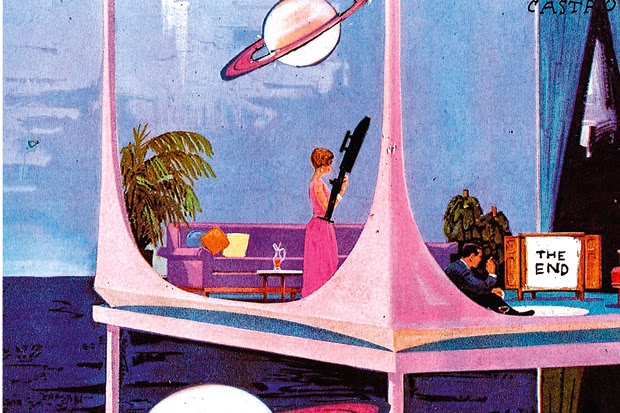 ‘Americans shouldn’t believe they’re immune to social unrest’ was all the prospective client would offer by way of explanation. He primarily wanted the house as a refuge for his own family but also, he revealed magnanimously, saw it as a possible rallying point for humanity in the event of some future catastrophe.
The strange thing was that when my friend rang a mechanical engineer for advice on a few technical details, rather than be gobsmacked, the engineer said he’d been working on pretty much the same brief for another Wall Street titan. Only he wanted a moat, too. ‘What do they know that we don’t?’ the architect asked me. (...)
There have been doomsday cults in the US since the off, and survivalist militias in combat gear were charging around the woods preparing to fight government baddies during the Clinton presidency. But that’s nothing on the cynical mood now. The chief reason has been Barack Obama winning a second term — many preppers believe he will start trying to separate citizens from their guns, sparking civil war. For the very rich, there is the added paranoia caused by the growing wealth gap and widespread predictions that it could lead eventually to serious social unrest. Drive along the East River into Manhattan’s financial district and you can’t miss a huge billboard advertising a storage warehouse. ‘The French aristocracy never saw it coming either,’ it reads. Endearingly cryptic … unless you’re a twitchy banker and then the threat is fairly obvious. A well-known Wall Street financial adviser, David John Marotta, recently told investors they should prepare for a financial apocalypse by carrying around an emergency ‘bug-out bag’ containing food, a gun and ammunition.
According to James Stevens, alias Doctor Prepper, who is the guru of a movement he prefers to call ‘family preparedness’, most preppers are white, middle-class and affluent. Black people aren’t interested, he says. Read prepper online forums and you’ll pick up on a definite elitism, a view that they’re the chosen few and that some people’s lives are too frivolous to be worth saving. One has to ask how many of these people are simply fantasising about an alternative world in which they are the hero.
Being that hero doesn’t come cheap. America’s ‘disaster preparedness’ economy is estimated to be worth some annual $500 million in sales to ordinary punters — several billion dollars when you include sales to businesses and the government. That’s just the stuff you fit in a backpack. If you have $2 million to spare, you can have your own decommissioned nuclear missile bunker as an end-of-the-world getaway. When a developer converted a 1960s-era missile silo in Kansas into a 174ft deep apartment complex, some sniggered but he quickly sold all 14 of the 1,820 sq ft units. There’s a long waiting list for further silo conversions that he plans. Survival Condo will have enough supplies of site-grown food, and purified well and rain water, to accommodate 70 people indefinitely, says the developer. The flats boast large HDTV panels simulating windows (giving views of a world that no longer exists). The silo also boasts a cinema, spa, classrooms, bar and pool. Zombies and other non-members will be kept out with ground-level security cameras, electric fences and the lethal contents of an onsite armoury.
For those who need to prepare on a tighter budget for D-day (preppers call it TSHTF, or ‘the shit hits the fan’), there are cheaper options such as a 40 ft long, 10 ft diameter corrugated steel tube that can house six and be buried in your back garden. It’s a snip at $72,000, although the fake tree or rock to conceal the air vent is extra. Early buyers were offered a free ten acres at a secret prepper settlement in Arizona so they could bury their tube near like-minded neighbours.
‘Americans shouldn’t believe they’re immune to social unrest’ was all the prospective client would offer by way of explanation. He primarily wanted the house as a refuge for his own family but also, he revealed magnanimously, saw it as a possible rallying point for humanity in the event of some future catastrophe.The strange thing was that when my friend rang a mechanical engineer for advice on a few technical details, rather than be gobsmacked, the engineer said he’d been working on pretty much the same brief for another Wall Street titan. Only he wanted a moat, too. ‘What do they know that we don’t?’ the architect asked me. (...)
There have been doomsday cults in the US since the off, and survivalist militias in combat gear were charging around the woods preparing to fight government baddies during the Clinton presidency. But that’s nothing on the cynical mood now. The chief reason has been Barack Obama winning a second term — many preppers believe he will start trying to separate citizens from their guns, sparking civil war. For the very rich, there is the added paranoia caused by the growing wealth gap and widespread predictions that it could lead eventually to serious social unrest. Drive along the East River into Manhattan’s financial district and you can’t miss a huge billboard advertising a storage warehouse. ‘The French aristocracy never saw it coming either,’ it reads. Endearingly cryptic … unless you’re a twitchy banker and then the threat is fairly obvious. A well-known Wall Street financial adviser, David John Marotta, recently told investors they should prepare for a financial apocalypse by carrying around an emergency ‘bug-out bag’ containing food, a gun and ammunition.
According to James Stevens, alias Doctor Prepper, who is the guru of a movement he prefers to call ‘family preparedness’, most preppers are white, middle-class and affluent. Black people aren’t interested, he says. Read prepper online forums and you’ll pick up on a definite elitism, a view that they’re the chosen few and that some people’s lives are too frivolous to be worth saving. One has to ask how many of these people are simply fantasising about an alternative world in which they are the hero.
Being that hero doesn’t come cheap. America’s ‘disaster preparedness’ economy is estimated to be worth some annual $500 million in sales to ordinary punters — several billion dollars when you include sales to businesses and the government. That’s just the stuff you fit in a backpack. If you have $2 million to spare, you can have your own decommissioned nuclear missile bunker as an end-of-the-world getaway. When a developer converted a 1960s-era missile silo in Kansas into a 174ft deep apartment complex, some sniggered but he quickly sold all 14 of the 1,820 sq ft units. There’s a long waiting list for further silo conversions that he plans. Survival Condo will have enough supplies of site-grown food, and purified well and rain water, to accommodate 70 people indefinitely, says the developer. The flats boast large HDTV panels simulating windows (giving views of a world that no longer exists). The silo also boasts a cinema, spa, classrooms, bar and pool. Zombies and other non-members will be kept out with ground-level security cameras, electric fences and the lethal contents of an onsite armoury.
For those who need to prepare on a tighter budget for D-day (preppers call it TSHTF, or ‘the shit hits the fan’), there are cheaper options such as a 40 ft long, 10 ft diameter corrugated steel tube that can house six and be buried in your back garden. It’s a snip at $72,000, although the fake tree or rock to conceal the air vent is extra. Early buyers were offered a free ten acres at a secret prepper settlement in Arizona so they could bury their tube near like-minded neighbours.
by Tom Leonard, The Spectator | Read more:
Image: Castro
Subscribe to:
Posts (Atom)