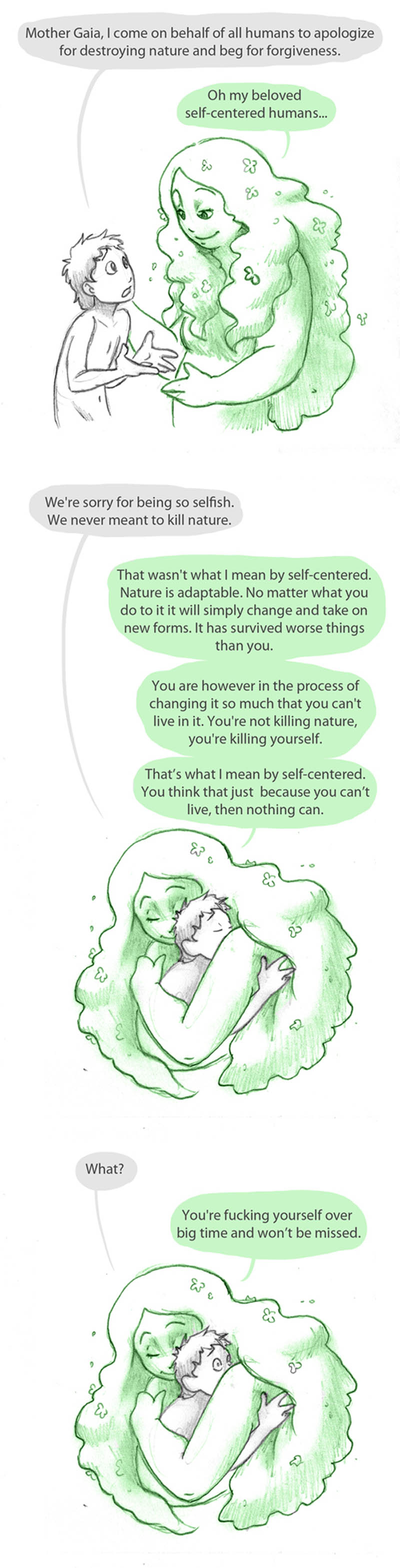
[ed. Someone retrieved this from the archives and I thought I'd repost it. Still relevant as ever.]
via:


 According to a recent report by the World Bank, that scenario is not so far-fetched. The bank is one of those high-minded organizations -- Washington is full of them -- that release hundreds, maybe thousands, of reports a year on policy issues big and small. Many of these reports are long and highly technical, and just about all of them get released to the world as a PDF report posted to the organization's Web site.
 That paragraph neatly encapsulates a conversation we’ve been having for a few years now. What’s happening to college athletes is bullshit. We know this.
 A former creative director at NBC Universal, Roske is not without assets. He is the producer of a web series called “Chasing the Hill,” which chronicles the campaign of a fictional Democratic congresswoman. He also has support from the White House — or at least the soundstage White House of “The West Wing.” Richard Schiff, who played Toby on the series, has a big role in “Chasing the Hill” and is a Roske friend. So is David Hasselhoff, who played the governor of California on the web series. Should Roske get elected, he already has some bold ideas. He plans, for instance, to hire a film crew to document his every move in office. “People have a right,” he says, “to know what their elected representatives are doing.

 Dick Loizeaux, 65, who began suffering hearing loss nearly a decade ago, recently had a “comfortable conversation” in a noisy New York nightclub using the GN ReSound Linx hearing aid.

Although visually open to the street, the lawn was a barrier—a kind of verdant moating separating the household from the threats and temptations of the city. … [It separates] the family by real estate from intruders into private space.Securing the perimeter of the nuclear family’s compound, the inevitable white-picket fence stood guard, a Leave It to Beaver update of the frontier stockade. “He put up a barbed wire fence/ To keep out the unknown,” Joni Mitchell sings, in “The Hissing of Summer Lawns” (1975), a Didion-esque indictment of the same status-seeking, spiritually arid suburbanites Malvina Reynolds mocks in her 1962 folk song, “Little Boxes” (inspired by the Levittown-like California housing development of Westlake), and whom Didion submits for our sardonic consideration in her essay “Some Dreamers of the Golden Dream” (1966). Like Didion, who sets her morality play in San Bernardino, Mitchell uses The Valley and its sprinkler-swished lawns as a metaphor for the blank-brained narcissism and materialism that for many (especially New Yorkers of the Woody Allen persuasion) are L.A.’s gifts to American culture:
He bought her a diamond for her throatEven now, when we experience the crack-up of the suburban dream as an aesthetic pleasure of the first order through movies like American Beauty and Revolutionary Road and TV shows like Mad Men, Breaking Bad, and Weeds, the lawn endures in the public mind as a symbol of the American idyll, or at least a white, middle-class idyll. (...)
He put her in a ranch house on a hill
She could see the valley barbecues
From her window sill
See the blue pools in the squinting sun
Hear the hissing of summer lawns
 Dams degrade water quality, block the movement of nutrients and sediment, destroy fish and wildlife habitats, damage coastal estuaries and in some cases rob surrounding forests of nitrogen. Reservoirs can also be significant sources of greenhouse gas emissions.
 Two teams of scientists published studies on Sunday showing that blood from young mice reverses aging in old mice, rejuvenating their muscles and brains. As ghoulish as the research may sound, experts said that it could lead to treatments for disorders like Alzheimer’s disease and heart disease.