Tuesday, May 13, 2014

The Smooth Path to Pearl Harbor

The heated rhetoric of recent months suggests that interpreting the behavior of both China and Japan during the war years will become increasingly controversial. Meanwhile, the tensions between the two countries could destabilize the American-dominated postwar order in East Asia. We may be about to witness the most important moment of change in the relations among the powers in the region since the events that led to Pearl Harbor in 1941.

In this atmosphere, understanding the reasons for Japan’s decision to go to war in the Pacific has an urgency that goes beyond the purely historical. Fortunately, Japan 1941: Countdown to Infamy, by the Japanese historian Eri Hotta, proves an outstanding guide to that devastating decision. In lucid prose, Hotta meticulously examines a wide range of primary documents in Japanese to answer the question: Why did Japan find itself on the brink of war in December 1941?
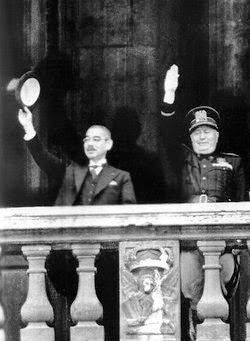
The answer begins long before the year of the book’s title. In the 1920s, Japan gave many signs of being integrated into international society. It had taken part, albeit in a limited way, in World War I and had been one of the victorious nations at the Paris Peace Conference of 1919. Its parliamentary democracy was young but appeared promising: in 1925, a new law greatly widened the male franchise. The country had become a part of the global trading system, and Japan’s external policy was defined by the liberal internationalism of Foreign Minister Shidehara Kijuro.

Yet interwar Japan was ambivalent about its status in the world, perceiving itself as an outsider in the Western-dominated global community, and aware that the bonds among different parts of its own society were fraying. The Western victors of 1919 had refused Japanese demands for a racial equality clause as part of the peace settlement, confirming the opinions of many of Tokyo’s policymakers that they would never be treated as the peers of their white allies. At home, labor unrest and an impoverished countryside showed that Japan’s society was unstable under the surface. After the devastating earthquake in Japan’s Kanto region in 1923, riots broke out against members of the local Korean population, who were falsely accused of arson and robbery. In 1927, one of the finest writers of the era, Akutagawa Ryunosuke (whose short story “In a Grove” became the basis of Kurosawa’s film Rashomon), took his own life. In his will, he declared that he was suffering from “a vague insecurity.”

Japan’s sense of insecurity was real but by no means vague, and expressed itself most vividly in the drive toward building an empire. In the early twentieth century, Japan was the only non-Western country to have its own colonies. In 1895, Japan won a war against China and was ceded Taiwan; it gained territorial and railway rights in Manchuria in 1905 at the end of its war with Russia; and in 1910, it fully annexed Korea. The depression devastated Japan’s economy after 1929, and its leaders became obsessed with the idea of expanding further onto the Asian mainland.

Japanese civilian politics also started to fall apart as the military began to make its own policy. In 1931, two officers of the locally garrisoned Japanese Kwantung Army in the south of China set off an explosion on a railway line near the city of Shenyang (then Mukden) in Manchuria, the northeastern region of China. Within days, they prepared the way for the Japanese conquest of the entire region. Protests from a commission sent by the League of Nations had no effect other than causing Japan to quit the League.

By the mid-1930s, much of northern China was essentially under Japanese influence. Then, on July 7, 1937, a small-scale clash between local Chinese and Japanese troops at the Marco Polo Bridge in Wanping, a small village outside Beijing, escalated. The Japanese prime minister, Prince Konoe, used the clash to make further territorial demands on China. Chiang Kai-shek, leader of the Nationalist government, decided that the moment had come to confront Japan rather than appease it, and full-scale war broke out between the two sides.

Within eighteen months, China and Japan were locked in a stalemate. The Japanese quickly overran eastern China, the most prosperous and advanced part of the country. But they were unable to subdue guerrilla activity in the countryside or eliminate the Communists based in the north. Nor did Chiang’s government show any inclination to surrender: by moving to the southwestern city of Chongqing, his Chinese Nationalists dug in for a long war against Japan, desperately hoping to attract allies to their cause, but gaining little response over the long years until 1940. Yet between them the Nationalist and Communist forces had more than half a million troops in China. The United States, increasingly concerned that all Asia might fall into Japan’s hands, began to assist China and impose sanctions on Japan. At that point, desperate to resolve their worsening situation, Japan embarked on the path to the attack on Pearl Harbor on December 7, 1941, and four years of war with the United States and its allies.

Hotta makes it unambiguously clear that the blame for the war lies entirely at Japan’s door. The feeling of inevitability in Tokyo was a product of the Japanese policymakers’ own blinkered perspectives. One of the most alarming revelations in her book is the weak-mindedness of the doves and skeptics, who refused to confront the growing belligerence of most of their colleagues.

by Rana Mitter, NY Review of Books |  Read more:
Image: Heinrich Hoffmann/Ullstein Bild/Granger Collection

Monday, May 12, 2014


[ed. Yikes.]
World Hairdressing Championships - in Pictures.
Image: Arne Dedert/EPA

The Soul-Killing Structure of the Modern Office

Picture Leonardo DiCaprio heading stolidly to work at the start of two of his most alliterative movies. In Revolutionary Road, set in 1955, he’s Frank Wheeler, a fedora’d nobody who takes a train into Manhattan and the elevator to a high floor in an International-style skyscraper. He smokes at his desk, slips out for a two-martini lunch, and gets periodically summoned to the executive den where important company decisions are made. Wheeler is a cog, but he is an enviable cog—by appearances, he has achieved everything a man is supposed to want in postwar America.

In The Wolf of Wall Street, set in the late 1980s, DiCaprio is a failed broker named Jordan Belfort who follows a classified ad to a Long Island strip mall, where a group of scrappy penny-stock traders cold-call their marks and drive home in sedans. His office need not be a status symbol, since prestige for stock traders is about domination, not conformity; if you become a millionaire, who cares if you did it in the Chrysler Building or your garage?

Watch these films back-to-back, and you’ll see DiCaprio traverse the recent history of the American workplace. A white-collar job used to be a signal of ambition and stability far beyond that offered by farm, factory, or retail work. But what was once a reward has become a nonnecessity—a mere company mailing address. Highways are now stuffed with sand-colored, dark-windowed cubicle barns arranged in groups like unopened moving boxes. Barely anyone who works in this kind of place expects to spend a career in that building, but no matter where you go, you can expect variations on the same fluorescent lighting, corporate wall art, and water coolers.

In his new book, Cubed: A Secret History of the Workplace, Nikil Saval claims that 60 percent of Americans still make their money in cubicles, and 93 percent of those are unhappy to do so. But rather than indict these artless workspaces, Saval traces the intellectual history of our customizable pens to find that they’re the twisted end result of utopian thinking. “The story of white-collar work hinges on promises of freedom and uplift that have routinely been betrayed,” he writes. Above all, Cubed is a graveyard of social-engineering campaigns.

Saval, an editor at n+1, traces the modern office’s roots back to the bookkeeping operations of the early industrial revolution, where clerks in starched collars itemized stuff produced by their blue-collar counterparts. Saval describes these cramped spaces as the birthplace of a new ethic of “self-improvement.” A clerkship was a step up from manual labor, and the men lucky enough to pursue it often found themselves detached—from the close-knit worlds of farming or factory work and even from their fellow clerks, who were now just competition. In Saval’s telling, this is where middle-class anxiety began. (...)

My first office job started in the summer of 2007. I’d just graduated from college, and I took the light rail to the outer suburbs of Baltimore and walked half a mile to my desk. The McCormick & Company factory was nearby, so each day smelled like a different spice. In that half-mile (sidewalk-free, of course), I passed three other corporate campuses and rarely saw anyone coming or going. I worked in a cubicle of blue fabric and glass partitions and reported to the manager with the nearest window. For team meetings, we’d head into a room with a laminate-oak table and a whiteboard. If it was warm, I’d take lunch at a wooden picnic table in the parking lot, the only object for miles that looked like weather could affect it. In my sensible shoes and flat-front khakis, I’d listen to the murmur of Interstate 83 from just over a tree-lined highway barrier, the air smelling faintly of cumin or allspice. This was not a sad scene, but it was an empty one, and I was jolted back to it when I read Saval’s assertion that post-skyscraper office design “had to be eminently rentable. … The winners in this new American model weren’t office workers or architects, not even executives or captains of industry, but real estate speculators.”

Freelancers are expected to account for 40 percent to 50 percent of the American workforce by 2020. Saval notes a few responses to this sea change, such as “co-working” offices for multiple small companies or self-employed people to share. But he never asks why the shift is under way or why nearly a quarter of young people in America now expect to work for six or more companies. These are symptoms of the recession, and the result of baby boomers delaying retirement to make up for lost savings. But they’re also responses to businesses’ apparent feelings toward their employees. It’s not so much the blandness of corporate architecture, which can have a kind of antiseptic beauty; it’s the transience of everything in sight, from the computer-bound work to the floor plans designed so that any company can move right in when another ends its lease or bellies up.When everything is so disposable, why would anyone expect or want to stay?

by John Lingan, American Prospect |  Read more:
Image: CubeSpace/Asa Wilson

And once the storm is over you won’t remember how you made it through, how you managed to survive. You won’t even be sure, in fact, whether the storm is really over. But one thing is certain. When you come out of the storm you won’t be the same person who walked in. That’s what this storm’s all about.

Haruki Murakami, Kafka on the Shore

The Rise of Corporate Impunity

On the evening of Jan. 27, Kareem Serageldin walked out of his Times Square apartment with his brother and an old Yale roommate and took off on the four-hour drive to Philipsburg, a small town smack in the middle of Pennsylvania. Despite once earning nearly $7 million a year as an executive at Credit Suisse, Serageldin, who is 41, had always lived fairly modestly. A previous apartment, overlooking Victoria Station in London, struck his friends as a grown-up dorm room; Serageldin lived with bachelor-pad furniture and little of it — his central piece was a night stand overflowing with economics books, prospectuses and earnings reports. In the years since, his apartments served as places where he would log five or six hours of sleep before going back to work, creating and trading complex financial instruments. One friend called him an "investment-banking monk."

Serageldin's life was about to become more ascetic. Two months earlier, he sat in a Lower Manhattan courtroom adjusting and readjusting his tie as he waited for a judge to deliver his prison sentence. During the worst of the financial crisis, according to prosecutors, Serageldin had approved the concealment of hundreds of millions in losses in Credit Suisse's mortgage-backed securities portfolio. But on that November morning, the judge seemed almost torn. Serageldin lied about the value of his bank's securities — that was a crime, of course — but other bankers behaved far worse. Serageldin's former employer, for one, had revised its past financial statements to account for $2.7 billion that should have been reported. Lehman Brothers, AIG, Citigroup, Countrywide and many others had also admitted that they were in much worse shape than they initially allowed. Merrill Lynch, in particular, announced a loss of nearly $8 billion three weeks after claiming it was $4.5 billion. Serageldin's conduct was, in the judge's words, "a small piece of an overall evil climate within the bank and with many other banks." Nevertheless, after a brief pause, he eased down his gavel and sentenced Serageldin, an Egyptian-born trader who grew up in the barren pinelands of Michigan's Upper Peninsula, to 30 months in jail. Serageldin would begin serving his time at Moshannon Valley Correctional Center, in Philipsburg, where he would earn the distinction of being the only Wall Street executive sent to jail for his part in the financial crisis.

American financial history has generally unfolded as a series of booms followed by busts followed by crackdowns. After the crash of 1929, the Pecora Hearings seized upon public outrage, and the head of the New York Stock Exchange landed in prison. After the savings-and-loan scandals of the 1980s, 1,100 people were prosecuted, including top executives at many of the largest failed banks. In the '90s and early aughts, when the bursting of the Nasdaq bubble revealed widespread corporate accounting scandals, top executives from WorldCom, Enron, Qwest and Tyco, among others, went to prison.

The credit crisis of 2008 dwarfed those busts, and it was only to be expected that a similar round of crackdowns would ensue. In 2009, the Obama administration appointed Lanny Breuer to lead the Justice Department's criminal division. Breuer quickly focused on professionalizing the operation, introducing the rigor of a prestigious firm like Covington & Burling, where he had spent much of his career. He recruited elite lawyers from corporate firms and the Breu Crew, as they would later be known, were repeatedly urged by Breuer to "take it to the next level."

But the crackdown never happened. Over the past year, I've interviewed Wall Street traders, bank executives, defense lawyers and dozens of current and former prosecutors to understand why the largest man-made economic catastrophe since the Depression resulted in the jailing of a single investment banker — one who happened to be several rungs from the corporate suite at a second-tier financial institution. Many assume that the federal authorities simply lacked the guts to go after powerful Wall Street bankers, but that obscures a far more complicated dynamic. During the past decade, the Justice Department suffered a series of corporate prosecutorial fiascos, which led to critical changes in how it approached white-collar crime. The department began to focus on reaching settlements rather than seeking prison sentences, which over time unintentionally deprived its ranks of the experience needed to win trials against the most formidable law firms. By the time Serageldin committed his crime, Justice Department leadership, as well as prosecutors in integral United States attorney's offices, were de-emphasizing complicated financial cases — even neglecting clues that suggested that Lehman executives knew more than they were letting on about their bank's liquidity problem. In the mid-'90s, white-collar prosecutions represented an average of 17.6 percent of all federal cases. In the three years ending in 2012, the share was 9.4 percent. (Read the Department of Justice's response to ProPublica's inquiries.)

After the evening drive to Philipsburg, Serageldin checked into a motel. He didn't need to report to Moshannon Valley until 2 p.m. the next day, but he was advised to show up early to get a head start on his processing. Moshannon is a low-security facility, with controlled prisoner movements, a bit tougher than the one portrayed on "Orange Is the New Black." Friends of Serageldin's worried about the violence; he was counseled to keep his head down and never change the channel on the TV no matter who seemed to be watching. Serageldin, who is tall and thin with a regal bearing, was largely preoccupied with how, after a decade of 18-hour trading days, he would pass the time. He was planning on doing math-problem sets and studying economics. He had delayed marrying his longtime girlfriend, a private-equity executive in London, but the plan was for her to visit him frequently.

Other bankers have spoken out about feeling unfairly maligned by the financial crisis, pegged as "banksters" by politicians and commentators. But Serageldin was contrite. "I don't feel angry," he told me in early winter. "I made a mistake. I take responsibility. I'm ready to pay my debt to society." Still, the fact that the only top banker to go to jail for his role in the crisis was neither a mortgage executive (who created toxic products) nor the C.E.O. of a bank (who peddled them) is something of a paradox, but it's one that reflects the many paradoxes that got us here in the first place.

by Jesse Eisinger, Pro Publica |  Read more:
Image: Javier Jaen

Daily Aspirin Regimen Not Safe for Everyone: FDA

Taking an aspirin a day can help prevent heart attack and stroke in people who have suffered such health crises in the past, but not in people who have never had heart problems, according to the U.S. Food and Drug Administration.

"Since the 1990s, clinical data have shown that in people who have experienced a heart attack, stroke or who have a disease of the blood vessels in the heart, a daily low dose of aspirin can help prevent a reoccurrence," Dr. Robert Temple, deputy director for clinical science at the FDA, said in an agency news release.

A low-dose tablet contains 80 milligrams (mg) of aspirin, compared with 325 mg in a regular strength tablet.

However, an analysis of data from major studies does not support the use of aspirin as a preventive medicine in people who have not had a heart attack, stroke or heart problems. In these people, aspirin provides no benefits and puts them at risk for side effects such as dangerous bleeding in the brain or stomach, the FDA said.

by Robert Priedt, WebMD | Read more:
Image: uncredited

The Unmothered

When I was growing up in Israel, there was a short-lived show on television called “Hahaverim Shel Yael” (“Yael’s Friends”), which featured a peppy girl who introduced short clips acted out by puppets. The actress who played Yael was probably in her twenties, but she was dressed up to look like a child, in flowery dresses and pigtails. I loved that program, in which the puppets occassionally crossed into real life and made a mess of Yael’s studio. Right before the opening music came on, Yael would look into the camera and fake-whisper to the viewers, “Tell your mother to turn up the volume!” Once, as my twin sister and I were settling down on the sofa to watch, my mother overheard this opening bit. “And what about those who don’t have a mother?” she asked.

I must have been seven or eight at the time. I was irritated with her for asking that question, forever ruining the show for me. But I shouldn’t have been surprised. It summed up, I now realize, her parenting philosophy. The way she didn’t baby us, but treated us like thoughtful people, capable of empathy. The way she was always fully there—registering, questioning. But mostly, I think, it showed her unyielding belief in fairness, which, years later, I would hear her define as justice played out in the private sphere. (She was a philosophy professor, preoccupied with definitions.) It was a particular kind of fairness, one that centered on a child’s sensibility. Once, when I asked her whom she loved more, my sister or me, she answered, simply, “You.” Incredulous, my sister posed the same question. “Who do you love more, Ima? Ruth or me?” “You,” my mother said. We tried again. Each time, my mother invariably told whoever asked that she loved her more. “This doesn’t make any sense,” we finally said. She smiled and told us, “Sure it does. Don’t you see? I love you more and I love you more.” This was her sense of fairness: no kid wants to hear that they are loved the same as their sister.

This Mother’s Day, three and a half years after she died, I find myself turning over her question in my mind. And what about those who don’t have a mother?

“CALL MOM” said a sign the other day, and something inside me clenched. In my inbox, at work, an email waited from the New York Times: a limited offer to “treat Mom” to a free gift. It’s nothing, I tell myself. A day for advertisers. So I shrug off the sales and the offers, the cards and the flowers. I press delete. Still, I now mark Mother’s Day on my private calendar of grief. Anyone who has experienced a loss must have one of those. There’s August 29th, my mother’s birthday—forever stopped at sixty-four. September 17th, my parents’ anniversary—a day on which I now make a point of calling my father, and we both make a point of talking about anything but. There’s June 6th, the day she was diagnosed—when a cough that she had told us was “annoying” her and a leg that she had been dragging, thinking she must have pulled a muscle, turned out to be symptoms of Stage IV lung cancer. And then there’s October 16th: the day she died, four months and ten days after the diagnosis. The year becomes a landscape filled with little mines.

Trust me, I’m too aware of the fact that my mother is gone to wish her here in any serious way on Mother’s Day. But does the holiday have to be in May, when the lilacs are in full bloom? When a gentle breeze stirs—the kind of breeze that reminds me of days when she would recline on a deck chair on our Jerusalem porch, head tilted back, urging me to “sit a while”?

Meghan O’Rourke has a wonderful word for the club of those without mothers. She calls us not motherless but unmothered. It feels right—an ontological word rather than a descriptive one. I had a mother, and now I don’t. This is not a characteristic one can affix, like being paperless, or odorless. The emphasis should be on absence.

by Ruth Margalit, New Yorker |  Read more:
Image: Ruth Margalit

Sunday, May 11, 2014


Liberace and Cher
via:

Diane Birch, Daryl Hall

The World of Bob Dylan Obsessives

Imagine liking a singer so much you travel across the country to see him. You invade his private spaces; commit his every song to memory; change the way you dress, walk, and talk to be more like him. When people ask about your past, you answer the way he might, instead of telling the truth.

This kind of behavior might make you a subject of David Kinney’s new book The Dylanologists. But it might make you Bob Dylan himself.

When Bob Dylan arrived in New York on Jan. 24, 1961, he was a Woody Guthrie pilgrim. He talked like he came from Oklahoma instead of Minnesota and told stories of ramblin’ that would have fit in Bound for Glory. He sought out the folk singer, who was suffering from Huntington’s chorea. On the weekends Dylan would sit by Guthrie’s hospital bed and play him songs.

The Dylanologists are just as obsessive about Dylan. In the age before digital music, tape collectors strapped audio equipment to their bodies and pursued rare recordings like jewels from the Pharaoh's tomb. Bill Pagel purchased the ticket from Dylan’s prom, his high chair, and ultimately the home in Duluth where Dylan was born. Elizabeth Wolfson vacationed to California so she could drive by Dylan’s Malibu home. Security found her wandering the grounds and turned her away. The most famous of the Dylanologists, A.J. Weberman, was so consumed with trying to figure out the transcendental message behind Dylan’s music he was caught looking through the singer’s trash.

Woody Guthrie gave shape to Bob Dylan’s life and gave him an identity. That's a powerful relationship, and it's what makes the Dylan fanatic such an interesting topic. From the 1960s, when Dylan was first called the “voice of a generation,” he and his music have shaped entire lives. He's not just the guy playing in the background at the deli. He’s soundtracking marriages and inspiring in listeners a deeper understanding of themselves. Dylanologists credit Bob for driving them to certain careers or relationships.

He doesn’t want the credit. Dylan’s career has been propelled by his effort to stay one step ahead of his fans. He shed the protest-singer label almost as fast as they gave it to him, and he’s ditched every category they've tried to put him in ever since. Wherever he is right now, he’s on the run.

After reading this series of profiles, it's hard not to share Bob Dylan’s feelings about his most devoted fans. “Get a life, please,” he told one interviewer about the devotees. “You're not serving your own life well. You're wasting your life." Kinney doesn't make this argument explicitly. His book is not unlike a Bob Dylan song—he paints a picture and then you've got to interpret it yourself—but the conclusion seems plain: The life of the Dylanologist is often a wasted one.

by John Dickerson, Slate |  Read more:
Image: via:

Behind the Scenes on the NY Times Redesign

The New York Times just launched the first piece of their sitewide redesign: new article pages, with other tweaks and nudges throughout the site. We spoke with two designers and a developer who worked on the project to learn about the tech choices, design ideas, and strategy behind the new look and feel.

Strategy & Rationale

Renda Morton, product design lead: We are a really big company, that’s trying to be faster. Our website is our largest platform. To redesign the whole thing at once would be a nightmare, so we decided to start with our story page and go from there. What’s launching on the 8th is not a site redesign, but really just a redesign of our story page, and some light re-skinning to our home page, section fronts and some blogs to match the new story page. We started with the story page because, like other sites, that’s where most of our readers spend their time on our site. Most times bypassing our home page completely.

We’re going to tackle the home page and section fronts next, though we may not take the same approach. For the home page we’re going to being iterating from the re-skin, slowly adding features and refinements. Its “redesign” will be a slow evolution.

We’ll still continue work on the story page. We don’t want to just let it sit and rot on the internet, and end up right back that this point again where we had to no choice but to do a major overhaul.

What is your team hoping to achieve with the redesign work?

RM: Most of these are still works in progress, but our goals are:
  • Be faster.
  • Have a more flexible and adaptive presentation.
  • Have consistency across platforms.
  • Make the site easier to for the newsroom to produce and maintain.
  • Make it easier for our readers to read, navigation, share and explore.
  • Maintain and convert subscribers.
  • Create a high-quality advertising environment.
What spurred the redesign? Why now?

Allen Tan: It’s partly some much-needed foundation-building. We get to clear out legacy code and design that’s accumulated over 6 years (yeah, it’s been that long), and allows for quicker and easier iteration.

Eitan Konigsburg: Yeah, we had reached a bit of a technical wall in terms of being able to scale the site. A lot of technical debt was holding us back from truly modernizing the website and attempting a redesign (w/o reworking the infrastructure) would’ve been difficult. So the decision to redesign the site was an excellent chance to rebuild the technical foundation as well. These decisions could be seen as going hand-in-hand as it not only furthered the design-develop cycle, but allowed these groups to work even more closely together.

That includes using Github instead of SVN for version control, Vagrant environments, Puppet deployment, using requireJS so five different versions of jQuery don’t get loaded, proper build/test frameworks, command-line tools for generating sprites, the use of LESS with a huge set of mixins, a custom grid framework, etc. (...)

The Big Challenges

What were the biggest challenges you encountered while designing and building out the new site?

RM: The biggest “design” challenge is our own internal process and structure. Our website is where our newsroom’s editorial needs, meet our business goals and requirements, meet our reader’s goals and desires. There’s some overlap, but usually there is a compromise to be made. That’s the challenge. And sometimes you don’t even know if it can be done. Everything else, though hard, is nothing compared to that.

by Source Open News | Read more:
Image: NY Times

Saturday, May 10, 2014


Keiko Tanabe, Pacific Coast Highway III, 2010
via:

How To Write A Love Poem

Poetry occupies a cultural space in Contemporary American Society somewhere between Tap Dancing and Ventriloquism. People are certainly aware that poetry exists, but this awareness comes upon them only vaguely and in passing moments. During commercials, mostly, which feature corporate poetry. When people think of a poet, perhaps they imagine the finger-snapping beret-wearing beatnik. Or the slammy mike-wielding poet-ranter. Both proud poetic traditions. But most people who write poetry are people just like yourself. Scruffy, broken wordpals. In the age of Twitter, casual word-shaping may be at its all-time high worldwide. As we attempt to fit all the meaning and emotion we can into a few short lines, no doubt Maya Angelou and Walt Whitman and Bashō are looking down from heaven and smiling. (I know Maya Angelou isn’t dead. She just lives in heaven.)

Love poetry has, of course, been with us since the beginning of time. Lame pick-up lines were passé even in Mesozoic times; we diminish ourselves with cheap dating gimmickry. And who would want to woo anyone who could be gotten so cheaply anyway? It’s the chase that's the fun—and the poem is the map you use! To get to Someone’s Soul! (Excited trumpets!)

When is the right time in a relationship to present someone with a poem? A good question. The line between creepy and romantic is ever shifting. Some people might like a poem written about them at first, and then later come to find it creepy and taser you. Others might, upon first reading, feel creeped out and then later come to love the poem you wrote. You never know. Love makes us put ourselves out there in crazy ways; it's a roller coaster except there are no safety restraints. You could find yourself floating or smashed on the boardwalk like a heel-crushed hotdog. That’s the fun of it! It starts as a funny feeling in the stomach and then quickly goes on to flood the brain. Soon we're constantly thinking about them, wondering what they look like without pants on, trying to remember their schedule at the yoga place. Poets actually know more about longing than they do about love. Poets fall in love with other people’s wives, people who don’t love them back. They're human, in other words; and humans weren't built for happiness. They were built for dissatisfaction and yearning.

So, what’s your story? For whom do you yearn? Could be your parole officer. Or the guy you hired to kill your ex. We generally are attracted to complication: people who it might be impossible to pursue. As the great John Wieners wrote, “The poem does not lie to us. We lie under its law.” I quote that a lot, because it’s the most important thing a poem can do: communicate energy and Capital T Truth to the reader. In this case to someone you think is pretty special. So make your Truth sound pretty good.

The first step is to stare at a blank piece of paper for a while. This is actually a helpful step. Like the way Michelangelo stared at a block of stone for a while and then figured out that there was a man with a strangely small penis inside of it. Or Jackson Pollock would stare at a blank canvas and realize that a bunch of random painting droppings and swirls were underneath, waiting to be dripped out. Or Eve Ensler saw an empty stage and a microphone and then decided that she wanted to talk about her vagina. What does the blank page tell us? A lot. It's a mirror of our own minds. Especially, in my case, when I have spilled coffee on it.

How does one proceed from this blank page? Hopefully, you don’t stare at the page all day and go insane, and then start committing crimes around town under the alias of “The Blank Page.” That would be a terrible outcome. And you’d probably end up a Batwoman villain. There are easy ways to get started writing a poem. And easy is the way to go. No one wants a really tangled and complicated love poem written about himself. Dante wrote about following Beatrice through Heaven, Hell and Purgatory, and he still never actually got to be with her. But they didn’t have OkCupid then, so it’s understandable. Plus, Beatrice was, like, 13, and who knows what 13-year-old girls like? Bieber, I guess. Please don’t send love poems to 13-year-old girls. Unless you are 13.

One way to get started with your love poem is to use the recipient's name. Names are good. Find out what his or her name is and then write it down the page like so:

J
I
M

T
H
E

H
A
M
M
E
R

B
E
H
R
L
E

There is probably a word for this kind of poem. Acrostic. I just looked that up. That is a good way to start a poem! And it shows someone that you know his name. Which is a good thing to know. This is a great starting point. So in the first line you could start with a "J" word.

Just to let you know

Okay! You’re building up to something. So far so good. Don’t use italics to emphasize certain words, though. People use italics too much in poems to mean This is really, really deep. This is so breathlessly important. So skip the italics.

Just to let you know
I think you are pretty cool


That’s good! Building on the "I"! Bringing yourself into it. Being direct! That’s good, because it takes some people a little while to get the gist of something. Just get right to it.

Just to let you now
I think you are pretty cool
Mostly because of your ass


Humor! Excellent. You may not want to mention someone's butt in the first stanza, or maybe at all. It just happens to be my finest feature, and I’m always glad when people have opinions about it. Some people are weird about that, but whatever. Safe things to mention when you don't know somebody that well, or you just know him from work or following him around on the N train or whatever, are hair, eyes and elbows. Mouths, bellybuttons, noses, ears, coccyges—anything that can be used during some kind of sex act—can be approached only metaphorically and with the greatest of caution when you’re writing for people who do not already know that you love them.

by Jim Berhle, The Awl |  Read more:
Image: Warner Bros.
[ed. Repost: 10/1/2011]

Flower Collotype, by Ogawa Kazumasa, 1895
via:

Boobs


[ed. Jayne Mansfield and Sophia Loren. I don't know who the other two are, but... who cares!]
via: here and here

The Real Butlers of the .001 Percent

It's the first morning of butler school in London, and I'm flanked by eleven classmates who paid $2,700 for the privilege of learning to be servants. We've convened in a conference room at the London headquarters of Bespoke Bureau, the elite staffing agency that runs the school. Compared with the royal grandeur just outside—a medieval stone courtyard where the lord mayor's coronation carriage is on display—the office space itself is more Dunder Mifflin bland, perhaps a first taste of the upstairs-downstairs dynamic to come. We're soon joined by instructor Steve Ford, 47, a sturdily built Welsh butler charged with teaching us formal table service, etiquette, and household management.

Ford gives each of us a good once-over, making sure we look the butler part: neat hair, clipped nails, no visible tattoos or jewelry other than wedding rings, even on the women. (Genderwise, our class is split fifty-fifty.) He checks our shoes, which, he says, should be "polished, enough that you can shave in them, but never outshine your boss's." Then he passes out our uniforms for the week—black ties and white shirts over black trousers—and orders us each to take a turn at an ironing board set up in the center of the room, introducing ourselves as we press the wrinkles from our duds. (Or in my case, replace them with fresher wrinkles.)

My fellow trainees range in age from 25 to 49 and include a stewardess on the yacht of an American cosmetics billionaire, a Singaporean hotel manager, and a British-army sniper formerly stationed in Afghanistan who once worked as the concierge at a five-star hotel. All have previous experience in the high-end-service sector. Meanwhile I can't tell you if the dinner fork goes to the left or the right of the soufflé fork. Or do you eat soufflé with a spoon?

Lucky for me, my livelihood won't depend on knowing the answer (spoon). I'm here doing research, part of a larger mission to learn the truths of being a butler, a vocation that's booming. For that, you can thank our New Gilded Age, with a wealth gap that's become a yawning chasm. There are currently more millionaires worldwide than ever—the total jumped by 10 percent in 2012 alone—which means a huge demand for those who serve the super-rich, like the butler. The Russian oligarchs, Middle Eastern oil barons, and Asian moguls buying up expensive real estate in and around London are also exporting the Euro-aristocratic lifestyle back home. Thirty-five years ago, there were only a few hundred butlers left in Britain; today there are roughly 10,000, plus thousands more abroad, including the fastest-growing butler market of them all, China. "For the Chinese, it's a status thing," says Sara Vestin Rahmini, who founded Bespoke Bureau. "They're like, 'Just send us somebody who looks British, wholooks European.' "

China now has over 1 million millionaires, with 90,000 minted just in 2012. Gary Williams, a London-based staffing agent who himself was a butler for fifteen years, credits much of China' s butler demand to Downton Abbey. Watched by millions of Chinese, it's one of the biggest British TV imports ever. The show is more than just a soapy diversion, he says; it's a guidebook for living in a stratified society. "The Chinese aren't even really sure what a British butler should do," says Williams. "It will take them ten to fifteen years to really understand that."

But they'll pay—and pay well—to find out. A new butler willing to go east, to Shanghai or Dubai or anywhere else suffering an Anglo-servant shortage, can start at $60,000 a year and run his employer's estate from the start. In the West, where standards are higher and the competition more fierce, a rookie typically apprentices for a few years and earns a starting salary of maybe $40,000. A butler in either market should hit six figures within five to six years—sooner if he learns a few dirty secrets or gets poached by one of his boss's billionaire friends.

So the money is respectable and the demand is high. Yet buttling—which is the very ludicrous, very real verb for what butlers do—obviously isn't a career that one takes on lightly. I couldn't help but wonder: Who wants to become a butler? There are easier ways to make a living that don't entail all-consuming servitude. So I tracked down butlers from Shanghai to Los Angeles, and even enrolled in butler school, in an effort to peek behind the velvet curtain.

What I saw was the intense, sometimes thankless existence I suspected. A butler supervises his boss's household staff, oversees his meals and entertainment, and attends to his every whim and desire. He must be equal parts concierge and Michael Clayton-esque fixer. In that sense, the basic job requirements haven't changed much in a hundred years. What has changed: the boss. Forget about the dainty lord ringing for his cup of tea. The butlers of today serve paranoid money managers, manor-owning supermodels, Chinese celebrities, and horny sheiks. And they all have stories—horrible, hilarious, sometimes hooker-fueled stories—that they never get to tell, because nobody talks to the butler. Until now.

by David Katz, GQ |  Read more:
Image: Sean McCabe

Mid-century brick on Ambrose by Chris Turnham