‘The first principle is that you must not fool yourself—and you are the easiest person to fool.’
- Richard Feynman


 While the biomechanics behind the powerful blow certainly aren’t trivial, the punch owes far more to brain structure than to raw strength.
 Oh, we would take quite a lot, as it happened. It was 1981 when the assistant dean worried in that manner—the very first year of what was once called the “tuition spiral,” when higher ed prices got the attention of the media by outpacing inflation by a factor of two or three. There was something shocking about this development; tuition hadn’t gone up like that during the 1970s, even though that was the heyday of ascending consumer prices.
 Red Light Center works on a freemium model: you can wander around for free, chatting to other users, or dancing in the nightclub (not advised). But if you want to be able to get your kit off and your freak on you need to pay for VIP membership. It also has an internal economy with its own currency, "Rays", which have a (pretty stable) real-world exchange value. Real and virtual goods and services are for sale. There's a Camgirl Alley, where you can steer your avatar for interactive pornography. You can buy clothes, shoes and imaginary property. And if you can't persuade another player to sleep with you, there are others who will have avatar sex with you for Rays.
 One of the reasons the Phocians were able to resist for so long is that they were sitting on an enormous pile of treasure. It had been acquired by the sanctuary over many centuries as gifts from visitors grateful for (or hopeful of) divine favour and/or anxious to impress other visitors to the shrine with monuments to their piety and wealth. Around 550BC, Croesus, the king of Lydia, in western Turkey, had, it was said, ordered a gigantic bonfire of vanities – couches inlaid with silver and gold, goblets, fancy cloaks and so on – and turned the precious alloy into ingots that he shipped to Delphi to provide a shiny pedestal for a statue of a solid gold lion weighing 240kg. To this he added two gigantic urns of precious metal – one gold, one silver (with a capacity, we are reliably informed, of 5,000 gallons) – that were placed on either side of the entrance to the temple, and various other items of gold and silver plate, a golden statue of a woman over five foot high, said to be an image of a cook who had saved him from poisoning, and his wife's elaborate necklaces and girdles. The administrators were careful to maintain catalogues of the properties with which they had been entrusted, with details of weights and measurements inscribed on stone for all to see.
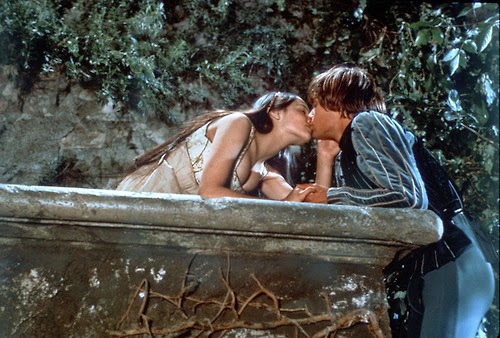 To motivate the discussion, I began by trying to persuade my students that, many-splendored thing it might be, love presents something a puzzle. Consider some apparently epically poor decisions from literature. Paris might be forgiven for falling for Helen, but was his next best option so much worse that it was worth starting a war? Could Lancelot and Guinevere not put their love aside, set against their loyalties to Arthur, King and husband? And when Romeo and Juliet believed the other to be dead, was suicide preferable to searching for another, though doubtless less compelling, mate?
 When Babbage soldered together his first computer, a Sinclair ZX80, the kit to make it cost a whisker under £80 (ie, £290 or $490 in today’s money). Strictly for hobbyists, this tiny machine had just four kilobytes of read-only memory in which to hold its operating system, an interpreter for the BASIC programming language and an editor, plus a mere kilobyte of random-access memory for data. Despite these limits, the ZX80 taught a generation of enthusiasts how to program efficiently. At the time, the $1,300 Apple II was beyond the reach of most enthusiasts. The ZX80’s modest price helped thousands of youngsters get a headstart in computing.
 This kind of bias is also reflected in the various language editions of Wikipedia. For example, it’s not surprising to find that the Chinese language version contains more links to Chiang Kai-shek, who once led the Republic of China, than the German language edition.
 As fast as it can, Google is sealing up cracks in its systems that Edward J. Snowden revealed the N.S.A. had brilliantly exploited. It is encrypting more data as it moves among its servers and helping customers encode their own emails. Facebook, Microsoft and Yahoo are taking similar steps.