Monday, August 4, 2014


The Problem with OKCupid is the Problem with the Social Web

On Monday, I tried to list some reasons why OKCupid's self-acknowledged experiments on its users didn't seem to be stirring up the same outrage that Facebook's had. Here at the end of the week, I think I was largely right: fewer people are upset, the anger is more tempered, and that has a lot to do with the reasons I gave. But one reaction I didn't expect is that some people took it as saying that I wasn't upset by what OKCupid did, or that people shouldn't be as upset by it.
What OKCupid did has actually made me madder and madder as the week's gone on, but for reasons that are different from other people's. I think this is pretty important, so I'm going to try to explain why. (...)
Even the filtering algorithms, we're both told and led to assume, are the product of our choices. Either we make these choices explicitly (mute this user, don't show me this again, more results like these) or implicitly (we liked the last five baby pictures, so Facebook shows us more baby pictures; we looked at sites X, Y, and Z, so we see Amazon ads for people who looked at X, Y, and Z. It's not arbitrary; it's personalized. And it's personalized for our benefit, to reflect the choices that we and the people we trust have made.
This is what makes the user-created social web great. It's the value it adds over traditional news media, traditional classified ads, traditional shopping, everything.
We keep copyright on everything we write and every image we post, giving these services a broad license to use it. And whenever the terms of service seem to be saying that these companies have the right to do things we would never want them to do, we're told that these are just the legal terms that the companies need in order to offer the ordinary, everyday service that we've asked them to do for us.
This is why it really stings whenever somebody turns around and says, "well actually, the terms you've signed give us permission to do whatever we want. Not just the thing you were afraid of, but a huge range of things you never thought of." You can't on one hand tell us to pay no attention when you change these things on us, and with the other insist that this is what we've really wanted to do all along. I mean, fuck me over, but don't tell me that I really wanted you to fuck me over all along.
Because ultimately, the reason you needed me to agree in the first place isn't just because I'm using your software, but because you're using my stuff. And the reason I'm letting you use my stuff, and spending all this time working on it, is so that you can show it to people.
I'm not just a user of your service, somebody who reads the things that you show it to me: I'm one of the reasons you have anything that you can show to anyone at all.
by Tim Carmody, Kottke.org | Read more:
Image: via:


Mosquito Hell
[ed. The irresistible joys of roughing it in the Alaska bush. When you're breathing mosquitoes (or trying to shit in a black cloud of fast, biting bugs), you really do ask yourself, what the hell am I doing here?]
It's not always easy to talk to Outsiders about mosquitoes. They nod knowingly and mention Maine or Minnesota. I usually stop and talk about something else. I've been to those places, and Central America, and Africa. I remember the dark, warm nights, the rain, the bandits with machetes and machine guns. But not so much the mosquitoes.
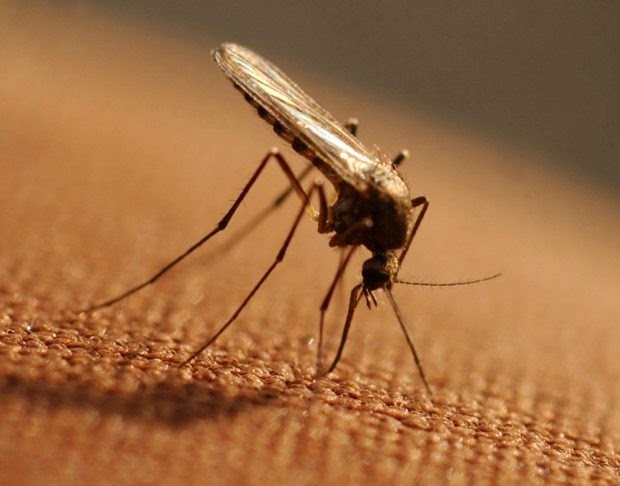 These last two springs, the young, aggressive bugs have hatched late. Recently, my coworker Linnea Wik and I flew to Ambler. Even though it was early June, we saw only two or three mosquitoes all weekend. It was cold, yet strangely pleasant with no bugs. I liked the reprieve, but worried the swallows and other species might be starving while we humans gloated.
Sure enough, as soon as the cool weather eased slightly, hungry young mosquitoes swarmed. I knew it was bad when Don Williams and his son Alvin both texted me from Ambler about the bugs. They don't usually mention them.
About that time, a French archaeology student, Angelique, emailed me, asking if I might hike with her into the mountains north of the Kobuk to look for various sources of jade used by the old Inupiaq to make weapons and tools. All I knew about this woman was that she'd first contacted me a year ago, was half Polish and was very persistent. I wrote back, saying I was busy, she should hire villagers for any transport and the only thing I knew about archaeology was that she needed to get explicit permission from landowners. I also warned her about the brush -- thick nowadays back in the hills -- and the mosquitoes.
Unfortunately, talking about bugs in the Arctic right away makes a person sound like they're exaggerating. “It's hard to breathe,” I tell people. “Don't worry about bears. Going to the bathroom is going to seem like a life-threatening experience.” (...)
By midnight the first day, sweating and scratched after 11 hours thrashing through mindlessly thick brush, we slumped in damp moss, not quite desperate but getting there. We were too tired to eat and nearly out of water, again. Somehow the bugs seemed to worsen, hour after hour. Clouds pelted us and rode along on our packs; the buzzing was ceaseless and every 15 minutes we had to re-spray our bug shirts. I'd never seen dwarf birch like these in the Arctic -- over our heads and as thick around as my wrist, blocking all view, tangling our feet and tearing at our skin and clothes. Our progress for the last four hours had been about 900 yards an hour. My arm was numb from swinging the machete and my elbow bruised from hitting the butt of my pistol. My shoulder holster under my pack chafed through to the meat.
Angelique's boots had worn holes and her feet were soaked and blistered. With a pack on her back and another on her front, half-blinded by her bug shield, she'd fallen countless times in the brush and into creeks and swamps we crossed. Throughout the day I'd heard her call out, “Set? Set?” as she tried to locate me a few yards ahead in the brush. I hadn't heard a complaint, though. (...)
“Whose idea was this?” I muttered -- my perennial mantra.
“He usually says that when something was his idea,” Linnea reassured Angelique.
We laughed and shared the last of our water and a granola bar, doing what we'd been doing all day: suffering, sharing and laughing. In that way I guess this really was Angelique's idea -- because I imagine the old people did a lot of that: suffering, sharing, and laughing. (...)
The following day we broke camp, our packs heavy with rocks, and headed downstream, along the thickly vegetated banks of the creek. Travel was hideous. My jeans were frayed fuzzy and torn, and black flies swarmed, crawling everywhere under our clothes, biting and joining the frenzy of the mosquitoes.
Angelique's feet, after days wet, were a puffy mess. The plan had been to inflate our packrafts here and drift, maybe barefoot in the boats, resting, occasionally paddling while pleasantly dreaming of cold beers.
Unfortunately, the thickets along the banks were crisscrossed with overgrown dead-fall spruce, mired with sinkholes and wet side-channels. The pretty blue line on my USGS map translated into a narrow, turbulent chute with boulder teeth. Every hundred yards or so, a log lay across the creek, limbs combing the water.
Angelique informed me again that she couldn't swim. I assured her that it would be fine -- I couldn't either. We weren't getting in that creek anyway; we were stuck behind my machete, slashing a path, staying beside the stream so she could collect more samples.
That night, in addition to mosquitoes, our tent filled with tiny, crawling black flies. We sprayed the netting with bug dope until they fell, covering the floor and our clothes and sleeping bags with writhing half-dead bugs. Outside, the tent was being pelted. During the night I awoke, convinced that now it really was raining, a soft steady downpour. “It is rain?” Angelique asked. But it was only more and more insects striking the tent.
It's not always easy to talk to Outsiders about mosquitoes. They nod knowingly and mention Maine or Minnesota. I usually stop and talk about something else. I've been to those places, and Central America, and Africa. I remember the dark, warm nights, the rain, the bandits with machetes and machine guns. But not so much the mosquitoes.
These last two springs, the young, aggressive bugs have hatched late. Recently, my coworker Linnea Wik and I flew to Ambler. Even though it was early June, we saw only two or three mosquitoes all weekend. It was cold, yet strangely pleasant with no bugs. I liked the reprieve, but worried the swallows and other species might be starving while we humans gloated.Sure enough, as soon as the cool weather eased slightly, hungry young mosquitoes swarmed. I knew it was bad when Don Williams and his son Alvin both texted me from Ambler about the bugs. They don't usually mention them.
About that time, a French archaeology student, Angelique, emailed me, asking if I might hike with her into the mountains north of the Kobuk to look for various sources of jade used by the old Inupiaq to make weapons and tools. All I knew about this woman was that she'd first contacted me a year ago, was half Polish and was very persistent. I wrote back, saying I was busy, she should hire villagers for any transport and the only thing I knew about archaeology was that she needed to get explicit permission from landowners. I also warned her about the brush -- thick nowadays back in the hills -- and the mosquitoes.
Unfortunately, talking about bugs in the Arctic right away makes a person sound like they're exaggerating. “It's hard to breathe,” I tell people. “Don't worry about bears. Going to the bathroom is going to seem like a life-threatening experience.” (...)
By midnight the first day, sweating and scratched after 11 hours thrashing through mindlessly thick brush, we slumped in damp moss, not quite desperate but getting there. We were too tired to eat and nearly out of water, again. Somehow the bugs seemed to worsen, hour after hour. Clouds pelted us and rode along on our packs; the buzzing was ceaseless and every 15 minutes we had to re-spray our bug shirts. I'd never seen dwarf birch like these in the Arctic -- over our heads and as thick around as my wrist, blocking all view, tangling our feet and tearing at our skin and clothes. Our progress for the last four hours had been about 900 yards an hour. My arm was numb from swinging the machete and my elbow bruised from hitting the butt of my pistol. My shoulder holster under my pack chafed through to the meat.
Angelique's boots had worn holes and her feet were soaked and blistered. With a pack on her back and another on her front, half-blinded by her bug shield, she'd fallen countless times in the brush and into creeks and swamps we crossed. Throughout the day I'd heard her call out, “Set? Set?” as she tried to locate me a few yards ahead in the brush. I hadn't heard a complaint, though. (...)
“Whose idea was this?” I muttered -- my perennial mantra.
“He usually says that when something was his idea,” Linnea reassured Angelique.
We laughed and shared the last of our water and a granola bar, doing what we'd been doing all day: suffering, sharing and laughing. In that way I guess this really was Angelique's idea -- because I imagine the old people did a lot of that: suffering, sharing, and laughing. (...)
The following day we broke camp, our packs heavy with rocks, and headed downstream, along the thickly vegetated banks of the creek. Travel was hideous. My jeans were frayed fuzzy and torn, and black flies swarmed, crawling everywhere under our clothes, biting and joining the frenzy of the mosquitoes.
Angelique's feet, after days wet, were a puffy mess. The plan had been to inflate our packrafts here and drift, maybe barefoot in the boats, resting, occasionally paddling while pleasantly dreaming of cold beers.
Unfortunately, the thickets along the banks were crisscrossed with overgrown dead-fall spruce, mired with sinkholes and wet side-channels. The pretty blue line on my USGS map translated into a narrow, turbulent chute with boulder teeth. Every hundred yards or so, a log lay across the creek, limbs combing the water.
Angelique informed me again that she couldn't swim. I assured her that it would be fine -- I couldn't either. We weren't getting in that creek anyway; we were stuck behind my machete, slashing a path, staying beside the stream so she could collect more samples.
That night, in addition to mosquitoes, our tent filled with tiny, crawling black flies. We sprayed the netting with bug dope until they fell, covering the floor and our clothes and sleeping bags with writhing half-dead bugs. Outside, the tent was being pelted. During the night I awoke, convinced that now it really was raining, a soft steady downpour. “It is rain?” Angelique asked. But it was only more and more insects striking the tent.
by Seth Kantner, Alaska Dispatch | Read more:
Image: Stephen Nowers

Sunday, August 3, 2014
A Man And His Cat
I lived with the same cat for 19 years — by far the longest relationship of my adult life. Under common law, this cat was my wife. I fell asleep at night with the warm, pleasant weight of the cat on my chest. The first thing I saw on most mornings was the foreshortened paw of the cat retreating slowly from my face and her baleful crescent glare informing me that it was Cat Food Time. As I often told her, in a mellow, resonant, Barry White voice: “There is no luuve … like the luuve that exists … between a man … and his cat.”
 The cat was jealous of my attention; she liked to sit on whatever I was reading, walked back and forth and back and forth in front of my laptop’s screen while I worked, and unsubtly interpolated herself between me and any woman I may have had over. She and my ex Kati Jo, who was temperamentally not dissimilar to the cat, instantly sized each other up as enemies. When I was physically intimate with a woman, the cat did not discreetly absent herself but sat on the edge of the bed with her back to me, facing rather pointedly away from the scene of debauch, quietly exuding disapproval, like your grandmother’s ghost.
I realize that people who talk at length about their pets are tedious at best, and often pitiful or repulsive. They post photos of their pets online, tell little stories about them, speak to them in disturbing falsettos, dress them in elaborate costumes and carry them around in handbags and BabyBjorns, have professional portraits taken of them and retouched to look like old master oil paintings. When people over the age of 10 invite you to a cat birthday party or a funeral for a dog, you need to execute a very deft etiquette maneuver, the equivalent of an Immelmann turn or triple axel, in order to decline without acknowledging that they are, in this area, insane.
This is especially true of childless people, like me, who tend to become emotionally overinvested in their animals and to dote on them in a way that gives onlookers the creeps. Often the pet seems to be a surrogate child, a desperate focus or joint project for a relationship that’s lost any other raison d’être, like becoming insufferable foodies or getting heavily into cosplay. When such couples finally have a child their cats or dogs are often bewildered to find themselves unceremoniously demoted to the status of pet; instead of licking the dinner plates clean and piling into bed with Mommy and Daddy, they’re given bowls of actual dog food and tied to a metal stake in a circle of dirt.
I looked up how much Americans spend on pets annually and have concluded that you do not want to know. I could tell you what I spent on my own cat’s special kidney health cat food and kidney and thyroid medication, and periodic blood tests that cost $300 and always came back normal, but I never calculated my own annual spending, lest I be forced to confront some uncomfortable facts about me. What our mass spending on products to pamper animals who seem happiest while rolling in feces or eating the guts out of rodents — who don’t, in fact, seem significantly less happy if they lose half their limbs — tells us about ourselves as a nation is probably also something we don’t want to know. But it occurs to me that it may be symptomatic of the same chronic deprivation as are the billion-dollar industries in romance novels and porn.
The cat was jealous of my attention; she liked to sit on whatever I was reading, walked back and forth and back and forth in front of my laptop’s screen while I worked, and unsubtly interpolated herself between me and any woman I may have had over. She and my ex Kati Jo, who was temperamentally not dissimilar to the cat, instantly sized each other up as enemies. When I was physically intimate with a woman, the cat did not discreetly absent herself but sat on the edge of the bed with her back to me, facing rather pointedly away from the scene of debauch, quietly exuding disapproval, like your grandmother’s ghost.I realize that people who talk at length about their pets are tedious at best, and often pitiful or repulsive. They post photos of their pets online, tell little stories about them, speak to them in disturbing falsettos, dress them in elaborate costumes and carry them around in handbags and BabyBjorns, have professional portraits taken of them and retouched to look like old master oil paintings. When people over the age of 10 invite you to a cat birthday party or a funeral for a dog, you need to execute a very deft etiquette maneuver, the equivalent of an Immelmann turn or triple axel, in order to decline without acknowledging that they are, in this area, insane.
This is especially true of childless people, like me, who tend to become emotionally overinvested in their animals and to dote on them in a way that gives onlookers the creeps. Often the pet seems to be a surrogate child, a desperate focus or joint project for a relationship that’s lost any other raison d’être, like becoming insufferable foodies or getting heavily into cosplay. When such couples finally have a child their cats or dogs are often bewildered to find themselves unceremoniously demoted to the status of pet; instead of licking the dinner plates clean and piling into bed with Mommy and Daddy, they’re given bowls of actual dog food and tied to a metal stake in a circle of dirt.
I looked up how much Americans spend on pets annually and have concluded that you do not want to know. I could tell you what I spent on my own cat’s special kidney health cat food and kidney and thyroid medication, and periodic blood tests that cost $300 and always came back normal, but I never calculated my own annual spending, lest I be forced to confront some uncomfortable facts about me. What our mass spending on products to pamper animals who seem happiest while rolling in feces or eating the guts out of rodents — who don’t, in fact, seem significantly less happy if they lose half their limbs — tells us about ourselves as a nation is probably also something we don’t want to know. But it occurs to me that it may be symptomatic of the same chronic deprivation as are the billion-dollar industries in romance novels and porn.
by Tim Kreider, NY Times | Read more:
Image: via:

Disenfranchised
Bhupinder “Bob” Baber bought two Quiznos franchises in Long Beach, California, in 1998 and 1999. His investment totaled $500,000, and Baber’s wife, Ratty, quit her job to work at the restaurants for no pay. The Babers did this because, as Bob would later recall, he “trusted in Quiznos.” But, as he soon found out, being a franchisee can be a very swift and painful way to lose a lot of money.
 Over the past year, thousands of fast-food workers have staged protests and rallies for a higher hourly wage. As they see it, big corporations like McDonald’s and Domino’s can well afford to pay workers more. But the vast majority of these workers don’t work for these giants. They work for people like Bob Baber. Franchisees don’t enjoy the market powers and economies of scale of their parent companies. Rather, they run small businesses with narrow profit margins, high failure rates, and plenty of anti-corporate grievances of their own. Anyone who wants to help immiserated fast-food workers, in other words, also needs to spare a few thoughts for their immiserated bosses. That means reforming the deeply troublesome franchise system. (...)
In the 20th century, businesses began to see the value of franchising in the service sector. Howard Johnson used franchising in the 1930s, and Ray Kroc built an empire on McDonald’s franchises in the 1950s, ’60s, and ’70s. Today, fast food is sold almost entirely through franchises. Worldwide, franchises represent about 80 percent of McDonald’s restaurants, 95 percent of Burger King restaurants, and 100 percent of Subway restaurants. (The rest are usually company-owned flagship restaurants in high-profile locations or restaurants relinquished by one franchisee and not yet assigned to another.)
The positioning of franchisees between fast-food workers and large fast-food companies is part of a larger trend within the economy that might be termed (with apologies to Karl Marx and Friedrich Engels) “the devolution of the proletariat.” As the Boston College law professor Kent Greenfield observes, corporations and even the federal government have learned to use “suppliers, subsidiaries, franchisees, contractors, to avoid responsibility” for the welfare of those at the bottom of what business schools call the “value chain.” The low- wage jobs are offloaded onto smaller entities. Making things worse for workers is a lack of opportunities to move up the corporate ladder, since a burger-flipper doesn’t actually work for the company whose logo decorates his uniform.
Over the past year, thousands of fast-food workers have staged protests and rallies for a higher hourly wage. As they see it, big corporations like McDonald’s and Domino’s can well afford to pay workers more. But the vast majority of these workers don’t work for these giants. They work for people like Bob Baber. Franchisees don’t enjoy the market powers and economies of scale of their parent companies. Rather, they run small businesses with narrow profit margins, high failure rates, and plenty of anti-corporate grievances of their own. Anyone who wants to help immiserated fast-food workers, in other words, also needs to spare a few thoughts for their immiserated bosses. That means reforming the deeply troublesome franchise system. (...)In the 20th century, businesses began to see the value of franchising in the service sector. Howard Johnson used franchising in the 1930s, and Ray Kroc built an empire on McDonald’s franchises in the 1950s, ’60s, and ’70s. Today, fast food is sold almost entirely through franchises. Worldwide, franchises represent about 80 percent of McDonald’s restaurants, 95 percent of Burger King restaurants, and 100 percent of Subway restaurants. (The rest are usually company-owned flagship restaurants in high-profile locations or restaurants relinquished by one franchisee and not yet assigned to another.)
The positioning of franchisees between fast-food workers and large fast-food companies is part of a larger trend within the economy that might be termed (with apologies to Karl Marx and Friedrich Engels) “the devolution of the proletariat.” As the Boston College law professor Kent Greenfield observes, corporations and even the federal government have learned to use “suppliers, subsidiaries, franchisees, contractors, to avoid responsibility” for the welfare of those at the bottom of what business schools call the “value chain.” The low- wage jobs are offloaded onto smaller entities. Making things worse for workers is a lack of opportunities to move up the corporate ladder, since a burger-flipper doesn’t actually work for the company whose logo decorates his uniform.
by Timothy Noah, Pacific Standard | Read more:
Image: Public Domain
Stop Making Sense: Thirty Years Later
"We didn't want any of the bullshit," former Talking Heads drummer Chris Frantz says about Stop Making Sense, the band's influential 1984 concert film. "We didn't want the clichés. We didn't want close-ups of people's fingers while they're doing a guitar solo. We wanted the camera to linger, so you could get to know the musicians a little bit."
 It was December 1983 when the group filmed three shows at Hollywood's Pantages Theater, while on a tour for Speaking in Tongues that found them playing in an extended lineup with extra percussion, keyboards and guitar. The one thing the band wanted from the movie – directed by Jonathan Demme, who would later win an Oscar for The Silence of the Lambs – was something that would be the complete opposite of anything on MTV at the time. The film had long, drawn-out close-ups on the musicians' faces, it barely showed the audience and it used dramatic lighting to exaggerate the choreography. The group, which consisted of Frantz, vocalist David Byrne, guitarist/keyboardist Jerry Harrison and bassist Tina Weymouth, financed the movie mostly by itself and by the time Stop Making Sense came out, that tenacity had given way to a hit. Filmgoers were literally dancing in the aisles as the movie played.
Last month, a 30th anniversary edition Stop Making Sense came out digitally and it is also being re-released at various theaters throughout the United States. Rolling Stone recently caught up with the drummer – who is still recording with his wife, Tina Weymouth, in the Tom Tom Club – to find out how the film holds up three decades later.
What do you think of Stop Making Sense the last time you saw it?
All the nice things that people say about Talking Heads? It just confirms those statements are true [laughs]. We were very fortunate in that everybody who worked on it did such a good job. I would pay 1,000 bucks to see that show [laughs]. (...)
It was December 1983 when the group filmed three shows at Hollywood's Pantages Theater, while on a tour for Speaking in Tongues that found them playing in an extended lineup with extra percussion, keyboards and guitar. The one thing the band wanted from the movie – directed by Jonathan Demme, who would later win an Oscar for The Silence of the Lambs – was something that would be the complete opposite of anything on MTV at the time. The film had long, drawn-out close-ups on the musicians' faces, it barely showed the audience and it used dramatic lighting to exaggerate the choreography. The group, which consisted of Frantz, vocalist David Byrne, guitarist/keyboardist Jerry Harrison and bassist Tina Weymouth, financed the movie mostly by itself and by the time Stop Making Sense came out, that tenacity had given way to a hit. Filmgoers were literally dancing in the aisles as the movie played.Last month, a 30th anniversary edition Stop Making Sense came out digitally and it is also being re-released at various theaters throughout the United States. Rolling Stone recently caught up with the drummer – who is still recording with his wife, Tina Weymouth, in the Tom Tom Club – to find out how the film holds up three decades later.
What do you think of Stop Making Sense the last time you saw it?
All the nice things that people say about Talking Heads? It just confirms those statements are true [laughs]. We were very fortunate in that everybody who worked on it did such a good job. I would pay 1,000 bucks to see that show [laughs]. (...)
When did the idea that the band would be introduced individually come about?
That was all decided on before the tour began. It's a little bit of a revision of what really happened in real life. I think what David would like to convey is that it began with David Byrne and then he invited Tina to join the band and then he invited Chris and then he invited Jerry and then he invited Steve Scales and so on, but it wasn't like that. What really happened was Tina, David and I moved to New York with the idea that we might start a band. I convinced David that it was a good idea. I asked Tina to join the band. I asked Jerry Harrison to join the band. So it's a little bit of a revision, but it works really well as a narrative for the movie.
What do you remember about David's intro with the playing "Psycho Killer" to a drum loop?
What do you remember about David's intro with the playing "Psycho Killer" to a drum loop?
David put that together himself; I was not party to that or anything like that. He didn't ask anybody, it was like "I'm going to do this." It worked well.
When you get onstage, you listen to a headphone for a minute. Was Jonathan directing you?
When you get onstage, you listen to a headphone for a minute. Was Jonathan directing you?
No. In the headphone, I was listening to the tempo. Because we were shooting over three nights, we wanted to make sure each song began at the same tempo. So I devised a click track to listen to at the beginning. Sometimes when you play live, you might speed up a little bit, especially in punk, New-Wave style; the audience likes to get hammered, they like to have a lively performance, so we had to make sure it wasn't too lively.
The movie has so many great close-ups on band members' faces. What are your favorites?
The movie has so many great close-ups on band members' faces. What are your favorites?
Tina looks really angelic and great throughout the whole film, and I love when Bernie Worrell gives some of his weird glances at who knows what [laughs]. Bernie's a funny guy to watch. David is awesome throughout.
by Kory Grow, Rolling Stone | Read more:
Image: Rolling Stone via Warner Bros.
Saturday, August 2, 2014
Dead Baby Downhill 2014

[ed. One of the finest nights I can remember. The annual Dead Baby Downhill event in Seattle (“The best party known to humankind". I know, the name sucks). Ear piercing music, insane bike aerobatics, a debauched crowd of drugged and drunken party-goers, packed bars, streets and alley ways. All free. There must have been 300-400 cool kids there (and not so cool ones), 20s, 30s, ... but hardly anyone older than me (insert joke here). Never been that close to a mosh pit before and was engulfed (advice: just a hard forearm or a shove now and then and you can generally stay vertical). Way too much fun! Special note: Alexi Void and the band Go Like Hell. Wow! See below: in the alley, next to Georgetown Records].
Go Like Hell! They're a lean, mean, punk rock machine technically referred to as a weapon of mass destruction, and guess what, they think you're dumb, fat and ugly. You better run like hell because this outrageous five piece is coming to a town near you. Go Like Hell will kick you in the balls, bust up your face, and kick your ass into outer space. (...)
Go Like Hell's live show is what sets the band apart. In fact, The Misfits have been known to indulge in an entire show. Full of personality, sexuality, and unbridled passion, they play with a sense of urgency and a set full of unexpected surprises. You might say that watching them live is like looking down the barrel of a loaded gun.
by CDBaby | Read more:
Image: via
Video: markk

Wednesday, July 30, 2014
Rustle, Tingle, Relax: The Compelling World of A.S.M.R.
A few months ago, I was on a Manhattan-bound D train heading to work when a man with a chunky, noisy newspaper got on and sat next to me. As I watched him softly turn the pages of his paper, a chill spread like carbonated bubbles through the back of my head, instantly relaxing me and bringing me to the verge of sweet slumber.
It wasn’t the first time I’d felt this sensation at the sound of rustling paper — I’ve experienced it as far back as I can remember. But it suddenly occurred to me that, as a lifelong insomniac, I might be able to put it to use by reproducing the experience digitally whenever sleep refused to come.
 Under the sheets of my bed that night, I plugged in some earphones, opened the YouTube app on my phone and searched for “Sound of pages.” What I discovered stunned me.
Under the sheets of my bed that night, I plugged in some earphones, opened the YouTube app on my phone and searched for “Sound of pages.” What I discovered stunned me.
There were nearly 2.6 million videos depicting a phenomenon called autonomous sensory meridian response, or A.S.M.R., designed to evoke a tingling sensation that travels over the scalp or other parts of the body in response to auditory, olfactory or visual forms of stimulation.
The sound of rustling pages, it turns out, is just one of many A.S.M.R. triggers. The most popular stimuli include whispering; tapping or scratching; performing repetitive, mundane tasks like folding towels or sorting baseball cards; and role-playing, where the videographer, usually a breathy woman, softly talks into the camera and pretends to give a haircut, for example, or an eye examination. The videos span 30 minutes on average, but some last more than an hour.
For those not wired for A.S.M.R. — and even for those who, like me, apparently are — the videos and the cast of characters who produce them — sometimes called “ASMRtists” or “tingle-smiths” — can seem weird, creepy or just plain boring. (Try pitching the pleasures of watching a nerdy German guy slowly and silently assemble a computer for 30 minutes.)
Two of the most well-known ASMRtists, Maria of GentleWhispering (more than 250,700 subscribers) and Heather Feather (more than 146,500 subscribers), said that although they sometimes received lewd emails and requests, many of their followers reached out to them with notes of gratitude for the relief from anxiety, insomnia and melancholy that their videos provided.
Some say the mundane or monotonous quality of the videos lulls us into a much-needed state of serenity. Others find comfort in being the sole focus of the A.S.M.R. actor’s tender affection and care. Or perhaps the assortment of sounds and scenarios taps into pleasing childhood memories. I grew up falling asleep hearing the sounds from my father’s home office: A computer engineer, he was continually sorting through papers, tapping keys and assembling and disassembling PCs and MACs.
Dr. Carl W. Bazil, a sleep disorders specialist at Columbia University, says A.S.M.R. videos may provide novel ways to switch off our brains.
People who have insomnia are in a hyper state of arousal,” he said. “Behavioral treatments — guided imagery, progressive relaxation, hypnosis and meditation — are meant to try to trick your unconscious into doing what you want it to do. A.S.M.R. videos seem to be a variation on finding ways to shut your brain down.”
So far, it seems to work for me. Like many insomniacs, I have over the years tried natural remedies like valerian root or melatonin, vigorous exercise regimens and strong sleeping pills like Ambien and Lunesta. But sleep rarely came. Nothing has worked as well and consistently as watching a man in an A.S.M.R. video sort through papers and his collection of Titanic paraphernalia.
by Stephanie Fairyington, NY Times | Read more:
Image: YouTube
The Morality of Perversion
When Vladimir Nabokov’s Lolita was first published in 1955, the novel generated an enormous amount of controversy. Narrated by Humbert Humbert, a fictional literature professor in his late thirties, the tragicomedy depicts his obsessive sexual relationship with 12-year-old Dolores Haze—the eponymous Lolita.
 60 years down the road, the book remains as controversial as ever. A large part of this seems to be that Lolita, despite our moral condemnation of child sex, somehow manages to elicit the reader’s sympathy for its pedophilic ‘protagonist’ (who is, possibly, more accurately described as a hebephile). Beyond our contempt for Humbert, there is also disgust with ourselves. How dare we even think of sympathizing with such a pervert? Surely by doing so we inch closer to condoning sex with children.
Such confusion reflects unresolved thoughts and feelings about sexual deviation in general. What does it mean to sympathize with perversion? Where, exactly, lies the wrong in what many of us think of as sexual deviance—such as pedophilia, zoophilia, homosexuality, and various other unusual forms of sexuality? What specifically is it that’s so outrageous about the affair between Humbert and Dolores? To answer such questions, we must delve into the field of sexual ethics.
Sex: the moral minefield
Why is the ethics of sex even a thing? For one, sex is a significant act which plays a big part in an individual’s life. How someone practices (or doesn’t practice) sex is intertwined with their emotions, relationships, expression and identity. Moreover, sex is an act involving our own bodies that we either wish to participate in, or don’t. In deontological terms or rights-speak, there are important rights and potential violations surrounding sex. From a consequentialist perspective, there is the potential for both great harm and utility to arise from sex. All this makes sex something we should tread around pretty carefully.
Historically, sexual dynamics have also played a huge role in ordering society (and continue to do so). Our psychological perceptions of morality often end up having a lot to do with maintaining social order. Fields like experimental moral psychology and evolutionary psychology seek to uncover these mental biases. It has been, for example, suggested that moral judgments about promiscuity may have come about as a way of keeping a gender-based social order intact; sleeping around is more likely to be considered a moral violation in places where women are economically dependent on men.
So thinking carefully about the morality of sex is important, because there are substantive deontological and consequential concerns surrounding its practice, and also because it is important to check the psychological biases we have towards our moral judgments about sex.
60 years down the road, the book remains as controversial as ever. A large part of this seems to be that Lolita, despite our moral condemnation of child sex, somehow manages to elicit the reader’s sympathy for its pedophilic ‘protagonist’ (who is, possibly, more accurately described as a hebephile). Beyond our contempt for Humbert, there is also disgust with ourselves. How dare we even think of sympathizing with such a pervert? Surely by doing so we inch closer to condoning sex with children.Such confusion reflects unresolved thoughts and feelings about sexual deviation in general. What does it mean to sympathize with perversion? Where, exactly, lies the wrong in what many of us think of as sexual deviance—such as pedophilia, zoophilia, homosexuality, and various other unusual forms of sexuality? What specifically is it that’s so outrageous about the affair between Humbert and Dolores? To answer such questions, we must delve into the field of sexual ethics.
Sex: the moral minefield
Why is the ethics of sex even a thing? For one, sex is a significant act which plays a big part in an individual’s life. How someone practices (or doesn’t practice) sex is intertwined with their emotions, relationships, expression and identity. Moreover, sex is an act involving our own bodies that we either wish to participate in, or don’t. In deontological terms or rights-speak, there are important rights and potential violations surrounding sex. From a consequentialist perspective, there is the potential for both great harm and utility to arise from sex. All this makes sex something we should tread around pretty carefully.
Historically, sexual dynamics have also played a huge role in ordering society (and continue to do so). Our psychological perceptions of morality often end up having a lot to do with maintaining social order. Fields like experimental moral psychology and evolutionary psychology seek to uncover these mental biases. It has been, for example, suggested that moral judgments about promiscuity may have come about as a way of keeping a gender-based social order intact; sleeping around is more likely to be considered a moral violation in places where women are economically dependent on men.
So thinking carefully about the morality of sex is important, because there are substantive deontological and consequential concerns surrounding its practice, and also because it is important to check the psychological biases we have towards our moral judgments about sex.
by Grace Boey, 3 Quarks Daily | Read more:
Image: Lolita

Comcast Confessions
When AOL executive and Comcast customer Ryan Block recently tried to cancel his internet service, he ended up in a near-yelling match with a customer service representative who spent 18 minutes trying to talk him out of it.
Rep: I’m just trying to figure out here what it is about Comcast service that you’re not liking.
Block: This phone call is actually a really amazing representative example of why I don’t want to stay with Comcast. Can you please cancel our service?
Rep: Okay, but I’m trying to help you.
Block: The way you can help me is by disconnecting my service.
Rep: But how is that helping you? How is that helping you? Explain to me how that is helping you.
Block: Because that’s what I want.
Rep: Okay, so why is that what you want? (...)

Internet not working? Confusing charges on your bill? Moving, and need to cancel your service? It doesn’t matter why you’re calling Comcast — get ready for a sales pitch.
Dozens of current and former Comcast employees told The Verge they had to constantly push products, even if they worked in tech support, billing, and general customer service.
Mark Pavlic was hired as a customer account executive at Comcast in October 2010 after graduating from a technical institute. He figured he’d be troubleshooting TV, phone, and internet service, but most of his month-long training focused on sales. Every day when he walked into the call center, he’d see a whiteboard with employee names and their RGUs, or revenue generating units.
"I didn’t know that I was going to be selling things," he says. "The customer is calling in to tell you what’s wrong, and you’re looking for ways to sell them service."
The longer he was there, the more the company emphasized sales. "They pushed it as a way for us to earn more money," he says. "[But] if you were low on sales, you got put on probation." He quit after 10 months.
Pavlic’s call center in Pittsburgh is operated by Comcast, but the company also uses third-party and international call centers. Exact training and incentive structures vary by call center, and on whether employees are working on business services or residential services. Our interviews revealed a common thread across facilities: what often started out as a carrot — bonuses for frontline employees who made sales — turned into a stick, as employees who failed to pitch hard enough or meet their quotas were chastised, or worse.
Brian Van Horn, a billing specialist who worked at Comcast for 10 years, says the sales pitch gradually got more aggressive. "They were starting off with, ‘just ask," he says. "Then instead of ‘just ask,’ it was ‘just ask again,’ then ‘engage the customer in a conversation,’ then ‘overcome their objections.’" He was even pressured to pitch new services to a customer who was 55 days late on her bill, he says.
Rep: I’m just trying to figure out here what it is about Comcast service that you’re not liking.
Block: This phone call is actually a really amazing representative example of why I don’t want to stay with Comcast. Can you please cancel our service?
Rep: Okay, but I’m trying to help you.
Block: The way you can help me is by disconnecting my service.
Rep: But how is that helping you? How is that helping you? Explain to me how that is helping you.
Block: Because that’s what I want.
Rep: Okay, so why is that what you want? (...)
Internet not working? Confusing charges on your bill? Moving, and need to cancel your service? It doesn’t matter why you’re calling Comcast — get ready for a sales pitch.
Dozens of current and former Comcast employees told The Verge they had to constantly push products, even if they worked in tech support, billing, and general customer service.
Mark Pavlic was hired as a customer account executive at Comcast in October 2010 after graduating from a technical institute. He figured he’d be troubleshooting TV, phone, and internet service, but most of his month-long training focused on sales. Every day when he walked into the call center, he’d see a whiteboard with employee names and their RGUs, or revenue generating units.
"I didn’t know that I was going to be selling things," he says. "The customer is calling in to tell you what’s wrong, and you’re looking for ways to sell them service."
The longer he was there, the more the company emphasized sales. "They pushed it as a way for us to earn more money," he says. "[But] if you were low on sales, you got put on probation." He quit after 10 months.
Pavlic’s call center in Pittsburgh is operated by Comcast, but the company also uses third-party and international call centers. Exact training and incentive structures vary by call center, and on whether employees are working on business services or residential services. Our interviews revealed a common thread across facilities: what often started out as a carrot — bonuses for frontline employees who made sales — turned into a stick, as employees who failed to pitch hard enough or meet their quotas were chastised, or worse.
Brian Van Horn, a billing specialist who worked at Comcast for 10 years, says the sales pitch gradually got more aggressive. "They were starting off with, ‘just ask," he says. "Then instead of ‘just ask,’ it was ‘just ask again,’ then ‘engage the customer in a conversation,’ then ‘overcome their objections.’" He was even pressured to pitch new services to a customer who was 55 days late on her bill, he says.
by Adrianne Jefferies, The Verge | Read more:
Image: Michael Shane

How Did Bob Dylan Get So Weird?
In August, a Bob Dylan album may well arrive in stores concrete and virtual. It may be called Shadows in the Night. It may have a song called “Full Moon & Empty Arms” on it; a stream of the tune was released without comment on his website a couple of months ago. Why Dylan chose to record a cover of an old Sinatra track isn’t clear; it may, or may not, be a clue that the purported album will consist of covers. Dylan has just finished shows in Japan, Eastern Europe, and Scandinavia; will head next to Australia and New Zealand; and may or may not be preparing for a swing through the U.S. in the fall.
 We think of Dylan in a pantheon of great rock stars, at or near the top of a select list that includes the Stones, Springsteen, maybe U2, but not too many other active artists. But he behaves much differently. He’s released more albums than Bruce Springsteen in the past 25 years and played more shows than Springsteen, the Stones, and U2 combined. Yet he hardly ever does interviews and does virtually nothing to publicize his albums or tours. For someone who seems to be in such plain sight, he remains hidden, present but opaque, an open book written in cipher. Normal questions don’t seem to do him justice. You want to ask: What is Bob Dylan? Why is Bob Dylan? After listening to him since I was a kid and seeing him live for—gulp—nearly 40 years, I think I’m beginning to figure it out.
You have to start by disregarding the well-told narrative: The soi-disant vagabond’s rise through folk music to a place of utter domination at the highest level of literate, passionate, and difficult pop and rock music, all by 1966; a retreat and Gethsemane until 1974, when he came back, roaring and vengeful, more passionately focused than before, adding a remarkable personal dimension to his ’60s work. After that, depending on how generously you view his career, there has been either a long decline or decades of remarkable and kaleidoscopic creativity, culminating in the triumphs, late in life, of his five most recent albums.
For an artist as rooted in our musical culture as Dylan, the linearity of a narrative works more to disconnect him from the influences and traditions his work comprises than to explain him. First, you have to appreciate the many layers that make up his peculiar but unmistakable aesthetic. His work is grounded in acoustic folk-blues—ballads, chants, and love stories, populated with mystical or just plain weird meanings and themes, rattling and farting around like tetched uncles in the attic of our American psyche. To this add the dread-filled dreamscapes—unexplainable, unnerving—of French Surrealism, and then, arrestingly, the punchy patois of the Beats, who originally intuited the substratum of social stresses that would whipcrack across the ’60s and into the ’70s. Then factor in personal songwriting, a strain of pop he basically invented, doled out first with obfuscations, payback, tall tales, and lies—some by design, some on general principle, some just to be an asshole—and then the signs, here and there (and then everywhere, the more you look), of autobiographical happenstance and deeply felt emotion.
And remember that some of his narratives are fractured. Time and focus shift; first person can become third; sometimes more than one story seems to be being told at the same time (“Tangled Up in Blue” and “All Along the Watchtower” are two good examples). And then there’s plain sonic impact: Even his earliest important songs have a cerebral and reverberating authority in the recording, his voice sometimes filling the speakers, his primitive but blistering guitar work adding confrontation, ease, humor, anger, and contrariness, presenting all but the most unwilling listeners with moment after moment of incandescence.
And, finally, a key component often overlooked: Dylan’s artistic process. On a fundamental level, he doesn’t trust mediation or planning. The story of his recording career is littered with tales of indecisive and failed sessions and haphazard successful ones, in both cases leaving frustrated producers and session people in their wake. You could say the approach served him well during his early years of inspiration and has hobbled him in his later decades of lesser work. Dylan doesn’t care. During the recording of Blood on the Tracks, which may be the best rock album ever made, one of the musicians present heard the singer being told how to do something correctly in the studio. Dylan’s reply: “Y’know, if I’d listened to everybody who told me how to do stuff, I might be somewhere by now.”
We think of Dylan in a pantheon of great rock stars, at or near the top of a select list that includes the Stones, Springsteen, maybe U2, but not too many other active artists. But he behaves much differently. He’s released more albums than Bruce Springsteen in the past 25 years and played more shows than Springsteen, the Stones, and U2 combined. Yet he hardly ever does interviews and does virtually nothing to publicize his albums or tours. For someone who seems to be in such plain sight, he remains hidden, present but opaque, an open book written in cipher. Normal questions don’t seem to do him justice. You want to ask: What is Bob Dylan? Why is Bob Dylan? After listening to him since I was a kid and seeing him live for—gulp—nearly 40 years, I think I’m beginning to figure it out.You have to start by disregarding the well-told narrative: The soi-disant vagabond’s rise through folk music to a place of utter domination at the highest level of literate, passionate, and difficult pop and rock music, all by 1966; a retreat and Gethsemane until 1974, when he came back, roaring and vengeful, more passionately focused than before, adding a remarkable personal dimension to his ’60s work. After that, depending on how generously you view his career, there has been either a long decline or decades of remarkable and kaleidoscopic creativity, culminating in the triumphs, late in life, of his five most recent albums.
For an artist as rooted in our musical culture as Dylan, the linearity of a narrative works more to disconnect him from the influences and traditions his work comprises than to explain him. First, you have to appreciate the many layers that make up his peculiar but unmistakable aesthetic. His work is grounded in acoustic folk-blues—ballads, chants, and love stories, populated with mystical or just plain weird meanings and themes, rattling and farting around like tetched uncles in the attic of our American psyche. To this add the dread-filled dreamscapes—unexplainable, unnerving—of French Surrealism, and then, arrestingly, the punchy patois of the Beats, who originally intuited the substratum of social stresses that would whipcrack across the ’60s and into the ’70s. Then factor in personal songwriting, a strain of pop he basically invented, doled out first with obfuscations, payback, tall tales, and lies—some by design, some on general principle, some just to be an asshole—and then the signs, here and there (and then everywhere, the more you look), of autobiographical happenstance and deeply felt emotion.
And remember that some of his narratives are fractured. Time and focus shift; first person can become third; sometimes more than one story seems to be being told at the same time (“Tangled Up in Blue” and “All Along the Watchtower” are two good examples). And then there’s plain sonic impact: Even his earliest important songs have a cerebral and reverberating authority in the recording, his voice sometimes filling the speakers, his primitive but blistering guitar work adding confrontation, ease, humor, anger, and contrariness, presenting all but the most unwilling listeners with moment after moment of incandescence.
And, finally, a key component often overlooked: Dylan’s artistic process. On a fundamental level, he doesn’t trust mediation or planning. The story of his recording career is littered with tales of indecisive and failed sessions and haphazard successful ones, in both cases leaving frustrated producers and session people in their wake. You could say the approach served him well during his early years of inspiration and has hobbled him in his later decades of lesser work. Dylan doesn’t care. During the recording of Blood on the Tracks, which may be the best rock album ever made, one of the musicians present heard the singer being told how to do something correctly in the studio. Dylan’s reply: “Y’know, if I’d listened to everybody who told me how to do stuff, I might be somewhere by now.”
by Bill Wyman, Vulture | Read more:
Image: uncredited
Tuesday, July 29, 2014

A Sense of Smell
A man committed suicide in my apartment building two weeks ago. They retrieved his body last Tuesday afternoon, about 10 days after he killed himself. Tuesday was a hot and humid day, and the smell was filling the building. The police came and brought fans and propped doors open to clear the air, and by the evening the smell was blown out of the building and into the neighborhood – broken up into small enough molecules to not be particularly noticed by anyone. It had been getting really bad in the apartment.
Last Sunday, two days before they found his body, my building manager posted a note on the door to the apartment saying he would go through everyone’s apartments on Friday in order to find the “source of the odor that has been bothering residents.” I live on the third floor of the building, and the man had lived on the first floor, and the smell hadn’t invaded my floor much, until that weekend. That weekend the smell got really loud.
 My building is always full of such strange and curious smells, which I, sometimes reluctantly, process and think about throughout the day. There’s nearly forty apartments in here, and over forty people are cooking dinners, having sex & farting, and then attempting to shower their days away, which coats them with a brand new cloak of scent. The air smells busy in here. It used to be even more complex, but Management God recently blessed us with new carpeting in the hallway, and the old smell of “confused & rotting cherries mixed with human filth” was replaced with “new carpet smell!” I filed away “new carpet smell!” in my brain, simply as that, because I haven’t had many encounters with fresh carpet, and had never remarked on it’s aroma. It was a smell to replace the creepy smell of poorly-managed apartment carpet, and it’s sterile aroma was welcome to my nose.
But on that hot Tuesday, the whole apartment reeked of death. Like new carpet, I hadn’t smelled a neglected dead human before. A friend asked me to describe the smell to him, and the only words I could use to describe it were “hot garbage,” which feels so trite and I’m not satisfied with, but it’s all that came to me. However, I know that if I ever smelled it again, I would immediately recognize it. It’s one of those smells that clings to you. It’s a sad smell to have filed away. You hope you won’t smell it again, but quite likely will.
I’m sorry to linger on something so tragic and disturbing as the smell of death. Smells have become really important to me, and I try to treat my nostrils as a second pair of eyes (so to speak, since we can sometimes only discuss the importance of a sense by relating it to how much we trust our sight). I realized, after his suicide, that I wanted to spend some time writing about how smells have been, and are, important to how I live and understand the world. (...)
I feel like I have a pretty good nose on me now. It has taken a lot of work, and I still have a lot of things to smell and develop faster recall. When I first started working at beezy’s, however, I was fooling myself into thinking I had a good sniffer. My boss had a good sniffer, and it would scare me sometimes (in a fun way). One epic time, she ran back into the kitchen from the basement because she could “smell the noodles sticking to the bottom of the pot.” Allow me to reiterate: FROM THE BASEMENT. I probably told her she was possessed by demons, and she probably ignored me as she grabbed a spatula to scrape off the noodles from the bottom of the pot.
I think people ignore most of the smells they encounter, or at least they don’t stop and allow them to be a source of orientation. We’re not really trained to be aware of our noses, as much as we are for our eyes & ears. We lose a lot of knowledge of the world if we don’t narrate our smells. We’ll have a narrow understanding of our settings if we don’t map the smells that emanate from the corners of our houses. (...)
Lovers become very close with each other’s smells. The smell of Abercrombie cologne takes me back to the excitement of my first boyfriend when I was 14. ( He was so classy.) The mixture of Polar Ice gum and cigarettes makes me think of my friend Larry, when we attempted to date each other. I can smell an old love-of-my-life every time I get my clothes dry-cleaned. That’s a weird one I haven’t figured out yet, since he doesn’t ever get his stuff dry-cleaned.
I had the pleasure of eavesdropping on a very sweet conversation between two of my guyfriends, who were both spending time away from their respective partners. They were talking about how hard it was to get used to having the bed be empty, and one of them suggested that trading pillows might make it easier to have your lover out of town.
“It’d be nice to still be able to smell them.” He said. The other guy heartily agreed, having traded pillows before with his girlfriend, and said “Yeah, that makes it a LOT easier.”
Last Sunday, two days before they found his body, my building manager posted a note on the door to the apartment saying he would go through everyone’s apartments on Friday in order to find the “source of the odor that has been bothering residents.” I live on the third floor of the building, and the man had lived on the first floor, and the smell hadn’t invaded my floor much, until that weekend. That weekend the smell got really loud.
My building is always full of such strange and curious smells, which I, sometimes reluctantly, process and think about throughout the day. There’s nearly forty apartments in here, and over forty people are cooking dinners, having sex & farting, and then attempting to shower their days away, which coats them with a brand new cloak of scent. The air smells busy in here. It used to be even more complex, but Management God recently blessed us with new carpeting in the hallway, and the old smell of “confused & rotting cherries mixed with human filth” was replaced with “new carpet smell!” I filed away “new carpet smell!” in my brain, simply as that, because I haven’t had many encounters with fresh carpet, and had never remarked on it’s aroma. It was a smell to replace the creepy smell of poorly-managed apartment carpet, and it’s sterile aroma was welcome to my nose.But on that hot Tuesday, the whole apartment reeked of death. Like new carpet, I hadn’t smelled a neglected dead human before. A friend asked me to describe the smell to him, and the only words I could use to describe it were “hot garbage,” which feels so trite and I’m not satisfied with, but it’s all that came to me. However, I know that if I ever smelled it again, I would immediately recognize it. It’s one of those smells that clings to you. It’s a sad smell to have filed away. You hope you won’t smell it again, but quite likely will.
I’m sorry to linger on something so tragic and disturbing as the smell of death. Smells have become really important to me, and I try to treat my nostrils as a second pair of eyes (so to speak, since we can sometimes only discuss the importance of a sense by relating it to how much we trust our sight). I realized, after his suicide, that I wanted to spend some time writing about how smells have been, and are, important to how I live and understand the world. (...)
I feel like I have a pretty good nose on me now. It has taken a lot of work, and I still have a lot of things to smell and develop faster recall. When I first started working at beezy’s, however, I was fooling myself into thinking I had a good sniffer. My boss had a good sniffer, and it would scare me sometimes (in a fun way). One epic time, she ran back into the kitchen from the basement because she could “smell the noodles sticking to the bottom of the pot.” Allow me to reiterate: FROM THE BASEMENT. I probably told her she was possessed by demons, and she probably ignored me as she grabbed a spatula to scrape off the noodles from the bottom of the pot.
I think people ignore most of the smells they encounter, or at least they don’t stop and allow them to be a source of orientation. We’re not really trained to be aware of our noses, as much as we are for our eyes & ears. We lose a lot of knowledge of the world if we don’t narrate our smells. We’ll have a narrow understanding of our settings if we don’t map the smells that emanate from the corners of our houses. (...)
Lovers become very close with each other’s smells. The smell of Abercrombie cologne takes me back to the excitement of my first boyfriend when I was 14. ( He was so classy.) The mixture of Polar Ice gum and cigarettes makes me think of my friend Larry, when we attempted to date each other. I can smell an old love-of-my-life every time I get my clothes dry-cleaned. That’s a weird one I haven’t figured out yet, since he doesn’t ever get his stuff dry-cleaned.
I had the pleasure of eavesdropping on a very sweet conversation between two of my guyfriends, who were both spending time away from their respective partners. They were talking about how hard it was to get used to having the bed be empty, and one of them suggested that trading pillows might make it easier to have your lover out of town.
“It’d be nice to still be able to smell them.” He said. The other guy heartily agreed, having traded pillows before with his girlfriend, and said “Yeah, that makes it a LOT easier.”
Subscribe to:
Posts (Atom)