Wednesday, December 21, 2016

Red Flags Waving
“Happiness isn’t good enough for me! I demand euphoria!”
- Bill Watterson, Calvin & Hobbes
There are several instances across history when valuations have broken well-beyond their historical norms, as the speculative “animal spirits” of investors have scrambled off like greased pigs at a rodeo. Those speculative episodes were typically concluded by one of two events: 1) a combination of overvalued, overbought, overbullish conditions appearing as a joint syndrome, or 2) deteriorating uniformity and widening dispersion of market internals across a broad range of individual securities, industries, sectors, and security-types, indicating a subtle shift among investors toward risk-aversion (when investors are risk-seeking, they tend to be indiscriminate about it).
 Indeed, in market cycles across history, those two events were regularly “stuck together,” in the sense that overvalued, overbought, overbullish extremes were typically either accompanied or closely followed by deterioration in market internals. That regularity turned out to be our Achilles Heel in the half-cycle since 2009. After admirably navigating previous complete market cycles, I insisted on stress-testing our methods against Depression-era data in 2009. The resulting methods picked up the fact that overvalued, overbought, overbullish extremes were consistently associated with market losses across history, and we responded by taking a hard-negative market outlook when they appeared. The problem in the half-cycle since 2009 was that zero interest rates - and specifically short-term interest rates below about 10 basis points - acted as a kind of “solvent” that separated the two events, and encouraged yield-seeking speculation by investors long after extreme overvalued, overbought, overbullish conditions had emerged. In the presence of zero-interest rate policy, one had to wait for market internals to deteriorate explicitly before adopting a hard-negative market outlook.
We presently observe the third most overvalued extreme in history based on the most reliable valuation measures we identify, in the presence of 1) the most extreme “overvalued, overbought, overbullish” syndrome we identify, and 2) explicitly deteriorating market internals. Based on a composite of measures best correlated with actual subsequent market returns across history, other two competing extremes were 1929 and 2000.
After more than three decades as a professional investor, it’s become clear that when investors are euphoric, they are incapable of recognizing euphoria itself. Presently, we hear inexplicable assertions that somehow euphoria hasn’t taken hold. Yet in addition to the third greatest valuation extreme in history for the market, the single greatest valuation extreme for the median stock, and expectations for economic growth that are inconsistent with basic arithmetic, both the 4-week average of advisory bullishness and the bull-bear spread are higher today than at either the 2000 or 2007 market peaks. In the recent half-cycle, extreme bullish sentiment and deteriorating market internals also preceded the near-20% decline in 2011, yet extreme bullish sentiment was also uneventful on a few occasions when interest rates were in the single digits and market internals were intact. That distinction is critical. The zero-rate “solvent” that allowed overvalued, overbought, overbullish extremes to detach from deteriorating market internals and downside risk is now gone, and investors should understand that subtlety.
As a side note, among popular alternatives, Investors Intelligence publishes one of the better surveys of bullish/bearish sentiment, while the AAII survey is far noisier. For our part, we focus on a slightly different balance, between trend-sensitive and value-conscious investor groups. As I detailed in Lessons From the Iron Law of Equilibrium:
“When prices are unusually elevated relative to the norm, it’s almost always because trend-followers (and other price-insensitive buyers) are ‘all in.’ Those positions are - and in fact have to be - offset by equal and opposite underweights by value-conscious investors. A sudden increase in the desired holdings of trend-sensitive traders has to be satisfied by inducing a price increase large enough to give value-conscious investors an incentive to sell. Conversely, a sudden decrease in the desired holdings of trend-sensitive traders has to be satisfied by inducing a price decline large enough to give value-conscious investors an incentive to buy. Any tendency of investors to buy on greed and sell on fear obviously amplifies this process.
“From this perspective, (and one can show this in simulation), what we’re really interested in is not the balance between bulls and bears per se, but the balance of sentiment between trend-sensitive and value-conscious investors. Market tops emerge when trend-followers are beating their chests while value-conscious investors are nursing bruises from their shorts. Market bottoms are formed when trend-followers wouldn’t even touch the market, and value-conscious investors are bleeding from all of the falling knives they’ve accumulated.”
Valuation update
Over a century ago, Charles Dow wrote “To know values is to comprehend the meaning of movements in the market.” To offer a long-term and full-cycle perspective of current market conditions, I published a chart last week of the ratio of nonfinancial market capitalization to corporate gross value added, including estimated foreign revenues (what I’ve called MarketCap/GVA), and a second chart relating that measure to the actual 12-year S&P 500 total returns that have followed. From present valuation extremes, we expect 12-year S&P 500 total returns averaging just 0.8% annually, with a likely interim market collapse over the completion of this cycle on the order of 50-60%. Valuations are poor tools to gauge near-term market outcomes, but they are both invaluable and brutally honest about potential consequences over the complete market cycle. They also offer a consistent framework to understand market fluctuations. Recall for example, my April 2007 estimate of a 40% loss to fair-value, and then following that 40% loss, my late-October 2008 comment observing that stocks had become undervalued. Over the complete market cycle, valuation is quite a strong suit for us.
Similarly, as I wrote at the March 2000 bubble peak:
“Investors have turned the market into a carnival, where everybody ‘knows’ that the new rides are the good rides, and the old rides just don’t work. Where the carnival barkers seem to hand out free money for just showing up. Unfortunately, this business is not that kind - it has always been true that in every pyramid, in every easy-money sure-thing, the first ones to get out are the only ones to get out... One of the things that you may have noticed is that our downside targets for the market don’t simply slide up in parallel with the market. Most analysts have an ingrained ‘15% correction’ mentality, such that no matter how high prices advance, the probable maximum downside risk is just 15% or so (and that would be considered bad). Factually speaking, however, that’s not the way it works... The inconvenient fact is that valuation ultimately matters. That has led to the rather peculiar risk projections that have appeared in this letter in recent months. Trend uniformity helps to postpone that reality, but in the end, there it is... Over time, price/revenue ratios come back into line. Currently, that would require an 83% plunge in tech stocks (recall the 1969-70 tech massacre). The plunge may be muted to about 65% given several years of revenue growth. If you understand values and market history, you know we’re not joking.”
As it happened, the S&P 500 lost half of its value by the October 2002 low, while the tech-heavy Nasdaq 100 Index lost an oddly precise 83% of its value.
With regard to the advancing half-cycle since 2009, I can be reasonably criticized for my insistence on stress-testing our methods in response to the global financial crisis (which we anticipated, but that also produced outcomes that were "out of sample" from a post-war perspective). My well-intended fiduciary inclination inadvertently shot us in the foot, because the resulting approach to classifying market return/risk profiles embedded a regularity of both Depression-era and post-war market cycles that, in this cycle, was disrupted by zero-interest rate policy. Our mid-2014 adaptations resolved that issue. Though I’m convinced that our methods have ultimately come out stronger, the criticism is legitimate, as is criticism about the time it took to disentangle and address the underlying issue. That said, investors are entirely misguided if they believe that those challenges in this cycle give them a "free pass" to ignore obscene valuations. If investors rule out the potential for the S&P 500 to lose 50-60% of its value over the completion of this cycle, they’re actually ruling out an outcome that would be wholly run-of-the-mill from a historical perspective, given current valuation extremes. They’re also ignoring that my previous risk estimates in prior cycles were devastatingly correct.
Disciplined investing isn't easy (and whenever it seems like it is, you're about to learn a costly lesson). The market has been in a more than two-year top-formation with internals lagging the major indices, with investors chasing high-beta stocks (those with amplified sensitivity to market fluctuations), and with rather shallow corrections from a full-cycle perspective. All of that has been a headwind for value-conscious hedged-equity strategies, but it won’t prevent the completion of this market cycle. Indeed, our impression is that the recent swing by investors from active to passive investment strategies represents nothing but performance-chasing, at a point where valuations imply historically low prospective 12-year returns for a conventional portfolio mix. If history is a guide, nobody will remember the patience, discipline, and tolerance for frustration that were required to avoid or to benefit from the 50-60% market loss that we estimate over the completion of this cycle. A focus on market internals may help, but even the less-extended 2000 and 2007 peaks were frustrating for us. As John Kenneth Galbraith wrote decades ago about the Great Crash, “Only a durable sense of doom could survive such discouragement.” Meanwhile, distinguish full-cycle outcomes from immediate outcomes. They can often be two quite different objects. (...)
Emphatically, our pointed concerns about market risk would quickly ease to a neutral outlook if our measures of market internals were to become favorable. Again, the reason is that overvaluation typically gives way to sharp market losses only during segments of the market cycle when investors have subtly shifted toward risk-aversion. Since risk-seeking speculators tend to be indiscriminate about that speculation, the best measure we’ve found to infer those risk-seeking or risk-averse preferences is the uniformity or divergence of market action across a broad range of internals.
So while our long-term (10-12 year) expectations for S&P 500 returns remain near zero, and we now expect a 50-60% market retreat over the completion of this cycle (an outcome that would be only run-of-the-mill from present valuation extremes), our expectations about more immediate market outcomes will remain heavily driven by the quality of market action we observe at each point in time. Presently, those measures are hostile, which is why we’ve got red flags waving, but a shift toward favorable uniformity across our measures of market internals would defer those concerns. Put simply, market conditions don’t forecast or require a near-term market collapse. Rather, they are currently permissive of a market collapse, and on average, market returns under such conditions have historically been quite negative until those conditions have cleared.
by John P. Hussman, Ph.D., Hussman Funds | Read more:
- Bill Watterson, Calvin & Hobbes
There are several instances across history when valuations have broken well-beyond their historical norms, as the speculative “animal spirits” of investors have scrambled off like greased pigs at a rodeo. Those speculative episodes were typically concluded by one of two events: 1) a combination of overvalued, overbought, overbullish conditions appearing as a joint syndrome, or 2) deteriorating uniformity and widening dispersion of market internals across a broad range of individual securities, industries, sectors, and security-types, indicating a subtle shift among investors toward risk-aversion (when investors are risk-seeking, they tend to be indiscriminate about it).
 Indeed, in market cycles across history, those two events were regularly “stuck together,” in the sense that overvalued, overbought, overbullish extremes were typically either accompanied or closely followed by deterioration in market internals. That regularity turned out to be our Achilles Heel in the half-cycle since 2009. After admirably navigating previous complete market cycles, I insisted on stress-testing our methods against Depression-era data in 2009. The resulting methods picked up the fact that overvalued, overbought, overbullish extremes were consistently associated with market losses across history, and we responded by taking a hard-negative market outlook when they appeared. The problem in the half-cycle since 2009 was that zero interest rates - and specifically short-term interest rates below about 10 basis points - acted as a kind of “solvent” that separated the two events, and encouraged yield-seeking speculation by investors long after extreme overvalued, overbought, overbullish conditions had emerged. In the presence of zero-interest rate policy, one had to wait for market internals to deteriorate explicitly before adopting a hard-negative market outlook.
We presently observe the third most overvalued extreme in history based on the most reliable valuation measures we identify, in the presence of 1) the most extreme “overvalued, overbought, overbullish” syndrome we identify, and 2) explicitly deteriorating market internals. Based on a composite of measures best correlated with actual subsequent market returns across history, other two competing extremes were 1929 and 2000.
After more than three decades as a professional investor, it’s become clear that when investors are euphoric, they are incapable of recognizing euphoria itself. Presently, we hear inexplicable assertions that somehow euphoria hasn’t taken hold. Yet in addition to the third greatest valuation extreme in history for the market, the single greatest valuation extreme for the median stock, and expectations for economic growth that are inconsistent with basic arithmetic, both the 4-week average of advisory bullishness and the bull-bear spread are higher today than at either the 2000 or 2007 market peaks. In the recent half-cycle, extreme bullish sentiment and deteriorating market internals also preceded the near-20% decline in 2011, yet extreme bullish sentiment was also uneventful on a few occasions when interest rates were in the single digits and market internals were intact. That distinction is critical. The zero-rate “solvent” that allowed overvalued, overbought, overbullish extremes to detach from deteriorating market internals and downside risk is now gone, and investors should understand that subtlety.
As a side note, among popular alternatives, Investors Intelligence publishes one of the better surveys of bullish/bearish sentiment, while the AAII survey is far noisier. For our part, we focus on a slightly different balance, between trend-sensitive and value-conscious investor groups. As I detailed in Lessons From the Iron Law of Equilibrium:
“When prices are unusually elevated relative to the norm, it’s almost always because trend-followers (and other price-insensitive buyers) are ‘all in.’ Those positions are - and in fact have to be - offset by equal and opposite underweights by value-conscious investors. A sudden increase in the desired holdings of trend-sensitive traders has to be satisfied by inducing a price increase large enough to give value-conscious investors an incentive to sell. Conversely, a sudden decrease in the desired holdings of trend-sensitive traders has to be satisfied by inducing a price decline large enough to give value-conscious investors an incentive to buy. Any tendency of investors to buy on greed and sell on fear obviously amplifies this process.
“From this perspective, (and one can show this in simulation), what we’re really interested in is not the balance between bulls and bears per se, but the balance of sentiment between trend-sensitive and value-conscious investors. Market tops emerge when trend-followers are beating their chests while value-conscious investors are nursing bruises from their shorts. Market bottoms are formed when trend-followers wouldn’t even touch the market, and value-conscious investors are bleeding from all of the falling knives they’ve accumulated.”
Valuation update
Over a century ago, Charles Dow wrote “To know values is to comprehend the meaning of movements in the market.” To offer a long-term and full-cycle perspective of current market conditions, I published a chart last week of the ratio of nonfinancial market capitalization to corporate gross value added, including estimated foreign revenues (what I’ve called MarketCap/GVA), and a second chart relating that measure to the actual 12-year S&P 500 total returns that have followed. From present valuation extremes, we expect 12-year S&P 500 total returns averaging just 0.8% annually, with a likely interim market collapse over the completion of this cycle on the order of 50-60%. Valuations are poor tools to gauge near-term market outcomes, but they are both invaluable and brutally honest about potential consequences over the complete market cycle. They also offer a consistent framework to understand market fluctuations. Recall for example, my April 2007 estimate of a 40% loss to fair-value, and then following that 40% loss, my late-October 2008 comment observing that stocks had become undervalued. Over the complete market cycle, valuation is quite a strong suit for us.
Similarly, as I wrote at the March 2000 bubble peak:
“Investors have turned the market into a carnival, where everybody ‘knows’ that the new rides are the good rides, and the old rides just don’t work. Where the carnival barkers seem to hand out free money for just showing up. Unfortunately, this business is not that kind - it has always been true that in every pyramid, in every easy-money sure-thing, the first ones to get out are the only ones to get out... One of the things that you may have noticed is that our downside targets for the market don’t simply slide up in parallel with the market. Most analysts have an ingrained ‘15% correction’ mentality, such that no matter how high prices advance, the probable maximum downside risk is just 15% or so (and that would be considered bad). Factually speaking, however, that’s not the way it works... The inconvenient fact is that valuation ultimately matters. That has led to the rather peculiar risk projections that have appeared in this letter in recent months. Trend uniformity helps to postpone that reality, but in the end, there it is... Over time, price/revenue ratios come back into line. Currently, that would require an 83% plunge in tech stocks (recall the 1969-70 tech massacre). The plunge may be muted to about 65% given several years of revenue growth. If you understand values and market history, you know we’re not joking.”
As it happened, the S&P 500 lost half of its value by the October 2002 low, while the tech-heavy Nasdaq 100 Index lost an oddly precise 83% of its value.
With regard to the advancing half-cycle since 2009, I can be reasonably criticized for my insistence on stress-testing our methods in response to the global financial crisis (which we anticipated, but that also produced outcomes that were "out of sample" from a post-war perspective). My well-intended fiduciary inclination inadvertently shot us in the foot, because the resulting approach to classifying market return/risk profiles embedded a regularity of both Depression-era and post-war market cycles that, in this cycle, was disrupted by zero-interest rate policy. Our mid-2014 adaptations resolved that issue. Though I’m convinced that our methods have ultimately come out stronger, the criticism is legitimate, as is criticism about the time it took to disentangle and address the underlying issue. That said, investors are entirely misguided if they believe that those challenges in this cycle give them a "free pass" to ignore obscene valuations. If investors rule out the potential for the S&P 500 to lose 50-60% of its value over the completion of this cycle, they’re actually ruling out an outcome that would be wholly run-of-the-mill from a historical perspective, given current valuation extremes. They’re also ignoring that my previous risk estimates in prior cycles were devastatingly correct.
Disciplined investing isn't easy (and whenever it seems like it is, you're about to learn a costly lesson). The market has been in a more than two-year top-formation with internals lagging the major indices, with investors chasing high-beta stocks (those with amplified sensitivity to market fluctuations), and with rather shallow corrections from a full-cycle perspective. All of that has been a headwind for value-conscious hedged-equity strategies, but it won’t prevent the completion of this market cycle. Indeed, our impression is that the recent swing by investors from active to passive investment strategies represents nothing but performance-chasing, at a point where valuations imply historically low prospective 12-year returns for a conventional portfolio mix. If history is a guide, nobody will remember the patience, discipline, and tolerance for frustration that were required to avoid or to benefit from the 50-60% market loss that we estimate over the completion of this cycle. A focus on market internals may help, but even the less-extended 2000 and 2007 peaks were frustrating for us. As John Kenneth Galbraith wrote decades ago about the Great Crash, “Only a durable sense of doom could survive such discouragement.” Meanwhile, distinguish full-cycle outcomes from immediate outcomes. They can often be two quite different objects. (...)
Emphatically, our pointed concerns about market risk would quickly ease to a neutral outlook if our measures of market internals were to become favorable. Again, the reason is that overvaluation typically gives way to sharp market losses only during segments of the market cycle when investors have subtly shifted toward risk-aversion. Since risk-seeking speculators tend to be indiscriminate about that speculation, the best measure we’ve found to infer those risk-seeking or risk-averse preferences is the uniformity or divergence of market action across a broad range of internals.
So while our long-term (10-12 year) expectations for S&P 500 returns remain near zero, and we now expect a 50-60% market retreat over the completion of this cycle (an outcome that would be only run-of-the-mill from present valuation extremes), our expectations about more immediate market outcomes will remain heavily driven by the quality of market action we observe at each point in time. Presently, those measures are hostile, which is why we’ve got red flags waving, but a shift toward favorable uniformity across our measures of market internals would defer those concerns. Put simply, market conditions don’t forecast or require a near-term market collapse. Rather, they are currently permissive of a market collapse, and on average, market returns under such conditions have historically been quite negative until those conditions have cleared.
by John P. Hussman, Ph.D., Hussman Funds | Read more:
Image: Bill Waterson


$4,000 for Slicing a Leg of Spanish Cured Ham
[ed. Follow your dream.]
Florencio Sanchidrián has been slicing Iberian ham (jamon) for the last three decades and today his name is synonymous with the Spanish delicacy. The 55-year-old is regarded as the world’s best ham slicer in the world, and he charges accordingly for his services – a reported $4,000 to slice a leg of ham.
 Born in the city of Avila, Spain, Sanchidrián trained as a professional bullfighter in his youth, but eventually put his red cape away and moved to Barcelona to work as a waiter. One day, he started cutting ham and simply fell in love with it. He started taking jamon slicing courses, and before long, he was winning slicing competitions as well as national and international awards. Florencio is now known as an ambassador of Iberian ham around the world, and he tours the five continents “with a leg of ham under his arm” at least once or twice a year.
Floren, as he likes to be called, has sliced ham for a number of celebrities, including President Barrack Obama, Robert De Niro, or David Beckham, and for his majesty King Juan Carlos of Spain. He has performed his jamon-slicing art at the Oscars, Hollywood private parties and at casinos in Las Vegas and Macau. Throughout the year, he follows the Formula 1 circuit, cutting ham for VIPs in the paddocks and lounges of the top racing teams.
Slicing machines are apparently out of the question, as far as jamon enthusiasts are concerned, as heat generated by the friction can alter the taste of the ham and melt the fat, thus ruining the whole experience. But while professional ham slicers are present at any decent cocktail party or event in Spain, they usually make around $250 per ham leg. That’s not nearly enough for them to make a living, which is why most of them have multiple jobs. Florencio Sanchidrián, on the other hand, charges around $4,000 for cutting a leg of ham, a process that takes him around an hour and a half to complete.
He considers jamon slicing an art form – part cutting skill, part storytelling. While he masterfully cuts slices of ham thin enough to see through, he entertains his audience by giving them information about the pig’s breeding, the history of Iberian ham and the type of jamon they are about to enjoy. It’s an artistic performance, and people are crazy about it. At least crazy enough to pay him $4,000 for it.
h/t Marginal Revolution
Florencio Sanchidrián has been slicing Iberian ham (jamon) for the last three decades and today his name is synonymous with the Spanish delicacy. The 55-year-old is regarded as the world’s best ham slicer in the world, and he charges accordingly for his services – a reported $4,000 to slice a leg of ham.
 Born in the city of Avila, Spain, Sanchidrián trained as a professional bullfighter in his youth, but eventually put his red cape away and moved to Barcelona to work as a waiter. One day, he started cutting ham and simply fell in love with it. He started taking jamon slicing courses, and before long, he was winning slicing competitions as well as national and international awards. Florencio is now known as an ambassador of Iberian ham around the world, and he tours the five continents “with a leg of ham under his arm” at least once or twice a year.
Floren, as he likes to be called, has sliced ham for a number of celebrities, including President Barrack Obama, Robert De Niro, or David Beckham, and for his majesty King Juan Carlos of Spain. He has performed his jamon-slicing art at the Oscars, Hollywood private parties and at casinos in Las Vegas and Macau. Throughout the year, he follows the Formula 1 circuit, cutting ham for VIPs in the paddocks and lounges of the top racing teams.
Slicing machines are apparently out of the question, as far as jamon enthusiasts are concerned, as heat generated by the friction can alter the taste of the ham and melt the fat, thus ruining the whole experience. But while professional ham slicers are present at any decent cocktail party or event in Spain, they usually make around $250 per ham leg. That’s not nearly enough for them to make a living, which is why most of them have multiple jobs. Florencio Sanchidrián, on the other hand, charges around $4,000 for cutting a leg of ham, a process that takes him around an hour and a half to complete.
He considers jamon slicing an art form – part cutting skill, part storytelling. While he masterfully cuts slices of ham thin enough to see through, he entertains his audience by giving them information about the pig’s breeding, the history of Iberian ham and the type of jamon they are about to enjoy. It’s an artistic performance, and people are crazy about it. At least crazy enough to pay him $4,000 for it.
by Spooky, Oddity Central | Read more:
Image: Escuela Superior de Corte de Jamonh/t Marginal Revolution

Celebrity - the Smiling Face of the Corporate Machine
Now that a reality TV star is preparing to become president of the United States, can we agree that celebrity culture is more than just harmless fun – that it might, in fact, be an essential component of the systems that govern our lives?
The rise of celebrity culture did not happen by itself. It has long been cultivated by advertisers, marketers and the media. And it has a function. The more distant and impersonal corporations become, the more they rely on other people’s faces to connect them to their customers.
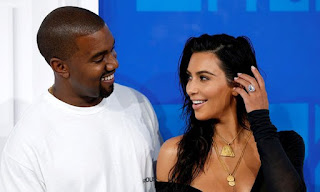 Corporation means body; capital means head. But corporate capital has neither head nor body. It is hard for people to attach themselves to a homogenised franchise owned by a hedge fund whose corporate identity consists of a filing cabinet in Panama City. So the machine needs a mask. It must wear the face of someone we see as often as we see our next-door neighbours. It is pointless to ask what Kim Kardashian does to earn her living: her role is to exist in our minds. By playing our virtual neighbour, she induces a click of recognition on behalf of whatever grey monolith sits behind her this week.
An obsession with celebrity does not lie quietly beside the other things we value; it takes their place. A study published in the journal Cyberpsychology reveals that an extraordinary shift appears to have taken place between 1997 and 2007 in the US. In 1997, the dominant values (as judged by an adult audience) expressed by the shows most popular among nine- to 11 year-olds were community feeling, followed by benevolence. Fame came 15th out of the 16 values tested. By 2007, when shows such as Hannah Montana prevailed, fame came first, followed by achievement, image, popularity and financial success. Community feeling had fallen to 11th, benevolence to 12th.
A paper in the International Journal of Cultural Studies found that, among the people it surveyed in the UK, those who follow celebrity gossip most closely are three times less likely than people interested in other forms of news to be involved in local organisations, and half as likely to volunteer. Virtual neighbours replace real ones.
The blander and more homogenised the product, the more distinctive the mask it needs to wear. This is why Iggy Pop was used to promote motor insurance and Benicio del Toro is used to sell Heineken. The role of such people is to suggest that there is something more exciting behind the logo than office blocks and spreadsheets. They transfer their edginess to the company they represent. As soon they take the cheque that buys their identity, they become as processed and meaningless as the item they are promoting.(...)
You don’t have to read or watch many interviews to see that the principal qualities now sought in a celebrity are vapidity, vacuity and physical beauty. They can be used as a blank screen on to which anything can be projected. With a few exceptions, those who have least to say are granted the greatest number of platforms on which to say it.
This helps to explain the mass delusion among young people that they have a reasonable chance of becoming famous. A survey of 16-year-olds in the UK revealed that 54% of them intend to become celebrities. (...)
Celebrity has a second major role: as a weapon of mass distraction. The survey published in the IJCS I mentioned earlier also reveals that people who are the most interested in celebrity are the least engaged in politics, the least likely to protest and the least likely to vote. This appears to shatter the media’s frequent, self-justifying claim that celebrities connect us to public life.
The survey found that people fixated by celebrity watch the news on average as much as others do, but they appear to exist in a state of permanent diversion. If you want people to remain quiescent and unengaged, show them the faces of Taylor Swift, Shia LaBeouf and Cara Delevingne several times a day.
The rise of celebrity culture did not happen by itself. It has long been cultivated by advertisers, marketers and the media. And it has a function. The more distant and impersonal corporations become, the more they rely on other people’s faces to connect them to their customers.
 Corporation means body; capital means head. But corporate capital has neither head nor body. It is hard for people to attach themselves to a homogenised franchise owned by a hedge fund whose corporate identity consists of a filing cabinet in Panama City. So the machine needs a mask. It must wear the face of someone we see as often as we see our next-door neighbours. It is pointless to ask what Kim Kardashian does to earn her living: her role is to exist in our minds. By playing our virtual neighbour, she induces a click of recognition on behalf of whatever grey monolith sits behind her this week.
An obsession with celebrity does not lie quietly beside the other things we value; it takes their place. A study published in the journal Cyberpsychology reveals that an extraordinary shift appears to have taken place between 1997 and 2007 in the US. In 1997, the dominant values (as judged by an adult audience) expressed by the shows most popular among nine- to 11 year-olds were community feeling, followed by benevolence. Fame came 15th out of the 16 values tested. By 2007, when shows such as Hannah Montana prevailed, fame came first, followed by achievement, image, popularity and financial success. Community feeling had fallen to 11th, benevolence to 12th.
A paper in the International Journal of Cultural Studies found that, among the people it surveyed in the UK, those who follow celebrity gossip most closely are three times less likely than people interested in other forms of news to be involved in local organisations, and half as likely to volunteer. Virtual neighbours replace real ones.
The blander and more homogenised the product, the more distinctive the mask it needs to wear. This is why Iggy Pop was used to promote motor insurance and Benicio del Toro is used to sell Heineken. The role of such people is to suggest that there is something more exciting behind the logo than office blocks and spreadsheets. They transfer their edginess to the company they represent. As soon they take the cheque that buys their identity, they become as processed and meaningless as the item they are promoting.(...)
You don’t have to read or watch many interviews to see that the principal qualities now sought in a celebrity are vapidity, vacuity and physical beauty. They can be used as a blank screen on to which anything can be projected. With a few exceptions, those who have least to say are granted the greatest number of platforms on which to say it.
This helps to explain the mass delusion among young people that they have a reasonable chance of becoming famous. A survey of 16-year-olds in the UK revealed that 54% of them intend to become celebrities. (...)
Celebrity has a second major role: as a weapon of mass distraction. The survey published in the IJCS I mentioned earlier also reveals that people who are the most interested in celebrity are the least engaged in politics, the least likely to protest and the least likely to vote. This appears to shatter the media’s frequent, self-justifying claim that celebrities connect us to public life.
The survey found that people fixated by celebrity watch the news on average as much as others do, but they appear to exist in a state of permanent diversion. If you want people to remain quiescent and unengaged, show them the faces of Taylor Swift, Shia LaBeouf and Cara Delevingne several times a day.
by George Monbiot, The Guardian | Read more:
Image: Eduardo Munoz/Reuters
$16,255 Dinner Bill Hints at NFL hazing culture
Here’s what passes for a good time in the NFL. A group of veteran players gather up an unsuspecting rookie and take him out to dinner. Over the next few hours they order heaping slabs of steak and bottle upon bottle of wine from the restaurant’s secret storage chest. After, they wash it all down with a couple bottles of Dom Perignon.
 When the bill arrives they propose a game. How about a little credit card roulette? Everyone throws their card in a hat and the waiter or waitress is asked to close their eyes then pull out a card. This is “the winner,” the one stuck with the check. Of course the game is rigged to be sure the rookie’s card will be selected. The bill makes his heart sink.
Maybe it’s $15,000.
Or $17,000.
Or $22,599.
Everybody laughs. Ha. Ha. Can you believe it? Oh the poor sap. There you go kid! Welcome to the league!
On Monday, that rookie was Houston Texans safety KJ Dillon who was handed a $16,255.20 bill for dinner with teammates. Included was $349.65 in sea bass and a whopping $7,770 of Hennessy Pardis Imperial. Not included was the gratuity, which should have been about $3,200 if Dillon was being only mildly generous. Buried deep in the check was a $12.95 Caesar salad that was apparently all Dillon ate according to his Twitter feed, where he placed a photograph of the bill and informed his followers that he didn’t even partake in the $7,770 of Hennessy since he doesn’t even drink.
The whole thing made for a good joke around the Internet. Hey, look at the silly rookie! Until former NFL punter Adam Podlesh tweeted a public note to Dillon that read: “For those who don’t think the NFL player bankruptcy epidemic has anything to do with veterans passing down the culture…Exhibit A. [Dillon] is a rookie on IR with a split in his contract. After tip he spent almost 7% of his post-tax paragraph 5 salary this year ... that is the same relative spending as a $50k a year new employee spending almost $3000 on his co-workers.”
Leave it to a punter to shame the meat-and-potato behemoths in the locker room. At some point athletes have to understand there is little redeeming social value in burying a supposedly beloved and trusted teammate with a staggering dinner bill. The legacy of professional athletes squandering their money is extreme. Ten thousand here. Twenty thousand there. Suddenly the whole pile is gone. Everybody shakes their head and mutters about another dumb athlete who couldn’t take care of what he earned.
 When the bill arrives they propose a game. How about a little credit card roulette? Everyone throws their card in a hat and the waiter or waitress is asked to close their eyes then pull out a card. This is “the winner,” the one stuck with the check. Of course the game is rigged to be sure the rookie’s card will be selected. The bill makes his heart sink.
Maybe it’s $15,000.
Or $17,000.
Or $22,599.
Everybody laughs. Ha. Ha. Can you believe it? Oh the poor sap. There you go kid! Welcome to the league!
On Monday, that rookie was Houston Texans safety KJ Dillon who was handed a $16,255.20 bill for dinner with teammates. Included was $349.65 in sea bass and a whopping $7,770 of Hennessy Pardis Imperial. Not included was the gratuity, which should have been about $3,200 if Dillon was being only mildly generous. Buried deep in the check was a $12.95 Caesar salad that was apparently all Dillon ate according to his Twitter feed, where he placed a photograph of the bill and informed his followers that he didn’t even partake in the $7,770 of Hennessy since he doesn’t even drink.
The whole thing made for a good joke around the Internet. Hey, look at the silly rookie! Until former NFL punter Adam Podlesh tweeted a public note to Dillon that read: “For those who don’t think the NFL player bankruptcy epidemic has anything to do with veterans passing down the culture…Exhibit A. [Dillon] is a rookie on IR with a split in his contract. After tip he spent almost 7% of his post-tax paragraph 5 salary this year ... that is the same relative spending as a $50k a year new employee spending almost $3000 on his co-workers.”
Leave it to a punter to shame the meat-and-potato behemoths in the locker room. At some point athletes have to understand there is little redeeming social value in burying a supposedly beloved and trusted teammate with a staggering dinner bill. The legacy of professional athletes squandering their money is extreme. Ten thousand here. Twenty thousand there. Suddenly the whole pile is gone. Everybody shakes their head and mutters about another dumb athlete who couldn’t take care of what he earned.
by Les Carpenter, The Guardian | Read more:
Image: K.J. Dillon
Tuesday, December 20, 2016

Bud-Sex
A lot of men have sex with other men but don’t identify as gay or bisexual. A subset of these men who have sex with men, or MSM, live lives that are, in all respects other than their occasional homosexual encounters, quite straight and traditionally masculine — they have wives and families, they embrace various masculine norms, and so on. They are able to, in effect, compartmentalize an aspect of their sex lives in a way that prevents it from blurring into or complicating their more public identities. Sociologists are quite interested in this phenomenon because it can tell us a lot about how humans interpret thorny questions of identity and sexual desire and cultural expectations.
 Last year, NYU Press published the fascinating book Not Gay: Sex Between Straight White Men by the University of California, Riverside, gender and sexuality professor Jane Ward. In it, Ward explored various subcultures in which what could be called “straight homosexual sex” abounds — not just in the ones you’d expect, like the military and fraternities, but also biker gangs and conservative suburban neighborhoods — to better understand how the participants in these encounters experienced and explained their attractions, identities, and rendezvous. But not all straight MSM have gotten the same level of research attention. One relatively neglected such group, argues the University of Oregon sociology doctoral student Tony Silva in a new paper in Gender & Society, is rural, white, straight men (well, neglected if you set aside Brokeback Mountain).
Silva sought to find out more about these men, so he recruited 19 from men-for-men casual-encounters boards on Craigslist and interviewed them, for about an hour and a half each, about their sexual habits, lives, and senses of identity. All were from rural areas of Missouri, Illinois, Oregon, Washington, or Idaho, places known for their “social conservatism and predominant white populations.” The sample skewed a bit on the older side, with 14 of the 19 men in their 50s or older, and most identified exclusively as exclusively or mostly straight, with a few responses along the lines of “Straight but bi, but more straight.”
Since this is a qualitative rather than a quantitative study, it’s important to recognize that the particular men recruited by Silva weren’t necessarily representative of, well, anything. These were just the guys who agreed to participate in an academic’s research project after they saw an ad for it on Craigslist. But the point of Silva’s project was less to draw any sweeping conclusions about either this subset of straight MSM, or the population as a whole, than to listen to their stories and compare them to the narratives uncovered by Ward and various other researchers.
Specifically, Silva was trying to understand better the interplay between “normative rural masculinity” — the set of mores and norms that defines what it means to be a rural man — and these men’s sexual encounters. In doing so, he introduces a really interesting and catchy concept, “bud-sex”:
In some of the subcultures Ward studied, straight MSM were able to reinterpret homosexual identity as actually strengthening their heterosexual identities. So it was with Silva’s subjects as well — they found ways to cast their homosexual liaisons as reaffirming their rural masculinity. One way they did so was by seeking out partners who were similar to them. “This is a key element of bud-sex,” writes Silva. “Partnering with other men similarly privileged on several intersecting axes—gender, race, and sexual identity—allowed the participants to normalize and authenticate their sexual experiences as normatively masculine.” In other words: If you, a straight guy from the country, once in a while have sex with other straight guys from the country, it doesn’t threaten your straight, rural identity as much as it would if instead you, for example, traveled to the nearest major metro area and tried to pick up dudes at a gay bar. You’re not the sort of man who would go to a gay bar — you’re not gay!
It’s difficult here not to slip into the old middle-school joke of “It’s not gay if …” — “It’s not gay” if your eyes are closed, or the lights are off, or you’re best friends — but that’s actually what the men in Silva’s study did, in a sense...
 Last year, NYU Press published the fascinating book Not Gay: Sex Between Straight White Men by the University of California, Riverside, gender and sexuality professor Jane Ward. In it, Ward explored various subcultures in which what could be called “straight homosexual sex” abounds — not just in the ones you’d expect, like the military and fraternities, but also biker gangs and conservative suburban neighborhoods — to better understand how the participants in these encounters experienced and explained their attractions, identities, and rendezvous. But not all straight MSM have gotten the same level of research attention. One relatively neglected such group, argues the University of Oregon sociology doctoral student Tony Silva in a new paper in Gender & Society, is rural, white, straight men (well, neglected if you set aside Brokeback Mountain).
Silva sought to find out more about these men, so he recruited 19 from men-for-men casual-encounters boards on Craigslist and interviewed them, for about an hour and a half each, about their sexual habits, lives, and senses of identity. All were from rural areas of Missouri, Illinois, Oregon, Washington, or Idaho, places known for their “social conservatism and predominant white populations.” The sample skewed a bit on the older side, with 14 of the 19 men in their 50s or older, and most identified exclusively as exclusively or mostly straight, with a few responses along the lines of “Straight but bi, but more straight.”
Since this is a qualitative rather than a quantitative study, it’s important to recognize that the particular men recruited by Silva weren’t necessarily representative of, well, anything. These were just the guys who agreed to participate in an academic’s research project after they saw an ad for it on Craigslist. But the point of Silva’s project was less to draw any sweeping conclusions about either this subset of straight MSM, or the population as a whole, than to listen to their stories and compare them to the narratives uncovered by Ward and various other researchers.
Specifically, Silva was trying to understand better the interplay between “normative rural masculinity” — the set of mores and norms that defines what it means to be a rural man — and these men’s sexual encounters. In doing so, he introduces a really interesting and catchy concept, “bud-sex”:
Ward (2015) examines dudesex, a type of male–male sex that white, masculine, straight men in urban or military contexts frame as a way to bond and build masculinity with other, similar “bros.” Carrillo and Hoffman (2016) refer to their primarily urban participants as heteroflexible, given that they were exclusively or primarily attracted to women. While the participants in this study share overlap with those groups, they also frame their same-sex sex in subtly different ways: not as an opportunity to bond with urban “bros,” and only sometimes—but not always—as a novel sexual pursuit, given that they had sexual attractions all across the spectrum. Instead, as Silva (forthcoming) explores, the participants reinforced their straightness through unconventional interpretations of same-sex sex: as “helpin’ a buddy out,” relieving “urges,” acting on sexual desires for men without sexual attractions to them, relieving general sexual needs, and/or a way to act on sexual attractions. “Bud-sex” captures these interpretations, as well as how the participants had sex and with whom they partnered. The specific type of sex the participants had with other men—bud-sex—cemented their rural masculinity and heterosexuality, and distinguishes them from other MSM.This idea of homosexual sex cementing heterosexuality and traditional, rural masculinity certainly feels counterintuitive, but it clicks a little once you read some of the specific findings from Silva’s interviews. The most important thing to keep in mind here is that rural masculinity is “[c]entral to the men’s self-understanding.” Quoting another researcher, Silva notes that it guides their “thoughts, tastes, and practices. It provides them with their fundamental sense of self; it structures how they understand the world around them; and it influences how they codify sameness and difference.” As with just about all straight MSM, there’s a tension at work: How can these men do what they’re doing without it threatening parts of their identity that feel vital to who they are?
In some of the subcultures Ward studied, straight MSM were able to reinterpret homosexual identity as actually strengthening their heterosexual identities. So it was with Silva’s subjects as well — they found ways to cast their homosexual liaisons as reaffirming their rural masculinity. One way they did so was by seeking out partners who were similar to them. “This is a key element of bud-sex,” writes Silva. “Partnering with other men similarly privileged on several intersecting axes—gender, race, and sexual identity—allowed the participants to normalize and authenticate their sexual experiences as normatively masculine.” In other words: If you, a straight guy from the country, once in a while have sex with other straight guys from the country, it doesn’t threaten your straight, rural identity as much as it would if instead you, for example, traveled to the nearest major metro area and tried to pick up dudes at a gay bar. You’re not the sort of man who would go to a gay bar — you’re not gay!
It’s difficult here not to slip into the old middle-school joke of “It’s not gay if …” — “It’s not gay” if your eyes are closed, or the lights are off, or you’re best friends — but that’s actually what the men in Silva’s study did, in a sense...
by Jesse Singal, Science of Us | Read more:
Image: Hero Images Inc./Getty Images/Hero Images
Monday, December 19, 2016

Moderation As a Virtue
[ed. This includes moderation in everything, not just politics: drinking, eating, exercise, pornography, internet, social networking, drugs, work, Netflix... everything. As my doctor says, "moderation in everything, including moderation" (I love that guy). Too often people seem to want to embrace a binary perspective these days... black or white, good or bad, regular or organic.]
Moderation, then, is out of step with the times, which are characterized by populist anger and widespread anxiety, by cross-partisan animosity and dogmatic certainty. Those with whom we have political disagreements are not only wrong; they are often judged to be evil and irredeemable.
 In such a poisonous political culture, when moderation is precisely the treatment we need to cleanse America’s civic toxins, it invariably becomes synonymous with weakness, lack of conviction and timidity. For many, moderation is what the French existentialist Jean-Paul Sartre called a “tender souls philosophy.”
This is quite a serious problem, as Aurelian Craiutu argues in his superb and timely new book, “Faces of Moderation: The Art of Balance in an Age of Extremes,” in which he profiles several prominent 20th-century thinkers, including Raymond Aron, Isaiah Berlin and Michael Oakeshott. Mr. Craiutu, a professor of political science at Indiana University, argues that the success of representative government and its institutions depends on moderation because these cannot properly function without compromise, which is the governing manifestation of moderation.
The case for political moderation requires untangling some misconceptions.
Moderation does not mean truth is always found equidistant between two extreme positions, nor does it mean that bold and at times even radical steps are not necessary to advance moral ends. Moderation takes into account what is needed at any given moment; it allows circumstances to determine action in the way that weather patterns dictate which route a ship will follow.
But there are general characteristics we associate with moderation, including prudence, the humility to recognize limits (including our own), the willingness to balance competing principles and an aversion to fanaticism. Moderation accepts the complexity of life in this world and distrusts utopian visions and simple solutions. The way to think about moderation is as a disposition, not as an ideology. Its antithesis is not conviction but intemperance.
Moderates “do not see the world in Manichaean terms that divide it into forces of good (or light) and agents of evil (or darkness),” according to Professor Craiutu. “They refuse the posture of prophets, champion sobriety in political thinking and action, and endorse an ethics of responsibility as opposed to an ethics of absolute ends.” This allows authentic moderates to remain open to facts that challenge their assumptions and makes them more likely to engage in debate free of invective. The survival of a functioning parliamentary system, Sir William Harcourt said, depends on “constant dining with the opposition.”
The charge that moderates lack courage is easily put to rest by people like the French journalist and philosopher Raymond Aron. He was a man of deep, reasoned convictions who possessed a sense of proportion. A nonconformist, Aron was fearless in taking on the leading intellectuals of his time, including his friend Sartre. (Parisian students in 1968 avowed that it was “better to be wrong with Sartre than right with Aron.”) Aron strongly defended liberal democracy when it was fashionable to denigrate it. Playing off the Marxist claim that religion was the opium of the masses, Aron argued that Marxism was the opium of the intellectuals.
For Aron, political moderation was a fighting creed. Allergic to ideological thinking, he conformed his views to evidence. He retained his intellectual and political independence throughout his life. Aron believed that history teaches us humility, modesty and the limits of our knowledge. He was also skilled at the art of dialogue, engaging those he disagreed with critically but civilly. “As the last great representative of a distinguished tradition of European liberalism,” Professor Craiutu writes, “Aron attempted to disintoxicate minds and calm fanaticism in dark times.” Aron put it this way: “Freedom flourishes in temperate zones; it does not survive the burning faith of prophets and crowds.”
by Peter Wehner, NY Times | Read more:
Image: via:
The World According to Stanislaw Lem
[ed. I read Lem when I was fresh out of college working in a bookstore (His Master's Voice). Back then employees would trade secret recommendations on favorite books, which is how I heard about him (now you can find those same recommendations on the shelves of any bookstore, titled "Employee Favorites", which seems kind of sad for some reason). Anyway, I thought he was a genius, along the lines of David Foster Wallace. Glad to see him finally getting some recognition. I'll have to revist him again soon.]
 But SF, like everything else, is also a product of its time. Jules Verne’s tales of trips around the globe and voyages to the center of the Earth reflected the scientific optimism of the late 19th century, before World War I blew open technology’s dark side. During its midcentury golden age in the United States, the pulpy genre cheered on the rising economic and military dominance of the United States, forecasting an American empire that stretched to the stars. Not long after, New Wave authors like Philip K. Dick, Samuel R. Delany, and Ursula K. Le Guin wrestled with the social and political upheavals of the 1960s and ’70s, from Cold War paranoia to the Civil Rights Movement, second-wave feminism, and the drug culture. What kind of stories the Trump era might inspire is still unknown, but they probably won’t be cheerful.
Stanisław Lem, the Polish novelist, futurologist, literary theorist, satirist, and philosophical gadfly, tried mightily to free his work from the shackles of the present. In dozens of novels, short stories, essays, metaliterary experiments, and futurological treatises, he attempted to imagine everything from a living ocean that could read human minds (Solaris) to a swarm of nonbiological mechanical insects (The Invincible) to a supercomputer many times more intelligent than its human creators (Golem XIV). In his 1964 book Summa Technologiae, Lem mocked writers whose works were merely historical fiction recast in the future — “corsairs and pirates of the thirtieth century.” It’s easy to find targets for Lem’s criticism; most SF movies are exercises in wish fulfillment, projections of a space-age Columbus in search of a final frontier. For Lem, science fiction meant thinking harder and imagining more.
But even Lem could not transcend his own history. Born in 1921 in Lviv (then called Lwów as part of the Second Polish Republic), he survived World War II, served in the Polish resistance, and lived for most of his life under Polish Communism. In his work, he turned repeatedly to themes reflecting those experiences, including the role of chance in determining fate, the oppressive bureaucracy of authoritarian regimes, and the possibility of a runaway arms race that escapes human control. Ironically, Lem’s effort to think outside of history often provides the best descriptions of the period he lived through.
Lem died in 2006, having lived to see many of his ideas come true. Yet today he has fallen into quasi-obscurity, at least in the English-speaking world. Not even in his heyday did he have the cachet in the United States of writers like Isaac Asimov or Robert A. Heinlein. But Lem was phenomenally popular in Eastern and Central Europe. According to a recent estimate, his books have been translated into more than 40 languages and have sold almost 40 million copies, and he was repeatedly nominated for the Nobel Prize. By all measures he was one of the most successful writers of the 20th century.(...)
Compared to most science fiction writers, Lem’s thinking was both disinterested and far-reaching. In works like the nonfictional Summa Technologiae, he explored the possibilities of artificial intelligence, virtual reality, and genetic engineering, comparing technological advancement to biological evolution. Just as evolution had no moral agenda, he argued, technological developments were neither inherently good nor bad, but followed their own internal logic. Unlike most would-be prophets, who predict the future with warnings of dystopia or promises of a better tomorrow, Lem approached the subject without a moralizing tone.
But in his fiction Lem did explore the pitfalls that the future might hold. His experience living under German occupation impressed on him the role of chance in life and the ease with which that life could be snuffed out. The absurdities of authoritarian communism and the perils of the Cold War further illustrated the danger humanity posed to itself. Worst of all, the construction of oppressive ideological systems seemed to occur through processes that its participants were unable to prevent, or even fully understand. (...)
These ideas evoke comparisons to Orwell, and to the British novelist’s famous depiction of Stalinism in 1984 (1949). But in his letters to Kandel, Lem claimed that Orwell had gotten Stalinism wrong. Whereas Orwell described his dystopian regime as “a boot stamping on a human face — forever,” Lem argued that communist oppression was not a sadistic evil pursued for its own sake but a natural result of turning state ideology into dogma. Similarly, Lem critiqued Hannah Arendt’s analysis of totalitarianism, writing that “she made out these systems to be fruit of strictly intentional evil.” Rather, he writes, “Stalin’s times concocted a myth, never concretely or cogently expressed, of the state as a machine that was not only perfect, but also omniscient and omnipotent.” For Lem, the tragic consequences weren’t the result of premeditated cruelty, but the logical outcome of turning politics into faith.
Lem may have been critical of the Soviet Union, but that didn’t mean he had a positive view of the West. “Say, one country permits eating little children right before the eyes of crazed mothers,” he wrote to Kandel in 1977, “and another permits eating absolutely anything, whereupon it turns out that the majority of people in that country eat shit. So what does the fact that most people eat shit demonstrate […] ?” In other words, just because life behind the Iron Curtain was bad, that didn’t make the United States good. For Lem the world wasn’t divided between good and evil, but between bad and even worse.
Starting in the late 1960s, Lem turned away from conventional SF in favor of experimental works of literary and cultural criticism. These included books like The Philosophy of Chance (1968), in which he attempted to produce an empirical form of literary theory, and the Borgesian A Perfect Vacuum (1971) and One Human Minute (1986), in which he reviewed nonexistent books. While Lem’s literary experiments displayed a playful dexterity, his cultural criticisms were often clichéd, focusing on the West’s supposed vulgarity, tastelessness, and excess. In a 1992 interview with Swirski, he commented on the exploding number of TV channels, calling them “simply appalling. It is like having two thousand shirts or pairs of shoes.” While Lem’s main argument was about the unmanageable explosion of media, neither TV channels nor an excessive wardrobe seems like humanity’s greatest crime.
If Lem didn’t think much of American popular culture, neither did he have much esteem for its literature. (...)
Lem’s criticisms may have been curmudgeonly and, as Swirksi suggests, rooted in his frustrated desire for greater American recognition. But to Lem the country also represented dangers that we are only now beginning to appreciate. He foresaw dystopia not only in resource-starved wastelands, but also in technological prisons of pleasure and excess. “The idea would be to expand the gamut of pleasurable sensations to the maximum, and perhaps even to bring into being […] other, as yet unknown, kinds of sensual stimulation and gratification,” he wrote in His Master’s Voice. This possibility became the premise for The Futurological Congress, in which humanity becomes trapped in a pharmacologically induced paradise, unaware of its own looming extinction.
Most presciently, Lem understood that even mundane varieties of information could be disastrous in overwhelming quantities. What happens, he asked in His Master’s Voice, when “the technologies of information have led to a situation in which one can receive best the message of him who shouts the loudest, even when the most falsely?” Or, as he wrote in the same novel, “freedom of expression sometimes presents a greater threat to an idea, because forbidden thoughts may circulate in secret, but what can be done when an important fact is lost in a flood of impostors […] ?” Facebook and the deluge of fake news sites didn’t exist when Lem wrote this, but their creation wouldn’t have surprised him. The future of the United States, he wrote to Kandel, is “dark, most likely.” (...)
Lem considered any effort to make accurate predictions a fool’s errand — “Nothing ages as fast as the future,” he once wrote — but he did try to think rigorously about the paths our civilization might take. At first technology is applied toward our environment, he argued, as we enter the Anthropocene era on Earth. But eventually it is turned toward the human organism itself, leading to a stage of existence that is as yet unpredictable. “Man remains the last relic of Nature, the last ‘authentic product of Nature’ for an indefinite period of time,” he writes. But “the invasion of technology created by man into his body is inevitable.”
Most importantly, Lem viewed biological evolution and technological development as part of the same process. Following Norbert Wiener’s formulation that there exist in the universe “islands of locally decreasing entropy” — that is, areas of space-time that tend naturally toward greater complexity and organization — Lem posited that evolution was not just a biological process guiding life on Earth but a phenomenon that could include any form of matter or energy. While these islands might sometimes result in biological life, they might also result in other kinds of complex systems, including our own creations. “Who causes whom?” he asked in Summa Technologiae. “Does technology cause us, or do we cause it?” Or, as he put it more pointedly in His Master’s Voice, “The roles are now reversed: humanity becomes, for technology, a means, an instrument for achieving a goal unknown and unknowable.”
by Ezra Glinter, LARB | Read more:
Image: Goodreads
Roger Miller
Houses where nobody lives
Two people each having so much pride inside
Neither side forgives
The angry words spoken in haste
Such a waste of two lives
It's my belief
Pride is the chief cause in the decline
In the number of husbands and wives
A woman and a man, a man and a woman
Some can and some can't
And some can
Two broken hearts lonely, looking like
Houses where nobody lives
Two people each having so much pride inside
Neither side forgives
Lyrics: via:
Turning Your Vacation Photos Into Works of Art
It’s the season for family travel and photos — and perhaps enlarging some of those images of snowy landscapes or tropical getaways to decorate your home.
There are, of course, the usual print services and methods. You can choose a glossy or matte finish, print a photo on canvas, or make it into a poster with a few clicks online at photo sites like Snapfish and Shutterfly, professional photo shops like Adorama and Mpix, or drugstores and big-box chains like Walgreens and Costco. But the web is also home to many lesser-known printing services, as well as uncommon surfaces on which to enlarge photos for display, be it burlap, wood boards, acrylic or stick-and-peel fabric. Why not try some fresh sites and methods?
I recently sent some ho-hum quality iPhone vacation photos to a handful of companies that I’d never used before and had them enlarged to various sizes and printed on different surfaces. I’ve also offered some guidance about bulk digitizing those boxes of old travel photos sitting in your closet or basement so that you can begin the New Year if not with a vacation, then with a clutter-free home.
 Engineer Prints
Of all the ways to turn photos into wall art, I was most interested in trying engineer prints, named for the large, lightweight prints used by architects. For less than the cost of a couple of movie tickets, you can make huge enlargements. Mind you, it’s a particular aesthetic, one that’s most likely to appeal to people who are after an industrial, shabby chic or bohemian look. The paper is thin and the lines of the images are softer than a fine art print. And engineer prints need not be formally framed. People stick them to their walls with washi tape, a crafting tape that comes in innumerable colors and prints; or they hang the prints using wood poster rails or skeleton clips. For a while, engineer prints from photos were primarily available in black and white, but now you can find them in color, too.
One of the easiest ways to order them online is through Parabo Press, which is run by Photojojo, an online photography gear shop, and Zoomin, a photo printing service in Asia. As with all printing sites, you upload your image, zoom in closer if you like, and then click to buy.
The site’s engineer prints are 4 feet by 3 feet, and cost $20 in black and white, and $25 in color. I sent out two different photos to be made in black and white, and they came out, to my surprise, beautifully. I was impressed that they were able to be enlarged to such a degree and not look blurry. And the paper (while so thin I was worried about accidentally tearing it) lends it an artful, careless look rather than the expected framed print over the couch.
Parabo Press is a breeze to use: It’s clean and easy to read, your options are straightforward, and there are no annoying upsells. The site also offers prints on metal, glass, newsprint and Zines (handmade magazines); calendars; photo books; and prints from its Risograph machine, which uses soy-based ink and is described by Parabo as having “a cult following since its invention in 1980s Japan.”
Fabric Prints
A fabric print — not soft like a bedsheet, more like a place mat made of matte woven fabric — is another departure from a traditional photo enlargement. Order one from a site such as SnapBox and instead of framing it, you can peel and stick it on your wall. The site’s fabric posters adhere to (and can be peeled off) smooth surfaces such as untextured walls, glass, ceilings, tile and finished wood surfaces (avoid surfaces like stucco, concrete blocks, brick, unfinished wood, canvas or freshly painted walls). SnapBox offers fabric posters in more than a dozen sizes from 4x4 to 36x54, from less than $2 to about $80.
I ordered a 24x36 fabric poster for $34.99, a discounted price thanks to a holiday coupon — not cheap (you can buy fine art prints on other sites for less), but you’re printing on special material. Regardless of the cost, I expected the finished product to look like the sort of cheap thing one might see in a dorm room (it sticks to walls, after all), but I was pleasantly surprised. The fabric was durable and the details in the photo — crevasses in a glacier; onlookers on a bridge — were nicely defined.
There are, of course, the usual print services and methods. You can choose a glossy or matte finish, print a photo on canvas, or make it into a poster with a few clicks online at photo sites like Snapfish and Shutterfly, professional photo shops like Adorama and Mpix, or drugstores and big-box chains like Walgreens and Costco. But the web is also home to many lesser-known printing services, as well as uncommon surfaces on which to enlarge photos for display, be it burlap, wood boards, acrylic or stick-and-peel fabric. Why not try some fresh sites and methods?
I recently sent some ho-hum quality iPhone vacation photos to a handful of companies that I’d never used before and had them enlarged to various sizes and printed on different surfaces. I’ve also offered some guidance about bulk digitizing those boxes of old travel photos sitting in your closet or basement so that you can begin the New Year if not with a vacation, then with a clutter-free home.
 Engineer Prints
Of all the ways to turn photos into wall art, I was most interested in trying engineer prints, named for the large, lightweight prints used by architects. For less than the cost of a couple of movie tickets, you can make huge enlargements. Mind you, it’s a particular aesthetic, one that’s most likely to appeal to people who are after an industrial, shabby chic or bohemian look. The paper is thin and the lines of the images are softer than a fine art print. And engineer prints need not be formally framed. People stick them to their walls with washi tape, a crafting tape that comes in innumerable colors and prints; or they hang the prints using wood poster rails or skeleton clips. For a while, engineer prints from photos were primarily available in black and white, but now you can find them in color, too.
One of the easiest ways to order them online is through Parabo Press, which is run by Photojojo, an online photography gear shop, and Zoomin, a photo printing service in Asia. As with all printing sites, you upload your image, zoom in closer if you like, and then click to buy.
The site’s engineer prints are 4 feet by 3 feet, and cost $20 in black and white, and $25 in color. I sent out two different photos to be made in black and white, and they came out, to my surprise, beautifully. I was impressed that they were able to be enlarged to such a degree and not look blurry. And the paper (while so thin I was worried about accidentally tearing it) lends it an artful, careless look rather than the expected framed print over the couch.
Parabo Press is a breeze to use: It’s clean and easy to read, your options are straightforward, and there are no annoying upsells. The site also offers prints on metal, glass, newsprint and Zines (handmade magazines); calendars; photo books; and prints from its Risograph machine, which uses soy-based ink and is described by Parabo as having “a cult following since its invention in 1980s Japan.”
Fabric Prints
A fabric print — not soft like a bedsheet, more like a place mat made of matte woven fabric — is another departure from a traditional photo enlargement. Order one from a site such as SnapBox and instead of framing it, you can peel and stick it on your wall. The site’s fabric posters adhere to (and can be peeled off) smooth surfaces such as untextured walls, glass, ceilings, tile and finished wood surfaces (avoid surfaces like stucco, concrete blocks, brick, unfinished wood, canvas or freshly painted walls). SnapBox offers fabric posters in more than a dozen sizes from 4x4 to 36x54, from less than $2 to about $80.
I ordered a 24x36 fabric poster for $34.99, a discounted price thanks to a holiday coupon — not cheap (you can buy fine art prints on other sites for less), but you’re printing on special material. Regardless of the cost, I expected the finished product to look like the sort of cheap thing one might see in a dorm room (it sticks to walls, after all), but I was pleasantly surprised. The fabric was durable and the details in the photo — crevasses in a glacier; onlookers on a bridge — were nicely defined.
SnapBox is a user-friendly site with clear instructions and pricing. In addition to fabric posters, it also offers fine art prints, photo books and prints on canvas and pillows.
by Stephanie Rosenbloom, NY Times | Read more:
Image: Stephanie Rosenbloom


Saturday, December 17, 2016


Finding North America’s Lost Medieval City
A thousand years ago, huge pyramids and earthen mounds stood where East St. Louis sprawls today in Southern Illinois. This majestic urban architecture towered over the swampy Mississippi River floodplains, blotting out the region's tiny villages. Beginning in the late 900s, word about the city spread throughout the southeast. Thousands of people visited for feasts and rituals, lured by the promise of a new kind of civilization. Many decided to stay.
At the city's apex in 1050, the population exploded to as many as 30 thousand people. It was the largest pre-Columbian city in what became the United States, bigger than London or Paris at the time. Its colorful wooden homes and monuments rose along the eastern side of the Mississippi, eventually spreading across the river to St. Louis. One particularly magnificent structure, known today as Monk’s Mound, marked the center of downtown. It towered 30 meters over an enormous central plaza and had three dramatic ascending levels, each covered in ceremonial buildings. Standing on the highest level, a person speaking loudly could be heard all the way across the Grand Plaza below. Flanking Monk’s Mound to the west was a circle of tall wooden poles, dubbed Woodhenge, that marked the solstices.
 Despite its greatness, the city’s name has been lost to time. Its culture is known simply as Mississippian. When Europeans explored Illinois in the 17th century, the city had been abandoned for hundreds of years. At that time, the region was inhabited by the Cahokia, a tribe from the Illinois Confederation. Europeans decided to name the ancient city after them, despite the fact that the Cahokia themselves claimed no connection to it.
Centuries later, Cahokia's meteoric rise and fall remain a mystery. It was booming in 1050, and by 1400 its population had disappeared, leaving behind a landscape completely geoengineered by human hands. Looking for clues about its history, archaeologists dig through the thick, wet, stubborn clay that Cahokians once used to construct their mounds. Buried beneath just a few feet of earth are millennia-old building foundations, trash pits, the cryptic remains of public rituals, and in some places, even, graves.
To find out what happened to Cahokia, I joined an archaeological dig there in July. It was led by two archaeologists who specialize in Cahokian history, Sarah Baires of Eastern Connecticut State University and Melissa Baltus of University of Toledo. They were assisted by Ph.D. candidate Elizabeth Watts of Indiana University, Bloomington, and a class of tireless undergraduates with the Institute for Field Research. Together, they spent the summer opening three large trenches in what they thought would be a sleepy little residential neighborhood southwest of Monk's Mound.
They were wrong. The more they dug, the more obvious it became that this was no ordinary place. The structures they excavated were full of ritual objects charred by sacred fires. We found the remains of feasts and a rare earthen structure lined with yellow soils. Baires, Baltus, and their team had accidentally stumbled on an archaeological treasure trove linked to the city's demise. The story of this place would take us back to the final decades of a great city whose social structure was undergoing a radical transformation.
East St. Louis palimpsest
Finding a lost city in the modern world isn’t exactly like playing Tomb Raider. Instead of hacking through jungle and fighting a dragon, I drove to Cahokia on a road that winds through the depressed neighborhoods of East St. Louis and into Collinsville, Illinois. As recently as the 1970s, the ancient city’s elevated walkways and mounds were covered over by suburban developments. Just west of Monk's Mound was the Mounds Drive-In Theater. Farmers often plowed over Cahokia’s smaller landmarks.
All that changed 40 years ago when Illinois declared Cahokia a state historic site, and UNESCO granted it World Heritage status. The state bought 2,200 acres of land from residents, clearing away the drive-in and a small subdivision. Now the Cahokia Mounds State Historic Site and Visitors’ Center is devoted to preserving what remains of the ancient city’s monumental downtown architecture.
At the city's apex in 1050, the population exploded to as many as 30 thousand people. It was the largest pre-Columbian city in what became the United States, bigger than London or Paris at the time. Its colorful wooden homes and monuments rose along the eastern side of the Mississippi, eventually spreading across the river to St. Louis. One particularly magnificent structure, known today as Monk’s Mound, marked the center of downtown. It towered 30 meters over an enormous central plaza and had three dramatic ascending levels, each covered in ceremonial buildings. Standing on the highest level, a person speaking loudly could be heard all the way across the Grand Plaza below. Flanking Monk’s Mound to the west was a circle of tall wooden poles, dubbed Woodhenge, that marked the solstices.
 Despite its greatness, the city’s name has been lost to time. Its culture is known simply as Mississippian. When Europeans explored Illinois in the 17th century, the city had been abandoned for hundreds of years. At that time, the region was inhabited by the Cahokia, a tribe from the Illinois Confederation. Europeans decided to name the ancient city after them, despite the fact that the Cahokia themselves claimed no connection to it.
Centuries later, Cahokia's meteoric rise and fall remain a mystery. It was booming in 1050, and by 1400 its population had disappeared, leaving behind a landscape completely geoengineered by human hands. Looking for clues about its history, archaeologists dig through the thick, wet, stubborn clay that Cahokians once used to construct their mounds. Buried beneath just a few feet of earth are millennia-old building foundations, trash pits, the cryptic remains of public rituals, and in some places, even, graves.
To find out what happened to Cahokia, I joined an archaeological dig there in July. It was led by two archaeologists who specialize in Cahokian history, Sarah Baires of Eastern Connecticut State University and Melissa Baltus of University of Toledo. They were assisted by Ph.D. candidate Elizabeth Watts of Indiana University, Bloomington, and a class of tireless undergraduates with the Institute for Field Research. Together, they spent the summer opening three large trenches in what they thought would be a sleepy little residential neighborhood southwest of Monk's Mound.
They were wrong. The more they dug, the more obvious it became that this was no ordinary place. The structures they excavated were full of ritual objects charred by sacred fires. We found the remains of feasts and a rare earthen structure lined with yellow soils. Baires, Baltus, and their team had accidentally stumbled on an archaeological treasure trove linked to the city's demise. The story of this place would take us back to the final decades of a great city whose social structure was undergoing a radical transformation.
East St. Louis palimpsest
Finding a lost city in the modern world isn’t exactly like playing Tomb Raider. Instead of hacking through jungle and fighting a dragon, I drove to Cahokia on a road that winds through the depressed neighborhoods of East St. Louis and into Collinsville, Illinois. As recently as the 1970s, the ancient city’s elevated walkways and mounds were covered over by suburban developments. Just west of Monk's Mound was the Mounds Drive-In Theater. Farmers often plowed over Cahokia’s smaller landmarks.
All that changed 40 years ago when Illinois declared Cahokia a state historic site, and UNESCO granted it World Heritage status. The state bought 2,200 acres of land from residents, clearing away the drive-in and a small subdivision. Now the Cahokia Mounds State Historic Site and Visitors’ Center is devoted to preserving what remains of the ancient city’s monumental downtown architecture.
by Annalee Newitz, Ars Technica | Read more:
Image: Artist Rendering uncredited
Sex in Silicon Valley
When I turned 30, in 2011, I envisioned my sexual experience eventually reaching a terminus, like a monorail gliding to a stop. I would disembark, find myself face-to-face with another human being, and there we would remain in our permanent station in life: the future.
I was single and straight. I had not chosen to be single, but love is rare and frequently unreciprocated. Without love, I saw no reason to form a permanent attachment to any particular place. My friends expressed a religious belief that it would arrive for me one day, as if love were something the universe owed to each of us, which no human could escape.
 I had known love but, having known it, I knew how powerless I was to instigate it or ensure its duration. I knew that it did not arrive for everyone, and as I got older I began to worry it would not arrive for me.
On a Monday in April 2012, I stood in line at JFK airport to board a plane to California. I had decided to visit San Francisco because my desires and my reality had diverged beyond the point of reconciliation. I wanted to picture a different future, one aligned with the freedom of my present, and in those years San Francisco was where the future was going to be figured out, or at least it was the city designated for people who still believed in free love. They gave their choices names and they conceived of their actions as social movements. They saw in new technology an opportunity to refashion society, including ideas about sexuality.
By 2012, the young people who came to San Francisco were neither dropouts nor misfits. They were children who had grown up eating sugar-free cereal, swaddled in polar fleece jackets made from recycled plastic bottles. They had studied abroad, knew their favourite kinds of sashimi and were friends with their parents. Unlike their parents, they commuted to the suburbs and lived in the cities. As they arrived, the cities reshaped to receive their disposable income.
In San Francisco, the young people went to coffee shops where the production of espresso was ritualised to resemble a historic re-enactment of the hardships of 19th-century pioneer life. Nobody smoked cigarettes. They honed their bodies with the aim of either perfect homeostasis or eternal life. They ate red meat only once a month, to time their consumption of iron with the end of their menstrual cycles. They started companies whose names referenced fantasy fiction. They were adults, but they could seem like children. Their sex lives were impossible to fathom, because they seemed never to have lived in darkness. They had grown up observing foreign wars, economic inequality and ecological catastrophe, crises that they earnestly discussed on their digital feeds, but avoided internalising as despair.
I’m not saying Elizabeth was all of these things, but she described herself as an optimist. Elizabeth had a membership at a rock-climbing gym; she meditated and practised yoga. She organised hot-air balloon rides and weekend trips. She worked long, punishing hours, but had the energy to stay up all night at weekends, go on cycling excursions or attend silent retreats. A friend of mine had met her at a circus arts class and suggested I meet her.
Elizabeth had moved to San Francisco after college. Her boyfriend had moved to the south to go to medical school. No matter how much she loved him, or how much her mother, an infertility specialist, urged her to have children as a young woman, she was not yet ready to start a family. She had a job offer as a consultant at an economics firm. So, in 2010, when she was 22, she moved west and they broke up.
Elizabeth had never before lived in a city. She knew the suburbs in Virginia where she had grown up, and the small New England town where she had attended college. She arrived in San Francisco and made friends, some through internet dating.
She met Wes one night in late 2010, when he accompanied one of her co-workers to a boardgame party at her house. For their first date, they attended Nerd Night at a local bar. They watched a lecture about the future of teledildonics. On the walk home, they kissed. Then Wes, with the transparency he thought of as mature and fair, gave a speech of pre-emptive relationship indemnity. He was still getting over his last girlfriend, he said. He did not want to be in a relationship. Elizabeth tried not to roll her eyes – it was the first date! They said goodnight and parted ways.
Wes had grown up in San Francisco, studied computer science at Harvard and returned west after graduation to work at Google. Somewhere along the upward incline of his precocious youth, he had skipped a grade and was still only 21, tall and handsome.
Wes’s previous serious relationship, the one before he met Elizabeth, had ended during his senior year of college. At the time he met Elizabeth, the discovery of how much he liked casual sex was still new to him.
Still, Elizabeth and Wes lived near each other. They began meeting once a week for drinks, dates and sleeping over, always with a show of nonchalance. Given the choice, Elizabeth would have wanted a more serious commitment. She was only 23, but she had one reaction to Wes’s lack of interest in their relationship: he was acting like a baby. Fine, she decided. She would also see other people.
A few weeks later, she met Brian, a graduate of Stanford who also worked in tech. Soon Elizabeth had two non-boyfriends. Neither relationship had the expectation of exclusivity, or any defined path into the future. She kept the two separate and never saw the men together. They balanced each other, one providing security against the possible failure of the other.
One day in May 2011, six months after they met, Elizabeth introduced Wes to psilocybin mushrooms. The trip shifted their relationship. They still did not use the word “love”, but they now acknowledged what they referred to as “emotional involvement”.
Elizabeth was hired at Google. They took the bus to its Mountain View complex and ate in the cafeteria together. When they went for dinner with Wes’s family, Elizabeth was presented as a friend.
Elizabeth did not describe what she was doing – having sex with two men on a regular basis over an extended period of time, with the occasional extra-relationship dalliance besides – as polyamory. The word had cultural connotations for her, of swinging married people or creepy old men.
Although, like most people her age, she had friends whose partnerships allowed for sex with others, those friends tended to use the term “open relationship”, which was somehow less infused with the stigma of intentional weirdness, and did not amount to a proclamation of sexual identity. (...)
They were not bothered, as I was, by the evidence that nonmonogamous arrangements had been rejected by the last generation of straight people who had tried them. I looked at the experiments of the 60s and 70s, and felt they had taught us that communes and other alternative arrangements that celebrated sexual freedom generally ended in jealousy and hurt feelings. We obedient children of the 80s and 90s saw the failures of the counterculture, and held ourselves in thrall to drug laws, health insurance, student loan payments, internships, condoms, skin protection factors, antidepressants, designated smoking areas, politically correct language, child safety locks, gym memberships, cancer screenings and career advancement. We had a nuanced understanding of risk.
I was single and straight. I had not chosen to be single, but love is rare and frequently unreciprocated. Without love, I saw no reason to form a permanent attachment to any particular place. My friends expressed a religious belief that it would arrive for me one day, as if love were something the universe owed to each of us, which no human could escape.
 I had known love but, having known it, I knew how powerless I was to instigate it or ensure its duration. I knew that it did not arrive for everyone, and as I got older I began to worry it would not arrive for me.
On a Monday in April 2012, I stood in line at JFK airport to board a plane to California. I had decided to visit San Francisco because my desires and my reality had diverged beyond the point of reconciliation. I wanted to picture a different future, one aligned with the freedom of my present, and in those years San Francisco was where the future was going to be figured out, or at least it was the city designated for people who still believed in free love. They gave their choices names and they conceived of their actions as social movements. They saw in new technology an opportunity to refashion society, including ideas about sexuality.
By 2012, the young people who came to San Francisco were neither dropouts nor misfits. They were children who had grown up eating sugar-free cereal, swaddled in polar fleece jackets made from recycled plastic bottles. They had studied abroad, knew their favourite kinds of sashimi and were friends with their parents. Unlike their parents, they commuted to the suburbs and lived in the cities. As they arrived, the cities reshaped to receive their disposable income.
In San Francisco, the young people went to coffee shops where the production of espresso was ritualised to resemble a historic re-enactment of the hardships of 19th-century pioneer life. Nobody smoked cigarettes. They honed their bodies with the aim of either perfect homeostasis or eternal life. They ate red meat only once a month, to time their consumption of iron with the end of their menstrual cycles. They started companies whose names referenced fantasy fiction. They were adults, but they could seem like children. Their sex lives were impossible to fathom, because they seemed never to have lived in darkness. They had grown up observing foreign wars, economic inequality and ecological catastrophe, crises that they earnestly discussed on their digital feeds, but avoided internalising as despair.
I’m not saying Elizabeth was all of these things, but she described herself as an optimist. Elizabeth had a membership at a rock-climbing gym; she meditated and practised yoga. She organised hot-air balloon rides and weekend trips. She worked long, punishing hours, but had the energy to stay up all night at weekends, go on cycling excursions or attend silent retreats. A friend of mine had met her at a circus arts class and suggested I meet her.
Elizabeth had moved to San Francisco after college. Her boyfriend had moved to the south to go to medical school. No matter how much she loved him, or how much her mother, an infertility specialist, urged her to have children as a young woman, she was not yet ready to start a family. She had a job offer as a consultant at an economics firm. So, in 2010, when she was 22, she moved west and they broke up.
Elizabeth had never before lived in a city. She knew the suburbs in Virginia where she had grown up, and the small New England town where she had attended college. She arrived in San Francisco and made friends, some through internet dating.
She met Wes one night in late 2010, when he accompanied one of her co-workers to a boardgame party at her house. For their first date, they attended Nerd Night at a local bar. They watched a lecture about the future of teledildonics. On the walk home, they kissed. Then Wes, with the transparency he thought of as mature and fair, gave a speech of pre-emptive relationship indemnity. He was still getting over his last girlfriend, he said. He did not want to be in a relationship. Elizabeth tried not to roll her eyes – it was the first date! They said goodnight and parted ways.
Wes had grown up in San Francisco, studied computer science at Harvard and returned west after graduation to work at Google. Somewhere along the upward incline of his precocious youth, he had skipped a grade and was still only 21, tall and handsome.
Wes’s previous serious relationship, the one before he met Elizabeth, had ended during his senior year of college. At the time he met Elizabeth, the discovery of how much he liked casual sex was still new to him.
Still, Elizabeth and Wes lived near each other. They began meeting once a week for drinks, dates and sleeping over, always with a show of nonchalance. Given the choice, Elizabeth would have wanted a more serious commitment. She was only 23, but she had one reaction to Wes’s lack of interest in their relationship: he was acting like a baby. Fine, she decided. She would also see other people.
A few weeks later, she met Brian, a graduate of Stanford who also worked in tech. Soon Elizabeth had two non-boyfriends. Neither relationship had the expectation of exclusivity, or any defined path into the future. She kept the two separate and never saw the men together. They balanced each other, one providing security against the possible failure of the other.
One day in May 2011, six months after they met, Elizabeth introduced Wes to psilocybin mushrooms. The trip shifted their relationship. They still did not use the word “love”, but they now acknowledged what they referred to as “emotional involvement”.
Elizabeth was hired at Google. They took the bus to its Mountain View complex and ate in the cafeteria together. When they went for dinner with Wes’s family, Elizabeth was presented as a friend.
Elizabeth did not describe what she was doing – having sex with two men on a regular basis over an extended period of time, with the occasional extra-relationship dalliance besides – as polyamory. The word had cultural connotations for her, of swinging married people or creepy old men.
Although, like most people her age, she had friends whose partnerships allowed for sex with others, those friends tended to use the term “open relationship”, which was somehow less infused with the stigma of intentional weirdness, and did not amount to a proclamation of sexual identity. (...)
They were not bothered, as I was, by the evidence that nonmonogamous arrangements had been rejected by the last generation of straight people who had tried them. I looked at the experiments of the 60s and 70s, and felt they had taught us that communes and other alternative arrangements that celebrated sexual freedom generally ended in jealousy and hurt feelings. We obedient children of the 80s and 90s saw the failures of the counterculture, and held ourselves in thrall to drug laws, health insurance, student loan payments, internships, condoms, skin protection factors, antidepressants, designated smoking areas, politically correct language, child safety locks, gym memberships, cancer screenings and career advancement. We had a nuanced understanding of risk.
by Emily Witt, The Guardian | Read more:
Image: Stephan Schmitz
Friday, December 16, 2016

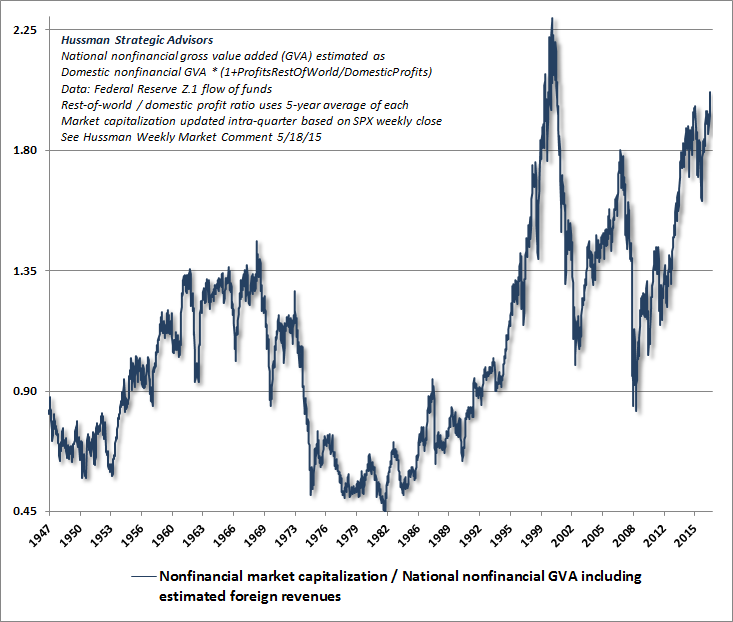
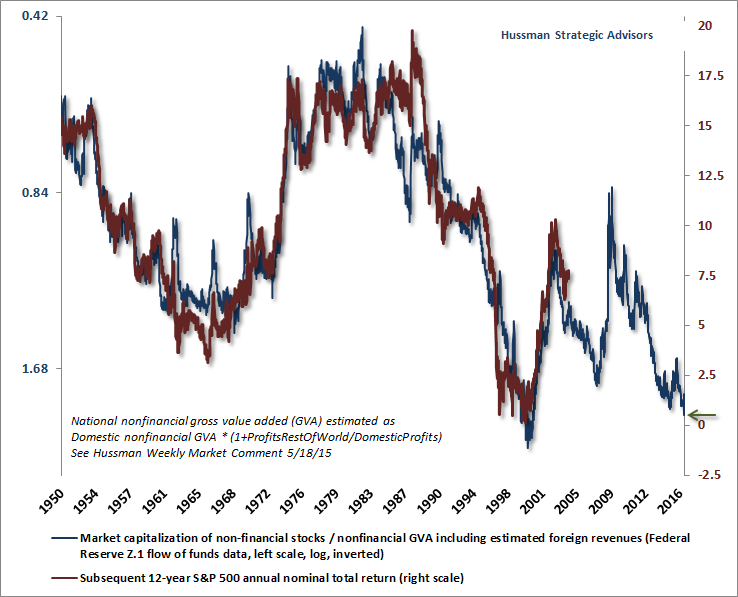
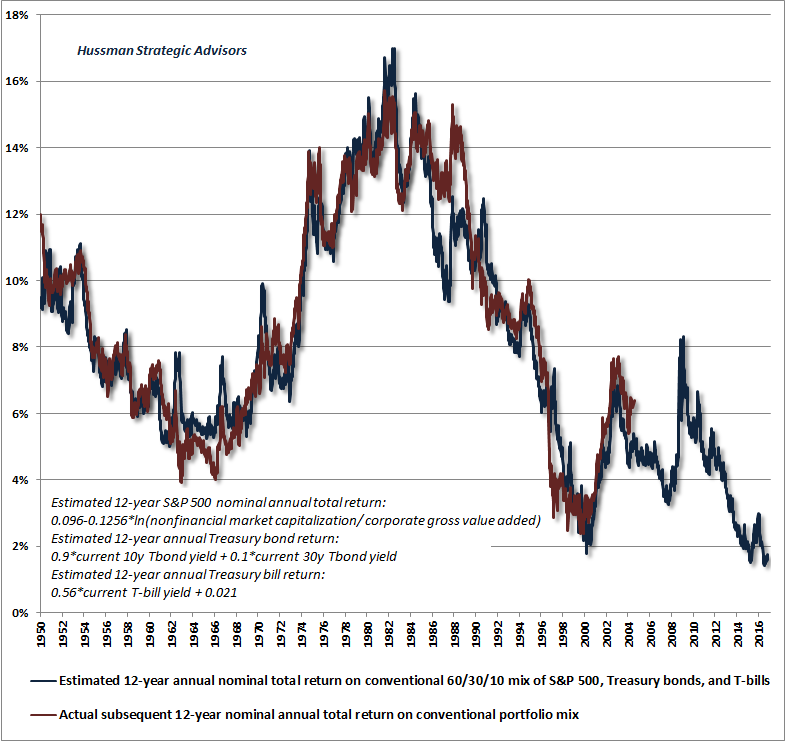
North Carolina GOP Strips Some Power From Incoming Democratic Governor
[ed. Liberals are forever bringing flowers and peace signs to a knife fight. When will they ever learn? See also: Trump has a life many aspire to. That's one reason people voted for him.]
North Carolina Republicans stripped the incoming Democratic governor of some of his authority on Friday and were on the verge of an even greater power grab, an extraordinary move critics said flies in the face of voters.
 Just last week, it appeared Republicans were ready to finally accept Democrats’ narrow win in a contentious governor’s race. As it turns out, they weren’t done fighting. In a surprise special session in the dying days of the old administration, some say the Republican-dominated legislature has thrown the government into total disarray, approving at least one bill aimed at emasculating incoming governor Roy Cooper’s administration.
Cooper, the current attorney general, has threatened to sue. And many in the state are accusing Republicans of letting sour grapes over losing the governor’s mansion turn into a legislative coup.
“I believe fervently in democracy. I’m watching it be undermined … by people who seem unwilling to consider or to listen,” said Margaret Toman, who was among hundreds of protesters rallying inside the legislative building this week, demanding that Republicans leave Cooper’s authority alone.
The protesters were so loud that the senate and house cleared the galleries – a highly unusual move – and more than two dozen people were arrested this week. Some protesters chanted “all political power comes from the people” as demonstrators were escorted from the legislative building by authorities. Those who remained could only watch the debate through glass windows or listen to it online.
Governor Pat McCrory, a Republican who lost to Cooper by about 10,000 votes, quickly signed into law a bill that merges the state board of elections and state ethics commission into one board composed equally of Democrats and Republicans, according to documents from general assembly staff. The previous state elections board law would have allowed Cooper to put a majority of Democrats on the panel.
The law would also make elections for appellate court judgeships officially partisan again.
Another bill nearing final legislative approval would force Cooper’s cabinet choices to be subject to senate confirmation.
McCrory’s office did not respond to phone calls and texts about the bills.
by AP via: The Guardian | Read more:
North Carolina Republicans stripped the incoming Democratic governor of some of his authority on Friday and were on the verge of an even greater power grab, an extraordinary move critics said flies in the face of voters.
 Just last week, it appeared Republicans were ready to finally accept Democrats’ narrow win in a contentious governor’s race. As it turns out, they weren’t done fighting. In a surprise special session in the dying days of the old administration, some say the Republican-dominated legislature has thrown the government into total disarray, approving at least one bill aimed at emasculating incoming governor Roy Cooper’s administration.
Cooper, the current attorney general, has threatened to sue. And many in the state are accusing Republicans of letting sour grapes over losing the governor’s mansion turn into a legislative coup.
“I believe fervently in democracy. I’m watching it be undermined … by people who seem unwilling to consider or to listen,” said Margaret Toman, who was among hundreds of protesters rallying inside the legislative building this week, demanding that Republicans leave Cooper’s authority alone.
The protesters were so loud that the senate and house cleared the galleries – a highly unusual move – and more than two dozen people were arrested this week. Some protesters chanted “all political power comes from the people” as demonstrators were escorted from the legislative building by authorities. Those who remained could only watch the debate through glass windows or listen to it online.
Governor Pat McCrory, a Republican who lost to Cooper by about 10,000 votes, quickly signed into law a bill that merges the state board of elections and state ethics commission into one board composed equally of Democrats and Republicans, according to documents from general assembly staff. The previous state elections board law would have allowed Cooper to put a majority of Democrats on the panel.
The law would also make elections for appellate court judgeships officially partisan again.
Another bill nearing final legislative approval would force Cooper’s cabinet choices to be subject to senate confirmation.
McCrory’s office did not respond to phone calls and texts about the bills.
by AP via: The Guardian | Read more:
Image: Jonathan Drake/Reuters
Subscribe to:
Posts (Atom)