Friday, June 16, 2017

The Long-Term Price of Oil Is ...

What's the right way to think about the long-term price of oil?

This question consumes the industry -- and markets -- no matter what prices are on any given day. Back in 2000, when mega-mergers formed giants like Exxon Mobil Corp., it was typical to plug roughly $20 a barrel into valuation models. Only a few years ago, we were being told that "$100 a barrel is becoming the new $20". One crash later, no oil major's slide deck is complete without a pledge to fund itself at $55 or less.

Take a look at the oil futures curve just prior to the crash and in several more recent periods and you can see that, for all the movement in daily prices, longer term prices seem pretty anchored around that level:

Another New Normal

Long-term oil futures have collapsed by almost half and are anchored around $55 a barrel

Why that level? The likeliest explanation is that it appears to be the trigger point for U.S. shale producers to boost drilling and fracking, raising supply relatively quickly and thereby keeping a lid on prices. Meanwhile, the rest of the industry has had to squeeze costs to remain competitive with these Texas upstarts. The previous spell of cost inflation behind that "$100 is the new $20" comment now works the other way.

And because shale's productivity owes more to inputs of capital, technology and innovation -- like manufacturing, in other words -- than traditional advantages of political access to territory, it represents a sea change in oil's economics (see this and this), upending the old paradigm centered on OPEC.

But oil is a weird market.

Presenting BP Plc's latest edition of its annual Statistical Review of World Energy earlier this week, the oil major's chief economist, Spencer Dale, raised an interesting point about the role of oil-exporting nations in an age of relative oil abundance:
If you are a very large oil producer, you can run very significant fiscal deficits for two, three, four, five years, and that is perfectly fine for you to do that ... You cannot run very large fiscal deficits forever. And therefore, in the longer run, I think we need to think not only about what the cost of extracting oil out of the ground is, you also have to think about the nature of the economies of those major oil producers. And for them, I do not see many of those major oil producers with economies which work anywhere near $50, let alone below $50.
In an interview in New York the next day, he elaborated:
One's natural instinct as an economist is to say: Well, I know how to price anything in the long run. I work out what the cost of producing it is; I put a return on capital in it; that gives me a markup: That's the long-run price.
In oil's case, however, those big exporting countries present a problem because, as Dale says, most of them require oil prices far above $50 to make their economies work over the long term (see this). Even Saudi Arabia, which was smart enough to sock away billions in the boom years, can't withstand prices at this level for long.

About a decade ago, at the height of the peak oil frenzy, this need on the part of OPEC countries was used by some to justify ever-higher price expectations. Under this thinking, OPEC had most of the oil reserves, and its members' one-trick economies needed $100-plus prices to function; ergo, oil had to be priced at that level.

I mean, come on. That's like me going to my boss and saying, "I need to be paid millions because, you know, I've got a certain lifestyle to maintain." They'd find another, cheaper journalist or make do with none at all. Oil consumers did the same thing.

The point isn't that OPEC's needs set prices in that way. It's more that, with its members still supplying about 40 percent of the world's oil, their economic weaknesses represent a risk to seeing prices as being in inexorable decline from here. Consider, if U.S. oil companies aren't economic, they can try to cut costs and, even if unsuccessful, the worst that happens is a trip to bankruptcy court. In an oil-dependent economy, governments must embark on radical and potentially destabilizing reform -- see Saudi Arabia -- or can, as in Venezuela's case, flirt with outright collapse.

by Liam Denning, Bloomberg | Read more:
Image: uncredited

Thursday, June 15, 2017

Line Dudes

Unemployed and depressed, Robert Samuel turned to Craigslist. It was iPhone release day in 2012 and, looking to make a few bucks, he offered to hold an Apple loyalist's place in line for $100. Apple fever was strong, and Samuel quickly found a taker and rushed to the Fifth Avenue shop in New York. The man who hired him ended up being able to score the smart phone online but paid him anyway.

"I was going to leave," Samuel recalled. "It was actually a customer who prompted me to stay," proposing, "Why don't you sell your spot?"

Samuel realized he had stumbled on a money-making scheme and called his friends to join him in line. By the end of the day, the crew had sold four spots and five milk crates, which exhausted Apple fans bought to sit on. The day of waiting earned Samuel enough money to buy his own iPhone 5.

"I always call myself an accidental entrepreneur," said Samuel, 41. "This was never meant to be." Today, he's the chief executive officer of Same Ole Line Dudes LLC, a professional line-sitting service with dozens of employees, all independent contractors.

A Brooklyn native, Samuel went to the city's public schools and left Pace University three semesters short of graduating. He spent his career working a slew of customer service, retail, and security jobs, which he credits with preparing him for the customer-facing business he now runs.

Same Ole Line Dudes, or Line Dudes for short, charges $25 for the first hour of waiting and $10 for every additional half hour. There's a minimum of two hours and a $5 hourly surcharge for extreme weather. The line sitters get 60 percent of the fee, plus tips. Line Dudes fields 60 to 100 requests a month and experiences an uptick in the summer from tourists.

At first, Samuel wasn't sure the business was sustainable. It wasn't until the summer of 2013, a year after the iPhone sit, that he started actively using the Line Dudes Twitter account, which he had set up a few months earlier. "I wasn't even taking myself seriously," he said. "I was throwing paint on the wall and calling it something when it dried."

Then the Cronut was invented.

Samuel's business surged when Dominique Ansel, a world-renowned pastry chef, combined the croissant with the doughnut and started selling an extremely limited supply at his SoHo bakery. Every day, Samuel would post on Craiglist offering to stand in line for the thing. With more clients than he could handle, he recruited his friends to stand in line with him, since the bakery limited the number of Cronuts per customer. He charged $60 to purchase and deliver two Cronuts, which retailed for $5 apiece.

Reporters noticed that Samuel and his buddies were at the bakery daily, and his line-sitting services made the local news. He once delivered Cronuts to a customer in Baltimore, who paid for his round-trip bus ticket.

As word spread, "people started calling us for other stuff," Samuel said. He began waiting in line for Saturday Night Live tapings, for famous speakers, for anything that created a queue. By early 2014, Samuel had launched a website for booking line-sitting appointments but still felt unsure about leaving his day job. He finally made running Line Dudes his full-time gig in January.

by Polly Mosendz, Bloomberg | Read more:
Image:Michael Nagle/Bloomberg

I Finally Tried a Cannabis Cigar, and It Changed My Mind

When I read that a cigar filled with an ounce of weed and seven grams of hash was sold for $3,600 at the Seattle pot shop Diego Pellicer on its first day of business, I immediately thought: That's some stupid shit.

Why would anyone spend that kind of money on a blunt? I could buy a car for that amount. A five-figure weed cigar seems like the definition of wasteful opulence. It sounded like capitalist forces at their worst—one minute they're profiting off the racist war on drugs, and the next minute they're creating an artificial need for an expensive version of those once illegal drugs.

Then I got to take a couple hits off one of these fancy cannabis cigars, and suddenly my mind was changed.

My foray into fancy blunts was wholly unintentional. I just happened in on a group of people sharing a weed cigar made by Leira, the same brand of that $3,600 blunt I had scoffed at. The cigar was at least three times fatter than any blunt I have ever rolled, yet taking even the biggest hit was effortlessly smooth. As we passed the cigar around a circle, lazily puffing on it in the afternoon sun, I noticed the blunt was barely diminishing in size. In the time that an entire joint would be finished, this blunt hardly looked any smaller.

I still think these cigars are opulent as hell, borderline ostentatious, and wholly out of my price range, but I've come to realize they're also pretty interesting. Leira's two cigar varieties sell for $100 and $420—a steep discount on that crazy $3,600 version—and a couple other companies make even less expensive types. Something tells me these blunts are going to become a lot more popular at backyard barbecues and fancy parties. The ease with which they can be passed around make them one of the most comfortable ways to get a big group of people high.

Unlike the blunts that have been a favorite of stoners for years—which use the gutted tobacco wrap of cheap gas-station cigars—these cannabis cigars are wrapped in actual pot leaves. (...)

The cannabis leaves are filled with ground-up weed, often with a cannabis concentrate mixed in to give the cigar an extra THC punch. Leira uses exclusively pot from Gold Leaf, the top-shelf producer they share a building with. Leira makes two versions of their "cannagar" blunts: a "cannarillo" filled with four grams of flower and half a gram of rosin ($100), and a "corona" filled with 12 grams of flower and three grams of rosin ($420). Rosin is a type of solventless hash concentrate.

Leira rolls its cigars around a skewer, which leaves a hole down the center of the cigar. This gives Leira's blunts their distinctly smooth hit and that endless smoking experience. "That helps keep it burning slow and also helps it burn smoothly," according to Ariel Payopay, owner of Leira. "Our cannarillos will last around an hour, and I've heard our coronas have lasted up to six hours."

This is one of the reasons I think these cigars are going to become popular for rich stoners and their friends. Plus, cigars have an effortless cool factor about them.

"There was always just blunts and joints and bongs, but nothing looked really classy, like for a wedding or something," Payopay said. "When you're all dressed up and smoking a joint, it doesn't look as fancy."

by Lester Black, The Stranger |  Read more:
Image: Leira Cannagars

A Reckoning For Our Species

Image: Yonhap/EPA

Tuesday, June 13, 2017

Sneak Attack

The Liver: A ‘Blob’ That Runs the Body

To the Mesopotamians, the liver was the body’s premier organ, the seat of the human soul and emotions. The ancient Greeks linked the liver to pleasure: The words hepatic and hedonic are thought to share the same root.

The Elizabethans referred to their monarch not as the head of state but as its liver, and woe to any people saddled with a lily-livered leader, whose bloodless cowardice would surely prove their undoing.

Yet even the most ardent liverati of history may have underestimated the scope and complexity of the organ. Its powers are so profound that the old toss-away line, “What am I, chopped liver?” can be seen as a kind of humblebrag.

After all, a healthy liver is the one organ in the adult body that, if chopped down to a fraction of its initial size, will rapidly regenerate and perform as if brand-new. Which is a lucky thing, for the liver’s to-do list is second only to that of the brain and numbers well over 300 items, including systematically reworking the food we eat into usable building blocks for our cells; neutralizing the many potentially harmful substances that we incidentally or deliberately ingest; generating a vast pharmacopoeia of hormones, enzymes, clotting factors and immune molecules; controlling blood chemistry; and really, we’re just getting started.

“We have mechanical ventilators to breathe for you if your lungs fail, dialysis machines if your kidneys fail, and the heart is mostly just a pump, so we have an artificial heart,” said Dr. Anna Lok, president of the American Association for the Study of Liver Diseases and director of clinical hepatology at the University of Michigan.

“But if your liver fails, there’s no machine to replace all its different functions, and the best you can hope for is a transplant.”

And while scientists admit it hardly seems possible, the closer they look, the longer the liver’s inventory of talents and tasks becomes.

In one recent study, researchers were astonished to discover that the liver grows and shrinks by up to 40 percent every 24 hours, while the organs around it barely budge.

by Natalie Angier, NY Times | Read more:
Image: Guyco

Monday, June 12, 2017

Weddings of the 0.01 Percent

Britain: The End of a Fantasy

To understand the sensational outcome of the British election, one must ask a basic question. What happens when phony populism collides with the real thing?

Last year’s triumph for Brexit has often been paired with the rise of Donald Trump as evidence of a populist surge. But most of those joining in with the ecstasies of English nationalist self-assertion were imposters. Brexit is an elite project dressed up in rough attire. When its Oxbridge-educated champions coined the appealing slogan “Take back control,” they cleverly neglected to add that they really meant control by and for the elite. The problem is that, as the elections showed, too many voters thought the control should belong to themselves.

Theresa May is a classic phony Brexiter. She didn’t support it in last year’s referendum and there is no reason to think that, in private, she has ever changed her mind. But she saw that the path to power led toward the cliff edge, from which Britain will take its leap into an unknown future entirely outside the European Union. Her strategy was one of appeasement—of the nationalist zealots in her own party, of the voters who had backed the hard-right UK Independence Party (UKIP), and of the hysterically jingoistic Tory press, especially The Daily Mail.

The actual result of the referendum last year was narrow and ambiguous. Fifty-two percent of voters backed Brexit but we know that many of them did so because they were reassured by Boris Johnson’s promise that, when it came to Europe, Britain could “have its cake and eat it.” It could both leave the EU and continue to enjoy all the benefits of membership. Britons could still trade freely with the EU and would be free to live, work, and study in any EU country just as before. This is, of course, a childish fantasy, and it is unlikely that Johnson himself really believed a word of it. It was just part of the game, a smart line that might win a debate at the Oxford Union.

But what do you do when your crowd-pleasing applause lines have to become public policy? The twenty-seven remaining member states of the EU have to try to extract a rational outcome from an essentially irrational process. They have to ask the simple question: What do you Brits actually want? And the answer is that the Brits want what they can’t possibly have. They want everything to change and everything to go as before. They want an end to immigration—except for all the immigrants they need to run their economy and health service. They want it to be 1900, when Britain was a superpower and didn’t have to make messy compromises with foreigners.

To take power, May had to pretend that she, too, dreams these impossible dreams. And that led her to embrace a phony populism in which the narrow and ambiguous majority who voted for Brexit under false pretences are be reimagined as “the people.”

This is not conservatism—it is pure Rousseau. The popular will had been established on that sacred referendum day. And it must not be defied or questioned. Hence, Theresa May’s allies in The Daily Mail using the language of the French revolutionary terror, characterizing recalcitrant judges and parliamentarians as “enemies of the people” and “saboteurs.”

This is why May called an election. Her decision to do so—when she had a working majority in parliament—has been seen by some as pure vanity. But it was the inevitable result of the volkish rhetoric she had adopted. A working majority was not enough—the unified people must have a unified parliament and a single, uncontested leader: one people, one parliament, one Queen Theresa to stand on the cliffs of Dover and shake her spear of sovereignty at the damn continentals.

And the funny thing is that this seemed possible. As recently as late April, with the Labour Party in disarray and its leftist leader Jeremy Corbyn deemed unelectable, the polls were putting the Tories twenty points ahead and telling May that her coronation was inevitable. All she had to do was repeat the words “strong and stable” over and over and Labour would be crushed forever. The opposition would be reduced to a token smattering of old socialist cranks and self-evidently traitorous Scots. Britain would become in effect a one-party Tory state. An overawed Europe would bow before this display of British staunchness and concede a Brexit deal in which supplies of cake would be infinitely renewed.

There were three problems.

by Fintan O’Toole, NY Review of Books | Read more:
Image: Toby Melville/TPX/Reuters

Finally, Something Isn’t the Matter With Kansas

The most momentous political news of the past week? For my money, it wasn’t James Comey’s Senate testimony, riveting as it was. It was the Kansas Legislature’s decision to defy the governor and raise income taxes — a move that could well be the first step in a transformation of American politics much more far-reaching than anything that could come from Russiagate.

Hear me out. Kansas, under Gov. Sam Brownback, has come as close as we’ve ever gotten in the United States to conducting a perfect experiment in supply-side economics. The conservative governor, working with a conservative State Legislature, in the home state of the conservative Koch brothers, took office in 2011 vowing sharp cuts in taxes and state spending, except for education — and promising that those policies would unleash boundless growth.

The taxes were cut, and by a lot. The cumulative cut was forecast to be $3.9 billion by 2019. A fellow at a right-leaning Missouri think tank said in 2015 that Mr. Brownback’s cuts were “the biggest tax cut of any state, relative to the size of its economy, in recent history.”

The cuts came. But the growth never did. As the rest of the country was growing at rates of just above 2 percent, Kansas grew at considerably slower rates, finally hitting just 0.2 percent in 2016. Revenues crashed. Spending was slashed, even on education: In March, the State Supreme Court ruled that state-level school spending was unconstitutionally low. The court is ideologically mixed, but its ruling was unanimous.

The experiment has been a disaster. Mr. Brownback is widely disliked. If he has anything to be grateful for, it’s the existence of Gov. Chris Christie, Republican of New Jersey, who recently swiped from him the title of the nation’s most unpopular governor, which Mr. Brownback had held for the better part of three years.

Finally, even the Republican Kansas Legislature faced reality. Earlier this year it passed tax increases, which the governor vetoed. Last Tuesday, the legislators overrode the veto.

Not only is it a tax increase — it’s even a progressive tax increase! A married couple filing jointly and earning $30,000 will pay an additional $120, which is 0.4 percent of total income, while the same couple earning $100,000 will fork over $755, or 0.755 percent. More than half of the Republicans in both houses voted for the increases.

There’s the background. Now, why is this a big deal?

Because Republicans are not supposed to raise taxes, ever. In Washington or in the states. This goes back to President George H. W. Bush’s agreeing to a bipartisan tax increase in 1990 after famously saying in his 1988 campaign, “Read my lips: no new taxes.” Afterward, the conservative group Americans for Tax Reform, led by Grover Norquist, started making Republican candidates for Congress and state houses sign a no-tax pledge.

Ever since, with scattered exceptions, no Republican member of the House or Senate has voted for a tax increase. For 27 years. If you wonder why problems arise and Congress never does anything about them, the tax pledge is usually the answer, or at least an answer.

by Michael Tomasky, NY Times |  Read more:
Image: Andrew DeGraff

Sunday, June 11, 2017


Kamran Bigdely,
Tardigrade (Water Bear)
via:

No is Not Enough

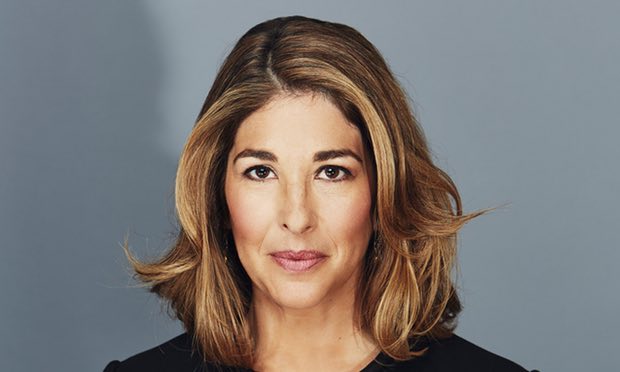
The fact that Naomi Klein predicted the forces that explain the rise to power of Donald Trump gives her no pleasure at all. It is 17 years since Klein, then aged 30, published her first book, No Logo – a seductive rage against the branding of public life by globalising corporations – and made herself, in the words of the New Yorker, “the most visible and influential figure on the American left” almost overnight. She ended the book with what sounded then like “this crazy idea that you could become your own personal global brand”.

Speaking about that idea now, she can only laugh at her former innocence. No Logo was written before social media made personal branding second nature. Trump, she suggests in her new book, No Is Not Enough, exploited that phenomenon to become the first incarnation of president as a brand, doing to the US nation and to the planet what he had first practised on his big gold towers: plastering his name and everything it stands for all over them.

Klein has also charted the other force at work behind the victory of the 45th president. Her 2007 book, The Shock Doctrine, argued that neoliberal capitalism, the ideological love affair with free markets espoused by disciples of the late economist Milton Friedman, was so destructive of social bonds, and so beneficial to the 1% at the expense of the 99%, that a population would only countenance it when in a state of shock, following a crisis – a natural disaster, a terrorist attack, a war.

Klein developed this theory first in 2004 when reporting from Baghdad and watching a brutally deregulated market state being imagined by agents of the Bush administration in the rubble of war and the fall of Saddam Hussein. She documented it too in the aftermath of the Boxing Day tsunami in Sri Lanka, when the inundated coastline of former fishing villages was parcelled up and sold off to global hotel chains in the name of regeneration. And she saw it most of all in the fallout of Hurricane Katrina in New Orleans, when, she argued, disaster was first ignored and exacerbated by government and then exploited for the gain of consultants and developers.

Friedmanites understood that in extreme circumstances bewildered populations longed above all for a sense of control. They would willingly grant exceptional powers to anyone who promised certainty. They understood too that the combination of social media and 24-hour cable news allowed them to manufacture such scenarios almost at will. The libertarian right of the Republican party, in Klein’s words, became “a movement that prays for crisis the way drought-struck farmers pray for rain”.

In 2008, the year after The Shock Doctrine was published, Klein believed that the financial crash would prove a reckoning for this cynical philosophy. That the ways in which the Wall Street elite had enriched itself through manipulation and deregulation would finally be exposed in plain sight. In retrospect, it seems, the monumental frailties of the system, its patent vulnerability, allied with concerns over terrorism and a global refugee crisis, only made populations more desperate and fearful. They appeared to crave anyone who could suggest simple solutions to apparently intractable problems. Anyone who said that they could turn back the clock to “make America great again” and who had the branded cap to prove it.

For those of us who can’t help looking at those events without turning lines from WB Yeats’s The Second Coming over in our heads (“what rough beast, its hour come round at last, slouches towards Bethlehem to be born?”), Klein’s new book – which examines in detail both the phenomenon of Trump and how liberal and progressive forces might counter his reality – is a brilliant articulation of restless anxiety.

Speaking at her home in Toronto last week, Klein suggested to me that Trump’s novelty was to take the shock doctrine and make it a personal superpower. “He keeps everyone all the time in a reactive state,” she said. “It is not like he is taking advantage of an external shock, he is the shock. And every 10 minutes he creates a new one. It is like he has these lasers coming out of his belt.”

She wrote the book very fast, much faster than is her usual habit, because she feared that the further into a Trump administration America travels, the less scope there might be for resistance, for building an alternative. In this she believes that there are important precedents for people to understand.

She points hopefully to the example of Spain in 2004, when after the Madrid train bombings the prime minister, José Maria Aznar, announced that a state of emergency and special state powers were necessary. The people, remembering Franco, took to the streets to reject that analysis and kicked the government out, voting in a party that would pull Spanish troops out of Iraq. She is fully aware, too, of the alternative in Turkish president Recip Tayyip ErdoÄŸan’s successful plea for dictatorial powers following the chaos of the failed coup in 2016. Klein’s book sets out those examples in advance of any comparable shock in America, and makes the case for collective resistance in the event of crisis. “I hope none of it happens [in the States] and none of it is useful,” she says, “but just in case, I wanted to have it out there as soon as possible.”

The daughter of American parents, Klein lives in Toronto with dual citizenship. When she thought about putting her book together, her original plan was for an anthology of articles threaded together with interviews, but once she started analysing the presidency she kept writing in a kind of frenzy. One of the benefits of having a deadline and an all-consuming project was that it meant she was forced to use the blocking app Freedom to protect her from the distraction of the internet. “I think if I hadn’t written this book I just would have stared at Twitter like many others for months on end, watching it unfold, and writing snippy things at people.”

That tendency among Trump’s critics, she says, is a symptom of his banal influence. She devotes one section of her book to the notion that through Twitter Trump is making the political sphere in his own image and that “we all have to kill our inner Trump”. Among other things, she says, the president “is the embodiment of our splintered attention spans”. One essential ingredient of resistance, she suggests, is to retain a belief in telling and understanding complex stories, keeping faith with narrative.

One of the questions that Klein’s book does not reach a conclusion about is how conscious Trump is of his shock doctrine tactics. Is he a demagogue in the scheming manner of Putin and ErdoÄŸan, or just a useful idiot for the forces around him?

“I think he is a showman and that he is aware of the way that shows can distract people,” she says. “That is the story of his business. He has always understood that he could distract his investors and bankers, his tenants, his clients from the underlying unsoundness of his business, just by putting on the Trump show. That is the core of Trump. He is undoubtedly an idiot, but do not underestimate how good he is at that.”

by Tim Adams, The Guardian |  Read more:
Image: Koroush Keshiri

Andrew Archer, Edo Ball: Illustrations Based on Japanese Mythology and Culture
via:
[ed. See also: The Cavaliers Won Game 4 With a Performance for the Ages]

Saturday, June 10, 2017

What No One Ever Tells You About Tiny Homes

My husband and I share a 492-square-foot apartment in Cambridge, Mass. We inhabit a “micro apartment,” or what is sometimes called a tiny house. This label is usually proudly applied to dwellings under 500 square feet, according to Wikipedia. We are unwittingly on a very small bandwagon, part of a growing international movement.

But deep inside the expensive custom closets and under the New Age Murphy beds, the pro-petite propaganda has hidden some unseemly truths about how the other half lives. No one writes about the little white lies that help sell this new, very small American dream.

Here, on the inside, we have found small not so beautiful after all. Like the silent majority of other middling or poor urban dwellers in expensive cities, we are residents of tiny homes not by design, but because it is all our money can rent.

Tiny houses are booming. The movement, whose origins fans often link in spirit all the way to Thoreau’s cabin at Walden Pond, became increasingly popular after the 2008 housing crash. Living small has come to signal environmental mindfulness and restrained consumerism.

A tiny home is a state of mind, if not a religion. It is in vogue, and it is in Dwell. The tiny house pairs well with other contemporary cultural currents. It is cut from the same cloth as the Marie Kondo craze of 2014, and suits this year’s hygge, too. (The recently imported cult of hygge-ness — or coziness, from Denmark — often entails the burning of candles, wearing of chunky sweaters and a pursuit of togetherness facilitated by small spaces.) Micro living plugs into the age of Apple minimalism, too. In real estate listings, “cozy” is no longer an unconvincing euphemism, but a coveted catchphrase.

Our apartment in Cambridge was built in 1961, part of an earlier wave of utopian interest in tiny affordable housing. Our space occupies most of the lower third of a two-unit, three-story building. There is a contiguous row of nine such pairings — pint-size below, family-size above — on our street. The original developer’s vision was that income from renting the lower units could help cover the mortgage for the owners’ homes above.

The most striking feature of our small lives is the unavoidable, domineering presence of the plastic laundry hamper originally bought from Target in 2007. Embarrassing, ordinary objects like the hamper are empowered in small spaces; they become tyrants. In a larger home, this perfectly functional item might recede quietly into a closet or laundry room.

Our unattractive $10 centerpiece occupies approximately 0.4 percent of our home’s surface area, but visually, it seems much larger. In an otherwise horizontal bedroom landscape (a queen-size mattress on the floor), the hamper looms high and white above the rest of the room. It often reminds me of the Capitol in Lincoln, Neb. — a piece of monumental architecture designed to dominate the prairie, to force man’s will over nature. (...)

Life in our tiny home is characterized above all by shabbiness. Like the apartment’s pervasive, undomesticateable dust bunnies, the threadbare feeling grows and grows simply because it already exists.

No one warns you that everything is more concentrated in a tiny house, that the natural life cycle of objects accelerates.

Our things are aging faster than they did in their previous homes. We sit on our lone couch more hours a day than in any previous dwelling. The cushions are fading, the springs sagging, the corners fraying. Our rug is balding along our daily paths, starkly revealing repetitive routines: back and forth to the coffee machine, to the couch, to the sink, to the couch. The denudations look like cow paths cut through sage brush — invasive affronts on the landscape. Everything in our tiny house is worked over more, used harder.

Here, even smells take up space. We once made a meal that called for caramelizing three pounds of onions. For hours the onions melted in their pan. Technically they were taking up less and less space, but somehow they intruded more. In a tiny house, the smell of slowly sweated onions is an inescapable, cloyingly rich aroma; a scent to drive men — and women — mad.

The eau de onion spread to everything. It clung especially to the moist bathroom towels, and to the laundry drying in the bedroom. We were never clean again. Fresh from the shower, we immediately smelled of onions — of tiny house. For weeks, smelling like old onions became one of our micro lives’ certainties. The scent’s preferred repository, I eventually learned, was my New Age, polyester sports bra.

“It smells like onion,” my husband had certified weeks later. “That doesn’t seem like a good thing to wear.” I said, “I can’t not wear it.” And that was true. I did wear it, but the bra’s coolly advertised moisture-wicking technology seemed designed to activate the old onions. I carried the smell with me deep into the city. You can never really leave a tiny house; it goes with you everywhere.

For generations, writers have warned about romanticizing the lives of the poor. Beware the nostalgie de la boue. Small can be a bad fit.

So we daydream big. Dreams of unfashionable, politically incorrect, old American aspirations that our generation isn’t supposed to believe in anymore. Dreams of design features so vast that they sound like foreign countries. I dream of kitchen islands. I dream outside this box.

by Gene Tempest, NY Times |  Read more:
Image: Bee Murphy

The Difference Between Liberalism and Leftism

It is reasonable to wonder whether the divide between liberalism and leftism actually matters very much. Why does there actually need to be so much animosity between the Clinton and Sanders factions of the Democratic Party? (Or the Blair and Corbyn factions in the UK’s Labour Party.) Why on earth did the race for DNC chair between Keith Ellison and Tom Perez grow so vicious, given their substantially similar progressive credentials? With Donald Trump poised to ravage the planet, either through boiling it slowly over time or blowing it up instantaneously with his vast nuclear arsenal, it would seem time for liberals and leftists to emphasize their similarities rather than their differences. Squabbling over minutiae is a fine way to ensure political irrelevance, and if everyone agrees that right-wing policies are poisonous and immoral, then surely the differences among progressive and leftish people can be worked out later.

It’s also true that, according to one view, the differences between liberals and leftists are not even differences of substance, but differences of political strategy. The claim of people like Clinton and Blair is that, while they share the core progressive principles of compassion and equality, they are simply more hard-nosed and pragmatic. They are more cynical about the limits of political possibility, and believe that change happens slowly. From this perspective, the core difference between Clinton and Sanders is not their ultimate end goals (they both want a world of progressive values), but how to get there.

If that’s the case, and the core of the divide is over “compromise” versus “purity,” or “a view that major progress happens slowly” versus “a demand that it happens immediately,” then the disagreements here should be friendly ones. Unity should be pretty easy, because we’re literally trying to help one another pursue the same objective. I want the same things you do, but I simply think that I have a more effective way of getting them.

But while this is often the kind of language with which moderate liberals distinguish themselves from more “radical” progressive factions, I don’t actually think it does accurately describe the nature of the liberal/left divide. And while conservatives would lump all these varying political tendencies together as a generic political tendency called “the left,” there are some internal conflicts that are both fundamental and irresolvable. It is not simply a disagreement over tactics among people who share ideals. The two sets of ideals are different, and come from two entirely different worldviews.

The core divergence in these worldviews is in their beliefs about the nature of contemporary political and economic institutions. The difference here is not “how quickly these institutions should change,” but whether changes to them should be fundamental structural changes or not. The leftist sees capitalism as a horror, and believes that so long as money and profit rule the earth, human beings will be made miserable and will destroy themselves. The liberal does not actually believe this. Rather, the liberal believes that while there are problems with capitalism, it can be salvaged if given a few tweaks here and there. As Nancy Pelosi said of the present Democratic party: “We’re capitalist.” When Bernie Sanders is asked if he is a capitalist, he answers flatly: “No.” Sanders is a socialist, and socialism is not capitalism, and there is no possibility of healing the ideological rift between the two. Liberals believe that the economic and political system is a machine that has broken down and needs fixing. Leftists believe that the machine is not “broken.” Rather, it is working perfectly well; the problem is that it is a death machine designed to chew up human lives. You don’t fix the death machine, you smash it to bits.

I was recently reminded of the nature of the difference while glancing through Timothy Snyder’s (very) short book On Tyranny. Snyder is a historian of fascism, who believes that the rise of Donald Trump has parallels with 20th century authoritarian movements, and he offers twenty “lessons” for how ordinary people should act under tyrannical regimes. (Trump actually goes undiscussed in the book, but it is quite clear throughout what Snyder is referring to when he talks about contemporary tyranny.) Some of Snyder’s lessons reminded me strongly of why, despite our mutual antipathy for Trump, there is such a serious contrast between his beliefs (as a liberal) and my own (as a leftist).

One Snyder lesson was particularly striking: Number 19—Be a Patriot. Snyder’s exhortation to patriotism runs as follows:

What is patriotism? Let us begin with what patriotism is not. It is not patriotic to dodge the draft and to mock war heroes and their families… It is not patriotic to compare one’s search for sexual partners in New York with the military service in Vietnam that one has dodged. [Snyder’s use of this oddly specific act is a good representation of just how clear it is that the book is about Trump despite treating the president as a Voldemort-esque unmentionable.] It is not patriotic to avoid paying taxes…. It is not patriotic to admire foreign dictators… It is not patriotic to cite Russian propaganda at rallies. It is not patriotic to share an adviser with Russian oligarchs. It is not patriotic to solicit foreign policy advice from someone who owns shares in a Russian energy company… [Snyder’s list of things that are not patriotic goes on further.] [P]atriotism involves serving your own country. [A patriot] wants the nation to live up to its ideals…A patriot has universal values.

Snyder’s patriotism passage stuck out to me, because I realized I totally rejected a core part of his message: the idea that “patriotism” is a good thing to begin with. Patriotism has always seemed to me to be a profoundly irrational notion; I believe one should love and serve humanity, not one’s particular arbitrary geopolitical segment of humanity. Snyder’s problem with Trump is that Trump is not enough of a patriot. But I see all rhetoric of patriotism as profoundly conservative and antithetical to everything I believe. In fact, I find Snyder’s whole case to be based on deeply conservative principles. Rhetoric against “draft dodgers”? The idea that one shouldn’t listen to the advice of someone with shares in a foreign company? What the hell kind of liberalism is this?

But that’s why I say the divide has something to do with one’s view of political and economic institutions as either fundamentally good or not. The liberal sees the conservative patriot wearing a flag pin and says: “A flag pin isn’t what makes you a patriot.” The leftist says: “Patriotism is an incoherent and chauvinistic notion.” The liberal says, “We’re the real ones who love America,” while the leftist says, “What is America?” or “I don’t see what it would mean to love or hate a meaningless conceptual entity.” The liberal says, “I’m standing up for what the Founding Fathers actually believed” while the leftist says, “The Founding Fathers endorsed the ownership of human beings. Some owned human beings themselves, and beat or raped these human beings. I will not measure the worth of something by what the Founding Fathers thought about it.” Certainly, the word “liberal” is an unfortunately overbroad and imprecise term, but it’s fair to say that some strains of liberalism actually have more values in common with conservatism than with leftism, in that they affirm key conservative premises that leftists abhor. (e.g. all that “America is the greatest country in the history of the world” poppycock.)

I don’t think this difference is merely rhetorical. Sometimes it is; the ACLU often sees as politically and legally advantageous to frame everything it does as a defense of the great and noble values embedded in the Constitution, instead of pointing out that many of the Constitution’s values are not particularly great or noble. But there is also a strong sense in which the liberal affirms the nation’s core ideological underpinnings, while the leftist rejects them. (Some other divides: the liberal view of the Vietnam War is that it was well-intentioned but doomed and badly handled. The leftist view is that it was evil in both intention and execution. Likewise with Iraq: was George W. Bush a well-meaning bungler or a predatory war criminal?)

Snyder’s suggestions for resisting tyranny are in conflict with leftism in other ways. Most of them are individualistic: they focus on people as isolated units. Thus they include:
  • Believe in truth.
  • Be calm when the unthinkable arrives.
  • Contribute to good causes.
  • Listen for dangerous words.
  • Practice “corporeal” politics. [Sarcastic quotation marks my own.]
  • Make eye contact and small talk.
  • Establish a private life.
Amusingly, most of these seem like woefully ineffective weapons against fascism. At best they are useless (“Make small talk”??). At worst, like prescriptions for “revolutionary self care” (e.g. learning to play an instrument as revolutionary act), they provide convenient rationalizations for people’s inaction, allowing them to feel as if they are being politically active by doing the same thing they were probably going to do anyway. Read the news! Hug your friends! The idea that these things constitute meaningful resistance to Trump could be held only by somebody who wasn’t actually thinking about what serious political change looks like.

by Nathan J. Robinson, Current Affairs |  Read more:

Paying a Price for 8 Days of Flying in America

On the sixth day of my weeklong odyssey across America by air, I found myself wedged into a middle seat in the far reaches of a flight from Des Moines to Phoenix, wearing the sweatpants I had slept in. Angry at the in-flight movie system and feeling hungry, I turned to my carry-on lunch: a container of yogurt.

The yogurt had spent the flight in the seat pocket, building up internal pressure. As I removed the top, it exploded, spraying blobs onto me, the seat, the floor and a nearby man whose mood was not enhanced by the arrival of a wet vanilla-flavored substance in his hair. I never did have lunch that day.

As flights go, it was not a personal success. But anyone who travels knows that wretchedness on a plane is only a matter of degree and never confined to a single passenger. The unfriendliness of the skies seems to grow only more baroquely awful with each new incident immortalized on a cellphone. (...)

To understand the forces defining air travel in America today, I spent eight days crisscrossing the country in economy class. Four airlines. Twelve flights (half of them delayed). Twelve cities. Twelve cups of tomato juice. Three trips through whole-body scanners. One alarming use of the words “groin area.” Eight testy conversations with authority figures. One lost bag. Two broken entertainment systems. And a reporter who went a week without washing her hair.

The trip had its share of surreal moments — interrogated by a security agent at one point, I forgot what city I was flying to — and I felt increasingly removed from myself, dehumanized and disaffected. Through a grim twist of fate, every flight seemed to leave from a gate in a distant corner of the terminal. Sitting again and again at the back of the plane, I wondered, am I getting enough oxygen?

But the week also showed people at their mordant best: helping each other wedge luggage into overhead spaces, trading information about delays and exhibiting a bracing what-fresh-hell-is-this solidarity, at least when they were not squabbling over spots in the boarding line. I began to get a sense of the perverse forces that drive airlines, airports and security personnel to pursue seemingly customer-hostile policies in the name of profits and safety.

As bad as flying can be, more people are doing it. Some 24,000 commercial flights take off and land in the United States every day, most at or close to capacity. Last year, a record 719 million people flew on domestic flights, as compared with 696 million the year before.

To help their profits, airlines fit more passengers into smaller spaces, charge more for once-basic services like legroom, inveigle customers into joining frequent-flier programs, and lavish ever more perks on higher-revenue passengers at the front of the plane.

The result is a widening caste system that can turn an airplane into a microcosm of “The Hunger Games.” The elite bask in an airborne version of Panem, enjoying over-the-top frivolities distant from the tedium of normal life, while the masses scrap over scant resources, dreaming of revolution. (...)

DAY 1: THE CASTE SYSTEM

• American Airlines Flight 85, New York to San Francisco, 7:55 p.m.

I can’t sleep on crowded late-night planes, so I pick a flight that leaves at a reasonable hour and duly present myself at Kennedy International Airport at 6 p.m. Right away, the passengers are funneled into two groups, one that will have a good experience and one that will not.

To the left is the regular check-in area, a scrum of anxiety where the regular travelers jostle and fret into ragged lines staffed by overburdened agents.

To the right is the priority area, a calm oasis of privilege where smaller numbers of high-status travelers are promptly ushered to check-in desks by smiling airline employees eager to help.

This pattern will continue throughout the trip, and it all makes perfect economic sense. Airlines make far more money from premium-class passengers than from economy passengers, and their focus is on making these customers as happy as possible.

At the gate, the flight is delayed for more than two hours, for whimsical reasons known only to the airline. Just under 80 percent of flights in the United States landed on time last year, according to the Bureau of Transportation Statistics, an independent agency that is part of the Transportation Department. In the last decade, the on-time rate has been as low as 70.91 percent and as high as 82.11 percent.

The mood changes as you go further along in a plane. It’s like starting at a penthouse on Fifth Avenue and traversing the city until you reach your own house, a tent shared by 20 people on the banks of the Gowanus Canal. I have a middle seat, which will prove to be a recurring theme.

A thin curtain separates us from first class, but it feels impenetrable. A passenger attempts to use the first-class bathrooms but is ordered to the back of the plane. As the flight attendants dole out our sole free snack on this flight of six and a half hours — a lone Lotus Biscoff (“Europe’s Favorite Cookie With Coffee”) — the aroma of something delicious that may or may not be lasagna wafts in from the front. (...)

DAY 2: BOARDING NIGHTMARE

• Delta Flight 1106, San Francisco to Salt Lake City, 10:34 a.m.

• Delta Flight 2926, Salt Lake City to Denver, 3:20 p.m.

Half of America is furious at the other half, unable to agree on even previously uncontroversial topics like the weather. But if there’s one subject that unites the country, it is a loathing of what the airlines euphemistically call the boarding process.

I’m already grumpy because of fatigue and the fact that this flight, too, is unaccountably late. Besides, I fail to discard my water bottle at security, a rookie mistake that results in a walk of shame to the garbage bin reserved for people who do not understand what “no beverages” means.

At the gate, the mood is restive. The plane has not arrived.

A group of passengers — these people are known derisively as “gate lice” to frequent fliers — is surging toward the door anyway, jockeying for position in imaginary lines. This makes the others nervous, so they head over there, too.

“It gives me a sense of comfort to stand near the gate,” says Kristin Olson, who has left the lounge to stake out a prime position at the boarding area. “It can be chaotic and uncertain. I’m like, any time it’s set to board, I want to be here.”

Airlines have experimented with everything, including back-to-front boarding, window-seats-before-aisle-seats boarding, and what some people call “chaos boarding,” where passengers basically rush the gate en masse. Reasonable people can disagree on which is most efficient, but one thing seems clear: The current system — organized according to elaborate status-based hierarchies — is a highly irritating way to board a plane.

“On some flights, you have so many elite travelers that by the time they all board, there’s no one left,” Seth Kaplan, managing partner of the online publication Airline Weekly, said in an interview.

Each airline has its own way of calculating status, calibrating down to the most picayune distinction, just the way English people will tell you in all seriousness that they grew up upper lower-middle class, say, or lower upper-middle class.

It’s always startling to see how starkly this little slice of class warfare plays out. After boarding passengers who need extra help, Delta divides the remaining people into five “boarding zones” comprising 24 separate categories. If that seems like a lot, it is. The zones are cunningly arranged so that Zone 1 is actually the third group to board.

Zone 3 is for passengers with the cheapest tickets. They are forbidden to get on the plane until everyone else — the Sky Team Elite Plus members, the Priority Boarding Trip Extra customers, and so on — has already boarded.

There’s something soul-destroying about actively caring whether you’ve achieved, say, Crossover Rewards SPG Platinum status. On the other hand, it’s uniquely dispiriting to be a member of Zone 3.

Our boarding passes might as well say “Loser” on them.

by Sarah Lyall, NY Times |  Read more:
Image: Sarah Lyall

The Making of Erin Hills

In June, Erin Hills, the mammoth rumpled blanket of a golf course in tiny Erin, Wis., will host the first of what will be many U.S. Opens. I say that with confidence, because it's the right course in the right place at the right time.

Erin Hills is a privately owned public golf course, befitting the USGA's populist desire to grow the game, in an untapped market. The course sits on 652 acres, an expanse unprecedented in championship golf. There's enough room to accommodate every money-making skybox, hospitality palace and merchandise tent imaginable. There's room for 100,000 spectators, if the USGA wanted that many. It doesn't. Ticket sales were capped at 35,000, evidently to avoid traffic snarls.

The course will be a genuine test. Yes, it's ridiculously long from its back tees at 8,348 yards, but it isn't intended to ever be played at that length. For the Open, it'll officially measure 7,693 yards but will be shorter on any given day because each hole has enormous flexibility. It's a par 72, first for a U.S. Open since Pebble Beach in 1992, and at least a couple of par 5s could force even big hitters to use a fairway wood to reach those greens in two.

Agreed, it's not a genuine links where one can bounce every shot into every target. There are some elevated fairways and elevated greens, and that's by design. The wind blows a considerable amount of the time at Erin Hills, and one of its tests is handling aerial shots in the wind. Fairways pitch and heave, dip and tumble, with few level lies anywhere. Its bunkers are real hazards where recovery is often secondary to escape. The greens are pure bentgrass, the first time in a U.S. Open in forever, slick and smooth surfaces on which there will be plenty of birdie putts made.

Yes, I'm an unabashed cheerleader for Erin Hills. I have a right to be, for I was involved in its creation. Or rather, its excavation. Erin Hills existed within the glacial folds of Wisconsin's kettle-moraine topography for eons. We just had to unearth it. (...)

When Mike and I first saw the land, in June 2000 (Dana made his first visit in the fall of 2001), it was an overgrown, rolling pasture with several sections covered in dense trees. Yet we could see, even then, its glorious natural contours. This was our opportunity to emulate Sand Hills Golf Club, the brilliant minimalist layout by Bill Coore and Ben Crenshaw in central Nebraska, easily the most natural course in America. We wanted to move as little earth as possible, make it memorable, walkable, with holes no one had ever seen or played before. (Some would say we went overboard in that last regard.)

We were also determined to build it efficiently and inexpensively, and we did. Erin Hills was built for less than $3 million, about a third of that devoted to irrigation. A ton of money was subsequently spent on other aspects of Erin Hills, but the course itself was two point nine eight.

Once we finally settled on our routing—18 holes plus a bonus, a par-3 Bye hole—Mike suggested minimally invasive construction. We mowed down existing grasses, sprayed the stubble with herbicide, slit in irrigation and seeded right into the mat of dead vegetation, preserving nearly every ridge, wrinkle, hump and hollow. We cored out areas for greens, which were constructed of pure sand, and hauled the soil off for use elsewhere, mostly in creating landforms for tees. We used a bulldozer sparingly, mainly to carve away small portions of four holes. (...)

There was also our general manager-to-be, who looked like every mousy accountant ever portrayed in the movies. He had quit his job as a software programmer to pursue a dream of running a golf course. He'd located the land and talked a businessman into buying it, lobbied to have Doak design it, and when we got the job, became our champion. He shepherded every regulatory permit to a successful conclusion, participated in most discussions about design and made sure everyone got paychecks on time. He was eager to run the club once it opened, until, on the cusp of completion, he went home one night and, for reasons unknown, killed his wife. He subsequently pleaded no contest to a charge of reckless homicide and is now serving a lengthy term in a Wisconsin prison. I mention him here because he was essential in the creation of Erin Hills, but decline to state his name out of respect for his children, who are now adults.

Finally, and most important, there was the guy who hired us, Bob Lang, who had created a small business empire producing greeting cards, calendars and gift-shop collectibles. His Lang Companies was based in Delafield, 20 miles south of Erin. Bob had rebuilt its downtown into a charming 19th-century retreat, a Wisconsin version of Colonial Williamsburg. The day we first met, he proudly pointed out specific building details, such as hand-planed floor planks secured by square nails. His office contained valuable Civil War relics, an incredible collection of Abe Lincoln portraits and the framed autographs of the first 12 presidents of the United States.

Bob was a less-than-avid golfer whose vision for the project was the lush, green, tree-lined Brown Deer Golf Course in Milwaukee. Though there's nothing wrong with Brown Deer, it was not what our site was offering. Mike and Dana left it to me to educate Bob, so I took him to Prairie Dunes in Kansas, then sent him on to Sand Hills. Bob didn't like what he saw. Sand Hills had no trees, and both courses were more brown than green. "I want Ireland," he said, "I want emerald green."

"Ireland is 40 shades of green," I told him. It took a while, but it eventually sank in. Bob would later launch an Erin Hills media campaign that boasted Forty Shades of Green.

Bob knew just enough golf to be dangerous. He wanted a par-73 course, with six par 5s. We explained to him that par would end up being whatever the land allowed us to build, but six 5s were at least two too many, unless he wanted six-hour rounds. His solution was 15-minute tee times. We explained it would be hard to make money with only four foursomes per hour.

He also wanted to own the longest golf course in the world and wasn't happy when I told him that was an indication of phallic envy. We informally lasered the course from stake to stake and found it to be 7,911 yards from the proposed championship "black tee" markers. Bob wanted more. He wanted a set of "back black" tees to reach his goal of 8,800 yards. We finally caved, found him some locations and ran irrigation to them, but explained they were for use 30 years or more down the road. We made him pledge to us that he wouldn't put markers on them or list them on the scorecard.

The first thing he did after the course opened was to hold a highly publicized Back Black Challenge, involving local pros and amateurs. The course measured over 8,300 yards, par 75 (including the Bye hole), and the winning score was 81. I told him that was the worst sort of PR he could give to a new public golf course. But he persisted. He was soon selling hats in the clubhouse with the inscription Erin Hills ... Not for the Faint of Heart.

by Ron Whitten, Golf Digest |  Read more:
Image: Dom Furore

Friday, June 9, 2017

Priorities


via:
[ed. While everyone was watching James Comey's testimony in Congress, Republicans had other important business to take care of: Bill to Erase Some Dodd-Frank Banking Rules Passes in House. How about a little Ry Cooder to celebrate?]