Sunday, February 4, 2018

The Kids Aren’t Alright

When we talk about generations, we tend to talk as if history has always been divided up into them. But the idea of distinct eras of cohorts each defined by some unique spirit is not timeless. The notion of a generation was borne of a conception of history as a machine of progress—a claim central to Enlightenment ideology. When philosopher Johann Gottfried Herder coined the term “Zeitgeist” in 1769, he assumed time was a progressive force driving history forward. Developing this idea, Hegel imagined historical progress as a series of dialectical steps, each bringing the Geist, or World Spirit, closer to its realization of reason and freedom.

To this day, the notion of generations remains haunted by the Geist—the tacit presumption that each birth cohort signifies progress. Little wonder that millennials have proven such a conundrum for media narratives. Because for millennials, as author Malcolm Harris points out, the progress ideology “doesn’t jibe with reality: Somehow things got worse.”

Harris’s new book, Kids These Days: Human Capital and the Making of Millennials, is a crucial work of generational analysis in part because it severs the connection between the idea of generations and the presupposition of progress. The book is not an explicit critique of this essentialist notion of generations, however, but something more practical: a corrective. Against a glut of reductive clickbait stories dedicated to asserting “Millennials be like [insert broad observation]” Harris (with whom I worked a number of years ago at the New Inquiry) takes up the task of asking why millennials are the way they are, and then providing an answer. As he states in his introduction: “if Millennials are different in one way or another, it’s not because we’re more (or less) evolved than our parents or grandparents; it’s because they’ve changed the world in ways that have produced people like us. And we didn’t happen by accident.” The pages that follow are a careful and convincing study of how specific material conditions account for the way millennials be like—and, crucially, “in whose interests it is that we exist this way.”

Kids These Days offers a historical materialist analysis, but Harris is too committed to accessibility to use that term or to mention Marx even once. In prose that is precise, readable, and witty, he explores the economic, social, and political conditions that shaped those of us—myself and Harris included—born between 1980 and 2000. Harris’s central contention is that millennials are what happens when contemporary capitalism converts young people into “human capital.” After reading his book, it seems ill-advised to understand millennials any other way.

It’s nothing groundbreaking to state that capitalism shapes the subjects who live under it. But Harris looks in detail at what distinguishes millennials as the product of our specific period during which capitalism, as he puts it, “has started to hyperventilate: It’s desperate to find anything that hasn’t yet been reengineered to maximize profit, and then it makes those changes as quickly as possible.” This has turned young people into “human capital.” It’s not just industry and government that frame us this way. Harris’s book shows how almost every institution influencing the development of young people—including parents, school, college, entertainment, psychiatry, social media, and work—reinforces the idea that young people are simply investments in labor.

So what is human capital? As Harris explains, its “rough paper analog is the résumé: a summary of past training for future labor.” Being viewed as human capital reduces people to no more than potential earners, with their value determined by their imagined future capacity to make money based on their current skillset and social position. It’s a way of reconfiguring young life into market terms. And it has informed every stage of the millennial generation’s development: schools organized by competitive standardized testing; résumé-building extracurriculars for the wealthy; zero-tolerance policies and the constant threat of prison for poor kids; monitoring and control of childhood behavior; prescription drugs, and little free time to play, all justified by the myth that turning yourself into better human capital guarantees a better future.

Childhood done right, according to the vagaries of this system, means getting into college and taking on huge debt—to double down on the self-qua-investment. As tuition costs have soared, median incomes have stagnated, producing a generation with little hope of paying off its unprecedented levels of debt. “As it turns out,” Harris writes, “just because you can produce an unprecedented amount of value doesn’t necessarily mean you can feed yourself under twenty-first-century American capitalism.”

As Harris admits almost as a refrain, this is a bleak story about an unsustainable situation. But this game does have winners. The question is who wins, and the answer is clear. Turning a generation into human capital provides capitalists with a steady supply of workers.

Harris’s analysis will come as a shock only to readers who previously understood millennials in terms of contradictory media tropes (they are both lazy and working all hours, sexless and oversexed, ever-connected and narcissistic, money-driven and financially irresponsible). But Harris isn’t offering up novelty—he’s giving us a comprehensive analysis of what has up until now been dealt with in fragments.

by Natasha Lennard, Dissent | Read more:
Image:Submissions to the We Are the 99 Percent Tumblr, 2011–2013

Jane's Addiction


Helen Lundeberg, Night Lights and Shadows, 1959.
via:

Sriracha is for Closers

Monday Morning.

A new day, a new week, a new opportunity to master your destiny, to bite the ass off a bear, to be a coffee achiever, to hustle harder, to get shit done.

Brendan Alper’s out the door by 8:41 a.m. He swipes his office key card just before 9:00 and steps onto the poured-concrete floor of the lobby, where the tableau that greets him is composed of beadboard paneling, hanging globe-shaped light fixtures, exposed pipes, a midcentury patchwork sectional sofa, banquettes for laptop rovers, a granite coffee bar (with La Colombe brew in the urns, Ronnybrook dairy products arranged neatly in a refrigerator, and bottles of sriracha sauce), a second bar with taps (Sierra Nevada, Angry Orchard), a large glass watercooler lined with grapefruit slices, an accent wall with a mural of a starry sky and mysterious hands plying a cat’s cradle, and another wall festooned with a neon word sculpture. hello brooklyn, it reads. You might recognize in these touches the zippered-hoodie aesthetics of WeWork, the company that operates the building. You might even be a WeWork tenant yourself. Perhaps you’ve taken a meeting or two in a WeWork building, or else you will soon enough, as twenty-first-century America continues its headlong shift toward the gig economy.

Finally, Brendan gets to his pod-enclosed desk on the fifth floor, ready for some TCB: Taking Care of Business. Brendan is thirty and the founder of a tech company. He is bright, cheerfully handsome, well-related, well-connected, an alumnus of Brown University and Goldman Sachs, where he did operational risk management, which he concedes was “not exactly a crushing-it kind of job.” One day a couple years ago, Brendan looked at his bosses and saw his future self: “charting numbers under fluorescent light, two kids at home, counting vacation days, and at what cost?” He quit and tried writing comedy sketches but found it too solitary, plus he didn’t want to move to L.A.

Last year, Brendan scraped together his life savings and started a dating app called Hater. It adds value, as the Shark Tankers say, by matching people according to their shared dislikes. He finished the beta and timed Hater’s February 2017 launch in the App Store to coincide with some canny PR stunts—coverage on The View, Good Morning America, CBS’s Sunday Morning, and Fox & Friends; features on seven blogs embargoed for the same day; a viral public- art installation depicting Trump and Putin nude and locked in an embrace. Within three weeks, he had three hundred thousand registered users worldwide. Then, per an agreement he reached with potential investors, Hater received a market valuation of $4 million, even though the company had yet to bring in a cent.

Which pretty much brings us to this fine June morning. Brendan’s wearing a striped T-shirt, jeans cuffed well above the ankle, and flip-flops—an ideal uniform if you’re hanging out at your condo swimming pool all day. That’s part of the fun of being your own CEO, he says. “But there’s that existential problem I wasn’t really prepared for: Nobody’s telling me what to do. Should I be putting together a budget? Working on the design of a new app? Raising money? Trying to retain users? Trying to attract new users? Trying to build out our analytics? Should I be dressing up like a chicken and handing out business cards in Grand Army Plaza?”

There are a lot of Brendans in the Republic of WeWork, and many are right here in this corridor. Some of the outfits in the South Williamsburg, Brooklyn, location trade in worldly goods, like Conscious Step, a sock company that donates a share of its proceeds to charity; Carvana, an online used-car dealership; Motorino, a pizza micro-chain; and Visual Magnetics, which sells idea boards. Others are entirely ether-based, such as One Door, a company that offers cloud-centric “merchandising execution”; Mish Guru, a Snapchat-focused “management & analytics platform”; and DevTribe, a social-media consultancy seeking “influencers looking to increase revenue through personal branding.” There’s at least one self-employed “vlogger and design consultant,” as well as Turnkey & Bespoke, which manages retail construction projects, be they pop-up shops, promotional booths, or, yes, offices inside WeWork buildings. There’s also a company called NSFW, whose function might be described as “facilitating curated gratification.” (It puts on swingers’ parties.) (...)

WeWork employees are quick to tell you that the company, and others like it, came about to serve the new leaders of the tech revolution. You can also see them as the by-product of an economy that suddenly ceased to guarantee young people steady employment. The economic collapse of 2008 and the flood of millennials who’ve since entered the workforce have together given us the age of “coworking,” a term WeWork popularized. The U. S. Census Bureau’s 2015 tally of unincorporated “nonemployer businesses”—an often-used classification for a lot of gig-economy work—reported that the figure had grown by nearly 20 percent, over the previous decade, to twenty- four million. Ours has long been a culture of garage tinkerers and traveling salesmen, but the coworking model presents a new, amenity- enriched option for young men and women setting out as entrepreneurial armies of one, in that it leaves them to rent the sort of infrastructure that the modern world has snatched from them.

Fees range from $220 a month for a “hot desk,” or space at a power outlet, to upwards of $650 for a private office. You also get unlimited coffee and craft beer, printer credits, evening yoga classes, themed happy hours, and lunch ’n’ learn seminars. Brendan’s four-desk office lists for $2,100 a month, but WeWork gave him the space gratis for the first six months, and now at a discount. “They like all the press Hater gets,” he says. “It’s kind of like Nike giving free shoes to athletes. Anyway, it’s better than working out of a Starbucks, and the membership ends up providing an extensive ‘collaboration network,’ ” he says. “They can find you an accountant or someone to make stickers.”

The staffers at WeWork call themselves “community managers” and wear T-shirts bearing the company’s slogans: “Do What You Love,” “Creator,” “Better Together.” The conversations in the elevator tend to be about Slack channel pickup, or chasing virality, or how much coffee a person has to consume before it functions as a diuretic. The lavatories at the WeWork at 524 Broadway in Manhattan, incidentally, are terrific—enclosed stalls with clever toile wallpaper featuring a repeating print of surveillance cameras partially obscured by roses and leaves. WeWork employs a design team of twenty-five, and each space is full of artwork carefully curated by Jeremiah Britton, the company’s creative director of art and graphics, to exemplify certain “core values”: “relevant, clever, honest and authentic, inspiring, and shareworthy.”

When this forty-eight-year-old reporter, embedded for several weeks at 524 Broadway, had a problem using the printer on his floor, he sought help from a community manager eating her lunch from a mason jar (“something healthy people call quinoa”), who politely advised him to file a request online. They try to respond within fifteen minutes, she said, adding, “Fun fact: In this building, the average wait is four minutes.” When the reporter did eventually get the printer to work, she offered an exuberant high-five. “I knew you could do it!” Asked how she liked WeWork, another community manager, who’d recently been at a corporate retreat in L. A. (with entertainment by the Chainsmokers), replied, “Culty, but in an awesome way!” in a tone that you could swear was outfitted with a suite of emojis. (...)

Would Sinclair Lewis’s Babbitt have transcended his feelings of malaise if he’d spent his evenings taking meditation classes in his office building? What might Willy Loman, who ventured door-to-door with nothing but a smile and a shoeshine, have made of WeWork’s buy-in incubator program, with its build-your-own-hash-browns bar on Thank God It’s Mondays? What would the rank and file of Dunder Mifflin think of the legions of young hustlers who hope to make a killing by coming up with the next Shine?

Shine, by the way, is a “daily messaging experience” that sends its subscribers succinct pep talks like this one: “We all want to be chill when faced w/ a frustration (‘no sweat!’). But adulting is hard, Eric. Today, learn to respond > react.” The company has thus far raised more than $3 million from investors.

Not so long ago, bright young men like Brendan and Sam would’ve kept on paying their dues, patiently working their way up middle-management rungs, devoting decades to a single institution, and eventually retiring on a tidy pension. That life went the way of the American buffalo. And the risk-tolerant dudes of Hater consider themselves happy to have the independence gained in the exchange.

by Eric Konigsberg, Esquire |  Read more:
Image: Max Guther
[ed. See also: How WeWork Has Perfectly Captured the Millennial Id]

Europe’s New Data Protection Rules

Europe wants to conquer the world all over again.

Only this time, its killer app isn’t steel or gunpowder. It’s an EU legal juggernaut aimed at imposing ever tougher privacy rules on governments and companies from San Francisco to Seoul.

When the region’s regulators roll out the changes — known as the General Data Protection Regulation, or GDPR — on May 25, it will represent the biggest overhaul of the world’s privacy rules in more than 20 years.

The new regulations offer EU citizens sweeping new powers over how their data can be collected, used and stored, presenting global leaders outside the 28-country block with a stark choice: bring their domestic laws in line with the EU’s new rules, or risk being shut out of a market of 500 million well-heeled consumers.

“Data protection is a good example of Europe trying to extend its influence over other countries,” said Christopher Kuner, co-chair of the Brussels Privacy Hub at the Vrije Universiteit Brussel. “Call it the ‘Brussels Effect.’”

For many countries, the choice is a no-brainer. Breaking commercial ties with the world’s largest trading bloc is unthinkable, and failing to comply brings the risk of hefty fines — up to €20 million or 4 percent of global revenue, whichever is higher — for any company with European customers that mishandles data.

In response, legislators worldwide are scrambling to update their domestic legislation to bend to Europe’s privacy rules. The data revamp will allow EU consumers to pull their data from a company at any time, force businesses to alert customers within three days if their data is hacked and let people move information to rival services at a drop of a hat.

The “Brussels effect” is mostly manageable for advanced economies like Japan, which last year set up an independent agency to handle privacy complaints to conform with Europe’s privacy standards during negotiations for a new Japan-EU trade deal.

But for emerging countries, the cost and administrative burden of applying the EU privacy standards can be daunting. In countries like South Africa, whose domestic legislation is primarily based on Europe’s rules, the upcoming data protection changes risks being viewed as yet another diktat handed down by former colonial powers in a form of “data imperialism.”

“Any country that’s not working toward these standards is left out in the cold,” said John Giles, managing attorney at Michalsons, a law firm in South Africa. “GDPR has long tentacles.”

Falling into line

For years, Europe has served as the world’s privacy police officer.

Since the mid-1990s, EU policymakers have rolled out a series of data protection rules that quickly became the de facto global standards for most countries except for a few holdouts like China, Russia and the United States.

But, as companies like Google, Facebook and Amazon vacuumed up more of people’s private information, European lawmakers upped the ante, intent on setting a new bar for data protection worldwide.

“We want to set the global standard,” Věra Jourová, the European commissioner for justice, told POLITICO last year. “Privacy is a high priority for us.”

by Mark Scott and Laurens Cerulus, Politico |  Read more:
Image: Sara Gironi Carnevale

Saturday, February 3, 2018

Stephane Grappelli


Ray Troll
via:

Retreat, America

American troops were deployed in well over 150 countries, and Special Forces in 138 countries as of 2016. Lest you think this accounts for just a random troop stationed here or there, overall, as of September 2017, there were significant deployments of over 1,000 troops in 19 countries: Afghanistan, Bahrain, Belgium, Cuba, Djibouti, Germany, Iraq, Italy, Japan, Jordan, South Korea, Kuwait, Qatar, Spain, Syria, Taiwan, Turkey, the United Arab Emirates, and the United Kingdom, according to a Pentagon spreadsheet.

The two biggest deployments are Cold War-vintage bases designed to check the Soviet Union. Germany has 47,055 U.S. troops and Japan has 51,452 military personnel. These, at least, seem relatively harmless. But that's about all that can be said for them.

Why are we bothering to maintain huge bases at vast expense in the middle of peaceful countries, almost three decades after the principal reason for their existence has vanished? Most or all of these Americans can come home. America can easily maintain the nuclear security umbrella over Europe with a couple submarines. We don't need tens of thousands of people there.

We have 27,123 Americans deployed in South Korea. That's a more sensitive area because Trump keeps ratcheting up tensions. But I will concede that even without him, one wouldn't want to simply pull out those troops and upset the delicate status quo. After Trump is gone, U.S. diplomats should work on finally ending the Korean War (which is technically still going on), and restoring a state of peaceful relations between the two countries. If that can be achieved (a big if, to be sure), then that deployment can be drastically reduced as well.

Middle East deployments are the next biggest category. Afghanistan has 16,500 people, Bahrain has 9,826, Djibouti has 4,715, Iraq has 9,123, Jordan has 2,730, Kuwait has 16,712, Qatar has 6,671, Syria has 1,723, Turkey has 2,273, and the U.A.E. has 4,240. It's hard to know exactly what these people are even doing due to secrecy and military deception, but I submit that they are almost completely worthless in terms of U.S. national interest — and often deeply harmful.

For starters, Afghanistan is lost, and the sooner we admit that, the better. Iraq has mostly taken back its territory from ISIS, and ought to be allowed to stand on its own feet. Much of the rest of these deployments are supporting drone strikes, a wretched policy that has a high rate of civilian casualties and has given entire towns and villages PTSD. Those should be stopped immediately as well.

The things we are doing in these countries are not helping anyone, and the people who are doing them should come home.

That brings me to the hundreds of small Special Forces deployments. The military won't even list all the names of every country these people are involved in, but I see no reason to suspect they're doing any good at all. First, the level of military aggression going on these days with no input from Congress or the citizenry — where you sometimes can't even know what country the commandos are in, let alone what they're doing — is appalling. If American forces are to be deployed, let it happen after democratic deliberation, not because some mercenary corporation has close ties to the White House.

Second, as Jeremy Scahill wrote in his book Dirty Wars, the actual U.S. record in this kind of brushfire conflict is almost universally abysmal. It's akin to what British colonial troops used to do back in the heyday of that global empire. It's a safe bet that pretty much all of these troops can come home now.

Obviously one can't make a complete strategic plan without knowing exactly what these troops are doing. But what we can say is that the Greater Middle East is nearly two decades into violent American meddling in every corner of the place, and is a smoking ruin very largely because of that. Soon enough, the young Americans enlisting to fight in Afghanistan will have been born after the war there started. The country is worse off today than it was in 2001. Why are we still there?

by Ryan Cooper, The Week |  Read more:
Image: Asmaa Waguih

An Ancient Virus May Be Responsible for Human Consciousness

You've got an ancient virus in your brain. In fact, you've got an ancient virus at the very root of your conscious thought.

According to two papers published in the journal Cell in January, long ago, a virus bound its genetic code to the genome of four-limbed animals. That snippet of code is still very much alive in humans' brains today, where it does the very viral task of packaging up genetic information and sending it from nerve cells to their neighbors in little capsules that look a whole lot like viruses themselves. And these little packages of information might be critical elements of how nerves communicate and reorganize over time — tasks thought to be necessary for higher-order thinking, the researchers said.

Though it may sound surprising that bits of human genetic code come from viruses, it's actually more common than you might think: A review published in Cell in 2016 found that between 40 and 80 percent of the human genome arrived from some archaic viral invasion. [Unraveling the Human Genome: 6 Molecular Milestones]

That's because viruses aren't just critters that try to make a home in a body, the way bacteria do. Instead, as Live Science has previously reported, a virus is a genetic parasite. It injects its genetic code into its host's cells and hijacks them, turning them to its own purposes — typically, that means as factories for making more viruses. This process is usually either useless or harmful to the host, but every once in a while, the injected viral genes are benign or even useful enough to hang around. The 2016 review found that viral genes seem to play important roles in the immune system, as well as in the early days of embryo development.

But the new papers take things a step further. Not only is an ancient virus still very much active in the cells of human and animal brains, but it seems to be so important to how they function that processes of thought as we know them likely never would have arisen without it, the researchers said.

by Rafi Letzter, Live Science | Read more:
Image: Shutterstock
[ed. The premise of Neal Stephenson's excellent novel Snow Crash.]

The Banana Trick

Beneath the bland veneer of supermarket automation lurks an ugly truth: There’s a lot of shoplifting going on in the self-scanning checkout lane. But don’t call it shoplifting. The guys in loss prevention prefer “external shrinkage.”

Self-checkout theft has become so widespread that a whole lingo has sprung up to describe its tactics. Ringing up a T-bone ($13.99/lb) with a code for a cheap ($0.49/lb) variety of produce is “the banana trick.” If a can of Illy espresso leaves the conveyor belt without being scanned, that’s called “the pass around.” “The switcheroo” is more labor-intensive: Peel the sticker off something inexpensive and place it over the bar code of something pricey. Just make sure both items are about the same weight, to avoid triggering that pesky “unexpected item” alert in the bagging area.

How common are self-scanning scams? If anonymous online questionnaires are any indication, very common. When Voucher Codes Pro, a company that offers coupons to internet shoppers, surveyed 2,634 people, nearly 20 percent admitted to having stolen at the self-checkout in the past. More than half of those people said they gamed the system because detection by store security was unlikely. A 2015 study of self-checkouts with handheld scanners, conducted by criminologists at the University of Leicester, also found evidence of widespread theft. After auditing 1 million self-checkout transactions over the course of a year, totaling $21 million in sales, they found that nearly $850,000 worth of goods left the store without being scanned and paid for.

The Leicester researchers concluded that the ease of theft is likely inspiring people who might not otherwise steal to do so. Rather than walk into a store intending to take something, a shopper might, at the end of a trip, decide that a discount is in order. As one retail employee told the researchers, “People who traditionally don’t intend to steal [might realize that] … when I buy 20, I can get five for free.” The authors further proposed that retailers bore some blame for the problem. In their zeal to cut labor costs, the study said, supermarkets could be seen as having created “a crime-generating environment” that promotes profit “above social responsibility.” (...)

Perhaps it’s not surprising that some people steal from machines more readily than from human cashiers. “Anyone who pays for more than half of their stuff in self checkout is a total moron,” reads one of the more militant comments in a Reddit discussion on the subject. “There is NO MORAL ISSUE with stealing from a store that forces you to use self checkout, period. THEY ARE CHARGING YOU TO WORK AT THEIR STORE.” Barbara Staib, the director of communications of the National Association for Shoplifting Prevention, believes that self-checkouts tempt people who are already predisposed to shoplifting, by allowing them to rationalize their behavior. “Most shoplifters are in fact otherwise law-abiding citizens. They would chase behind you to return the $20 bill you dropped, because you’re a person and you would miss that $20.” A robot cashier, though, changes the equation: It “gives the false impression of anonymity,” Staib says. “This apparently empowers people to shoplift.”

by Rene Chun, The Atlantic |  Read more:
Image: James Graham

Thursday, February 1, 2018

Amazon Health

It’s pretty rare for the same company to feature in two consecutive Weekly Articles; yesterday’s announcement of a health care initiative involving Amazon, though, is not only incredibly intriguing, it also fits directly into some of the most important themes on Stratechery. I couldn’t resist.

THE ANNOUNCEMENT

From a joint press release:
Amazon, Berkshire Hathaway and JPMorgan Chase & Co. announced today that they are partnering on ways to address healthcare for their U.S. employees, with the aim of improving employee satisfaction and reducing costs. The three companies, which bring their scale and complementary expertise to this long-term effort, will pursue this objective through an independent company that is free from profit-making incentives and constraints. The initial focus of the new company will be on technology solutions that will provide U.S. employees and their families with simplified, high-quality and transparent healthcare at a reasonable cost. 
Tackling the enormous challenges of healthcare and harnessing its full benefits are among the greatest issues facing society today. By bringing together three of the world’s leading organizations into this new and innovative construct, the group hopes to draw on its combined capabilities and resources to take a fresh approach to these critical matters… 
The effort announced today is in its early planning stages, with the initial formation of the company jointly spearheaded by Todd Combs, an investment officer of Berkshire Hathaway; Marvelle Sullivan Berchtold, a Managing Director of JPMorgan Chase; and Beth Galetti, a Senior Vice President at Amazon. The longer-term management team, headquarters location and key operational details will be communicated in due course.
I’ve gotten more and more questions from readers about the possibilities of Amazon and health care, even before this announcement. I’ve been surprised, to be honest, but perhaps I shouldn’t be: I was the one who declared on The Bill Simmons Podcast that “Amazon’s goal is to basically take a skim off of all economic activity”, and given that health care was 17.9% of GDP in 2016, well, I guess that means I predicted this!

AMAZON HEALTH MARKETPLACE

What is “this”, though? It certainly is tempting to jump immediately to a possible end game predicated on the ideas I have laid out in The Amazon Tax, Amazon’s New Customer, and Amazon Go and the Future:
  • Amazon builds out “interfaces” for its employees (as well as those of Berkshire Hathaway and J.P. Morgan Chase — I’ll just refer to Amazon from here on out), both digital and physical, to access basic healthcare needs; these sit in front of pharmacy benefit managers (PBMs), insurance administrators, wholesale distributors and pharmacies.
  • Amazon starts building out infrastructure for those healthcare suppliers, requiring them to serve Amazon’s employees using a standard interface.
Amazon could then go in one of two directions. First, Amazon could start to backwards integrate into its suppliers’ business; there are hints the company is already exploring pharmaceutical sales, and the Wall Street Journal says the idea was broached. That said, I actually think this is less likely; insurance operates best at more scale, not less: first and foremost, the larger the pool, the more risk can be spread, as well as obvious efficiency gains in administration. More scale also gives more bargaining power over other parts of the healthcare chain. Three companies, large though they may be, aren’t going to be as effective as large insurers, no matter how well-managed they may be.

What would make more sense to me is that, having first built an interface for its employees, and then a standardized infrastructure for its health care suppliers, is that Amazon converts the latter into a marketplace where PBMs, insurance administrators, distributors, and pharmacies have to compete to serve employees. And then, once that marketplace is functioning, Amazon will open the floodgates on the demand side, offering that standard interface to every large employer in America.

AGGREGATION AND SUPPLIERS

This is certainly ambitious enough — basically intermediating U.S. employers and the U.S. healthcare industry — but in fact this only sets the stage for the wholesale disruption of American healthcare. First, Amazon could not only open up its standard interface to other large employers, but small-and-medium sized businesses, and even individuals; in this way the Amazon Health Marketplace could aggregate by far the most demand for healthcare.

Consolidating demand by offering a superior user experience is how aggregators gain power; given the scenario I just sketched out, Aggregation Theory has a prediction about what might happen next:
Once an aggregator has gained some number of end users, suppliers will come onto the aggregator’s platform on the aggregator’s terms, effectively commoditizing and modularizing themselves. Those additional suppliers then make the aggregator more attractive to more users, which in turn draws more suppliers, in a virtuous cycle. 
This means that for aggregators, customer acquisition costs decrease over time; marginal customers are attracted to the platform by virtue of the increasing number of suppliers. This further means that aggregators enjoy winner-take-all effects: since the value of an aggregator to end users is continually increasing it is exceedingly difficult for competitors to take away users or win new ones.
The key words there are “commoditize and modularize”, and this is where the option I dismissed above comes into play, but not in the way most think: Amazon doesn’t create an insurance company to compete with other insurance companies (or the other pieces of healthcare infrastructure); rather, Amazon makes it possible — and desirable — for individual health care providers to come onto their platform directly, be that doctors, hospitals, pharmacies, etc.

After all, if Amazon is facilitating the connection to patients, what is the point of having another intermediary? Moreover, by virtue of being the new middleman, Amazon has the unique ability to consolidate patient data in a way that is not only of massive benefit to patients and doctors but also to the application of machine learning.

Of course that leaves the insurance piece, which makes Berkshire Hathaway a useful partner; conveniently, Berkshire Hathaway is not in the health insurance business, but rather the health reinsurance business — that is, they insure the insurers. Or, to put it another way, they don’t provide any of the services that Amazon Health Marketplace might make obsolete, and specialize in the one thing Amazon Health Services would need.

Oh, and this will be really expensive, and take years to get off the ground. It certainly would be helpful to have access to financing and capital markets, which means it would be very helpful to partner with JPMorgan Chase & Company. The skills these three companies bring to bear seems far more relevant than the number of employees (and besides, the company alliance approach to traditional health care has been done).

by Ben Thompson, Stratechery |  Read more:
Image: uncredited

Why CBT is Falling Out of Favour

Everybody loves cognitive behavioural therapy. It’s the no-nonsense, quick and relatively cheap approach to mental suffering – with none of that Freudian bollocks, and plenty of scientific backing. So it was unsettling to learn, from a paper in the journal Psychological Bulletin, that it seems to be getting less effective over time. After analysing 70 studies conducted between 1977 and 2014, researchers Tom Johnsen and Oddgeir Friborg concluded that CBT is roughly half as effective in treating depression as it used to be.

What’s going on? One theory is that, as any therapy grows more popular, the proportion of inexperienced or incompetent therapists grows bigger. But the paper raises a more intriguing idea: the placebo effect. The early publicity around CBT made it seem a miracle cure, so maybe it functioned like one for a while. These days, by contrast, the chances are you know someone who’s tried CBT and didn’t miraculously become perfectly happy for ever. Our expectations have become more realistic, so effectiveness has fallen, too. Johnsen and Friborg worry that their own paper will make matters worse by further lowering people’s expectations.

All this highlights something even stranger, though: when it comes to talk therapy, what does it even mean to speak of the placebo effect? With pills, it’s straightforward: if I swallow a sugar tablet, believing it to be an antidepressant, and my depression lifts, then there’s a good chance the placebo effect is at work. But if I believe that CBT, or any therapy, is likely to work, and it does, who’s to say if my beliefs were really the cause, rather than the therapy? Beliefs are an integral part of the process, not a rival explanation. The line between what I think is going on and what is going on starts to blur. Truly convince yourself that a psychological intervention is working and by definition it’s working.

Perhaps every era needs a practice it can believe in as a miracle cure – Freudian psychoanalysis in the 1930s, CBT in the 1990s, mindfulness meditation today – until research gradually reveals it to be as flawed as everything else.

Or it could be that we’re changing as people. In 1958, a US psychoanalyst, Allen Wheelis, published a book arguing that Freudian analysis had stopped working because the American character had altered. In Freud’s day, Wheelis argued, people didn’t understand why they felt sad; psychoanalysis gave them explanations, whereupon they found it easy to transform their lives. Modern people were better at self-understanding, but they lacked the gumption to do anything about it. “Lacking the sturdy character of the Victorians,” as Roy F Baumeister and John Tierney put it in their book Willpower‚ “people didn’t have the strength to follow up on the insight and change their lives.”

The old techniques weren’t completely wrong; they’d just outlived their usefulness. If the secret of happiness is hard to find, maybe that’s because the answer keeps changing.

by Oliver Burkeman, The Guardian |  Read more:
Image: uncredited
[ed. Nearly all therapists these days seem to be CBT practitioners. From Slate Star Codex: "The therapists I’ve seen ask patients to question whether their anxiety and their negative thoughts are rational, ever so tactfully, and the patients say “No shit, Sherlock, of course they aren’t, but just knowing that doesn’t help or make them go away, and I’ve been through this same spiel with like thirty people already. Now shut up and give me my Xanax.”. There's got to be something better. See also (from SSC): CBT in the Water Supply. And also: Powerless Placebos.]

HappyOrNot - Customer Satisfaction at the Push of a Button

In 2016, a European gas-station chain hired HappyOrNot, a small Finnish startup, to measure customer satisfaction at its hundred and fifty-plus outlets. One gas station rapidly emerged as the leader, and another as the distant laggard. But customer satisfaction can be influenced by factors unrelated to customer service, so, to check, the chain’s executives swapped the managers at the best and worst performers. Within a short time, the store at the top of the original list was at the bottom, the store at the bottom was at the top, and one of the managers was looking for work.

By the standards of traditional market research, HappyOrNot’s analysis was simplistic in the extreme. There were no comment cards, customer surveys, focus groups, or reports from incognito “mystery shoppers.” There was just crude data collected by customer-operated devices that looked almost like Fisher-Price toys: freestanding battery-powered terminals with four big push buttons—dark green and smiley, light green and less smiley, light red and sort of frowny, dark red and very frowny. As customers left a store, a small sign asked them to rate their experience by pressing one of the buttons (very happy, pretty happy, pretty unhappy, or very unhappy), and that was all.

What HappyOrNot’s gas-station data lacked in substance, though, they made up for in volume. A perennial challenge in polling is gathering responses from enough people to support meaningful conclusions. The challenge grows as the questions become more probing, since people who have the time and the inclination to fill out long, boring surveys aren’t necessarily representative customers. Even ratings on Amazon and on Walmart.com, which are visited by millions of people every day, are often based on so few responses that a single positive or negative review can affect customer purchases for months. In 2014, a study of more than a million online restaurant reviews, on sites including Foursquare, GrubHub, and TripAdvisor, found that the ratings were influenced by a number of “exogenous” factors, unrelated to food quality—among them menu prices (higher is better) and the weather on the day the reviews were written (worse is worse).

A single HappyOrNot terminal can register thousands of impressions in a day, from people who buy and people who don’t. The terminals are self-explanatory, and customers can use them without breaking stride. In the jargon of tech, giving feedback through HappyOrNot is “frictionless.” And, although the responses are anonymous, they are time-stamped. One client discovered that customer satisfaction in a particular store plummeted at ten o’clock every morning. Video from a closed-circuit security camera revealed that the drop was caused by an employee who began work at that hour and took a long time to get going. She was retrained, and the frowns went away.

Last year, a Swedish sofa retailer hired HappyOrNot to help it understand a sales problem in its stores. Revenues were high during the late afternoon and evening but low during the morning and early afternoon, and the retailer’s executives hadn’t been able to figure out what their daytime employees were doing wrong. The data from HappyOrNot’s terminals surprised them: customers felt the most satisfied during the hours when sales were low, and the least satisfied during the hours when sales were high. The executives realized that, for years, they’d looked at the problem the wrong way. Because late-day revenues had always been relatively high, the executives hadn’t considered the possibility that they should have been even higher. The company added more salespeople in the afternoon and evening, and earnings improved.

HappyOrNot was founded just eight years ago, but its terminals have already been installed in more than a hundred countries and have registered more than six hundred million responses—more than the number of online customer ratings ever posted on Amazon, Yelp, or TripAdvisor. HappyOrNot is profitable, and its revenues have doubled each year for the past several years; its clients have a habit of inquiring whether, by chance, the company is for sale—significant accomplishments for a still tiny enterprise whose leaders say that their ultimate goal is to change not just the way people think about customer satisfaction but also the way they think about happiness itself.

by David Owen, New Yorker |  Read more:
Image: HappyOrNot

Don’t Forget How the Soviet Union Saved the World from Hitler

In the Western popular imagination -- particularly the American one -- World War II is a conflict we won. It was fought on the beaches of Normandy and Iwo Jima, through the rubble of recaptured French towns and capped by sepia-toned scenes of joy and young love in New York. It was a victory shaped by the steeliness of Gen. Dwight D. Eisenhower, the moral fiber of British Prime Minister Winston Churchill, and the awesome power of an atomic bomb.

But that narrative shifts dramatically when you go to Russia, where World War II is called the Great Patriotic War and is remembered in a vastly different light. (...)

Starting in 1941, the Soviet Union bore the brunt of the Nazi war machine and played perhaps the most important role in the Allies' defeat of Hitler. By one calculation, for every single American soldier killed fighting the Germans, 80 Soviet soldiers died doing the same.

Of course, the start of the war had been shaped by a Nazi-Soviet pact to carve up the lands in between their borders. Then Hitler turned against the U.S.S.R.

The Red Army was "the main engine of Nazism’s destruction," writes British historian and journalist Max Hastings in "Inferno: The World at War, 1939-1945." The Soviet Union paid the harshest price: though the numbers are not exact, an estimated 26 million Soviet citizens died during World War II, including as many as 11 million soldiers. At the same time, the Germans suffered three-quarters of their wartime losses fighting the Red Army.

"It was the Western Allies’ extreme good fortune that the Russians, and not themselves, paid almost the entire ‘butcher’s bill’ for [defeating Nazi Germany], accepting 95 per cent of the military casualties of the three major powers of the Grand Alliance," writes Hastings.

The epic battles that eventually rolled back the Nazi advance -- the brutal winter siege of Stalingrad, the clash of thousands of armored vehicles at Kursk (the biggest tank battle in history) -- had no parallel on the Western Front, where the Nazis committed fewer military assets. The savagery on display was also of a different degree than that experienced farther west.

Hitler viewed much of what's now Eastern Europe as a site for "lebensraum" -- living space for an expanding German empire and race. What that entailed was the horrifying, systematic attempt to depopulate whole swaths of the continent. This included the wholesale massacre of millions of European Jews, the majority of whom lived outside Germany's pre-war borders to the east. But millions of others were also killed, abused, dispossessed of their lands and left to starve.

"The Holocaust overshadows German plans that envisioned even more killing. Hitler wanted not only to eradicate the Jews; he wanted also to destroy Poland and the Soviet Union as states, exterminate their ruling classes, and kill tens of millions of Slavs," writes historian Timothy Snyder in "Bloodlands: Europe between Hitler and Stalin." (...)

To be sure, as Snyder documents, the Soviet Union under Stalin also had the blood of millions on its hands. In the years preceding World War II, Stalinist purges led to the death and starvation of millions. The horrors were compounded by the Nazi invasion.

"In Soviet Ukraine, Soviet Belarus, and the Leningrad district, lands where the Stalinist regime had starved and shot some four million people in the previous eight years, German forces managed to starve and shoot even more in half the time," Snyder writes. He says that between 1933 and 1945 in the "bloodlands" -- the broad sweep of territory on the periphery of the Soviet and Nazi realms -- some 14 million civilians were killed.

By some accounts, 60 percent of Soviet households lost a member of their nuclear family.

For Russia's neighbors, it's hard to separate the Soviet triumph from the decades of Cold War domination that followed. One can also lament the way the sacrifices of the past inform the muscular Russian nationalism now peddled by Putin and his Kremlin allies. But we shouldn't forget how the Soviets won World War II in Europe.

by Ishaan Tharoor, Washington Post | Read more:
Image: Eduard Korniyenko
[ed. People have short memories. See also: Someday Donald Trump Will Be as Respected as Ronald Reagan]

Wednesday, January 31, 2018

James Hunter


[ed. ..bread without no meat.]

The Secrets of Cruise Ships

At a time when travelers are feeling more precious than ever about “authentic experiences,” the cruise industry is doubling down on the exact opposite: completely manufactured fun. Leading the pack is Royal Caribbean Cruises Ltd., whose mega-ships are destinations unto themselves: Its restaurants, casinos, Broadway-caliber musicals, silent disco parties, skating rinks, karaoke, dance clubs, and escape-the-room experiences are such strong lures, some guests don’t even bother to look up where the ship is docking.

So when the cruise line invited me to join the ranks as temporary director of its largest ship, Harmony of the Seas—which is as big as five Titanics—I knew I was signing up for the most manic week of my life.

As cruise director, my primarily responsibility was seeing to the happiness of 6,322 passengers and 2,200-plus crew. Over the course of a week, I had my hands in every department, from ship activities and entertainment to onboard revenue, making sure that everyone and everything worked in, well, harmony. From stocking the world’s biggest buffet and staving off gastrointestinal disasters to hosting celebrity guests, everything is 10 times crazier when you’re mayor of a city that’s floating in the middle of the sea.

There Is Secret Cruise Code Language

It’s crucial for the staff to have code words so that passengers don’t get freaked out if something goes wrong. A “30-30” means the crew is asking maintenance to clean up a mess; three times during my stint I called in a “PVI” (public vomiting incident). An “Alpha” is a medical emergency, a “Bravo” is a fire, and “Kilo” is a request for all personnel to report to their emergency posts, which happens in the event of, say, a necessary evacuation. Be wary of “Echo,” which is called if the ship is starting to drift, or “Oscar,” which means someone’s gone overboard. A crew member told me he’s had only four or five “Oscars” in 10 years of cruising.

Drunk Guests Can't Outsmart the On-Board Bartenders

If you thought those all-you-can-drink beverage packages were directly correlated with drunk debauchery at sea, think again. Only eight to 10 percent of passengers purchase unlimited booze packages—Royal Caribbean’s guests are largely family travelers—and those who do are carefully monitored. Every single alcoholic beverage is poured with a jigger. Intoxicated passengers can have their SeaPasses (onboard credit cards) temporarily disabled, barring them from being served at any of the ship’s bars. As for the most popular alcoholic beverage ordered on board? It’s a cinnamon fireball shot.

According to Ivan De La Rosa, the ship’s senior doctor, the biggest issue involving alcohol is when the ship is docked in Cozumel, Mexico. Mix an afternoon of unregulated drinking on land at Señor Frogs with tropical heat and a few glasses of Mexican tap water, and you’ve got yourself a guaranteed “PVI.”

All Cruise Guests Basically Eat the Same Things

Freezers on board Harmony of the Seas are the size of New York studio apartments—and stocking them is an art form. Before each sailing, the inventory team receives enoughingredients for 20 different dining venues, plus servings for the 2,000-member crew. (The total cost, including such other consumables as paper towels, is about $800,000.) Overestimate the order, and the voyage becomes less-profitable (and wasteful); underestimate, and you’ll risk a riot over coconut shrimp.

Luckily, passengers’ eating habits are fairly predictable. On the average week-long cruise, Royal Caribbean estimates its guests will be 80 percent American, consuming around 3,000 bottles of wine, 7,000 pounds of chicken breast, and almost 100,000 eggs.

If more than 80 percent of the guests are American, the crew orders extra ketchup. When the percentage of Chinese passengers increases, they bump up the supply of sliced fruit, seafood, and rice. Latin Americans consume more red meat and Coronas (which also requires additional limes). And family-prone Spring Break cruises require three times as many chicken nuggets. The one thing that never changes no matter who is on board? Toilet paper. Around 9,600 rolls are used each week.

by Brandon Presser, Bloomberg |  Read more:
Image: Zohar Lazar

The Case Against Tom Brady

Perhaps the sight of Tom Brady’s chin dimple doesn’t blind you with seething rage. I guess you don’t have eyeballs.

Or maybe you’re not from Philadelphia. Eagles fans have recently been prevented from realizing a beloved postseason pastime—the city’s so-called “Crisco Cops” greased up downtown lamp posts to stop rowdy Philadelphians from scaling them. Perhaps now they can instead relish another classic activity: the great tradition of loathing the New England Patriots, everyone who holds them dear, and everything they represent.

The Patriots. Ugh. Even their team name is a lie. First of all, a bald eagle—so sleek! so majestic! so fierce!—is infinitely cooler than some dude wearing a tricorne hat. And can someone tell Robert Kraft that giving muskets to a bunch of LARPers in the endzone isn’t actually patriotic? Last time I checked, the cradle of liberty wasn’t in Foxborough, Massachusetts. Ben Franklin may have believed the nation’s premier bird was the turkey, but he still picked Philadelphia over Boston for a reason. (The reason: Philly’s better.)

Tom Brady. Ughhhhhh.

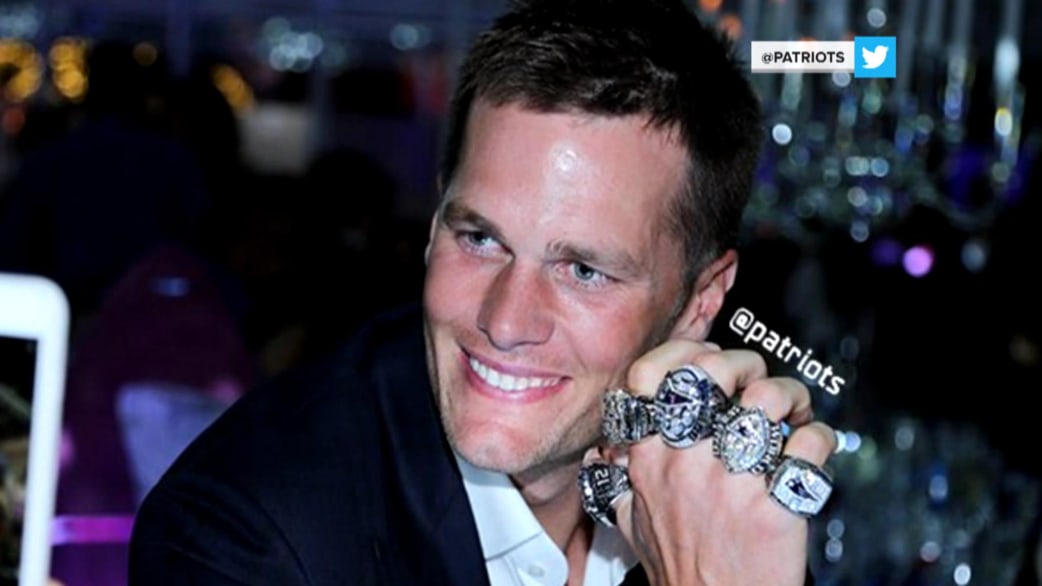
It isn’t the unrepentant cheating that makes him detestable—or even his thing with avocado “ice cream,”or that he’s from California, or that he wrote a bookcalled The TB12 Method: How to Achieve a Lifetime of Sustained Peak Performance, or that he tried to sell people $99 science-pajamas, or that he has a controversial bromance with Donald Trump, or that he’s so wishy-washy about that bromance, or that he married a mega-successful knockout supermodel, or that he has a $44 million salary, or his 66,159 passing yards, or his five Super Bowl rings, or the fact that he is some kind of football-savant Benjamin Button who ages in reverse and physically cannot stop winning.

Actually, wait, it is the winning thing. It’s totally all the winning.

Tom Brady is eminently hate-able because he’s so damned good. But there must be more to it than that. Philadelphians can’t be that petty, right? (Don’t answer that.)

People love an underdog, in part, because spectators are hedonists; they want an emotionally pleasurable experience. And, putting aside team loyalties, it turns out that rooting for a favorite like Brady to win is especially ho-hum if that favorite ends up losing. “Because it is unexpected, an underdog’s victory is more satisfying than a favorite’s and an underdog’s loss is much less traumatic,” wrote Jimmy Frazier and Eldon Snyder, the authors of a 1991 paper published in the Sociology of Sport Journal about the appeal of teams that are expected to lose. A utilitarian model would, they said, clearly predict the underdog effect. (...)

Their findings have implications that extend beyond the sporting world. Underdogs show up throughout the history, literature, and mythology of the Western world. Going back to ancient times, one of the most compelling kinds of stories people tell is fundamentally concerned with underdog status.

The novelist Kurt Vonnegut, for example, once observed that the arc of one classic story type—characterized by a protagonist’s steady climb in good fortune, sudden fall, and eventual ascension back to happily ever after—can be found in anything from creation stories across major religions to Cinderella. A couple years ago, I wrote about a group of computer scientists who studied the emotional path of this story pattern, compared with several others, and found that it’s among the top narrative arcs favored by readers.

This same story arc arguably mirrors the trajectory of Tom Brady’s career. It wasn’t always easy for him, back before he was the king of the Super Bowl and the husband of a supermodel. This is the same Tom Brady who got so little playing time at the University of Michigan that he nearly transferred. And the same Tom Brady who began his career as a starting player with a humiliating loss to Notre Dame. “No one expects that this guy was going to be the best football player of all time. Even him!” said Mark Snyder, who was one of the beat writers who covered Brady’s redshirt junior season for the University of Michigan’s college paper in 1998. “No one really knew who he was. He was definitely an underdog.”

by Adrienne LaFrance, The Atlantic | Read more:
Image: Wikipedia
[ed. See also: The Invention of Moral Narrative]