Thursday, March 22, 2018

China’s One-Man Show

In early March, the National Peoples’ Congress repealed the two-term limit for the Chinese presidency, a measure originally instituted by Deng Xiaoping to prevent the reemergence of a cult of personality around the Chinese leader. Xi Jinping, the current president, is now China’s undisputed master.

In fact, Xi already holds the country’s top three offices: in addition to the presidency, he’s also general secretary of the Communist Party and head of the military. Now he can hold these posts for as long as he draws breath. What does this all mean? And what are Xi’s long-term ambitions for China?

To learn more, Doug Henwood spoke to Isabel Hilton, an editor and journalist with extensive expertise in Chinese affairs. The full interview is available here.

Xi Jinping has just been declared something like president for life in China. Precisely what does this entail, and what does it mean?

Well, it’s a slightly curious move. As you may recall, Deng Xiaoping, the great reformer, was trying to set in place a series of structures in the Chinese state and in the party that would guard against any one man attaining the kind of power that Mao Zedong had attained and the bad things that can follow from that.

So, he instituted a number of measures. One was a move toward a more collective leadership, and the other — the one that’s relevant here — is the tradition that a Chinese president could serve two terms, each of five years, so that after ten years, essentially, he had to step down.

This has a number of knock-on effects. If you know that you have to step down at the end of ten years, you moderate your behavior. You don’t want to have a whole set of enemies waiting to get you. So, the tenor and tone of the administrations that followed Deng Xiaoping were altogether calmer than during the era of Mao Zedong.

Term limits also solved the question that has bedeviled China’s politics, which is the question of succession. All through the imperial period — 2,000 years of naked power struggles and succession struggles — you see the bad effects of not having a constitutional succession process. And we saw it also in the first years of Chairman Mao, when every person who was named number two, and therefore could be expected to succeed Mao, ended up either dead or in jail.

It’s a recipe for instability, and it’s a curious move at this point.

Where did it come from? Was there a great upsurge among his colleagues and comrades, or did he lead the way to this declaration?

It’s certainly being presented as by acclamation, but, if you track what Xi Jinping has been doing the last five years, there’s no doubt that this was a carefully prepared part.

He’s had five years of wounding his enemies through the anti-corruption drive. He’s had a process of taking back state power into party hands and a really massive personality cult — the elevation of Xi Jinping and his sort into pole position in the party. So, you’ve got a structure that has changed direction in the last five years, where the party is very much back in control and Xi Jinping is very much back in control of the party.

Now, having said that, why did he need to be president for life? The powerful positions in China are party general secretary and head of the military commission, and he holds both of those posts, which are not time limited. So, there must have been another reason why he felt that this position was essential to his consolidation of power.

There are a couple of possible explanations for that. One, it dovetails very well with an international role. As president, he gets to interact with other presidents, whereas as general secretary it’s a little more complicated to meet Queen Elizabeth or a US president.

The second possibility is that although the post is not the most powerful in China, nevertheless to have someone else occupy it might give a platform for opposition. But now he dominates all three major political roles in China for the foreseeable future. (...)

Let’s talk about some of the policy goals. I’ve been hearing for at least a decade that China wants to switch the economy away from exports toward more domestically oriented consumption. Is any of that happening?

Yes, it is. If you look at the proportion of services in the Chinese economy, it does appear to be going up. You see some closing down of excess capacity, but not enough. There’s also a drive to export quite a lot of that capacity through the Belt and Road process.

And the really difficult problem is growth. Such growth as we have had in the Chinese economy has been largely fueled by debt, by borrowing, and now debt levels are really quite high. If you were to have an effective bankruptcy procedure you would probably have quite a lot of triage at this point.

It’s not really clear how the state is going to deal with that going forward. There have been some measures to clean up what they call gray banking and shadow banking sectors, where financial instruments of the kind that caused so much trouble in the Western financial system were devised by local authorities and by state-owned enterprises in order to go on fueling their growth. You can’t run like that forever, and that is one of the problems that Xi Jinping is going to have to address

People do make some calamitous announcements about the collapse of the Chinese financial system, and with it the real economy. Do you think the Chinese can manage it?

They’ve managed it before. They did have an absolutely catastrophic state of banking some years back, and they cleaned it up. The Chinese state still has relatively deep pockets. They have the power to stop a kind of cascade collapse, which would cause tremendous drama because the Chinese investor — or the Chinese bank-account holder — is very quick on the streets when the money isn’t there anymore. If you look at how investors reacted to the stock-market crash eighteen months ago, they were out there demonstrating, saying, “Where is my profit?”

So, this is pretty sensitive stuff in terms of the general population. The risk is Xi Jinping, who has essentially said to people, if you stay out of politics, we will make you materially better off — that’s been the message since Tiananmen in 1989 — may not be able to deliver the kind of growth that will allow people to feel that they can afford to forget about politics. It’s going to be much trickier if you have an effectively stagnating economy.

What are China’s ambitions as Trump gradually cripples American standing internationally?

“Thank you very much, President Trump,” I think is what they’re saying in Beijing. They hardly have to lift a finger to be seen as a responsible power these days. But there have been a few missteps.

The Chinese have tended to overreach, and I think that that’s probably not good for China as it learns to exercise global leadership. So, for example, when British prime minister Theresa May went to China, the Chinese demanded that she sign a kind of blanket approval of the Belt and Road project. Well, no serious Western politician is going to do that.

And if you see the state of play between Australia and China lately, there is a lot of Australian anxiety and pushback about an undue exercise of Chinese influence in the form of influence buying in political parties, intimidation of Chinese students, intimidation of Western academics who don’t follow the party line, and so on.

China is trying to maintain the same image of party leadership in the world that it maintains in China. That’s complicated. If China is to grow up as a global power, it’s going to have to learn to take criticism and not be so extremely sensitive.

This is a learning process. China is becoming both a hard power and a soft power, and, if the Belt and Road project is to proceed, China is going to have to assume responsibility for security in places like Afghanistan, Waziristan, Balochistan, let alone, you know, Xinjiang territory and those connections through to central Asia. China is going to have to do quite a lot of fairly rapid learning about how you manage global assets and how you protect infrastructure investments in a world that’s not necessarily friendly.

What’s China’s ultimate vision? What does it want?

I think the ultimate vision is a restoration of the sense that China is the center of its world. That was the way China felt about itself for many centuries, partly because it didn’t really go very much farther. There was a brief period in the Ming Dynasty when ships went up and down the coast of Africa, and there was always land-based trade along the Silk Road, but China was content to treat the states and its neighbors in the immediate region as tributaries that paid homage to China as the great regional power. It was 20 percent of the world’s economy, which is pretty much where we’re heading back to.

China wants to restore that position, but it also wants to preserve its own system of government against rival systems of government. In pursuit of that, China is steadily setting up parallel institutions. Its own, as yet small, multilateral investment bank, the Asian Infrastructure Investment Bank, is devising rules that suit China rather than rules that have been part of the postwar order.

I think we’ll see China increasingly building a world that suits China, but trying not to overreach.

How do they read the bellicosity coming out of some of the people around Trump who clearly think of China as a scary enemy?


Well, I think China’s pretty used to that, certainly in most political campaigns. There’s an understanding that American politics needs an enemy, and they have been the choice lately. I don’t think China contemplates for a moment that they are likely to come to an armed exchange. You know, this is a reasonably sensible leadership, and nobody gains.

I think they’re kind of alarmed by Trump’s unpredictability, but otherwise Trump suits them pretty well because the dilution of American standing and influence in the world is an opportunity for China. If it went too far, China’s anxiety would be that it would have to step up prematurely to restore order and guarantee trading conditions and all those things that China still depends on.

So, I don’t think it wants Trump actually to push the United States off the cliff, but to weaken its standing.

by Doug Henwood - Inteview with Isabel Hinton, Jacobin |  Read more:
Image: Kevin Frayer/Getty

The Population Bomb - Updated


Interview: Paul Ehrlich, The Guardian |  Read more:
Images: Linh Pham/Getty Images and Paulo Whitaker/Reuters

Creating Believable Digital Humans


Epic Games’ Tim Sweeney on creating believable digital humans:

One thing we’ve been interested in over the years is digital humans. Two years ago we showed Senua, the Hellblade character. To this day, that’s pretty much state of the art. But we wanted to see if we could get closer to crossing the uncanny valley. She was great, but you could see that the facial animation wasn’t quite there. The details in the skin and the hair—it was still a fair way from crossing the uncanny valley.

We got together with Cubic Motion and 3Lateral again, the facial reading company, and Vicon, and also our friends at Tencent Next, the research lab at Tencent, to see if we could do something amazing. We put together this project to build a digital human for a presentation in China with Tencent. (...)

GamesBeat: How would you say the new character is an improvement on Senua from Hellblade, in a demo a couple of years ago?

Libreri: There’s more detail in terms of the resolution of the face. Women actually have a tiny bit of peach fuzz, little hairs all over their face, which was impossible to render two years ago, but now the GPUs are fast enough that we can do that. There are 300,000 little tiny hairs on her ears, on her nose. We also improved the shading technology. The skin shading now supports two layers of specular reflection. It also supports back scatter. If you put a light behind her ear, it glows red like it would in the real world.

We added another thing called screen space irradiance, which is the ability to bounce light off her face into her eye sockets. It’s surprising. It seems like a subtle thing, but it makes a big difference as far as believing what’s happening in your eyes. It’s a pretty significant improvement compared to where we got with Senua. We’re happy with the results. It’s still lacking some detail in terms of how the flesh moves.

by Dean Takahashi, Venture Beat |  Read more:
Image: Epic Games
[ed. Wow]

Wednesday, March 21, 2018

Trump Hacked the Media Right Before Our Eyes

Let’s get one thing straight: I am not a fan of Facebook. I’m confident that social media is a cancer on our private lives and a source of derangement in our politics. I take it for granted that the tech barons are acquiring the power to tilt elections, and that they’ll be happy to play handmaidens to tyrants soft and hard so long as they can monetize our data. I take a certain mordant pleasure in watching Mark Zuckerberg and his minions scapegoated for the political failures of late-Obama-era liberalism.

But the liberal establishment’s fixation on Facebook’s 2016 sins — first the transmission of fake news and now the exploitation of its data by the Trump campaign or its appendages — still feels like a classic example of blaming something new because it’s new when it’s the old thing that mattered more. Or of blaming something new because you thought that “new” meant “good,” that the use of social-media data by campaigns would always help tech-savvy liberals and not their troglodytic rivals — and the shock of discovering otherwise obscures the more important role that older forms of media played in making the Trump era a reality.

No doubt all the activity on Facebook and the apparent use of Facebook’s data had some impact, somewhere, on Trump’s surprise victory. But the media format that really made him president, the one whose weaknesses and perversities and polarizing tendencies he brilliantly exploited, wasn’t Zuckerberg’s unreal kingdom; it wasn’t even the Twitter platform where Trump struts and frets and rages daily. It was that old pre-internet standby, broadcast and cable television, and especially TV news.

Start with the fake news that laid the foundation for Trump’s presidential campaign — not the sort that circulates under clickbait headlines in your Facebook feed, but the sort broadcast in prime time by NBC, under the label of reality TV. Yes, as media sophisticates we’re all supposed to know that “reality” means “fake,” but in the beginning nobody marketed “The Apprentice” that way; across most of its run you saw a much-bankrupted real estate tycoon portrayed, week after week and season after season, as a titan of industry, the for-serious greatest businessman in the world.

Where did so many people originally get the idea that Trump was the right guy to fix our manifestly broken government? Not from Russian bots or targeted social media ad buys, but from a prime-time show that sold itself as real, and sold him as a business genius. Forget unhappy blue collar heartlanders; forget white nationalists and birthers: The core Trump demographic might just have been Republicans who watched “The Apprentice,” who bought the fake news that his television program and its network sponsors gladly sold them.

That was step one in the Trump hack of television media. Step two was the use of his celebrity to turn news channels into infomercials for his campaign. Yes, his fame also boosted him on social media, but there you can partially blame algorithms and the unwisdom of crowds; with television news there were actual human beings, charged with exercising news judgment and inclined to posture as civic-minded actors when it suits them, making the decision to hand day after day of free coverage to Donald Trump’s rallies, outrages, feuds and personal attacks.

Nothing that Cambridge Analytica did to help the Trump campaign target swing voters (and there’s reason to think it didn’t do as much as it claimed) had anything remotely like the impact of this #alwaysTrump tsunami, which probably added up to more than $2 billion in effective advertising for his campaign during the primary season, a flood that drowned all of his rivals’ pathetic tens of millions. And as cynical as I believe the lords of Silicon Valley to be, the more important cynicism in 2016 belonged to those television execs who were fine with enabling the wild Trumpian takeover of the G.O.P., because after all Republicans deserved it and Hillary was sure to beat him in the end.

Except that she didn’t beat him, in part because he also exploited the polarization that cable news, in particular, is designed to feed. In 2016 this polarization didn’t just mean that Fox became steadily more pro-Trump as he dispatched his G.O.P. rivals; it also meant that a network like CNN, which thrives on Team Red vs. Team Blue conflict, felt compelled to turn airtime over to Trump surrogates like Jeffrey Lord and Corey Lewandowski and Kayleigh McEnany because their regular stable of conservative commentators (I was one of them) simply wasn’t pro-Trump enough.

The depth and breadth of Trump skepticism among right-wing pundits was a pretty solid indicator of his unfitness for high office. But especially once he won the nomination this skepticism was often filtered out of cable coverage, because the important thing was to maintain the partisan shouting-match model. This in turn encouraged a sense that this was just a typical right-versus-left election, in which you should vote for Trump if you usually voted for Republicans … and in the end that’s what most G.O.P. voters did.

My own CNN experiences were positive; I admire the many fine journalists who work in television news. But it was clear enough being in that orbit in 2016, as it should be clear to anyone who watched Trump’s larger relationship to his television coverage, that the business model of our news channels both assumes and heightens polarization, and that it was ripe for exploitation by a demagogue who was also a celebrity.

It’s also clear — as the economists Levi Boxell, Matthew Gentzkow and Jesse Shapiro wrote in these pages late last year — that among older white Americans, the core demographic where first the primaries and then the general election were decided, television still far outstrips the internet as the most important source of news. And indeed, the three economists noted, for all the talk about Breitbart’s influence and Russian meddling and dark web advertising, Trump only improved on Mitt Romney’s showing among Americans who don’t use the internet, and he “actually lost support among internet-using voters.” In a sense, you could argue, all those tweets mattered mainly because they kept being quoted on TV.

Which is not to say that the current freakout over Facebook doesn’t make a certain kind of sense. Beyond the psychological satisfaction of weaving the often-genuinely-sinister side of Silicon Valley into stolen-election theories, there’s a strategic wisdom to the center-left establishment’s focus on the internet.

What Trump did will be hard for a future demagogue to imitate: The generations who get their information from newscasts are dying out, the web is taking over at an accelerating pace and in the long run there is more to be gained in going after Mark Zuckerberg than in pillorying Jeff Zucker. And pillorying Fox’s hosts only helps their brand: the big tech companies regard themselves as part of the liberal cultural complex, so they’re vulnerable to progressive bullying and shaming; not so Sean Hannity, whose stalwart support for Trump was and remains vastly more important than any online stratagem.

In the end, as Michael Brendan Dougherty wrote recently for National Review, one implicit goal of the Facebook freakout is to ensure that “conservatives and populists will not be allowed to use the same tools as Democrats and liberals again, or at least not use them effectively.” If the trauma of Trump’s victory turns social-media gatekeepers into more aggressive and self-conscious stewards of the liberal consensus, the current freakout will have more than served its political purpose.

by Ross Douthat, NY Times |  Read more:
Image: Andrew Harrer/Bloomberg

Child Abuse Imagery Found Within Bitcoin's Blockchain

German researchers have discovered unknown persons are using bitcoin’s blockchain to store and link to child abuse imagery, potentially putting the cryptocurrency in jeopardy.

The blockchain is the open-source, distributed ledger that records every bitcoin transaction, but can also store small bits of non-financial data. This data is typically notes about the trade of bitcoin, recording what it was for or other metadata. But it can also be used to store links and files.

Researchers from the RWTH Aachen University, Germany found that around 1,600 files were currently stored in bitcoin’s blockchain. Of the files least eight were of sexual content, including one thought to be an image of child abuse and two that contain 274 links to child abuse content, 142 of which link to dark web services.

“Our analysis shows that certain content, eg, illegal pornography, can render the mere possession of a blockchain illegal,” the researchers wrote. “Although court rulings do not yet exist, legislative texts from countries such as Germany, the UK, or the USA suggest that illegal content such as [child abuse imagery] can make the blockchain illegal to possess for all users.”

“This especially endangers the multi-billion dollar markets powering cryptocurrencies such as bitcoin.”

While the spending of bitcoin does not necessarily require a copy of the blockchain to facilitate, some processes, such as some mining techniques, require the downloading of the full blockchain or chunks of it.

“Since all blockchain data is downloaded and persistently stored by users, they are liable for any objectionable content added to the blockchain by others. Consequently, it would be illegal to participate in a blockchain-based systems as soon as it contains illegal content,” the researchers wrote.

Since mining is essential for the function of bitcoin, as the process records the transactions into the blockchain to verify trades and generates new bitcoin in the process, having illegal content such as child abuse imagery within the blockchain could cause significant issues for the currency.

“We anticipate a high potential for illegal blockchain content to jeopardise blockchain-based systems such as bitcoin in the future,” the researchers wrote.

This is not the first time warnings over the ability to store non-financial data within the blockchain have been issued. Interpol sent out an alert in 2015 saying that “the design of the blockchain means there is the possibility of malware being injected and permanently hosted with no methods currently available to wipe this data”.

by Samuel Gibbs, The Guardian |  Read more:
Image: Chesnot/Getty Images
[ed. Important. See also: What is Blockchain?]

On Seeing America’s Wars Whole

Six Questions for A.G. Sulzberger

Dear Mr. Sulzberger:

Congratulations on assuming the reins of this nation’s — and arguably, the world’s — most influential publication. It’s the family business, of course, so your appointment to succeed your father doesn’t exactly qualify as a surprise. Even so, the responsibility for guiding the fortunes of a great institution must weigh heavily on you, especially when the media landscape is changing so rapidly and radically.

Undoubtedly, you’re already getting plenty of advice on how to run the paper, probably more than you want or need. Still, with your indulgence, I’d like to offer an outsider’s perspective on “the news that’s fit to print.” The famous motto of the Times insists that the paper is committed to publishing “all” such news — an admirable aspiration even if an impossibility. In practice, what readers like me get on a daily basis is “all the news that Times editors deem worthy of print.”

Of course, within that somewhat more restrictive universe of news, not all stories are equal. Some appear on the front page above the fold. Others are consigned to page A17 on Saturday morning.

And some topics receive more attention than others. In recent years, comprehensive coverage of issues touching on diversity, sexuality, and the status of women has become a Times hallmark. When it comes to Donald Trump, “comprehensive” can’t do justice to the attention he receives. At the Times (and more than a few other media outlets), he has induced a form of mania, with his daily effusion of taunts, insults, preposterous assertions, bogus claims, and decisions made, then immediately renounced, all reported in masochistic detail. Throw in salacious revelations from Trump’s colorful past and leaks from the ongoing Mueller investigation of his campaign and our 45th president has become for the Times something akin to a Great White Whale, albeit with a comb-over and a preference for baggy suits.

In the meantime, other issues of equal or even greater importance — I would put climate change in this category — receive no more than sporadic or irregular coverage. And, of course, some topics simply don’t make the cut at all, like just about anything short of a school shooting that happens in that vast expanse west of the Hudson that Saul Steinberg years ago so memorably depicted for the New Yorker.

The point of this admittedly unsolicited memo is not to urge the Times to open a bureau in Terre Haute or in the rapidly melting Arctic. Nor am I implying that the paper should tone down its efforts to dismantle the hetero-normative order, empower women, and promote equality for transgender persons. Yet I do want to suggest that obsessing about this administration’s stupefying tomfoolery finds the Times overlooking one particular issue that predates and transcends the Trump Moment. That issue is the normalization of armed conflict, with your writers, editors, and editorial board having tacitly accepted that, for the United States, war has become a permanent condition.

Let me stipulate that the Times does devote an impressive number of column-inches to the myriad U.S. military activities around the planet. Stories about deployments, firefights, airstrikes, sieges, and casualties abound. Readers can count on the Times to convey the latest White House or Pentagon pronouncements about the briefly visible light at the end of some very long tunnel. And features describing the plight of veterans back from the war zone also appear with appropriate and commendable frequency.

So anyone reading the Times for a week or a month will have absorbed the essential facts of the case, including the following:

* Over 6,000 days after it began, America’s war in Afghanistan continues, with Times correspondents providing regular and regularly repetitive updates;

* In the seven-year-long civil war that has engulfed Syria, the ever-shifting cast of belligerents now includes at least 2,000 (some sources say 4,000) U.S. special operators, the rationale for their presence changing from week to week, even as plans to keep U.S. troops in Syria indefinitely take shape;

* In Iraq, now liberated from ISIS, itself a byproduct of U.S. invasion and occupation, U.S. troops are now poised to stay on, more or less as they did in West Germany in 1945 and in South Korea after 1953;

* On the Arabian Peninsula, U.S. forces have partnered with Saudi Crown Prince Mohammad Bin Salman Al Saud in brutalizing Yemen, thereby creating a vast humanitarian disaster despite the absence of discernible U.S. interests at stake;

* In the military equivalent of whacking self-sown weeds, American drones routinely attack Libyan militant groups that owe their existence to the chaos created in 2011 when the United States impulsively participated in the overthrow of Muammar Gaddafi;

* More than a quarter-century after American troops entered Somalia to feed the starving, the U.S. military mission continues, presently in the form of recurring airstrikes;

* Elsewhere in Africa, the latest theater to offer opportunities for road-testing the most recent counterterrorism techniques, the U.S. military footprint is rapidly expanding, all but devoid of congressional (or possibly any other kind of) oversight;

* From the Levant to South Asia, a flood of American-manufactured weaponry continues to flow unabated, to the delight of the military-industrial complex, but with little evidence that the arms we sell or give away are contributing to regional peace and stability;

*Amid this endless spiral of undeclared American wars and conflicts, Congress stands by passively, only rousing itself as needed to appropriate money that ensures the unimpeded continuation of all of the above;

*Meanwhile, President Trump, though assessing all of this military hyperactivity as misbegotten — “Seven trillion dollars. What a mistake.” — is effectively perpetuating and even ramping up the policies pioneered by his predecessors.

This conglomeration of circumstances, I submit, invites attention to several first-order questions to which the Times appears stubbornly oblivious. These questions are by no means original with me. Indeed, Mr. Sulzberger (may I call you A.G.?), if you’ve kept up with TomDispatch — if you haven’t, you really should — you will already have encountered several of them. Yet in the higher reaches of mainstream journalism they remain sadly neglected, with disastrous practical and moral implications.

The key point is that when it comes to recent American wars, the Times offers coverage without perspective. “All the news” is shallow and redundant. Lots of dots, few connections.

To put it another way, what’s missing is any sort of Big Picture. The Times would never depict Russian military actions in the Crimea, eastern Ukraine, and Syria, along with its cyber-provocations, as somehow unrelated to one another. Yet it devotes remarkably little energy to identifying any links between what U.S. forces today are doing in Niger and what they are doing in Afghanistan; between U.S. drone attacks that target this group of “terrorists” and those that target some other group; or, more fundamentally, between what we thought we were doing as far back as the 1980s when Washington supported Saddam Hussein and what we imagine we’re doing today in the various Muslim-majority nations in which the U.S. military is present, whether welcome or not.

Crudely put, the central question that goes not only unanswered but unasked is this: What the hell is going on? Allow me to deconstruct that in ways that might resonate with Times correspondents:

What exactly should we call the enterprise in which U.S. forces have been engaged all these years? The term that George W. Bush introduced back in 2001, “Global War on Terrorism,” fell out of favor long ago. Nothing has appeared to replace it. A project that today finds U.S. forces mired in open-ended hostilities across a broad expanse of Muslim-majority nations does, I suggest, deserve a name, even if the commander-in-chief consigns most of those countries to “shithole” status. A while back, I proposed “War for the Greater Middle East,” but that didn’t catch on. Surely, the president or perhaps one of his many generals could come up with something better, some phrase that conveys a sense of purpose, scope, stakes, or location. The paper of record should insist that whatever it is the troops out there may be doing, their exertions ought to have a descriptive name.

What is our overall objective in waging that no-name war? After 9/11, George W. Bush vowed at various times to eliminate terrorism, liberate the oppressed, spread freedom and democracy, advance the cause of women’s rights across the Islamic world, and even end evil itself. Today, such aims seem like so many fantasies. So what is it we’re trying to accomplish? What will we settle for? Without a readily identifiable objective, how will anyone know when to raise that “Mission Accomplished” banner (again) and let the troops come home?

By extension, what exactly is the strategy for bringing our no-name war to a successful conclusion? A strategy is a kind of roadmap aimed at identifying resources, defining enemies (as well as friends), and describing a sequence of steps that will lead to some approximation of victory. It should offer a vision that gets us from where we are to where we want to be. Yet when it comes to waging its no-name war, Washington today has no strategy worthy of the name. This fact should outrage the American people and embarrass the national security establishment. It should also attract the curiosity of the New York Times.

Roughly speaking, in what year, decade, or century might this war end? Even if only approximately, it would help to know — and the American people deserve to know — when the front page of the Times might possibly carry a headline reading “Peace Secured” or “Hostilities Ended” or even merely “It’s Over.” On the other hand, if it’s unrealistic to expect the ever-morphing, ever-spreading no-name war to end at all, then shouldn’t someone say so, allowing citizens to chew on the implications of that prospect? Who better to reveal this secret hidden in plain sight than the newspaper over which you preside?

What can we expect the no-name war to cost? Although the president’s estimate of $7 trillion may be a trifle premature, it’s not wrong. It may even end up being on the low side. What that money might otherwise have paid for — including infrastructure, education, scientific and medical research, and possibly making amends for all the havoc wreaked by our ill-considered military endeavors — certainly merits detailed discussion. Here’s a way to start just such a discussion: Imagine a running tally of sunk and projected cumulative costs featured on the front page of the Times every morning. Just two numbers: the first a tabulation of what the Pentagon has already spent pursuant to all U.S. military interventions, large and small, since 9/11; the second, a projection of what the final bill might look like decades from now when the last of this generation’s war vets passes on.

Finally, what are the implications of saddling future generations with this financial burden? With the sole exception of the very brief Gulf War of 1990-1991, the no-name war is the only substantial armed conflict in American history where the generation in whose name it was waged resolutely refused to pay for it — indeed, happily accepted tax cuts when increases were very much in order. With astonishingly few exceptions, politicians endorsed this arrangement. One might think that enterprising reporters would want to investigate the various factors that foster such irresponsibility.

by Andrew Bacevich, TomDispatch |  Read more:
Image: uncredited
[ed. I flew into Honolulu today and on final approach we passed over a squadron of F-15s and C-130s parked on the tarmac. I heard the woman behind me turn to her husband and ask (I kid you not)... "are we at war with anybody?"]

Tuesday, March 20, 2018


Brendon Burton, Western Gothic
via:

Test Case

So it finally happened: a self-driving car struck and killed a pedestrian in Arizona. And, of course, the car was an Uber.

(Why Uber? Well, Uber is a taxi firm. Lots of urban and suburban short journeys through neighbourhoods where fares cluster. In contrast, once you set aside the hype, Tesla's autopilot is mostly an enhanced version of the existing enhanced cruise control systems that Volvo, BMW, and Mercedes have been playing with for years: lane tracking on highways, adaptive cruise control ... in other words, features used on longer, faster journeys, which are typically driven on roads such as motorways that don't have mixed traffic types.)

There's going to be a legal case, of course, and the insurance corporations will be taking a keen interest because it'll set a precedent and case law is big in the US. Who's at fault: the pedestrian, the supervising human driver behind the steering wheel who didn't stop the car in time, or the software developers? (I will just quote from CNN Tech here: "the car was going approximately 40 mph in a 35 mph zone, according to Tempe Police Detective Lily Duran.")

This case, while tragic, isn't really that interesting. I mean, it's Uber, for Cthulhu's sake (corporate motto: "move fast and break things"). That's going to go down real good in front of a jury. Moreover ... the maximum penalty for vehicular homicide in Arizona is a mere three years in jail, which would be laughable if it wasn't so enraging. (Rob a bank and shoot a guard: get the death penalty. Run the guard over while they're off-shift: max three years.) However, because the culprit in this case is a corporation, the worst outcome they will experience is a fine. The soi-disant "engineers" responsible for the autopilot software experience no direct consequences of moral hazard.

But there are ramifications.

Firstly, it's apparent that the current legal framework privileges corporations over individuals with respect to moral hazard. So I'm going to stick my neck out and predict that there's going to be a lot of lobbying money spent to ensure that this situation continues ... and that in the radiant Randian libertarian future, all self-driving cars will be owned by limited liability shell companies. Their "owners" will merely lease their services, and thus evade liability for any crash when they're not directly operating the controls. Indeed, the cars will probably sue any puny meatsack who has the temerity to vandalize their paint job with a gout of arterial blood, or traumatize their customers by screaming and crunching under their wheels.

Secondly, sooner or later there will be a real test case on the limits of machine competence. I expect to see a question like this show up in an exam for law students in a decade or so:

A child below the age of criminal responsibility plays chicken with a self-driving taxi, is struck, and is injured or killed. Within the jurisdiction of the accident (see below) pedestrians have absolute priority (there is no offense of jaywalking), but it is an offense to obstruct traffic deliberately.

The taxi is owned by a holding company. The right to operate the vehicle, and the taxi license (or medalion, in US usage) are leased by the driver.

The driver is doing badly (predatory pricing competition by the likes of Uber is to blame for this) and is unable to pay for certain advanced features, such as a "gold package" that improves the accuracy of pedestrian/obstacle detection from 90% to 99.9%. Two months ago, because they'd never hit anyone, the driver downgraded from the "gold package" to a less-effective "silver package".

The manufacturer of the vehicle, who has a contract with the holding company for ongoing maintenance, disabled the enhanced pedestrian avoidance feature for which the driver was no longer paying.

The road the child was playing chicken on is a pedestrian route closed to private cars and goods traffic but open to public transport.

In this jurisdiction, private hire cars are classified as private vehicles, but licensed taxis are legally classified as public transport when (and only for the duration) they are collecting or delivering a passenger within the pedestrian area.

At the moment of the impact the taxi has no passenger, but has received a pickup request from a passenger inside the pedestrian zone (beyond the accident location) and is proceeding to that location on autopilot control.

The driver is not physically present in the vehicle at the time of the accident.

The driver is monitoring their vehicle remotely from their phone, using a dash cam and an app provided by the vehicle manufacturer but subject to an EULA that disclaims responsibility and commits the driver to binding arbitration administered by a private tribunal based in Pyongyang acting in accordance with the legal code of the Republic of South Sudan.

Immediately before the accident the dash cam view was obscured by a pop-up message from the taxi despatch app that the driver uses, notifying them of the passenger pickup request. The despatch app is written and supported by a Belgian company and is subject to an EULA that disclaims responsibility and doesn't impose private arbitration but requires any claims to be heard in a Belgian court.

The accident took place in Berwick-upon-Tweed, England; the Taxi despatch firm is based in Edinburgh, Scotland.

Discuss!

by Charlie Stross, Charlie's Diary |  Read more:

Beloved Guitar Maker Gibson Faces Crushing Debt

Like the blues giant Robert Johnson, whose mastery of a Gibson guitar was said to be the result of a deal with the Devil, the company has come to a crossroads.

After 116 years, the Devil’s knocking on Gibson’s door. Debt of as much as $560 million is due this summer, and investors are whispering that Chief Executive Officer Henry Juszkiewicz has got to go.

Juszkiewicz traded a slice of Gibson’s soul in an attempt to become more than just the maker of the world’s most beloved guitar. He bought pieces of consumer electronics companies to relaunch Gibson Guitars as Gibson Brands Inc., a “music lifestyle’’ company. It didn’t work out as planned.

“My dream was to be the Nike of music lifestyle,” Juszkiewicz said in an interview. “At this point, I have to cut back on that ambition, frankly.”

Elvis Presley changed history on a Gibson J200. Eric Clapton’s famous solo on the Beatles’ “While My Guitar Gently Weeps’’ was played on a Gibson, and when young B.B. King fled a burning building and realized he’d left his Gibson behind, he risked his lifeby going back inside to retrieve it. The fire had been accidentally started by two men fighting over a woman, and King gave his hollow-body guitar her name -- Lucille.

But pop cares little for legend. Gibson says sales are strong, but guitars don’t have the mystique they did in King’s day.

Consumer Electronics


“We have a younger generation coming in with tastes toward a different type of music,” said Al Di Meola, a Grammy-winning jazz guitarist.

Juszkiewicz tried diversification. He bought a line of consumer electronics from Japanese company Onkyo Corp., and in 2014 he added Royal Philips NV’s audio and home entertainment business, WOOX Innovations, for $135 million.

The purchases fit into Juszkiewicz’s vision for the company’s future. Not everyone was pleased.

“Gibson has chosen to go into that market where they’re competing with the really big dogs,” said Pat Foley, who leads artist relations at Orange Amplifiers. He ran Gibson’s entertainment relations worldwide before being fired in 2014. “In the guitar market, we were the big dogs.” (...)

The company has expressed pride that its Gibson guitars are made in the U.S. Acoustic instruments come out of a factory in Bozeman, Montana, and solid-body electric guitars are made in Nashville, Tennessee. Hollow bodies, like King’s Lucille, are crafted at its Memphis plant.

The Memphis factory sits near B.B. King’s Blues Club and not far from the old Sun Records studio, where Presley cut his first album. The guitars are shaped, sanded, painted and polished by hand. Wood chips fly, sending the scent of cut rosewood into the air. It takes up to a month to make each instrument into a work of art. Only 60 are completed each day.

“We’re preserving the artistry,” Juszkiewicz said. “That’s what Gibson is, and that’s what people want from Gibson.”

To raise cash, Gibson Brands sold the Memphis factory in December to private equity firms Somera Road and Tricera Capital for $14.1 million. It continues work there, for now.

Reduce Leverage

“Their hope is that the capital structure is refinanceable if they can reduce leverage,” said Cassidy of Moody’s. “We think the likelihood of a default or some type of financial restructuring is pretty high.”

Another obstacle to the company’s resurgence is its broken relationship with some retailers. A number of them have stopped selling the brand, citing unmanageable demands that range from annual credit checks to upfront orders for a year’s merchandise.

“You have to eat so much garbage in order to be a Gibson dealer that it’s not worth it,” said George Gruhn, who owns Gruhn Guitars in Nashville.

Other vendors echoed that sentiment, including Frank Glionna, who says he’d been a Gibson dealer since the 1970s and called his decision to cut ties last year “bittersweet.”

‘Everybody Bailed’


“In the last couple of years, everybody bailed,” said Glionna, owner of The Music Gallery in Highland Park, Illinois. “The company is in the worst place I’ve ever seen it in my decades as a dealer.”

by Emma Orr and Austin Weinstein, Bloomberg | Read more:
Image: ES-339, Guitar Center
[ed. Sad. People have been saying for years that Juszkiewicz needed to go.]

Embarrassed Whale Panicking About Huge Barnacle Outbreak Before Date


ATLANTIC OCEAN—Concerned that the unappealing affliction would spoil his plans for a romantic evening, an embarrassed right whale was reportedly panicking Monday after having a huge barnacle outbreak before an upcoming date. “Oh god, I look terrible, they’re all over my face,” said the mortified cetacean, scrambling in vain to clear his skin by rubbing against a nearby rock outcropping. “I can’t believe this, I haven’t had a single barnacle in months, and tonight of all nights I get dozens of them. The worst part is, there’s basically nothing I can do about it. I guess I’ll just take her to a darker part of the ocean and hope she doesn’t notice. This is so humiliating.” At press time, the whale was reportedly feeling much more relaxed after his companion showed up for their date with her face completely covered in a fishing net.

by The Onion |  Read more:
Image: uncredited

How to Delete Facebook

If you’ve finally given up on the world’s most popular social media network and want to get rid of Facebook, it’s not too complicated to remove yourself from the service. But before you delete all of those pictures, posts, and Likes, you should download your personal information from Facebook first.

Your Facebook archives contain just about all of the pertinent information related to your account, including your photos, active sessions, chat history, IP addresses, facial recognition data, and which ads you clicked, just to name a few. That’s a ton of personal information that you should probably maintain access to. To download your archive, go to “Settings” and click “Download a copy of your Facebook data” at the bottom of General Account Settings, and then click “Start My Archive.”


After you’ve finished downloading your archive, you can now delete your account.

Beware: once you delete your account, it cannot be recovered.

If you are ready to delete your account, you can click this link, which will take you to the account deletion page. (Facebook doesn’t have the delete account option in its settings, for some reason.) Once you click “Delete My Account,” your account will be marked for termination, and inaccessible to others using Facebook. (...)

The company says it can take up to 90 days to fully delete your account and the information associated with it, but it notes that your account will be inaccessible to other people using Facebook during that time.

by Micah Singleton, The Verge |  Read more:
Image: uncredited

Monday, March 19, 2018

Tonina Saputo

12 Things Everyone Should Understand About Tech

Technology isn’t an industry, it’s a method of transforming the culture and economics of existing systems and institutions. That can be a little bit hard to understand if we only judge tech as a set of consumer products that we purchase. But tech goes a lot deeper than the phones in our hands, and we must understand some fundamental shifts in society if we’re going to make good decisions about the way tech companies shape our lives—and especially if we want to influence the people who actually make technology.

Even those of us who have been deeply immersed in the tech world for a long time can miss the driving forces that shape its impact. So here, we’ll identify some key principles that can help us understand technology’s place in culture.

1. Tech is not neutral.

One of the most important things everybody should know about the apps and services they use is that the values of technology creators are deeply ingrained in every button, every link, and every glowing icon that we see. Choices that software developers make about design, technical architecture or business model can have profound impacts on our privacy, security and even civil rights as users. When software encourages us to take photos that are square instead of rectangular, or to put an always-on microphone in our living rooms, or to be reachable by our bosses at any moment, it changes our behaviors, and it changes our lives.

All of the changes in our lives that happen when we use new technologies do so according to the priorities and preferences of those who create those technologies.

2. Tech is not inevitable.

Popular culture presents consumer technology as a never-ending upward progression that continuously makes things better for everybody. In reality, new tech products usually involve a set of tradeoffs where improvements in areas like usability or design come along with weaknesses in areas like privacy & security. Sometimes new tech is better for one community while making things worse for others. Most importantly, just because a particular technology is “better” in some way doesn’t guarantee it will be widely adopted, or that it will cause other, more popular technologies to improve.

In reality, technological advances are a lot like evolution in the biological world: there are all kinds of dead-ends or regressions or uneven tradeoffs along the way, even if we see broad progress over time. (...)

6. Tech is often built with surprising ignorance about its users.

Over the last few decades, society has greatly increased in its respect for the tech industry, but this has often resulted in treating the people who create tech as infallible. Tech creators now regularly get treated as authorities in a wide range of fields like media, labor, transportation, infrastructure and political policy — even if they have no background in those areas. But knowing how to make an iPhone app doesn’t mean you understand an industry you’ve never worked in!

The best, most thoughtful tech creators engage deeply and sincerely with the communities that they want to help, to ensure they address actual needs rather than indiscriminately “disrupting” the way established systems work. But sometimes, new technologies run roughshod over these communities, andthe people making those technologies have enough financial and social resources that the shortcomings of their approaches don’t keep them from disrupting the balance of an ecosystem. Often times, tech creators have enough money funding them that they don’t even notice the negative effects of the flaws in their designs, especially if they’re isolated from the people affected by those flaws. Making all of this worse are the problems with inclusion in the tech industry, which mean that many of the most vulnerable communities will have little or no representation amongst the teams that create new tech, preventing those teams from being aware of concerns that might be of particular importance to those on the margins.

by Anil Dash, LinkedIn |  Read more:
Image: uncredited

Bad BBQ


[ed. I tried a new barbecue sauce on my ribs tonight. I wouldn't say it was totally bad, but it did remind me of this.]

"Water, blackstrap molasses, imported habanero peppers, salt, garlic, ginger, tomato puree, axle grease, real hickory smoke, snuff, butts of clove cigarettes, Guiness Stout fermentation dregs, uranium mill tailings, muffler cores, monosodium glutamate, nitrates, nitrites, nitrotes and nitrutes, nutrites, natrotes, powdered pork nose hairs, dynamite, activated charcoal, match-heads, used pipe cleaners, tar, nictotine, single-malt whiskey, smoked beef lymph nodes, autumn leaves, red fuming nitric acid, bituminous coal, fallout, printer's ink, laundry starch, drain cleaner, blue chrysotile asbestos, carrageenan, BHA, BHT, and natural flavorings."

~ Neal Stephenson, The Diamond Age
Image: uncredited via

Joe Jackson


[ed. See also: Be My Number Two]

Peter Charles Henderson, Blue Egyptian Water-lily, 1804
via:

What is it to be a Cow?

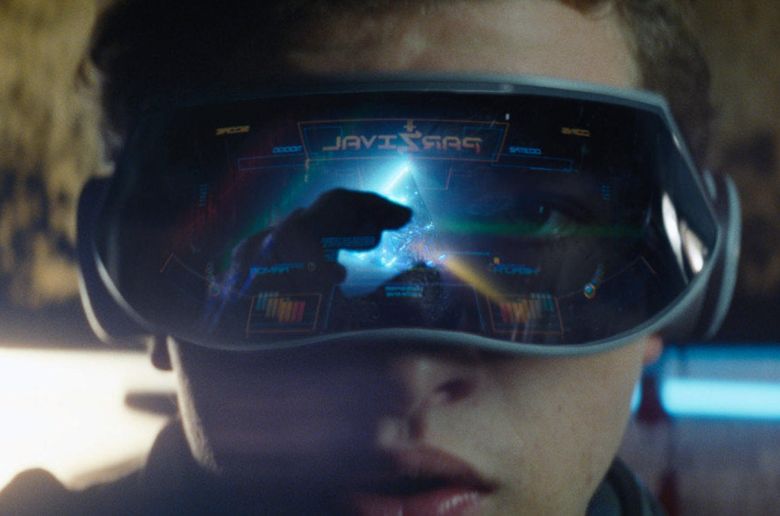
The room shuddered, and Mark Zuckerberg looked down. The floor was opening, leaving him perched on a narrow ledge, a thin plank ahead, a gaping pit on either side. “OK, that’s pretty scary”, he said. It was also pretty imaginary, for the Facebook founder stood in a Stanford University lab, video goggles strapped to his head, atmospheric audio pumped in, the ground rigged to quaver. Many of those who experience the Stanford “pit”, as Zuckerberg did in 2014, are too frightened to walk the plank. And that is the marvel of virtual reality: when gadgets envelop our senses, we enter a limbo state where our minds understand the falsity but our bodies do not.

Virtual reality – and much breathless exaggeration regarding it – has been part of tech daydreaming for a few decades, without yet becoming something anyone might keep in their living room. During a previous flare of VR hopes in the 1980s and 90s, microprocessors lagged behind programmers’ visions. Today, computing power has nearly caught up, and it is up to coders to conjure dreamscapes desirable enough for us to buy. Once VR goes mainstream, optimists say, new universes will open. We’ll be able to fly. Or become trout. Or walk through others’ bodies. Any kookiness or fantasia could be concocted and shared. Pessimists, however, warn that VR will produce aimless addicts, lost in non-existent worlds to the detriment of the one we have contended with for millennia.

Whether VR proves grand or ghastly, tech corporations are hurrying to profit. Months after Zuckerberg wavered at the pit’s edge, Facebook paid $2 billion for a leading headset maker, Oculus VR. Also that year, Google released a viewer made of cardboard that allowed users to transform their smartphones into rudimentary VR screens. In the years since, the Samsung Gear VR has come out, along with the Oculus Rift, the HTC Vive, and the Sony PlayStation VR. None has sold in society-changing numbers, but each product inches ahead.

In the meantime, entrepreneurs are feverishly developing apps, promising VR fitness, VR movie experiences, VR property viewing, VR psychotherapy, not to mention VR porn. A pioneering spirit flourishes, thrilling and chaotic. “Consumer VR is coming like a freight train”, writes Jeremy Bailenson, the Stanford professor behind the pit and one of the world’s leading VR researchers, in Experience on Demand: What virtual reality is, how it works, and what it can do. “It may take two years, it may take ten, but mass adoption of affordable and powerful VR technology, combined with vigorous investment in content, is going to unleash a torrent of applications that will touch every aspect of our lives.”

For Bailenson, the power of virtual reality is that it is not virtual. What you do in VR generates experiences akin to real ones, he argues, making VR the most psychologically powerful medium ever invented. Once the technology is refined (major limitations remain), VR will transform education, whether one is learning brain surgery or parachuting. It will allow us to travel anywhere in perfect safety. It could even deepen our empathy. Storytelling has long offered humans a way to glimpse others’ viewpoints, witness their escapades and their torments, too. But VR, its advocates say, would be far more potent. You could inhabit the body of, say, someone from a different country or ethnicity, or discover what it is to be a cow, Bailenson suggests. Another use of VR “presence” is real-world absence, which has been used to help burn victims through a game called SnowWorld, which distracts them from excruciating medical treatment. News organizations, too, are experimenting, hoping VR will engage the public in far-flung events when words, photographs and video fail.

The revolution is approaching at a peculiar time, when fear of what is becoming of us in the digital age cohabits with excitement about each new wizardry – these conflicting emotions often occurring in the same person at the same time. Our unease is evident in an array of recent books, amounting almost to a new genre: dystopian non-fiction. Consider the subtitles of a few from 2017: How Facebook, Google, and Amazon cornered culture and undermined democracy; The rise of Silicon Valley as a political powerhouse and social wrecking ball; The existential threat of big tech. Even Wired magazine, a longtime purveyor of our glittering digital future, now regularly asks where it all went wrong.

Bailenson is a hearty VR booster, but acknowledges a few concerns. If a VR experience is almost equal to a real one, what happens when you witness VR violence there? What if you yourself murder someone in a VR game? From the outside, it would merely look like a person in headset and earphones. Inside, something hideous could be happening. Legal questions arise, too. Should crimes committed in VR be illegal? Before you say no, what about torture? Or sex crimes? What if the user has sexual relations with a VR version of a real person without their permission? This seems obscene. But is it a thought crime? An experience crime? Or no crime at all?

by Tom Rachman, TLS |  Read more:
Image: Ready Player One, Lifestyle Pictures/Alamy

Cooking with Alexandre Dumas

If the lavish feasts and epic drinking sessions of The Three Musketeers, by Alexandre Dumas (1802–1870), are any indication, seventeenth-century France was the era of the gourmand. The musketeers—Athos, Porthos, and Aramis—and their young friend d’Artagnan, the Gascon nobleman who is the book’s hero, are frat boys of a different era, men for whom an ordinary evening at home is thus:
Porthos was in bed, and was playing a game of lansquenet with Mousqueton [his servant], to keep his hand in; while a spit loaded with partridges was turning before the fire, and on each side of a large chimney-piece, over two chafing dishes, were boiling two stew-pans, from which exhaled a double odour of rabbit and fish stews, rejoicing to the smell. In addition to this … the top of a wardrobe and the marble of a commode were covered with empty bottles.
The musketeers know no moderation. They order multiple bottles of wine for a quick drink, and at one point, one of them consumes an entire wine cellar. When Aramis plans to eat an omelet with a side of spinach, his friends ultimately convince him to say to the waiter, “Return from whence you came; take back these horrible vegetables … Order a larded hare, a fat capon, mutton leg dressed with garlic, and four bottles of old Burgundy.”

Dumas was a bon vivant and passionate cook who wrote in many genres, and his Grand Dictionnaire de Cuisine, a sprawling volume that traveled the alphabet from absinthe to zest, was the great project he felt he must complete before he died. (It was published posthumously.). According to the introduction to my abridged, translated version of that volume, Dumas “wrote novels and stories because he needed the revenue but produced his masterpiece, the Grand Dictionnaire de Cuisine, because he loved the work.” The book includes recipes, society gossip, bits of culinary history, and the writer’s meditations on hosting and entertaining. It is not, the introduction says, “a basic cookery book for an untaught bride.” I found it fun to read that a recipe for ortolans, a rare songbird, tells us that to kill them, we must “asphyxiate them by plunging their heads into very strong vinegar. It is a violent death that improves their flesh.”

I made three dishes mentioned in The Three Musketeers—the rabbit stew and fish stew cooked concomitantly in the passage quoted above (the mingled smells really did cause rejoicing) and a spinach salad to exonerate the spinach forgone in the book. For all three, I worked from Dumas’s cookbook, choosing a rabbit-stew option that seemed possible to execute for a person who had never cooked rabbit and, in the spirit of adventure, a fish stew calling for eel. Since drinking was so essential to Dumas and the musketeers, I paired the food with wines, either those mentioned in the book or approximations.

This cooking called for an eel head, rehydrated morels (they were great), and an old-fashioned soup-thickening technique called beurre manié, all well outside my comfort zone. I took as my inspiration these words of the musketeer Athos upon being sent into danger: “So let us go get killed where we are told to go. Is life worth the trouble of so many questions?” (...)

Matelote of Eel Marinière

Take a Seine carp, an eel, a tench, a perch, and cut them in pieces. Slice 2 large onions. Put the onions on the bottom of a copper pot, then all the heads, then the body pieces, so the pieces from nearest the tail are on top. Season with salt, pepper, a bouquet garni, and a few cloves of garlic. Pour over all 2 bottles of white wine. Bring to a quick boil. Add 1 glass of cognac and flame. Add 20 or 30 little onions fried in butter. Make little balls of flour and butter and sprinkle it into your matelote. Shake to mix well. Serve hot, garnished with croutons and crayfish cooked in Rhine wine.

—Alexandre Dumas’ Dictionary of Cuisine, edited, abridged, and translated by Louis Colman

For the bouquet garni:

a few leaves of sage
a few sprigs of thyme
1/2 sprig rosemary
1 bay leaf

Tie all the ingredients together and place them in a piece of cheesecloth.

For the croutons:

1/2 baguette

Slice the baguette and fry the slices in butter till crispy, salting liberally.

For the soup:

1 eel, filleted, head reserved
2 catfish, filleted, head reserved
1 bass, filleted, head reserved
salt
pepper
1 white onion, in segments
4 cloves of garlic
1 bottle white wine, preferably Sancerre
2 1/2 cups water
20 or 30 little cipollini onions
8 tbs butter (2 for frying the fish, 6 for the beurre manié)
1/4 cup flour
Salt and pepper, to taste

Make a fish stock. Put the fish heads and the head of the eel, the onions, the garlic, the wine, and the water in a large pot. Bring to a boil, then simmer for 20 minutes and strain.

Brown the onions in the butter on medium-low heat until they’re very soft, about 30 minutes.

Prepare the fish. I followed Dumas’s directions and cut my fish as steaks, but they were bony and difficult to eat. In this recipe, I suggest using fillets.

Dry the fillets and season them thoroughly. Fry skin side down in two tablespoons of the butter until the skin is crisp.

Prepare the beurre manié. Mash the remaining butter with the flour until it forms a smooth paste. Make the paste into teaspoon-size balls. These will be used to thicken the soup.

Reheat the fish stock to a simmer, add the onions and fillets, and simmer until the fish is cooked through.

Add the beurre manié balls and continue to simmer until the balls have dispersed and the sauce has thickened.

Salt and pepper to taste. Serve garnished with croutons.

by Valerie Stivers, Paris Review | Read more:
Image: Valarie Stivers

Leandro Erlich, La Vitrina Cloud Collection (2011)
via: