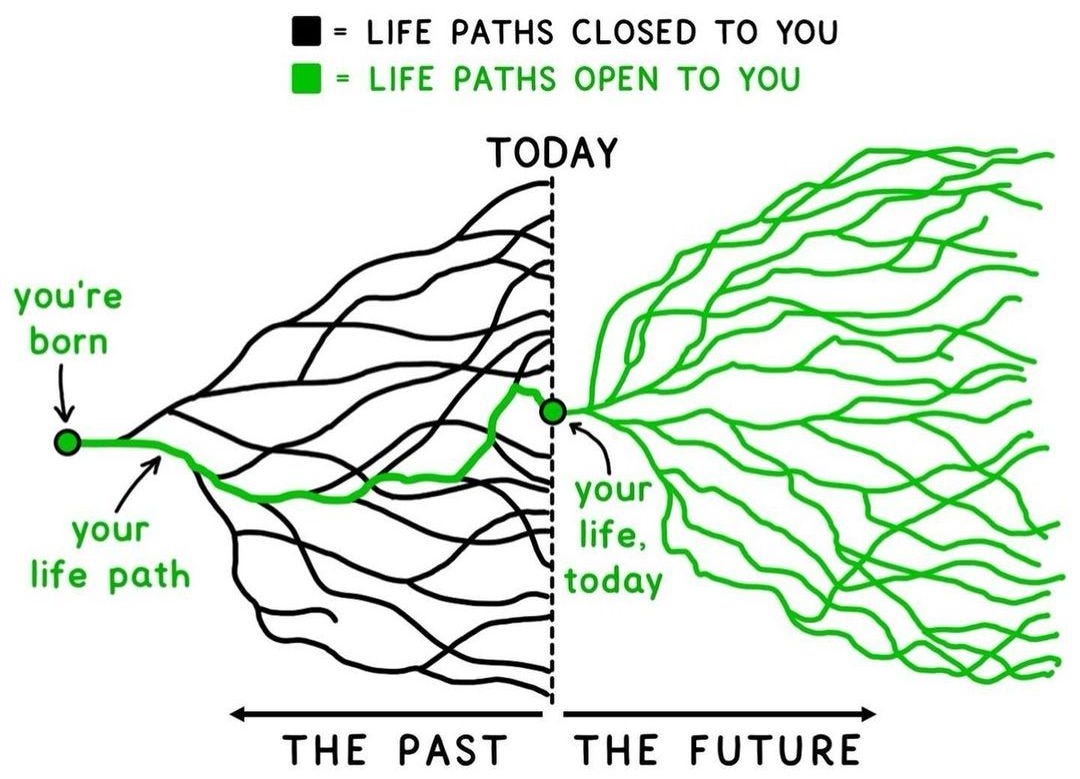
Inventors constantly come up with exciting new inventions, each of them with the potential to change everything forever. But only a fraction of these ever establish themselves as a persistent part of civilization, and the rest vanish from collective consciousness. Before shutting down forever, though, the alternate branches of the tech tree leave some faint traces behind: over-optimistic sci-fi stories, outdated educational cartoons, and, sometimes, some obscure accessories that briefly made it to mass production before being quietly discontinued.
The classical example of an abandoned timeline is the Glorious Atomic Future, as described in the 1957 Disney cartoon Our Friend the Atom. A scientist with a suspiciously German accent explains all the wonderful things nuclear power will bring to our lives:
Sadly, the glorious atomic future somewhat failed to materialize, and, by the early 1960s, the project to rip a second Panama canal by detonating a necklace of nuclear bombs was canceled, because we are ruled by bureaucrats who hate fun and efficiency.
While the Our-Friend-the-Atom timeline remains out of reach from most hobbyists, not all alternate timelines are permanently closed to exploration. There are other timelines that you can explore from the comfort of your home, just by buying a few second-hand items off eBay.
I recently spent a few months in one of these abandoned timelines: the one where the microwave oven replaced the stove.
First, I had to get myself a copy of the world’s saddest book.
Microwave Cooking, for One
Marie T. Smith’s Microwave Cooking for One is an old forgotten book of microwave recipes from the 1980s. In the mid-2010s, it garnered the momentary attention of the Internet as “the world’s saddest cookbook”:

To the modern eye, it seems obvious that microwave cooking can only be about reheating ready-made frozen food. It’s about staring blankly at the buzzing white box, waiting for the four dreadful beeps that give you permission to eat. It’s about consuming lukewarm processed slop on a rickety formica table, with only the crackling of a flickering neon light piercing through the silence.
But this is completely misinterpreting Microwave Cooking for One’s vision. First – the book was published in 1985.
When MCfO was published, microwave cooking was still a new entrant to the world of household electronics. Market researchers were speculating about how the food and packaging industries would adapt their products to the new era and how deep the transformation would go. Many saw the microwave revolution as a material necessity: women were massively entering the workforce, and soon nobody would have much time to spend behind a stove. In 1985, the microwave future looked inevitable.
Second – Marie T. Smith is a microwave maximalist. She spent ten years putting every comestible object in the microwave to see what happens. Look at the items on the book cover – some are obviously impossible to prepare with a microwave, right? Well, that’s where you’re wrong. Marie T. Smith figured out a way to prepare absolutely everything. If you are a disciple of her philosophy, you shouldn’t even own a stove. Smith herself hasn’t owned one since the early 1970s. As she explains in the cookbook’s introduction, Smith believed the microwave would ultimately replace stove-top cooking, the same way stove-top cooking had replaced campfire-top cooking.
So, my goal is twofold: first, I want to know if there’s any merit to all of these forgotten microwaving techniques. Something that can make plasma out of grapes, set your house on fire and bring frozen hamsters back to life cannot be fundamentally bad. But also, I want to get a glimpse of what the world looks like in the uchronia where Marie T. Smith won and Big Teflon lost. Why did we drift apart from this timeline?
by Malmsbury, Telescopic Turnip | Read more:
Images: Microwave Cooking For One/YouTube/uncredited

