Friday, April 13, 2012


Is Facebook Making Us Lonely?
Social media—from Facebook to Twitter—have made us more densely networked than ever. Yet for all this connectivity, new research suggests that we have never been lonelier (or more narcissistic)—and that this loneliness is making us mentally and physically ill. A report on what the epidemic of loneliness is doing to our souls and our society.
 Yvette Vickers, a former Playboy playmate and B-movie star, best known for her role in Attack of the 50 Foot Woman, would have been 83 last August, but nobody knows exactly how old she was when she died. According to the Los Angeles coroner’s report, she lay dead for the better part of a year before a neighbor and fellow actress, a woman named Susan Savage, noticed cobwebs and yellowing letters in her mailbox, reached through a broken window to unlock the door, and pushed her way through the piles of junk mail and mounds of clothing that barricaded the house. Upstairs, she found Vickers’s body, mummified, near a heater that was still running. Her computer was on too, its glow permeating the empty space.
The Los Angeles Times posted a story headlined “Mummified Body of Former Playboy Playmate Yvette Vickers Found in Her Benedict Canyon Home,” which quickly went viral. Within two weeks, by Technorati’s count, Vickers’s lonesome death was already the subject of 16,057 Facebook posts and 881 tweets. She had long been a horror-movie icon, a symbol of Hollywood’s capacity to exploit our most basic fears in the silliest ways; now she was an icon of a new and different kind of horror: our growing fear of loneliness. Certainly she received much more attention in death than she did in the final years of her life. With no children, no religious group, and no immediate social circle of any kind, she had begun, as an elderly woman, to look elsewhere for companionship. Savage later told Los Angeles magazine that she had searched Vickers’s phone bills for clues about the life that led to such an end. In the months before her grotesque death, Vickers had made calls not to friends or family but to distant fans who had found her through fan conventions and Internet sites.
Vickers’s web of connections had grown broader but shallower, as has happened for many of us. We are living in an isolation that would have been unimaginable to our ancestors, and yet we have never been more accessible. Over the past three decades, technology has delivered to us a world in which we need not be out of contact for a fraction of a moment. In 2010, at a cost of $300 million, 800 miles of fiber-optic cable was laid between the Chicago Mercantile Exchange and the New York Stock Exchange to shave three milliseconds off trading times. Yet within this world of instant and absolute communication, unbounded by limits of time or space, we suffer from unprecedented alienation. We have never been more detached from one another, or lonelier. In a world consumed by ever more novel modes of socializing, we have less and less actual society. We live in an accelerating contradiction: the more connected we become, the lonelier we are. We were promised a global village; instead we inhabit the drab cul-de-sacs and endless freeways of a vast suburb of information.
At the forefront of all this unexpectedly lonely interactivity is Facebook, with 845 million users and $3.7 billion in revenue last year. The company hopes to raise $5 billion in an initial public offering later this spring, which will make it by far the largest Internet IPO in history. Some recent estimates put the company’s potential value at $100 billion, which would make it larger than the global coffee industry—one addiction preparing to surpass the other. Facebook’s scale and reach are hard to comprehend: last summer, Facebook became, by some counts, the first Web site to receive 1 trillion page views in a month. In the last three months of 2011, users generated an average of 2.7 billion “likes” and comments every day. On whatever scale you care to judge Facebook—as a company, as a culture, as a country—it is vast beyond imagination.
Despite its immense popularity, or more likely because of it, Facebook has, from the beginning, been under something of a cloud of suspicion. The depiction of Mark Zuckerberg, in The Social Network, as a bastard with symptoms of Asperger’s syndrome, was nonsense. But it felt true. It felt true to Facebook, if not to Zuckerberg. The film’s most indelible scene, the one that may well have earned it an Oscar, was the final, silent shot of an anomic Zuckerberg sending out a friend request to his ex-girlfriend, then waiting and clicking and waiting and clicking—a moment of superconnected loneliness preserved in amber. We have all been in that scene: transfixed by the glare of a screen, hungering for response.
When you sign up for Google+ and set up your Friends circle, the program specifies that you should include only “your real friends, the ones you feel comfortable sharing private details with.” That one little phrase, Your real friends—so quaint, so charmingly mothering—perfectly encapsulates the anxieties that social media have produced: the fears that Facebook is interfering with our real friendships, distancing us from each other, making us lonelier; and that social networking might be spreading the very isolation it seemed designed to conquer.
by Stephen Marche, The Atlantic | Read more:
Illustration: Facebook.com
Yvette Vickers, a former Playboy playmate and B-movie star, best known for her role in Attack of the 50 Foot Woman, would have been 83 last August, but nobody knows exactly how old she was when she died. According to the Los Angeles coroner’s report, she lay dead for the better part of a year before a neighbor and fellow actress, a woman named Susan Savage, noticed cobwebs and yellowing letters in her mailbox, reached through a broken window to unlock the door, and pushed her way through the piles of junk mail and mounds of clothing that barricaded the house. Upstairs, she found Vickers’s body, mummified, near a heater that was still running. Her computer was on too, its glow permeating the empty space. The Los Angeles Times posted a story headlined “Mummified Body of Former Playboy Playmate Yvette Vickers Found in Her Benedict Canyon Home,” which quickly went viral. Within two weeks, by Technorati’s count, Vickers’s lonesome death was already the subject of 16,057 Facebook posts and 881 tweets. She had long been a horror-movie icon, a symbol of Hollywood’s capacity to exploit our most basic fears in the silliest ways; now she was an icon of a new and different kind of horror: our growing fear of loneliness. Certainly she received much more attention in death than she did in the final years of her life. With no children, no religious group, and no immediate social circle of any kind, she had begun, as an elderly woman, to look elsewhere for companionship. Savage later told Los Angeles magazine that she had searched Vickers’s phone bills for clues about the life that led to such an end. In the months before her grotesque death, Vickers had made calls not to friends or family but to distant fans who had found her through fan conventions and Internet sites.
Vickers’s web of connections had grown broader but shallower, as has happened for many of us. We are living in an isolation that would have been unimaginable to our ancestors, and yet we have never been more accessible. Over the past three decades, technology has delivered to us a world in which we need not be out of contact for a fraction of a moment. In 2010, at a cost of $300 million, 800 miles of fiber-optic cable was laid between the Chicago Mercantile Exchange and the New York Stock Exchange to shave three milliseconds off trading times. Yet within this world of instant and absolute communication, unbounded by limits of time or space, we suffer from unprecedented alienation. We have never been more detached from one another, or lonelier. In a world consumed by ever more novel modes of socializing, we have less and less actual society. We live in an accelerating contradiction: the more connected we become, the lonelier we are. We were promised a global village; instead we inhabit the drab cul-de-sacs and endless freeways of a vast suburb of information.
At the forefront of all this unexpectedly lonely interactivity is Facebook, with 845 million users and $3.7 billion in revenue last year. The company hopes to raise $5 billion in an initial public offering later this spring, which will make it by far the largest Internet IPO in history. Some recent estimates put the company’s potential value at $100 billion, which would make it larger than the global coffee industry—one addiction preparing to surpass the other. Facebook’s scale and reach are hard to comprehend: last summer, Facebook became, by some counts, the first Web site to receive 1 trillion page views in a month. In the last three months of 2011, users generated an average of 2.7 billion “likes” and comments every day. On whatever scale you care to judge Facebook—as a company, as a culture, as a country—it is vast beyond imagination.
Despite its immense popularity, or more likely because of it, Facebook has, from the beginning, been under something of a cloud of suspicion. The depiction of Mark Zuckerberg, in The Social Network, as a bastard with symptoms of Asperger’s syndrome, was nonsense. But it felt true. It felt true to Facebook, if not to Zuckerberg. The film’s most indelible scene, the one that may well have earned it an Oscar, was the final, silent shot of an anomic Zuckerberg sending out a friend request to his ex-girlfriend, then waiting and clicking and waiting and clicking—a moment of superconnected loneliness preserved in amber. We have all been in that scene: transfixed by the glare of a screen, hungering for response.
When you sign up for Google+ and set up your Friends circle, the program specifies that you should include only “your real friends, the ones you feel comfortable sharing private details with.” That one little phrase, Your real friends—so quaint, so charmingly mothering—perfectly encapsulates the anxieties that social media have produced: the fears that Facebook is interfering with our real friendships, distancing us from each other, making us lonelier; and that social networking might be spreading the very isolation it seemed designed to conquer.
by Stephen Marche, The Atlantic | Read more:
Illustration: Facebook.com


Just How Big Are Porn Sites

It is a truth universally acknowledged, that a person in possession of a fast internet connection must be in want of some porn.
While it’s difficult domain to penetrate — hard numbers are few and far between — we know for a fact that porn sites are some of the most trafficked parts of the internet. According to Google’s DoubleClick Ad Planner, which tracks users across the web with a cookie, dozens of adult destinations populate the top 500 websites. Xvideos, the largest porn site on the web with 4.4 billion page views per month, is three times the size of CNN or ESPN, and twice the size of Reddit. LiveJasmin isn’t much smaller. YouPorn, Tube8, and Pornhub — they’re all vast, vast sites that dwarf almost everything except the Googles and Facebooks of the internet.
While page views are a fine starting point, they only tell you that X porn site is more popular than Y non-porn site. Four billion page views sure sounds like a lot, but it’s only when you factor in what those porn surfers are actually doing that the size and scale of adult websites truly comes into focus.
We’ll start by laying the ground work, and then on the second page we have some real world figures from YouPorn, the second largest porn site on the web. If you like, take a moment to try and estimate the amount of traffic that YouPorn handles every second. Let us know in the comments if your guess is anywhere near.
by Sebastian Anthony, Extreme Tech | Read more:
New View of Depression: An Ailment of the Entire Body
Scientists are increasingly finding that depression and other psychological disorders can be as much diseases of the body as of the mind.
People with long-term psychological stress, depression and post-traumatic stress disorder tend to develop earlier and more serious forms of physical illnesses that usually hit people in older age, such as stroke, dementia, heart disease and diabetes. Recent research points to what might be happening on the cellular level that could account for this.
 Scientists are finding that the same changes to chromosomes that happen as people age can also be found in people experiencing major stress and depression.
The phenomenon, known as "accelerated aging," is beginning to reshape the field's understanding of stress and depression not merely as psychological conditions but as body-wide illnesses in which mood may be just the most obvious symptom.
"As we learn more…we will begin to think less of depression as a 'mental illness' or even a 'brain disease,' but as a systemic illness," says Owen Wolkowitz, a psychiatry professor at the University of California, San Francisco, who along with colleagues has conducted research in the field.
Gaining a better understanding of the mechanisms that link physical and mental conditions could someday prove helpful in diagnosing and treating psychological illnesses and improving cognition in people with memory problems, Dr. Wolkowitz says.
In an early look at accelerated aging, researchers at Duke University found about 20 years ago that brain scans of older people with depression showed much faster age-related loss of volume in the brain compared with people without depression. The reasons for the accelerated aging appeared to go beyond unhealthy behaviors, like smoking, diet and lack of exercise, researchers said.
Recent efforts to study what is behind accelerated aging on a cellular level have focused on telomeres, a protective covering at the ends of chromosomes that have been recognized as playing an important role in aging. Telomeres get shorter as people age, and shortened telomeres also are related to increased risk of disease and mortality.
by Shirley S. Wang, WSJ | Read more:
People with long-term psychological stress, depression and post-traumatic stress disorder tend to develop earlier and more serious forms of physical illnesses that usually hit people in older age, such as stroke, dementia, heart disease and diabetes. Recent research points to what might be happening on the cellular level that could account for this.
Scientists are finding that the same changes to chromosomes that happen as people age can also be found in people experiencing major stress and depression. The phenomenon, known as "accelerated aging," is beginning to reshape the field's understanding of stress and depression not merely as psychological conditions but as body-wide illnesses in which mood may be just the most obvious symptom.
"As we learn more…we will begin to think less of depression as a 'mental illness' or even a 'brain disease,' but as a systemic illness," says Owen Wolkowitz, a psychiatry professor at the University of California, San Francisco, who along with colleagues has conducted research in the field.
Gaining a better understanding of the mechanisms that link physical and mental conditions could someday prove helpful in diagnosing and treating psychological illnesses and improving cognition in people with memory problems, Dr. Wolkowitz says.
In an early look at accelerated aging, researchers at Duke University found about 20 years ago that brain scans of older people with depression showed much faster age-related loss of volume in the brain compared with people without depression. The reasons for the accelerated aging appeared to go beyond unhealthy behaviors, like smoking, diet and lack of exercise, researchers said.
Recent efforts to study what is behind accelerated aging on a cellular level have focused on telomeres, a protective covering at the ends of chromosomes that have been recognized as playing an important role in aging. Telomeres get shorter as people age, and shortened telomeres also are related to increased risk of disease and mortality.
by Shirley S. Wang, WSJ | Read more:
Wednesday, April 11, 2012

Lit
[ed. Reading this now, and it's terrific.]
 In “Lit,” her searing new memoir, Mary Karr recalls that she and her impossible mother used to play a game, when they were driving or her mother was bored or sprawled on her bed with a hangover: “Tell me a story she liked to say, meaning charm me — my life in this Texas suckhole is duller than a rubber knife. Amaze me.”
This game, aided and abetted by her father’s abundant storytelling gifts — his ability to regale his drinking buddies with all manner of startling tales — would fuel Ms. Karr’s own hunger for putting “marks on paper.” Even when she was a child, stapling together a book of rhymes she’d done in crayon, she knew that writing was a way she “could puncture the soap bubble” of her mother’s misery, that writing was a way to seize people’s attention and enthrall them.
With “Lit” Ms. Karr has done just that: She has written a book that lassos you, hogties your emotions and won’t let you go. It’s a memoir that traces the author’s descent into alcoholism and her conflicted, piecemeal return from that numb hell — a memoir that explores the subjectivity of memory even as it chronicles with searching intelligence, humor and grace the author’s slow, sometimes exhilarating, sometimes painful discovery of her vocation and her voice as a poet and writer.
“Lit” is by no means a perfect performance: the sections dealing with the author’s ex-husband, Warren, feel oddly fuzzy and abstract, but for the reader who can manage to push those sections aside, the book is every bit as absorbing as Ms. Karr’s devastating 1995 memoir, “The Liars’ Club,” which secured her place on the literary map.
That earlier book focused on her harrowing childhood with an increasingly absent father and a crazy mother, who, during one moment of madness, set fire to her two daughters’ toys and threatened them with a knife; the 2000 sequel, “Cherry,” dealt with the author’s drug-laced, boy-crazy adolescence in a small Texas town.
“Lit,” in contrast, deals with a less anomalous story — that is, a story of addiction and recovery, by now familiar in outline from the many A.A.-like autobiographies produced during the memoir craze of the late ’90s. Whereas many of these lesser efforts were propelled by the belief that confession is therapeutic and therapy is redemptive and redemption somehow equals art, Ms. Karr’s own work demonstrates that candor and self-revelation only become literature when they are delivered with hard-earned craft, that the exposed life is not the same as the examined one.
by Michiko Kakutani, NY Times | Read more:
Photo: Marion Ettlinger
In “Lit,” her searing new memoir, Mary Karr recalls that she and her impossible mother used to play a game, when they were driving or her mother was bored or sprawled on her bed with a hangover: “Tell me a story she liked to say, meaning charm me — my life in this Texas suckhole is duller than a rubber knife. Amaze me.” This game, aided and abetted by her father’s abundant storytelling gifts — his ability to regale his drinking buddies with all manner of startling tales — would fuel Ms. Karr’s own hunger for putting “marks on paper.” Even when she was a child, stapling together a book of rhymes she’d done in crayon, she knew that writing was a way she “could puncture the soap bubble” of her mother’s misery, that writing was a way to seize people’s attention and enthrall them.
With “Lit” Ms. Karr has done just that: She has written a book that lassos you, hogties your emotions and won’t let you go. It’s a memoir that traces the author’s descent into alcoholism and her conflicted, piecemeal return from that numb hell — a memoir that explores the subjectivity of memory even as it chronicles with searching intelligence, humor and grace the author’s slow, sometimes exhilarating, sometimes painful discovery of her vocation and her voice as a poet and writer.
“Lit” is by no means a perfect performance: the sections dealing with the author’s ex-husband, Warren, feel oddly fuzzy and abstract, but for the reader who can manage to push those sections aside, the book is every bit as absorbing as Ms. Karr’s devastating 1995 memoir, “The Liars’ Club,” which secured her place on the literary map.
That earlier book focused on her harrowing childhood with an increasingly absent father and a crazy mother, who, during one moment of madness, set fire to her two daughters’ toys and threatened them with a knife; the 2000 sequel, “Cherry,” dealt with the author’s drug-laced, boy-crazy adolescence in a small Texas town.
“Lit,” in contrast, deals with a less anomalous story — that is, a story of addiction and recovery, by now familiar in outline from the many A.A.-like autobiographies produced during the memoir craze of the late ’90s. Whereas many of these lesser efforts were propelled by the belief that confession is therapeutic and therapy is redemptive and redemption somehow equals art, Ms. Karr’s own work demonstrates that candor and self-revelation only become literature when they are delivered with hard-earned craft, that the exposed life is not the same as the examined one.
by Michiko Kakutani, NY Times | Read more:
Photo: Marion Ettlinger
The Disconnect
Why are so many Americans living by themselves?
 As reliably as autumn brings Orion to the night sky, spring each year sends a curious constellation to the multiplex: a minor cluster of romantic comedies and the couples who traipse through them, searching for love. These tend not to be people who have normal problems. She is poised, wildly successful in an ulcer-making job, lonely. He is sensitive, creative, equipped with a mysteriously vast apartment, unattached. For all these resources, nothing can allay their solitude. He tries to cook. She collects old LPs. He seeks love in the arms of chatty narcissists. She pulls all-nighters in her office. Eventually, her best friend, who may also be her divorced mother, tells her that something needs to change: she’s squandering her golden years; she’ll end up forlorn and alone. Across town, his stout buddy, who is married to someone named Debbee, rhapsodizes about the pleasures of cohabitation. None of this is helpful. As the movie’s first act nears its end point, we spy our heroine in the primal scene of rom-com solitude: curled up on her couch, wearing lounge pants, quaffing her third glass of wine, and excavating an enormous box of Dreyer’s. She is watching the same TV show that he is (whiskey half drained on his coffee table, Chinese takeout in his lap), and although this fact assures us of a destined romance, it is not so useful for the people on the screen. They are alone; their lives are grim. The show they’re watching seems, from the explosive flickering, to be about the invasion of Poland.
Few things are less welcome today than protracted solitude—a life style that, for many people, has the taint of loserdom and brings to mind such characters as Ted Kaczynski and Shrek. Does aloneness deserve a less untoward image? Aside from monastic seclusion, which is just another way of being together, it is hard to come up with a solitary life that doesn’t invite pity, or an enviable loner who’s not cheating the rules. (Even Henry David Thoreau, for all his bluster about solitude, ambled regularly into Concord for his mother’s cooking and the local bars.) Meanwhile, the culture’s data pool is filled with evidence of virtuous togetherness. “The Brady Bunch.” The March on Washington. The Yankees, in 2009. Alone, we’re told, is where you end up when these enterprises go south.
And yet the reputation of modern solitude is puzzling, because the traits enabling a solitary life—financial stability, spiritual autonomy, the wherewithal to buy more dishwashing detergent when the box runs out—are those our culture prizes. Plus, recent demographic shifts suggest that aloneness, far from fading out in our connected age, is on its way in. In 1950, four million people in this country lived alone. These days, there are almost eight times as many, thirty-one million. Americans are getting married later than ever (the average age of first marriage for men is twenty-eight), and bailing on domestic life with alacrity (half of modern unions are expected to end in divorce). Today, more than fifty per cent of U.S. residents are single, nearly a third of all households have just one resident, and five million adults younger than thirty-five live alone. This may or may not prove a useful thing to know on certain Saturday nights.
by Nathan Heller, New Yorker | Read more:
Illustration: Jean-François Martin
As reliably as autumn brings Orion to the night sky, spring each year sends a curious constellation to the multiplex: a minor cluster of romantic comedies and the couples who traipse through them, searching for love. These tend not to be people who have normal problems. She is poised, wildly successful in an ulcer-making job, lonely. He is sensitive, creative, equipped with a mysteriously vast apartment, unattached. For all these resources, nothing can allay their solitude. He tries to cook. She collects old LPs. He seeks love in the arms of chatty narcissists. She pulls all-nighters in her office. Eventually, her best friend, who may also be her divorced mother, tells her that something needs to change: she’s squandering her golden years; she’ll end up forlorn and alone. Across town, his stout buddy, who is married to someone named Debbee, rhapsodizes about the pleasures of cohabitation. None of this is helpful. As the movie’s first act nears its end point, we spy our heroine in the primal scene of rom-com solitude: curled up on her couch, wearing lounge pants, quaffing her third glass of wine, and excavating an enormous box of Dreyer’s. She is watching the same TV show that he is (whiskey half drained on his coffee table, Chinese takeout in his lap), and although this fact assures us of a destined romance, it is not so useful for the people on the screen. They are alone; their lives are grim. The show they’re watching seems, from the explosive flickering, to be about the invasion of Poland.Few things are less welcome today than protracted solitude—a life style that, for many people, has the taint of loserdom and brings to mind such characters as Ted Kaczynski and Shrek. Does aloneness deserve a less untoward image? Aside from monastic seclusion, which is just another way of being together, it is hard to come up with a solitary life that doesn’t invite pity, or an enviable loner who’s not cheating the rules. (Even Henry David Thoreau, for all his bluster about solitude, ambled regularly into Concord for his mother’s cooking and the local bars.) Meanwhile, the culture’s data pool is filled with evidence of virtuous togetherness. “The Brady Bunch.” The March on Washington. The Yankees, in 2009. Alone, we’re told, is where you end up when these enterprises go south.
And yet the reputation of modern solitude is puzzling, because the traits enabling a solitary life—financial stability, spiritual autonomy, the wherewithal to buy more dishwashing detergent when the box runs out—are those our culture prizes. Plus, recent demographic shifts suggest that aloneness, far from fading out in our connected age, is on its way in. In 1950, four million people in this country lived alone. These days, there are almost eight times as many, thirty-one million. Americans are getting married later than ever (the average age of first marriage for men is twenty-eight), and bailing on domestic life with alacrity (half of modern unions are expected to end in divorce). Today, more than fifty per cent of U.S. residents are single, nearly a third of all households have just one resident, and five million adults younger than thirty-five live alone. This may or may not prove a useful thing to know on certain Saturday nights.
by Nathan Heller, New Yorker | Read more:
Illustration: Jean-François Martin
Saturday, April 7, 2012


It's Time To Set Your Fish Sauce Free

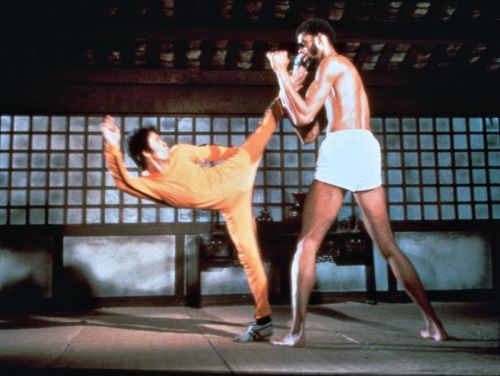
Sometimes it seems to me that practically everybody in America is a little uptight when it comes to Asian fish sauce. I mean, some folks are closed off to any condiment that might taste or smell “fishy,” while others are intent on dusting off the hand-hammered iron wok and slavishly chasing the dragon on that authentic dining experience in Phuket. To the former group I’d say, the tree of globalism can only grow tall when good men and women eat challenging ethnic food. Also, fish sauce is really not that fishy. To the latter: I respect that purist’s sensibility, but it’s also okay to use authentic Asian things in nontraditional ways. After all, look what the Asians have done with our Spam and Kareem Abdul Jabbar. It’s fine to color outside the lines here a little.
In my view, Asian fish sauce is an essential condiment, and I mean that in both senses of the word: It’s essential I have some in the house; and it imparts a flavor essence, a roundness or lip-adhesive quality that can and should be used in ways that exceed tradition. Think of how radically the uses of tomato paste, Parmesan cheese, and Campbell’s cream of mushroom have expanded beyond their initial roles in American and European cuisine. Heck, think of ketchup. (The word ketchup, by the way, is derived from the name of an Asian fish sauce—Henry Heinz could not have predicted I’d be using his sauce on my gyoza.)
Of course, using fish to flavor sauce is by no means an exclusively Asian thing. A fermented fish condiment called 'Garum' was widely used by the ancient Romans. Imagine how necessary that little injection of umami would be to soldiers subsisting mostly on spelt porridge. Today, Italians use a product called Colatura di Alici that’s made in a very similar way to Asian fish sauce. Anchovy is also a main flavor element in Worcestershire sauce and the even more peculiarly English foodstuff with the suggestive name “Gentleman’s Relish.”
The fish sauce we're talking about here, though, might more properly be called nam pla or nuoc mam; though I believe these are just the Thai and Vietnamese terms for ‘fish sauce.’ By whatever name, this stuff is produced by packing fresh anchovies with large amounts of salt, and sometimes sugar, and allowing the mixture to ferment over the course of months (sometimes to over a year), and finally filtering out the clear, dark caramel-colored fluid. Widely available in the U.S., it comes primarily from Thailand. That said, a couple of Thai brands I’ve tried are marketed as nuac mam, rather than nam pla, and are said to be produced in the Vietnamese style, which results in a milder, more complex flavor profile. I prefer the milder varieties, so I guess I’m a nuoc mam devotee. And I was quite pleased to find out that a super-premium brand of genuine Vietnamese fish sauce is now available in the States.
Here are some notes on a few of the brands I was able to purchase at some Asian specialty markets near my house and one Anglo gourmet shop:
Squid Brand: This is a fairly typical Thai brand, salty with a fairly fishy, robust flavor. I’d use it primarily in very strongly flavored, cooked Thai dishes like curries stir frys. Under $2 for a 24-oz.bottle.
Three Crabs: This is the brand most American foodies rely on. It’s from Thailand but made in the Vietnamese style. Mild and slightly sweet, this sauce pretty good for all-around use. Please note that Three Crabs is the only one of this group that incorporates hydrolysed vegetable protein as a flavor enhancer. Those sensitive to MSG or leery of food additives should take this into account. Under $4 for a 24-oz.bottle.
Flying Horse on Earth Brand: Salty but mellow. Good all-around fish sauce, but keep the saltiness in mind. I find I like to use this one as a go-to cooking fish sauce and used it on the shortribs and enchilada sauce. I love the name and logo, too. Under $3 for a 24-oz. bottle.
Red Boat 40°N: This is the super premium stuff, first-press and actually from Phu Quoc, Vietnam, an island that is said to produce the best fish sauce . The N-designation refers to grams of nitrogen per liter. Very clean tasting, more subtle, no off tastes at all. It’s pretty dear, so I’d use this for mildly flavored dishes and non-cooking uses like in vinaigrettes or on pasta. I had to go to a pretty gourmet, white-people shop in Berkeley to get this. Under $7 for an 8.45-oz. bottle. (Note that Red Boat also comes in a 50°N version that is said to be even higher quality and more complex. It’s currently out of stock and runs about $10 for 80 ml.)
I’m sure you’re aware of how fish sauce can be used in Thai curries, Vietnamese fried-rice dishes and dipping sauces. As seasoned internet users, you have available to you all kinds of authentic uses of nuoc mam and nam pla. So I've focused here on fish sauce as a general condiment, for use on dishes that you and I haven’t thought up yet, or as enhancements to your mama’s traditional recipes:
by Ben Choi, The Awl | Read more:
Friday, April 6, 2012


The Big Business of Breast Cancer

Though the NFL has, shall we say, a complicated history with women, its embrace of breast cancer awareness is perhaps only fitting. After all, in the nearly 20 years since the pink ribbon became the official symbol of the cause — Estée Lauder cosmetics counters handed out 1.5 million of them in 1992 as part of the first-ever nationwide awareness campaign to leverage the pink ribbon — breast cancer has become the NFL of diseases, glutted with corporate sponsorships, merchandise deals, and ad campaigns. This is true year-round, but especially in October, when breast cancer marketing reaches a frothy pink frenzy. This month, an awareness-minded consumer can buy almost any knickknack or household item in pink — from lint brushes and shoelaces to earbuds and Snuggies. If she happens to be in an American Airlines Admirals Club, she can snack on pink cookies while drinking pink champagne. If instead she finds herself at one of the nation's 500 Jersey Mike's Subs franchises, for about $7 she can order the "pink ribbon combo," consisting of a sandwich, chips, and soda served in a limited-edition pink plastic cup (because nothing says "cancer awareness" like chips and soda).
Though breast cancer researchers and advocates perpetually plead for more money, the disease is, in fact, awash in it. Last year, the National Institutes of Health, the nation's top agency for health-related research, allocated $763 million to the study of breast cancer, more than double what it committed to any other cancer. The Department of Defense also funds breast cancer research ($150 million this year), as do several states, most notably Texas and California. All that is in addition to the money raised by the roughly 1,400 IRS-recognized, tax-exempt charities in this country devoted to breast cancer. They operate in every state and in just about every major city. The largest of them, Dallas-based Susan G. Komen for the Cure, grossed $420 million last year alone. All told, an estimated $6 billion is raised every year in the name of breast cancer. And the money keeps pouring in.
Which seems like great news for the fight against breast cancer, and in part it is (though not as great as it sounds, and we'll get back to that). But it's also been a boon for charity scammers — the charlatans who prey on the public's beneficence and its inveterate laziness when it comes to due diligence. The nonprofit world is full of them. (Greg Mortenson, the celebrated author of Three Cups of Tea, is only the latest philanthropist to battle allegations that his organization, the Central Asia Institute, misused funds.) Breast cancer makes a particularly alluring target — not just because there is so much money involved or because women across all income levels tend to give more than men, but because we give to breast cancer forcefully, eagerly, superstitiously. Breast cancer holds a peculiarly powerful sway with us — it's a disease dreaded so profoundly that not supporting the cause feels like tempting fate.
by Lea Goldman, Marie Claire | Read more:
Photo: Stephen Lewis

Subscribe to:
Posts (Atom)