Wednesday, April 20, 2011

Ten Years After - Insecure Security

[ed. I was subjected to one of these freeze drills in Portland, Oregon a couple years ago -- a very disorienting and eerily oppressive experience]

by Patrick Smith

At the Bangkok airport they took my scissors. This was the second time they took my scissors in Bangkok. I should have learned my lesson.

They were safety scissors, the kind you'd give to a child, about two-and-a-half inches long with rounded tips. (The photo at the top of this column shows an identical pair that I bought as a replacement.) Highly dangerous -- at least as the BKK security staff saw it. My airline pilot credentials meant nothing to them.

It's funny, but not really, when you stop to consider how easy it would be to fashion a sharp object -- certainly one deadlier than a pair of rounded-end scissors -- after boarding an airplane, from almost anything within your reach: a wine bottle, a first-class juice glass, a piece of plastic molding, and so on and so forth. Heck, if you're seated in first or business class, they give you a metal knife and fork.

But more to the point, pun intended, why do we still care so much about pointy objects?

When it came right down to it, the success of the Sept. 11 attacks had nothing -- nothing -- to do with box cutters. The hijackers could have used anything. They were not exploiting a weakness in luggage screening, but rather a weakness in our mind-set -- our understanding and expectations of what a hijacking was and how it would unfold. The hijackers weren't relying on weapons, they were relying on the element of surprise.

All of that is different now. For several reasons, from passenger awareness to armored cockpit doors, the in-flight takeover scheme has long been off the table as a viable M.O. for an attack. It was off the table before the first of the twin towers had crumbled to the ground. Why don't we see this? Although a certain anxious fixation would have been excusable in the immediate aftermath of the 2001 attacks, here it is a decade later and we're still pawing through people's bags in a hunt for what are effectively harmless items.

There in Bangkok it hit me, in a moment of gloomy clarity: These rules are never going to change, are they?

How depressing is that, to be stuck with this nonsense permanently? Not only the obsession with sharps, but the liquids and gels confiscations, the shoe removals, etc.
These policies aren't just annoying, they're potentially self-destructive. Self-destructive because they draw our security resources away from more useful pursuits. Imagine if, instead of a tiny pair of scissors, I'd had a half-pound of explosives in my luggage, shaped into some innocuous-looking item. Would the Bangkok screeners have caught it, or are they too busy hunting for pointy things and contraband shampoo? And what of passengers' checked luggage? Are the bags down below undergoing adequate scrutiny for explosives -- a far more potent threat than somebody's hobby knife?

Read more:

Tuesday, April 19, 2011

School Lunches From Around The World

Ever wonder what children are eating for lunch across the world? Take a look at these 22 very different school lunches and learn some fascinating insights into kids’ school lives across the globe.

USA


Burger and chips! There is a group of retired military officers stating that today’s school lunches are making the kids so fat that many are unable to meet the military’s physical fitness standards.

The good news is that the Improving Nutrition for American’s Children Act was recently passed, whose aim is to make school lunches more nutritional, encourage partnerships with local farms, raise the reimbursement rate for schools and force schools to set standards for vending machine food.

How Your Cursor Really Works

 
click on image

The Great American Sell-Off

It's 8:55 a.m. on a crisp Thursday morning in the exclusive New Jersey suburb of Bernards Township, and at 34 Emily Rd., more than 60 people are lined up impatiently outside the front door. Inside, owners Mark and Mary Tuller, who were up most of the night and feel like "zombies," are girding themselves for the onslaught: a three-day crush of strangers pouring into their home, pawing through their family's stuff. Attic to basement, nearly everything is tagged with a price, from the mahogany dining room breakfront ($5,000) to the half-used

Mark, a 62-year-old former general counsel for Verizon Wireless, and Mary, a retired math teacher, say they couldn't be more excited about their imminent move to a smaller, Mediterranean-style place on the California coast. But with moving trucks arriving in exactly one week, they're more than a little anxious about whether this estate sale will be successful in unloading nearly three decades' worth of accumulated belongings—especially prized pieces like their antique, hand-knotted Persian rugs (the one in the living room originally cost $20,000). "We wanted to sell these expensive items in a way that brought closure," says Mark, "and didn't want them to just walk out the door for almost nothing."

Indeed, to help facilitate the sale, they've chosen a company called The Grand Bazaar to run it; unlike some other mom-and-pop businesses they interviewed, it actually takes credit cards. But from the moment the doors open and salegoers storm the 5,000-square-foot home like pirates rushing a ship, virtually no one bothers with plastic. Not the man with the white ponytail happily scoring a $1 jug of deer repellent or the woman in chunky diamonds and fur-tipped pumps snapping up old garden hose nozzles. Some bargainers cart off books or clothes in bulk, but most arrive at the checkout table with small items: Christmas decorations, souvenir Parisian drink coasters, a board game from the downstairs toy closet. In fact, when the doors close on the Tuller family sale (final take: on the plus side of $30,000), there's still quite a bit of furniture left, most of which is destined for donation or—cue Mary's nostalgic sighs—the Dumpster. And those expensive rugs? At least $30,000 worth of fancy floor coverings are headed into storage. "The sale was a huge success if you were in the market for unopened soap," says Mark.

Call it the great American sell-off . For years now Americans have been gathering and collecting at an amazing pace, filling homes that over the past half-century have more than doubled in size, to an average of nearly 2,500 square feet. And even that hasn't been enough to contain our nation's overflow of stuff. These days nearly one in 10 U.S. households maintains at least one self-storage unit, 65 percent more than did so in 1995. Filling these spaces, of course, comes naturally to baby boomers. Born into the giddy postwar climate of conspicuous consumption and weaned on decades of easy credit, they're a generation accustomed to regularly leaving offerings at the altar of retail.

That is, until they hit the empty-nest, time-to-start-downsizing phase—and begin wondering what to do with their mountains of accumulated stuff. With some 8,000 Americans turning 65 every day, on average, and the senior population expected to double by 2050, millions are facing a massive, multifaceted purge that's turning out to be much tougher than they thought it would be. And millions more find themselves in similar quandaries as they deal with the truckloads they've inherited from packrat relatives. Indeed, whether they're leaving an heirloom china set at the local consignment store or packing a stately grandfather clock off to Sotheby's, many are discovering that the resale market is glutted with household goods. And oriental rugs are only the beginning. Got a home full of middle-market, traditional-style furniture to sell? Dealers say that stuff's plunged 50 to 75 percent in value. Elaborate silver tea sets are worth more melted than as decorative objects. And huge heavy items like dining-room breakfronts and banker-style desks are often the toughest to unload. "I once sold a piano for $11," says David Rago, a Lambertville, N.J., auctioneer.

by Missy Sullivan, Market Watch |  Read more:
Image: cleverswine

The Sad, Beautiful Fact That We're All Going To Miss Almost Everything

by Linda Holmes, NPR 

The vast majority of the world's books, music, films, television and art, you will never see. It's just numbers.

Consider books alone. Let's say you read two a week, and sometimes you take on a long one that takes you a whole week. That's quite a brisk pace for the average person. That lets you finish, let's say, 100 books a year. If we assume you start now, and you're 15, and you are willing to continue at this pace until you're 80. That's 6,500 books, which really sounds like a lot.

Let's do you another favor: Let's further assume you limit yourself to books from the last, say, 250 years. Nothing before 1761. This cuts out giant, enormous swaths of literature, of course, but we'll assume you're willing to write off thousands of years of writing in an effort to be reasonably well-read.

Of course, by the time you're 80, there will be 65 more years of new books, so by then, you're dealing with 315 years of books, which allows you to read about 20 books from each year. You'll have to break down your 20 books each year between fiction and nonfiction – you have to cover history, philosophy, essays, diaries, science, religion, science fiction, westerns, political theory ... I hope you weren't planning to go out very much.

You can hit the highlights, and you can specialize enough to become knowledgeable in some things, but most of what's out there, you'll have to ignore. (Don't forget books not written in English! Don't forget to learn all the other languages!)

Oh, and heaven help your kid, who will either have to throw out maybe 30 years of what you deemed most critical or be even more selective than you had to be.

We could do the same calculus with film or music or, increasingly, television – you simply have no chance of seeing even most of what exists. Statistically speaking, you will die having missed almost everything.

Gotcha!

click on image
via:

The Goon Squad

Fiction Pulitzer Sneaks Music Writing In Through The Back Door

by Ann Powers, NPR

A huge congrats to Jennifer Egan, whose outstanding rock and roll novel, A Visit From the Goon Squad, took the 2011 Pulitzer Prize for fiction yesterday. I love that book, not only for its empathetic and wry view of the bohemians and weirdo entrepreneurs who create and sustain the popular arts, but also because Egan somehow embeds the basic elements of post-punk music within the novel's complicated narrative: its interlocking tales share characters and a slowly coalescing narrative, bouncing off each other and merging like the tracks a DJ selects to make for a great night on the dance floor. Though it's hardly gonzo, this is a rock and roll novel in its very structure. And I'm extra pleased that Egan's feminist take on the rock scene now enters history as the exemplary work from a generation of writers for whom pop music serves as both subject matter and key inspiration.

Unfolding like a playlist based on the themes of time and loss, Goon Squad's interlocking narratives run on rhythms that shift from the aggro mood of punk to the decentered energy of a rave to the fragmented confessions of indie rock. Egan should have won the Pulitzer for the PowerPoint chapter alone – an amazing essay on the importance of pauses within songs that's also a heartbreaking tale of the way autism has shattered the unity of one small family.

Egan, who has said she wasn't a huge music fan before writing this novel, has done what great pop music makers do: she's made a story that runs through multiple channels, hooking you with highly engaging characters, working the groove of an engrossing narrative, layering riffs and samples from contemporary literature within her experimental prose style. I'd nominate her for a Grammy if I could.

Rx

by Alexis Madrigal, The Atlantic

bestsellingdrugs2011.jpg

These are the best-selling prescription drugs in America, according to the research firm, IMS Health. They form the shadow of our nation's ailments. Among pharmaceutical industry watchers, the big news is that the top 10 drugs are generics, i.e. the ones Big Pharma makes little money on. For the casual observer, what stands out is that five drugs treat high blood pressure and by far the best-selling drug in this country is Vicodin.

People are stressed out and hurting, apparently.

The top 15 highest-grossing drugs treat a similar but not identical set of conditions, according to IMS. Three drugs treat heart disease and cholesterol. Three more treat depression and bipolar disorder. Arthritis and asthma each have two drugs in the top 15. Acid reflux, diabetes, anemia, cancer and pain round out the list.

All of the medicines with the exception of Oxycontin are for chronic conditions.

Comparing the two lists, the most striking contrast is the revenue potential of mental health drugs, which don't get prescribed that often, but rank way up on the sales list. Lipitor is the only medication that makes both lists.

highest grossing drugs.jpg

via:

Yo-Yo Ma and Lil Buck Perform "The Swan"

In an explosion of hipness that also happens to be a genuinely beautiful artistic collaboration, director Spike Jonze films (with his phone?) Yo-Yo Ma and L.A. dancer Lil Buck performing "The Swan" by Camille Saint-Saëns, and then posts it to the blog of super-cool boutique empire Opening Ceremony. This is definitely a case of substance over style: Ma and Buck make an amazing combination.


On YouTube, Jonze writes:
The other day, I was lucky enough to be at an event to bring the arts back into schools and got to see an amazing collaboration between Yo-Yo Ma and a young dancer in LA, Lil Buck. Someone who knows Yo-Yo Ma had seen Lil Buck on YouTube and put them together. The dancing is Lil Buck's own creation and unlike anything I've seen. Hope you enjoy. -- Spike Jonze.

Penguin Hors d'oeuvres


Penguins are adorable and classy (all tuxedo all the time), and these little appetizers provided me two of my favorite things: praise for making something adorable and cream cheese. I encourage you to make them, too, because they're ridiculously easy, and because they'll get you lots of points at your next social gathering. My ex and I made these to take to a friend’s going-away party (the friend was leaving for Antarctica, so they were particularly fitting), and to be honest they were probably the cutest things there. I don’t know who originally came up with the idea, and I can't remember where we originally saw them, but I do know they should be replicated. Often. Also they're tasty!

What you need: black olives, cream cheese, a large carrot, a sharp knife, toothpicks.

How long this will take you: 15 minutes

Annnd we’re off.

First, open a can of olives and pour them on to a paper towel so you can sort out the larger ones from the smaller ones. The large olives are better for the bodies, the smaller ones for the heads. (Unless you want disproportionate penguins, which probably you don’t because that sort of disproportion is not cute in the same way that little puppies with huge paws are disproportionately cute.) Take the larger ones and cut a thin strip out from top to bottom:


(Don’t discard the strips you cut out, because you might choose to use them later.) Once you have as many hollow olive bodies as you want, take a knife and pack them with cream cheese. (This part's easier if the cream cheese has been out of the fridge for a little while, so it's softer and more malleable.) Take a toothpick and poke it through a smaller olive and then through the back of one of the bodies you just made. Peel the large carrot and thinly cut rounds from it, then slice a little V out of each one:


Don’t discard the V-shaped cutouts, because you’re going to use them as beaks in a moment. Stand each penguin up on a carrot round, and poke the toothpick through it to keep them in place. There will be some extra toothpick poking through the top of each penguin’s head, which is handy for when you take them to parties and people use the top portion of the toothpick to pick them up off the party tray and hold them in the air while praising your creativity. I mean, to pick them up and eat them.

To make your penguin's face, poke two holes for eyes, and then smear cream cheese in them. Cut a little cross below the eyes, and push one of the V-shaped cutouts into them to serve as a beak.

Ta-da, you’re done, hooray, all that! You can take those slices of the olives that you cut out in the first step, and press them into place to serve as flippers (wings?) on some of the penguins. One penguin should probably get a top hat, which you can carve out of excess carrot if you’re feeling super fancy (you are). The top hat could be even more snazzed up if accompanied by … a monocle? I don’t know. Go have a cocktail!

by Laura Rodriquez, The Hairpin |  Read more:
Images: uncredited

Life Is A Blur

Philip Barlow was born in Pietermaritzburg, South Africa, 1968. He started travelling Europe starting from the 90s while developing his talent. He has produced approximately 500 portraits in pastel and charcoal, painted 8 murals and completed around 200 watercolour/ pen and ink drawings. Philip Barlow has also created murals and done ceiling paintings in various homes and corporate spaces.

philipbarlow

Your Federal Tax Receipt

by Barry Ritholtz

Civil War's Last Shots Were Fired in the Bering Sea

by  Mike Dunham

A unique battle flag hangs in the Confederate Museum in Richmond, Va. It's the flag of the only ship in the southern navy to have circumnavigated the globe. The one that fluttered as cannons fired the final volleys in the war. The last to be lowered in surrender.

And the only Civil War ensign -- Yankee or Rebel --to have flown in action in Alaska.

The 150th anniversary of the first shot of America's deadliest conflict has been widely noted this month. Few people are aware, however, that the last shot was fired off Alaska's shores.

Yet the roar of the guns of the CSS Shenandoah -- like those of Fort Sumter -- continue to echo in our world after a century and a half.

STEALTH RAIDER

Built as a supposed troop transport in supposedly neutral Great Britain, the 1,160-ton screw steamer Sea King was designed with subterfuge in mind. Its smokestack could be lowered, its masts and sails switched to look like a different ship.

In October 1864, it was secretly transferred to the Confederate Navy in a black-ops rendezvous off the coast of Africa. A skeleton crew rigged the ship for battle and renamed it Shenandoah.

Its mission was to disrupt Union shipping and commerce. It burned American-flagged ships in the South Atlantic and Indian oceans. Then it sailed into the Pacific and laid a course for the Bering Sea.
The extensive New England whaling fleet off Alaska included some of the biggest and most expensive vessels of the day, the 19th century version of factory ships. Their lucrative cargo of oil was essential for modern life in the nation's growing cities.

But the whaling grounds were in territory claimed by the Czar. Union battleships were thousands of miles away. No one envisioned a Confederate assault amid the ice floes of Russian America.

The Shenandoah had speed, power and guns that could fire a half-mile with some accuracy. The whalers gave little or no resistance. In 12 months, the raider captured or sank 38 American ships and took 1,000 prisoners -- without a single battle casualty on either side.

Lynn Schooler of Juneau is the author of perhaps the best-known history of the Shenandoah, "The Last Shot: The Incredible Story of the C.S.S. Shenandoah and the True Conclusion of the American Civil War" (Ecco/HarperCollins). He noted that many of the captives, attracted by the spunk and spirit of the rebel ship, freely signed onto their captor's crew.

"The officers, in particular, were a charming bunch of fellows," Schooler said in a recent interview. "Well-educated, young, enthusiastic -- and silver-tongued."

Evidence of their charm emerged in accounts of a stop for repairs in Melbourne, Australia. In those days it was the custom to give a button from your uniform to a lady with whom you had ''dallied.'' When the Shenandoah's officers shipped out, Schooler noted, their uniforms were held together with pins and string.

For the captured whaling crews, there were also economics at play. No ship meant no pay. If they joined the Shenandoah, however, they could share in the spoils.

Navy pay was determined by a warship's profits, similar to a crewman's cut of the catch on modern fishing boats, Schooler said.

"They were like crabbers, long-liners."

Schooler has been a commercial fisherman. He became fascinated with the Shenandoah saga as a bookworm teenager in Anchorage when he came across an article about it in an old Alaska Sportsman magazine.

As an adult, he researched "The Last Shot" by tracing as much of the ship's path as he could.

"I'm not a Civil War buff," he said. "But as I traveled around the world, it became clear how really global the conflict was. (The history of the Shenandoah) is still common knowledge down in Melbourne. I saw three private boats with that name in the harbor. There's a prominent mural of the ship on the side of a restaurant. That surprised me because hardly any Americans know about it."

Read more:

Monday, April 18, 2011

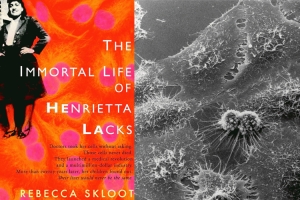
The Immortal Life of Henrietta Lacks

[ed.  This just came out in paperback and I can't wait to read it.  The reviews I've read so far say this could be one of the best non-fiction books of 2011]

by Laura Miller 

The scientific story told in Rebecca Skloot's "The Immortal Life of Henrietta Lacks" is marvel enough: Lacks died in 1951, but also lives on in the form of cells, taken from a single biopsy, that have proven easier to grow in a lab than any other human tissue ever sampled. So easy, in fact, that one scientist has estimated that if you could collect all of the cells descended from that first sample on a scale, the total would weigh 50 million metric tons. Lacks' famous cell line, known as HeLa, has played a key role in the development of cures and treatments for polio, AIDS, infertility and cancer, as well as research into cloning, gene mapping and radiation.

There's a run-of-the-mill "The Cells That Changed the World" book in that premise, and one with a better claim to credibility than most of the "Changed the World" titles that have flooded bookstores since Dava Sobel's "Longitude" became a surprise bestseller 14 years ago. But "The Immortal Life of Henrietta Lacks" is far from run-of-the-mill -- it's indelible. Skloot (whom -- full disclosure -- I know slightly) spent a decade tracking down Lacks' surviving family and winning over their much-abused trust, a process that becomes part of the story she tells. Actually, it often takes over the story entirely. Just as the DNA in a cell's nucleus contains the blueprint for an entire organism, so does the story of Henrietta Lacks hold within it the history of medicine and race in America, a history combining equal parts of shame and wonder.

Henrietta Lacks, an African-American woman born and raised in rural Virginia, was treated for the cervical cancer that killed her in Baltimore's Johns Hopkins Hospital. A sample of her cancer cells taken during an early examination was handed over to a Hopkins researcher, George Gey, who probably never met Lacks herself. Unlike the vast majority of human cells, which almost always die soon after being removed from the body, Lacks' turned out to be astonishingly robust and easy to culture. They contain an enzyme that prevents them from automatically degenerating like normal cells, rendering them immortal, capable of dividing and multiplying seemingly forever. HeLa has provided countless experimenters with the once-rare raw materials needed to test drugs and procedures that have saved lives and transformed medicine.

But Lacks never knew her cells had been taken by Gey or why. Her family, who struggled to survive through a series of hardships that make "The Color Purple" look tame by comparison, occasionally heard from Hopkins or from journalists captivated by the HeLa story, but they had difficulty understanding what little information they were given. Then, in the '60s, a scientist discovered that most of the other cell lines being cultivated throughout the world had been contaminated by HeLa cells, and had probably been taken over by them. Hopkins researchers tracked down the Lackses to get the blood samples they needed to detect that contamination; the family thought they were being tested for the terrifying disease that had killed Henrietta. They believed that "Henrietta" had been shot into space, blown up with nuclear bombs and cloned. They worried that she might somehow be suffering through these experiences. And, eventually, they were enraged to learn that companies were making money selling vials of her cells while her children couldn't even afford medical insurance.

Read more:

Cats Playing Patty Cake. What They Were Saying.

[ed.  Okay, I know there are a gazillion cat pictures and videos on the internet.  This is the only one I like.  Turn your sound up.]


The Rise of the New Global Elite

by  Chrystia Freeman

If you happened to be watching NBC on the first Sunday morning in August last summer, you would have seen something curious. There, on the set of Meet the Press, the host, David Gregory, was interviewing a guest who made a forceful case that the U.S. economy had become “very distorted.” In the wake of the recession, this guest explained, high-income individuals, large banks, and major corporations had experienced a “significant recovery”; the rest of the economy, by contrast—including small businesses and “a very significant amount of the labor force”—was stuck and still struggling. What we were seeing, he argued, was not a single economy at all, but rather “fundamentally two separate types of economy,” increasingly distinct and divergent.

This diagnosis, though alarming, was hardly unique: drawing attention to the divide between the wealthy and everyone else has long been standard fare on the left. (The idea of “two Americas” was a central theme of John Edwards’s 2004 and 2008 presidential runs.) What made the argument striking in this instance was that it was being offered by none other than the former five-term Federal Reserve Chairman Alan Greenspan: iconic libertarian, preeminent defender of the free market, and (at least until recently) the nation’s foremost devotee of Ayn Rand. When the high priest of capitalism himself is declaring the growth in economic inequality a national crisis, something has gone very, very wrong.

This widening gap between the rich and non-rich has been evident for years. In a 2005 report to investors, for instance, three analysts at Citigroup advised that “the World is dividing into two blocs—the Plutonomy and the rest”:  In a plutonomy there is no such animal as “the U.S. consumer” or “the UK consumer”, or indeed the “Russian consumer”. There are rich consumers, few in number, but disproportionate in the gigantic slice of income and consumption they take. There are the rest, the “non-rich”, the multitudinous many, but only accounting for surprisingly small bites of the national pie.

Before the recession, it was relatively easy to ignore this concentration of wealth among an elite few. The wondrous inventions of the modern economy—Google, Amazon, the iPhone—broadly improved the lives of middle-class consumers, even as they made a tiny subset of entrepreneurs hugely wealthy. And the less-wondrous inventions—particularly the explosion of subprime credit—helped mask the rise of income inequality for many of those whose earnings were stagnant.

But the financial crisis and its long, dismal aftermath have changed all that. A multibillion-dollar bailout and Wall Street’s swift, subsequent reinstatement of gargantuan bonuses have inspired a narrative of parasitic bankers and other elites rigging the game for their own benefit. And this, in turn, has led to wider—and not unreasonable—fears that we are living in not merely a plutonomy, but a plutocracy, in which the rich display outsize political influence, narrowly self-interested motives, and a casual indifference to anyone outside their own rarefied economic bubble.

Through my work as a business journalist, I’ve spent the better part of the past decade shadowing the new super-rich: attending the same exclusive conferences in Europe; conducting interviews over cappuccinos on Martha’s Vineyard or in Silicon Valley meeting rooms; observing high-powered dinner parties in Manhattan. Some of what I’ve learned is entirely predictable: the rich are, as F. Scott Fitzgerald famously noted, different from you and me.

What is more relevant to our times, though, is that the rich of today are also different from the rich of yesterday. Our light-speed, globally connected economy has led to the rise of a new super-elite that consists, to a notable degree, of first- and second-generation wealth. Its members are hardworking, highly educated, jet-setting meritocrats who feel they are the deserving winners of a tough, worldwide economic competition—and many of them, as a result, have an ambivalent attitude toward those of us who didn’t succeed so spectacularly. Perhaps most noteworthy, they are becoming a transglobal community of peers who have more in common with one another than with their countrymen back home. Whether they maintain primary residences in New York or Hong Kong, Moscow or Mumbai, today’s super-rich are increasingly a nation unto themselves.

The Winner-Take-Most Economy
The rise of the new plutocracy is inextricably connected to two phenomena: the revolution in information technology and the liberalization of global trade. Individual nations have offered their own contributions to income inequality—financial deregulation and upper-bracket tax cuts in the United States; insider privatization in Russia; rent-seeking in regulated industries in India and Mexico. But the shared narrative is that, thanks to globalization and technological innovation, people, money, and ideas travel more freely today than ever before.

Read more:

Whippersnappers


by Katherine Greider

The other day, when I confessed to my husband that I had requested a "copy" of the online journal our college-age niece edits, he bent down at the knees, pawed the air, turned his face to the ceiling, and let out a mournful roar. That would be a woolly mammoth, sinking into the tar pits at La Brea.

I get this sort of thing a lot. And I've always been a good sport about it. I surrender the keyboard or remote control at the first exasperated sigh of a child grown impatient with my fumbling. Like the elderly relative who each year exclaims, "My, how tall you are!" I make all the requisite noises of awe for the high-tech gadgetry that has allowed music, video and communications to go completely mobile, breaching all boundaries of space and time, not to mention for the skills that let people surf this extraterrestrial wavelength with aplomb. All hail the fleet and nimble thumbs of youth.

Well, maybe it's the ravages of peri-menopause, but lately I find my mood has changed. Faced with a seemingly endless torrent of hoopla over the mind-bending possibilities of this or that next-generation smartphone, I want to say, quoting a phrase from my own youth, big whoop. When my children, at 10 and 14, cock their heads, wearing an expression of forbearance, and tell me, "Mom, you don't really understand our culture," I find myself wanting to yelp, "Right back atcha, dearies!"

How could they understand? They weren't around in the Nehi-orange, slap-happy 1970s, the decade that encompassed the bulk of my childhood. We had no inkling about MP3 players, laptops, tablet computers, the Internet, video streaming, cellphones, GPS-enabled hand-held devices, or even cable television, for crying out loud. But we had just as strong a cultural and psychological investment in the technologies we did have. If today's kids are like hunter-gatherers packing their lightweight tools wherever they roam, we were homesteaders gathered around our warm and lovely technological hearths.

When I was a child, my family watched TV, listened to records, and talked on the phone only in fixed locations inside our own home, at more or less circumscribed times. All Americans did. Now, without a second thought, we're uncoupling these enjoyments from domestic life in a shift that may turn out to be as momentous as when Americans evicted childbirth and death from their homes in the early twentieth century.

I'm not saying it's bad. I'm just saying let's take a moment to reflect. I'm saying that maybe some day long hence, people will want to know what it was like when telephones were literally tethered to the kitchen wall. Come close, and I'll tell you: It was awesome.

First of all, the receiver. It was only a receiver -- no buttons, no screen, no folding mechanism, just this smooth, solid, ergonomically elegant object meant to be held to the ear. And the corkscrewy cord confined you to a small sphere where what you did was simply this: talk on the phone. I remember looping this cord around my finger as I lay on the floor next to the refrigerator, its motor gently humming and warming the linoleum. Or I'd sit on the back stairs, communing with the coats and purses and dog leashes. And the sound quality! Reach out and touch someone. That's what it was like. No traffic, no grocery clerks, no huffing and chuffing as the person you're talking to dashes for the bus.

Phone numbers were associated, not with individuals, but with households. Any number we were likely to use again we scribbled on the side of a cupboard beside the phone. Each number had its own position and style and became a little memento of the day you wrote it down; together these jottings formed a spatial representation of the whole family's relationships, formed, continued, occasionally abandoned.
My children, who use cellphones almost exclusively, are strangers to the fact that apparently separate telephones may be connected to a single line, which in turn is embedded in the walls of the house. So they don't really get certain fond traditions of my youth. Like fighting over the phone. Listening in on someone else's conversation (you must raise the receiver ever so gently from its cradle). Or bellowing across the house for a call's intended recipient to pick up! in another room. My children will never know the exquisite fright of a friend's parent breaking in to snap, "I told you to get off an hour ago!"

Read more:

The Jungle Sub

by Jim Popkin

The clatter of helicopter blades echoed across the jungles of northwestern Ecuador. Antinarcotics commandos in three choppers peered at the mangroves below, scanning for any sign of activity. The police had received a tip that a gang of Colombian drug smugglers had set up a clandestine work site here, in a dense swamp 5 miles south of Colombia’s border. And whatever the traffickers were building, the tipster had warned, was truly enormous.

Photo: Christoph MorlinghausFor decades, Colombian drug runners have pursued their trade with diabolical ingenuity, staying a step ahead of authorities by coming up with one innovation after another. When false-paneled pickups and tractor-trailers began drawing suspicion at US checkpoints, the cartels and their Mexican partners built air-conditioned tunnels under the border. When border agents started rounding up too many human mules, one group of Colombian smugglers surgically implanted heroin into purebred puppies. But the drug runners’ most persistently effective method has also been one of the crudest—semisubmersible vessels that cruise or are towed just below the ocean’s surface and can hold a ton or more of cocaine.

Assembled in secret shipyards along the Pacific coast, they’ve been dubbed drug subs by the press, but they’re incapable of diving or maneuvering like real submarines. In fact, they’re often just cigarette boats encased in wood and fiberglass that are scuttled after a single mission. Yet despite their limitations, these semisubmersibles are notoriously difficult to track. US and Colombian officials estimate that the cartels have used them to ship hundreds of tons of cocaine from Colombia over the past five years alone.

But several years ago, intelligence agencies began hearing that the cartels had made a technological breakthrough: They were constructing some kind of supersub in the jungle. According to the persistent rumors, the phantom vessel was an honest-to-goodness, fully functioning submarine with vastly improved range—nothing like the disposable water coffins the Colombians had been using since the ’90s. US law enforcement officials began to think of it as a sort of Loch Ness Monster, says one agent: “Never seen one before, never seized one before. But we knew it was out there.”

Finally, the Ecuadoreans had enough information to launch a full-fledged raid. On July 2, 2010, a search party—including those three police helicopters, an armada of Ecuadorean navy patrol boats, and 150 well-armed police and sailors—scoured the coastline near the Colombian border. When a patrol boat happened on some abandoned barrels in a clearing off the Río Molina, the posse moved in to find an astillero, or jungle shipyard, complete with spacious workshops, kitchens, and sleeping quarters for 40. The raid had clearly interrupted the workday—rice pots from breakfast were still on the stove.

And there was something else hastily abandoned in a narrow estuary: a 74-foot camouflaged submarine—nearly twice as long as a city bus—with twin propellers and a 5-foot conning tower, beached on its side at low tide. “It was incredible to find a submarine like that,” says rear admiral Carlos Albuja, who oversees Ecuadorean naval operations along the northwest coast. “I’m not sure who built it, but they knew what they were doing.”

A cargo hold in the sub's bow can hold up to 9 tons of cocaine, worth about $250 million.

Photo: Christoph Morlinghaus

Read more:

10,000 Hours

Can a complete novice become a golf pro with 10,000 hours of practice?

by  Michael Kruse

Testing researchers’ theory that 10,000 hours of deliberate practice can lift an ordinary person to excellence, Dan McLaughlin practices chip shots at Mangrove Bay Golf Course in St. Petersburg. McLaughlin had never golfed before he conceived The Dan Plan: to put in 10,000 hours of practice and become good enough to play the game professionally.

One wet, raw day last April, at the Broadmoor public golf course in Portland, Ore., Dan McLaughlin stood in the center of one of the greens. He wore running shoes, blue jeans and a yellow rubber raincoat. He wrapped his frozen fingers around a two-buck putter and hit one-foot putts, and he did that for two hours straight, stopped for a cup of hot, decaffeinated tea, then did it for two hours more. That’s how this started.

On his 30th birthday, June 27, 2009, Dan had decided to quit his job to become a professional golfer.

He had almost no experience and even less interest in the sport.

What he really wanted to do was test the 10,000-hour theory he read about in the Malcolm Gladwell bestseller Outliers. That, Gladwell wrote, is the amount of time it takes to get really good at anything — “the magic number of greatness.”

The idea appealed to Dan. His 9-to-5 job as a commercial photographer had become unfulfilling. He didn’t want just to pay his bills. He wanted to make a change.

Could he stop being one thing and start being another? Could he, an average man, 5 feet 9 and 155 pounds, become a pro golfer, just by trying? Dan’s not doing an experiment. He is the experiment.

The Dan Plan will take six hours a day, six days a week, for six years. He is keeping diligent records of his practice and progress. People who study expertise say no one has done quite what Dan is doing right now.

Dan spent last month in St. Petersburg because winters are winters in the Pacific Northwest. “If I could become a professional golfer,” he said one afternoon, “the world is literally open to any options for anybody.”

Dan is the youngest son of a family of high achievers. One of his grandfathers was a career IBM man. The other was a civil engineer. His father is an actuary. So is his brother. Actuaries calculate risk. They make statistical predictions about the future based on past performance. His brother graduated with high honors as a math major from Georgia Tech and then did it again in the divinity program at Boston University and now lives and works in New York City and is married with a young daughter. His sister is a dermatologist in Atlanta and a mother of four. She regularly runs marathons.
Dan? He’s the only one of his siblings who wasn’t confirmed in the Methodist church in which they grew up. He didn’t understand why he had to do this just because everybody else was doing this. He was 12.

Within his immediate family, he said, “I’m definitely the one with the most wander in my heart.”


Read more:

Mondays