Wednesday, October 5, 2011


The Benjamin Franklin Effect
The Misconception: You do nice things for the people you like and bad things to the people you hate.
The Truth: You grow to like people for whom you do nice things and hate people you harm.
 Benjamin Franklin knew how to deal with haters.
Born in 1706 as the eighth of 17 children to a Massachusetts soap and candlestick maker, the chances Benjamin would go on to become a gentleman, scholar, scientist, statesman, musician, author, publisher and all-around general bad-ass were astronomically low, yet he did just that and more because he was a master of the game of personal politics.
Like many people full of drive and intelligence born into a low station, Franklin developed strong people skills and social powers. All else denied, the analytical mind will pick apart behavior, and Franklin became adroit at human relations. From an early age, he was a talker and a schemer – a man capable of guile, cunning and persuasive charm. He stockpiled a cache of cajolative secret weapons, one of which was the Benjamin Franklin Effect, a tool as useful today as it was in the 1730s and still just as counterintuitive. To understand it, let’s first rewind back to 1706.
Franklin’s prospects were dim. With 17 children, Josiah and Abiah Franklin could only afford two years of schooling for Benjamin. Instead, they made him work, and when he was 12 he became an apprentice to his brother James who was a printer in Boston. The printing business gave Benjamin the opportunity to read books and pamphlets. It was as if Ben Franklin was the one kid in the neighborhood who had access to the Internet. He read everything, and taught himself every skill and discipline one could absorb from text.
At 17, Franklin left Boston and started his own printing business In Philadelphia. At age 21, he formed a “club of mutual improvement” called the Junto. It was a grand scheme to gobble up knowledge. He invited working-class polymaths like himself who wanted to experiment in 1700s lifestyle design the chance to pool together their books and trade thoughts and knowledge of the world on a regular basis. They wrote and recited essays, held debates, and devised ways to acquire currency. Franklin used the Junto like a private consulting firm, a think tank, and he bounced ideas off of them so he could write and print better pamphlets. Franklin eventually founded the first subscription library in America and wrote it would make “the common tradesman and farmers as intelligent as most gentlemen from other countries,” not to mention, give him access to whatever books he wanted to buy. Genius.
By the 1730s Franklin was riding down an information superhighway of his own construction, and the constant stream of information made him a savvy politician in Philadelphia. A celebrity and an entrepreneur who printed both a newspaper and an almanac, Franklin had collected a few enemies by the time he ran for the position of clerk of the general assembly, but Franklin knew how to deal with haters.
As clerk, he could step into a waterfall of data coming out of the nascent government. He would record and print public records, bills, vote totals and other official documents. He would also make a fortune literally printing the state’s paper money. He won the race, but the next election wasn’t going to be as easy. Franklin’s autobiography never mentions this guy’s name, but according to the book when Franklin ran for his second term as clerk, one of his colleagues delivered a long speech to the legislature lambasting Franklin. Franklin still won his second term, but this guy truly pissed him off. In addition, this man was “a gentleman of fortune and education” who Franklin believed would one day become a person of great influence in the government. So, Franklin knew he had to be dealt with, and thus he launched his human behavior stealth bomber.
Franklin set out to turn his hater into a fan, but he wanted to do it without “paying any servile respect to him.” Franklin’s reputation as a book collector and library founder gave him a reputation as a man of discerning literary tastes, so Franklin sent a letter to the hater asking if he could borrow a selection from the his library, one which was a “very scarce and curious book.” The rival, flattered, sent it right away. Franklin sent it back a week later with a thank you note. Mission accomplished.
The next time the legislature met, the man approached Franklin and spoke to him in person for the first time. Franklin said the hater “ever after manifested a readiness to serve me on all occasions, so that we became great friends, and our friendship continued to his death.”
What exactly happened here? How can asking for a favor turn a hater into a fan? How can requesting kindness cause a person to change his or her opinion about you? The answer to what generates The Benjamin Franklin Effect is the answer to much more about why you do what you do.
As a primate, you are keen to social cues which portend your possible ostracism from an in-group. In the wild, banishment equals death. So, it follows you work to feel included because the feeling of being left out, being the last to know, being the only one not invited to the party is a deep and severe slice into your emotional core. Anxiety over being ostracized, over being an outsider has driven the behavior of billions for millions of years. Impression management theory says you are always thinking about how you appear to others, even when there are no others around. In the absence of onlookers, deep in your mind, a mirror reflects back that which you have done, and when you see a person who has behaved in a way which could get you booted from your in-group, the anxiety drives you to seek a re-alignment. But, which came first? Your display or your belief? As a professional, do you feel compelled to wear a suit, or after donning a suit do you conduct yourself in a professional manner? Do you vote Democrat because you champion social programs, or do you champion social programs because you voted Democrat? The research says the latter in both cases. When you become a member of a group, or the fan of a genre, or the user of a product – those things have more influence on your attitudes than your attitudes have on them, but why?
Read more:
The Truth: You grow to like people for whom you do nice things and hate people you harm.
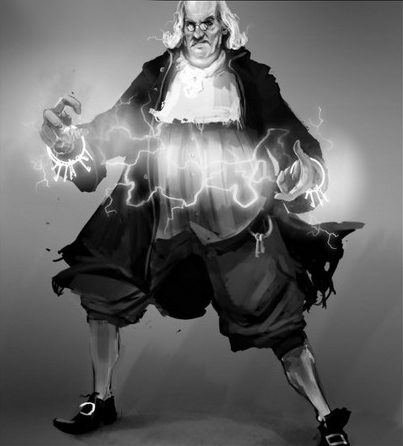 Benjamin Franklin knew how to deal with haters.
 Born in 1706 as the eighth of 17 children to a Massachusetts soap and candlestick maker, the chances Benjamin would go on to become a gentleman, scholar, scientist, statesman, musician, author, publisher and all-around general bad-ass were astronomically low, yet he did just that and more because he was a master of the game of personal politics.
Like many people full of drive and intelligence born into a low station, Franklin developed strong people skills and social powers. All else denied, the analytical mind will pick apart behavior, and Franklin became adroit at human relations. From an early age, he was a talker and a schemer – a man capable of guile, cunning and persuasive charm. He stockpiled a cache of cajolative secret weapons, one of which was the Benjamin Franklin Effect, a tool as useful today as it was in the 1730s and still just as counterintuitive. To understand it, let’s first rewind back to 1706.
Franklin’s prospects were dim. With 17 children, Josiah and Abiah Franklin could only afford two years of schooling for Benjamin. Instead, they made him work, and when he was 12 he became an apprentice to his brother James who was a printer in Boston. The printing business gave Benjamin the opportunity to read books and pamphlets. It was as if Ben Franklin was the one kid in the neighborhood who had access to the Internet. He read everything, and taught himself every skill and discipline one could absorb from text.
At 17, Franklin left Boston and started his own printing business In Philadelphia. At age 21, he formed a “club of mutual improvement” called the Junto. It was a grand scheme to gobble up knowledge. He invited working-class polymaths like himself who wanted to experiment in 1700s lifestyle design the chance to pool together their books and trade thoughts and knowledge of the world on a regular basis. They wrote and recited essays, held debates, and devised ways to acquire currency. Franklin used the Junto like a private consulting firm, a think tank, and he bounced ideas off of them so he could write and print better pamphlets. Franklin eventually founded the first subscription library in America and wrote it would make “the common tradesman and farmers as intelligent as most gentlemen from other countries,” not to mention, give him access to whatever books he wanted to buy. Genius.
By the 1730s Franklin was riding down an information superhighway of his own construction, and the constant stream of information made him a savvy politician in Philadelphia. A celebrity and an entrepreneur who printed both a newspaper and an almanac, Franklin had collected a few enemies by the time he ran for the position of clerk of the general assembly, but Franklin knew how to deal with haters.
As clerk, he could step into a waterfall of data coming out of the nascent government. He would record and print public records, bills, vote totals and other official documents. He would also make a fortune literally printing the state’s paper money. He won the race, but the next election wasn’t going to be as easy. Franklin’s autobiography never mentions this guy’s name, but according to the book when Franklin ran for his second term as clerk, one of his colleagues delivered a long speech to the legislature lambasting Franklin. Franklin still won his second term, but this guy truly pissed him off. In addition, this man was “a gentleman of fortune and education” who Franklin believed would one day become a person of great influence in the government. So, Franklin knew he had to be dealt with, and thus he launched his human behavior stealth bomber.
Franklin set out to turn his hater into a fan, but he wanted to do it without “paying any servile respect to him.” Franklin’s reputation as a book collector and library founder gave him a reputation as a man of discerning literary tastes, so Franklin sent a letter to the hater asking if he could borrow a selection from the his library, one which was a “very scarce and curious book.” The rival, flattered, sent it right away. Franklin sent it back a week later with a thank you note. Mission accomplished.
The next time the legislature met, the man approached Franklin and spoke to him in person for the first time. Franklin said the hater “ever after manifested a readiness to serve me on all occasions, so that we became great friends, and our friendship continued to his death.”
What exactly happened here? How can asking for a favor turn a hater into a fan? How can requesting kindness cause a person to change his or her opinion about you? The answer to what generates The Benjamin Franklin Effect is the answer to much more about why you do what you do.
***
At the lowest level, behavior-into-attitude conversion begins with impression management theory which says you present to your peers the person you wish to be. You engage in something economists call signaling by buying and displaying to your peers the sorts of things which give you social capital. If you live in the Deep South you might buy a high-rise pickup and a set of truck nuts. If you live in San Fransisco you might buy a Prius and a bike rack. Whatever are the easiest to obtain, loudest forms of the ideals you aspire to portray become the things you own, like bumper stickers signaling to the world you are in one group and not another. Those things then influence you to become the sort of person who owns them.As a primate, you are keen to social cues which portend your possible ostracism from an in-group. In the wild, banishment equals death. So, it follows you work to feel included because the feeling of being left out, being the last to know, being the only one not invited to the party is a deep and severe slice into your emotional core. Anxiety over being ostracized, over being an outsider has driven the behavior of billions for millions of years. Impression management theory says you are always thinking about how you appear to others, even when there are no others around. In the absence of onlookers, deep in your mind, a mirror reflects back that which you have done, and when you see a person who has behaved in a way which could get you booted from your in-group, the anxiety drives you to seek a re-alignment. But, which came first? Your display or your belief? As a professional, do you feel compelled to wear a suit, or after donning a suit do you conduct yourself in a professional manner? Do you vote Democrat because you champion social programs, or do you champion social programs because you voted Democrat? The research says the latter in both cases. When you become a member of a group, or the fan of a genre, or the user of a product – those things have more influence on your attitudes than your attitudes have on them, but why?
Read more:


Take Shelter
by A.O. Scott
“You’ve got a good life, Curtis,” says Dewart, Curtis’s best friend and co-worker. (Dewart is played by Shea Whigham, Curtis by the amazing Michael Shannon.) “I think that’s the best compliment you can give a man: take a look at his life and say, ‘That’s good.’ ”
 A sinister corollary to Dewart’s homespun truism might be that the greatest fear a man can experience is that of losing the good life he has. It is this anxiety, which afflicts Curtis in especially virulent form, that defines the mood of “Take Shelter,” Jeff Nichols’s remarkable new film. It is a quiet, relentless exploration of the latent (and not so latent) terrors that bedevil contemporary American life, a horror movie that will trouble your sleep not with visions of monsters but with a more familiar dread.
We like to think that individually and collectively, we have it pretty good, but it is harder and harder to allay the suspicion that a looming disaster — economic or environmental, human or divine — might come along and destroy it all. Normalcy can feel awfully precarious, like a comforting dream blotting out a nightmarish reality.
What if everything that Curtis values were to be suddenly swept away? We are not talking about a life of luxury and ease, but about modest comforts and reasonable expectations: a decent job with health benefits and vacation time, a loving family, a house of your own. Curtis has all of this. He works in heavy construction and comes home to the tidy home he shares with his wife, Samantha (Jessica Chastain), and their daughter, Hannah (Tova Stewart), who is deaf.
Without being a hokey paragon of proletarian virtue — Mr. Shannon’s scarecrow frame and sharply angled features seem designed to repel sentimentality — Curtis is clearly a dedicated employee, a loyal friend, a doting husband and a gentle father. This makes the intensity of his terror, and his helpless, potentially destructive reactions to it, all the more alarming.
Read more:
“You’ve got a good life, Curtis,” says Dewart, Curtis’s best friend and co-worker. (Dewart is played by Shea Whigham, Curtis by the amazing Michael Shannon.) “I think that’s the best compliment you can give a man: take a look at his life and say, ‘That’s good.’ ”
A sinister corollary to Dewart’s homespun truism might be that the greatest fear a man can experience is that of losing the good life he has. It is this anxiety, which afflicts Curtis in especially virulent form, that defines the mood of “Take Shelter,” Jeff Nichols’s remarkable new film. It is a quiet, relentless exploration of the latent (and not so latent) terrors that bedevil contemporary American life, a horror movie that will trouble your sleep not with visions of monsters but with a more familiar dread. We like to think that individually and collectively, we have it pretty good, but it is harder and harder to allay the suspicion that a looming disaster — economic or environmental, human or divine — might come along and destroy it all. Normalcy can feel awfully precarious, like a comforting dream blotting out a nightmarish reality.
What if everything that Curtis values were to be suddenly swept away? We are not talking about a life of luxury and ease, but about modest comforts and reasonable expectations: a decent job with health benefits and vacation time, a loving family, a house of your own. Curtis has all of this. He works in heavy construction and comes home to the tidy home he shares with his wife, Samantha (Jessica Chastain), and their daughter, Hannah (Tova Stewart), who is deaf.
Without being a hokey paragon of proletarian virtue — Mr. Shannon’s scarecrow frame and sharply angled features seem designed to repel sentimentality — Curtis is clearly a dedicated employee, a loyal friend, a doting husband and a gentle father. This makes the intensity of his terror, and his helpless, potentially destructive reactions to it, all the more alarming.
Read more:
Taken by Pirates
by Jeffrey Gettleman
“It wasn’t really a pretty night,” Rachel Chandler recalled. Small, sloshing waves were coming from the southeast, and a trickle of wind blew from the southwest. There was no moon, and the stars were shrouded by clouds.
 The boat was slowly edging away from Mahé, the main island in the Seychelles archipelago, for Tanga, Tanzania, the beginning of a two-week passage across the Indian Ocean. The wind was pushing them farther north than they’d planned to be. With no ships or land in sight, the Chandlers’ 38-foot sailboat, the Lynn Rival, bobbed along all alone.
Rachel, who is 57, was on watch — it was her turn to do the four-hour shift — and her husband, Paul, was asleep below deck. It was about 2:30 a.m., and she sat in a T-shirt and light trousers at the stern, feeling seasick. Because the wind was so faint, Rachel turned on the sailboat’s small engine, which chugged along at five knots, just loud enough to drown out other noise.
By the time she heard the high-pitched whine of outboard motors at full throttle, she had only seconds to react. Two skiffs suddenly materialized out of the murk, and when she swung the flashlight’s beam onto the water, two gunshots rang out.
“No guns! No guns!” she screamed.
The crack of assault rifles jarred Paul awake. He had been sleeping naked — as he often does on tropical nights — and hesitated before jumping out of the cabin. “The first thing I thought,” said Paul, who is 61, “was pirates.”
Within seconds, eight scruffy Somali men hoisted themselves aboard, their assault rifles and rocket-propelled-grenade launchers clanging against the hull. Paul activated an emergency beacon, which immediately started emitting an S.O.S., and then went up on deck. The men stank of the sea and nervous musk, and they jabbed their guns at the Chandlers.
“Stop engine!” they shouted. “Crew, crew! How many crew number?”
One pirate was particularly concerned about anything flashing, and Paul’s heart sank when the pirate stomped below deck and discovered the emergency beacon, blinking like a strobe, and promptly switched it off. The pirates ordered the Chandlers not to touch anything else, and then they demanded a shower.
This was Oct. 23, 2009. The Chandlers would be held for the next 388 days. In the past few years, loosely organized gangs of Somali pirates, kitted out with Fiberglas skiffs, rusty Kalashnikovs and flip-flops, have waylaid hundreds of ships — yachts, fishing boats, freighters, gigantic oil tankers, creaky old Indian dhows, essentially anything that floats — and then extracted ransom in exchange for their return. As a result, the worldwide shipping industry now spends billions of dollars on higher insurance premiums, armed guards and extra fuel to detour thousands of miles away from the Gulf of Aden, a congested shipping lane just off Somalia’s coast leading to the Red Sea. Navies from more than two dozen countries patrol Somalia’s coast, burning around a million dollars of fuel per day. And yet 2011 is on track to be another banner year for piracy, with more than 20 ships already seized, hundreds of seamen in captivity and the average ransom now fetching upward of $5 million, a fortune anywhere but especially in a country with no government and an economy that has been decimated by decades of war. Of all the thousands of people who have been held for ransom, though, few, if any, would endure as long — and as intimate — an experience behind pirate lines as Paul and Rachel Chandler.
Read more:
Illustration by Wesley Allsbrook
“It wasn’t really a pretty night,” Rachel Chandler recalled. Small, sloshing waves were coming from the southeast, and a trickle of wind blew from the southwest. There was no moon, and the stars were shrouded by clouds.
 The boat was slowly edging away from Mahé, the main island in the Seychelles archipelago, for Tanga, Tanzania, the beginning of a two-week passage across the Indian Ocean. The wind was pushing them farther north than they’d planned to be. With no ships or land in sight, the Chandlers’ 38-foot sailboat, the Lynn Rival, bobbed along all alone.
 Rachel, who is 57, was on watch — it was her turn to do the four-hour shift — and her husband, Paul, was asleep below deck. It was about 2:30 a.m., and she sat in a T-shirt and light trousers at the stern, feeling seasick. Because the wind was so faint, Rachel turned on the sailboat’s small engine, which chugged along at five knots, just loud enough to drown out other noise.
By the time she heard the high-pitched whine of outboard motors at full throttle, she had only seconds to react. Two skiffs suddenly materialized out of the murk, and when she swung the flashlight’s beam onto the water, two gunshots rang out.
“No guns! No guns!” she screamed.
The crack of assault rifles jarred Paul awake. He had been sleeping naked — as he often does on tropical nights — and hesitated before jumping out of the cabin. “The first thing I thought,” said Paul, who is 61, “was pirates.”
Within seconds, eight scruffy Somali men hoisted themselves aboard, their assault rifles and rocket-propelled-grenade launchers clanging against the hull. Paul activated an emergency beacon, which immediately started emitting an S.O.S., and then went up on deck. The men stank of the sea and nervous musk, and they jabbed their guns at the Chandlers.
“Stop engine!” they shouted. “Crew, crew! How many crew number?”
One pirate was particularly concerned about anything flashing, and Paul’s heart sank when the pirate stomped below deck and discovered the emergency beacon, blinking like a strobe, and promptly switched it off. The pirates ordered the Chandlers not to touch anything else, and then they demanded a shower.
This was Oct. 23, 2009. The Chandlers would be held for the next 388 days. In the past few years, loosely organized gangs of Somali pirates, kitted out with Fiberglas skiffs, rusty Kalashnikovs and flip-flops, have waylaid hundreds of ships — yachts, fishing boats, freighters, gigantic oil tankers, creaky old Indian dhows, essentially anything that floats — and then extracted ransom in exchange for their return. As a result, the worldwide shipping industry now spends billions of dollars on higher insurance premiums, armed guards and extra fuel to detour thousands of miles away from the Gulf of Aden, a congested shipping lane just off Somalia’s coast leading to the Red Sea. Navies from more than two dozen countries patrol Somalia’s coast, burning around a million dollars of fuel per day. And yet 2011 is on track to be another banner year for piracy, with more than 20 ships already seized, hundreds of seamen in captivity and the average ransom now fetching upward of $5 million, a fortune anywhere but especially in a country with no government and an economy that has been decimated by decades of war. Of all the thousands of people who have been held for ransom, though, few, if any, would endure as long — and as intimate — an experience behind pirate lines as Paul and Rachel Chandler.
Read more:
Illustration by Wesley Allsbrook
That vs. Which
by Ali Hale
One of our readers, Justin, recently wrote to ask:
When To Use “That” and When To Use “Which”
Before I come on to the “that”/”which” rule, just a reminder that “who” should always be used when referring to people.
A restrictive clause is one which is essential to the meaning of a sentence – if it’s removed, the meaning of the sentence will change. For example:
One of our readers, Justin, recently wrote to ask:
When proofreading a peer’s article on the solar system, I realized that she, and I, are unsure of the proper use of “that” and “which” in a sentence. Below is [SIC] two examples of the same sentence, one using “that” and the other “which.”Justin, I’ll give you the answer now, rather than making you read to the end of the whole article: the second version of that sentence, using that is correct.
Which is the correct sentence, and what is the general rule of thumb?
- “To our knowledge, it is the only body in the solar system which currently sustains life, although several other bodies are under investigation.”
- “To our knowledge, it is the only body in the solar system that currently sustains life, although several other bodies are under investigation.”
When To Use “That” and When To Use “Which”
Before I come on to the “that”/”which” rule, just a reminder that “who” should always be used when referring to people.
- The boy who threw the ball.
- This is the woman who always wears a black shawl.
- THAT should be used to introduce a restrictive clause.
- WHICH should be used to introduce a non-restrictive or parenthetical clause.
A restrictive clause is one which is essential to the meaning of a sentence – if it’s removed, the meaning of the sentence will change. For example:
- Chairs that don’t have cushions are uncomfortable to sit on.
- Card games that involve betting money should not be played in school.
- To our knowledge, it is the only body in the solar system that currently sustains life…
- Chairs, which are found in many places of work, are often uncomfortable to sit on.
- I sat on an uncomfortable chair, which was in my office.

Tuesday, October 4, 2011
Rolling Stones
[ed. Great song...all the better by the contribution of Lisa Fischer, taking over for the unforgettable Mary Clayton.]
Forfeiture Funding
[ed. Forfeiture Fund via: Wikipedia.]
 Imagine you own a million-dollar piece of property free and clear, but then the federal government and local law enforcement agents announce that they are going to take it from you, not compensate you one dime, and then use the money they get from selling your land to pad their budgets—all this even though you have never so much as been accused of a crime, let alone convicted of one.
That is the nightmare Russ Caswell and his family is now facing in Tewksbury, Mass., where they stand to lose the family-operated motel they have owned for two generations.
Seeking to circumvent state law and cash in on the profits, the Tewksbury Police Department is working with the U.S. Department of Justice to take and sell the Caswells property because a tiny fraction of people who have stayed at the Motel Caswell during the past 20 years have been arrested for crimes. Keep in mind, the Caswells themselves have worked closely with law enforcement officials to prevent and report crime on their property. And the arrests the government complains of represent less than .0005 percent of the 125,000 rooms the Caswells have rented over that period of time.
Despite all this, the Caswells stand to lose literally everything they have worked for because of this effort by federal and local law enforcement officials not to pursue justice, but rather to police for profit.
How widespread is the problem of civil forfeiture abuse nationwide? In 1986, the year after the U.S. Department of Justice’s Asset Forfeiture Fund was created—the fund that holds the forfeiture proceeds from properties forfeited under federal law and available to be paid out to law enforcement agencies—took in just $93.7 million. Today it holds more than $1.6 billion.
via:
 Imagine you own a million-dollar piece of property free and clear, but then the federal government and local law enforcement agents announce that they are going to take it from you, not compensate you one dime, and then use the money they get from selling your land to pad their budgets—all this even though you have never so much as been accused of a crime, let alone convicted of one.
 That is the nightmare Russ Caswell and his family is now facing in Tewksbury, Mass., where they stand to lose the family-operated motel they have owned for two generations.
Seeking to circumvent state law and cash in on the profits, the Tewksbury Police Department is working with the U.S. Department of Justice to take and sell the Caswells property because a tiny fraction of people who have stayed at the Motel Caswell during the past 20 years have been arrested for crimes. Keep in mind, the Caswells themselves have worked closely with law enforcement officials to prevent and report crime on their property. And the arrests the government complains of represent less than .0005 percent of the 125,000 rooms the Caswells have rented over that period of time.
Despite all this, the Caswells stand to lose literally everything they have worked for because of this effort by federal and local law enforcement officials not to pursue justice, but rather to police for profit.
How widespread is the problem of civil forfeiture abuse nationwide? In 1986, the year after the U.S. Department of Justice’s Asset Forfeiture Fund was created—the fund that holds the forfeiture proceeds from properties forfeited under federal law and available to be paid out to law enforcement agencies—took in just $93.7 million. Today it holds more than $1.6 billion.
via:
Blade of Grass

Every year, Nikon hosts the Small World Photomicrography Competition, inviting photographers and scientists to submit images of all things visible under a microscope. The winners for this year's competition have just been announced, with Dr. Igor Siwanowicz taking first prize for his image of a common green lacewing larva that had earlier landed on his hand, trying to take a bite. This year's entries cover a fascinating range of subjects and sizes, from the eyes of a freshwater shrimp to the delicate scales on the wing of a butterfly, from a simple yet complex frost crystal to neurospheres and cancer cells. Enjoy a trip into a miniature world through the images shared here with us by the fine folks at Nikon, all from the 2011 Nikon Small World Photomicrography Competition. [32 photos]
via:
Current Events: "Bank Of America Customers Get The Heck Out Of That Bank!"
[ed. Swipe fees. Aptly named. If you want to skip the introduction explaining what swipe fees are, skip to around 06:00 in the video and you'll still get a pretty good idea of how you're being screwed (if you're a BofA customer, which I won't be shortly).]
Hawaii Makes Surfing Official High School Sport

[ed. About time! Good news.]
by Jaymes Song
Hawaii will soon become the first state in the US to call surfing an official high school sport.
Governor Neil Abercrombie and state education officials said on Monday that riding the waves will join the likes of football, basketball, volleyball and swimming as a state-sanctioned prep sport in public schools, starting as early as spring 2013.
"It's quite clear, when you think of Hawaii, you think of surfing," Abercrombie said with a scenic backdrop of sunbathers and surfers along Waikiki beach behind him. The news conference was held near the statue of island icon Duke Kahanamoku, an Olympic gold medal swimmer known as the father of modern surfing.
"Hawaii is the birthplace of surfing. From Duke Kahanamoku to the thousands of residents and visitors who surf both recreationally and competitively, the sport is rooted in our culture and way of life," the governor said.
The Aloha State is known for its world-class surf breaks and competitions. It is home to many pro surfers and has produced several world champions including Hawaii's Carissa Moore, who this summer became the youngest world champion at 18.
"I think it's awesome, and it will open doors for kids," said Moore, who welcomed the announcement. She said the sport taught her many life lessons growing up, such as hard work, perseverance, and time management.
"Surfing and riding a wave is so much like life. You fall down over and over again, but you keep picking yourself back up until you ride one all the way to the beach," Moore said. "I know that's kind of cheesy, but I think surfing is definitely a really good outlet for a lot of teens and young kids. It's a way to channel a lot of energy into something positive. It's just really awesome."
Read more:
Banking’s Self Inflicted Wounds
by Barry Ritholtz
Morgan Stanley in a free fall. Goldman Sachs at multi-year lows. Citigroup looking Ugly. Bank of America off 50% from recent highs.
You may be wondering what is going on with the major firms in the financial sector. While each of these firms have different problems — vampire squids to Countrywide acquisitions — they all have something in common: Their balance sheets are opaque.
This is no accident. Indeed, it was by design that execs in the banking sector, and their outside accountants, hatched a scheme in 2008 to hide their balance sheets from public view. The bankers had been lobbying the Financial Accounting Standards Board to change the rules that governed “Fair Value Measurements” also known as FAS157 (September 2006).
You may recall during 2008 this was referred to as “Mark-to-market” accounting.
Banks loved m2m during a boom period. M2M made the more unusual balance sheet holdings — derivatives, the mortgage-backed securities (MBS), exotic liabilities, and other assets — look fantastic. The fair value measurements of these items — essentially, yesterday’s closing price — allowed the accounts to show enormous profits. Those were the underlying basis for huge bonuses, stock option grants and of course, company share prices.
The reality was quite a bit different. These were not equities or treasuries or corporate bonds — they were thinly traded items whose prices were ramping upwards on a sea of delusional optimism. As soon as the credit bubble ended and housing began to retreat, these assets would free fall like an Acme anvil in a Roadrunner cartoon — and the bankers were the Coyote.
Uh-oh, this was gonna be a problem. So the bankers began to lobby FASB to change the rules governing Fair Value Accounting. Sure, it was hugely helpful on the way up, but now, reporting actual holdings — previously marked at all time highs — was becoming problematic.
To their credit, the accounting board resisted. What Bankers were proposing — marking to their models — was patently absurd. These were the models that told them these purchases were good ideas in the first place. Changing Mark-to-Market to Mark-to-Model was a free pass to practically allowed banks to NEVER have to write down their liabilities. Some people began calling the proposed accounting changes “Mark-to-Make-Believe.”
In the midst of the 2008-09 collapse, however, Congress was in a panic. They mandated that FASB accept Mark-to-Make-Believe accounting in the Emergency Economic Stabilization Act of 2008. It gave the Securities and Exchange Commission the authority to “Suspend Mark-to-Market Accounting.” In March and April of 2009, that is precisely what occurred.
It was yet another example of an industry lobbying Washington, D.C. to get precisely what they want — and then having that legislation blow up in their faces. (I detailed other examples of this in a chapter of Bailout Nation — you can see that chapter here: Strange Connections, Unintended Consequences).
The bottom line is this: Investors do not really have a clear idea of how healthy any of these banks truly are. We do not know the state of their balance sheets. We do not know what their exposures are to mortgages, to Europe, to Greece, etc. They could all be technically insolvent, as far as any investor can tell.
And that is exactly how the bankers wanted it.
But given the trouble in Europe, and the likely problems in housing if the US goes into a recession, Investors have decided they cannot take the risk of a holding an opaque, possibly under-capitalized probably over-leveraged financial firm blindly. They are telling the banks no thanks, we are not interested, we are going to be prudent and we have to assume the worst. Hence, for the second half of 2011, they have been selling off their holdings in these opaque, potentially insolvent too big to succeed entities.
Bankers, enjoy your beds. You made them, now lay in them . . .
Morgan Stanley in a free fall. Goldman Sachs at multi-year lows. Citigroup looking Ugly. Bank of America off 50% from recent highs.
You may be wondering what is going on with the major firms in the financial sector. While each of these firms have different problems — vampire squids to Countrywide acquisitions — they all have something in common: Their balance sheets are opaque.
This is no accident. Indeed, it was by design that execs in the banking sector, and their outside accountants, hatched a scheme in 2008 to hide their balance sheets from public view. The bankers had been lobbying the Financial Accounting Standards Board to change the rules that governed “Fair Value Measurements” also known as FAS157 (September 2006).
You may recall during 2008 this was referred to as “Mark-to-market” accounting.
Banks loved m2m during a boom period. M2M made the more unusual balance sheet holdings — derivatives, the mortgage-backed securities (MBS), exotic liabilities, and other assets — look fantastic. The fair value measurements of these items — essentially, yesterday’s closing price — allowed the accounts to show enormous profits. Those were the underlying basis for huge bonuses, stock option grants and of course, company share prices.
The reality was quite a bit different. These were not equities or treasuries or corporate bonds — they were thinly traded items whose prices were ramping upwards on a sea of delusional optimism. As soon as the credit bubble ended and housing began to retreat, these assets would free fall like an Acme anvil in a Roadrunner cartoon — and the bankers were the Coyote.
Uh-oh, this was gonna be a problem. So the bankers began to lobby FASB to change the rules governing Fair Value Accounting. Sure, it was hugely helpful on the way up, but now, reporting actual holdings — previously marked at all time highs — was becoming problematic.
To their credit, the accounting board resisted. What Bankers were proposing — marking to their models — was patently absurd. These were the models that told them these purchases were good ideas in the first place. Changing Mark-to-Market to Mark-to-Model was a free pass to practically allowed banks to NEVER have to write down their liabilities. Some people began calling the proposed accounting changes “Mark-to-Make-Believe.”
In the midst of the 2008-09 collapse, however, Congress was in a panic. They mandated that FASB accept Mark-to-Make-Believe accounting in the Emergency Economic Stabilization Act of 2008. It gave the Securities and Exchange Commission the authority to “Suspend Mark-to-Market Accounting.” In March and April of 2009, that is precisely what occurred.
It was yet another example of an industry lobbying Washington, D.C. to get precisely what they want — and then having that legislation blow up in their faces. (I detailed other examples of this in a chapter of Bailout Nation — you can see that chapter here: Strange Connections, Unintended Consequences).
The bottom line is this: Investors do not really have a clear idea of how healthy any of these banks truly are. We do not know the state of their balance sheets. We do not know what their exposures are to mortgages, to Europe, to Greece, etc. They could all be technically insolvent, as far as any investor can tell.
And that is exactly how the bankers wanted it.
But given the trouble in Europe, and the likely problems in housing if the US goes into a recession, Investors have decided they cannot take the risk of a holding an opaque, possibly under-capitalized probably over-leveraged financial firm blindly. They are telling the banks no thanks, we are not interested, we are going to be prudent and we have to assume the worst. Hence, for the second half of 2011, they have been selling off their holdings in these opaque, potentially insolvent too big to succeed entities.
Bankers, enjoy your beds. You made them, now lay in them . . .
Can Answers to Evolution Be Found in Slime?

[ed. ...complex choreography of signals in some species that allows 20,000 individuals to form a single sluglike body, sounds like Congress]
by Carl Zimmer
Most of the aliens that come out of Hollywood don’t really look alien at all. They may have pizza-size eyes or roachlike antennae, but their oddities are draped on a familiar humanoid frame.
If you want to find life forms that truly seem otherworldly, your local forest is a much better place than your local cineplex. It is home to creatures that are immensely old, fundamentally bizarre and capable of startlingly sophisticated behavior. They are the slime molds.
Slime molds are a remarkable lineage of amoebas that live in soil. While they spend part of their life as ordinary single-celled creatures, they sometimes grow into truly alien forms. Some species gather by the thousands to form multicellular bodies that can crawl. Others develop into gigantic, pulsating networks of protoplasm.
While naturalists have known of slime molds for centuries, only now are scientists really starting to understand them. Lab experiments are revealing the complex choreography of signals in some species that allows 20,000 individuals to form a single sluglike body.
The pulsating networks that some slime molds form are giving other scientists clues to solving difficult mathematical problems. In 2000, Japanese researchers placed Physarum polycephalum — the name means “many-headed slime mold” — in a maze, along with two blocks of food. It extended its tendrils down the corridors of the maze, bending around curves, reaching dead ends and then backing out of them. After four hours, the slime mold was feasting on both blocks of food.
Andrew Adamatzky, a researcher at the University of West England, has been watching slime molds since 2006, finding inspirations in their growth for designing computer software. He has made electronic music using molds, and a favorite hobby is challenging them to build highway systems. In 2010 he and his colleagues placed a slime mold in the middle of a map of Spain and Portugal, with pieces of food on the largest cities. The slime mold grew a network of tentacles that was nearly identical to the actual highway system on the Iberian Peninsula.
“If some countries started to build highways from scratch, I would recommend to them to follow the slime mold routes,” Dr. Adamatzky said.
Read more:
photo:Steven L. Stephenson
Monday, October 3, 2011


Tweet Science
[ed. The race to monitize Twitter and stay ahead of the technological curve.]
by Joe Hagan
 At Twitter, they like to measure human events in tweets per second, or TPS. The more tweets per second, the more impressive and important the event—Twitter as the most important measure of human history. The company started releasing this number the summer of 2009, when Michael Jackson died and crashed Twitter’s service under the weight of 493 TPS.
On computer monitors on floor three, they can watch TPS for an event spike like commodities on a trading desk. The freak earthquake in Virginia in August reached 5,500 TPS, a number released to the press as a significant barometer of impact: “More tweets than Osama bin Laden,” said the London Telegraph.
That compares to 5,530 TPS for the Japanese earthquake and tsunami. Or 6,436 TPS for the 2011 BET Awards, and 5,531 for the NBA Finals. In August, the new Twitter record was set: 8,868 TPS for Beyoncé’s performance at the MTV Video Music Awards.
“People describe Twitter as a global consciousness,” says Ryan Sarver, a fast-talking engineer who comes out of his third-floor sanctum to meet me in a conference room. Sarver, who is responsible for managing this chaotic flow, the so-called fire hose of tweets, says Twitter has only begun to take shape. “We’re in the early life cycle of what the platform is,” he says. “This is version one.”
In Silicon Valley, Twitter is already legend, one of those once-a-decade sure things, on the level of Microsoft or Apple or Google or Facebook—that not only changes the nature of the world but eventually makes it hard to remember a world in which it didn’t exist. The ambition, and some of the rhetoric, is Gutenberg-size, though instead of Bibles, there’s Beyoncé.
“There are nearly 7 billion people on this planet,” says Jack Dorsey, the company’s co-founder and original genius. “And we are building Twitter for all of them. They evolve, and so do we.”
Measured by the number of people who’ve joined the flock, Twitter’s growth is indeed staggering—a 370 percent surge in users since 2009. In fact, it resembles nothing so much as Google a decade ago, and everyone here, along with the small army of venture capitalists whose millions are funding this laboratory, is aware of this fact, as well as the implied competition with social-media superstars like Facebook and Zynga that are promising to go public and make lots of Valley V.C.’s very rich. Google has launched an assault with Google+, a more controlled social world, equidistant from Facebook and Twitter, and thus a possible refuge for those who are disaffected by Twitter’s chaotic news flow.
The intense pressure to convert Twitter into a profitable business, and before a tech bubble pops, is palpable here. And it’s happening as the company struggles with an interlocked set of existential questions, starting with the most basic one possible: What is Twitter? Initially, the idea was of a kind of adrenalized Facebook, with friends communicating with friends in short bursts—and indeed, Facebook rushed to borrow Twitter’s innovations so it wouldn’t be left behind. But as Twitter grew, it finally became clear to Twitter’s brain trust that the relevant analogy was not a social network but a broadcast system—the birth of a different sort of TV.
Read more:
llustration by Christoph Niemann
by Joe Hagan
 At Twitter, they like to measure human events in tweets per second, or TPS. The more tweets per second, the more impressive and important the event—Twitter as the most important measure of human history. The company started releasing this number the summer of 2009, when Michael Jackson died and crashed Twitter’s service under the weight of 493 TPS.
 On computer monitors on floor three, they can watch TPS for an event spike like commodities on a trading desk. The freak earthquake in Virginia in August reached 5,500 TPS, a number released to the press as a significant barometer of impact: “More tweets than Osama bin Laden,” said the London Telegraph.
That compares to 5,530 TPS for the Japanese earthquake and tsunami. Or 6,436 TPS for the 2011 BET Awards, and 5,531 for the NBA Finals. In August, the new Twitter record was set: 8,868 TPS for Beyoncé’s performance at the MTV Video Music Awards.
“People describe Twitter as a global consciousness,” says Ryan Sarver, a fast-talking engineer who comes out of his third-floor sanctum to meet me in a conference room. Sarver, who is responsible for managing this chaotic flow, the so-called fire hose of tweets, says Twitter has only begun to take shape. “We’re in the early life cycle of what the platform is,” he says. “This is version one.”
In Silicon Valley, Twitter is already legend, one of those once-a-decade sure things, on the level of Microsoft or Apple or Google or Facebook—that not only changes the nature of the world but eventually makes it hard to remember a world in which it didn’t exist. The ambition, and some of the rhetoric, is Gutenberg-size, though instead of Bibles, there’s Beyoncé.
“There are nearly 7 billion people on this planet,” says Jack Dorsey, the company’s co-founder and original genius. “And we are building Twitter for all of them. They evolve, and so do we.”
Measured by the number of people who’ve joined the flock, Twitter’s growth is indeed staggering—a 370 percent surge in users since 2009. In fact, it resembles nothing so much as Google a decade ago, and everyone here, along with the small army of venture capitalists whose millions are funding this laboratory, is aware of this fact, as well as the implied competition with social-media superstars like Facebook and Zynga that are promising to go public and make lots of Valley V.C.’s very rich. Google has launched an assault with Google+, a more controlled social world, equidistant from Facebook and Twitter, and thus a possible refuge for those who are disaffected by Twitter’s chaotic news flow.
The intense pressure to convert Twitter into a profitable business, and before a tech bubble pops, is palpable here. And it’s happening as the company struggles with an interlocked set of existential questions, starting with the most basic one possible: What is Twitter? Initially, the idea was of a kind of adrenalized Facebook, with friends communicating with friends in short bursts—and indeed, Facebook rushed to borrow Twitter’s innovations so it wouldn’t be left behind. But as Twitter grew, it finally became clear to Twitter’s brain trust that the relevant analogy was not a social network but a broadcast system—the birth of a different sort of TV.
Read more:
llustration by Christoph Niemann
Subscribe to:
Posts (Atom)