Monday, November 12, 2012

The Expendables

The word “foreign” in the name French Foreign Legion does not refer to faraway battlegrounds. It refers to the Legion itself, which is a branch of the French Army commanded by French officers but built of volunteers from around the world. Last summer I came upon 20 of them on a grassy knoll on a farm in France near the Pyrenees. They were new recruits sitting back-to-back on two rows of steel chairs. They wore camouflage fatigues and face paint, and held French assault rifles. The chairs were meant to represent the benches in a helicopter flying into action—say, somewhere in Africa in the next few years to come. Two recruits who had been injured while running sat facing forward holding crutches. They were the pilots. Their job was to sit there and endure. The job of the others was to wait for the imaginary touchdown, then disembark from the imaginary helicopter and pretend to secure the imaginary landing zone. Those who charged into the imaginary tail rotor or committed some other blunder would have push-ups to do immediately, counting them off in phonetic French—uh, du, tra, katra, sank. If they ran out of vocabulary, they would have to start again. Eventually the recruits would stage a phased retreat back to their chairs, then take off, fly around for a while, and come in for another dangerous landing. The real lesson here was not about combat tactics. It was about do not ask questions, do not make suggestions, do not even think of that. Forget your civilian reflexes. War has its own logic. Be smart. For you the fighting does not require a purpose. It does not require your allegiance to France. The motto of the Legion is Legio Patria Nostra. The Legion is our fatherland. This means we will accept you. We will shelter you. We may send you out to die. Women are not admitted. Service to the Legion is about simplifying men’s lives.

What man has not considered climbing onto a motorcycle and heading south? The Legion can be like that for some. Currently it employs 7,286 enlisted men, including non-commissioned officers. Over just the past two decades they have been deployed to Bosnia, Cambodia, Chad, both Congos, Djibouti, French Guiana, Gabon, Iraq, Ivory Coast, Kosovo, Kuwait, Rwanda, and Somalia. Recently they have fought in Afghanistan, as members of the French contingent. There is no other force in the world today that has known so much war for so long. A significant number of the men are fugitives from the law, living under assumed names, with their actual identities closely protected by the Legion. People are driven to join the Legion as much as they are drawn to it. That went for every recruit I met on the farm. Altogether there were 43, ranging in age from 19 to 32. There had been 48, but 5 had deserted. They came from 30 countries. Only a third of them spoke some form of French.

The language problem was compounded by the fact that most of the drill instructors were foreigners, too. It would be hard to find a more laconic group. The sergeant supervising the helicopter exercise had mastered the art of disciplining men without wasting words. He was a former Russian Army officer, a quiet observer who gave the impression of depth and calm, partly because he spoke no more than a few sentences a day. After one of the imagined helicopter landings, when a clumsy recruit dropped his rifle, the sergeant walked up to him and simply held out his fist, against which the recruit proceeded to bang his head.

The sergeant lowered his fist and walked away. The chairs took off and flew around. Toward the end of the afternoon the sergeant signaled for his men to dismantle the helicopter and head down a dirt road to the headquarters compound. They rushed to it, carrying the chairs. The farm is one of four such properties used by the Legion for the first month of basic training, all chosen for their isolation. The recruits lived there semi-autonomously, cut off from outside contact, subject to the whims of the instructors, and doing all the chores. They were getting little sleep. Mentally they were having a hard time. (...)

Before dawn the recruits set off in file through heavy rain. They wore bulky packs, with assault rifles slung across their chests. Boulanger navigated at the head of the column. I walked beside him and ranged backward down the line. The Russian sergeant brought up the rear, watching for strays. It was a slog, mostly on narrow roads through rolling farmland. Dogs kept a wary distance. When the column passed a herd of cows, some men made mooing sounds. That was the entertainment. Late in the morning the column entered a large village, and Boulanger called a halt for lunch in a churchyard. I had thought that people might come out to encourage them, and even warm them with offers of coffee, but rather the opposite occurred when some of the residents closed their shutters as if to wish the legionnaires gone. This fit a pattern I had seen all day, of drivers barely bothering to slow as they passed the line of exhausted troops. When I mentioned my surprise to Boulanger he said that the French love their army once a year, on Bastille Day, but only if the sky is blue. As for the foreigners of the Foreign Legion, by definition they have always been expendable.

The expendability can be measured. Since 1831, when the Legion was formed by King Louis-Philippe, more than 35,000 legionnaires have died in battle, often anonymously, and more often in vain. The Legion was created primarily to gather up some of the foreign deserters and criminals who had drifted to France in the aftermath of the Napoleonic Wars. It was discovered that these men, who were said to threaten civil society, could be induced to become professional soldiers at minimal cost, then exiled to North Africa to help with the conquest of Algeria.

by William Langewiesche, Vanity Fair | Read more:
Photo: From Gamma-Keystone/Getty Images. Digital colorization by Lorna Clark

The drunk highway, Santa Fe, New Mexico
via:

Not a Badass, a Baker


Thursday morning, 3 a.m.: The alarm clock sounds and the Baker rises. He’s showered and dressed by 3:40, out the door of his Capitol Hill apartment by 10 minutes to 4. He walks the few blocks to his workplace at the corner of Olive and Howell briskly but without hurry. The Baker walks this way almost everywhere. He doesn’t own a car, doesn’t want to.

Absent the daytime warmth of Indian summer, the dark night air is sharp and cold, the city streets mostly vacant. Not counting the woman tossing newspapers out of the passenger-side window of her Toyota sedan, the reasons for a normal person to be functioning at this hour are dubious—usually desolation or desperation. The Baker is at ease in this temporal netherworld. Not comfortable in it—nothing outside a bed is comfortable at this hour—but present in its remove. He knows exactly what he’s doing here.

Shortly after 4 a.m., the Baker, Neil Robertson, 47 years old, slim and fastidious in sleek, clear-plastic-framed glasses, close-cropped hair and trim salt-and-pepper beard, opens the door to Crumble & Flake. He steps inside his bakery—a spartan space with grey concrete floors, sparkling white walls, and big, front-facing windows—and turns on the lights. He is alone in his world, exactly how he likes to be. As not-night yields to actual morning, Robertson puts into motion the alchemical forces of chemistry and combustion that will produce today’s goods. (...)

There’s a European proverb that goes something like “The baker is the only honest man in the kitchen.” It applies professionally—bakers can’t hide flaws under sauce or searing—as well as personally. Bakers are, generally speaking, of a kind.

“Very few friends, very little social life,” is how Robertson says he copes with the unconventional hours that his profession demands. “I’ve always been a loner.”

Neil Robertson is certainly an original. He was a graphic designer for almost two decades before switching careers 10 years ago. He studied pastry production in Chicago, baked professionally in Las Vegas at the Bellagio and then back in Seattle at Canlis. He opened Crumble & Flake eight months ago to immediate acclaim and long lines of people hoping for a taste of his pastry.

But he’s also an archetype: sober, meticulous, obsessed with perfection. (He spent seven years developing his chocolate chip recipe.) He describes himself not as an artist but a craftsman, less interested in self-expression than consistency. Contrast that with the rock star pretension of the restaurant chef, tattooed and willful and possessing big ideas about Food with a capital F.

“I’m not a badass. I’ll never be a badass. I’m a baker,” Robertson says. “I don’t aspire to fame or, you know, big awards. If I can look at my case and all the baking is done and say to myself, ‘Yeah, I made that. I’m proud of that. Dammit, it’s good stuff’—that gives me deep, deep satisfaction.”

Across the city at CafĂ© Besalu, James Miller exhibits some of the same characteristics—the innate perfectionism, the quiet pride. (Probably coincidence, but he also sports snazzy, plastic-framed glasses and short hair.)

“Bakers are the humble side of the kitchen,” Miller says. “Cooks are like the lead singer, bakers are more like the rhythm section.” As for the off-hours, “If you’re immersed in what you’re doing, it doesn’t matter what the clock says.”

Consensus is that, in Seattle, Besalu bakes the croissant to beat. The place has been a fixture in Ballard for 12 years, as much a fast-paced production facility as a destination for a leisurely latte or lunch. Miller says that some of his customers have stopped at the shop every single day since it opened. He’s happy to have children come in and see bread made by hand that doesn’t come from a supermarket.

At 1:30 on a recent mid-week afternoon, a few 20-somethings huddle at a table within Besalu’s saffron-colored walls playing Boggle. At another table, a woman props her sock feet on a chair while painting a watercolor. Behind the counter, a young server takes coffee orders before pastry requests. A handful of baking assistants scurry around ovens and mixers. Miller is taking a break from measuring dough on a worn steel balance to chat with a guy in a North Face fleece. The place is brisk and relaxed simultaneously.

“Just like any artist would have an idea in their mind of what they want, I have an idea in mind of what I want to eat when I eat a croissant,” Miller tells me later. “It’s hard to explain. When I watch children here that are five years old eating a croissant, getting in there, tearing it apart, almost with these rituals, eating the inside first or the outside first, really enjoying it, I want to tell the adults, ‘That’s how you should do it.’”

Miller relates one customer’s experience: “He ate the croissant and said, ‘Now I know what Godzilla feels like when he eats a building. I could feel each floor collapsing in my mouth.’ That’s pretty good.”

Eating a Besalu croissant is an experience of sensual science. Its striated curvature appears surprisingly structured, architectural—a tiny, squishy Sydney Opera House. Its consistency occupies an ambiguous interim state of matter between solid and gas. Its flakes are long and fluttery like some kind of silicate mineral. Salt and sweet cream butter lean on either side of the tongue; the tongue is not quite sure how to behave in this ethereal, flavorful encounter. It emits a nostalgic smell of butter and bread. Also qualities more ineffable, like comfort and sophistication and expertise.

by Jonathan Zwickel, City Arts | Read more:
Photo by Nate Watters

Love on the March

I am forty-four years old, and I have lived through a startling transformation in the status of gay men and women in the United States. Around the time I was born, homosexual acts were illegal in every state but Illinois. Lesbians and gays were barred from serving in the federal government. There were no openly gay politicians. A few closeted homosexuals occupied positions of power, but they tended to make things more miserable for their kind. Even in the liberal press, homosexuality drew scorn: in The New York Review of Books, Philip Roth denounced the “ghastly pansy rhetoric” of Edward Albee, and a Time cover story dismissed the gay world as a “pathetic little second-rate substitute for reality, a pitiable flight from life.” David Reuben’s 1969 best-seller, “Everything You Always Wanted to Know About Sex (But Were Afraid to Ask)”—a book I remember perusing shakily at the library—advised that “if a homosexual who wants to renounce homosexuality finds a psychiatrist who knows how to cure homosexuality, he has every chance of becoming a happy, well-adjusted heterosexual.”

By the mid-eighties, when I was beginning to come to terms with my sexuality, a few gay people held political office, many states had dropped long-standing laws criminalizing sodomy, and sundry celebrities had come out. (The tennis champion Martina Navratilova did so, memorably, in 1981.) But anti-gay crusades on the religious right threatened to roll back this progress. In 1986, the Supreme Court, upholding Georgia’s sodomy law, dismissed the notion of constitutional protection for gay sexuality as “at best, facetious.” aids was killing thousands of gay men each year. The initial response of the Reagan Administration—and of the mainstream media—is well summarized by a Larry Speakes press briefing in October, 1982:
Q: Larry, does the President have any reaction to the announcement [from] the Centers for Disease Control in Atlanta that aids is now an epidemic and have over 600 cases? 
Mr. Speakes: What’s aids? 
Q: Over a third of them have died. It’s known as “gay plague.” (Laughter.) No, it is. I mean it’s a pretty serious thing that one in every three people that get this have died. And I wondered if the President is aware of it? 
Mr. Speakes: I don’t have it. Do you? (Laughter.)
By the time Reagan first spoke at length about aids, in May, 1987, the death toll in the U.S. had surpassed twenty thousand. What I remember most about my first sexual experience is the fear.

Today, gay people of a certain age may feel as though they had stepped out of a lavender time machine. That’s the sensation that hit me when I watched the young man in Tempe shout down a homophobe in the name of the President-elect. Gay marriage is legal in six states and in Washington, D.C. Gays can serve in the military without hiding their sexuality. We’ve seen openly gay judges, congresspeople, mayors (including a four-term mayor of Tempe), movie stars, and talk-show hosts. Gay film and TV characters are almost annoyingly ubiquitous. The Supreme Court, which finally annulled sodomy laws in 2003, is set to begin examining the marriage issue. And the 2012 campaign has shown that Republicans no longer see the gays as a reliable wedge issue: although Mitt Romney opposes same-sex marriage, he has barely mentioned it this fall. If thirty-two people were to die today in a mass murder at a gay bar, both Obama and Romney would presumably express sympathy for the victims—more than any official in New Orleans did when, back in 1973, an arsonist set fire to the Upstairs Lounge.  (...)

One fashionable explanation for the turnabout credits popular culture: out-and-proud celebrities and gay-friendly sitcoms have made straight Americans more comfortable with their other-minded neighbors. When, in May, Vice-President Joe Biden declared his support for gay marriage, prompting Obama to do the same, he said, “Things really begin to change . . . when the social culture changes. I think ‘Will & Grace’ probably did more to educate the American public than almost anything anybody’s ever done so far.” Not that long ago, though, Hollywood was regularly portraying gays and lesbians as flouncing sissies, pathetic suicide cases, and serial killers; Vito Russo documented that practice in his 1981 book, “The Celluloid Closet.” A decade later, I joined a demonstration, organized by the San Francisco chapter of Queer Nation, against the movie “Basic Instinct,” which was being filmed in the city, and whose plot featured homicidal lesbians. My activist career ended there, but the protest, and others like it, made headway. Belatedly, Hollywood stopped teaching America to fear homosexuality. The entertainment industry, far from leading the way, caught up with a new social reality.

Three-dimensional people are more persuasive than two-dimensional ones, as Biden surely knows. In the end, the big change likely came about because, each year, a few thousand more gay people make the awkward announcement to their families and friends, supplanting images from the folklore of disgust. My primary political moment happened when I wrote long, lugubrious letters to my closest friends, finally revealing the rest of me. In one, I came out in a footnote on the seventh page, amid pompous but heartfelt quotations from Wallace Stevens: “The greatest poverty is not to live / In a physical world, to feel that one’s desire / Is too difficult to tell from despair.” Harvey Milk always said that this was how the revolution would happen: one lonely kid at a time.

by Alex Ross, New Yorker |  Read more:
Photos: Clockwise from top left: Terry Schmitt/San Francisco Chronicle/Corbis; Fred W. McDarrah/Getty; Gregory Bull/AP; Michael Abramson/Time Life Pictures/Getty; Justin Sullivan/Getty

How I Learned a Language in 22 hours

There was a brief moment this summer, a little over a year after the publication of my first book, Moonwalking With Einstein: The Art And Science Of Remembering Everything, when I thought I had finally put the subject of my memory into my memory. No phone interview with an obscure midwestern talk radio station or lunchtime lecture in a corporate auditorium was going to prevent me from finally moving on to another topic and starting work on my next long-term project – inspired by my encounter with Mongousso – about the world's last remaining hunter-gatherer societies and what they can teach us.

As part of my research, I had begun planning a series of logistically complicated trips that would take me back to the same remote region where I had met Mongousso. My goal was to spend the summer living in the forest with him and his fellow Mbendjele pygmies. It's virtually impossible to find pygmies in northern Congo who speak French, much less English, and so in order to embed to the degree I was hoping, I needed to learn Lingala, the trade language that emerged in the 19th century as the lingua franca of the Congo basin. Though it is not the first language of the pygmies, Lingala is universally spoken across northern Congo – not only by the pygmies, but by their Bantu neighbors as well. Today, the language has about two million native speakers in both the Congos and in parts of Angola, and another seven million, including the Mbendjele pygmies, who use it as a second tongue.

You might think that learning a language with so many speakers would be an easy task in our global, interconnected age. And yet when I went online in search of Lingala resources, the only textbook I could find was a US Foreign Service Institute handbook printed in 1963 – when central Africa was still a front of the cold war – and a scanned copy of a 1,109-word Lingala-English dictionary. Which is how I ended up getting drawn back into the world of hard-core memorising that I had written about in Moonwalking.

Readers of that book (or the extract that ran last year in this magazine) will remember the brilliant, if slightly eccentric, British memory champion named Ed Cooke who took me under his wing and taught me a set of ancient mnemonic techniques, developed in Greece around the fifth century BC, that can be used to cram loads of random information into a skull in a relatively short amount of time. Ed showed me how to use those ancient tricks to perform seemingly impossible feats, such as memorising entire poems, strings of hundreds of random numbers, and even the order of a shuffled pack of playing cards in less than two minutes.

Since my book was published, Ed had moved on to other things and co-founded an online learning company called Memrise with a Princeton University neuroscience PhD named Greg Detre. Their goal: to take all of cognitive science's knowhow about what makes information memorable, and combine it with all the knowhow from social gaming about what makes an activity fun and addictive, and develop a web app that can help anyone memorise anything – from the names of obscure cheeses, to the members of the British cabinet, to the vocabulary of an African language – as efficiently and effectively as possible. Since launching, the site has achieved a cult following among language enthusiasts and picked up more than a quarter of a million users.

"The idea of Memrise is to make learning properly fun," Ed told me over coffee on a recent visit to New York to meet with investors. "Normally people stop learning things because of a bunch of negative feedback, such as worries about whether they'll actually get anywhere, insecurities about their own intelligence, and a sense of it being effortful. With Memrise, we're trying to invert that and create a form of learning experience that is so fun, so secure, so well directed and so mischievously effortless that it's more like a game – something you'd want to do instead of watching TV."

I have never been particularly good with languages. Despite a dozen years of Hebrew school and a lifetime of praying in the language, I'm ashamed to admit that I still can't read an Israeli newspaper. Besides English, the only language I speak with any degree of fluency is Spanish, and that came only after five years of intense classroom study and more than half a dozen trips to Latin America. Still, I was determined to master Lingala before leaving for the Congo. And I had just under two and a half months to do it. When I asked Ed if he thought it would be possible to learn an entire language in such a minuscule amount of time using Memrise, his response was matter-of-fact: "It'll be a cinch."

by Joshua Foer, The Guardian |  Read more:
Photograph: Christopher Lane

Sunday, November 11, 2012


Marcel Duchamp, Réseaux des stoppages étalon, (Network of Stoppages) Oil and pencil on canvas, 148.9 x 197.7 cm, 1914, The Museum of Modern Art, New York.
via:

Brian Eno and Ha-Joon Chang

It's a very Brian Eno notion: rather than submit to a normal interview, the 64-year-old polymath wants to talk about his new album through a conversation with the economist Ha-Joon Chang. Inevitably, the discussion, which takes place in Eno's office in Notting Hill, London, barely touches on the record, Lux; instead, it ranges over another of his new creations (an app called Scape), the value of art, and why numbers are like sausages. We also cover the real reason why rightwing Americans won't admit that the war in Iraq was a mistake.

Eno met Chang through an editor at the latter's publisher. The 49-year old economist is something of a star in that increasingly starry calling, ever since the publication of his 23 Things They Don't Tell You About Capitalism – a book described by the Guardian as "a masterful debunking of some of the myths of capitalism". Born in South Korea and now teaching at Cambridge University, Chang admits to being a fan of early Roxy Music – but, as soon becomes apparent, he and Eno have more in common than that.

Brian Eno: There's an issue we're both interested in – this middle ground between control and chaos. Some economists say you can only have a control model or a chaos model, that you're either a socialist or it's all about the free market. Whereas you say: "Let's find a place in between."

This happens to be an issue with the music I make. It's made for a place somewhere between architecture and gardening. It's not a situation where I'm finessing every tiny detail. I basically set a process in motion and then watch it happen. A lot of the design work is prior to the thing starting, rather than trying to keep control of it once it has started. You try to design the process carefully enough so you get the results you want and don't have to intervene.

Ha-Joon Chang: That's the approach I use in my economics. Central planners thought they could control everything, but there are always elements of uncertainty and surprise. But they then try to control even those. At the other extreme, we have those free-market economists who think there need to be less rules – even that it's OK to kill your competitor. Then you have a system that runs amok because everyone is cheating everyone in trying to beat them. The illusion that this rule-less system can organise itself has been proven completely mistaken – but we still have people wanting to believe in these extremes.

BE: And people saying, well, if you don't believe in that one, you must believe in this one.

HJC: I've read quite a few readers' reviews of my book on Amazon, saying, "Ah, he criticises the free market, he advocates central planning." I don't do that for a minute! But this is our black and white, dichotomous way of thinking – which has really been harmful.

BE: One of the things you're doing when you make art, apart from entertaining yourself and other people, is trying to see what ways of working feel good, what feels right. What gets the results you want? And for me, it isn't top-down architecture that does that – but it's not chaos, either. I don't want to do free jazz! Because free jazz – which is the musical equivalent of free marketeering – isn't actually free at all. It's just constrained by what your muscles can do. It turns out that anything that is called free anything isn't really. It's just constraints that you don't recognise.

by Caspar Llewellyn Smith, The Guardian | Read more:
Photograph: Martin Godwin

Valerie Trierweiler: Affairs of State


The president of France, François Hollande, is not a man famed for sartorial snappiness. His work wardrobe consists of a series of neutral ties and unexceptional suits in safe, dark colours. On holiday, he favours oversized polo shirts and beige chinos. Much was made in the run-up to his electoral victory in May of his reputation as "Mr Normal" – a necessary counterpoint to the flashiness of his Cuban-heeled predecessor, Nicolas Sarkozy, who became known as "President Bling Bling". So it was understandable, perhaps, that for Hollande's first official photograph with the newly formed government, he turned to his partner of more than seven years for advice on what to wear.

His girlfriend, Valérie Trierweiler, a 47-year-old former political journalist and television talk-show host, knows how to dress for the cameras. Trierweiler agreed to help Hollande pick out a suit and tie, but added pointedly: "Don't expect me just to be doing this from now on."

It is an anecdote that neatly encapsulates France's new first lady. Beneath the exquisite exterior – the immaculately coiffed hair, the subtle make-up, the open-necked shirts with precisely the right number of buttons left undone – there lies a steely resolve to be much more than just a presidential consort. "She's a person who has always lived by herself, for herself," explains Alix Bouilhaguet, who co-authored La Frondeuse (The Troublemaker), a recent biography of Trierweiler. "[She] is incapable of living in the shadow of a partner – even when her partner is the president."

For those of us on this side of the Channel who have become used to seeing party leaders wheel out their wives for a simpering pre-conference kiss, Trierweiler's refusal to play the role of pliant wife is refreshing. But in France, it has done her no favours: a recent poll forVSD magazine found that 67% of French people had a negative view of her.

France can still be a profoundly sexist society where women are expected to fit neatly into certain pigeonholes. Trierweiler, who is neither an unapologetic career-woman nor a devoted wifelet who has forsaken her own ambitions for the sake of her man (and, by extension, the country) poses an impossible conundrum for the electorate. To them, her actions can seem confusing and contradictory. On one hand, she is a strong, assertive woman who made her way up through the ranks from modest beginnings. On the other, she is capable of outbursts of jealousy and neediness, played out on the national stage to the embarrassment of her partner and his voters. No one knows quite what to make of her.

Partly, Trierweiler is a victim of her own uncertain status. She and Hollande remain unmarried and he is on record as saying he believes marriage is a "bourgeois" institution. As such, she has no official standing as first lady and yet she has been forced to give up her job as a political journalist for Paris Match so as to avoid accusations of bias. Instead, she writes the odd book review for the magazine, insisting that she must continue to support her children (three teenage boys from her second marriage to fellow journalist and academic Denis Trierweiler). But the editor has announced he will not be renewing her contract at the end of the year. Recently, she has been talking of wanting to take up "humanitarian" work – that fail-safe option for spouses of powerful men who need to be kept occupied.

Throughout it all, she continues to have her own office in the ElysĂ©e Palace and five personal assistants – the cause of much grumbling in the press at a time of cutbacks. The former first lady Carla Bruni-Sarkozy recently urged the couple to marry in order to make things "simpler".

But the French electorate has also been taken aback by allegations published in La Frondeuse that Trierweiler was reportedly sleeping with a married conservative minister, Patrick Devedjian, while she was having a relationship with Hollande. At the time, Hollande was still living with SĂ©golène Royal, the mother of his four children and a senior Socialist politician in her own right. Trierweiler is suing the authors over the so-called "mĂ©nage a six". Still, the rumours remain. And although extra-marital dalliances are viewed tolerantly by the Parisian chattering classes, there is an underlying sense – unfair, perhaps – that Trierweiler relies on her feminine wiles to get ahead.

by Elizabeth Day, The Guardian |  Read more:
Photograph: Olivier Douliery-Pool/Rex Features

Charles Rennie MackintoshYellow Tulips  1923
via:

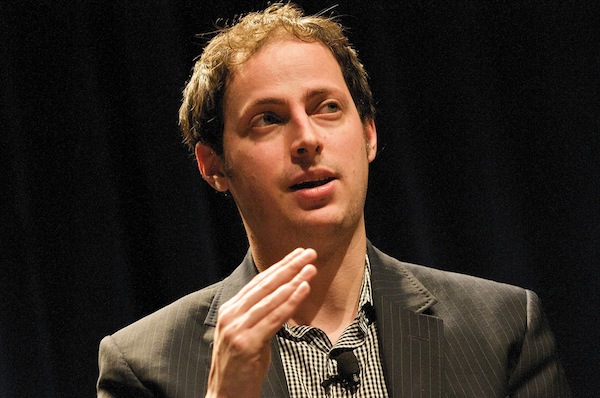
How Does Nate Silver Do It?

Obama may have won the presidency on election night, but pundit Nate Silver won the internet by correctly predicting presidential race outcomes in every state plus the District of Columbia — a perfect 51/51 score.

Now the interwebs are abuzz with Nate Silver praise. Gawker proclaims him “America’s Chief Wizard.” Gizmodo humorously offers 25 Nate Silver Facts (sample: “Nate Silver’s computer has no “backspace” button; Nate Silver doesn’t make mistakes”). IsNateSilverAWitch.com concludes: “Probably.”

Was Silver simply lucky? Probably not. In the 2008 elections he scored 50/51, missing only Indiana, which went to Obama by a mere 1%.

How does he do it? In his CFAR-recommended book The Signal and the Noise: Why So Many Predictions Fail, but Some Don’t, Silver reveals that his “secret” is bothering to obey the laws of probability theory rather than predicting things from his gut.

An understanding of probability can help us see what Silver’s critics got wrong. For example, Brandon Gaylord wrote:
Silver… confuses his polling averages with an opaque weighting process… and the inclusion of all polls no matter how insignificant – or wrong – they may be. For example, the poll that recently helped put Obama ahead in Virginia was an Old Dominion poll that showed Obama up by seven points. The only problem is that the poll was in the field for 28 days – half of which were before the first Presidential debate. Granted, Silver gave it his weakest weighting, but its inclusion in his model is baffling.
Actually, what Silver did is exactly right according to probability theory. Each state poll provided some evidence about who would win that state, but some polls — for example those which had been accurate in the past — provided more evidence than others. Even the Old Dominion poll provided some evidence, just not very much — which is why Silver gave it “his weakest weighting.” Silver’s “opaque weighting process” was really just a straightforward application of probability theory. (In particular, it was an application of Bayes’ Theorem.)

by Luke and Gwern Branwern, CFAR |  Read more:

A Different Justice

As an American, or maybe just as a moral human being, it's hard not to feel appalled, even outraged, that Norwegian far-right monster Anders Breivik only received 21 years in prison for his attacks last year, including a bombing in Oslo and a cold-blooded shooting spree, which claimed 77 lives. That's just under 100 days per murder. The decision, reached by the court's five-member panel, was unanimous. He will serve out his years (which can be extended) in a three-room cell with a TV, exercise room, and "Ikea-style furniture." The New York Times quoted a handful of survivors and victims' relatives expressing relief and satisfaction at the verdict. It's not a scientific survey, but it's still jarring to see Norwegians welcoming this light sentence.

Norway's criminal justice system is, obviously, quite distinct from that of, say, the U.S.; 21 years is the maximum sentence for anything less severe than war crimes or genocide. Still, it's more than that: the entire philosophy underpinning their system is radically different. I don't have an answer for which is better. I doubt anyone does. But Americans' shocked response to the Breivik sentence hints at not just how different the two systems are, but how deeply we may have come to internalize our understanding of justice, which, whatever its merits, doesn't seem to be as universally applied as we might think.

The American justice system, like most of those in at least the Western world, is built on an idea called retributive justice. In very simplified terms (sorry, I'm not a legal scholar), it defines justice as appropriately punishing someone for an act that's harmful to society. Our system does include other ideas: incapacitating a criminal from committing other crimes, rehabilitating criminals to rejoin society, and deterring other potential criminals. At its foundation, though, retributive justice is about enforcing both rule of law and more abstract ideas of fairness and morality. Crimes are measured by their damage to society, and it's society that, working through the court system, metes out in-turn punishment. Justice is treated as valuable and important in itself, not just for its deterrence or incapacitative effects. In a retributive system, the punishment fits the crime, and 21 years in a three-room cell doesn't come close to fitting Breivik's 77 premeditated murders.

Criminals are not primarily wrongdoers to be punished, but broken people to be fixed.Norway doesn't work that way. Although Breivik will likely be in prison permanently -- his sentence can be extended -- 21 years really is the norm even for very violent crimes. The much-studied Norwegian system is built on something called restorative justice. Proponents of this system might argue that it emphasizes healing: for the victims, for the society, and, yes, for the criminal him or herself. Sounds straightforward enough, but you might notice that there's nothing in there about necessarily punishing the criminal, and in fact even takes his or her needs into account.

"Restorative justice thus begins with a concern for victims and how to meet their needs, for repairing the harm as much as possible, both concretely and symbolically," explains a 1997 academic article, by a scholar of restorative justice named Howard Zehr, extolling the systems' virtues. In the Breivik trial, this meant giving every victim (survivors as well as the families of those killed) a direct voice. Victims were individually represented by 174 court-appointed lawyers. The court heard 77 autopsy reports, 77 descriptions of how Breivik had killed them, and 77 minute-long biographies "voicing his or her unfulfilled ambitions and dreams." In an American-style retributive system, the trial is primarily about hearing and evaluating the case against the criminal. Norway does this too, but it also includes this restorative tool of giving space to victims, not as evidence, but to make the trial a forum for those victims to heal and to confront the man who'd harmed them. The trial itself is about more than just proving or disproving guilt, but about exorcising the victims' suffering.

What about the criminal? Of course, Norway is locking Breivik away in part to keep him safely cordoned off from society. Beyond that, the restorative "model encourages offenders to understand the consequences of their actions or to empathize with victims," Zehr explains. That begins with the trial, where he or she is encouraged to grapple with the wrongness of their actions; Breivik gave no sign of doing this, a remorseless, fist-pumping neo-Nazi to the very end. The process continues during the incarceration, which is treated less as a form of punishment than as a sort of state-imposed rehabilitation. It's not a categorial difference from the American model, which includes a number of rehab and therapeutic offerings, but, with Breivik about to enjoy some not insignificant creature comforts in his three-room cell, the emphasis is clearly distinct.

The pleasant-sounding experience of being in Norwegian prison isn't some sign of Scandinavian weakness or naïveté; it's precisely the point. A comfortable cell, clean and relaxing environment, and nice daily activities such as cooking classes are all meant to prepare the criminal for potentially difficult or painful internal reformation. Incarceration, in this thinking, is the treatment for whatever social or psychological disease led them to transgress. The criminals are not primarily wrongdoers to be punished, but broken people to be fixed.

by Max Fisher, The Atlantic |  Read more:

North Kohala Nurtures Music and Arts

[ed. I've always loved Hawi, and John Keawe is a slack-key guitar master - every album of his that I own is excellent.]

HAWI, Hawaii — You don't get to North Kohala unless you mean to, or you've made a wrong turn.

All the better for local musicians and artists to hide away and find their Polynesian muses.

This lush district at the Big Island of Hawaii's north shore is isolated from the busy Kona Coast by the ranch-dotted, horse-heaven hill that is Kohala, an extinct volcano. On its windward side, it squeezes up like an accordion into deep and wild valleys navigated only by ancient trails.

A two-lane road transits the frozen-in-time, tin-roof towns of Hawi and Kapa'au and ends at an overlook and trailhead above the kiwi-green Pololu Valley.

Nearby, on a windswept point looking toward Maui, King Kamehameha I was born in the 1750s. To protect him from chiefs jealous of his royal destiny, protectors fled with the infant to raise him in the remote backcountry beyond Pololu.

To this day, North Kohala cradles island culture and intact native families, and this road less traveled nurtures the souls of musicians and artists whose work is emblematic of Hawaii.

You need a reason

"The important thing about Kohala is it's a dead-end road and you have to have a reason to come up here," says David Gomes, a musician whose Portuguese great-grandparents came from the Azores to work a now-defunct sugar plantation that was Kohala's economic lifeblood for 100 years. "That makes the community a little tight place. They're sweet, tolerant, forgiving people. Kohala is literally and figuratively the end of the road for some."

Gomes, who grew up with the remote valleys as his playground and who still loves to hike them, spends peaceful days crafting masterful guitars and ukuleles in a cluttered workshop off a quiet lane above Hawi (say "Huh-vee"). He has a dual cultural connection to the ukulele: Before being popularized in Hawaii in the 1800s, ukuleles came from Portugal.

by Brian J. Cantwell, Seattle Times |  Read more:
Photo: Brian J. Cantwell

Building a Better Vibrator

The offices of Jimmyjane are above a boarded-up dive bar in San Francisco's Mission district. There used to be a sign on a now-unmarked side door, until employees grew weary of men showing up in a panic on Valentine's Day thinking they could buy last-minute gifts there. (They can't.) The only legacy that remains of the space's original occupant, an underground lesbian club, is a large fireplace set into the back wall. Porcelain massage candles and ceramic stones, neatly displayed on sleek white shelves alongside the brightly colored vibrators that the company designs, give the space the serene air of a day spa.

Ethan Imboden, the company's founder, is 40 and holds an electrical engineering degree from Johns Hopkins and a master's in industrial design from Pratt Institute. He has a thin face and blue eyes, and wears a pair of small hoop earrings beneath brown hair that is often tousled in some fashion. The first time I visited, one April morning, Imboden had on a V-neck sweater, designer jeans and Converse sneakers with the tongues splayed out -- an aesthetic leaning that masks a highly programmatic interior. "I think if you asked my mother she'd probably say I lined up my teddy bears at right angles," he told me.

Imboden was seated next to a white conference table, reviewing a marketing graphic that Jimmyjane was preparing to email customers before the summer season. Projected onto a wall was an image that promoted three of Jimmyjane's vibrators, superimposed over postcards of iconic destinations -- Paris, the Taj Mahal, a Mexican surf beach -- with the title: "Meet Jimmyjane's Mile High Club: The perfect traveling companions for your summer adventures." The postcard for the Form 2, a vibrator Imboden created with the industrial designer Yves Behar, was pictured alongside the Eiffel Tower with the note: " Bonjour! Thanks to my handy button lock I breezed through my flight without making noise or causing an international incident. See you soon, FORM 2."

Jimmyjane's conceit is to presuppose a world in which there is no hesitation around sex toys. Placing its products on familiar cultural ground has a normalizing effect, Imboden believes, and comparing a vibrator to a lifestyle accessory someone might pack into their carry-on luggage next to an iPad shifts people's perceptions about where these objects fit into their lives. Jimmyjane products have been sold in places like C.O. Bigelow, the New York apothecary, Sephora, W Hotels, and even Drugstore.com. Insinuating beautifully designed and thoughtfully engineered sex toys into the mainstream consumer landscape could push Americans into more comfortable territory around sex in general. Jimmyjane hopes to achieve this without treading too firmly on mainstream sensibilities. (...)

Through their design, Imboden wants to convey the sense that these are carefully considered objects--that someone is looking out for our sexual well-being, even if we have been conditioned to have low expectations. "I jokingly say this is an area where you really don't want to disappoint your customers," Behar told me. "And I think this is an industry that has treated its customers really badly." The Form 2 takes a symmetrical, organic form but they avoid emulating anatomy, because while "the penis is very well designed to accomplish what it needs to accomplish, a vibrator doesn't actually need to do those same things," Imboden said. One function it was not designed to accomplish was to stimulate a woman's G spot, but even if it did, mimicking male genitalia treads on psychological territory that Imboden would rather avoid. "While on the one hand that has its own excitement, there becomes a third person," he said, noting that some men feel threatened by an object they perceive to be a substitution for themselves. "People aren't necessarily seeking to have a threesome. Our goal has really been for the focus to be on you and your sensations and the interaction with your partner and not really to pull attention to the product itself. That's an element of why we make the products as quiet as they are. It's also why we make them visually quiet." Representational objects, like taxidermy hanging in a lodge, take up psychic space; figurative forms leave fantasy open to one's own interpretation. "Staying away from body shapes," Imboden explained, "is a way of keeping open provocative possibility, as opposed to narrowing it down to a provocative prescription."

by Andy Issacson, The Atlantic |  Read more:

Cap Sante 2
markk

Saturday, November 10, 2012


susan jane walp
via:

Unsung Heroes

[ed. How many have heard of Ms. King and her accomplishments? Not a lot, I'd imagine; and not me until recently. I wish we had a rock star category for scientists. See also, her fight against gene patenting.]

Mary-Claire King (born 1946) is an American human geneticist. She is a professor at the University of Washington, where she studies the genetics and interaction of genetics and environmental influences on human conditions such as HIV, lupus, inherited deafness, and also breast and ovarian cancer. King is known for three major accomplishments: identifying breast cancer genes; demonstrating that humans and chimpanzees are 99% genetically identical; and applying genomic sequencing to identify victims of human rights abuses.

King began her career with a degree in mathematics (cum laude) from Carleton College. She completed her doctorate in 1973 at the University of California, Berkeley in genetics, after her advisor Allan Wilson persuaded her to switch from mathematics to genetics. In her doctoral work at Berkeley (1973), she demonstrated through comparative protein analysis that chimpanzees and humans are 99% genetically identical, a finding that stunned the public at the time, revolutionized evolutionary biology, and is today common knowledge. King's work supported Allan Wilson's view that chimpanzees and humans diverged only five million years ago, and King and Wilson suggested that gene regulation was likely responsible for the significant differences between the species, a prescient suggestion since borne out by other researchers.

King completed postdoctoral training at the University of California, San Francisco (UCSF) before accepting a faculty appointment at the University of California, Berkeley, as professor of genetics and epidemiology (1976–1995).

While on the faculty at Berkeley, King demonstrated in 1990 that a single gene on chromosome 17, later known as BRCA1, was responsible for many breast and ovarian cancers—as many as 5-10% of all cases of breast cancer may be hereditary. The discovery of the "breast cancer gene" revolutionized the study of numerous other common diseases; prior to and during King's 16 years working on this project, most scientists had disregarded her ideas on the interplay of genetics with complex human disease. Genetics had been used in diseases with a single genetic tie, such as Huntington's disease, cystic fibrosis, and sickle-cell anemia, but researchers were skeptical about genetics' utility in the more common kinds of diseases that included multiple genetic factors and environmental factors as well.

The technique King developed to identify BRCA1 has since proven valuable in the study of many other illnesses, and King has built on to that research by identifying BRCA2, and extending her technique to other diseases and conditions.

Since 1990 King has also begun working in collaboration with scientists around the world to identify genetic causes of hearing loss and deafness. They successfully cloned the first nonsyndromic deafness-related gene in 1997. King continues to work with scientists Karen Avraham in Israel and Moien Kanaan in the West Bank, modeling international scientific cooperation in conjunction with conducting scientific research. Hereditary deafness is common amongst Arab communities, providing good study populations to understand the genetics.

King has also worked on the Human Genome Diversity Project, which seeks to delineate the distinctions between individuals in order to further understanding of human evolution and historical migrations.

At the request of Dr. William Maples, King was also involved in DNA investigations of the first party of Romanov remains exhumed in 1991 in Ekaterinburg, Russia.

King remained at Berkeley until 1995, when she took an appointment as the American Cancer Society Research Professor at the University of Washington.

King first applied her genetics skills to human rights work in 1984, when she and her lab began working with Abuelas de Plaza de Mayo (Grandmothers of Plaza de Mayo) in Argentina to use dental genetics to identify missing persons, ultimately identifying and returning to their homes more than 50 children. The missing persons included at least 59 children, most born to women targeted and "disappeared" by the Argentine military dictatorship during the eight-year "dirty war" of the 1970s and 1980s. These children, after being removed from their imprisoned mothers, were often illegally "adopted" by military families without their mothers' consent. Las Abuelas ("the grandmothers") had gathered data trying to identify the children, and every Thursday, marched to the central plaza in Buenos Aires ("Plaza de Mayo") to demand the return of their grandchildren. The Argentinian government would not return the children without "proof" of kinship, however, and King's technique, using mitochondrial DNA and human leukocyte antigen serotyping genetic markers from dental samples, proved invaluable. The Supreme Court of Argentina in 1984 determined that King's test had positively identified the relationship of Paula Logares to her family, establishing the precedent for the ultimate reunification of dozens of families with their stolen children.

by Wikipedia | Read more:
Photo: Dan Lamont