Sunday, April 20, 2014

Alive in the Sunshine

For as long as the environment has existed, it’s been in crisis. Nature has always been a focus of human thought and action, of course, but it wasn’t until pesticides and pollution started clouding the horizon that something called “the environment” emerged as a matter of public concern.
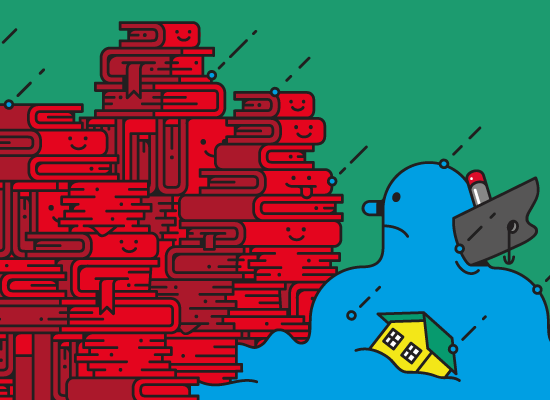
In 1960s and 1970s America, dystopian images provoked anxiety about the costs of unprecedented prosperity: smog thick enough to hide skylines from view, waste seeping into suburban backyards, rivers so polluted they burst into flames, cars lined up at gas stations amid shortages, chemical weapons that could defoliate entire forests. Economists and ecologists alike forecasted doom, warning that humanity was running up against natural limits to growth, extinction crises, and population explosions.

But the apocalypse didn’t happen. The threat that the environment seemingly posed to economic growth and human well-being faded from view; relieved to have vanquished the environmental foe, many rushed to declare themselves its friends instead.

Four decades later, everyone’s an environmentalist — and yet the environment appears to be in worse shape than ever. The problems of the seventies are back with a vengeance, often transposed into new landscapes, and new ones have joined them. Species we hardly knew existed are dying off en masse; oceans are acidifying in what sounds like the plot of a second-rate horror movie; numerous fisheries have collapsed or are on the brink; freshwater supplies are scarce in regions home to half the world’s population; agricultural land is exhausted of nutrients; forests are being leveled at staggering rates; and, of course, climate change looms over all.

These aren’t issues that can be fixed by slapping a filter on a smokestack. They’re certainly not about hugging trees or hating people. To put it bluntly, we’re confronted with the fact that human activity has transformed the entire planet in ways that are now threatening the way we inhabit it — some of us far more than others. And it’s not particularly helpful to talk in generalities: the idea that The Environment is some entity that can be fixed with A Solution is part of the problem.

The category “environmental problems” contains multitudes, and their solutions don’t always line up: water shortages in Phoenix are a different matter than air pollution in Los Angeles, disappearing wetlands in Louisiana, or growing accumulations of atmospheric carbon. So instead of laying out some kind of template for a sustainable future, I argue that there’s no way to get there without tackling environmentalism’s old stumbling blocks: consumption and jobs. And the way to do that is through a universal basic income. (...)

It’s hard to think of many things more disingenuous than arguing that addressing environmental issues will impose unacceptable restrictions on the American standard of living while simultaneously promoting austerity measures — yet that attitude is pervasive in mainstream political discourse.

And while having stuff doesn’t make you a miserable soulless materialist, as some of the shriller anti-consumerist rhetoric would suggest, it doesn’t necessarily make you happier, either. Rather, the “status treadmill” frequently does the opposite: fueling anxiety, inadequacy, and debt under the banner of democracy and freedom. Meanwhile, consumer guilt has led to an explosion in “green” products — recycled toilet paper, organic T-shirts, all-natural detergents — but most do little more than greenwash the same old stuff, bestowing a sheen of virtue on their users, suggesting personal choices will save the planet. But the individual agonizing that constitutes consumer politics isn’t going to get around the fact that the global economy depends on more or less indefinitely expanding consumption. In fact, consumption has come full circle and become virtuous: protesting sweatshops and ranting about exploitation is passé; buying gadgets is the new way to lift people out of poverty. And so it’s not just workers who are threatened with jobs blackmail — we’re all threatened with consumption blackmail, wherein consuming less will put millions out of work worldwide and crash the global economy. Even our trash is creating jobs somewhere. (...)

A “green economy” can’t just be one that makes “green” versions of the same stuff, or one that makes solar panels in addition to SUVs. Eco-Keynesianism in the form of public works projects can be temporarily helpful in building light rail systems and efficient infrastructure, weatherizing homes, and restoring ecosystems — and to be sure, there’s a lot of work to be done in those areas. But a spike in green jobs doesn’t tell us much about how to provide for everyone without creating jobs by perpetually expanding production. The problem isn’t that every detail of the green-jobs economy isn’t laid out in full — calls for green jobs are meant to recognize the fraught history of labor-environmentalist relations, and to signify a commitment to ensuring that sustainability doesn’t come at the expense of working communities. The problem is that the vision they call forth isn’t a projection of the future so much as a reflection of the past — most visions of a “new economy” look a whole lot like the same old one. Such visions reveal a hope that climate change will be our generation’s New Deal or World War II, vaulting us out of hard times into a new era of widespread prosperity.

by Alyssa Battistoni, Jacobin |  Read more:
Image: Edward Carvalho-Monaghan

In a Hole, Golf Considers Digging a Wider One

Golf holes the size of pizzas. Soccer balls on the back nine. A mulligan on every hole.

These are some of the measures — some would say gimmicks — that golf courses across the country have experimented with to stop people from quitting the game.

Golf has always reveled in its standards and rich tradition. But increasingly a victim of its own image and hidebound ways, golf has lost five million players in the last decade, according to the National Golf Foundation, with 20 percent of the existing 25 million golfers apt to quit in the next few years.

People under 35 have especially spurned the game, saying it takes too long to play, is too difficult to learn and has too many tiresome rules.

Many of golf’s leaders are so convinced the sport is in danger of following the baby boomer generation into the grave that an internal rebellion has led to alternative forms of golf with new equipment, new rules and radical changes to courses. The goal is to alter the game’s reputation in order to recruit lapsed golfers and a younger demographic.

“We’ve got to stop scaring people away from golf by telling them that there is only one way to play the game and it includes these specific guidelines,” said Ted Bishop, the president of the P.G.A. of America, who also owns a large Indiana golf complex. “We’ve got to offer more forms of golf for people to try. We have to do something to get them into the fold, and then maybe they’ll have this idea it’s supposed to be fun.”

Among the unconventional types of golf is an entry-level version in which the holes are 15 inches wide, about four times the width of a standard hole.

by Bill Pennington, NY Times |  Read more:
Image: Paul Abell/Associated Press for Hack Golf

Saturday, April 19, 2014


Arne Svenson“Neighbors #5,” 2012
via:

Thursday, April 17, 2014

My Boss Has Body Odour and I Have Sex with My Twin


In the late 17th century, a “panel of experts” answered reader queries submitted to the The Athenian Mercury, on topics ranging from literature to epistemology; the magazine’s spin-off, The Ladies Mercury, was devoted solely to advising “virgins, wives, or widows.” A hundred years later, the Ladies Monthly Museum, a periodical devoted to the “Amusement and Instruction” of polite females, would provide what’s probably the template for the contemporary advice column. Since then, “agony aunts” (and “uncles”) have become staples across media—print (Ann Landers, Dear Abby, Dan Savage), radio (Dr. Drew), online (Cary Tennis)—and the most distinctive voices among them have become iconic.

But why do complete strangers seek advice from people they hardly know? And likewise, how do advice columnists—who are rarely psychologists or ethicists by training—justify their answers?

Hazlitt recently gathered four of our favourite columnists for a round of shoptalk on the ethics and challenges of the advice game. Cheryl Strayed, otherwise known as ‘Dear Sugar’ at The Rumpus, has published two books this year: the New York Times bestseller Wild, a heartrending memoir about her arduous solo trek along the Pacific Crest Trail in the wake of a marriage break-up and her mother’s death; and a collection of her ‘Dear Sugar’ columns titled Tiny Beautiful Things. Cary Tennis writes the ‘Since You Asked’ column at Salon, where his existential musings have offered comfort to readers since 2001. Emily Yoffe is Slate’s ‘Dear Prudence’, while her other writing has appeared in the New York Times and Esquire. Lynn Coady is a former advice columnist for The Globe and Mail and her novel, The Antagonist, was shortlisted for the 2011 Giller Prize.

Are there common threads or themes that you see over and over in the questions you get? Questions that seem to be real problems in a lot of people’s lives that they keep writing in about in variations?

Cheryl: Yes, a ton. There are a lot of people with broken hearts. And they’ll never get over so and so leaving them.

Emily: Yeah, I never run those because the answer is the same and it’s very boring. It’s just, “Move forward.” The guy I thought I’d kill myself over when I was 27 I can’t remember the name of now. There are some big general categories. One is cubicle land. The horrors of the farters, the breathers, the hummers, the eaters. I can only do a limited number of “My husband looks at porn.”

Lynn: With 'Group Therapy,' because of the nature of the column, I got a lot of emotional etiquette questions. It had a jury effect. A lot of people wrote in about some relationship they had, and both parties were hurt and insulted by something the other had done, and the over arching question was “Which one of us is the asshole here?”

Emily: Another thing I’ve learned from the column is write the damn thank you note! This feeling of “I haven’t been sufficiently acknowledged” is really deep. Read the Bible. Cain and Abel. What was that over? God liked this gift better than that gift. They seem trivial, but they’re big.

Cheryl: That’s funny. I hardly get etiquette or work-related stuff. I get a lot of sex and love questions. There are far more 28-year-old virgins out there then I ever would have imagined.

Emily: Don’t you want to put them together?

Cheryl: Introduce them to each other? Yeah. There are several questions from virgins that stump us. I’ve gotten questions from virgins that ask, “How do you get to the point where you have sex with someone else?” I don’t know how to explain that. I always had the opposite problem, like how do you get to a place where you don’t have sex with someone?It’s funny.

Emily: I agree. There’s something heartbreaking about that. I get a lot of “I’m 25, 27, 28. Everyone says I’m attractive. I have a good job, but no one from the opposite sex has ever touched me.” And you wonder. There are some people who miss the boat in high school and they think there’s some kind of magical thing that happened that they missed. And they get older and older and they’re heading toward becoming a 40-year-old virgin.

Cheryl: Well maybe that’s a part of it. They missed that moment where they were supposed to do that thing. And then now they’re on the other side of it and it becomes an issue. Cary, how have you answered this?

Cary: The introversion/extroversion thing is hard sometimes. Some people are deeply introverted and it’s hard to fathom. As my detractors will be happy to note, I don’t always provide answers. Sometimes I’m just writing a thing. I answer a lot of questions that are unanswerable, because I’m not really answering them. I’m like singing a song. I’m trying to say something comforting.

Emily: I think Cary gets to the heart of what makes each of our columns different. What you describe is very different from what I do. I’ve had people say, “I don’t know how you answered that.” I say I only answer the ones I think I can answer! People are looking at these columns for different things.

by Britt Harvey, Hazlitt |  Read more:
Illustration by Andrew Kolb
[ed. Repost August 25, 2012]

Gabriel García Márquez, Conjurer of Literary Magic, Dies at 87

[ed. See also: The Art of Fiction No.69.]

Gabriel García Márquez, the Colombian novelist whose “One Hundred Years of Solitude” established him as a giant of 20th-century literature, died on Thursday at his home in Mexico City. He was 87.

Cristóbal Pera, his former editor at Random House, confirmed the death. Mr. García Márquez learned he had lymphatic cancer in 1999, and a brother said in 2012 that he had developed senile dementia.

Mr. García Márquez, who received the Nobel Prize for Literature in 1982, wrote fiction rooted in a mythical Latin American landscape of his own creation, but his appeal was universal. His books were translated into dozens of languages. He was among a select roster of canonical writers — Dickens, Tolstoy and Hemingway among them — who were embraced both by critics and by a mass audience.

“Each new work of his is received by expectant critics and readers as an event of world importance,” the Swedish Academy of Letters said in awarding him the Nobel.

Mr. García Márquez was a master of the literary genre known as magical realism, in which the miraculous and the real converge. In his novels and stories, storms rage for years, flowers drift from the skies, tyrants survive for centuries, priests levitate and corpses fail to decompose. And, more plausibly, lovers rekindle their passion after a half-century apart.

Magical realism, he said, sprang from Latin America’s history of vicious dictators and romantic revolutionaries, of long years of hunger, illness and violence. In accepting his Nobel, Mr. García Márquez said: “Poets and beggars, musicians and prophets, warriors and scoundrels, all creatures of that unbridled reality, we have had to ask but little of imagination. For our crucial problem has been a lack of conventional means to render our lives believable.”

Like many Latin American intellectuals and artists, Mr. García Márquez felt impelled to speak out on the political issues of his day. He viewed the world from a left-wing perspective, bitterly opposing Gen. Augusto Pinochet, the right-wing Chilean dictator, and unswervingly supporting Fidel Castro in Cuba. Mr. Castro became such a close friend that Mr. García Márquez showed him drafts of his unpublished books.

No draft had more impact than the one for “One Hundred Years of Solitude.” Mr. García Márquez’s editor began reading it at home one rainy day, and as he read page after page by this unknown Colombian author, his excitement grew. Soon he called the Argentine novelist Tomás Eloy Martínez and summoned him urgently to the home.

Mr. Eloy Martinez remembered entering the foyer with wet shoes and encountering pages strewn across the floor by the editor in his eagerness to read through the work. They were the first pages of a book that in 1967 would vault Mr. García Márquez onto the world stage. He later authorized an English translation, by Gregory Rabassa. In Spanish or English, readers were tantalized from its opening sentences:

“Many years later, as he faced the firing squad, Col. Aureliano Buendía was to remember that distant afternoon when his father took him to discover ice. At that time Macondo was a village of 20 adobe houses built on the bank of a river of clear water that ran along a bed of polished stones, which were white and enormous, like prehistoric eggs. The world was so recent that many things lacked names, and in order to indicate them it was necessary to point.”

“One Hundred Years of Solitude” would sell tens of millions of copies. The Chilean poet Pablo Neruda called it “the greatest revelation in the Spanish language since ‘Don Quixote.’ ” The novelist William Kennedy hailed it as “the first piece of literature since the Book of Genesis that should be required reading for the entire human race.”

Mr. García Márquez was rattled by the praise. He grew to hate “One Hundred Years of Solitude,” he said in interviews, because he feared his subsequent work would not measure up to it in readers’ eyes. He need not have worried. Almost all his 15 other novels and short-story collections were lionized by critics and devoured by readers.

by Jonathan Kandell, NY Times |  Read more:
Image: Ulf Andersen, AP

Douglas and Stephanie Mallis Kahn
via:

The Postcapital Economy

Consider John Maynard Keynes’s coalmine experiment. On the theory that having people employed for no purpose at all can help to stimulate economic activity during times of demand collapse or output shock, he proposed having a government fill old bottles with banknotes, bury them in coal mines, and encouraging private enterprise to compete to dig them back up again. The process would employ many more people in jobs, albeit pointless ones, and thereby spread wealth around. Keynes argued it would naturally be more sensible to have these people employed in building houses or something else more useful. But the economic effect would be the same.

In many ways, what White is arguing is that China is actually running the greatest Keynesian coal-mine thought experiment of all time, building and producing not for the sake of what was produced but rather to take advantage of a global capital surplus. This gave China the opportunity to empower its citizens on the condition that underwriting the capital could woo it in the first place through this massive social experiment. It did so, of course, by means of foreign-exchange manipulation—an important precursor to the quantitative easing (QE) used by the U.S. Federal Reserve postcrisis—that ensured that every dollar invested in China would offer a better payoff than a dollar invested at home. It could guarantee this because not only would there always be a superior Chinese bid for the capital in question but it would be coming from the government directly.

It is only because the government is putting up the bid rather than private enterprise—which in emerging markets is thought of as risky and suffering from corruption and other principal-agent problems—that the capital suddenly becomes free-flowing to the country in question. If it wasn’t the government providing the bid, it would be seen as too risky to invest. But since the government can print money ad infinitum, and this is what Chinese currency manipulation really consists of (buying dollars with newly printed yuan), that bid remains competitive for as long as the Chinese government wants it to be.

The Western version of QE sees the Federal Reserve printing money in order to absorb underperforming assets and U.S. Treasury bonds into its coffers in a way that effectively underwrites their performance no matter what and squeezes the market at the same time. The Chinese FX manipulation version of QE saw the government printing money in order to absorb abundant dollars out of the global system, in a way that effectively kept the dollar overvalued no matter what. This meant investors could be sure that their dollar denominated investments in China would always result in real returns.

The reason the Chinese government felt comfortable underwriting bids for foreign investment, meanwhile, is probably because its socialistic disposition allowed it to see what the West couldn’t: namely, that in the West, capital was no longer scarce enough to justify a truly competitive bid for it and all China had to do was provide some sort of guarantee in order to benefit from it.

At the end of the day, the much discussed “savings glut” is just another way of saying capital surplus. For years nobody really understood what was fueling it, but more recently Larry Summers speculated that it was the first clear symptom of “secular stagnation,” a trend that arguably started in the early 1980s. In a secular-stagnated economy, we end up with a capital rather than labor bias, which sees rents and returns flow to owners of capital in favor of labor, to the detriment of the wider economy.

Unless that surplus could be redistributed to new pockets of demand, all roads consequently lead to a demand collapse, because eventually all wealth becomes concentrated in the hands of technology and capital owners rather than in labor’s hands. This creates a vicious demand circle that impoverishes the economy overall.

For China to benefit from that capital surplus, all it needed to do was draw the capital over and keep it there, creating a self-enforcing capital scarcity—or savings glut—for the world. With its socialistically minded economy that didn’t mind investing capital for public purposes regardless of return, China prevented that capital from returning to the West. This is important, because if the capital was allowed to flow back to the West, it would have less of a distributive wealth effect than it would in China, where it would make more people feel more rich. In the West, it would more than likely end up concentrating in the hands of capital owners, who would be ever keener to employ robots than human beings. (...)

As White argues, this is why it’s wrong to assume that China is pursuing capitalism as we know it. Its real aim is to create a hybrid model of public investment and very aggressive market-based competition with the hope of creating consumer surpluses rather than economic rents. This would distribute wealth more widely than if it was passed exclusively to rent seekers alone.

Capital is allocated consequently not on the basis of whether the asset created can provide a return but whether it serves a greater social purpose. The Chinese government will consequently fund contractors to develop public infrastructure and other massive social projects, as well as backstop private enterprise that has potentially overinvested in private developments. Even if the projects don’t yield a monetary return, they improve the social infrastructure, Chinese mobility, and the general standard of life. By contrast, in the United States, the lack of guaranteed returns has created a major underinvestment problem in public infrastructure, which is now falling apart or becoming ever more dangerous as a result.

by Izabella Kaminska, TNI |  Read more:
Image: uncredited

Irony is Ruining Our Culture

[ed. The prevalence of irony may also be an expression of generalized helplessness/hopelessness, which, I guess, is at least a positive in that it implies an awareness and perhaps yearning for something more authentic. It's better than what comes after: cynicism (followed by resignation and/or despair).]

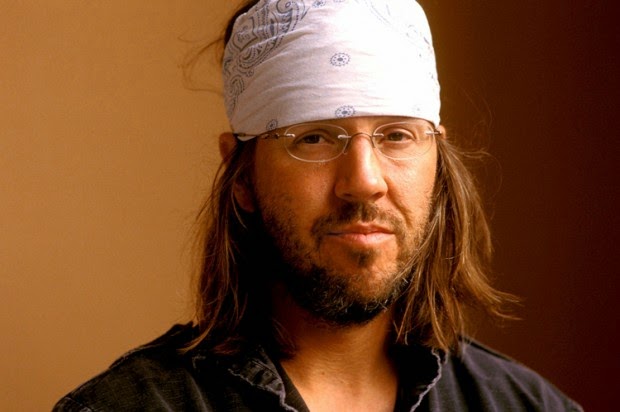
Percy Shelley famously wrote that “poets are the unacknowledged legislators of the world.” For Shelley, great art had the potential to make a new world through the depth of its vision and the properties of its creation. Today, Shelley would be laughed out of the room. Lazy cynicism has replaced thoughtful conviction as the mark of an educated worldview. Indeed, cynicism saturates popular culture, and it has afflicted contemporary art by way of postmodernism and irony. Perhaps no recent figure dealt with this problem more explicitly than David Foster Wallace. One of his central artistic projects remains a vital question for artists today: How does art progress from irony and cynicism to something sincere and redeeming?

Twenty years ago, Wallace wrote about the impact of television on U.S. fiction. He focused on the effects of irony as it transferred from one medium to the other. In the 1960s, writers like Thomas Pynchon had successfully used irony and pop reference to reveal the dark side of war and American culture. Irony laid waste to corruption and hypocrisy. In the aftermath of the ’60s, as Wallace saw it, television adopted a self-deprecating, ironic attitude to make viewers feel smarter than the naïve public, and to flatter them into continued watching. Fiction responded by simply absorbing pop culture to “help create a mood of irony and irreverence, to make us uneasy and so ‘comment’ on the vapidity of U.S. culture, and most important, these days, to be just plain realistic.” But what if irony leads to a sinkhole of relativism and disavowal? (...)

Recently, the Onion spoofed an ad campaign in which Applebee’s encouraged hipsters to visit their restaurants “ironically” and middle-aged adults to make fun of hipsters. The parody describes four “with it” young folks “seriously” eating their dinner at Applebee’s while ridiculing the food, service and atmosphere. Behind them sit three sad, middle-aged adults mocking the hipsters, sarcastically saying “because I know who the latest bands are I am too cool to eat a cheeseburger without making fun of it.” Neither group is genuinely happy about their meal or station in life. The Onion’s satire points out that irony and formality have become the same thing. At one time, irony served to reveal hypocrisies, but now it simply acknowledges one’s cultural compliance and familiarity with pop trends. The art of irony has lost its vision and its edge. The rebellious posture of the past has been annexed by the very commercialism it sought to defy.

by Matt Ashby and Brendan Carroll, Salon |  Read more:
Image: Hachette Book Group

How Legalized Pot Would Change America

When Washington State needed advice on how to set up a market for legal marijuana, they called UCLA professor Mark Kleiman. Here, Kleiman discusses the future of legalized pot with Ezra Klein.

The interview has been edited for length and clarity.

Mark Kleiman: Continued prohibition is probably the worst thing we could do about cannabis right now. Alcohol style legalization, which is where we're headed, is probably the second worse. If we had a national debate now we might settle on a temperate cannabis policy. That would get us the benefits of legalization without an upsurge in heavy use and use by juveniles.

Without a national solution – a national framework for safe cannabis policy – we're going to wind up going down the road we went down with alcohol. We'll have commercial sale, low taxes, loose regulation. That's a bad place to be for alcohol. It's not as bad a place to be for cannabis, but it's the worse place we could be.

Ezra Klein: Why is it a dumb idea to regulate Cannabis in the states?

Mark: A lot of the things you might want to do as a state government you can't do while it remains federally illegal. Each state is hostage to all the other states. If Washington wanted to have tight restrictions and high taxes and Oregon wanted to have loose restrictions and low taxes, guess what happens? Lots of Oregon pot floods Washington.

We'll get a race to the bottom. With tobacco, now New York State and particularly New York City have very high tobacco taxes. But something like a third of all the cigarettes sold in New York City are smuggled. Not from Leningrad, but from Virginia. It's really hard to stop that stuff.

An ounce of cannabis on the illicit market or in the medical stores now costs around $300. A pack of cigarettes can easily weigh just about one ounce. New York City and state are trying to collect $8.00 on a pack of cigarettes and substantially failing. So now try to collect $300.00 on an ounce of cannabis.

I think burning plant leaves and flowers and breathing the smoke is going to be completely out of fashion in ten years along with burning tobacco leaves.

I think we're going to go entirely e-cigarette for both markets. One of the consequences is that's much easier to smuggle because concentrate is much more compact than herbal cannabis. Collecting state level taxes on this may be really hard if there's any substantial state gradients. It's a little weird to be giving state licenses to commit federal felonies. It will be nice to have a legally sane system. (...)

Ezra: Why do you think cannabis concentrate is going to become so dominant in ten years? I'm curious about that.

Mark: A number of reasons. Most people don't like to cough.

Ezra: We should say concentrate is when you've essentially extracted the active ingredient.

Mark: There are a number of different technologies for taking cannabis flowers and leave sand extracting from them the active agents. Not just the THC but the 90 other chemicals that are in there. Then it's put in a variety of forms. There's a liquid form that can go into something like an e-cigarette. There's also a solid, sort of waxy form that can go into a different kind of vaporizer.

In any case you've got some device that applies external heat to the concentrate and you breathe the vapor as opposed to the current technology which is you burn the plant matrix in order to vaporize the active agent and breath the smoke. Well, come on guys, breathing smoke's not a good idea and it's no fun. I think people, particularly people who only use it occasionally, will pay extra not to cough. The more advanced vaporization devices will actually deliver a measured puff which a joint really can't or a pipe really can't.

If you had a measured puff of a tested concentrate you could actually know how many milligrams you're getting to your brain. You could actually control your cannabis use in a halfway reasonable way as much as you can control your drinking experience by having some number of drinks. If you have three drinks, you know what that does to you. You can't really know that with cannabis now. The product is too different. The smoking behaviors is too different. It's not really reproducible. I think concentrates will take care of that.

by Ezra Klein, Vox |  Read more:
Image: Kevin Cummins / Getty Images

Portland: Don't Pee in the Pool

Portland officials said Wednesday they are flushing away millions of gallons of treated water for the second time in less than three years because someone urinated into a city reservoir.

In June 2011, the city drained a 7.5m-gallon reservoir at Mount Tabor in southeast Portland. This time, 38m gallons from a different reservoir at the same location will be discarded after a 19-year-old was videotaped in the act.

"The basic commandment of the Water Bureau is to provide clean, cold and constant water to its customers," bureau administrator David Shaff said Wednesday. "And the premise behind that is we don't have pee in it."

The open reservoirs hold water that has already been treated and goes directly into mains for distribution to customers.

The urine poses little risk – animals routinely deposit waste without creating a public health crisis – but Shaff said he doesn't want to serve water that was deliberately tainted.

"There is at least a perceived difference from my perspective," Shaff said. "I could be wrong on that, but the reality is our customers don't anticipate drinking water that's been contaminated by some yahoo who decided to pee into a reservoir."

by AP/The Guardian |  Read more:
Image: uncredited

Wednesday, April 16, 2014


[ed. A good fishing day.]
Image source: markk


Goldfish Street (金魚街) or Mongkok Goldfish Market, Hongkong

Messaging Wars

In the history of human communication, the Facebook post is a highly unnatural way to interact with friends and acquaintances. It’s akin to standing before a room filled with every single person you know and delivering a presentation about your personal life. You really don’t want all of those people listening, since a lot of them won’t care and a few of them you’d rather not tell. Sure, Facebook’s privacy controls let you target posts in principle, but in practice it’s a lot of work, especially when you’re trying to share something quickly.

This overly public nature is a big reason why Facebook, long stereotyped as a teenage obsession, today has a self-admitted problem with young people. Namely: They are leaving. By one estimate, some 11 million fewer high school and college kids in the US use Facebook today than did three years ago. Increasingly, kids don’t want to be on a network where their parents can so easily monitor their communi­cations. The generation that has grown up with social media is also wary of its permanence—that picture you post today may come back to haunt you when you’re ready to find a job. Even the site’s central design, a timeline that literally begins with your birth, emphasizes the notion that Facebook is forever.

This approach, as popular and powerful as it turned out to be, has created an opportunity for the mobile-messaging apps. They all foster a more natural feeling of conversation taking place between ad hoc groups of friends. Even better, to participate you don’t have to set up yet another social network. Instead, you just capitalize on the one that’s already in your pocket: your phone’s address book. With all of them, you download the app and, based on matches in your phone book, get automatically connected with any of your contacts who are also on the new service. After that, it’s astonishingly fast and easy to send texts, photos, and more, just as you would with SMS. (...)

But with 450 million people, WhatsApp’s plate is already looking pretty full. Yet Livingston is probably correct in his belief that Facebook can’t win the messaging wars, even with the infusion of WhatsApp’s user base. That’s because the messaging wars might never be won by anyone.

Why? For the same reasons that companies like WhatsApp and Kik have been able to grow so fast in the first place. Mobile apps are easy to download and launch with a single finger tap; the phone’s contact list is always available to get you up and running with at least a few good friends. On mobile devices, the self-reinforcing network effect might not be as important as it has been on the web. A recent study of 15- to 25-year-olds in the UK showed that 25 percent of them were using multiple messaging apps.

“The winner-take-all dynamic is obliterated on mobile,” argues Benedict Evans, an analyst and investor with Andreessen Horowitz. It’s not just that these apps can access our address books, reducing the frictional barriers to joining. The mobile experience makes it trivial to pick different apps for different uses with the mere tap of a thumb. And this shift, in turn, accelerates the process of building com­panies around such apps. “You don’t have to raise $50 million,” Evans says. “You don’t have to have 500 employees. You can have 20 to 40 guys who have never raised any money from venture capitalists reach 500 million users.”

by Mat Honan, Wired |  Read more:
Image: Ben Wiseman

Siobhan Mcbride
via:

A Better Way to Pick Your Doctor

Last week, the federal government made plans to release a massive database capable of providing patients with much more information about their doctors.

The Centers for Medicare and Medicaid Services, the government agency that runs Medicare, plans to post on its website detailed information about how many visits and procedures individual health professionals billed the program for in 2012, and how much they were paid.

This new trove of data, which covers 880,000 health professionals, adds to a growing body of information available to patients who don’t want to leave picking a doctor to chance. But to put that information to good use, consumers need to be aware of what is available, what’s missing and how to interpret it.

So, what’s out there?

As it stands, patients can go to websites such as Yelp or Healthgrades to read reviews of their doctors submitted by other patients. They can go to the websites of state medical boards to find out whether a doctor has faced disciplinary action. If they’re really adventurous, they can seek out lawsuit filings.

At its website, ProPublica maintains a database on which patients can check whether their doctors have received payments or gifts from any of more than a dozen pharmaceutical companies. Another ProPublica database allows patients to look at which medications a doctor has prescribed to patients in Medicare’s prescription drug program. The data enables patients to compare doctors with their peers, seeing if they have unusual practices or conflicts of interest.

This fall, under a little-debated part of the Affordable Care Act, the federal government will release data on personal, promotional, and research payments to doctors from all pharmaceutical and medical device companies. Armed with this information, patients will be able to at least ask whether their doctors have prescribed a drug because it is the best one for their patients—or because of a financial relationship. (...)

These new tools all have limits. They won’t tell you whether one doctor’s patients are sicker than another’s and need different therapies. They won’t tell you about a doctor’s bedside manner or willingness to return a phone call at 3 a.m. They won’t tell you about a doctor’s surgical skill.

It’s also far from certain whether patients will embrace the tools. Currently, an array of information is available about hospitals and nursing homes, but it’s unclear that it has made much of a difference in where patients seek care. Some people would simply prefer to make decisions the old-fashioned way, relying on community networks rather than data.

Still, our experience in making data available suggests lots of people are eager to use this information to drive health care choices. Millions have visited our Prescriber Checkup and Dollars for Docs news applications.

by Charles Ornstein, Pacific Standard | Read more:Image: Yevhen Vitte/Shutterstock

How a Watch is Made


German watchmaking company NOMOS Glashütte offers a look at what goes into the assembly of one of their watches in this fascinating short film that follows one of their watchmakers.
via: