Saturday, July 19, 2014

The Pull

I didn’t have sex until I was already out of college, and was a social worker. I decided I wanted to have sex with men. I said, “I’ll try this and see,” and I went with hustlers who were—some of them were attractive, but it didn’t go well because they were on 42nd Street, and it was a very degrading area and it was only about money. And then I realized it’s really not what I wanted. But I started with the hustlers, because that was what was available. It was before Stonewall. So that was what you did: You went in a dark area. You can go to a bathhouse, which I didn’t do; you could go to a movie house, which I didn’t do; but you could go to 42nd and pick up people who were…that way, so that’s what I did.

I only got my information through reading gay novels like City of Night, and things like that, and I might take notes on that and use that as a reference. But that’s a novel; that’s not really historical, so it just didn’t fit when I would go to 42nd. The way I’d approach people was not…they did it in the novel—but they don’t do that in New York City that way, like saying, “Are you a hustler? How much do you want?” That’s what I got out of these books.

The first experience wasn’t very good, but I figured nobody knew about it, so… And I had some people that liked me, some hustlers that I became their regular customer. They liked me very much. They had girlfriends on the side, so, um, like once, one guy said, “You’re the only gay man I allow. I’ve broken off with this because my girlfriend doesn’t want me to do it, but I keep you—you’re the last one.” So I was sort of a privileged character.

Even if they couldn’t perform—some of them were on drugs, you know—I would just leave the money and not have sex with them. I felt good about that, that I just…the guy was so out of it, you could see. So I would leave the ten dollars and go. But we went to the shitty hotels, flea-bitten hotels. That’s where these hustlers would take you. The rent was so cheap, it was five dollars for the night, and I’d say I wanna have sex—and he’s already out, he’s on the bed sleeping, and drooling a little bit, and their noses all red from the drugs, you know. But I paid. Even where it was not dirty and filthy you could still get sick. This hustler had a beautiful apartment with fish tank and beautiful bed, you know, just like—and I caught parasites from him.

I moved to California to help my brother in Los Angeles, and I was living in Beverly Hills, and went on leave of absence from my job as a social worker. I was doing really well by the way—got very good evaluations—and I went on a leave to help my brother who was an alcoholic. He had that Los Angeles lifestyle of drugs and goofballs and liquor, and my family said, “Well, go out there and help him. He’s staying in bed all day and sleeping and drinking and drugging and all these women hustlers…whores. He had all these street girls—what do you call them?—prostitutes, those types, and he’s hanging out with call girls. Some of them were street, others were really high class. And go and see if you can help him out.” I couldn’t help him. I myself picked up on some of the laziness. I went to work at one in the afternoon. I used to go to these discos there that just opened up in 1968-69, and I went to the discos, and the guys in L.A. looked much better than the guys in New York. They took their t-shirts off, they had these beautiful bodies, and they had long hair. And so that’s when I started with the becoming a disco queen in L.A. There was a place called Zeros which, during the week, was a famous nightclub; it would become The Patch on the weekend. The Patch was an all-gay giant disco. And everyone had a car so I would drive there. I had a white Cadillac. And all these palm trees, the weather was nice. But I wasn’t happy because it the L.A. living wasn’t no love affair, it was just all pleasure orientated, you know?

I became addicted to disco, and I stopped with the hustlers because I met somebody who was walking on the street, who was very good looking, and I didn’t know he was a hustler. I thought he was a student or something, and I talked to him and said let’s have lunch together. So he went home with me to my house and we had sex and he was very handsome: blond hair, blue eyes, a hippy with the long hair. Thing was, I didn’t realize he was probably hustling to survive, and he joined the Marines to straighten out, and he became my boyfriend. He’d be in the Marines and visit me, come flying in from Camp Lejeune in North Carolina. He would fly in and I would pay for the airline tickets and we would stay the whole weekend together and then, after the weekend was over, he’d have to go back. And so that was like what I consider to be my boyfriend because he was the only one I had, and I was the only one he had, so he and I hit it off well. But in the end we broke up over money. I couldn’t keep up sending him to his family—airline tickets—he needed to go to visit his mother who was very sick, and his brother who was in a car accident. So I’d send him to Louisiana and then bring him back, then send him to North Carolina and bring him back, and I couldn’t keep it up, you know? And so he went back into the straight world, but I knew for sure he was gay because this lasted for about three years.

I was a little blue but I didn’t go back to the hustlers, I just went to the disco world, which was now flourishing in New York. Sybil’s had just come over from England. It was Sybil Burton’s, the ex-wife of Richard Burton—she took the divorce money and she opened up Sybil’s, and I used to go there with my straight friends. Then, I went to another one Andy Warhol had: Electric Circus. This is before I came out as gay, and I would go in and be dressed to kill: sequin jackets and glitter and white fur coat and large platform shoes made in Brazil, and silk pants, you know the look—the look of the Bee Gees, but all super hyped up, and I would go and I would have a good time dancing and all that. I never found Mr. Wonderful on the dance floor, but I did show up. I went to all those discos including Studio 54. After all, if movie stars go there it must be ok. Everything the movie stars did was good for me.

I went back to being a social worker—this time they needed me as a probation officer. I took the test and I got a very high score and they hired me on the spot and I started to work with teenage kids and I was very good at it—got very good reviews—and it lasted about fifteen years, and the only thing was, that at night, I’d go out cruising these gay bars and go to the gay discos, but during the day I’d be very straight with these kids, telling them that they shouldn’t go out dancing and all that. I was still a religious boy going to synagogue, but I’d also be going to the bathhouses and to the back rooms, which had opened up. (...)

When you went to the back rooms you could hardly move, your arms were just jammed against you. There were people fisting each other, there were people in swings, going back and forth naked in swings. It looked like Berlin in the thirties—it was so decrepit. Downstairs there was regular sex. That was gay men who were not necessarily addicts. Underneath there, there was another floor that was the addicts—those were the ones who weren’t doing well with, you know, normal sex, so I went there where people stayed till eight in the morning, and I was very unhappy, and I would always have trouble leaving. I’d say, “Ten more minutes and I’m gonna go,” until it’d be eight o’clock in the morning. That was when I knew I was in trouble, because I couldn’t leave until they closed the place up! We’d come out; the light, the sun would get us in the eyeballs. The sun. Like in a movie. It was grueling and exhausting, just to get somebody you think is going to make you happy, and all you got was a little more sex. (...)

I didn’t realize…I thought that was gay life. We didn’t know. We thought that that was what being gay was: Party at somebody’s friend’s house, disco, bathhouse, afterwards we’d eat ice cream sodas at one of these places on Sheridan Square, and then go to the trucks, and then go to the piers, and after the piers, go into the bushes in Central Park, and that was the gay life. It was nothing; it was just pure sex. Loads of sex, sex, sex on top of sex, but all in the dark, and I remember praying at the baths, “God, get me out!” ‘cause they’re all skinny shaved-headed guys on these bunks, and it looked just like Auschwitz, and, “Oh, God, get me out of these bathhouses, I hate it!” I thought gay and slut and addict is all the same thing, and it’s not. I realized that, in South Dakota, a backroom was where you keep the beer. I thought everything was a backroom for gay men, you see?

by Matt Siegel, The Awl |  Read more:
Image: uncredited

Ken Kitano, One day series - Kanagawa Kenritsu sobudai 2007
via:

Losing Sparta

When Lisa Norris was a kid in Cookeville, Tennessee, her father worked at Acme Boots, and that plant and her childhood were intertwined. One of her earliest memories is of wandering around the factory among bins of leather, breathing in the smell of the well-​oiled wood floors. Then the boot plant went to Mexico and her dad landed at Wrangler, which makes jeans, and then Red Kap, which makes workwear, and rarely ever again did he stay at a job for more than eighteen months. Each time, the plant would downsize or shutter, the jobs would cross the border, and he’d have to start all over again.

Norris spent her teenage years doing 4-​H and helping out at her grandfather’s hardware store. She also went to five different high schools as her father chased work. This experience is why, in her early thirties, after several years doing human resources in the auto and defense industries, she started her own consulting firm dedicated to helping plants implement lean manufacturing principles and union avoidance, in an effort to save jobs in central Tennessee. “In all of my eleven years I never had a plant that left the area that I was involved with,” she told me proudly. “I was able to say nothing’s ever left. Nothing’s left the building.”

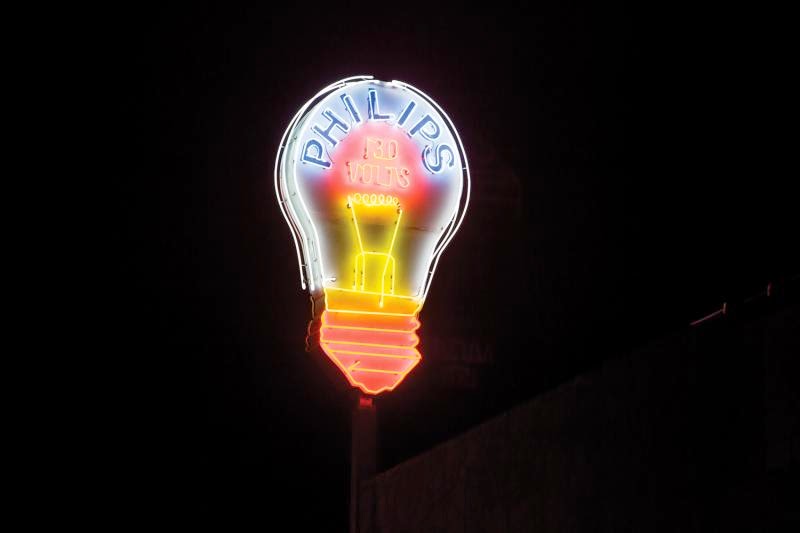
In late 2008, she got a call from Dave Uhrik, a veteran operations manager she deeply admired, who broke the news that he’d been hired on to manage a plant near Sparta, just down the road from where Norris grew up. The large factory produced commercial lighting fixtures and had recently been acquired by Philips, the $39 billion Dutch multinational best known for its vast array of consumer products, from light bulbs to electric toothbrushes to television sets. It took Norris “exactly twenty-​seven minutes” to decide that she was going to sell her business and join what Uhrik pitched as “the dream team.” It was barely half the pay, but it was a chance to put all of her ideas into practice, to be part of “the best of the best,” a model for what was possible in American manufacturing. “It was like, Oh, my goodness, we could do great things!”

The humming Sparta plant had it all. For one thing, the town is within a day’s haul of most US markets—​from New York and Chicago to Atlanta, St. Louis, and Dallas. Tennessee has decent, well-​maintained highways. The plant was union—​a new experience for Norris—​but this IBEW local was steely-​eyed about keeping and creating jobs; it had, for example, accepted a two-​tier pay scale and surrendered contract protections in order to attract a highly automated production line from New Jersey. The press for that new line, known as a Bliss, was nearly three stories high (so big it had to be anchored twenty feet underground) and could stamp out eight or ten massive commercial fluorescent fixtures every minute. It attracted lucrative contracts from hospitals, prisons, grocery-​store chains, and Walmart super​centers. Norris called it “a monument.” Brent Hall, the union rep, described it as a beating heart. “Every time that press rolled over,” he said, “the whole building would shake.”

Other production lines at the plant could push out smaller, custom products tailored to the needs of a specific buyer. A whole swath of the maintenance crew had been sent, on the plant’s dime, to get certified as industrial electricians and welders and millwrights so that they could retool machines on the fly, switching production from one job to the next in a matter of minutes. “Anything they wanted, we’d build it for them,” Scott Vincent, one veteran electrician told me. With Uhrik and Norris at the helm, the plant started buying steel and other inventory on consignment, and trimmed turnaround times to the point that its invoices would be getting paid before the bills on raw materials were even due. Tasked with cutting costs by $4 million, the management team tapped employees to identify inefficiencies in the assembly process, worked with suppliers to reduce components costs, and drastically reduced the number of products with defects. The plant boosted productivity by 7 percent and kept labor costs low, at around 4 percent. Still, thanks to the union, most workers were earning $13 to $15 an hour—​“real decent money around here,” as one maintenance worker told me, especially for a workforce where many had never graduated high school—​with two to three weeks of vacation and a blue-​chip health plan. Employees stuck around for years, knew their jobs inside and out, and had a rare esprit de corps. When they faced tight deadlines, fabricators would volunteer to come in as early as 4 or 5 a.m. so they could get a head start before the paint crew arrived at six. In December 2009 the Sparta facility was named by Industry​Week as a Best Plant of the year, one of the top ten in North America. In the months that followed, it won Best Plant within Philips’s global lighting division as well as the firm’s global “Lean Challenge.” That summer, plant managers invited state officials and legislators to Sparta to celebrate.

Then, one morning in November 2010, a Philips executive no one recognized drove up and walked into the plant, accompanied by a security guard wearing sunglasses and a sidearm. He summoned all the employees back to the shipping department and abruptly announced that the plant would be shut down. Though the workers didn’t know it at the time, most of their jobs would be offshored to Monterrey, Mexico. The two of them then walked out the door and drove off. “It was a shock, I’ll tell you,” Ricky Lack said more than two years later. Still brawny in his late fifties, he’d hired on at the plant in 1977, when he was nineteen years old. “My dad worked there,” he said. “Half the plant’s mom or dad or brother worked there. We still don’t know why they left.”

If you listen to any mainstream economist—​say, former White House economic advisor Gregory Mankiw, the author of one of the nation’s most popular economics textbooks—​you’ll learn that “productivity growth is good for American workers.” Productivity goes up, and with it comes rising prosperity for all. As Adam Davidson, the popular economics guru of Planet Money and the New York Times Magazine, wrote recently, “Productivity, in and of itself, is a remarkably good thing. Only through productivity growth can the average quality of human life improve.”

American workers are astonishingly productive. In fact, American labor productivity has grown every single year for the past three decades, according to the Bureau of Labor Statistics. US productivity zoomed up after the most recent financial crash, rising sharply from 2008 to 2009, and again from 2009 to 2010. By contrast, productivity actually shrank during this period in such industrialized nations as Japan, Germany, and the UK. Sure, a share of these productivity gains are due to American firms outsourcing and offshoring jobs to cheap labor markets, but the bulk of it comes from American workers adapting to new, more efficient technologies and working harder and faster than ever before—​and for less pay.

Politicians on both sides of the aisle tend to lean on American productivity as the solution to our current economic woes, a phenomenon in force during the last presidential campaign. “I know we can out-​compete any other nation on Earth,” Barack Obama told the nation in a weekly address in January 2011. “We just have to make sure we’re doing everything we can to unlock the productivity of American workers, unleash the ingenuity of American businesses, and harness the dynamism of America’s economy.” Mitt Romney, too, argued that “[a] productivity and growth strategy has immediate and very personal benefits,” and that “economic vitality, innovation, and productivity are inexorably linked with the happiness and well-​being of our citizens.” The idea being that if we sprinkle a little stimulus money here or some deregulation there, depending upon your orientation, American workers will somehow, through sheer grit and generous doses of Red Bull, be able to dig deep and work even faster, even harder, and even more efficiently than before—​even though they’ve been doing so for decades—​thereby jump-​starting our economic engine. After that, the sky’s the limit.

So why didn’t this play out for the ferociously productive workers at Philips’s award-​winning plant in Tennessee?

by Esther Kaplan, VQR |  Read more:
Image: David M. Barreda

The Children of Silicon Valley


In the new HBO comedy Silicon Valley, almost every new start-up representative at a high-tech conference ends his presentation with the programmatic words, “and this will make the world a better place.” When Steve Jobs sought to persuade John Sculley, the chief executive of Pepsi, to join Apple in 1983, he succeeded with an irresistible pitch: “Do you want to spend the rest of your life selling sugared water, or do you want a chance to change the world?” The day I sat down to write this article, a full-page ad for Blackberry in The New York Times featured a smiling Arianna Huffington with an oversize caption in quotes: “Don’t just take your place at the top of the world. Change the world.” A day earlier, I heard Bill Gates urge the Stanford graduating class to “change the world” through optimism and empathy. The mantra is so hackneyed by now that it’s hard to believe it still gets chanted regularly.

Our silicon age, which sees no glory in maintenance, but only in transformation and disruption, makes it extremely difficult for us to imagine how, in past eras, those who would change the world were viewed with suspicion and dread. If you loved the world; if you considered it your mortal home; if you were aware of how much effort and foresight it had cost your forebears to secure its foundations, build its institutions, and shape its culture; if you saw the world as the place of your secular afterlife, then you had good reasons to impute sinister tendencies to those who would tamper with its configuration or render it alien to you. Referring to all that happened during the “dark times” of the first half of the twentieth century, “with its political catastrophes, its moral disasters, and its astonishing development of the arts and sciences,” Hannah Arendt summarized the human cost of endless disruption:
The world becomes inhuman, inhospitable to human needs—which are the needs of mortals—when it is violently wrenched into a movement in which there is no longer any sort of permanence.
The twenty-first century has only aggravated the political, moral, social, and environmental concussions of the twentieth. There would be reason to applaud the would-be world-changers and start-up companies of Silicon Valley if they made it their business to resist or reverse this process of planetary upheaval, the way environmentalists seek to do with the wounds we have afflicted on nature. Sadly they have no such militancy in their souls, nor much thoughtfulness. With a few exceptions, our new tech armies rarely take the time to think through what they are doing. Or if they do, they tend to think in ways that only add to the turmoil and agitation.

Silicon Valley, and everything it stands for metonymically in our culture, has indeed affected billions of people around the planet. The innovations have come fast and furious, turning the past four decades into a series of “before and after” divides: before and after personal computers, before and after Google, before and after Facebook, iPhones, Twitter, and so forth. In the silicon age, “changing the world” means at bottom finding new and more ingenious ways to turn my computer or smart phone into my primary—and eventually my only—access to “reality.”

In truth Silicon Valley does not change the world as much as it changes my way of being in it, or better, of not being in it.

by Robert Pogue Harrison, NYRB | Read more:
Image: Silicon Valley

Lisa Adams, Second Life (2012)
via:

Tom Petty and the Heartbreakers


After nearly three years of work, Tom Petty and the Heartbreakers are finally ready to unleash their new album, Hypnotic Eye, which hits shelves on July 29th. The disc is an old-school rock record, closer in style to Petty's first couple of records than the blues rock sound of 2010's Mojo. "I knew I wanted to do a rock & roll record," Petty told Rolling Stone earlier this year. "We hadn't made a straight hard-rockin' record, from beginning to end, in a long time."

by Andy Greene, Rolling Stone |  Read more:
Image: Mary Ellen Matthews

The Giddy Summit: On Learning How to Surf

Researchers have often examined the difference between “external focus” and “internal focus” in the learning of new motor activities. An external focus is one in which your attention is directed to the effect you are having on or in relation to the external world; an internal focus is one in which your attention is directed to how your own body feels or is coordinated. If you are shooting a free throw in basketball and concentrate on how your wrist feels as you release the ball, your focus is internal. If you focus instead on the rim or the backboard or the basketball, your focus is external.

The leading proponent of the superiority of external focus in learning motor skills is a psychologist named Gabriele Wulf. She came to the idea in the late 1990s, not by theoretical cogitation but out of her own experience learning how to windsurf. As she describes in her review of fifteen years of research on motor learning and attentional focus, she was struck by how changing her focus while attempting a windsurfing maneuver produced a marked difference in her performance: “While practicing a power jibe, I found that directing attention to the position of my feet, the pressure they were exerting on the board to change its direction, or the location of my hands on the boom, resulted in many failed attempts and frequent falls into the water over several hours of practice. With the spontaneous decision to simply focus on the tilt of the board while turning came instantaneous success.” (...)

I emailed Dr. Wulf after I’d begun my quest to learn how to surf. She wrote back quickly and decisively: “I have no doubt that a focus on the surfboard would be more effective than any focus on body movements.” Buoyed by her confident declaration, and feeling that I now had the authority of scientific kinesiology at my disposal, I returned to the water. But either my focus remained insufficiently external, or I was focusing on the wrong part of the surfboard; my frustration was relieved only by the pleasure I took in observing the pelicans dive-bombing for fish in long, elegant arcs, or the stately procession of dorsal fins as dolphins swam parallel to the shore, just beyond the break. I was accumulating “time in the water,” which might eventually translate into the physical reality of surfing waves. (...)

After I had reached the point of being able to stand up in the whitewater and it came time to go out beyond the break, where real surfing actually took place, a profound frustration set in, which I suspect is common to many beginning surfers. One of two failures usually took place: either I could not generate sufficient speed to catch the wave, and pounded at the water helplessly as wave after wave passed me by; or (to compensate for the first failure), I slid up on the board to generate more speed and shift my weight forward, and thus found myself constantly “pearling,” or digging the nose of the board into the water, which led to a head-over-heels wipeout that was often frightening. Caught between these two extremes, which seemed to represent hydrological physics conspiring against my success, I nearly cracked and gave up. There were middle-aged men with potbellies who took off effortlessly and gave me slightly pitying looks as I flailed about, fit but helpless in a foreign world.

One day in late summer I remember as particularly awful. I’d gone to a spot slightly farther north that had been recommended as friendlier to beginning surfers, and the conditions looked favorable. Two hours in the water produced not a single ride, and my shoulders ached from the buildup of lactic acid. I came out of the water convinced that this had now become an impossible task, that I was too old or had some East Coast, neurotic gene that prevented me from catching waves. I had reached what the philosopher William James, in an essay on the sources of human energy and second winds, called the “fatigue-obstacle.”

by The Giddy Summit |  Read more:
Image: szeke via Compfight cc

Friday, July 18, 2014


via: New Yorker

Antonio Carlos Jobim


Saudade is a Portuguese or Galician word that has no direct translation in English. It describes a deep emotional state of nostalgic or profound melancholic longing for an absent something or someone that one loves. Moreover, it often carries a repressed knowledge that the object of longing may never return. A stronger form ofsaudade may be felt towards people and things whose whereabouts are unknown, such as a lost lover, or a family member who has gone missing.

Saudade was once described as "the love that remains" after someone is gone. Saudade is the recollection of feelings, experiences, places or events that once brought excitement, pleasure, well-being, which now triggers the senses and makes one live again. It can be described as an emptiness, like someone (e.g., one's children, parents, sibling, grandparents, friends, pets) or something (e.g., places, things one used to do in childhood, or other activities performed in the past) that should be there in a particular moment is missing, and the individual feels this absence. It brings sad and happy feelings all together, sadness for missing and happiness for having experienced the feeling.

via: Wikipedia |  Read more:

Peeling the Onion

In early July, hacker Jacob Appelbaum and two other security experts published a blockbuster story in conjunction with the German press. They had obtained leaked top secret NSA documents and source code showing that the surveillance agency had targeted and potentially penetrated the Tor Network, a widely used privacy tool considered to be the holy grail of online anonymity.

Internet privacy activists and organizations reacted to the news with shock. For the past decade, they had been promoting Tor as a scrappy but extremely effective grassroots technology that can protect journalists, dissidents and whistleblowers from powerful government forces that want to track their every move online. It was supposed to be the best tool out there. Tor’s been an integral part of EFF’s “Surveillance Self-Defense” privacy toolkit. Edward Snowden is apparently a big fan, and so is Glenn Greenwald, who says it “allows people to surf without governments or secret services being able to monitor them.”

But the German exposé showed Tor providing the opposite of anonymity: it singled out users for total NSA surveillance, potentially sucking up and recording everything they did online.

To many in the privacy community, the NSA’s attack on Tor was tantamount to high treason: a fascist violation of a fundamental and sacred human right to privacy and free speech.

The Electronic Frontier Foundation believes Tor to be “essential to freedom of expression.” Appelbaum — a Wikileaks volunteer and Tor developer — considers volunteering for Tor to be a valiant act on par with Hemingway or Orwell “going to Spain to fight the Franco fascists” on the side of anarchist revolutionaries.

It’s a nice story, pitting scrappy techno-anarchists against the all-powerful US Imperial machine. But the facts about Tor are not as clear cut or simple as these folks make them out to be…

Let’s start with the basics: Tor was developed, built and financed by the US military-surveillance complex. Tor’s original — and current — purpose is to cloak the online identity of government agents and informants while they are in the field: gathering intelligence, setting up sting operations, giving human intelligence assets a way to report back to their handlers — that kind of thing. This information is out there, but it’s not very well known, and it’s certainly not emphasized by those who promote it. (...)

The origins of Tor go back to 1995, when military scientists at the Naval Research Laboratory began developing cloaking technology that would prevent someone’s activity on the Internet from being traced back to them. They called it “onion routing” — a method redirecting traffic into a parallel peer-to-peer network and bouncing it around randomly before sending it off to its final destination. The idea was to move it around so as to confuse and disconnect its origin and destination, and make it impossible for someone to observe who you are or where you’re going on the Internet.

Onion routing was like a hustler playing the three-card monte with your traffic: the guy trying to spy on you could watch it going under one card, but he never knew where it would come out. (...)

The original goal of onion routing wasn’t to protect privacy — or at least not in the way most people think of “privacy.” The goal was to allow intelligence and military personnel to work online undercover without fear of being unmasked by someone monitoring their Internet activity. (...)

In the 90s, as public Internet use and infrastructure grew and multiplied, spooks needed to figure out a way to hide their identity in plain sight online. An undercover spook sitting in a hotel room in a hostile country somewhere couldn’t simply dial up CIA.gov on his browser and log in — anyone sniffing his connection would know who he was. Nor could a military intel agent infiltrate a potential terrorist group masquerading as an online animal rights forum if he had to create an account and log in from an army base IP address.

That’s where onion routing came in. As Michael Reed, one of the inventors of onion routing, explained: providing cover for military and intelligence operations online was their primary objective; everything else was secondary: (...)

Very early on, researchers understood that just designing a system that only technically anonymizes traffic is not enough — not if the system is used exclusively by military and intelligence. In order to cloak spooks better, Tor needed to be used by a diverse group of people: Activists, students, corporate researchers, soccer moms, journalists, drug dealers, hackers, child pornographers, foreign agents, terrorists — the more diverse the group that spooks could hide in the crowd in plain sight.

by Yasha Levine, PandoDaily |  Read more:
Image: Wikipedia

Say Yes to Undress

In case you missed the news that traditional courtship is dead, naked people on VH1 stand ready to enlighten you. And in case you thought that television networks had evolved beyond trying to attract viewers with cheesy titillation — ditto.

Yes, it’s time for “Dating Naked,” a reality series beginning Thursday on VH1 in which just-introduced strangers looking for love are nude from the get-go. This comes nine days after the new FYI channel, an A&E offshoot, introduced “Married at First Sight,” in which strangers paired by supposed experts begin their relationship by marrying, then decide whether they like each other.

Both shows are probably inevitable next steps in television’s endless effort to capitalize on the human need to pair up, which stretches back to “The Dating Game” of the 1960s and runs through “The Bachelor,” “The Millionaire Matchmaker” and odd variations like “It Takes a Church.”

The two new entries are, of course, outrageous affronts to the style of courtship that has served humanity quite well for millenniums, if you don’t count the dismaying frequency of divorce and resulting psychological damage to all involved. The shows are taking what used to be the long-term goal — getting married or seeing someone naked or both — and making it the starting point. As Chrissy, one of the geniuses in the first episode of “Dating Naked,” notes: “It is awkward meeting someone naked. I mean, usually you wait till sex.”

But we will not here debate what these shows say about the state of modern life, with its immediate-gratification mentality, lack of modesty and self-restraint, and general tastelessness. What concerns us here is that no one seems to have thought through the economic implications of what these fatuous shows represent, specifically the inexorable march toward television that is all nude, all the time.

“Dating Naked” won’t seem all that scandalous to inhabitants of the texting generation, for whom sharing photos of their naughty bits is now routine. The series is just a continuation of a tawdry show-it-all TV trend that began a year or so ago when reality series involving nude castaways (“Naked and Afraid”), nude real estate transactions (“Buying Naked”) and nude body painting (“Naked Vegas”) began turning up.

Factor in the endorsement of random coupling implied by “Dating Naked” and “Married at First Sight,” and we as a species are now lower on both the sartorial and the evolutionary scales than some penguins, which practice courtship rituals leading to committed relationships and have plumage that at least looks vaguely like clothing.

by Neil Genzlinger, NY Times |  Read more:
Image: Naked Dating

Johnny Winter (February,1944 – July, 2014)


Sun Records chieftain Sam Phillips described the voice of his pre-Elvis discovery Howlin’ Wolf as a sound from “where the soul of man never dies.” For young John Dawson Winter III, the blend of gravel, whiskey, mud, and madness in Wolf’s singing unearthed a well he still draws from 60 years later.

“‘Somebody Walking in My Home’ by Howlin’ Wolf is the first blues song I remember hearing,” Johnny Winter recalls. “I was in my bedroom listening to the transistor radio, and right from the beginning I knew blues was it for me. It had so much feeling. I just loved it. And I could really relate to the black experience. Most people in Texas didn’t like black people because they were too dark, and they didn’t like me because I was too white. I got that even when I was 12 and started playing guitar. By then I knew blues was what I wanted to play, and I still come at it from an emotional perspective—not technical.”

Nonetheless, it was the conflagrant intensity of Winter’s two-fingered picking, the bared-fang snarl of his tone, and the mix of sand and kerosene in his own voice that skyrocketed him from the Texas psychedelic club scene into the international music spotlight less than a year after he recorded his debut, The Progressive Blues Experiment, on the stage of Austin’s Vulcan Gas Company in 1968. By the end of 1969 he’d released his major-label debut, Johnny Winter, and the follow-up, Second Winter, and played Woodstock, laying out blueprints for the future of American blues-rock and even Southern rock.

Although Winter is currently enjoying a surprising late-career renaissance thanks to his recharged stage presence, a documentary film, and a spate of releases, it’s the images of him from 1969 to 1974 that are burned into the retina of rock history: rail thin and wrapped like a spider around the 1963 Gibson Firebird that still accompanies him onstage, wraith-like thanks to his albinism and long hair, literally attacking the strings.

by Ted Drozdowski, Premier Guitar | Read more:
Image: uncredited

Thursday, July 17, 2014


Criss CanningSquare-Fruited Mallee Gum
via:

Should We Mourn the End of Blogs?

Remember blogging? That quaint, old-fashioned hobby of keeping a regular, text-based online journal about your life and interests? Remember how blogs used to allow reader comments, and were archived in reverse-date order?

It was my friend’s younger brother who first introduced me to blogging in 2004, writing the Blogger URL on a paper napkin at a party. He and his friends formed the nucleus of my new online community.

But as I settle into my porch rocking chair 10 years later, tucking my crocheted rug a little more snugly around my withered old legs, I don’t even have to yell at the Kids of Today to get off my lawn. They don’t blog anymore.

Indeed, most of the personal blogs I once followed have vanished, or haven’t been updated in months or years. The blogroll in my sidebar reads like an honour roll of war dead. But I keep on blogging because, compared to tweeting for thousands of followers or posting to hundreds of Facebook friends, the single-digit pageviews my blog now attracts are a paradoxically private way to express myself.

The melancholy ruins of this digital Pompeii recall The Onion’s joke about internet archaeologists excavating the lost "Friendster" civilisation. But just as Friendster users migrated to MySpace and then to Facebook, teenagers are now fleeing Facebook to get away from their embarrassing older relatives.

So, where should we go nowadays for an instant hit of youthiness?WhatsApp, Snapchat, Tumblr, Instagram and Vine. (...)

Blogging persists, of course. But it’s mostly for adults – professionalised to the point where the old "bloggers vs journalists" debates now seem hopelessly quaint. Maintaining a personal blog has become entrepreneurial: a job that earns an income through display advertising, network marketing, ebooks and blog-to-book deals.

Concomitantly, blogging has indelibly influenced mainstream news reporting, which is now much more immediate, informal, link-rich and inclusive of reader comments. When I taught online journalism at Monash University from 2009-11, students published their assignments on WordPress blogs.

So for young people, blogs are work, not play. A 2008 Pew research project found that while 85% of 12 to 17-year-olds engaged in electronic personal communication (including texting, email, instant messaging and commenting on social media), 60% didn’t consider these texts to be "writing". Another study in 2013 revealed that teenagers still distinguish between the "proper" writing they do for school (which may be on blogs) and their informal, social communication.

By contrast, my fondness for prose – and my disgusted CLOSE TAB when an interesting link turns out to be, ugh, a video – marks me as a digital fogey. I didn’t get Tumblr for the longest time. Why were people just reblogging other people’s posts?

by Mel Campbell, The Guardian |  Read more:
Image: Anatoli Babi/Alamy

Wednesday, July 16, 2014


Fred Cuming
via:

Andrew Archer
via:

The Elephant in the Discotheque: The Bee Gees

The Bee Gees’ dominance of the charts in the disco era was above and beyond Chic, Giorgio Moroder, even Donna Summer. Their sound track to Saturday Night Fever sold thirty million copies. They were responsible for writing and producing eight of 1978’s number ones, something only Lennon and McCartney in 1963/64 could rival—and John and Paul hadn’t been the producers, only the writers. Even given the task of writing a song called “Grease” (“Grease is the word, it’s got groove, it’s got a meaning,” they claimed, hoping no one would ask, “Come again?”), they came up with a classic. At one point in March they were behind five singles in the American Top 10. In 1978 they accounted for 2 percent of the entire record industry’s profits. The Bee Gees were a cultural phenomenon.

Three siblings from an isolated, slightly sinister island off the coast of northwest England, already in their late twenties by the time the Fever struck—how the hell did they manage this? Pinups in the late sixties, makers of the occasional keening ballad hit in the early seventies, the Bee Gees had no real contact with the zeitgeist until, inexplicably, they had hits like “Nights on Broadway,” “Stayin’ Alive,” “Night Fever,” and the zeitgeist suddenly seemed to emanate from them. This happened because they were blending white soul, R&B, and dance music in a way that suited pretty much every club, every radio station, every American citizen in 1978. They melded black and white influences into a more satisfying whole than anyone since Elvis. Simply, they were defining pop culture in 1978.

Like ABBA, there is a well of melancholic emotion, even paranoia, in the Bee Gees’ music. Take “How Deep Is Your Love” (no. 1, ’77), with its warm bath of Fender Rhodes keyboards and echoed harmonies that camouflage the cries of the lyric: “We’re living in a world of fools, breaking us down, when they all should let us be … How deep is your love? I really need to know.” Or “Words,” with its romantic but strangely seclusionist “This world has lost its glory. Let’s start a brand-new story now, my love.” Or “Night Fever,” their ’78 number one, with its super-mellow groove and air-pumped strings masking the high anxiety of Barry Gibb’s vocal; the second verse is indecipherable, nothing but a piercing wail with the odd phrase—“I can’t hide!”—peeking through the cracks. It is an extraordinary record.

Total pop domination can have fierce consequences. Elvis had been packed off to the army; the Beatles had received Ku Klux Klan death threats—the Bee Gees received the mother of all backlashes, taking the full brunt of the anti-disco movement. Radio stations announced “Bee Gee–free weekends”; a comedy record called “Meaningless Songs in Very High Voices” by the HeeBeeGeeBees became a UK radio hit. Their 1979 album Spirits Having Flown had sold sixteen million copies and spawned three number-one singles (“Too Much Heaven,” “Tragedy,” “Love You Inside Out”); the singles from 1981’s Living Eyes—“He’s a Liar” and the title track—reached thirty and forty-five on the chart respectively, and didn’t chart in Britain at all. Almost overnight, nobody played Bee Gees records on the radio, and pretty much nobody bought them. The biggest group in the world at the end of 1978 went into enforced retirement three years later. Could they rise again? Of course they could.

by Bob Stanley, Paris Review |  Read more:
Image: uncredited

What Happens to Your Online Account When You Die?

You've probably decided who gets the house or that family heirloom up in the attic when you die. But what about your email account and all those photos stored online?

Grieving relatives might want access for sentimental reasons, or to settle financial issues. But do you want your mom reading your exchanges on an online dating profile or a spouse going through every email?

The Uniform Law Commission, whose members are appointed by state governments to help standardize state laws, on Wednesday endorsed a plan that would give loved ones access to - but not control of - the deceased's digital accounts, unless specified otherwise in a will.

To become law in a state, the legislation would have to be adopted by the legislature. If it did, a person's online life could become as much a part of estate planning as deciding what to do with physical possessions.

"This is something most people don't think of until they are faced with it. They have no idea what is about to be lost," said Karen Williams of Beaverton, Oregon, who sued Facebook for access to her 22-year-old son Loren's account after he died in a 2005 motorcycle accident.

The question of what to do with one's "digital assets" is as big as America's electronic footprint. A person's online musings, photos and videos - such as a popular cooking blog or a gaming avatar that has acquired a certain status online - can be worth considerable value to an estate. Imagine the trove of digital files for someone of historical or popular note - say former President Bill Clinton or musician Bob Dylan - and what those files might fetch on an auction block.

"Our email accounts are our filing cabinets these days," said Suzanne Brown Walsh, a Cummings & Lockwood attorney who chaired the drafting committee on the proposed legislation. But "if you need access to an email account, in most states you wouldn't get it."

But privacy activists are skeptical of the proposal. Ginger McCall, associate director of the Electronic Privacy Information Center in Washington, said a judge's approval should be needed for access, to protect the privacy of both the owners of accounts and the people who communicate with them.

"The digital world is a different world" from offline, McCall said. "No one would keep 10 years of every communication they ever had with dozens or even hundreds of other people under their bed."

Many people assume they can decide what happens by sharing certain passwords with a trusted family member, or even making those passwords part of their will. But in addition to potentially exposing passwords when a will becomes public record, anti-hacking laws and most companies' "terms of service" agreements prohibit anyone from accessing an account that isn't theirs. That means loved ones technically are prohibited from logging onto a dead person's account.

Several tech providers have come up with their own solutions. Facebook, for example, will "memorialize" accounts by allowing already confirmed friends to continue to view photos and old posts. Google, which runs Gmail, YouTube and Picasa Web Albums, offers its own version: If people don't log on after a while, their accounts can be deleted or shared with a designated person. Yahoo users agree when signing up that their accounts expire when they do.

But the courts aren't convinced that a company supplying the technology should get to decide what happens to a person's digital assets. In 2005, a Michigan probate judge ordered Yahoo to hand over the emails of a Marine killed in Iraq after his parents argued that their son would have wanted to share them. Likewise, a court eventually granted Williams, the Oregon mother, access to her son's Facebook account, although she says the communications appeared to be redacted.

by Anne Flaherty, AP |  Read more:
Image: AP Photo/Lauren Gambino