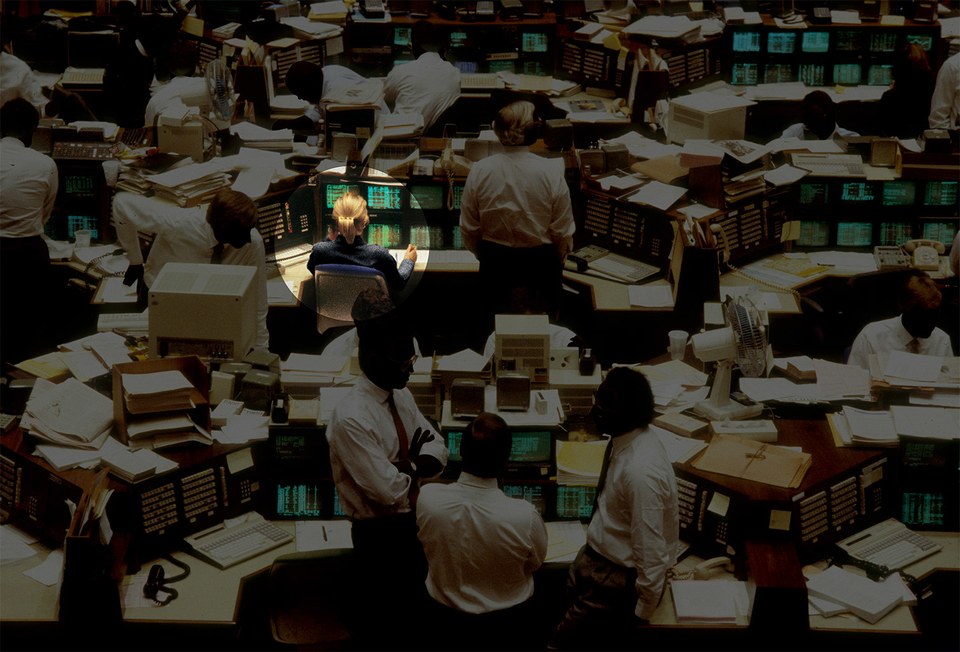
Wednesday, March 7, 2018

Why We Pretend to Clean Up Oil Spills

In many respects, society’s theatrical response to catastrophic oil spills resembles the way medical professionals respond to aggressive cancer in an elderly patient. Because surgery is available, it is often used. Surgery also creates the impression that the health care system is doing something even though it can’t change or reverse the patient’s ultimate condition. In an oil-based society, the cleanup delusion is also irresistible. Just as it is difficult for us to acknowledge the limits of medical intervention, society struggles to acknowledge the limits of technologies or the consequences of energy habits. And that’s where the state of marine oil spill response sits today: it creates little more than an illusion of a cleanup. Scientists—outside the oil industry—call it “prime-time theater” or “response theater.”

The hard scientific reality is this: a big spill is almost impossible to contain because it is physically impossible to mobilize the labor needed and current cleanup technologies in a timely fashion. When the city of Vancouver released a study in 2015 on the effectiveness of responses to large tanker or pipeline spills along the southern coast of British Columbia, the conclusion was blunt: “collecting and removing oil from the sea surface is a challenging, time-sensitive, and often ineffective process,” even in calm water.

Scientists have recognized this reality for a long time. During the 1970s when the oil industry was poised to invade the Beaufort Sea, the Canadian government employed more than 100 researchers to gauge the impacts of an oil spill on Arctic ice. The researchers doused sea ducks and ring seals with oil and set pools of oil on fire under a variety of ice conditions. They also created sizable oil spills (one was almost 60,000 liters, a medium-sized spill) in the Beaufort Sea and tried to contain them with booms and skimmers. They prodded polar bears into a man-made oil slick only to discover that bears, like birds, will lick oil off their matted fur and later die of kidney failure. In the end, the Beaufort Sea Project concluded that “oil spill countermeasures, techniques, and equipment” would have “limited effectiveness” on ice-covered waters. The reports, however, failed to stop Arctic drilling.

Part of the illusion has been created by ineffective technologies adopted and billed by industry as “world class.” Ever since the 1970s, the oil and gas industry has trotted out four basic ways to deal with ocean spills: booms to contain the oil; skimmers to remove the oil; fire to burn the oil; and chemical dispersants, such as Corexit, to break the oil into smaller pieces. For small spills these technologies can sometimes make a difference, but only in sheltered waters. None has ever been effective in containing large spills.

Conventional containment booms, for example, don’t work in icy water, or where waves run amok. Burning oil merely transforms one grave problem—water pollution—into sooty greenhouse gases and creates air pollution. Dispersants only hide the oil by scattering small droplets into the water column, yet they often don’t even do that since conditions have to be just right for dispersants to work. Darryl McMahon, a director of RESTCo, a firm pursuing more effective cleanup technologies, has written extensively about the problem, and his opinion remains: “Sadly, even after over 40 years experience, the outcomes are not acceptable. In many cases, the strategy is still to ignore spills on open water, only addressing them when the slicks reach shore.”

The issue partly boils down to scale, explains Jeffrey Short, a retired National Oceanic and Atmospheric Administration research chemist who studied the aftermath of the 2010 BP disaster as well as the Exxon Valdez spill in Prince William Sound, which grew at the alarming rate of half a football field per second over two days. “Go try and control something like that,” says Short. Yet almost 30 years after the Exxon Valdez contaminated much of Prince William Sound, the cleanup technology has changed little.

“What I find the most disturbing is the tendency for responsible authorities and industry to adopt technologies mainly because of their optics and with scant regard for their efficacy,” says Short. In addition, chaos rules in the aftermath of a spill. The enormous political pressure to do something routinely sacrifices any duty to properly evaluate what kind of response might actually work over time, says Short. “Industry says ‘we just want to clean it up,’ yet their demonstrative ability to clean it up sucks.”

Consider, for a moment, the industry’s dismal record on oil recovery. Average citizens may think that a successful marine oil spill cleanup actually involves recovering what has been spilled. They may also expect the amount of oil recovered would increase over time as industry learns and adopts better technologies. But there has been little improvement since the 1960s.

During the BP disaster, the majority of the oil evaporated, dropped to the ocean bottom, smothered beaches, dissolved, or remained on or just below the water’s surface as sheen or tar balls. Some oil-chewing bacteria offered assistance by biodegrading the oil after it had been dispersed. Rough estimates indicate that, out of the total amount of oil it spilled, BP recovered 3 percent through skimming, 17 percent from siphoning at the wellhead, and 5 percent from burning. Even so, that’s not much better than the Exxon Valdez spill in 1989 when industry recovered an estimated 14 percent of the oil. Transport Canada admits that it expects only 10 to 15 percent of a marine oil spill to ever be recovered from open water. “Even informed people are taken aback by these numbers,” says Short.

by Andrew Nikiforuk, Smithsonian | Read more:
Image:RGB Ventures/SuperStock/Alamy Stock Photo

Paul Westerberg

The Myth of What’s Driving the Opioid Crisis

Doctor-prescribed painkillers are not the biggest threat.

As an addiction psychiatrist, I have watched with serious concern as the opioid crisis has escalated in the United States over the past several years, and overdose deaths have skyrocketed. The latest numbers from the Centers for Disease Control and Prevention show fatalities spiraling up to about 42,000 in 2016, almost double the casualties in 2010 and more than five times the 1999 figures. The White House Council of Economic Advisers recently estimated that the opioid crisis cost the nation half a trillion dollars in 2015, based on deaths, criminal justice expenses and productivity losses. Meanwhile, foster care systems are overflowing with children whose parents can’t care for them, coroners’ offices are overwhelmed with bodies and ambulance services are straining small-town budgets. American carnage, indeed.

I have also watched a false narrative about this crisis blossom into conventional wisdom: The myth that the epidemic is driven by patients becoming addicted to doctor-prescribed opioids, or painkillers like hydrocodone (e.g., Vicodin) and oxycodone (e.g., Percocet). One oft-quoted physician refers to opioid medication as “heroin pills.” This myth is now a media staple and a plank in nationwide litigation against drugmakers. It has also prompted legislation, introduced last spring by Senators John McCain and Kirsten Gillibrand—the Opioid Addiction Prevention Act, which would impose prescriber limits because, as a news release stated, “Opioid addiction and abuse is commonly happening to those being treated for acute pain, such as a broken bone or wisdom tooth extraction.”

But this narrative misconstrues the facts. The number of prescription opioids in circulation in the United States did increase markedly from the mid-1990s to 2011, and some people became addicted through those prescriptions. But I have studied multiple surveys and reviews of the data, which show that only a minority of people who are prescribed opioids for pain become addicted to them, and those who do become addicted and who die from painkiller overdoses tend to obtain these medications from sources other than their own physicians. Within the past several years, overdose deaths are overwhelmingly attributable not to prescription opioids but to illicit fentanyl and heroin. These “street opioids” have become the engine of the opioid crisis in its current, most lethal form.

If we are to devise sound solutions to this overdose epidemic, we must understand and acknowledge this truth about its nature.

For starters, among people who are prescribed opioids by doctors, the rate of addiction is low. According to a 2016 national survey conducted by the Substance Abuse and Mental Health Services Administration, 87.1 million U.S. adults used a prescription opioid—whether prescribed directly by a physician or obtained illegally—sometime during the previous year. Only 1.6 million of them, or about 2 percent, developed a “pain reliever use disorder,” which includes behaviors ranging from overuse to overt addiction. Among patients with intractable, noncancer pain—for example, neurological disorders or musculoskeletal or inflammatory conditions—a review of international medical research by the Cochrane Library, a highly regarded database of systemic clinical reviews, found that treatment with long-term, high-dose opioids produced addiction rates of less than 1 percent. Another team found that abuse and addiction rates within 18 months after the start of treatment ranged from 0.12 percent to 6.1 percent in a database of half a million patients. A 2016 report in the New England Journal of Medicine concluded that in multiple published studies, rates of “carefully diagnosed” addiction to opioid medication averaged less than 8 percent. In a study several years ago, a research team purposely excluded chronic-pain patients with prior drug abuse and addiction from their data, and found that only 0.19 percent of the patients developed abuse and addiction to opioids.

Indeed, when patients do become addicted during the course of pain treatment with prescribed opioids, often they simultaneously face other medical problems such as depression, anxiety, other mental health conditions, or current or prior problems with drugs or alcohol. According to SAMHSA’s 2014 National Survey on Drug Use and Health, more than three-fourths of those who misuse pain medication already had used other drugs, including benzodiazepines and inhalants, before they ever misused painkillers. And according to CDC data, at least half of all prescription opioid-related deaths are associated with other drugs, such as benzodiazepines, alcohol and cocaine; combinations that are often deadlier than the component drugs on their own. The physical and mental health issues that drive people to become addicted to drugs in the first place are very much part of America’s opioid crisis and should not be discounted, but it is important to acknowledge the influence of other medical problems and other drugs.

Just because opioids in the medical context don’t produce high rates of addiction doesn’t mean doctors aren’t overprescribing and doing serious harm. The amount of opioids prescribed per person in 2016, though a bit lower than the previous year, was still considered high by the CDC—more than three times the amount of opioids dispensed in 1999. Some doctors routinely give a month’s supply of opioids for short-term discomfort when only a few days’ worth or even none at all is needed. Research suggests that patients given post-operation opioids don’t end up needing to use most of their prescribed dose.

In turn, millions of unused pills end up being scavenged from medicine chests, sold or given away by patients themselves, accumulated by dealers and then sold to new users for about $1 per milligram. As more prescribed pills are diverted, opportunities arise for nonpatients to obtain them, abuse them, get addicted to them and die. According to SAMHSA, among people who misused prescription pain relievers in 2013 and 2014, about half said that they obtained those pain relievers from a friend or relative, while only 22 percent said they received the drugs from their doctor. The rest either stole or bought pills from someone they knew, bought from a dealer or “doctor-shopped” (i.e., obtained multiple prescriptions from multiple doctors). So diversion is a serious problem, and most people who abuse or become addicted to opioid pain relievers are not the unwitting pain patients to whom they were prescribed.

While reining in excessive opioid prescriptions should help limit diversion and, in theory, suppress abuse and addiction among those who consume the diverted supply, it will not be enough to reduce opioid deaths today. In the first decade of the 2000s, the opioid crisis almost seemed to make sense: The volume of prescribed opioids rose in parallel with both prescription overdose deaths and treatment admissions for addiction to prescription opioids. Furthermore, 75 percent of heroin users applying to treatment programs initiated their opioid addiction with pills, so painkillers were seen as the “gateway” to cheap, abundant heroin after their doctors finally cut them off. (“Ask your doctor how prescription pills can lead to heroin abuse,” blared massive billboards from the Partnership for a Drug-Free New Jersey.) If physicians were more restrained in their prescribing, the logic went, fewer of their patients would become addicted, and the pipeline to painkiller addiction and ultimately to heroin would run dry.

It’s not turning out that way. While the volume of prescriptions has trended down since 2011, total opioid-related deaths have risen. The drivers for the past few years are heroin and, mostly, fentanyl, a synthetic opioid that is 50 times as potent as heroin. Fentanyl has legitimate medical use, but there is also illicit fentanyl, trafficked mostly from China, often via the Dark Web. Fentanyl and heroin (which itself is usually tainted to some extent with the fentanyl) together were present in more than two-thirds of all opioid-related deaths in 2016, according to CDC data. Painkillers were present in a little more than one-third of opioid-related deaths, but a third of those painkiller deaths also included heroin or fentanyl. While deaths from prescription opioids have basically leveled off, when you look at deaths in which prescription opioids plus heroin and fentanyl were present, then the recorded deaths attributed to prescription opioids continue to climb, too. (An especially pernicious element in the mix is counterfeiters with pill presses who sell illicit fentanyl in pill form deceptively labeled as OxyContin and other opioid pain relievers or benzodiazepines.)

Notably, more current heroin users these days seem to be initiating their opioid trajectory with heroin itself—an estimated 33 percent as of 2015—rather than with opioid painkillers. In the first decade of the 2000s, about 75 to 80 percent of heroin users started using opioids with pills (though not necessarily pain medication prescribed by a doctor for that particular person). It seems that, far more than prescribed opioids, the unpredictability of heroin and the turbocharged lethality of fentanyl have been a prescription for an overdose disaster.
***
Intense efforts to curb prescribing are underway. Pharmacy benefit managers, such as CVS, insurers and health care systems have set limits or reduction goals. State-based prescription drug monitoring programs help doctors and pharmacists identify patients who doctor-shop, ER hop or commit insurance fraud. As of July, 23 states had enacted legislation with some type of limit, guidance or requirement related to opioid prescribing. McCain and Gillibrand’s federal initiative goes even further, to impose a blanket ban on refills of the seven-day allotment for acute pain. And watchdog entities such as the National Committee for Quality Assurance have endorsed a system that compares the number of patients receiving over a certain dose of opioids with the performance rating for a physician.

A climate of precaution is appropriate, but not if it becomes so chilly that doctors fear prescribing. This summer, a 66-year-old retired orthopedic surgeon who practiced in Northern California—I’ll call her Dr. R—contacted me. For more than 30 years, she had been on methadone, a legitimate opioid pain medication, for an excruciating inflammatory bladder condition called interstitial cystitis. With the methadone, she could function as a surgeon. “It gave me a life. I would not be here today without it,” she told me. But one day in July, her doctor said the methadone had to stop. “She seemed to be worried that she was doing something illegal,” Dr. R told me.

Dr. R was fortunate. She found another doctor to prescribe methadone. But her experience of nonconsensual withdrawal of opioids is not isolated. Last year, the nonprofit Pain News Network conducted an online survey among 3,100 chronic pain patients who had found relief with opioids and had discussed this in online forums. While not necessarily a representative sample of all individuals with chronic pain who are on opioids, the survey was informative: 71 percent of respondents said they are no longer prescribed opioid medication by a doctor or are getting a lower dose; 8 out of 10 said their pain and quality of life are worse; and more than 40 percent said they considered suicide as a way to end their pain. The survey was purposely conducted a few months after the CDC released guidelines that many doctors, as well as insurance carriers and state legislatures, have erroneously interpreted as a government mandate to discontinue opioids. In other accounts, patients complain of being interrogated by pharmacists about their doses; sometimes they are even turned away.

The most tragic consequence is suicide. Thomas F. Kline, an internist in Raleigh, North Carolina, has chronicled 23 of them. His count is surely a harbinger of further patient abandonment to come. Meanwhile, so-called pain refugeeschronic pain patients whose doctors have dropped them—search out physicians to treat them, sometimes traveling more than a hundred miles or relocating. And in a recent Medscape survey, half the doctors who were polled expressed fear of violent reactions if patients were refused the prescription.

Knowing all this, what should we do about the opioid crisis? First, we must be realistic about who is getting in trouble with opioid pain medications. Contrary to popular belief, it is rarely the people for whom they are prescribed. Most lives do not come undone, let alone end in overdose, after analgesia for a broken leg or a trip to the dentist. There is a subset of patients who are vulnerable to abusing their medication—those with substance use histories or with mental health problems. Ideally, they should inform physicians of their history, and, in turn, their doctors should elicit such information from them.

Still, given that diverted pills, not prescribed medication taken by patients for pain, are the greater culprit, we cannot rely on doctors or pill control policies alone to be able to fix the opioid crisis. What we need is a demand-side policy. Interventions that seek to reduce the desire to use drugs, be they painkillers or illicit opioids, deserve vastly more political will and federal funding than they have received. Two of the most necessary steps, in my view, are making better use of anti-addiction medications and building a better addiction treatment infrastructure.

by Sally Satel, M.D., Politico | Read more:
Image: John Moore/Getty Images
[ed. There isn't a single aspect of America's War on Drugs that makes sense or has been effective: enforcement, scheduling, criminalization, rehabilitation, research. Nothing. See also: Opioid crisis: overdoses increased by a third across US in 14 months, says CDC and America Is Giving Away the $30 Billion Medical Marijuana Industry]

Dimmed Stars With Fuel to Burn

Ichiro Suzuki went 0 for 4 the day Felix Hernandez made his debut for the Seattle Mariners in 2005. But that is not how Hernandez remembers it. To him, Suzuki might as well have batted 1.000.

“Every time he came up to the plate was a hit,” Hernandez said by his locker on Tuesday at the Peoria Sports Complex. “It was exciting. He could do a lot of things on the field.”

Suzuki, 44, will soon return officially to the Mariners’ clubhouse, where he already has a locker stall, a stack of mail and his old No. 51 jersey waiting for him. The Mariners have not announced their contract agreement, but it is an open secret that Suzuki, a former American League most valuable player who took his physical in Seattle on Monday, is coming back.

About 10 miles down Bell Road, at the Texas Rangers’ complex in Surprise, another former superstar has also found a home. Tim Lincecum, a two-time Cy Young Award winner for the San Francisco Giants, worked out with the Rangers on Tuesday after agreeing to a contract.

The Rangers were awaiting the results of a physical exam before officially clearing a roster space for Lincecum, who attended the funeral of his older brother, Sean, last weekend. The Rangers plan to use Lincecum, 33, as a reliever, but they do not know exactly what they have. (...)

In their primes, Suzuki and Lincecum were undersized marvels: Both 5 feet 11 inches and less than 180 pounds, their bodies seemingly made of elastic. Suzuki slashed and dashed in one motion as he bolted from the batter’s box. Lincecum twisted and whirled and launched his body at hitters, an impossibly long stride helping generate extraordinary power.

Suzuki’s M.V.P. rookie season in 2001 coincided with the last playoff appearance by the Mariners, whose postseason drought is now the longest of any team in baseball, the N.F.L., the N.B.A. or the N.H.L.

Seattle traded Suzuki to the Yankees in 2012, and in the last five seasons he has hit just .263. This version of Suzuki may not help much, but the nostalgia is palpable.

“Everywhere you go, people love him,” second baseman Robinson Cano said, who played with Suzuki on the Yankees. “He’s the man here. The things that he did here, it was something I don’t think anybody’s ever done.”

The résumé is remarkable, indeed: In each season from 2001 through 2010, Suzuki collected at least 200 hits while batting above .300, winning a Gold Glove and being named an All-Star. He has 3,080 hits in the majors and 1,278 in Japan.

“Last year, in the second half, he hit pretty good,” Hernandez said, referring to Suzuki’s .299 average for Miami after the All-Star break. “I tell you, man, he’s not gonna come over here and not produce. He’s gonna hit.”

by Tyler Kepner, NY Times |  Read more:
Image: uncredited
[ed. Ichiro is back with the Mariners!]

Tuesday, March 6, 2018


Andreas Gursky
, Les Mées, 2016

What Is Amazon Key?

With online shopping and home deliveries becoming more and more popular, porch theft is also on the rise. To protect the packages on your doorstep from getting into the wrong hands, Amazon created Amazon Key, a high-tech package delivery system that allows delivery personnel to enter your home and drop off packages rather than leaving them out in the open for thieves to potentially steal. While it seems some people are hesitant about the idea of letting strangers into their homes, there are many potential benefits to Amazon Key. If you’re ok with a delivery person putting your package inside your front door rather than outside, Amazon Key might be a good fit for you. Here’s everything you need to know about Amazon Key.

Who Can Use It?

Amazon Key is available to Amazon Prime members. Amazon Prime costs $99 for a year, or $13 a month if you select the month-to-month payment plan.

However, Amazon Key is not available all across the United States. You can enter your location here to find out if your zip code is eligible for the Amazon Key service.

How Do I Set Up Amazon Key?

To set up Amazon Key, you’ll need to get your home ready with the necessary devices. First, you’ll need to buy and install Amazon’s Cloud Cam home security camera near your front door. You’ll also need to add a compatible smart lock to your door and sync it up with the rest of your smart home. Amazon has an Amazon Key Home Kit that includes the Cloud Cam and a Yale smart lock available for $250. But, you don’t necessarily have to have this particular lock to access Amazon Key — other smart lock brands such as Kwikset are also compatible. Get more information here.

How Does It Work?

You’ll need to install the Cloud Cam within 25 feet of your smart lock and facing your front door. You’ll then need to download the Amazon Key app on your phone and follow the instructions for setup, including inputing your home address. After that, you should be ready to get started.

On delivery day, you’ll receive a notification in the morning with a 4-hour window for when the driver will arrive at your home. Right before the driver arrives, you will receive a notification and watch the delivery happening live if you want (or later, as it’s stored for 24 hours). The driver will knock first and then request to unlock your door with their handheld scanner. Amazon then verifies that the package belongs to the address and the driver is near the door, turns on Amazon Cloud Cam, and unlocks your door. The driver doesn’t get any codes to open the door. The delivery person then leaves the package just inside the house, closes the door, then leaves. The smart lock automatically locks once the delivery person has closed the door and left.

Got an existing security system? Amazon Key won’t be able to work in conjunction with that, so if you have an alarm that goes off anytime the door opens that requires a code to turn off, you’ll need to disarm that before the delivery happens.

How Do I Request a Key Delivery?

Once you’ve gotten an Amazon Prime subscription and your Amazon Key setup is installed, Amazon will automatically select a Key delivery request at checkout. But before you get excited about all the bulky items you’ll now be able to order with white-glove delivery service, keep one thing in mind. Amazon only allows Key delivery for 10 million goods across the site, and these products are all things that one person would be able to carry alone. That’s why appliances, large electronic items, and bulky furniture are not currently part of the service.

by Gia Liu, Digital Trends |  Read more:
Image: uncredited
[ed. Just kill me now.]

The Exhilarating Art of Landing Planes in Crazy Crosswinds

The next time you feel like complaining about flying, (so, the next time you fly) a report this morning from a pilot landing at Dulles International Airport in Washington, DC, should put things into perspective:

“Very bump on descent. Pretty much every one on the plane threw up. Pilots were on the verge of throwing up.”

The members of the cleaning crew assigned to that wretched and retched-upon Bombardier regional jet were among the many victims of the Nor’easter currently slamming the East Coast. Winds as fierce as 70 mph have downed enough power lines to leave 450,000 in the dark, forced officials to suspend rail service and close bridges, and thrown planes about like a baby whacking the mobile above its crib.

This kind of storm is no fun for anyone, except, maybe, the pilots. “It’s kind of fun,” says Doug Moss, a commercial pilot and aviation consultant, even if the people outside the cockpit don’t think so. “I’m sure it scares the living daylights out of a lot of them.”

When they’re cruising, pilots can avoid most turbulence with a slight change to the flight plan. But the runway is where the runway is, and there’s only one path from the air to the ground. Which can mean having to land in crosswinds that can push planes to and fro.

That may look scary, Moss says. But for a competent pilot, it’s just a matter of crabbing and slipping. When the winds are calm, coming in to land is a matter of lining up with the runway as you gradually slow down and lose altitude, and lifting the nose (that’s called flaring) at the last moment to reduce your vertical speed and soften the impact. A heavy crosswind, however, will push the plane off course as it makes its approach.

When you crab, as you approach, you point the nose of the plane to the left or the right, angling into the wind. The plane is flying sideways, in a sense—the way a crab walks—but doing so keeps it on course. As you shed altitude and speed, you’ll turn further into the wind, using a mix of experience and trial and error to find the right angle.

When you’re just 50 or 100 feet above the ground, about to lift the nose and put rubber to runway, you switch techniques, from the crab to the slip. That means using the rudder pedals to swing the plane so the fuselage is parallel to the runway, the way it would have been from the beginning in calmer winds. Now, to counteract the crosswind, you use the ailerons (those hinged bits near the tip of the wing) to bank the aircraft, tipping the wings into the wind. Because the plane isn’t quite level, you may put one set of wheels on the ground before the other. That’s why different planes are certified for landing at different crosswind speeds—aircraft differ in what structural forces they can handle when landing in suboptimal optimal conditions.

“It’s a real finesse maneuver,” Moss says. The art of flying is doing all of that smoothly enough to keep your passengers safe and their barf bags untouched. And while modern autopilot systems can do a lot of this, they only work up to a certain wind speed. The most galling of gales call for a human touch.

by Alex Davies, Wired |  Read more:
Image: via
[ed. Slips are useful not just for crosswinds but for dumping a lot of altitude over a short distance. Hard rudder one way, ailerons cranked the other, drop like a rock. It feels slighty unnerving when you're first learning it, but really kind of fun after that.]

Los Lobos

Monday, March 5, 2018

Bank Earnings are Soaring, but Congress Wants to Gut Post-Crisis Safeguards

Dick Bove, A high-profile banking analyst, was feeling contrite. For years, Bove, a regular on CNBC, has been arguing for the rollback of regulations imposed after the 2008 financial collapse.

“But lately I’ve been trying to figure how regulation has hurt the banking industry,” Bove confessed in an interview last spring. “And I’m having a lot of trouble coming up with an answer.”

This week, the Senate considers the Economic Growth, Regulatory Relief, and Consumer Protection Act, a bill that represents the greatest threat to the Dodd-Frank financial reform law since its passage in 2010. The bill would relieve all but the country’s largest dozen banks of increased scrutiny and ease mortgage rules imposed after the financial crisis. It would undermine fair lending rules designed to counteract race discrimination and weaken the Volcker rule, which limits a bank’s ability to make speculative trades with federally insured deposits. The arguments that Bove has been making publicly for years are the same specious ones being offered by the bill’s co-sponsors, and the trade groups calling for a rollback of banking regulations: Banks are suffering and so, by extension, are consumers, businesses, and the economy at large.

“When you take a close look,” Bove says now, “it’s really hard to argue that regulation harmed the banking industry.” Bank earnings have gone up every year since 2010, according to data from the Federal Deposit Insurance Corporation, and soared more recently. “In 2014, and again in 2015 and 2016, bank earnings hit all-time records,” Bove said. “Loan volume, which was obviously lousy at the beginning of this period, picked up substantially in 2014, 2015, and 2016.”

Not that many inside the Beltway seem to care. To the extent pundits are talking about the bill, it’s to hail a rare show of bipartisanship. A dozen moderate Democrats are listed among the co-sponsors of what insiders refer to simply as the Crapo bill, after its main sponsor, Mike Crapo, R-Idaho, chair of the Senate Banking Committee.

“I don’t think that if you’re really thinking about the vast majority of Americans, you decide that your very first bipartisan bill is one that deregulates some of the biggest banks in the country,” said Dennis Kelleher, president of Better Markets, which pushes for tighter regulation of financial institutions. “But let’s take a step back and ask why there’s a bill at all. They’re saying, ‘We need ‘regulatory relief.’ How could you need regulatory relief if lending profits and every other metric you can look are at or approaching historic highs?”

The Community Bank Shuffle

The hardships purportedly faced by community banks come up a lot in the push for deregulation. “Since Dodd-Frank was signed into law in 2010, community banks in Tennessee and across our country have faced an overwhelming and disproportionate regulatory burden,” Sen. Bob Corker, R-Tenn., said when endorsing the Crapo bill in November. The “long overdue” unwinding of Dodd-Frank, Corker declared, “will help our community banks better serve hardworking Americans.” Mark Warner, D-Va., hailed the bill for making “targeted, commonsense fixes that will provide tangible relief to the community banks that are lifelines for smaller and rural communities.” Heidi Heitkamp, D-N.D. — identified by the Washington Post as one of the top Senate recipients of donations from commercial banks so far in the 2018 campaign cycle — said it offered “needed relief to community banks and credit unions,” and was vital in “helping farmers get loans to support their farms, and allowing families to buy homes in rural communities across our state.”

Few in Congress oppose helping community banks. The country’s smaller banks played almost no role in the subprime disaster, and most agree that they shouldn’t be subjected to extra scrutiny because of the misdeeds of their larger brethren. “In the past, there’ve been 90 votes in the Senate for regulatory relief targeted at community banks with $10 billion or less in assets,” said Kelleher, who spent eight years as a Senate staffer. But that’s not the narrow target of the Crapo bill, he points out, which grants regulatory relief to banks with up to $250 billion in assets. Only 12 banks fall above the Crapo’s massive $250 billion threshold — under the bill, no other bank would be considered “systemically important” and thus, would be freed of additional oversight by federal regulators, such as fewer stress tests and lower capital requirements. Currently, only banks with under $50 billion in assets (the vast majority of the country’s 5,000-plus banks) are granted an exception from increased government scrutiny.

A $250 billion asset threshold gives a pass to Deutsche Bank, for example, which is at the center of Robert Mueller’s investigation of Russian interference in the 2016 presidential election, and also to Barclays, Credit Suisse, and Santander — all large global banks with a significant footprint in the United States. Elizabeth Warren, D-Mass., has pointed out that Countrywide Financial played an outsized role in the 2008 subprime meltdown while sitting on less than $250 billion in assets. Likewise below the cutoff is the publicly traded Ally Financial which, as GMAC Financial, was also a central culprit in triggering the 2008 crash.

Jon Tester, D-Mont., another of the Crapo bill’s dozen Democratic co-sponsors, invoked Main Street when talking up the bill during a November Senate Banking Committee meeting. “These folks are not wearing slick suits in downtown New York or Boston,” Tester said of the bill’s beneficiaries. Perhaps not, but as the bill would lift regulations for a long list of what are called “super regionals,” they’re likely wearing slick suits in Atlanta, where SunTrust has its headquarters, or Chicago, where Northern Trust is based.

The average community bank employs 133 workers, according to the website of its trade group, the Independent Community Bankers of America. SunTrust, a publicly traded company, has more than 24,000 employees and operates thousands of branches across 11 states in the southeast. In 2014, the bank paid just under $1 billion in fines for itsmisdeeds related to the subprime crisis. (“SunTrust’s conduct is a prime example of the widespread underwriting failures that helped bring about the financial crisis,” then-Attorney General Eric Holder said at the time.) More recently, the bank was fined in 2017 for improperly steering customers to high-fee mutual funds.

“Community banks are the most exhausted Trojan horse ever to be used,” Kelleher said. “The Wall Street PR machine has elevated community banks to the levels of motherhood, apple pie, and the American flag.” So, too, has Steven Mnuchin, a lifelong denizen of Wall Street, who claimed during his confirmation hearings that “regulation is killing community banks” — a sentiment as commonly expressed as it is false. A 2017 FDIC report shows that deposits in community banks have grown in each of the past six years. Another report showed that 96 percent of the country’s 5,294 community banks were profitable, as of the third quarter of 2017.

by Gary Rivlin and Susan Antilla, The Intercept | Read more:
[ed. See also: How Democrats Are Helping Trump Dismantle Dodd-Frank]

Victor Pivovarov, Onion, garlic and lemon, 2004

There Is No Case for the Humanities

The humanities are not just dying — they are almost dead. In Scotland, the ancient Chairs in Humanity (which is to say, Latin) have almost disappeared in the past few decades: abolished, left vacant, or merged into chairs of classics. The University of Oxford has revised its famed Literae Humaniores course, "Greats," into something resembling a technical classics degree. Both of those were throwbacks to an era in which Latin played the central, organizing role in the humanities. The loss of these vestigial elements reveals a long and slow realignment, in which the humanities have become a loosely defined collection of technical disciplines.

The result of this is deep conceptual confusion about what the humanities are and the reason for studying them in the first place. I do not intend to address the former question here — most of us know the humanities when we see them.

Instead I wish to address the other question: the reason for studying them in the first place. This is of paramount importance. After all, university officials, deans, provosts, and presidents all are far more likely to know how to construct a Harvard Business School case study than to parse a Greek verb, more familiar with flowcharts than syllogisms, more conversant in management-speak than the riches of the English language. Hence the oft-repeated call to "make the case for the humanities."

Such an endeavor is fraught with ambiguities. Vulgar conservative critiques of the humanities are usually given the greatest exposure, and yet it is often political (and religious) conservatives who have labored the most mightily to foster traditional humanistic disciplines. Left defenders of the humanities have defended their value in the face of an increasingly corporate and crudely economic world, and yet they have also worked to gut some of the core areas of humanistic inquiry — "Western civ and all that" — as indelibly tainted by patriarchy, racism, and colonialism.

The humanities have both left and right defenders and left and right critics. The left defenders of the humanities are notoriously bad at coming up with a coherent, effective defense, but they have been far more consistent in defending the "useless" disciplines against politically and economically charged attacks. The right defenders of the humanities have sometimes put forward a strong and cogent defense of their value, but they have had little sway when it comes to confronting actual attacks on the humanities by conservative politicians. The sad truth is that instead of forging a transideological apology for humanistic pursuits, this ambiguity has led to the disciplines’ being squeezed on both sides.

Indeed, both sides enable the humanities’ adversaries. Conservatives who seek to use the coercive and financial power of the state to correct what they see as ideological abuses within the professoriate are complicit in the destruction of the old-fashioned and timeless scholarship they supposedly are defending. It is self-defeating to make common cause with corporate interests just to punish the political sins of liberal professors. Progressives who want to turn the humanities into a laboratory for social change, a catalyst for cultural revolution, a training camp for activists, are guilty of the same instrumentalization. When they impose de facto ideological litmus tests for scholars working in every field, they betray their conviction that the humanities exist only to serve contemporary political and social ends.

Caught in the middle are the humanities scholars who simply want to do good work in their fields; to read things and think about what they mean; to tease out conclusions about the past and present through a careful analysis of evidence; to delve deeply into language, art, artifact, culture, and nature. This is what the university was established to do.

To see this, one must first understand that the popular critiques of the humanities — overspecialization, overproduction, too little teaching — are fundamentally misguided. Often well-meaning critics think they are attacking the decadence and excess of contemporary humanities scholarship. In fact, they are striking at the very heart of the humanities as they have existed for centuries. (...)

To talk about the crisis of the humanities is to consider the survival of the university itself. The heart of the university is the arts, understood broadly. For the first centuries of the institution’s existence, every student had to traverse an arts curriculum before going on to achieve an employable degree in law, medicine, or theology. At any given time, the arts faculty and students would have formed by far the largest bloc in any university — the fact that students are still awarded B.A.s and M.A.s is an indication of their centrality. The arts were, in theory, the seven liberal arts, although in practice primarily grammar (including what we now call literary studies) and logic. The seven liberal arts had a wide mandate covering most of what we consider the humanities, as well as mathematics in all its branches and the physical and natural sciences. Alongside the arts were the three highers — theology, law, and medicine — which had a more professional orientation and sat in an occasionally uneasy truce with the arts.

What has happened relatively rapidly is the absorption of all areas of human endeavor into the university. One of the premises behind the land-grant universities dotting the American landscape is precisely that they could foster progress and innovation in agricultural science. That may well have been a fine idea, but there is no particular reason that you need a university to improve yields and reduce livestock mortality. When Illinois Industrial University was established, in 1867, it was supposed to be a purely technical institution. In 1885 it became the University of Illinois, and within decades, its presidents realized that they needed to build a proper humanities core to justify being a premier public university. The first decades of the 20th century saw both its departments of classics and English literature become leading American centers. As recently as 1992, a whole cadre of British polytechnics were officially dubbed universities. Some of them — Lincoln being one example — responded by building up a humanities core.

In short, the contemporary university is a strange chimera. It has become an institution for teaching undergraduates, a lab for medical and technological development in partnership with industry, a hospital, a museum (or several), a performance hall, a radio station, a landowner, a big-money (or money-losing) sports club, a research center competing for government funding — often the biggest employer for a hundred miles around — and, for a few institutions, a hedge fund ("with a small college attached for tax purposes," adds one wag).

Unbundling may well happen. If it does, where will the university be found amid the wreckage? Where it always has been: with the people who read stuff and think about it. What is fascinating and perverse about the current situation is that what was once peripheral to the university — engineering and technology — is now at its center, and what was once its center has been reduced to the margins and forced to make a case for its continued existence.

We are often told that we need to articulate the case for the humanities to survive the current budgetary and political landscape. We stutter and stumble when confronted with such requests, mumbling some phrases involving "skills," "relevance," "a changing economy," "engagement," or "values." The reason it is hard to articulate is that the ideas behind the words are hollow, and we know it. Somewhere inside we all know that there is no case for the humanities.

What have the humanities ever been for? Some might say, as one humanities dean put it, that the humanities teach us about how to express our ideas and unleash our creativity. That case barely needs refutation. The puzzled glances of actual artisans, writers, and artists — who historically have had little university training — should be enough to disabuse us of the notion that "Introduction to Food Studies" is a necessary prerequisite to making pottery or writing novels.

Another says that the humanities is about the search for values. But "values" is a hard thing to put in a diachronic frame because it is not clear that there is any analogous notion in any culture besides our own. Values can hardly be a necessary component of the humanities, as there was no notion of them for most of the humanities’ history. Furthermore, making values, however specified, tends invariably to privilege certain disciplines over others. Values might have a lot to do with Spanish Golden Age literature, but what have they to do with historical linguistics?

A supposedly related goal for the humanities is that of ethical training. Indeed, the humane letters have long been regarded as imparting some sort of moral education. But do they? An informal survey of humanities scholars might not lead one to optimism on that score. Even then, incommensurate paradigms pose a challenge. A polyamorist who volunteers for Greenpeace may be one person’s ethical paradigm; a staunch monogamist who happens to drive an SUV is another’s. But they are not obviously compatible with each other. Which one would a humanistic education produce?

Another argument holds that the humanities are about truth. This is a slippery argument: Many things are true in one sense or another, and certainly most such things do not fall under the remit of the arts. Now, maybe there are truths that are more important than other truths, but that can be delineated only within a particular framework. For some, theology might provide that framework; for others, technology. Humanists obviously have their own framework, but the humanities are that framework. Hence, a petitio principii.

Finally, we are most commonly told that the humanities are about skills. There is something valid about this argument: learning to parse Sanskrit undoubtedly entails some general cognitive benefit. But those benefits are always byproducts. No one wants to learn Sanskrit because it will give them a leg up in a fast-moving economy. It will never be a compelling case for the humanities that they are like a gym for the mind. Forget about attracting administrators — that argument will not even get you any students. (...)

The world has seen an explosion in the number of universities in the 20th century. The vision driving this expansion, however, has been the notion that universities can become science labs, innovation incubators, professional schools, engines of meritocracy, agents of social change, and guardians of equality. Praiseworthy those may be, but they are tasks for high schools, research labs, institutes of technology, apprenticeship programs, activism workshops, and the like. They have no essential connection to the university but are simply wedded to it out of convenience. Even so, it is those roles that hold the position of greatest influence in the modern university.

For now, at least, the humanities are permitted to retain a much-diminished place. The most prestigious universities in the West are still those defined by their humanities legacy, which surrounds them with an aura of cultural standing that their professional purpose no longer justifies. The humanities continue to lend cachet to educational credentials, granting an elite status worth far more than any "marketable skills." That is why every technical institute with higher aspirations has added humanities programs: Accounting or law or engineering can be learned in many places, but courtoisie is passed along only in the university, and only through the humanities — and everyone knows it.

Meanwhile, the humanities provide cover for the economic engine that the contemporary university has become. The holder of an endowed chair would prefer not to think of himself as an accreditor of the next generation of corporate consultants, hedge-fund managers, and tech CEOs — even though that is the most socially "relevant" and visible effect of his work today. It is the lingering presence of the humanities that allows the modern university to think better of itself, and to imagine itself to be above commercial or political vulgarity. This "case" for the humanities is implicit in every glossy flier produced by a university development office, but no one could state it without blushing.

The confusion over the purpose of the humanities has nothing to do with their relevance. The humanities are no more or less relevant now than they ever were. It is not the humanities that we have lost faith in, but the economic, political, and social order that they have been made to serve. Perhaps we demand a case for the humanities only because we cannot fathom having to make a case for anything else. (...)

That is the current state of the humanities: derided by the public, an easy target for lazy attacks by politicians, a scapegoat and straw man for left and right alike, considered useless by industry, divorced from its historic patrons in the church. Platitudes will offer no shelter for the coming storm.

by Justin Stover, Chronicle of Higher Education |  Read more:
Image: Gary Neill

Consent in the Digital Age

Now, apps aiming to help partners mitigate confusion in the bedroom have emerged, the newest of which approaches consent like a legal contract. LegalFling, which was introduced to users in beta on Monday, lets users give explicit sexual consent via an agreement, or a “live contract,” a dynamic document that users can continuously interact with and update.

And yes, these agreements could hold up in court, said Andrew D. Cherkasky, a former special victims prosecutor who now handles dozens of felony-level sexual assault cases each year as a criminal defense attorney. He emphasized, however, that what LegalFling offers are not technically contracts, but documentations of intent, which are legally viable.

LegalFling aims to make the sexual dos and don’ts explicit in a “fun and clear way,” according to its website.

Condom use, bondage, dirty talk, sexting: the app lets users set their boundaries before an encounter — boundaries that can be adjusted at any time with a tap and shared with a potential partner. (Sound familiar? Netflix’s twisted-tech series “Black Mirror” incorporated a similar transaction in its episode “Hang the DJ.”)

“A profile update is an event we store on the blockchain and will subsequently update the live contract,” Rick Schmitz, a co-creator of LegalFling, recently said. The transaction is encrypted, timestamped and stored. (A blockchain is a collection of digital transactions that are registered in a sequence of “blocks” of data.) (...)

When yes becomes no.


Dr. Michelle Drouin, a leading expert on technology and relationships, said the apps are good at documenting consent, but don’t account much for fluctuating human emotions. They don’t necessarily allow for any immediacy of one’s feelings, she said.

Use of the app “has to be planned,” she said, “and it’s really difficult for us to even know how we feel in the present moment, much less trying to anticipate how we might feel an hour from now.”

Mr. Schmitz said that a LegalFling agreement does not override someone changing his or her mind in the moment or being too intoxicated, for example, to consent. The company suggests you withdraw consent via the app at that moment, but, of course, that’s not always possible.

If encounters leave users feeling violated, Mr. Schmitz said, they should notify the aggressor afterward in a message, and it will be added to the record.

Also possible with a tap: triggering cease-and-desist letters, according to the website. (...)

But Dr. Drouin is not sold on apps as a solution to a very human problem. The requirement to interact with an app during a sexual encounter is “completely unrealistic,” she said.

“It would be very awkward within the context of an intimate encounter to be like, ‘Wait a second, I’m changing my mind on the app and also with you,’” she said.

More important, she said, the app could persuade someone to fulfill acts simply because they agreed to them in advance, or to overcommit in an effort to appear more sexually adventurous.

by Maya Salam, NY Times |  Read more:
Image: LegalFling
[ed. What a world.]

Sunday, March 4, 2018

Algorithmic Wilderness

I've tried many ways to free my brain from my iPhone. I’ve invented rules, bought books, deleted apps, installed other apps. But the only thing that reliably works is to leave the phone at home and to walk along a path through the nearby woods. With trees overhead, and mud below, you quickly forget the last social media notification. You escape the internet of things by surrounding yourself with things that can never be plugged in.

Nature and technology seem to pull us in different directions. Silicon Valley prophets talk of colonising new planets, conveniently sidestepping the challenge of saving our own. Smartphones drag our attention into a vortex of high-definition screens and endless notifications, while the demand for ‘innovation’ drives an endless cycle of consumption and waste. Amazon and Twitter take their names from the natural world, even as they invent products that seem bent on supplanting it. At Google and Facebook, the world’s best engineers are engaged in souping up our own species via artificial intelligence (AI), rather than protecting millions of others.

Behind all this tension is a cultural clash between the optimism of the tech industry and the pessimism of much of the green movement. In its crudest form, conservation tends to be about keeping people ‘out’ to minimise humanity’s destructive impact; it rejects the idea that we can improve places through our presence and inventions. Conservationists are disposed to have an inbuilt skepticism of grand projects – derived partly from bitter experience, such as Australia’s notorious decision to introduce cane toads in the 1930s to eat agricultural pests (now it’s the toads who have become the pests).

Yet the tech community has always had its hippies and its environmentalists. What if technologies were to become part of the natural world, woven more closely into its rhythms and processes? You might have heard of smart cities; now we have the conceptual seeds of smart countryside, forests and wetlands too. Picture green landscapes populated by an army of self-guided bots, responding to the shifting needs of the environment in which they’re embedded, and evolving alongside it, too. After all, the most recent wave of innovation has been driven by ‘machine learning’ or ‘deep learning’ – self-teaching algorithms that get better and better at detecting and predicting patterns in data, a computer-science version of an adaptive process.

Drawing a bright line between humans and nature has always been tricky. It’s all the more difficult now, when no ecosystem on Earth is free from human influence; in the Anthropocene, nowhere is truly pristine or wild. ‘The paradox, in a nutshell, is this,’ writes the journalist Oliver Morton in The Planet Remade (2015), ‘humans are grown so powerful that they have become a force of nature – and forces of nature are those things which, by definition, are beyond the power of humans to control.’

Perhaps the answer is not to try vainly to remove ourselves from the equation. Instead, we might create a different category of place, one shaped not just by humans and nature, but by thinking machines as well – what the philosopher Huw Price at Cambridge University has described as the ‘Machinocene’. But will this new era remove a source of wonder from our world, or create a whole new one?

To start to understand the dilemma, take Mallorca, the Spanish island where tourism has left a deep footprint in recent decades. Last year, I visited S’Albufera national park, one of the richest ecosystems in the area, which my Lonely Planet guide optimistically describes as having the best birdwatching in the Mediterranean.

The park’s entrance is located halfway down a road lined with luxury hotels and shops selling rubber inflatables. The land was farmed until the 19th century; even as a national park, it requires invasive infrastructure – cement paths, a visitor centre, bird-watching huts. Planes fly overhead. In other words, it’s a human-shaped environment masquerading as a natural one. ‘If you don’t explain to people that it’s human-made, they don’t realise,’ Maties Rebassa, the park’s director, told me. ‘I always say, it’s artificial, but very naturalised.’

The real problem lies beneath the surface. Over the past 15 years or so, S’Albufera has become overrun by carp. The park’s authorities are unsure how the population started, but their favoured hypothesis is that someone released the fish in the hope of later fishing them. You can now see the glistening bodies of the creatures, bobbing under the surface. By displacing sediment in the canals, the carps turn the water muddy, and prevent plant life from growing.

Each year, using nets, hooks and cages, the authorities extract hundreds of thousands of carp from the waterways. But the younger, smaller fish elude capture, and there are huge areas of reedbeds that the park officials can’t even reach. The result is a losing battle. The authorities can’t drain the park, because it’s connected to the sea. They’ve even considered using genetic alteration of the carp to somehow bring about a population collapse.

For people fighting such intractable environmental wars as this one, the appeal of new ‘smart’ technologies is clear. ‘The idea that autonomous systems could solve complex problems about conservation is inevitable,’ says James Canton, a self-described futurist who has held appointments at the Massachusetts Institute of Technology and at Ray Kurzweil’s Singularity University. As in S’Albufera, the reality is that we’ve damaged so many ecosystems that, if we want to experience something wild, much of the time it might have to be constructed.

‘A million dollars isn’t cool. You know what’s cool? A billion dollars.’ So claims the character of the real-life Facebook investor Sean Parker in the film The Social Network (2010). Lauren Fletcher, a former NASA engineer, has imbibed this calculus, but with a twist. ‘We’re going to plant 1 billion trees a year,’ he says in a promotional video for his business, which shows him tramping through the countryside in an anorak and glasses, before putting a plastic sheath on a seedling. ‘We’re going to change the world 1 billion trees at a time.’

BioCarbon Engineering, Fletcher’s company, with offices in Oxford, Dublin and Sydney, is banking on using drones to reforest large expanses of the Earth’s surface. Like many tech ideas, it has a beautiful simplicity. Planting by hand is an expensive process. So is planting by planes and helicopters, which has been done for decades. But drones could do the same thing in less time and for little cost. In places such as the Amazon and Borneo, where tropical forests have turned into dull pasture and plantations, mass plantation could restore some of their lost wonder.

BioCarbon Engineering’s drones scan the landscape for suitable soil, then fire out seedpods with sufficient force for them to break the surface. The company claims that it has already planted 25,000 trees in trials worldwide, and is working on replanting mangroves in Burma. A next step might be to use its drones to replenish areas hit by mining and forestry.

Despite its early promise, question marks hang over the venture. The biggest is whether it’s really ambitious enough. On its own, aerial planting seems best-suited to pioneer species – those trees that grow well on bare land – and even then, once seedlings are established, they generally need protection. What’s more, the fundamental worldwide problem with tackling climate change is not really reforestation – it’s preventing forests from being destroyed for agriculture and forestry in the first place. ‘Planting seeds isn’t going to solve that,’ says Glyn Davies, senior advisor at the World Wildlife Fund Malaysia.

Still, these experiments suggest that conservation is not the amateur, artisan pursuit some critics might imagine. Environmental scientists also use technology such as lidar – a form of laser surveying, similar to radar – to map forests and the threats to them. Lidar not only measures the height of the forest; it can also be used to gauge how much light penetrates the canopy, and what species might thrive below. Conservationists also deploy sensors and camera traps to detect animal movements, augmented by software that can, for example, help to identify tigers by building a three-dimensional model of their skin and stripes (no two tigers have exactly the same pattern). And machine learning has accelerated these developments. Researchers at Georgia Tech, IBM and the Smithsonian Institution are working on tools that can accurately model what will happen to whole ecosystems in response to environmental shocks – an exercise that requires AI capable of crunching decades-worth of data, from the specific mass of microorganisms to the growth processes of coral reefs.

These are examples of conservationists exploiting technology to guide decision-making. Even people who might see nature in spiritual or semi-spiritual terms – to be kept as far away from human influence as possible – probably wouldn’t object. But we should also prepare for technology to go further: to start making choices on its own, with less and less intervention from human reviewers.

by Henry Mance, Aeon |  Read more:
Image: Pierre Andrieu/AFP/Getty

Carolyn Drake, Two Rivers
via:

The First Four Minutes

It was a typical British afternoon in early May: wet, cool and blustery. Not exactly the ideal conditions for running four laps around a track faster than many thought humanly possible.

A lanky Oxford medical student named Roger Bannister looked up at the white-and-red English flag whipping in the wind atop a nearby church and figured he would have to call off the record attempt.

But then, shortly after 6 p.m. on May 6, 1954, the wind subsided. Bannister glanced up again and saw the flag fluttering oh-so gently. The race was on.

With two friends acting as pacemakers, Bannister churned around the cinder track four times. His long arms and legs pumping, his lungs gasping for air, he put on a furious kick over the final 300 yards and nearly collapsed as he crossed the finish line.

The announcer read out the time:

"3..."

The rest was drowned out by the roar of the crowd. The 3 was all that mattered.

Bannister had just become the first runner to break the mythical 4-minute barrier in the mile - a feat of speed and endurance that stands as one of the seminal sporting achievements of the 20th century.

The black-and-white image of Bannister, eyes closed, head back, mouth wide open, straining across the tape at Oxford's Iffley Road track, endures as a defining snapshot of a transcendent moment in track and field history.

Bannister died peacefully in Oxford on Saturday at the age of 88. He was "surrounded by his family who were as loved by him, as he was loved by them," the family said in a statement Sunday. "He banked his treasure in the hearts of his friends."

British Prime Minister Theresa May remembered Bannister as a "British sporting icon whose achievements were an inspiration to us all. He will be greatly missed."

Bannister's time of 3 minutes, 59.4 seconds captured the world's imagination and buoyed the spirits of Britons still suffering through post-war austerity.

"It's amazing that more people have climbed Mount Everest than have broken the 4-minute mile," Bannister said in an interview with The Associated Press in 2012.

Bannister followed up his 4-minute milestone a few months later by beating Australia's John Landy in the "Miracle Mile" or "Mile of the Century" at the Empire Games in Vancouver, British Columbia with both men going under 4 minutes. Bannister regarded that as his greatest race because it came in a competitive championship against his fiercest rival.

While he will forever be remembered for his running, Bannister considered his long medical career in neurology as his life's greatest accomplishment.

"My medical work has been my achievement and my family with 14 grandchildren," he said. "Those are real achievements."

The quest to break the 4-minute mile carried a special mystique. The numbers were easy for the public to grasp: 1 mile, 4 laps, 4 minutes.

When Sweden's Gunder Hagg ran 4:01.4 in 1945, the chase was truly on. But, time and again, runners came up short. The 4-minute mark seemed like a brick wall that would never be toppled.

Bannister was undaunted.

"There was no logic in my mind that if you can run a mile in 4 minutes, 1 and 2/5ths, you can't run it in 3:59," he said. "I knew enough medicine and physiology to know it wasn't a physical barrier, but I think it had become a psychological barrier."

by Chris Lehourites, AP |  Read more:
Image: Getty

Saturday, March 3, 2018

"We All Wear Black Every Day": Inside Wall Street's Complex, Shameful, and Often Confidential Battle With #MeToo

It could be the script for a movie. A brave woman comes forward to talk about the sexual harassment she’s experienced in the office. She feels terrified and alone. But many others have been in similar situations, and soon her voice is joined by a chorus, backing her up and supporting her. Then it spreads. Using the hashtag #MeToo, nearly five million people generate 12 million posts, comments, and reactions on Facebook in a 24-hour period. At one of her industry’s premier events, men and women alike wear black to show support for the cause, while Hollywood celebrities come together to form a group called Time’s Up, to fight sexual harassment. The list of powerful, allegedly abusive men who are no longer invincible grows to include a Hollywood mogul, famous journalists, radio personalities, and even a Las Vegas casino owner. Yet no one thinks it’s over.

Many believe the movement is changing the world, but in many places, including one industry that has long been regarded as a path to great wealth, there is mostly silence—in fact, it’s been “eerily silent,” as one woman puts it. She is talking about the world of finance. “#MeToo is not an equal-opportunity movement,” says Nicole Page, a lawyer at New York’s Reavis Page Jump, which handles employment cases, including those involving harassment and discrimination. Or as a recently retired senior Wall Street woman puts it, somewhat ruefully, “We all wear all black every day, and it doesn’t help.”

On the surface, this doesn’t make sense. Dennis Chookaszian, an adjunct professor at the University of Chicago’s Booth School of Business, recently polled his 130 students to see whether they have personally experienced harassment or observed it happening. Seventy percent of the women said they have been harassed, and roughly half the men and two-thirds of the women in the class said they’ve observed it or were aware of it happening. “Wall Street has to be the worst,” a senior Wall Street man tells me. He says that’s because of the nature of the work: the long hours, the travel, the pyramid-like structure, where there are plenty of junior women, but disproportionately fewer and fewer as you get toward the top. One woman who started on Wall Street in the late 1980s and eventually became a partner at her firm recounts having lunch with a prominent male banker, who asked her, “Did it [sexual harassment] happen to you?” “I guarantee it happened to every woman in this restaurant,” she replied. “It impacts every aspect of your career.”

In private groups, women, especially those who have been on Wall Street for decades, are talking about it. Some believe that a tidal wave is coming. But a close look at the industry’s shameful history, and at the realities of being a woman in finance, belies that optimism.

I was the only woman,” recalls the woman who started on Wall Street in the late 1980s. “My very first day of work, all the men and I were given office assignments. There was an odd number. So all the men got offices to share. I got a reconfigured utility closet. I was told it was in case I needed to change my nylons. And it just went on from there.”

“It was no-holds-barred,” says Sallie Krawcheck, who started at a junior level at Salomon Brothers in the 1980s and rose to run wealth management at Citigroup. “One day [at Salomon Brothers], I leaned over a colleague’s desk to work on a spreadsheet, and heard loud laughter from behind me; one of the guys was pretending to perform a sex act on me,” she wrote in a recent op-ed piece in The New York Times. “Almost every day, I found a Xerox copy of male genitalia on my desk.” In a recent conversation, she added that “the attitude was ‘Tough it out.’ You had no choice. I was 22 years old and from Charleston, South Carolina. I didn’t have any money, and there wasn’t anywhere to turn.”

Maureen Sherry, who became the youngest managing director at Bear Stearns, in the 1990s, and fictionalized her experiences in a 2016 novel called Opening Belle, wrote in a New York Times op-ed that on her first day on Wall Street she opened up a pizza box to find unwrapped condoms instead of pepperoni slices.

“You’d hear shit every day like ‘I want to lick your pussy,’ ” says a woman who worked on a trading floor in the 1980s. Another longtime Wall Streeter recalls being at a work dinner in Houston. On one side of her was a senior leader at her bank; on the other, a prominent politician. They simultaneously put their hands up her skirt. She recalls thinking, This is going to get really interesting when their hands touch. Thankfully, a male colleague across the table noticed her distress signals and called her out for a conference call.

On the flip side, some women who work on Wall Street say that gender has never been an issue for them, and some even say that being a woman in a mostly male world confers certain advantages for those who are strategic about it. “I will always assert that the women who are liked and who succeed in finance . . . actually see their femininity as a strength,” says a close friend of mine who has worked in finance for decades. “I would also go so far as to say that for every moment when a woman feels slighted or downright harassed, there are as many opportunities where she can capitalize on her attractiveness and gain an unfair advantage over men. . . . Perhaps a controversial view, but I truly believe it.”

But physical attributes can also divide women from one another. The woman who started her career in the late 1980s recalls that certain women were made fun of for the way they looked or dressed. One was dubbed “Crickets” because of the noise her stockings made when she walked. “Crickets persistently and consistently extended herself as a mentor to me and I ignored her,” the woman recalls. “I felt I could intellectually muscle my way through anything on my own and . . . she was Crickets.”

Other women view resorting to sex appeal as a necessary evil, but one that inevitably backfires. “Women absolutely feel compelled to use their looks,” says a woman who had a successful career at a big bank. “From your first day, the deck is stacked against you,” she says. “We all talk about it at every stage of our careers. As our male peers did, we attended the best universities, achieved excellent academic records, usually went to top M.B.A. programs, but as a woman, your discount rate [a financial term that measures what something is worth] is double or triple that of any man. . . . That’s why women since the beginning of time have used their looks—to climb out of that very hole. These are your cards, and you play them. You have been told you don’t have other cards of value. That’s the beginning of how all of this happens.” (...)

With so many stories of sexual harassment spanning decades, why aren’t the women on Wall Street leading the #MeToo charge? An obvious answer: the money. Wall Streeters often have a great deal of money tied up in their firms in the form of stock, and they usually have to sign non-disclosure agreements, either as a condition of employment or to get money when they depart. “For many senior women there is way too much on the table,” says a retired senior woman. “That’s the base reason why you haven’t heard more.”

But it goes beyond the money. “When you are rewarded for toughness there’s a big disincentive . . . to come forward with a story that would put a dent into your armor,” writes a current Wall Street woman in an e-mail. “That over time becomes identity.”

“It was always just stick your head down and get the work done,” says another woman. “When you are senior, you will be the change you want to see. But we weren’t.” In addition, there’s a belief that the consequences are much worse for a woman who complains than for a man who is the subject of complaints.

Among women I spoke to, the fear was often palpable. Fear of being labeled a complainer. Fear of being ostracized. Fear of being fired. I heard current stories that I cannot print, even anonymously, because the women are terrified that someone, somehow, will figure out they talked. They wish they were braver, several say. But the consequences are too great. The stories that are printed in this piece are scrubbed of telltale details for that reason.

by Bethany McLean, Vanity Fair |  Read more:
Image: Frank Fournier/Contact Press Images; Digital alteration by Vanity Fair

How the AR-15 Became ‘America’s Rifle’

Jeff Swarey bought his AR-15 rifle five years ago after shooting guns in video games. Jessie K. Fletcher, a former Marine sniper, was given one by his platoon after he stepped on a bomb in Afghanistan that blew off his legs. Jessica Dorantes, a Texas police officer, will not go on patrol without hers.

Their shared communion is a firearm that has in recent decades become a staple of American gun culture. Its iconic silhouette is immediately recognizable — and polarizing.

The AR-15 won its place in American culture through a confluence of circumstances, described in interviews by more than 15 gun industry professionals, hobbyists, lawyers and gun owners. They pointed to 2004, when the AR-15 re-entered the gun market after the end of the federal assault weapons ban, at a time of heightened interest in the military. It was popularized by the rise of a video game culture in which shooting became an accessible form of mass entertainment, and it was marketed as accessible and easy to personalize.

For those who love the rifle, it is seen as a testament to freedom — a rite of passage shared between parents and children, a token to welcome soldiers home, a tradition shared with friends at the range. But in its relatively short life span, the AR-15 has also become inextricably linked with tragedy and has been vilified as the weapon of mass murder.

Nineteen-year-old Nikolas Cruz confessed to gunning down 17 people last month at a high school in Parkland, Fla., in which an AR-15 was used, the latest mass shooting to prompt a new round of the intractable gun debate.

Whether beloved or reviled, the AR-15 is more than just a gun for much of the United States.

‘America’s Rifle’

Light, precise and with little recoil, the Colt Armalite Rifle-15 Sporter hit the market in the early 1960s as the first civilian version of the military’s M16 rifle. What set it apart was, much like its military counterpart, the inventor Eugene Stoner’s patented gas operating system, which allowed for rapid fire and reloading. The weapon could easily handle a 20-round magazine, was easy to disassemble and was marketed, in one of Colt’s early advertisements, to hunters, campers and collectors.

Billed as “America’s rifle” by the National Rifle Association, the AR-15 is less a specific weapon than a family of them. When Mr. Stoner’s rights to the gas system expired in 1977, it opened the way for dozens of weapons manufacturers to produce their own models, using the same technology. The term AR-15 has become a catchall that includes a variety of weapons that look and operate similarly, including the Remington Bushmaster, the Smith & Wesson M&P15 and the Springfield Armory Saint.

Over the ensuing decades, as the American military modified the M16’s exterior to allow for accessories such as sights, grips and flashlights, the civilian market followed. Today, gun enthusiasts consider the AR-15 the Erector Set of firearms. Online message boards, video games and advertisements all provide how-to guides for customizing the rifle.

by Ali Watkins, John Ismay and Thomas Gibbons-Neff, NY Times | Read more:
Image:brian.ch

The Lamentation of the Old Pensioner

The Lamentation of the Old Pensioner

Although I shelter from the rain
Under a broken tree,
My chair was nearest to the fire
In every company
That talked of love or politics,
Ere time transfigured me.

Though lads are making pikes again
For some conspiracy,
And crazy rascals rage their fill
At human tyranny,
My contemplations are of Time
That has transfigured me.

There's not a woman turns her face
Upon a broken tree,
And yet the beauties that I loved
Are in my memory,
I spit into the face of Time
That has transfigured me.

W.B. Yeats

Eagles (Joe Walsh)