Wednesday, June 20, 2018

In Praise of Fleabag and the Unapologetically Flawed Female Antihero


Fleabag — a show named for its seamy protagonist — is a tremendous, oddly nourishing show about a liar and thief. It's the story of a cafĂ© owner with no business sense; of a woman who reads people too well and takes advantage of them. It's the story of a pair of sisters — one sex-addicted, one repressed, both unhappy. It's the story of an unwanted guinea pig, of the aftermath of a friendship, of the forms of loss you keep returning to and the holes you try to fill (sometimes literally).

by Lili Loofbourow, The Week |  Read more:
Image: YouTube/Prime Video
[ed. Fleabag. A current favorite (Amazon Prime).]

Why Trump Country is Unfazed by the Child Separation Crisis

The bishop of Tucson, Franklin Graham, and Michelle Obama agree about very few things, but the inhumanity of President Trump's "zero tolerance" border policy is one of them. The New York Times and the New York Post, National Review, Jacobin, and The Federalist all agree that detaining parents and children separately is a crude practice that should be abandoned.

To find a defense of the administration you must journey beyond civilization into the jungles of the conservative internet. Here amid the febrile light and heat you will learn from the sleek leopards of the canopy and the hideously sluglike boa constrictors in the understory that Trump's policy is, in fact, based upon the soundest principles of Christian statecraft, according to which the laws of Caesar are there to be obeyed; that, actually, this was former President Obama's policy first, not Trump's; that the administration found itself with no choice thanks to an obscure court decision; that, honestly, folks, it isn't that bad, it's practically daycare or a cozy public elementary school (and think of all the money we're spending on it that could go to natural-born Americans living in poverty!); and that, after all, the phonies and frauds in the Fake News Media don't care about children and are cynically exploiting this situation in order to score points against our indefatigable flag-respecting commander in chief.

You are also very likely to hear a defense of the policy from the average Trump supporter in the rural Midwest. Here in the bowels of Trump country, when the administration eventually reverses course, upsetting only Ann Coulter and a handful of contributors to Conservative Review, the images of sobbing children in metal boxes will have cost the president nothing. There are any number of reasons for this, many of which have to do with the ability of many voters to pretend that one or more of the non-arguments proffered above is convincing. But there are other, more important, reasons for this that are mostly invisible to members of my profession.

One is that in many parts of the country where Trump enjoys wide support, the invasiveness of Child Protective Services is a fact of life. Everyone here knows what it is like to see their children or grandchildren or their nephews and nieces taken away, frequently for nonsensical and capricious reasons. The women my wife sees enjoying weekly supervised visits with their children at the local public library in our small Michigan town live in childless homes because their toddler fell down once or because a member of their family was convicted of taking or selling drugs. Parenting is something they have learned to conceive of as a kind of privilege rather than as a right.

They are accustomed to other sorts of random cruelties as well. Many of them live every day with the harassment of police officers, the condescension of teachers and social workers and the rest of the educational and public health bureaucracy, the leers of judges, the scolding of doctors and nurses, the incompetence of Veterans Affairs, even the smirks of grocery store clerks who seem to think that a woman who buys a case of beer while her children are in the shopping cart or when she is using food stamps to purchase her other groceries belong to a lower order of mammals.

Their manners have been barbarized almost beyond description. Just the other day I was walking next to my older daughter, who is 2 and a half, while she rode her tricycle. Eventually we came to a crosswalk and waited for the signal; when it appeared a pick-up truck that had missed the light came within two feet of hitting us. When I looked up at the driver he rolled down his window screamed, "Next time I'll just run your f--kin' kid over!" (He declined my invitation to pull over and further discuss the matter with me on the sidewalk.) Incidents like this are a wholly unremarkable feature of life in a world in which even the casual inconvenience of having to wait five seconds at a stoplight can give rise to quasi-homocidal rage and the ludicrous sense of power that comes from being behind the wheel of an automobile when there are pedestrians present is intoxicating.

How did this happen? It is almost impossible to give a succinct account, but any meaningful answer would involve the endlessly disruptive pace of modern life, the rise of the internet, the decline of religion, the disappearance of meaningful work, drug and alcohol abuse, and the resilience of atavistically crude manners.

None of this should be taken to suggest that the people I am talking about — even the one who almost ran over my daughter — are especially wicked. Anyone with a shred of empathy can see where most of these things come from. But there is a mode of politics in this country that appeals to the brokenness of their lives, the fracturing and poisoning of their imaginations, one that involves an affirmation of the thuggishness and despair with which they are so familiar and a suggestion that these feelings are the basis upon which a society might be organized. It did not begin with the rise of Trump. One could argue that it goes back to opposition to the civil rights movement or to the Know-Nothings or the anti-Federalists, all the way back to Cain and Abel, but I think in its modern incarnation it came into being with the Tea Party.

This was a movement that summoned out the inchoate rage of white Americans who had been left behind by free trade, the technologization of the economy, and the failure of Bushism to deliver at home or abroad, and found as its scapegoat a moderate neoliberal Democrat whose sole lasting achievement was the passage of the Heritage Foundation's health-care plan. The Affordable Care Act brought many of these people health coverage via the expansion of Medicaid. They do not know this. They only know that a man on television hated them for eight years. Now there is a different man on television who, if he does not love them, at least affords them a bizarre sort of respect. Above all he does not speak to them in the nauseating language of feel-good liberalism, except when it comes to the flag and the troops, the two universally agreed-upon objects of sentimentality. He speaks their own language of omnidirectional hostility and resentment.

President Trump's attempt to deter parents from immigrating by holding their children hostage is not going to lose him support among vast swathes of his base for the very simple reason that people who are accustomed to cruelty, on the giving and receiving ends alike, are not very likely to find such a policy appalling.

by Matthew Walther, The Week |  Read more:

Omakase

The couple decided that tonight they would go out for sushi. Two years ago, they’d met online. Three months ago, they’d moved in together. Previously, she’d lived in Boston, but now she lived in New York with him.

The woman was a research analyst at a bank downtown. The man was a ceramic-pottery instructor at a studio uptown. Both were in their late thirties, and neither of them wanted kids. Both enjoyed Asian cuisine, specifically sushi, specifically omakase. It was the element of surprise that they liked. And it suited them in different ways. She got nervous looking at a list of options and would second-guess herself. He enjoyed going with the flow. What is the best choice? she’d ask him when flipping through menus with many pages and many words, and he’d reply, The best choice is whatever you feel like eating at the moment.

Before they got there, the man had described the restaurant as a “hole-in-the-wall.” He had found it on a list of top sushi places in central Harlem. Not that there were many. So, instead of top sushi places, it may just have been a list of all sushi places. Be prepared, he said. Nothing is actually a hole-in-the-wall, she replied. Yet the restaurant was as the man had described: a tiny room with a sushi bar and a cash register. Behind the bar stood an old sushi chef. Behind the cash register sat a young waitress. The woman estimated that the hole could seat no more than six adults and a child. Good thing sushi pieces were small. Upon entering, she gave the man a look. The look said, Is this going to be O.K.? Usually, for sushi, they went downtown to places that were brightly lit, crowded, and did not smell so strongly of fish. But tonight downtown trains were experiencing delays because someone had jumped onto the tracks at Port Authority and been hit.

That was something the woman had to get used to about New York. In Boston, the subway didn’t get you anywhere, but the stations were generally clean and quiet and no one bothered you on the actual train. Also, there were rarely delays due to people jumping in front of trains. Probably because the trains came so infrequently that there were quicker ways to die. In New York, the subway generally got you where you needed to go, but you had to endure a lot. For example, by the end of her first month the woman had already seen someone pee in the corner of a car. She had been solicited for money numerous times. And, if she didn’t have money, the same person would ask her for food or a pencil or a tissue to wipe his nose. On a trip into Brooklyn on the L, she had almost been kicked in the face by a pole-dancing kid. She’d refused to give that kid any money.

You worry too much, the man said whenever she brought up the fact that she still didn’t feel quite at home in New York. And not only did she not feel at home; she felt that she was constantly in danger.

You exaggerate, the man replied.

At the restaurant, he gave the woman a look of his own. This look said two things: one, you worry too much, and, two, this is fun—I’m having fun, now you have fun.

The woman was having fun, but she also didn’t want to get food poisoning.

As if having read her mind, the man said, If you do get sick, you can blame me.

Eventually, the waitress noticed that the couple had arrived. She had been picking polish off her nails. She looked up but didn’t get up and instead waved them to the bar. Sit anywhere you like, she said sleepily. Then she disappeared behind a black curtain embroidered with the Chinese character for the sun.

When they first started dating, they’d agreed that if there weren’t any glaring red flags, and there weren’t, they would try to live together, and they did. To make things fair, each tried to find a job in the other’s city. Not surprisingly, the demand for financial analysts in New York was much higher than the demand for pottery instructors in Boston.

Huzzah, he texted the day the movers arrived at her old apartment. She texted back a smiley face, then, later, pictures of her empty living room, bedroom, bathroom, and the pile of furniture and things she was donating so that, once they were living together, they would not have, for example, two dining-room sets, twenty pots and pans, seven paring knives, and so on.

She was one of those people—the kind to create an Excel spreadsheet of everything she owned and send it to him, so that he could then highlight what he also owned and specify quantity and type, since it might make sense to have seven paring knives if they were of different thicknesses and lengths and could pare different things.

He was one of these people—the kind to look at an Excel spreadsheet and squint.

Before the big move, she had done some research on the best time to drive into the city in a large moving truck. She did not want to take up too much space. It would pain her if the moving truck was responsible for a blocked intersection and a mess of cars honking non-stop. The Internet said that New Yorkers were tough and could probably handle anything. But the Internet also said, To avoid the angriest of New Yorkers during rush hour, try 5 a.m. When she arrived at 5 a.m., he was waiting for her in the lobby of his building, with a coffee, an extra sweatshirt, and a very enthusiastic kiss. After the kiss, he handed her a set of keys. There were four in total: one for the building, one for the trash room, one for the mailbox, one for their apartment door. Because all the keys looked the same, he said that it might take her a month to figure out which was which, but it took her only a day. She was happy that he was happy. She would frequently wonder, but never ask, if he had looked for a job as diligently as she had.

I’ll just have water, the man said, when the waitress gave them each a cup of hot tea. It was eight degrees outside, and the waitress explained that the tea, made from barley, was intentionally paired with the Pacific oyster, which was the first course of the omakase. The waitress looked no older than eighteen. She was Asian, with a diamond nose stud and a purple lip ring. When talking to her, the woman could only stare at the ring and bite her own lip. The woman was also Asian (Chinese), and seeing another Asian with facial piercings reminded her of all the things she had not been able to get away with as a kid. Her immigrant parents had wanted the best for her, so imagine coming home to them with a lip ring. First, her parents would have made her take the ring out, then they would have slapped her, then they would have reminded her that a lip ring made her look like a hoodlum and in this country not everyone would give someone with an Asian face the benefit of the doubt. If she looked like a hoodlum, then she would have trouble getting into college. If she couldn’t get into college, then she couldn’t get a job. If she couldn’t get a job, then she couldn’t enter society. If she couldn’t enter society, then she might as well go to jail. Ultimately, a lip ring could only land her in jail—what other purpose did it serve? She was not joining the circus. She was not part of an indigenous African tribe. She was not Marilyn Manson. (Her father, for some strange reason, knew who Marilyn Manson was and listened to him and liked him.) Then, in jail, she could make friends with other people wearing lip rings and form a gang. Is that what you want as a career? her parents would have asked. To form a lip-ring gang in jail? And she would have answered no.

by Weike Wang, New Yorker | Read more:
Image: Pari Dukovic

Tuesday, June 19, 2018

Climate Change May Spark Global ‘Fish Wars’

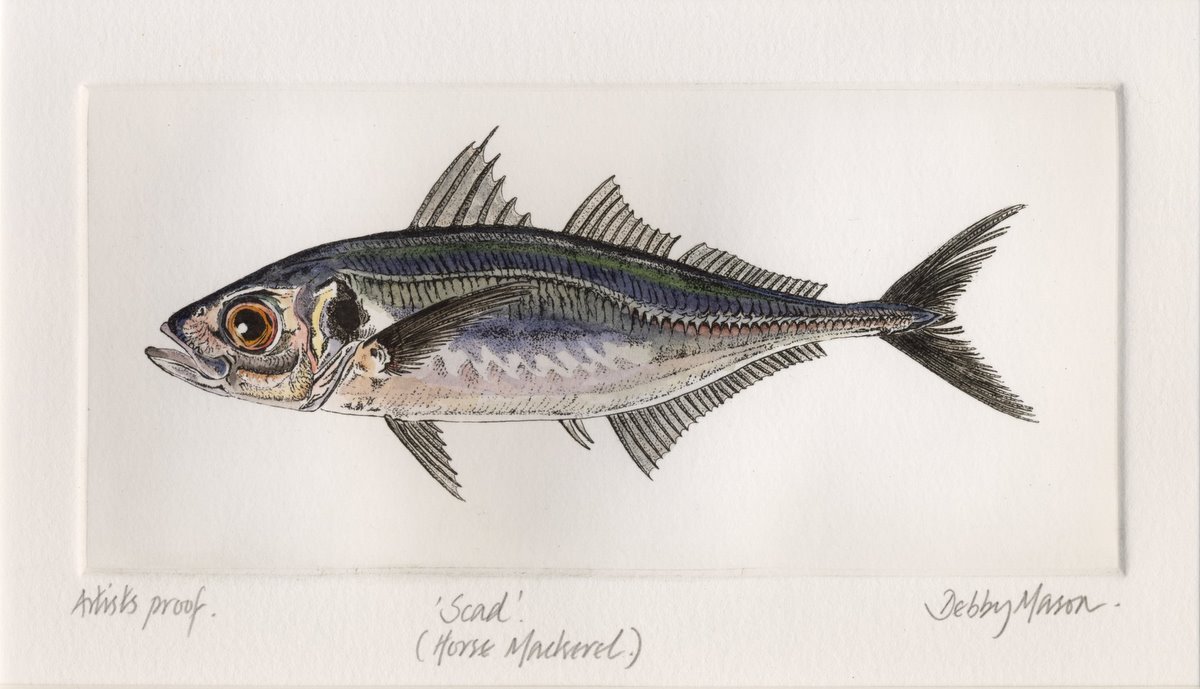
Atlantic mackerel, a fatty schooling fish, for years has been caught by fleets in parts of Europe and sold around the world—where it gets pickled, grilled, smoked, and fried. It is among the United Kingdom's key exports.

But a decade ago, warming temperatures began driving this popular fish north, into seas controlled by Iceland. Almost overnight, this seafood gold began shredding relations between some of the world's most stable governments. It led to unsustainable fishing, trade embargoes, and boat blockades. It even helped convince Iceland to drop its bid to join the EU. And that was among friendly nations.

Welcome to the climate-change food threat you may not have considered.

In many parts of the world overfishing is already draining the ocean of important sea life. But a paper published today in the journal Science suggests potentially explosive ocean fish wars are likely to simmer across the world as warming temperatures drive commercial fish species poleward into territories controlled by other nations, setting up conflicts with sometimes hostile neighbors that are suddenly forced to share. That could lead to far fewer fish, economic declines and, in some areas, serious threats to food security.

"I've got a 3-year-old son, and sometimes it seems like he's better at sharing than countries are with fisheries," says lead author Malin Pinsky, an assistant professor of biology at Rutgers University in New Jersey.

In parts of the world conflicts over ocean fishing are "already rampant. It's been brewing under the surface," says Jessica Spijkers, a sustainability researcher with the Stockholm Resilience Center and co-author of the study. "People have died at sea because fishing boats are out where other boat operators didn't think they should be."

GROWING PROBLEM

Dozens of countries, thanks to climate change, can expect to see entirely new fisheries develop by mid-century, the new study suggests, with that number jumping to 70 or more nations by century's end. By then, many countries could draw nearly a third or more of their national catch from fish stocks that didn't exist in their waters just a few decades earlier.

In parts of the world where governments are volatile and protein from the sea is essential, this is likely to set up conflicts that could escalate into violence or actual wars that threaten national sovereignty. In parts of East Asia, where international relations already are fraught because of disputed maritime boundaries and illegal fishing, scientists predict some countries could see 10 major new fisheries for species or stocks once exclusively managed by other countries.

"Even right now, it's likely to already be a bigger problem than we realize," Pinsky says. "I just don't think we're prepared for this globally."

FISH ARE MOVING—FAST

Most countries control fishing or have agreements to share rights within a 200-mile exclusive economic zone around their coasts. But fish, of course, don't care about political boundaries, and when they cross borders tempers can run hot.

In the 1990s, after agreements to share West Coast fish collapsed, the United States and Canada faced a standoff over salmon. Canada accused Americans of overfishing and seized boats fishing in Canadian waters. The governor of Alaska accused its neighbor of resorting to "gunboat diplomacy." Canada, in turn, threatened to overfish its own rivers to keep American boats from nabbing the harvest. New England saw similar battles between the two countries over lobster.

But now climate change has hundreds of species around the world moving toward the poles in search of colder waters, sometimes by hundreds of miles. And fishing rules and regulations simply cannot keep up.

by Craig Welch, National Geographic |  Read more:
Image: Debby Mason

Phil Mickelson’s Outrageous U.S. Open Putt Was a Maddening, Successful Troll


We got a strong Sunday finish at the U.S. Open and a deserving, great champion. But the first memory of this week’s 118th national championship will probably be Phil Mickelson’s sprint-and-slap on the 13th green Saturday afternoon.

Keep your head on a swivel because every kind of take on this bit of drama bubbled to the surface the last two days. I have had a bunch of conflicting thoughts on it, which I’ve been running through my head since it happened. I’m still not sure what’s right and final but I try to run through them, a little stream-of-consciousness, below. Here we go:
  1. What Phil did can be a disgrace. It can be entertaining and funny, too. I’m not a golf purist and generally find completely unexpected madness like this enjoyable. This was enjoyable because of the fallout and stupidity. But there’s really no other reading of it than it was wrong and bad.
  2. You’re not going to believe this, but there’s room for nuance here between “OMG, golf is so soft” and “Phil should be arrested.” Saying he should have been disqualified does not immediately mean you think your kids are now scarred forever. Nor is it some indictment of golf being too uptight.
  3. Phil should have been disqualified. You can attach some histrionics and modulate your voice or use some intense language that can make that a hot take. But the premise is not. He should have been tossed.
  4. He did something that’s just outside of how the game is played. The rules covered his ass and they were technically applied correctly, but this is also a case where applying a common sense or reasonableness standard would yield a different result. There’s an “I know it when I see it” element here.
  5. The move was far over the line of this whole arrangement and how this game is ordered and structured. It’s a dirty hit in football or a flagrant 2 in basketball. Just because there wasn’t violence associated with this doesn’t make the call for having him tossed some sort of soft, only-in-golf notion. It was just so far beyond how the game is played and the two-stroke penalty did not feel commensurate.
  6. I watched it, and then listened to his comments that it was a deliberate move to try and gain an advantage and then I spent much of the rest of the day walking around Shinnecock Hills thinking about the slippery slope implications of the whole thing. I don’t think it’s going to start happening with regularity, but the fact that Phil did it, outlined his motives, and came back to play again opens the door for it. That seems less than ideal and I could see another rule change down the line to officially slam the door on this kind of f**kery happening more often. The slippery slope argument IS enough for the DQ, in my opinion.
  7. It was a “serious breach” and it sounds like many of the players who do this every day for a living think he should have been DQ’d too. It’s not some media outrage to feed the content beast during a major championship.
  8. I love Phil, I was entertained. I enjoyed the circus and I was amused by his defiance, but it also bummed me out. Can I have all those conflicting emotions? Thinking it was a disgrace but also loving the circus around it? I don’t know, you can yell at me for being a ball of contradictions but that’s where I was at Saturday. Giggling while saying “holy shit, that was insane and wrong.”
by Brendan Porath, SB Nation | Read more:
Image: YouTube

Flight of the Conchords: ‘We're Retired Sex Symbols'

It’s an overcast Saturday morning in Dublin and Flight of the Conchords – AKA Bret McKenzie and Jemaine Clement – and I are in a coffee bar discussing how the pair ended up being in one of the most successful musical comedy bands on the planet when they are not actually fans of the genre.

“I love watching bands play and I love watching comedians perform, but I don’t go out of my way to watch musical comedians,” says McKenzie, the smaller and more serious of the two, with implied heavy understatement.

Clement, the brawnier and gigglier one, agrees: “Yeah, we love doing it, but we wouldn’t watch it.” He makes a delighted honk of a giggle.

Many others, however, do watch it – so many that I couldn’t get into their show in Dublin the night before. All 13,000 tickets had sold out for the first night of the band’s rescheduled tour, which was postponed after McKenzie broke two bones in his hand earlier this year. (“I fell down some stairs. It’s not a very good story, is it?” “Yeah, you should work on coming up with a funnier one.”) The rest of the tour sold out immediately, such is the public’s love for the Conchords’ supremely skilful and loving musical parodies, including Inner City Pressure, their take on West End Girls by Pet Shop Boys (sample lyric: “No one cares, no one sympathises / You just stay home and play synthesisers”) and their anti-seduction song, Business Time (“Then you go sort out the recycling / That isn’t part of the foreplay / But it is very important.”) They have had to add on some dates to meet the demand, which is not bad going for a band that just celebrated its 20th anniversary, but hasn’t released an album in more than a decade.

Despite themselves, Flight of the Conchords are still huge, although, heaven knows, they try not to be: they rarely give interviews and tour only when they feel like it. They are the only band I have ever interviewed who undersell themselves, repeatedly underestimating how many tickets and albums they have sold. Their main complaint about this tour is that the venues are too big. “I like an opera hall … 1,500 people. Perfect,” says McKenzie who, alas, finds himself playing stadiums.

“Fame is only an impediment,” Clement agrees.

Come on, surely they get something good from fame?

“Mmm … sometimes someone gives you a free ice-cream.”

Another thing their fame bequeathed them was the status of sex symbols. Today, McKenzie, 41, and Clement, 44, look a little more grizzled than they did on their eponymous sitcom, which they walked away from in 2009. A dad-like steadiness to their bearing has replaced the floppy late-twentysomethings they once played on TV. (Both are married with children and live with their families in Wellington; Clement has a nine-year-old son and McKenzie has three children, ranging in age from three to eight.) Back in the 00s, when they won a Grammy and their albums were in the Top 20, there was much talk about how the pair represented a new kind of anti-sexy sex symbol; I have friends who still, on a quiet Saturday night, crank up some of their old videos, such as Sugar Lumps, in which Clement and McKenzie gyrate all over a Chinese restaurant as they sing about how women love to stare at what they call “the family jewellery”. (“My dungarees make [the ladies] hun-ga-ree / They’re over the moon when I don pantaloons.”)

If they don’t care for fame, do they enjoy being lusted over by the ladies? McKenzie rolls his eyes so hard he nearly falls out of his chair.

“We’re retired sex symbols,” Clement says with a snort.

Clement has described himself, not inaccurately, as resembling “an ogre in a library”. When trying to describe McKenzie, he opts for a similarly Middle-earthian comparison: “If you go to the set of Peter Jackson’s Lord of the Rings when they’re filming an elf scene, you will see 100 people who look exactly like Bret.” (As it happens, McKenzie did play an elf in The Lord of the Rings and The Hobbit; his wife was working for Jackson at the time.) (...)

And yet when Flight of the Conchords debuted on HBO in 2007, it looked like nothing else anyone had ever seen. They played a pair of New Zealand musicians called Bret and Jemaine whose banal lives contrasted with the ridiculous grandiosity of their music videos, which would suddenly interrupt a scene as the characters broke the fourth wall and sang to the viewers. It was like an MGM musical for Gen X and millennials, but with more Prince references and songs about failed sexual encounters. At the time, the show was seen as part of the new wave of comedy of embarrassment, along with Curb Your Enthusiasm and The Office. But Flight of the Conchords always had more optimism and innocence than those shows; it certainly had none of the cynicism that was then so popular in comedy. (...)

Clement and McKenzie met at university in Wellington, when they were in a theatre group and realised they were the only two in the troupe who couldn’t play guitar, and so decided to write songs to learn.

But how do you go from a New Zealand university theatre group to an HBO hit show in a decade? The Conchords are so averse to trumpeting their successes that their answer takes some decoding.

by Hadley Freeman, The Guardian |  Read more:
Image: Tim Mosenfelder/Getty Images

Android Messaging From Your Computer Starting Today

Google is beginning to roll out desktop browser support for Android Messages, allowing people to use their PC for sending messages and viewing those that have been received on their Android smartphone. Google says the feature is starting to go out to users today and continuing for the rest of the week. Text, images, and stickers are all supported on the web version.

To get started, the Android Messages website has you scan a QR code using the Android Messages mobile app, which creates a link between the two. That’s very similar to how the web client for Allo — remember Allo? — worked. Unfortunately, that section of the Messages app isn’t yet live. Hopefully it won’t be long before it shows up and you can start chatting across platforms.

This is one of the first significant steps in Google’s push towards Chat, which is the company’s implementation of Rich Communication Services (RCS) inside Android Messages. If you’re going to be a viable competitor to iMessage, WhatsApp, Facebook Messenger, and other chat platforms, a desktop version is pretty critical. Allo was one swing at that goal, but Google is pausing all efforts and investment in that failed app and betting that Android Messages — the out-of-box default messaging app on many smartphones — represents its best chance at success. Many carriers have also pledged to back Chat and integrate the benefits (read receipts, typing indicators, full-resolution images and video, and improved group texts) offered by RCS. The big downside? None of this stuff is end-to-end encrypted.

by Chris Welch, The Verge |  Read more:
Image: Google

Monday, June 18, 2018

Understanding the ‘Beautiful Game’

Laurent Dubois devotes around 10 pages of The Language of the Game to describing how soccer’s offside rule has changed over the decades. “Negotiating the offside rule is one of the most complex and absorbing features of the game both for strikers and defenders, an intricate dance that involves positioning and timing of the most nuanced kind,” he writes. “To appreciate and understand this dance is, on a basic level, to appreciate and understand soccer.” If anything, Dubois understates the case. The offside rule is the very heart and soul of what we aficionados, in exalted moods, call “the beautiful game.” Please bear with me as I explain this.

At the risk of oversimplification: The offside rule decrees that a player may not pass the ball to a teammate unless, at the moment of the pass, two members of the opposing side are closer to the goal than that teammate. Imagine that you are a soccer player with the ball. You look up and see a teammate all by himself, no defender anywhere around him, 30 yards from the goal. All you have to do is loft the ball in his general direction and he’ll be playing one-on-one against the goalkeeper. But you can’t. Instead of rejoicing in a scoring opportunity you’re annoyed with your teammate for being so far out of position.

Almost all of the wonderful patterns and geometries of soccer are generated by this one rule, which also generates something that many non-fans greatly dislike: a paucity of goals. But soccer fans get exasperated when goals flow too freely. Scoring should not be easy, and, as with gold and diamonds, there’s a link between rarity and value. The true fan delights in players who have not just the physical gifts but also the imagination to circumvent the rules that seem designed specifically to prevent scoring.

One of the most famous moments in the history of soccer occurred in the 1970 World Cup, in a semifinal match between Brazil and Uruguay. Brazil’s forward TostĂŁo has the ball on the left side of midfield and looks up to see his teammate PelĂ© to his right, running full-tilt toward the goal. TostĂŁo has to make his pass quickly, before PelĂ© gets past the Uruguayan defenders and is therefore offside. He makes it: a beautiful long curling roller. But the Uruguay goalkeeper sees the danger and comes rushing out to clear it. PelĂ© continues at top speed, which is very fast indeed, and it looks like he may just beat the keeper, but that there will surely be a terrible collision between the two men—and then—a millisecond before the inevitable crash—PelĂ© alters course slightly to avoid the keeper and the ball, which rolls right on diagonally across the pitch. You can’t watch the scene without catching your breath, and only then do you ask: How did PelĂ© even think to do that?

But what happens then? Well: PelĂ© darts over to the ball, torques his body to take a tightly angled shot at the now-empty goal—and misses.

Again, this is one of the most famous moments in the history of soccer, and it ends in a missed shot. I do not believe that there is another sport in which a play that ends in a failure to score could be so celebrated. But the stroke of mental brilliance that precedes the miss is so remarkable to soccer fans that the former eclipses the latter. (By the way, Brazil went on to win the match and then, in the final against Italy, the World Cup.)

It might be easy to conclude that soccer is the sort of game that you either get or don’t get, yet Laurent Dubois takes up the noble and difficult task of trying to make soccer comprehensible and interesting to people who are used to games that follow a different logic. It’s a task he handles very well.

by Alan Jacobs, Weekly Standard |  Read more:
Image: Trinity Mirror / Mirrorpix / Alamy

Digital Nomads

Saturday, June 16, 2018

Dad Style - He Wore It First

Well before his public meltdown, Kanye West had already done the most uncool thing ever: He got married, had kids and moved to an upscale enclave of Los Angeles. His latest Yeezy collection for Adidas (which includes schlubby sweatshirts, tracksuits and athleisure basics) is filled with sly references to his newfound life as, well, a suburban dad.

A.P.C. came around with high-waisted pleated chinos, fanny packs andsocks worn with shorts. The label also has orthopedic-looking sneakers; their designer hashtagged them #dadshoes on Instagram.

A spring show for Balenciaga brought baggy blazers, bleached-out jeans and oversize shirts. To drive the point home, some of the male models were accessorized with children. Vogue called the look“dadcore.”

Dads are now at the center of the style universe. And their ethos, dad-ism, is part of the mass move to the unique and the downright fugly. There’s a reason that men in general have chosen to look so bizarre: “Designer brands have become beacons of fugly precisely because people have replaced shopping for things with posting them and then re-’Gramming them,” Nick Sullivan, the fashion director of Esquire, has said.

Dads in specific, though, are “the OG hypebeasts”; The Wall Street Journal recently declared that “‘Dad style’ is now in fashion. Yes, even the jeans.” GQ gave fathers a full-throated fashion endorsement, proclaiming that “the coolest sneakers to buy right now are ones your dad already owns.”

How did we come to the conclusion that orthopedic footwear, light-wash jeans and all the other trappings of dads were cool?

That hot ‘retired millennial’ look

“This is a logical extension or evolution of normcore,” said Brian Trunzo, the senior men’s wear editor at the trend forecasting firmWGSN. He calls the look “retired millennial.” “There’s something uniquely American about it, and very real, red-blooded man, like, ‘I’m going to wear a baggy plaid shirt with relaxed khakis because I’m chilling and I’m comfortable in my manhood.’”

Emily Segal, a founder of the design and technology think tankNemesis Global and a former member of K-Hole, the trend forecasting group that helped identify the normcore phenomenon, has a more expansive view of the movement.

“I don’t think it just has to do with being a dad,” Ms. Segal said. “What we call dad style is stuff that is self-consciously unsexy, or even un-self-consciously unsexy.”

“Brands are trying to produce mystery in this overexposed atmosphere,” Ms. Segal said. “They’re doing it by either picking something extremely random or something extremely obvious. Dad style is both.” (...)

‘30 is the new 20’

Fashion, of course, doesn’t exist in a vacuum and the rise of dad style also dovetails with several sociological shifts taking place.

“There’s always something about coolness that has to do with resistance, not in a political protest sort of way, more in the sense of something being wrong,” Ms. Segal said. She points to brands like Prada, which has long experimented with bad taste and “ugly” fashion to subvert traditional notions of what’s cool.

For young men, traditional roles of childhood and fatherhood have become unmoored in recent years.

Millennials, for example, have started leaving pricey city centers and are moving to the suburbs. And young people are living at home longer than ever, according to a Pew Research Center study, because of high housing costs and lower marriage rates, which is upending the traditional timeline when young urbanites marry, have children and move to the suburbs.

Meanwhile , fatherhood has become cool in other circles. As Dazed, the British youth culture magazine, noted in an article, influencers like Mr. Abloh, Mr. West, the designer Heron Preston and the model Luka Sabbat have taken to calling themselves “art dads,” which loosely means someone with street cred.

Seen another way, dad style is perhaps one more example of the internet’s ability to subvert classifications.

by Max Berlinger, NY Times |  Read more:
Image: Mall of America 1994. Martin Parr/Magnum Photos

Why I let Domino’s Fill My City’s Potholes

Before moving to Delaware to become city manager 2½ years ago, I worked as a city manager in northeast Ohio — a region known for tough, cold winters with lake effect snow and endless potholes. There, we knew how hard it was to keep ahead in the never-ending race to fix our streets with limited resources. I was told that my new home, positioned between the Delaware and Chesapeake bays, would have more moderate weather.

Then three weeks into my job as the city manager of Milford, a nor’easter hit Delaware, bringing snow, winds, flooding and low temperatures. And that meant potholes.

Over the next two years, I learned more about Milford’s infrastructure and the available funding mechanisms. While some streets are maintained by the state, the majority are the responsibility of this 10,000-resident city. A street maintenance backlog meant that while about half of Milford’s streets were in good or satisfactory condition, the rest were rated fair, poor, very poor or serious.

Delaware prides itself on being a low-tax state, a policy that has attracted residents who expect excellent services with few, if any, tax increases. So when I heard that a Domino’s marketing campaign was paying municipalities to repair potholes in return for credit for the work, I quickly responded. We worked with a Domino’s ad agency to ensure that the city would be portrayed in a positive light (not as some pothole-infested place you’d never want to visit) and to address any ethical concerns (i.e., we were not endorsing any particular brand of pizza). Our role was easy. In exchange for a $5,000 check, Domino’s wanted its logo and a tag­line saying “Oh yes we did” in spray chalk on the road next to each repair. The company also wanted photos — before-and-after shots. It didn’t want to send a video crew. It didn’t want high-resolution images. It wanted cellphone pictures of a bunch of guys patching potholes. Our maintenance team rolled out our new patching system and got to work. In two weeks, they fixed more than 40 potholes of different sizes — about 20 to 25 percent of the potholes that appeared after the winter. The chalk was gone after the first rain.

Many of us are familiar with business-to-business promotions, such as restaurants that let you show your baseball ticket to get a discount. But rarely has a business directly invested in making our infrastructure better through an ad campaign. The program has elicited some complaints about what it means that a pizza chain is funding basic government projects. On Twitter, one critic called it “a sign of both how horribly infrastructure has crumbled in America and how much power we have ceded corporations,” while another likened it to the trend of “funding our healthcare through GoFundMe.”

But we saw this as a great idea for our community. Relative to our budget for street repairs, $5,000 is not a small amount of money. Our annual outlay is just $30,000, and we use it to cover crack sealing and other repairs, in addition to fixing potholes. Our city’s general fund is just over $9 million, more than half of which funds our police department. In many communities, there’s a constant competition between paying for police and paying for everything else. Milford is no different.

Through the Municipal Street Aid fund, the state of Delaware offers some funding to help cities pay for road maintenance. But that aid covers only about a quarter of our needs. So we try anything we can to be efficient. We stretch utility repair funds by combining projects: If we need to fix a water line but we know that a sewer line on the same block also will need repairs, we wait to tackle those together, to avoid paying to rip up and replace the street twice. We’re working with other governments to find ways we can share equipment or work on projects together — we bought a new street sweeper this year, and another community may borrow it. The new patching system we bought uses a technique that can be deployed in cold temperatures, so we can patch all year.

There are people in this country who think government wastes money. But I treat city tax dollars as if they were my own, and I encourage our employees to do the same. Get three bids on every project; get three quotes on every purchase. Turn off the lights. We were able to lower the price of fuel by getting bulk discounts through state contracts. We apply for two to four grants a year and maybe get one. But a lot of services can’t be funded by grants. We try to develop the types of innovative ideas that foundations like to fund, but the basics — plowing snow, collecting garbage, the regular stuff that makes a city function — don’t win grants. Taking $5,000 from a pizza chain to repair our roads was not a difficult decision.

by Eric Norenberg, WaPo | Read more:
Image: City of Milford
[ed. See also: Why Domino’s Pizza Is Fixing Potholes Now (CityLab)]

A Beginner’s Guide to Fly Fishing With Your Father

A year ago, after almost three decades in Michigan and Chicago, I went east for a late-bloomer jaunt in grad school and to finally see how things felt on the mythical edges of the country. Now it’s August, and I’m back in Michigan feeling nostalgic for my childhood. I spent the last week in Chicago, reliving my mid-20s, drinking beers at bars with Old Style beer signs out front and swimming in the cold, urban lake, the skyscrapers bobbing above me. The day before I left, my friend Ryan had blown my hair straight and dyed it blond in his hip West Loop salon. After he’d swept away the smock, I shook it out and felt like a pony, strutting and fancy. Today, in this tackle shop in Northern Michigan, my hair still straight but pulled back, I feel too precious, too clean. I wish my hair were three-days dirty and matted to my head.

I was home visiting my parents when I decided to ask my dad if we could go fishing. I was bored in the suburbs, and the long summer evenings and loud cicadas reminded me of when my dad would take my brother on fishing weekends. “We actually always went in the spring,” my dad told me, and I realized that I was likely confusing my own memory with something I had read in a book. He was happy to take me anyway, but it was clear that my urban wardrobe wouldn’t work on the river. We pieced together an outfit, and now I’m standing in the fishing shop wearing tight, high-wasted shorts, my mom’s Tevas, a Tigers hat, and a much-too-big shirt I found in my dad’s closet. (...)

I have no memory of our parents gendering my brother and I, giving him trucks and Hardy Boys books, me dolls and Little Women. But divisions came anyway, and my brother learned to cast a fly rod while I never did. Once, when I was about 8, I went bluegill fishing with a friend in a suburban pond. We used bait — an abomination to a fly-fisherman — and fashioned rods out of toys and fishing hooks we found in my friend’s basement. Within an hour, I had been bitten by a duck and had snagged a hook on my cheek. I was sure the duck was rabid and the hook was rusty. My mother made me get a tetanus shot, and the whole incident was all but the end of my fishing career. My dad thought it was hilarious.

I had proved myself clumsy and incapable in the ways of the outdoors, a truth I’d revisit on camping trips and hikes in the future when I didn’t know how to light a camp stove or pitch a tent. I’d ask my father to show me, and he would. But I only felt confidence later, when I was around friends who had never tried to thread tent poles through nylon — people who grew up in big coastal cities who took my status as a Michigan native as proof of some quality of ruggedness. It was only in relief, juxtaposed against someone who had never seen a camp stove lit or a fish flopping and bleeding on the floor of a boat, that I seemed expert.

Being a boy, my brother’s life as a fisherman was only beginning when he was 8. Every spring, he and my dad went fishing on the Au Sable River with my dad’s many brothers and family friends. They drove north to Grayling and rented a cabin at Jim’s, then waded into a section of the river called the “Holy Water.” There the men who were serious got up early to fish in the mornings, and the boys who were not started when they finally woke up at noon. They cast their lines into a stretch of river frequented by Jim Harrison and Ernest Hemingway, a place where maples hang over the copper water and mourning doves hoot for most of the day.

On those weekends, it seemed, the boys trained to be men and the girls trained to be women. My mom and I stayed home to paint our nails and watch romantic comedies. My brother and father came back with tales of salad dressing made out of pickle juice, pranks played, and enormous fish caught and released. My mother was satisfactorily grossed out by the stories and their carload of grimy, fishy equipment. She refused to let them in the house until they had hosed themselves off. In retrospect, I wonder if my brother and I were jealous of each other’s weekends. The gendered rituals seemed exotic and cloistered, each swaddled in it’s own kind of mystery. It wasn’t that I wished to have the male experience, and he longed for the female. It was that we both wanted our childhoods to be capacious enough for both. (...)

It was my brother who found A River Runs Through It, that most American and romantic story of fly-fishing and brotherly love. We read it to each other on Sunday nights in a ritual that was as close as we ever came to church. My brother once wrote me a card with the last paragraph of the book scrawled out in the penmanship of a seventh-grade boy: “The river was cut by the world’s great flood and runs over rocks from the basement of time. On some of the rocks are timeless raindrops. Under the rocks are the words, and some of the words are theirs. I am haunted by waters.” It was this book that made me want to fish, that last paragraph in particular. There seemed to be something mysterious in the river, something transformative in the act of fishing itself that would change a man or show him a kind of grace. I wanted access to that mystery. (...)

It is the movie version of A River Runs Through It that I love these days. The beautiful casts, the sweeping vistas, the hunky men: watching it is a kind of shortcut to feeling. The soundtrack and the ’90s cinematography put me right back in my parents’ basement with my brother, each of us trying to pretend we aren’t crying in the last minutes of the film. It’s the story of two brothers, both fishermen, who grow up in Montana and become very different men — Norman, a serious scholar who goes to Dartmouth, and Paul, a poker-playing reporter always in debt to the wrong people. They find each other again and again when they are fishing in the Blackfoot River, holding onto a bond of childhood and seeking closeness through experience rather than words.

There are almost no women in the movie, only a girlfriend, a mother, and a prostitute. It doesn’t come close to passing the Bechdel test. But women are good at imagining themselves into the parts of men, if only because men are often the only decent characters. The film inspired thousands of women to take up fly-fishing, a strange fact considering not a single woman performs that activity in the story. For 10 years after the film came out, some of the most famous fishing schools in the United States had more women than men learning to tie flies and cast tight-looped lines.

For all the years I’ve watched the movie, I switch between the moments I see myself as Norm and the moments I see myself as Paul; the times I feel stalwart and surefooted and the times I feel wild and talented. Either way, I imagine myself fishing in the currents of the Blackfoot River in Montana, roll casting a fishing line over the water, small and strong in the forest. I imagine myself competent and tough, and therefore male, an equation that makes me queasy.

I wonder now if part of the reason I never went fishing with my brother and father as a kid is that I didn’t want my gender and youth to become synonymous with my incompetence. When I think back on it, I certainly would have been welcome if I had ever asked to join. But by the time I would have gone, I would have been a girlish interloper who was still learning — the worst one, the youngest one, and a girl to boot. Even then, I didn’t want those ideas braided together. It is only years later, as an adult, that I have let myself be a novice and a woman — that I have given it all a clumsy, childish try.

by Heather Radke, Longreads | Read more:
Image: Steven Weinberg

Friday, June 15, 2018

Joe Jackson

A Walk in the Woods

On the afternoon of July 5, 1983, three adult supervisors and a group of youngsters set up camp at a popular spot beside Lake Canimina in the fragrant pine forests of western Quebec, about eighty miles north of Ottawa, in a park called La Verendrye Provincial Reserve. They cooked dinner and, afterwards, in the correct fashion, secured their food in a bag and carried it a hundred or so feet into the woods, where they suspended it above the ground between two trees, out of the reach of bears.

About midnight, a black bear came prowling around the mar­gins of the camp, spied the bag, and brought it down by climbing one of the trees and breaking a branch. He plundered the food and departed, but an hour later he was back, this time entering the camp itself, drawn by the lingering smell of cooked meat in the campers’ clothes and hair, in their sleeping bags and tent fabric. It was to be a long night for the Canimina party. Three times between midnight and 3:30 A.M. the bear came to the camp.

Imagine, if you will, lying in the dark alone in a little tent, nothing but a few microns of trembling nylon between you and the chill night air, listening to a 400-pound bear moving around your campsite. Imagine its quiet grunts and mysterious snufflings, the clatter of upended cookware and sounds of moist gnawings, the pad of its feet and the heaviness of its breath, the singing brush of its haunch along your tent side. Imagine the hot flood of adrenaline, that unwelcome tingling in the back of your arms, at the sudden rough bump of its snout against the foot of your tent, the alarming wild wobble of your frail shell as it roots through the backpack that you left casually propped by the entrance—with, you suddenly recall, a Snickers in the pouch. Bears adore Snickers, you’ve heard.

And then the dull thought—oh, God—that perhaps you brought the Snickers in here with you, that it’s somewhere in here, down by your feet or underneath you or—oh, shit, here it is. Another bump of grunting head against the tent, this time near your shoulders. More crazy wobble. Then silence, a very long silence, and—wait, shhhhh…yes! —the unutterable relief of realizing that the bear has withdrawn to the other side of the camp or shambled back into the woods. I tell you right now, I couldn’t stand it.

So imagine then what it must have been like for poor little David Anderson, aged twelve, when at 3:30 A.M., on the third foray, his tent was abruptly rent with a swipe of claw and the bear, driven to distraction by the rich, unfixable, everywhere aroma of hamburger, bit hard into a flinching limb and dragged him shouting and flailing through the camp and into the woods. In the few moments it took the boy’s fellow campers to unzip themselves from their accoutrements—and imagine, if you will, trying to swim out of suddenly voluminous sleeping bags, take up flashlights and makeshift cudgels, undo tent zips with helplessly fumbling fingers, and give chase—in those few moments, poor little David Anderson was dead.

Now imagine reading a nonfiction book packed with stories such as this—true tales soberly related—just before setting off alone on a camping trip of your own into the North American wilderness. The book to which I refer is Bear Attacks: Their Cause and Avoidance, by a Canadian academic named Stephen Herrero. If it is not the last word on the subject, then I really, really, really do not wish to hear the last word. Through long winter nights in New Hampshire, while snow piled up outdoors and my wife slumbered peacefully beside me, I lay saucer-eyed in bed reading clinically precise accounts of people gnawed pulpy in their sleeping bags, plucked whimpering from trees, even noiselessly stalked (I didn’t know this happened!) as they sauntered unawares down leafy paths or cooled their feet in mountain streams. People whose one fatal mistake was to smooth their hair with a dab of aromatic gel, or eat juicy meat, or tuck a Snickers in their shirt pocket for later, or have sex, or even, possibly, menstruate, or in some small, inadvertent way pique the olfactory properties of the hungry bear. Or, come to that, whose fatal failing was simply to be very, very unfortunate—to round a bend and find a moody male blocking the path, head rocking appraisingly, or wander unwittingly into the territory of a bear too slowed by age or idleness to chase down fleeter prey.

Now it is important to establish right away that the possibility of a serious bear attack on the Appalachian Trail is remote. To begin with, the really terrifying American bear, the grizzly Ursus horribilis, as it is so vividly and correctly labeled—doesn’t range east of the Mississippi, which is good news because grizzlies are large, powerful, and ferociously bad tempered. When Lewis and Clark went into the wilderness, they found that nothing unnerved the native Indians more than the grizzly, and not surprisingly since you could riddle a grizzly with arrows—positively porcupine it—and it would still keep coming. Even Lewis and Clark with their big guns were astounded and unsettled by the ability of the grizzly to absorb volleys of lead with barely a wobble. (...)

If I were to be pawed and chewed—and this seemed to me entirely possible, the more I read—it would be by a black bear, Ursus americanus. There are at least 500,000 black bears in North America, possibly as many as 700,000. They are notably common in the hills along the Appalachian Trail (indeed, they often use the trail, for convenience), and their numbers are growing. Grizzlies, by contrast, number no more than 35,000 in the whole of North America, and just 1,000 in the mainland United States, principally in and around Yellowstone National Park. Of the two species, black bears are generally smaller (though this is a decidedly relative condition; a male black bear can still weigh up to 650 pounds) and unquestionably more retiring.

Black bears rarely attack. But here’s the thing. Sometimes they do. All bears are agile, cunning, and immensely strong, and they are always hungry. If they want to kill you and eat you, they can, and pretty much whenever they want. That doesn’t happen often, but—and here is the absolutely salient point—once would be enough.

by Bill Bryson, LitHub |  Read more:
Image: : Bess Sadler/Flickr

Larry David and the Game Theory of Anonymous Donations

In a Curb Your Enthusiasm episode from 2007, Larry David and his wife Cheryl and their friends attend a ceremony to celebrate his public donation to the National Resources Defense Council, a non-profit environmental advocacy group. Little does he know that the actor Ted Danson, his arch-frenemy, also donated money, but anonymously. “Now it looks like I just did mine for the credit as opposed to Mr. Wonderful Anonymous,” David tells Cheryl. David feels upstaged, as if his public donation has been transformed from a generous gesture to an egotistical one. Cheryl says, about Danson, “Isn’t that great? He donated the whole wing. Didn’t want anybody to know.” “I didn’t need the world to know either!” David says. “Nobody told me I could be ‘anonymous’ and tell people!” He would have done it Danson’s way, he says, but, realizing the contradiction, he fumes, “You can’t have it halfway! You’re either anonymous, or you’re not.” What Danson did, David concludes, is “fake philanthropy and faux anonymity!”

I thought of this scene this week, after reading a new study in Nature Human Behavior. “People sometimes make their admirable deeds and accomplishments hard to spot, such as by giving anonymously or avoiding bragging,” write the authors—Moshe Hoffman, Christian Hilbe, and Martin A. Nowak, evolutionary biologists from Harvard University and the Institute of Science and Technology Austria. But if “we give to gain reputational benefits, why would we ever wish to hide the fact that we gave?”

The answer to this question may seem less mysterious for anyone who’s seen that Curb episode, “The Anonymous Donor.” We “hide” the fact that we gave precisely for the reputational benefits. For example, at the ceremony, when Danson pops over to David, who’s chatting with then-California Senator Barbara Boxer, she calls Danson a “hero” and stands in awe of the altruism of his “anonymous” donation. Danson playfully shushes her—he’s meant to have only told one or two people but everyone seems to know. David can’t believe it, and later resolves to always donate anonymously for the sake of his reputation.

The episode hits on exactly what Hoffman, Hilbe, and Nowak describe in their paper. “Donations are never fully anonymous,” they write. “These donations are often revealed to the recipient, the inner circle of friends or fellow do-gooders,” and these “few privy observers, in turn, do not only learn that the donor is generous” but are “also likely to infer that the generosity was not motivated by immediate fame or the desire for recognition from the masses…”—exactly what everyone seemed to figure was true of David, to his chagrin.

What’s intriguing about anonymous giving, and other behaviors apparently designed to obscure good traits and acts, like modesty, is that it’s “hard to reconcile with standard evolutionary accounts of pro-social behavior,” the researchers write. Donations fall under a form of cooperation called “indirect reciprocity.” “Direct reciprocity is like a barter economy based on the immediate exchange of goods, while indirect reciprocity resembles the invention of money,” Nowak wrote in his highly cited 2006 paper “Five Rules for the Evolution of Cooperation.” “The money that fuels the engines of indirect reciprocity is reputation.” Donation evolved, in other words, because it granted a good reputation, which helped humans in securing mates and cementing alliances. But if that’s true, how did the practice of anonymous giving arise? The title of the new paper suggests a solution: “The signal-burying game can explain why we obscure positive traits and good deeds.”

The signal-burying game is one of the latest examples of scientists gaining insight into human behavior from game theoretic models and signalling theory. These games, the authors write, make sense of “seemingly counterintuitive behaviors by carefully analyzing which information these behaviors convey in a given context.” Geoffrey Miller, an evolutionary psychologist at the University of New Mexico, said recently on Sam Harris’ podcast, “Waking Up,” “Signalling theory is probably the part of game theory I use most often. The idea there is: How do you credibly demonstrate what kind of organism you are through the signals you give out? And what makes those signals honest, and hard to fake, rather than easily faked, like cheap talk?”

In the signal-burying game, a sender and a receiver pair up randomly, and are rewarded for the kind of match that is made. There are three types of senders (or donors)—low, medium, and high—and two types of receivers—weakly selecting and strongly selecting, or weak and strong for short. A strong receiver corresponds to one of the donor’s close friends or a fellow altruist, and a weak receiver to a member of the general public. The best payoff results from a strong receiver partnering with a high sender, while the worst payoff results from a weak receiver partnering with a high sender.

by Brian Gallagher, Nautilus |  Read more:
Image: David Hume Kennerly / Getty

Thursday, June 14, 2018

Ani Difranco


The 2004 U.S. Open and a Sunday to Forget

SOUTHAMPTON, N.Y. — Tom Meeks was on the 11th green at Shinnecock Hills on the morning of June 20, 2004, when he got the call on the radio. It was Mike Davis, now the CEO of the USGA, but then the U.S. Open championship director. “Tom, we need you at 7 right away,” Davis said.

Meeks, hearing the urgency in his colleague’s voice, jumped onto his cart and drove to the short, par-3 seventh hole. He had spent considerable time there that morning searching for, as he put it, “the easiest possible hole location I could find.” He had finally selected a spot on the front right of the green, not wanting to go too far back on a green that sloped front-to-back and had been very difficult for players to hold the previous day during the third round.

When Meeks arrived, Davis was standing on the green with the flag lying on the ground. He had watched from a spot nearby as the first two groups of the morning flailed helplessly at a green that simply wouldn’t allow any putt of more than a foot or a two to stop if it didn’t hit the hole dead center.

Those first four players—J.J. Henry, Kevin Stadler, Cliff Kresge and Billy Mayfair had made three triple-bogeys and a bogey. Ironically, it was Mayfair, who would go on to shoot 89—the highest score of a day when 28 players failed to break 80—who made the miracle bogey.

Meeks had been setting up championship golf courses for the USGA for close to 30 years, and this was the 10th time he had been charged with setting up a U.S. Open course. His reputation was as someone who would squeeze courses to their limits, following the USGA mantra of “fast and firm” at all times.

“You have to understand that the USGA had pushed the notion that it wanted its U.S. Open to be the biggest, baddest, toughest golf tournament in the world,” said David Fay, who was the organization’s executive director from 1989 to 2010. “Heck, even before I started working there [1979] that was the image of the Open. We were in love with fast and firm. That day, we went too far.”

Even as the Open finally returns to Shinnecock 14 years later, that sunny, windy Sunday is talked about in hushed tones in USGA circles. No one broke 70 and only Robert Allenby shot 70—even par—moving him from a tie for 34th to a tie for seventh. Retief Goosen and Phil Mickelson, who finished first and second, each shot 71. Ernie Els, who began the day two shots behind Goosen, shot 80—and still finished tied for ninth.

Meeks. who’s now 77, retired from the USGA in 2005 and lives in Indianapolis. He says one man was responsible for the debacle: him.

“It was my fault,” he said last weekend. “On Saturday, I thought the golf course was perfect—exactly where we wanted it to be. I went out to dinner with Susie [who he’s been married to for almost 53 years] and some friends and I was in a great mood. I loved Shinnecock as much as any Open venue we’d ever played, and I thought we were about to walk away from a perfect week.”

by John Feinstein, Golf Digest |  Read more:
Image: uncredited
[ed. I remember that weekend. It's still pretty tough.]