Wednesday, July 29, 2020

Stump and Nails

Adopted from the German game... Stump is played with a bad ass stump, hammer, nails, and LOTS of beer. I have played the game with many different groups over the years and the rules are always different. This is WRONG and straight-up SACRILEGE! For the sake of the integrity of the game, I will list what I consider the Unofficial Rules of The Game, as supplied by WorldStump.com.

These guys are the foremost authority on the game, and the following Rules of Play comes from their site-

Before the Game Starts

1. One person should be designated to prepare the stump for play. After the first game, it is common for the winner to assume the honor of preparing the stump for the next game.

2. To prepare the stump, determine how many players (or teams) will participate in the game. One nail should be hammered into the top surface of the stump for each player. The nails should be hammered into the stump straight and as little as possible, however, they should be far enough in that they are sturdy and will not fling out if they are hit at an angle (usually an inch or so will do). The nails should be spread evenly in a circle around the surface of the stump.

3. Each player “claims” a nail by placing his or her foot on the stump next to the nail. This will be his nail for the duration of the game. It is generally understood that people will claim the nail directly in front of them, though this does not necessarily have to be the case.

4. Each player must have a beer (can, bottle, cup, or other suitable container containing beer) on his or her person (defined as being supported entirely by said person and their clothing, not by any other objects) at all times. The only exception to this rule is during Home Improvement (see below), when a player can legally put his or her beer down until Home Improvement is completed.

5. It is general practice to use the claw of the hammer to open your beer, even if this means disrupting the course of play.

Rules of Play

The winner is the last player whose nail remains standing.

1. Each player, in turn, shall toss the hammer such that it makes at least one full 360-degree rotation before he touches it again. The player shall not be allowed more than one toss per turn for any reason (unless it is part of a Trick – see Rule 2a).

2. Once the hammer is caught the player shall attempt to bring it down immediately and without hesitation upon an opponent’s nail, driving it into the stump. Any attempt at “cocking” or “aiming” the hammer shall be considered foul play and subject to criticism.

2a. The standard toss is a back flip, such that the hammer flips claw first. However, all non-standard tosses are acceptable and encouraged, provided the toss does not violate Rules 1 or 2. Non-standard tosses are often referred to as “Tricks”. Click here for a list of Tricks and Trick Ideas. If the Trick includes a double toss (for example Under the Leg to Around the Back) it must remain a continuous motion and should not be an attempt to gain better control after a sub-par first toss. Attempting Tricks is considered to add general excitement to the game, and if successful, carries with it the potential for increased penalties for opponents (see Rule 3).

3. If a player succeeds in striking an opponent’s nail, and the nail becomes visibly shorter or bent, that opponent shall sip from his beer an amount proportionate to the damage inflicted, with additional amounts consumed for any showmanship or Tricks displayed in the toss and catch (see Rule 2a), in which case the number of sips should be a direct reflection of the victim’s respect for the Trick or showmanship.

4. If any player sees sparks resulting from the hammer striking a nail, it is a Social. Every player must take a sip from his own beer. The common announcement one makes when he sees sparks is “Spaaks!” – a throwback to the game’s suspected New England origin.

5. If a player drops the hammer during the toss, it is considered a Spazz and the player loses his turn. The player must take a sip from his own beer.

5a. If a player drops the hammer during the toss, and the hammer comes to rest directly on top of the stump, the person in the direction the handle of the hammer is pointing must chug his entire beer. The toss is still considered a Spazz, and the player who tossed must take a sip from his own beer.

6. If a player’s nail should become bent during the game, he may, during his turn only, choose to fix his own nail. This process is called “Home Improvement”. The player can take as long as he likes to fix the nail to his satisfaction, though his efforts are subject to comment by the other players. It is considered honorable to ensure that the nail is straight and in a position to be hit cleanly.

6a. During Home Improvement, it is generally expected that all other players will place a foot on the stump for stability.

7. A player is eliminated from the game (and thereby takes no more turns) once any part of the head of his nail passes below the level of the surface of the stump (including bending over the edge of the stump without actually entering it). A generally accepted test of whether a player is still active is whether one can pass a fingernail underneath the head of the nail without obstruction. Any obstruction of free movement shall result in the player being deemed inactive.

8. Should a player’s nail bend such that the head passes below the surface of the stump, thereby eliminating the player, this player can be resurrected if another player strikes the nail, regardless of intent, in such a way that the head of the nail emerges from the surface of the stump. The resurrected player will re-enter the game in the same rotation pattern as before elimination.

9. Inactive players should continue to comply with Rules 4, 5a, and 6a.

After the Game

Upon completion of a game (when only one nail remains standing), the players shall arrange themselves in order, clockwise around the stump, from first place to last place according to the results of the game.

Each player should ensure that he or she has sufficient beer remaining. If not, he or she should prepare another beer.

A “Waterfall” shall commence, whereby all players simultaneously begin chugging their beers (commonly after a toast to “The Stump”). The first place player can stop chugging at any time. The second place player must not stop chugging until after the first place player has stopped. The third place player must not stop chugging until after the second place player has stopped, and so on until the last place player chooses to stop drinking.

It is considered foul play to “cheat” during the Waterfall, incorporating such tactics as pretending to drink, drinking very slowly, or creating a “lake” in your mouth.

It is common for the winner of the game, should he choose to do so, to drive his own nail fully into the stump.

The following are additional rules of play and/or acceptable variations of the rules-

by Jared Vincent, Unofficial Networks |  Read more:
Image: uncredited
[ed. My buddy Jerry and I were talking the other night about obscure bands and he mentioned one he'd seen in a Texas bar years ago while playing Nails (fyi...band's name was Sleeze Beeze - think Def Leppard, but possibly sleazier). Anyway, he also noted that it wasn't a particularly good idea to mix the two - that particular band, and a bunch of guys with hammers. So, I'm like, "Nails? What's that?" Here's his version:

Apparently it all starts with 8 in. nails pounded into a stump, each about a dollar bill deep (the dollar bills all have to be standing up straight on end to begin). From there everyone takes turns whacking away until your nail is the last one standing. There might be some intricate game theory involved (such as it is), so teamwork could be helpful, or you might even pound your own nail in a ways from time to time just to keep it from being an easy target. Whatever. And this goes on for like, however long it takes - 20 minutes or more depending on the number of beers consumed. Classic. See also: How to Play Nails (Stump) - with videos (Instructables Outside).]

Tuesday, July 28, 2020


Seth Armstrong, Hillside, 2019
via:

Fake Fans, Fake Invitations


Those fake baseball fans are creeping people out (The Verge)

[ed. I think I'm losing my mind. In other baseball news, see also: Trump Won’t Throw First Pitch At Yankees Game Because No One Asked Him To (Vanity Fair).]

A Message to the City (Seattle) from Mattilda Bernstein Sycamore


"Sometimes, I feel like an entire culture has misplaced something, and it's... everything."

Good morning. It's Monday, July 27, and it's supposed to be blazing hot today—hottest day of the year so far.

Also blazing hot? The talents of novelist Mattilda Bernstein Sycamore, whose fourth novel, The Freezer Door, comes out in November.

There's a blurb on it from Maggie Nelson (!!) that says: "In a happy paradox common to great literature, it’s a book about not belonging that made me feel deeply less alone... I stand deeply inspired and instructed by its great wit, candor, inventiveness, and majesty."

Mattilda reads a little from The Freezer Door in her message today, but first she cracks: "I wrote a book about alienation, and then everything got worse."

by The Stranger |  Read more:
Image: YouTube

When Grandparents Are Estranged From Their Grandchildren

Since my own granddaughter’s birth almost four years ago, I’ve spent hours caring for her each week.

In this, I’m just plain lucky. We have stayed tight because I could reach her apartment in 75 minutes (in pre-pandemic times) by public transit, and because I haven’t inadvertently alienated my daughter or son-in-law.

But almost every time I write about grandparents, someone expresses anguish in the comments section about being unable to see or even call a beloved grandchild. Estrangement brings heartache I can’t truly imagine.

“You learn that you don’t have the relationship you thought you had with your children,” said a doctor in Western Massachusetts who is an estranged grandparent. Like several I spoke with, she asked for anonymity because she hoped for a future cease-fire.

She hasn’t seen her son and his seven children since 2015, except at a family funeral where they didn’t speak. He and his wife have blocked her email, she said, and sent gifts back unopened. “I feel like I’m being erased,” the doctor said.

How often this happens remains an unanswered question. In a 2012 survey of nearly 2,000 grandparents conducted for AARP, 2 percent said they never saw the grandchild who lived furthest away — but distance or illness could also account for that.

The numbers could well be higher. At heart, estrangement from grandchildren reflects estrangement from adult children, the gatekeeper middle generation that can promote or deny access. (...)

What leads to estrangement? Dr. Coleman, who works with estranged families and conducts webinars on the subject, puts divorce — in either generation — high on the list. “Children of any age can blame one parent for a divorce or feel a need to ally with one or another, or have problems with the new person the divorced parent brings into the family,” he said.

In the younger generation, divorce can create estrangement if a custodial parent no longer wants an ex’s family involved.

Sometimes, longtime grievances from adult children’s own childhoods surface when they become parents themselves. “Maybe they had an uneasy truce, but now that they have their own kids they’re anxious that their parents will hurt their children in the same way,” Dr. Coleman said.

by Paula Span, NY Times |  Read more:
Image: Andrea Ucini

Taylor Swift


Taylor Swift Is Singing About More Than Taylor Swift—and Rediscovering Herself in the Process (The Ringer)

... there’s no denying that Folklore, easily the most subdued and monochromatic Swift album yet, paints a rich inner landscape with just that one color (iron gray), and it rises to the grim occasion of sinking into a maudlin reverie worthy of this terrible year of global unease and self-quarantine. It’s a Cling to a Grand Piano Bobbing in a Stormy Ocean album for a Cling to a Grand Piano Bobbing in a Stormy Ocean era. Never a bombastic singer as either country stars or pop stars go, Swift sounds as muted as ever here, contemplative and relatably downbeat even when she’s singing a whole-ass song about the vibrant woman who used to live in her $17.75 million Rhode Island mansion.

Yes, “The Last Great American Dynasty,” as upbeat and propulsive as this record gets, is a very explicit tribute to Rebekah West Harkness, the eccentric multiple divorceé and Standard Oil heiress/widow who filled her Rhode Island mansion’s pool with champagne and her fish tank with scotch; “stole her neighbor’s dog and dyed it key-lime green,” a splendid detail after Swift’s own master-songwriter heart; and upon her death in 1982, had her ashes placed in a $250,000 urn designed by Salvador Dalí. (This song is also your first opportunity to hear Swift sing the word “bitch.”) Naturally, Harkness has inspired multiple lengthy explainer blog posts in the past 72 hours, because Swift wrote a song about her, because Swift owns her house now. (The refrain “She had a marvelous time ruining everything” becomes “I had a marvelous time ruining everything.”) And wow is it impressive, genuinely impressive, how charming this song is given the fact that it’s a white pop star, in July 2020, singing a song about her $17.75 million Rhode Island mansion.

[ed. The song Cardigan has nearly 30 million YouTube views, five days after it's release. I've never been much of a Taylor Swift fan but you have to admit she does have her hands pretty firmly grasped on the throat of American pop music and culture these days (and the songs on this album are actually pretty good).] 

Monday, July 27, 2020

Why Mookie Did the Right Thing

A week after George Floyd was killed by a white Minneapolis police officer, Spike Lee premiered a short film entitled 3 Brothers on a CNN special hosted by Don Lemon. The film, which is still available on Lee’s Instagram account, is only 94 seconds long. It opens with five words in red juxtaposed against a black background: “Will History Stop Repeating Itself?”

For a minute and a half, footage of the real-life killings of George Floyd and Eric Garner is interspersed with the fictional death of Do the Right Thing’s Radio Raheem (played by the late, great Bill Nunn). All three clips depict unarmed Black men, suffocated and killed by white police officers. Each episode is filled with a chorus of desperate pleas from horrified onlookers. They are eerily similar scenes. Like three instruments playing the same tune in three different octaves.

What makes 3 Brothers so affecting is the morose timelessness of the source material to which it is indebted. Released in 1989, amid the turbulence of the Reagan-and-Bush-era war on drugs, Do the Right Thing is an examination of trauma, community, and uprisings as a form of political action. Starring Lee as the protagonist Mookie, a delivery man at Sal’s Famous Pizzeria—the only white-owned business in the neighborhood—the film takes place over the course of one day, on a single block in Brooklyn’s Bed-Stuy. Set in the midst of a record heat wave, it focuses on the minutiae of everyday life in the neighborhood, only later revealing how vulnerable the Black and Brown bodies that populate it are to police violence.

Lee builds Do the Right Thing into a rolling boil, emphasized by the day’s temperatures but felt especially in Mookie’s interactions. A pair of police officers stalk the neighborhood from their patrol car, like predators eyeing prey. A run-in with a white man in a sweat-stained Larry Bird jersey foreshadows the looming threat of gentrification. A petition, organized by Buggin’ Out (Giancarlo Esposito), demanding that Sal honor not only Italian Americans on his “Wall of Fame” throws Mookie headfirst into fraught debates about race and ownership. Mookie argues with Sal’s oldest son, Pino, a virulent racist, about the inherent contradictions of “hating” Black people while idolizing Black artists and athletes. He protects Da Mayor, an old man with a drinking problem, after police officers question him about a group of kids who’ve sprayed water into a white man’s convertible. Up until the end of the movie, Mookie even tries to mediate the conflict between Sal and Buggin’ Out. For most of the film, he is the bridge between his community and the forces that constrict it.

As the torrid sun gives way to a muggy night, the neighborhood’s tensions overflow. When an altercation breaks out between Radio Raheem and Sal—over the former’s refusal to turn down the volume of his boombox—police officers arrive and immediately subdue Raheem. One officer lifts him off the ground, pinning a billy club against his neck, choking him, until his feet dangle lifelessly in the air. As an uprising swells in response to the killing, Mookie joins in, throwing a trash can through the plate-glass window of Sal’s Famous, after which the pizzeria is burned to the ground. The movie ends with two quotes—one from Martin Luther King Jr. and another from Malcolm X—on the utility of violence as a means to achieve liberation.

Despite its more recent placement within the pantheon of contemporary filmmaking, at the time of its release Do the Right Thing was met with controversy and resistance from white critics. The movie lost out on the Cannes Film Festival’s Palme d’Or because the jury president found Mookie “unheroic.” Nine months later, it was nominated for just two Oscars, famously losing Best Picture to Driving Miss Daisy, a film whose message of racial reconciliation—a well-worn Hollywood trope in which white characters are redeemed of their racism by virtue of their friendship with a Black counterpart—was the antithesis of Lee’s sprawling drama. White critics and Hollywood elites even debated whether or not the film would cause mass rioting in Black communities. In a review for New York magazine, Joe Klein wrote a screed warning readers of the “violent” ramifications that would come if the film spread to Black audiences.
If Lee does hook large black audiences, there’s a good chance the message they take from the film will increase racial tensions in the city. … It is Spike Lee himself—in the role of Sal’s deliveryman—who starts the riot by throwing a garbage can through the store’s window, one of the stupider, more self-destructive acts of violence I’ve ever witnessed (if black kids act on what they see, Lee may have destroyed his career in that moment).
New York magazine’s David Denby, a film critic and current staff writer at The New Yorker, similarly assailed the uprising scene, writing that Lee was “playing with dynamite in an urban playground” and that the “response to the movie could get away from him.”

Beyond the casual racism that suggests Black audiences are incapable of consuming incendiary art without erupting into a rampage of mindless violence, the common thread among the initial criticisms of Do the Right Thing was an ignorance of what “rioting” is about and the manner in which it operates in Lee’s narrative. That same ignorance is as much a staple of moments of social upheaval as the upheaval itself. “Spike was dealing with studio executives that didn’t understand how violence was incited and why it’s incited,” says Ruth E. Carter, the film’s costume designer, who would win an Oscar years later for her work on Black Panther. “They think something as simple as a movie like Do the Right Thing that has a riot scene in it is the thing that tips the temperament of the Black community. But it’s much deeper than that.”

About two-thirds of the way through Where Do We Go From Here: Chaos or Community, the final text that Dr. Martin Luther King Jr. wrote during his tectonic life, King describes visiting Watts, California, in the wake of the infamous 1965 Watts Rebellion. Just a few days earlier the city had been engulfed in flames as the uprising hit historic proportions. Amid all of this upheaval, King and his associates traveled the city looking for answers:
Touring Watts a few days after that nightmarish riot in 1965, Bayard Rustin, Andrew Young and I confronted a group of youngsters who said to us joyously, “We won.” We asked them: “How can you say you won when thirty-four Negroes are dead, your community is destroyed, and whites are using the riot as an excuse for inaction?” Their answer: “We won because we made them pay attention to us.”
Uprisings like the one King describes, or those that have surged across the country for the past eight weeks, are not thoughtless outbursts of untethered rage. The fact that they ignite in the heat of a specific episode of police violence does not mean that they are fueled by that episode alone. They are attempts to force the wandering gaze of state power to acknowledge a community and their struggles, and they are calculated responses to specific grievances, accumulated, in some cases, over generations.

by Lex Pryor, The Ringer |  Read more:
Image: Nate Creekmore

How to Take Screenshots on Your Android Phone

Screenshots are handy. You can use them to show your grandparent how to use a new app. You can use them to send a shot of that strange error message to your company’s IT department. You can use them to capture tweets — yours or someone else’s — before they disappear down the deletion black hole.

There are two ways to take a screenshot of your Android device’s screen. (We’re assuming your phone is loaded with Android 9 or later):
  • Press and hold the power button. You’ll get a pop-out window on the right side of your screen with icons that let you power off, restart, call an emergency number, or take a screenshot. Or...
  • Hold down the power button and press the volume-down button
Either way, after you’ve taken the screenshot, it will briefly appear as a smaller version and then disappear. A drop-down will briefly appear on top letting you know that the screenshot is being saved, and then it will be replaced by another drop-down that, if you tap it, will let you share or delete the screenshot or make some basic edits. That box will disappear after a few seconds, but if you check your top-left notifications bar, you’ll find one for that screenshot.

Some Android phones (for example, certain Samsung and Huawei phones) let you take “long” screenshots, where you can scroll the screen down and capture the entire page. Check your phone’s support pages if you think you might have that. It can be handy.

If you want to find all your past screenshots:
  • Go to your Photos app
  • Tap on the three parallel lines in the top-left corner
  • Select “Device folders” > “Screenshots”
by Barbara Krasnoff, The Verge | Read more:
Image: The Verge

Alone in the Wilderness, Again and Again

A middle-aged man wearing a plaid shirt, denim overalls, and a white driving cap is building a cabin before a backdrop of snowy mountains and a turquoise lake. The blade of his handsaw makes a steady sound, cutting through a peeled log stroke by stroke. As the title of his film reveals, Dick Proenneke is Alone in the Wilderness, although from my spot behind the counter, I see how Dick draws a crowd: every seat in the video nook is occupied, and men—mostly older visitors who seem past their cabin-building years—stand behind the benches, arms crossed. All day, every day, tourists consume Dick’s story, which continually unfolds since we keep him on auto-repeat.

It’s summer, and I’m working as a park ranger at a visitors’ center in Fairbanks. I dole out brochures for lands across Alaska, including Lake Clark National Park, where Dick’s cabin on the edge of Upper Twin Lake is now a historic site. Dick is a star, with a strong presence on the park’s website and his own handout that I’m constantly photocopying since it flies off the rack in the video nook. We’ve run out of DVDs, so a gray-haired Australian buys Dick’s book. “He’s magic,” the man sighs, and I have to agree.

One of my coworkers says Alone in the Wilderness is the only movie she’s seen over and over and not come to hate. It captivates me, from its opening shot of rosy alpenglow and Dick’s calm declaration: “It was good to be back in the wilderness again. I was alone, just me and the animals.” As the film begins in the summer of 1968, Dick is fifty-one and preparing to build the cabin where he will live for more than thirty years. Other than supply runs by the pilot Babe Alsworth, Dick will be entirely alone, just himself and his tripod-mounted camera.

I confess to my co-workers what seems an obvious desire: I’d love to be Dick Proenneke. Who wouldn’t want to live alone in the wilderness? They don’t, as it turns out. “He seems so lonely!” Anne bemoans. “Too many chores,” Adia adds.

She’s right—he does do a lot of chores. “July the thirty-first,” Dick announces. “Tin-bending day.” He’s cutting down metal gasoline containers and transforming them into common household items. “Made a water bucket, a wash pan, a dish pan, a flour pan, and storage cans,” Dick rattles off, so that I am astonished, once again, by his productivity. In the video nook, the crowd appears captivated. It would be hard to script a duller TV moment, but Dick makes even tin bending compelling because what he is really doing is sidestepping the modern world, tin shears in hand. Then he realizes he needs a spoon to pour batter onto the griddle. An hour later, he’s carved a spoon.

The writer Sam Keith, who befriended Dick when they both worked at an Alaskan naval base, edited Dick’s journals and in 1973 published One Man’s Wilderness, a chronicle of the construction of Dick’s cabin, which became an Alaskan classic. Five years before my job in the visitors’ center, this book introduced me to Dick Proenneke when I picked a copy off a sale rack in Fairbanks and brought it to my government job counting fish on the Alaska Peninsula. I did not know it then, but that job would be the closest I would come to living Dick’s dream life. I shared a cabin with a coworker in a river valley surrounded by snowy mountains and next to a lake. A pilot flew in supplies, and two months later he flew us out. In between, we counted fish, roamed, completed chores, and read. On days when the clouds lifted, I admired a hanging glacier. One day, while the wind blew forty, I curled up in my sleeping bag and began Dick’s book. The salmon were running, and from my window I watched bears fishing. Reading the book in such a remote place fired my imagination, even though building a cabin seemed out of my reach. Dick first visited Twin Lakes in 1962 and vowed to return. Five years later he did, cutting logs for his cabin, which he built the following summer. I lived and worked at the fish camp for three summers, in a cabin I did not build, and never alone. I have never been back. Dick served in the US Navy in World War II, worked as a carpenter, and retired as a diesel mechanic and heavy-equipment operator from the Kodiak Naval Base. Meanwhile, I’ve counted fish and doled out brochures.

I have another ten years to go until I’m as old as Dick was when he built his cabin, but I cannot imagine that will be enough time for me to gain his level of competence. I’ve settled on a compromise, visiting the wilderness but not living there. Instead I live down a dirt road in Fairbanks. My property is part of an old homestead, and I’ve been fixing it up for ten years. Through years of renovations, I lived with ripped-out walls and lumber piles in my entry. Construction starts and stalls, and I’ve entered a hazy phase of perpetual chores. I’ve put in a garden and grow vegetables. I pick berries with an obsession that would perhaps be better applied toward carpentry. I am not alone in the wilderness, but I am alone most of the time.

As part of my job, I lead an interpretive walk about pioneers of early Fairbanks. I carry an iPad to show visitors photos from the early days, when pioneers carved up the forest and created a town. I point at the busy road bordering our parking lot and pull up a photo from 100 years ago, when there was nothing but a string of cabins and gardens. We visit a surviving cabin, a token souvenir from what was demolished to build the visitors’ center. There is a fake outhouse in the yard, and tourists practice driving Segways in the parking lot before their tour along the bike path.

The frontier has largely vanished from Fairbanks, and I find myself desperate to convey how self-sufficiency, resourcefulness, and other frontier values live on in small ways. The tourists want to hear this, too—they are more drawn to Dick’s film, which shows the Alaska they want to see, than they are to the bingo parlors and box stores found on streets near the visitors’ center. When I tell the story of the past, I bring in my own story. I don’t have plumbing. I haul water or melt snow on a wood stove. I split wood. I play dodge-the-moose in my driveway. When I return to the topic of the historical cabin, one lady insists my life is more interesting. “You are a pioneer!” a man claims. No, I am a cabin yuppie, with Internet but no plumbing.

by Amy Marsh, Guernica |  Read more:
Image: Richard Proenneke
[ed. I've fished the stream connecting Upper and Lower Twin Lakes and saw Dick's cabin (I think it was his, how many could there be?). Quite a memorable trip (almost died). The country is stunningly beautiful; the lake trout and grayling large and plentiful. See also: Reflections on a Man in his Wilderness (NPCA). Alaska is/was a special place because of places and people like this.]

Jean-Michel Basquiat, Portrait of the Artist as a Young Derelict, 1982
via:

Sunday, July 26, 2020

The Cyrkle


[ed. A turn  down day (the sixties sound, just before it exploded in a hundred different directions). Interesting fact: their manager was Brian Epstein.]

‘Biggest Petri Dish in the World.’

Remember how people would joke about moving to Canada when things would go terribly, politically?

Like, say, after America had invaded the wrong country. People here, especially liberal Seattle people, would vow: “That’s it, I’m moving to Canada.”

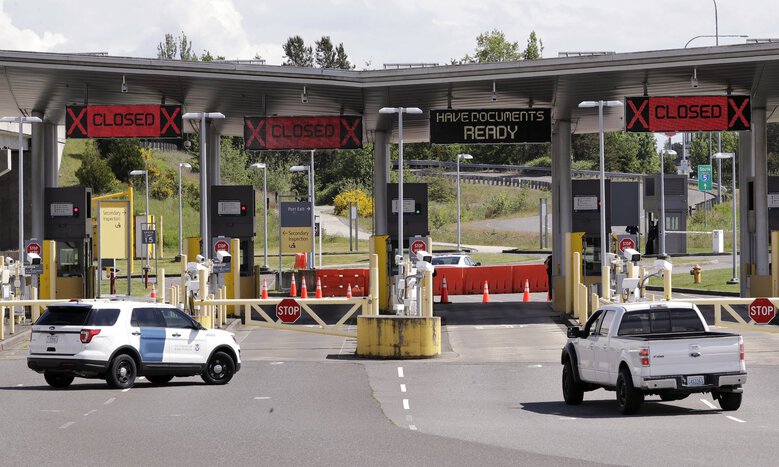
Well it turns out we need a new joke. Because Canada isn’t having it anymore. They don’t want us there — at all, no laughing matter.

“We regard the United States right now as the biggest petri dish in the world,” reports George Creek, from Vancouver Island, British Columbia.

Creek has been leading a group of volunteer watchdogs to monitor marine traffic, looking for Washington state boaters who have sneaked across the border into Canadian waters. They then report them to Canadian officials to try to keep them from docking and coming ashore. No hard feelings, he told me cheerily by phone this past week. But every American is seen as a loaded vector of disease.

“You need to get the pandemic under control. You need a rational person to take the helm of your country. Until then, all we’re saying to Americans is: Stay away. When you come against our wishes, pardon the expression, it pisses us off.”

Ouch. You know you’re becoming a pariah country when the Canadians go all “pardon the expression” on you.

Earlier this month, three local members of Congress — Democrat Derek Kilmer of Gig Harbor and Republicans Cathy McMorris Rodgers of Spokane and Dan Newhouse of Sunnyside — joined some of their colleagues in sending a seemingly benign letter to the Canadian government. It suggested we talk about reopening our shared 5,500-mile-long border, which remains closed to most travel due to COVID-19.

The letter was fluffed with flowery, binational niceties — such as a call to “restore the social bond that unites our two nations.” But hoo boy, not since the 1859 “pig incident,” when we nearly went to war in the San Juan Islands over one slaughtered hog, have our friends to the north gotten quite so prickly.

“Hard pass on opening the border — we’re a healthy nation with big plans, and you’re a failed society,” one Canadian replied to the congressional letter on Twitter.

“That border stays CLOSED,” wrote another. “Canadians may be polite but we aren’t CRAZY!”

And another: “There’s no reason to believe Americans will care about the health of Canadians, given that relatively few seem to care about the health of other Americans.”

Ouch again. On it went like this, with more than 6,000 tweeted responses to the members of Congress, in what was the social media equivalent of being battered by the wings of a flock of angry Canada geese.

Also this month, in response to news that U.S. boaters were flouting the border closure, the B.C. premier, John Horgan, joined in the stay away chorus.

“Our government fought hard to get the border closed, and it needs to remain closed until the US gets a handle on this pandemic,” he tweeted on July 15. “This is not the time for Americans to be here on vacation & anyone abusing the rules should be penalized accordingly.”

A recent poll of Canadians showed 89% want to keep the border with the U.S. closed through 2020, with the pollster saying they regard America’s mishandling of the virus as “a cautionary tale.”

Remember that election we had, in 2016, when the winner talked about closing our borders to the world? The world ended up closing its borders to us.

by Danny Westneat, Seattle Times |  Read more:
Image: uncredited

Ziqian Liu
via:

Gwen Coyne
via:

A Bunch of Guys in a Band


[ed. Don't think they have a formal band name (AntiPOP is another group). Check out this instrumental version by Andy McKee. And is the guy in the lower right hand corner Heath Ledger in disguise?]

Vocal: Lucas A. Engel; Drums: Gonzalo Díaz; Bass: Andi Schneir; Guitars: David Contreras; Keyboards & Programming: Marcelo Nuñez

Saturday, July 25, 2020

What’s Happening?

In 1974, Doris Lessing published memoirs of a survivor, a postapocalyptic novel narrated by an unnamed woman, almost entirely from inside her ground-floor apartment in an English suburb. In a state of suspended disbelief and detachment, the woman describes the events happening outside her window as society slowly collapses, intermittently dissociating from reality and lapsing into dream states. At first, the basic utilities begin to cut out, then the food supply runs short. Suddenly, rats are everywhere. Roving groups from neighboring areas pass through the yard, ostensibly escaping even worse living conditions and heading somewhere they imagine will be better. Her neighbors disappear, either dead or gone, leaving children behind—children who become feral and increasingly violent. Over the course of a few years, even the children’s language devolves into almost unintelligible jargon and cursing, as if the polite words they have been taught to communicate with no longer suit the survivalist demands of their situation.

The narrator’s myopic view of the outside world reflects the shortsightedness of her culture at large. Nobody, apparently, can admit how bad things are until conditions become completely unlivable, and meanwhile nobody can bear to name “it,” this slow, ongoing collapse with unidentifiable origins. The narrator spends considerable time trying and failing to define “it,” this never-quite-climactic but steady disintegration of life as she knew it. The news barely addresses “it,” and neither do the authorities, who, instead of offering aid, send troops in to police the newly homeless. To the narrator, “it” had never been “felt as an immediate threat”—because it always seemed like a problem elsewhere, relevant to somebody else, but never at the doorstep, until it was far too late. She explains: “While everything, all forms of social organization, broke up, we lived on, adjusting our lives as if nothing fundamental was happening. It was amazing how determined, how stubborn, how self-renewing were the attempts to lead an ordinary life. When nothing, or very little, was left of what we had been used to, had taken for granted even ten years before, we went on talking and behaving as if those old forms were still ours.”

Lessing sticks to the pronoun and describes “it” from an oblique angle, but writers of dystopian fiction have given “it” all sorts of names and causes. These turning points, which many science fiction plotlines hinge on, are similar to what the critic Darko Suvin has called “the novum”—the event or technological novelty that signals the fictional world is different from our own. The event that destroyed the earth in Philip K. Dick’s Do Androids Dream of Electric Sheep? is spurred by a major war called “World War Terminus.” Kim Stanley Robinson’s drowned city in New York 2140 is the product of two major “Pulses,” or moments of drastic sea-level rise. Neal Stephenson marks the inexplicable explosion of the moon in Seveneves by starting a new clock for human time, with the lunar destruction as hour A+0.0.0, or simply “Zero.” In P. D. James’s Children of Men, too, the clock starts over, at the point when humans become infertile and are faced with species demise: Year Omega. The titular event in Liz Jensen’s 2009 The Rapture is a major flood instigated by climate change, the biblical name of which is a not uncommon choice that, like the clock at 0, indicates that something has ended and something has begun anew. Such terminology points to the religious (and moralistic) undertones of much science fiction, a genre that supposedly rests on the supremacy of reason and rationality but is often undeniably theological in structure. One could say the same of Western cultural narratives at large.

A particularly inventive recent name for “it” is William Gibson’s “jackpot,” from his 2014 novel The Peripheral (which continues in the 2020 sequel Agency). The jackpot is what future humans call their previous social collapse, initiated partly by antibiotic-resistant bacterial infections. The choice of term is a somewhat ironic comment on the fact that global population decimation resulting from the plague was highly beneficial for some. The scarcity of an overpopulated world became post-jackpot abundance, at least for those who were poised to take advantage of it. As Gibson himself is said to have remarked, the future is already here, it is just unevenly distributed—an adage he updated in recent years to say that dystopia is also here, it’s just unevenly distributed, too.

Gibson’s jackpot seems like an appropriate term for our times and the current “it” the world is undergoing, which has so far been named the COVID-19 pandemic. While the virus can infect anyone, the pandemic disproportionately affects poor and minority communities when it comes to loss of livelihood and morbidity rates: If health care and basic rights are unevenly distributed, we can assume that this disease, this dystopia, will be too. And, as Gibson shows, we can expect that this disparity will perpetuate or widen after the event, as evidenced by choices like the Trump administration’s stimulus package, which supports “the economy” (i.e., the wealthy and their banks) rather than those most vulnerable. In other words, this pandemic may be hell for most but turn out to be a jackpot for some.

This raises the question: What will “after” the pandemic look like? In some ways it is the wrong question to ask, because event-izing the pandemic and giving it an after implies that there was a true before. Yet as writers of dystopian novels know, there was no before, there was only a time when “it” wasn’t quite so unavoidably visible. The circumstances that gave rise to “it” have been in place for quite some time. Yet until now, like Lessing’s narrator, those of us with the privilege to sit safely inside and watch what is happening outside, through the window, have been able to uphold the pretense that it is not our responsibility nor our calamity. We have successfully outsourced dystopia to somewhere else. But now it is “here,” because it is everywhere. (...)

On the one hand, naming the crisis allows one to apprehend it, grasp it, fight back against it. On the other hand, no word can fully encompass it, and any term is necessarily a reduction—the essence of “it” or “change” is not any singular instance but rather their constancy. For example, while one could call COVID-19 a biological crisis, one could just as accurately call it a health care crisis, a values crisis, or an ecological crisis. Names matter: Think of how Donna Haraway reframed the Anthropocene era as the “Capitalocene,” redirecting blame from the human species as such to humanity’s current economic system of relentless extraction and exploitation. The Capitalocene is in many ways a more optimistic title for our era than the Anthropocene, because it implies that there is another way: Although we might remain anthropos, we can still construct our world according to a different set of priorities and principles than the ones capitalism allows.

Year Zero is a useful concept for a story to hinge on, because it reflects our entrenched desire for moments of rupture that change everything at once. Disasters do shape history and intervene in the narratives we cling to—but in truth they only catalyze and make visible malignant processes that have been ongoing for a long time. The biggest disasters are the ones that are never identified as such—what Rob Nixon calls “Slow Violence,” those occurrences, like gradual environmental devastation, that disproportionately affect those without a megaphone, and which are not deemed newsworthy because they are not sensational single events. (One could also take up Keller Easterling’s use of the term “disposition” to describe the latent violent attitudes of infrastructure design—from electrical grids to legislation—that are only made manifest when the system spectacularly fails.) The pandemic might also be reframed as a form of slow violence, resulting not only from sudden, invasive “foreign,” nonhuman threats, but also from ongoing, pervasive, systemic power imbalances inside and outside the arbitrary borders we draw around places, people, and concepts.

Slow violence is hard to identify, hard to describe, and hard to resist. But this is one thing literature, postapocalyptic or otherwise, can do: to portray how the short and the long, the small and the big, connect. To identify the rot within rather than the threat without. To articulate “it” even when “it” has no name. Fiction can portray ecologies, timescales, catastrophes, and forms of violence that may be otherwise invisible, or more to the point, unnameable. We will never grasp the pandemic in its entirety, just like we will never see the microbe responsible for it with the naked eye. But we can try to articulate how it has changed us—is changing us.

Postapocalyptic literature probably does not dominate library shelves. Yet Lessing suggests that “it,” that apocalyptic pronoun, may be the hidden subject of all literature, precisely because it is the story of human hope and human failure and the coexistence of the two—the simultaneity of heaven/hell that makes up the human condition on earth. “It” is the essence of change, of human experience.

by Elvia Wilk, Bookforum | Read more:
Image: Jill Mulleady, No Hope No Fear, 2016. Courtesy the artist and Freedman Fitzpatrick, Los Angeles/Paris

Rep. Alexandria Ocasio-Cortez (D-NY) Responds to Rep. Ted Yoho (R-FL)


[ed. Powerful. I'd also imagine this is probably the first time the term "fucking bitch" has been entered into the Congressional Record by a member of Congress. See also: Rep. Yoho's response (such as  it is).] 

The Horror Novel Lurking in Your Busy Online Life


In early April, at the height of the pandemic lockdown, Gianpiero Petriglieri, an Italian business professor, suggested on Twitter that being forced to conduct much of our lives online was making us sick. The constant video calls and Zoom meetings were draining us because they go against our brain’s need for boundaries: here versus not here. “It’s easier being in each other’s presence, or in each other’s absence,” he wrote, “than in the constant presence of each other’s absence.”

Petriglieri’s widely retweeted post reads like the germ of a horror tale. The liminal space between presence and absence, reality and unreality, is often where the literature of fear unfolds — a place called the “uncanny.” That old aesthetic term for creeping dread, famously dissected by Freud, is typically now applied to disturbing specimens of digital animation said to reside in the “uncanny valley.”

by Margot Harrison, NY Times | Read more:Image: Julia Dufossé

Friday, July 24, 2020

Are American Colleges and Universities the Next Covid Casualties?

Long before Donald Trump or Covid 19, the eerie resemblance of American higher education to the old Habsburg Empire was hard to miss. At the top a handful of vintage institutions continued to glitter. They exercised a magnetic attraction on the rest of the world that even intellectual disasters on the scale of the economics discipline before the 2008 financial crisis hardly dented. But most every institution below the royals was at least fraying around the edges. Long before the pandemic hit, many showed clear signs of distress.

The root of that distress is not hard to identify: It is the pressures arising from the decline of the American middle class and the soaring income inequalities of the New Gilded Age. While a few US colleges have lineages stretching back centuries, they and their less venerable competitors dramatically reconfigured themselves during the long boom that followed World War II. Historically rapid economic growth along with major government funding initiatives, such as the GI Bill, post-Sputnik spending on defense and R&D; and Lyndon Johnson’s Great Society fueled a vast expansion of the whole system.

With college degrees the passport to well-paid, stable employment, going to college became the default expectation of middle-class students and parents and the aspiration of many less affluent households. State supported institutions bulked up, but so did most private colleges and universities. Research institutions, private liberal arts colleges, professional schools, state colleges and universities, and junior colleges nearly all added students and faculty. Many also transformed themselves into conglomerates, branching out into wholly new lines of activity and adding layers of administrators.

The fateful fork in the road came in the nineteen seventies, as economic growth slowed and became far more variable. The declines, along with major campaigns for lower taxes, squeezed both federal and state finances. With direct aid from governments constrained, and advances in biotechnology promising high returns, both Democrats and Republicans encouraged colleges and universities to privatize research performed on their campuses and to spin off products to private industry.

As college costs spiraled upward while middle class incomes stagnated, the market for college education stratified more sharply. A handful of private universities and a very few public ones with deep-pocketed alumni spent big to build internationally competitive programs in science, engineering, and professional schools. In a virtuous circle, those successes attracted further outside funding from both government and industry. A few institutions were so successful at this that student tuition eventually became a secondary factor compared to how their endowments fared in the stock markets.

Over time, the search for outside funding turned increasingly desperate as state support continued falling off, especially after economic downturns. State funding now supplies 21% of the budget – a huge decline from the nineteen seventies —-and has been replaced by net tuition revenues which have grown year after year since 1980.

Permanent faculty are higher education’s institutional memory; they are vital to manage the curriculum in departments and programs, decide who is qualified to teach what in the curriculum, and how students should be assessed. But desperate to save money, colleges and universities steadily chopped back full-time academic positions –from 85% in 1970 to less than 25% today. Instead they filled more and more teaching slots with adjuncts, who are paid much less. Many, according to a new report, live on incomes of $25,000 or less. Because the permanent faculty is less than 25% at institutions outside of the top 150 or so ranked public and private colleges, most instruction is now done by part-timers who are given little or no professional guidance about what or how to teach or how to assess students.

Many colleges, including large numbers of state institutions, also turned to recruiting out-of-state students who could pay full cost. They sought to attract students from abroad, including many from China, for the same reason. In large universities, teaching assistants with an uncertain grasp of English often teach many students.

The nature and amount of student services also changed; many schools, for example, found it necessary to add medical, psychological, and other counseling services for non-traditional students. Rising health costs were a constant problem, especially for part timers. Many institutions also poured scarce resources into sports success, believing that would inspire increased alumni contributions. They also competed for affluent students by offering hotel-like amenities, state of the art gyms, and other expensive facilities. It did not help that many heads of colleges aspired to be paid like corporate CEOs.

In the wake of the 2008 financial crisis, the Obama administration was reluctant to help states out of their budget shortfalls, while national Republicans were openly opposed. State support for higher ed plunged to new lows. In most states, it never really came back. In 2017, for example, the largest governmental source of revenues for public higher education, state general appropriations, amounted to $87 billion – $2.2 billion below the level of 2007.

Throughout this long time of troubles, both governments and universities encouraged students and their parents to make up the revenue shortfall by taking on debt themselves. Student private lenders gleefully helped, often at rates that were astonishing even by the standards of deregulated American finance. After 2008, as interest rates fell to historically low levels, some private lenders still tried to charge double digit interest rates for student loans. The national student loan debt has risen to over $1.6 trillion dollars in 2020.

The result has been a slow motion train wreck. The steady growth of a dual economy in the US has made middle-class jobs increasingly scarce and destroyed many previously well-paid, secure jobs. As the Sanders and Warren campaigns made obvious, many students now carry heavy loads of debt when the graduate – if they graduate. Dropout rates, especially of minority students, have soared and many fewer students – again, especially minority students – find college a practical possibility. Rates of college attendance for Black and Hispanic students run far below that of whites, whose rates have also been declining. Whites and Asians earn a college-level credential at rates about 20% higher than Blacks and Hispanics. At the same time, students with diplomas often cannot find anything resembling an old fashioned entry-level position, because there are so few to be found.

Now, suddenly, with the Covid 19 pandemic, the long running financial squeeze threatens to turn overnight into genuine insolvency as institutions struggle to figure out how to safely run instructional systems dependent on in-person activities and support systems all too reminiscent of cruise ships. Duke University’s President Vincent Price recently sent the board, faculty, and staff a memo stating that Duke would need to find an additional $150 million to $200 million to get through the upcoming academic year. University of Michigan and Stanford University administrators project losses on a similar scale. Endowments have likely also taken a hit, though the massive Federal Reserve interventions in financial markets has supported portfolios, if not working Americans.

Duke, Michigan, and Stanford, though, are wealthy institutions with established reputations. Many of these, if they must, can operate online for a good while, if not comfortably, and relatively few students will likely fail to show eventually. By contrast, it is painfully obvious that many less well-endowed institutions are grasping at straws to find ways to reopen in person. They fear that students and parents simply will not pay for online instruction at home from less renowned institutions and many need the tuition to survive. In addition, colleges and universities often garner important revenues from student payments for dorm and meal services. More than a few have substantial debts to service. (...)

Many education leaders are pressing for much larger packages in the next CARES legislative package. Figures of $47 billion or more are being tossed around by groups representing only part of American higher education. There is also discussion of measures protecting universities from at least some liability suits.

Not everyone is on board. A celebrated former president of Harvard known, if guardedly, to be close to the Biden campaign, has proposed that institutions should take advantage of the crisis to accelerate changes that were in train anyway. In his view, that might lead to wider use of online instruction by a few institutions with strong worldwide brand names. Some of his colleagues are more cautious: they recommend that for only courses in some fields.

By contrast, the outgoing President of the University of California system recently stated flatly that Massive Open Online Courses (MOOCs) have not worked well. That is our view, with the important qualification that for highly motivated students, in some sharply defined contexts, well designed MOOCs or videotapes can be effective. Absent those, we think that the experience of Princeton and other institutions, where students enrolled in MOOCs stayed away in droves, is likely to be repeated.

by Roger Benjamin and Thomas Ferguson, INET| Read more:
Image: uncredited
[ed. Personally, I'd select a state school with reasonable tuition, then transfer later if a "name" college is important to you.]

The Never-Ending War (and Military Budget)


[ed. Just so you know. $740 billion and counting (every year)... and for what? Who cares any more what we're trying to accomplish over there, after 19 years? Whatever it is, it ain't working (except for defense contractors). See also: House Democrats, Working With Liz Cheney, Restrict Trump’s Planned Withdrawal of Troops From Afghanistan and Germany (The Intercept)]