Sunday, December 22, 2024

Introducing Act-One

A multi-cam dialogue scene edited together using a single actor and camera set-up to drive the performance of two unique generated characters. ~ Introducing Act-One
Driving performance and generated output for Characters A &B.

At Runway, our mission is to build expressive and controllable tools for artists that can open new avenues for creative expression. Today, we're excited to release Act-One, a new state-of-the-art tool for generating expressive character performances inside Gen-3 Alpha.

Act-One can create compelling animations using video and voice performances as inputs. It represents a significant step forward in using generative models for expressive live action and animated content. 
 ~ Introducing Act-One

[ed. Whoa. We've been speculating about digital actors replacing real ones for a long time. Looks like it's finally here.]

Saturday, December 21, 2024

A Cobrahawk Christmas

[ed. My golfing buddy Matt on bass. Nice version of this old favorite. He told me they just recorded another Christmas tune for this year. Check out some of their other stuff...here and here.]

The Ghosts in the Machine: Spotify's Plot Against Musicians

I first heard about ghost artists in the summer of 2017. At the time, I was new to the music-streaming beat. I had been researching the influence of major labels on Spotify playlists since the previous year, and my first report had just been published. Within a few days, the owner of an independent record label in New York dropped me a line to let me know about a mysterious phenomenon that was “in the air” and of growing concern to those in the indie music scene: Spotify, the rumor had it, was filling its most popular playlists with stock music attributed to pseudonymous musicians—variously called ghost or fake artists—presumably in an effort to reduce its royalty payouts. Some even speculated that Spotify might be making the tracks itself. At a time when playlists created by the company were becoming crucial sources of revenue for independent artists and labels, this was a troubling allegation.

At first, it sounded to me like a conspiracy theory. Surely, I thought, these artists were just DIY hustlers trying to game the system. But the tips kept coming. Over the next few months, I received more notes from readers, musicians, and label owners about the so-called fake-artist issue than about anything else. One digital strategist at an independent record label worried that the problem could soon grow more insidious. “So far it’s happening within a genre that mostly affects artists at labels like the one I work for, or Kranky, or Constellation,” the strategist said, referring to two long-running indie labels.* “But I doubt that it’ll be unique to our corner of the music world for long.”

By July, the story had burst into public view, after a Vulture article resurfaced a year-old item from the trade press claiming that Spotify was filling some of its popular and relaxing mood playlists—such as those for “jazz,” “chill,” and “peaceful piano” music—with cheap fake-artist offerings created by the company. A Spotify spokesperson, in turn, told the music press that these reports were “categorically untrue, full stop”: the company was not creating its own fake-artist tracks. But while Spotify may not have created them, it stopped short of denying that it had added them to its playlists. The spokesperson’s rebuttal only stoked the interest of the media, and by the end of the summer, articles on the matter appeared from NPR and the Guardian, among other outlets. Journalists scrutinized the music of some of the artists they suspected to be fake and speculated about how they had become so popular on Spotify. Before the year was out, the music writer David Turner had used analytics data to illustrate how Spotify’s “Ambient Chill” playlist had largely been wiped of well-known artists like Brian Eno, Bibio, and Jon Hopkins, whose music was replaced by tracks from Epidemic Sound, a Swedish company that offers a subscription-based library of production music—the kind of stock material often used in the background of advertisements, TV programs, and assorted video content.

For years, I referred to the names that would pop up on these playlists simply as “mystery viral artists.” Such artists often had millions of streams on Spotify and pride of place on the company’s own mood-themed playlists, which were compiled by a team of in-house curators. And they often had Spotify’s verified-artist badge. But they were clearly fake. Their “labels” were frequently listed as stock-music companies like Epidemic, and their profiles included generic, possibly AI-generated imagery, often with no artist biographies or links to websites. Google searches came up empty.

In the years following that initial salvo of negative press, other controversies served as useful distractions for Spotify: the company’s 2019 move into podcasting and eventual $250 million deal with Joe Rogan, for example, and its 2020 introduction of Discovery Mode, a program through which musicians or labels accept a lower royalty rate in exchange for algorithmic promotion. The fake-artist saga faded into the background, another of Spotify’s unresolved scandals as the company increasingly came under fire and musicians grew more emboldened to speak out against it with each passing year.

Then, in 2022, an investigation by the Swedish daily Dagens Nyheter revived the allegations. By comparing streaming data against documents retrieved from the Swedish copyright collection society STIM, the newspaper revealed that around twenty songwriters were behind the work of more than five hundred “artists,” and that thousands of their tracks were on Spotify and had been streamed millions of times.

Around this time, I decided to dig into the story of Spotify’s ghost artists in earnest, and the following summer, I made a visit to the DN offices in Sweden. The paper’s technology editor, Linus Larsson, showed me the Spotify page of an artist called Ekfat. Since 2019, a handful of tracks had been released under this moniker, mostly via the stock-music company Firefly Entertainment, and appeared on official Spotify playlists like “Lo-Fi House” and “Chill Instrumental Beats.” One of the tracks had more than three million streams; at the time of this writing, the number has surpassed four million. Larsson was amused by the elaborate artist bio, which he read aloud. It described Ekfat as a classically trained Icelandic beat maker who graduated from the “Reykjavik music conservatory,” joined the “legendary Smekkleysa Lo-Fi Rockers crew” in 2017, and released music only on limited-edition cassettes until 2019. “Completely made up,” Larsson said. “This is probably the most absurd example, because they really tried to make him into the coolest music producer that you can find.”

Besides the journalists at DN, no one in Sweden wanted to talk about the fake artists. In Stockholm, I visited the address listed for one of the ghost labels and knocked on the door—no luck. I met someone who knew a guy who maybe ran one of the production companies, but he didn’t want to talk. A local businessman would reveal only that he worked in the “functional music space,” and clammed up as soon as I told him about my investigation.

Even with the new reporting, there was still much missing from the bigger picture: Why, exactly, were the tracks getting added to these hugely popular Spotify playlists? We knew that the ghost artists were linked to certain production companies, and that those companies were pumping out an exorbitant number of tracks, but what was their relationship to Spotify?

For more than a year, I devoted myself to answering these questions. I spoke with former employees, reviewed internal Spotify records and company Slack messages, and interviewed and corresponded with numerous musicians. What I uncovered was an elaborate internal program. Spotify, I discovered, not only has partnerships with a web of production companies, which, as one former employee put it, provide Spotify with “music we benefited from financially,” but also a team of employees working to seed these tracks on playlists across the platform. In doing so, they are effectively working to grow the percentage of total streams of music that is cheaper for the platform. The program’s name: Perfect Fit Content (PFC). The PFC program raises troubling prospects for working musicians. Some face the possibility of losing out on crucial income by having their tracks passed over for playlist placement or replaced in favor of PFC; others, who record PFC music themselves, must often give up control of certain royalty rights that, if a track becomes popular, could be highly lucrative. But it also raises worrying questions for all of us who listen to music. It puts forth an image of a future in which—as streaming services push music further into the background, and normalize anonymous, low-cost playlist filler—the relationship between listener and artist might be severed completely. (...)

According to a source close to the company, Spotify’s own internal research showed that many users were not coming to the platform to listen to specific artists or albums; they just needed something to serve as a soundtrack for their days, like a study playlist or maybe a dinner soundtrack. In the lean-back listening environment that streaming had helped champion, listeners often weren’t even aware of what song or artist they were hearing. As a result, the thinking seemed to be: Why pay full-price royalties if users were only half listening? It was likely from this reasoning that the Perfect Fit Content program was created.

After at least a year of piloting, PFC was presented to Spotify editors in 2017 as one of the company’s new bets to achieve profitability. According to a former employee, just a few months later, a new column appeared on the dashboard editors used to monitor internal playlists. The dashboard was where editors could view various stats: plays, likes, skip rates, saves. And now, right at the top of the page, editors could see how successfully each playlist embraced “music commissioned to fit a certain playlist/mood with improved margins,” as PFC was described internally.

In a Slack channel dedicated to discussing the ethics of streaming, Spotify’s own employees debated the fairness of the PFC program. “I wonder how much these plays ‘steal’ from actual ’normal’ artists,” one employee asked. And yet as far as the public was concerned, the company had gone to great lengths to keep the initiative under wraps. Perhaps Spotify understood the stakes—that when it removed real classical, jazz, and ambient artists from popular playlists and replaced them with low-budget stock muzak, it was steamrolling real music cultures, actual traditions within which artists were trying to make a living. Or perhaps the company was aware that this project to cheapen music contradicted so many of the ideals upon which its brand had been built. Spotify had long marketed itself as the ultimate platform for discovery—and who was going to get excited about “discovering” a bunch of stock music? Artists had been sold the idea that streaming was the ultimate meritocracy—that the best would rise to the top because users voted by listening. But the PFC program undermined all this. PFC was not the only way in which Spotify deliberately and covertly manipulated programming to favor content that improved its margins, but it was the most immediately galling. Nor was the problem simply a matter of “authenticity” in music. It was a matter of survival for actual artists, of musicians having the ability to earn a living on one of the largest platforms for music. PFC was irrefutable proof that Spotify rigged its system against musicians who knew their worth.

by Liz Pelley, Harper's |  Read more:
Image: Yoshi Sodeoka

via:

Radicalized

A short story about health care, and desperation.

Just because you’ve decided to die of cancer, that doesn’t stop everyone you know from consuming your last months on this Earth by sending you links to miracle cures. They deleted these and politely told everyone—even their parents—to cut that shit out, but people can’t help themselves.

Lacey’s mom found the link to adoptive cell transfer therapy.

It wasn’t woo: the US National Cancer Institute was part of the NIH, and they had gotten multiple papers on the therapy published in Nature, with huge numbers of citations. Joe and Lacey read the papers as best as they could, and Lacey talked about them with her dying Facebook friends, and they all decided that maybe this was worth a shot.

The way it worked was, they sequenced the genome of your tumor and looked for traits that your own white blood cells could target, then they sorted out your own white blood cells until they found some that targeted those traits, and grew 100 billion or so of those little soldiers in a lab and injected them into you. It was just a way of speeding up the slow and inefficient process by which your own body tuned its own white blood cell population, giving it a computational boost that could outrace even the fastest-mutating tumor.

Joe and Lacey even found a private doc, right there in Phoenix, who’d do the procedure. He had an appointment at Arizona State University, had published some good papers on the procedure himself, and all he needed was $1.5 million from their health insurer.

You know what happened next. Their insurer told Lacey that it was time for her to die now. If she wanted chemo and radiation and whatever, they’d pay it (reluctantly, and with great bureaucratic intransigence), but “experimental” therapies were not covered. Which, you know, OK, who wants to spend $1.5 mil on some charlatan’s miracle-cure juice cleanse or crystal therapy? But adaptive cell transfer wasn’t crystal healing and the NIH wasn’t the local shaman.

They underwent—Joe underwent—a weird transformation after her last call with the supervisor’s supervisor’s supervisor at their health insurer. Lacey had been so good about it all, finding peace and calm and determining to make her death a good death. She’d dragged Joe out of his anger at cancer and back into his love of her and a mutual understanding that they’d make their last days together good ones, for them and for Madison.

But after the insurer turned them down, the rage came back. Maybe the therapy wouldn’t have worked, but it was a chance, and a realistic one, not a desperate one, a real possibility that his daughter would have a mother and that he would have a wife and best friend to grow old with. (...)

There are lots of support forums online and the best ones perform an incredible, nearly magical service for their participants, proving the aphorism that “shared pain is lessened, shared joy is increased,” and making the lives of everyone who contributes to them better.

Fuck Cancer Right In Its Fucking Face was not one of those forums.

Fuck Cancer Right In Its Fucking Face was a forum for very angry people whose loved ones were dying or dead. Some of the denizens of FCRIIFF got better, maybe even partially due to the chance to vent in the forums, but also because they were surrounded by people who loved them and brought them back from the brink, people who shared their grief but had better coping skills.

In a forum for ex-drunks, there’s a big group of elder statespeople who’ve been sober for years and years. They’re a wise, moderating voice, and they are the existence of proof of life after addiction. Whenever someone on the forums went on a bender and was recriminating with themselves, there was a dried-out elder who could tell a story to top theirs, about being put out on the street, losing their kids, losing their limbs, even, and coming back from it.

Fuck Cancer Right In Its Fucking Face did not have those people. The people who got over their furious grief left FCRIIFF, chased away by its rage culture. The people who stayed were really into their anger, clinging to it like a drunk refusing to let go of a bottle.

If your anger took you to a place you couldn’t handle, a place that scared you, the elders of FCRIIFF would help you all right: they’d explain to you that this was the right reaction, the only reaction, and it was never, ever going to get better. This was your life from here on in. (...)

He stayed on the forum.

He was ready to quit FCRIFF—which old-timers like him called Fuckriff, or Ruck Fiff when they wanted to sound polite—when LisasDad1990 joined. His first message:
Lisa is six years old. This is what she looks like. I have put her to bed every night since she stopped breast feeding. I used to read her Hand, Hand, Fingers, Thumb and then we graduated to Green Eggs and now we’re reading Harry Potter. That’s right, a six-year-old. She’s SMART.

Last year, Lisa started falling down a lot, bumping into things. Her teachers said she wasn’t concentrating in school and I saw it too. Her mom’s not in the picture. I took her to the doc’s and they said she had a brain tumor. I can go into details later, but it’s not a good brain tumor. It’s not little or cute. It’s an aggressive little fucker, and it’s growing.

Lisa can only see out of one eye now, and she walks with a walker, or I wheel her in her chair.

But the good news is that it’s treatable. Not like 100% but the oncologist says he can whack that bastard straight out of there and blast her with some rads and give her some poison and she’ll live. She’ll always have some problems, but she’s young and she’s full of life and she’ll figure that shit out.

But our insurance? Not so much. I was working for a customs broker when it hit, my first real full time job, with insurance and everything. Paid so much into that insurance.

SO MUCH. But they say that the kind of surgery the doc wants to do, it’s experimental. They say it’s not covered.

Guys, I’m 28 years old, a single dad. My parents haven’t given me a dime since I told them to go fuck themselves and moved out at 17. If my ex had a dollar to spare, it’d go to oxys, before the student-debt collectors could get it.

I have a GoFundMe, but that only works if you know a million people or one millionaire. My kid is the greatest thing in the world, but everyone thinks that about their kid, and from all the evidence so far, I’m the only one who can see it.

The thing is, my daughter Lisa is going to die.

I mean, I can kid myself about it, but that’s what it’s about. My six-year-old kid is going to die even though she doesn’t have to (or at least she has a chance she won’t get to take).

It’s because some random asshole earning half a million dollars in an office at the top of a tower full of random assholes earning less than me decided she should die. He doesn’t know her and he won’t ever know her but he knows that there are so many kids like Lisa that are going to die because of his choices.

I’ve been sad, I’ve been angry, I’ve been worried. I hold Lisa so much that she tells me, dad stop it, but some day I’m going to hold her and she won’t say anything because she’ll be dead. That’s my truth and my life and I live that truth every day.

When Lisa goes, I’m going to go too. I never said that out loud but I’ll write it here because you guys know what I’m going through. I’m dead fucking serious. With Lisa I had everything to live for. Now I got nothing. Can’t even afford to bury her, not after all the out of pockets. Red bills every day, every credit card wants to send a guy around with a bat to break my knees. Maybe I’ll buy a gun and shoot the first one that comes to the door, then stick it in my mouth…
by Cory Doctorow, The American Prospect |  Read more:
Image: Cory Doctorow. Gregory Katsoulis/Creative Commons
[ed. Readers will recall how we ended up with Obamacare - typical bait and switch. Republicans and insurance industry lobbyists drew a red line on Medicare For All/Single Payer Healthcare, refusing to even discuss a national healthcare system unless those options were off the table (and also that everyone be required to sign up through private insurance companies). They then proceeded to vote against the compromise anyway (and have been trying to kill it ever since). See also: Cory Doctorow’s prescient novella about health insurance and murder: ‘They’re going to be afraid’ (The Guardian); and, How AARP Shills for UnitedHealthcare (TAP):]
***
I had assumed that UnitedHealth’s business model was to lowball premiums and then more than make up the profit by denying claims. But it’s even worse than that.

In Massachusetts, where I live, a supplemental Medicare policy from UnitedHealth costs $251 a month. An identical policy from Blue Cross, which has the state’s best record in not denying care, costs $212.

Why on earth would consumers buy such a flawed insurance product? It helps if they are captive customers, steered to UnitedHealth by a trusted source.

That would be AARP.

AARP has just under 38 million members. But AARP is basically an insurance marketing scheme masquerading as an advocacy group for the elderly.

For 27 years, UnitedHealth has been the co-branded choice of AARP. If you are looking for a supplemental policy to conventional Medicare, or a Medicare Advantage product, or a Medicare drug insurance policy, AARP will steer you to UnitedHealth. And only to UnitedHealth.

The reason is shameful. UnitedHealth kicks back 4.95 percent of premium income from AARP subscribers to AARP. And the numbers are staggering. According to AARP’s audited financial report, AARP made $289.3 million from member dues, but $1.134 billion from kickbacks from insurers, of which the lion’s share, $905 million, was from health insurers. AARP delicately refers to these as royalties.

And somehow, because it is a nonprofit, AARP manages to avoid income taxes on this kickback income. Despite Congress’s efforts over the years to make nonprofits pay taxes on commercial income, AARP paid only about $3 million in federal income taxes on “royalties” of well over a billion. ~ How AARP Shills for UnitedHealthcare

***

A February 2020 study published in The Lancet found that the proposed Medicare for All Act would save 68,000 lives and $450 billion in national healthcare expenditure annually. According to a 2022 study published in the Proceedings of the National Academy of Sciences of the United States of America, a single payer universal healthcare system would have saved 212,000 lives and averted over $100 billion in medical costs during the COVID-19 pandemic in the United States in 2020 alone. Roughly 16% of all COVID-19 deaths occurred in the US, despite having only 4% of the world's population.  ~ Wikipedia

Friday, December 20, 2024

via:

The Social Media Discourse of Engaged Partisans is Toxic Even When Politics are Irrelevant

Significance Statement

Political discourse on social media is infamously uncivil. Prevailing explanations argue that such incivility is driven by differences in ideological or social-identity conflict—partisans are uncivil because the political stakes are so high. This report considers a different (albeit not contradictory) possibility—that online political discourse tends to be uncivil because the people who opt into such discourse are generally uncivil. Indeed, people who opt into political discourse tend to be especially toxic, even when discussing nonpolitical topics in nonpartisan contexts. Such individuals disproportionately dominate political discourse online, thereby undermining the public sphere as a venue for inclusive debate.

Abstract

Prevailing theories of partisan incivility on social media suggest that it derives from disagreement about political issues or from status competition between groups. This study—which analyzes the commenting behavior of Reddit users across diverse cultural contexts (subreddits)—tests the alternative hypothesis that such incivility derives in large part from a selection effect: Toxic people are especially likely to opt into discourse in partisan contexts. First, we examined commenting behavior across over 9,000 unique cultural contexts (subreddits) and confirmed that discourse is indeed more toxic in partisan (e.g. r/progressive, r/conservatives) than in nonpartisan contexts (e.g. r/movies, r/programming). Next, we analyzed hundreds of millions of comments from over 6.3 million users and found robust evidence that: (i) the discourse of people whose behavior is especially toxic in partisan contexts is also especially toxic in nonpartisan contexts (i.e. people are not politics-only toxicity specialists); and (ii) when considering only nonpartisan contexts, the discourse of people who also comment in partisan contexts is more toxic than the discourse of people who do not. These effects were not driven by socialization processes whereby people overgeneralized toxic behavioral norms they had learned in partisan contexts. In contrast to speculation about the need for partisans to engage beyond their echo chambers, toxicity in nonpartisan contexts was higher among people who also comment in both left-wing and right-wing contexts (bilaterally engaged users) than among people who also comment in only left-wing or right-wing contexts (unilaterally engaged users). The discussion considers implications for democratic functioning and theories of polarization. (...)

Discussion

Taken together, the results provide strong and consistent support for the troll hypothesis: (i) people who are especially toxic in partisan contexts are also especially toxic in nonpartisan contexts, and (ii) engaged partisans (especially the bilaterally engaged) are more toxic than the nonengaged when discussing nonpolitical content in nonpartisan contexts. Such effects are specific to uncivil behaviors (rather than to negativity in general) and do not result from some sort of socialization process in partisan subreddits. They emerge regardless of political lean, and they apply to users whose partisan comments take place in contexts that are explicitly political or ostensibly nonpolitical—although they are especially strong for users with activity in explicitly political contexts. The effects, which emerge in virtually all nonpartisan subreddits, help to explain why political contexts tend to be more toxic than nonpolitical contexts. We conclude that just as people tend to be consistent in their online and offline political behavior, they are also consistent in their political and nonpolitical behavior.

Future research will be required to test how strongly these results generalize beyond Reddit. That said, a strength of the present study is that it investigates hundreds of millions of unique behaviors from millions of people across thousands of cultural contexts (subreddits). As such, the results are not subject to the typical concerns about a limited range of cultures or topics of discourse. In addition, social-media environments (e.g. Twitter, Facebook, Reddit) have become a core nexus for political discourse, increasingly functioning as democracy's public square. Reddit is a major context where political ideas get introduced and debated—where people of diverse backgrounds and ideologies discuss and argue about which ideas and policies are best.

The present findings have important implications for theories of political polarization. They suggest that discourse in partisan contexts is uncivil in large part because the people who opt into it are uncivil. This incivility distorts the public square. People's reluctance to contribute to political discourse—to contribute their views to the marketplace of ideas—is driven less by substantive disagreement than by the tenor of the discourse; they opt out when discourse gets heated. It is no wonder that people who are lower in trait hostility tend to opt out of online political discourse. The overrepresentation of dispositionally uncivil people in our political discourse is especially troubling because it promotes combative partisanship at the expense of deliberation and leads observers (those who also participate and those who do not) to conclude that the state of our politics is far more toxic than it really is.

There is little reason to believe that dispositionally uncivil people have better political ideas than those who are more dispositionally civil, and there is good reason to believe that the uncivil are less prone to compromise, to seek win–win solutions, or to assume that their interlocutors are people of goodwill. Consequently, the disproportionate representation of uncivil people in partisan contexts may be a significant contributor to the democratic backsliding afflicting the United States and many other nations in recent years. Theories of polarization must engage seriously with the fact that society has built a new megaphone that amplifies the voices of people whose discourse tendencies are disproportionally characterized by toxicity, moral outrage, profanity, anger, impoliteness, and low prosociality.

Past research has demonstrated that passive exposure to social-media posts from opposing partisans can exacerbate polarization, but the present study is the first to test whether people who opt into partisan discourse on one vs. both sides of the political divide tend to be especially toxic. Reddit offers its users the opportunity to join multiple communities across the political spectrum, and it gives space for constructive conversations on controversial topics. Nevertheless, our results suggest that this opportunity is exploited by people with especially uncivil tendencies. These findings contribute to an emerging sense of skepticism about whether breaking down echo chambers will reduce polarization or toxicity—at least in a straightforward way. The use of observational data allowed us to identify selection effects related to the behavior of the engaged, but further research is required to establish causal effects. (...)

Democracy requires conflict. People with differing ideological and policy preferences must compete in the marketplace of political ideas, seeking to persuade others that their own ideas are best. The present research suggests, however, that the voices that are most amplified on social media are dispositionally toxic, an arrangement that seems unlikely to cultivate the sort of constructive discussion and debate that democracies require. The incivility that the engaged partisans exhibit in contexts that are irrelevant to politics raises the concern that toxic behavior in partisan contexts might masquerade as righteousness or advocacy, but it is actually due in large part to these specific people's tendency to be uncivil in general. Consequently, an urgent priority for societies riven by polarization and democratic backsliding is to develop a means of making the public square a congenial environment not only for the dispositionally uncivil but also for people who would be willing to enter the debate if only the tenor of the discourse were less toxic.

by Michalis Mamakos, Eli J. Finkel, PNAS/National Academy of Sciences |  Read more:
[ed. Wherever they are, toxic people will always be toxic. I think we knew this.]

Optical Delusions: Widows on the Prowl

The onslaught of holiday parties only makes me miss more than ever the matchless company of my husband and soulmate for four exuberant decades, the swashbuckling British newspaper editor Sir Harry Evans. In 2002, he was voted best newspaper editor of all time by his peers. (“What took them so long?” he wondered.) Now that he’s been gone for four years, friends have started to urge me with sly supportive smiles to “put myself out there” and find a romantic replacement. The trouble is, I honestly cannot think of anyone but Harry—a man who shared so many of my passions, my idiosyncrasies, and my absolute indifference to domestic life—who would be able to put up with me and always find me irresistible.


During the weeks in Manhattan, we lived in the full-flash intensity of the media arena, vibrating with a succession of salons and book parties at our apartment on East 57th Street. (Harry called his dinner jacket his “working clothes.”) But alone on winter weekends at our house in Quogue, we pulled up the drawbridge and vanished into our cocoon. As I ran through my magazine editorships and wrote my books, while Harry served as ringmaster of Random House and penned best-selling histories, the sounds of industry that emanated from our back-to-back studies—the whir of fax machines, the tap-tap of keyboards, the phone calls wrangling writers—were the music of our marriage.

Now that I’m solo, I wonder what other people do in their free time. After so long holed up in the word factory with Harry, I don’t have a clue who the neighbors are in Quogue. Harry never cared that I can’t cook. Nor could he. We were always too engrossed in discussing the day’s headlines to notice that we were dining, yet again, on a stuffed baked potato. Returning home after Park Avenue parties, he would crash around the kitchen, making himself sardines on toast and regaling me with the best gossip or the most preposterous highlights from his own circuit of the revelers. I have come to realize that our blissful, singular focus on writing and editing has made me eccentric. What, for instance, is a hobby?

Forays to dinner parties in the Hamptons this summer yielded age-appropriate geezers who bang on about their golf swings and congregate together with booming, bald-headed laughter. Couples talk about their elaborate travel plans, doing inconceivable things like motoring through Loire Valley vineyards or taking extended treks to see a pile of ruins in Tibet. Holidays with Harry were usually helter-skelter, last-minute trips to overpriced Caribbean resorts with an inconvenient layover somewhere that neither of us had noticed on the travel agenda.

I realize I have forgotten—and can't really be bothered to relearn—how to feign the eye-batting fascination that is the sine qua non of romantic appeal to late-stage widowers.

I am also a realist. I can’t help but note there’s a pileup around me of surgically enhanced, widowed blondes. The Times obituary page unleashes a new one every day: power wives who once swirled through Manhattan drawing rooms on the arm of some titan and now prowl affluent, Viagra-circuit cocktail receptions at the Council on Foreign Relations. They are battle-tested and battle-ready with one senses, unlike me, an infinite capacity and willingness to adapt. Captious, hostessy, and primed for action, they seem undaunted at the prospect of being jumped on for one last inning. 

by Tina Brown, Fresh Hell |  Read more:
Images: uncredited
[ed. How the other half lives (or, more precisely, the upper half of the upper 10 percent). I guess Tina Brown, former editor-in- chief at Vanity Fair and the New Yorker has a substack now, which I just stumbled upon. Wish her good luck, I'm sure she'll be fine.]

Ship of State
via:
[ed. See also: A "diplomatic clown car" - ‘stunningly unqualified’ diplomatic team shapes up at breakneck speed (Guardian).]

via:
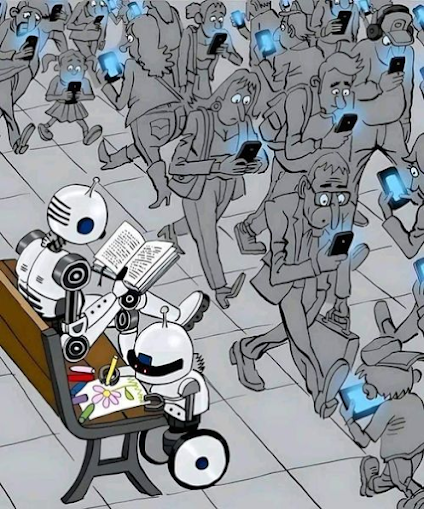
[ed. Some AI art is ok.]

Thursday, December 19, 2024

These Feet Are Made For Nothing

With some people, the problem is always the back. With me it’s feet.

So I wasn’t really surprised during the past weekend when I suddenly found myself howling and hopping on one foot around my kitchen. The thought went through my mind: “It figures, it figures.”

The reason I was hopping on one foot was that I had been cooking some spaghetti. But instead of pouring the boiling water into the sink, I aimed badly and poured it on my bare foot.

On the way to the hospital, I watched without sympathy as my foot changed colors.

If it hadn’t been for the pain, I might have pointed a finger at it and said: “Foot, you got exactly what you deserve.”

The fact is, I dislike my feet. At times the feelings border on hatred. As far back as I can remember, they’ve been nothing but trouble.

You might wonder how a person can hate his own feet. I don’t think that’s unusual. Some people hate their own noses. Or their teeth.

At least they can go to a plastic surgeon and get a nose job, or get their teeth capped.

But when you hate your own feet, there’s not much you can do about it except try to ignore them or swear when you happen to see them.

And that’s one of the problems with feet. They’re hard to ignore. The first thing I see every morning are my feet, sticking up at the other end of the bed.

So I start each morning by saying: “Hello, you lousy, ugly, gnarled, painful b—-s. I hate both of you!”

That’s not the best way to begin the day, I suppose, but it does get me into the proper frame of mind for my job.

As I lie there looking at my feet, I’m always struck by how ugly they are.

Most feet aren’t very good looking. I can’t remember anybody being renowned for his or her stunningly attractive feet, although there are strange people whose pulses race at the sight of a toe. Or so they say when they write about their fantasies to Penthouse Forum.

But for ugliness, mine have always been in a class by themselves.

When I was born, the first thing my mother said to me was: “He takes after his father. Look at those feet.”

She was right. My father had size 12 feet. And so did I — on the day I was born.

And the doctor later said that I was the only infant he had ever seen come into the world with calluses and corns and cracked toenails.

My toes are longer than most people’s fingers. If the toes were extended, I’d probably wear a size 20 shoe. But they curl under about three times so they look more like large, clenched fists than feet.

They’re also very wide. They might be as wide as they are long, which has always made it difficult for me to find shoes that fit properly.

When I was a kid, we’d spend hours at the shoe stores looking for shoes that were wide enough. One salesman finally gave up and said:

“Lady, the only place you’ll find a shoe that fits this kid is at a blacksmith’s shop.”

We finally found something that fit perfectly. They were comfortable, but a lot of people looked twice when they saw someone walking around with two baseball gloves on his feet. (...)

You can learn to live with feet like mine, but you have to take certain precautions.

For example, I took a vacation at the seashore once. In the evening, I’d take long, barefoot walks along the beach.

One morning, I noticed a crowd of men studying my footprints in the sand. They were the police, the conservation department and the local zoo.

One of them shook his head and said: “I don’t know what kind of creature it is, but we better post some armed guards here at night.”

My feet have probably sensed how I’ve felt about them, and they’ve retaliated by getting themselves stubbed and stepped on every chance they get. I don’t even take it personally when someone steps on my foot anymore. I just say: “Don’t apologize, he had it coming. Step on the other one, too. He’s just as bad.”

And I wouldn’t have even gone to the hospital when I burned my foot, except that I have to live with it.

When the doctor came into the emergency room, he asked me what happened.

“I just poured a pot of boiling water on it.”

He shook his head and said: “Boy, it really does look awful.”

“Doc,” I said, “it’s the other one.”

by Mike Royko, Chicago Sun Times |  Read more:
Image: Stock image

via:

What is Shelf-Sharing? In Japan, You Can Rent a Shelf to Sell Your Books

At Tokyo's Honmaru Jimbocho bookstore, a shelf-sharing book rack captures the spirit of a growing literary marketing trend.

"I'm holding an illustrated book of cheeses," says a delighted Tomoyo Ozumi, a customer at a growing kind of bookshop in Japan where anyone wanting to sell their tomes can rent a shelf.

The concept brings back the joy of browsing real books to communities where many bookstores have shut, and gives readers more eclectic choices than those suggested by algorithms on online sellers, its proponents say.

"Here, you find books which make you wonder who on earth would buy them," laughs Shogo Imamura, 40, who opened one such store in Tokyo's bookstore district of Kanda Jimbocho in April.

"Regular bookstores sell books that are popular based on sales statistics while excluding books that don't sell well," Imamura, who also writes novels about warring samurai in Japan's feudal era, told AFP.

"We ignore such principles. Or capitalism in other words," he said. "I want to reconstruct bookstores."

His shop, measuring just 53 square metres, houses 364 shelves, selling books – some new, some used – on everything from business strategy and manga comics to martial arts.

The hundreds of different shelf renters, who pay 4,850-9,350 yen (US$32-US$61, RM140-RM267) per month, vary from individuals to an IT company to a construction firm to small publishers.

"Each one of these shelves is like a real version of a social media account, where you express yourself like in Instagram or Facebook," said Kashiwa Sato, 59, the store's creative director. (...)

Crowd-pullers

Rokurou Yui, 42, said his three shelf-sharing bookstores in the same Tokyo area are filled with "enormous love" for shelf owners' favourite books,

"It is as if you're hearing voices of recommendations," Yui told AFP.

Owners of regular bookstores put books on their shelves that they have to sell to stay in business, regardless of their personal tastes, he said.

"But here, there is no single book that we have to sell, but just books that someone recommends with strong passion and love for," he said.

Yui and his father Shigeru Kashima, 74, a professor of French literature, opened their first shelf-sharing bookstore, called Passage, in 2022.

They expanded with two others and the fourth opened inside a French language school in Tokyo in October.

Passage has 362 shelves and the sellers help attract customers with their own marketing efforts, often online.

That is in contrast to conventional bookstores that often rely on owners' sole sales efforts, he said.

On weekends, Yui's store sometimes "looks as if it were a crowded nightclub with young customers in their 10s, 20s, 30s" with edgy background music playing, he said.

Customers and shelf-owners visit the bookstore not only to sell and buy books, but to enjoy "chatting about books", he said.

by Agency, The Star |  Read more:
Image: AFP
[ed. This is a great idea and sounds similar to staff recommendations, but one step further. Books don't have to be in-store stock to be displayed, but I imagine there's a spill-over effect for normal inventory. Plus, there's the shelf rental fee (and possibly a small commission on sales). Another innovative idea: Bookstores You Can Rent For Date Nights and More (Book Riot).]

American Values, American Election, 2024

[ed. Exactly. Whatever conservatives feverishly think liberals want - this is it. Question: How is this guy not making a living doing real media commentary?]

Wednesday, December 18, 2024

Design: Self-Driving Cars

Amazon’s self-driving car, Zoox, looks like this (source). It’s not private pods yet, but it’s proof that self-driving gives you the opportunity to experiment with form.

Self-Driving Cars

After a few disappointing years, these are finally coming into their own. The expert I talked (EDIT: I try to mostly preserve anonymity in this post, but this person has kindly allowed me to identify him as Andrew Miller of Changing Lanes) to said Tesla had made some bad decisions and was no longer in the top tier, but that companies like Waymo and [I can’t remember which other ones he named] were near the finish line. They’re already safer than humans in most situations and operating successfully in several cities. The remaining challenges to scaling up are mostly regulatory, not technical. Here the regulatory challenges are less about specific laws than general nervousness on the corporations’ part to be seen expanding too quickly. They want to build a strong record in friendly cities before venturing further.

The most interesting new claim I heard was that self-driving cars could help the environment by encouraging carpools. The UberShare carpool program hasn’t taken off, but that’s mostly because people are reluctant to share a car with a stranger. Self-driving cars have more design flexibility, and you might be able to turn them into a series of private pods. You could sit in your own private pod while your robotaxi made a two-block detour to pick up a second passenger.

Here the person I talked to wasn’t as concerned about fighting destructive regulation (which mostly has yet to materialize) as using legislation to guide the technology on the right path. Self-driving taxis have a big advantage over self-driving self-owned-cars: they can operate 24-7 and never have to park. If you can switch half the car-using population to robotaxis, you can convert half the parking lots into green space or homes. Nobody wants to ban self-driving car ownership, but some people do want to nudge the marginal commuter into robotaxis so they can reclaim slightly-more-than-half of the parking lots instead of slightly-less.

by Scott Alexander, Astral Codex Ten | (Notes From The Progress Studies Conference) - Read more
Image: Amazon/Zoox
[ed. The Zoox website is really something. Check it out.]

The Online Sports Gambling Experiment Has Failed

Related: Book Review: On the Edge: The Gamblers I have previously been heavily involved in sports betting. That world was very good to me. The times were good, as were the profits. It was a skill game, and a form of positive-sum entertainment, and I was happy to participate and help ensure the sophisticated customer got a high quality product. I knew it wasn’t the most socially valuable enterprise, but I certainly thought it was net positive. When sports gambling was legalized in America, I was hopeful it too could prove a net positive force, far superior to the previous obnoxious wave of daily fantasy sports.

It brings me no pleasure to conclude that this was not the case. The results are in. Legalized mobile gambling on sports, let alone casino games, has proven to be a huge mistake. The societal impacts are far worse than I expected.

The Short Answer
Joe Weisenthal: Why is it that sports gambling, specifically, has elicited a lot of criticism from people that would otherwise have more laissez faire sympathies?
This full post is the long answer. The short answer is that it is clear from studies and from what we see with our eyes that ubiquitous sports gambling on mobile phones, and media aggressively pushing wagering, is mostly predation on people who suffer from addictive behaviors. That predation, due to the costs of customer acquisition and retention and the regulations involved, involves pushing upon them terrible products offered at terrible prices, pushed throughout the sports ecosystem and via smartphones onto highly vulnerable people. This is not a minor issue. This is so bad that you can pick up the impacts in overall economic distress data. The price, on so many levels, is too damn high.

Paper One: Bankruptcies

We start with discussion of one of several new working papers studying the financial consequences of legalized sports betting. The impacts include a 28% overall increase in bankruptcies (!).
Brett Hollenbeck: *Working Paper Alert*: “The Financial Consequences of Legalized Sports Gambling” by Poet Larsen, @dade_us and myself. We study how the widespread legalization of sports gambling over the past five years has impacted consumer financial health. In 2018, SCOTUS ruled that states cannot be prohibited from allowing sports betting, and 38 states have since legalized sports gambling. This has led to a large new industry and a large increase in gambling accessibility. Roughly $300 billion has been bet and is growing fast. (...)
Paper Two: Reduced Household Savings
Paper Three: Increased Domestic Violence

The Product as Currently Offered is Terrible

Meanwhile, frankly, the product emphasis and implementation sucks. Almost all of the legal implementations (e.g. everyone I know about except Circa) are highly predatory. That’s what can survive in this market. Why? Predation is where the money is. There is no physical overhead at an online casino, but after paying for all the promotions and credit card payments and advertisements and licenses and infrastructure, the only way to make all that back under the current laws and business models is the above-mentioned 10%-style hold that comes from toxic offerings. Thus high prices even on the main lines, even higher ones on parlays and in-game betting. Whenever I see lines on the TV I usually want to puke at how wide the prices are. In game odds are beyond obnoxious. (...)

All this is complemented by a strategy centered around free bet promotions (which makes the bonuses sound a lot bigger than they are), advertisements, promotional texts and emails and especially a barrage of push notifications. Anyone showing any skill? They are shown the door.

Things Sharp Players Do

I don’t think this is central to the case that current legal sports betting is awful, but it is illustrative what pros do in order to disguise themselves and get their wagers down. That to do that, they make themselves look like the whales. Which means addicts. I’m used to stories like this one, that’s normal:
Ira Boudway (Bloomberg): If I open an account in New York, maybe for a few weeks I just bet the Yankees right before the game begins,” says Rufus Peabody, a pro bettor and co-host of the Bet the Process podcast. If this trick works, the book sees these normie, hometown bets as a sign that it’s safe to raise his limits.
It seems players have upped their game.
One pro bettor I know set up a bot which logs in to his accounts every day between 2 and 4 a.m., to make it seem like he can’t get through the night without checking his bets. Another withdraws money and then reverses those withdrawals so it looks like he can’t resist gambling. Simulating addictive behavior, says Peabody, is an effective way to get online sportsbooks to send you bonus money and keep your accounts open. This isn’t necessarily because operators are targeting problem bettors, he says; they’re simply looking to identify and encourage customers who are likely to spend—and lose—the most. This just happens to be a good way to find and enable addicts, too.
The rest of the post is filled with the usual statistics and tragic stories. What I find interesting about these examples is that they are very level-1 plays. As in, this is exactly what someone would do if they thought they were up against a system that was looking for signs of what type of player you are, but only in the most mechanical and simple sense. For this type of thing to work, the book must not be looking at details or thinking clearly or holistically. If you had tried this stuff on me when I was watching customers, to the extent I noticed it at all, I am pretty sure I would if anything have caught you faster.

People Cannot Handle Gambling on Smartphones

Vices and other distractions are constant temptations. When you carry a phone around with you, that temptation is ever present. Indeed, I recently got a Pixel Watch, and the biggest benefit of it so far is that I can stay connected enough to not worry, and not be tempted to check for things, without the pull of what a phone can do. And we have repeatedly seen how distracting it is for kids in school to have the smartphone right there in their pocket. I have learned to be very, very careful with mobile games, even ones with no relevant microtransactions. Putting gambling in your pocket makes the temptation to gamble ever-present. Even for those who can resist it, that is a not so cheap mental tax to pay, and likely to result in the occasional impulse bet, even without the constant notifications. First hit’s free. Constant offers that adjust to your responses, to get you to keep coming back. Now consider that at least several percent of people have an acute gambling addiction or vulnerability. For them, this is like an alcoholic being forced to carry a flask around in their pocket 24/7, while talk of what alcohol to choose and how good it would be to use that flask right now gets constantly woven into all their entertainment, and they by default get notifications asking if now is a good time for a beer. You can have the apps back up and running within a minute, even if you delete them. It was plausible that this was an acceptable situation, that people could mostly handle that kind of temptation. We have now run the experiment, and it is clear that too many of them cannot.

by Zvi Mowshowitz, Less Wrong | Read more:
Image: uncredited
[ed. See also: ‘A serious disease’: Congress weighs federal gambling crackdown amid growing concerns (Guardian).]

Home of Tomorrow. Yesterday

Walter Cronkite in the Philco-Ford home of tomorrow, 1967: “Meals in this kitchen of the future are programmed, the menus given to an automatic chef via typewriter or punched computer cards.”
via:

The Weird Surprise of Growing Old

If there’s anything that should not surprise us, it’s growing old. Everyone we have ever known has always been growing older. We have known this since we were small, and at first we loved the idea. Toddlers are excited to turn 3. Adolescents are thrilled to turn 16 or 18. Adults celebrate turning 30 and 40, although we’re often less happy with 50 and 60. And upon turning 70—well, we can no longer claim “late middle age.” We have passed “midlife”; we are, at least chronologically, old.

"The days of our years are threescore years and ten,” says the Bible. For millennia, 70 was considered a good long lifespan, but now it’s just the relocated portal to old age. Today, a 70-year-old woman in the US can expect to live, on average, to 85-87 years, while a 70-year-old US man can expect to live to 83-85 years. [ed. If you make it to 70.]

At 70, then, we have plenty of time ahead of us to be old. And before that, we’ve had plenty of time to get used to the idea of being old. Plenty of time to understand that how we feel and how we look may not be perfectly aligned. Plenty of time to read books about preventing aging—as well as books about embracing aging.

So why at 70 are we surprised to find ourselves cast upon the shore of old age? Surprise is surely ridiculous yet . . .

I don’t know a single person of 70 or older who is not astonished that they, too, have grown old. At 78, I’m still absorbing this idea myself, and I announce my age a lot, in sheer disbelief. (I’ll confess it’s gratifying when people feign shock at the number.)

“The most common emotion people feel about getting old is surprise,” wrote sociologist and author Martha Beck on her website in 2022. “I remember reading this in my 30s and finding it hilarious. Surprise? About the single most predictable thing in life? Oh, those old folks, I thought. Those doddering darlings! How silly they are! I’m pretty sure that was last week. Except now I’m about to turn 60.”

We age year by year, inexorably—so what is the source of our bizarre and irrational surprise at becoming old?

One sage philosopher explains it as follows:

“Part of the surprise lies in the gradual nature of aging—years pass, but day-to-day life often feels static. Days blur into weeks, and before we know it, decades have passed. This phenomenon creates a feeling of disconnect between our internal sense of self (which may feel youthful) and the external markers of age (grey hair, slower movement).”

(That sage philosopher is Chat GPT4, which—whom?—I sometimes consult and always credit.)

I think it’s like inflation. The price of eggs isn’t that high compared to last year’s price, but we also unconsciously measure it against some average price eggs have cost throughout our lives. This average is maybe $2.49—so $5.99 for a dozen eggs now seems exorbitant.

Similarly, we are not comparing age 70 to age 69 but to some sort of average age we vaguely feel ourselves to be. I call it the Law of Personal Averaging: the tendency to blend past and present in how we perceive our age. If we see ourselves as, say, 45, it feels completely insane that at our next birthday, 70, we are in the category old! (...)

Victor Hugo wrote in Les Misérables, “Forty is the old age of youth; fifty the youth of old age.” What, then is 70? The middle of old age? A man on Quora opines, “If 70 isn’t old age, then what the fuck do you think it is?” Yet demographers distinguish between the “young old” of 70-80, the old of 80-90, and the “old-old” of 90-100. After that there’s the glory of being a centenarian, of which there are some 100,000 in the USA today, a group that is expected to triple in the next 30 years. Most are probably as surprised to be 100 as I am to be 78.

The disconnect is real. One friend says, “It’s this weird feeling when you look in the mirror—as if you don’t belong in that body.”

Surprise! You do! You’re old!

by Catherine Hiller, Oldster |  Read more:
Images: Gerald Cotts/Sonia Pilcer
[ed. Yes, and while some memories seem ancient, others feel like just last week. Another thing... I was raised to always respect my elders since the accumulated years were supposed to bring wisdom. That depends on how you define wisdom. Mostly people just become more distilled versions of themselves, and actually more intractable. So, if you're not careful in cultivating positive qualities in your life, "what were once vices, now become habits".]

Tuesday, December 17, 2024

Steely Dan: Aja

Aja produced three excellent singles (“Peg,” “Josie,” and “Deacon Blues”) and sold millions of copies, becoming the group’s most commercially successful release. But it was a perplexing bestseller. Steely Dan spent the 1970s getting progressively more esoteric: jazzier, groovier, weirder. Even now, mapping the album’s melodic and harmonic shifts is impossible to do with confidence. Its songs are sprawling and fussy, populated by oddball characters with inscrutable backstories, like “Josie,” from the song of the same name (“She’s the raw flame, the live wire/She prays like a Roman with her eyes on fire”) or “Peg,” an aspiring actress headed who-knows-where, who’s “done up in blueprint blue.” “Blueprint blue”! It’s the kind of simple, perfect description prose writers pinch themselves over.

Outside of the studio, Becker and Fagen reveled in being a little rascally. They took long breaks from touring, and when they conceded to an interview, they often appeared self-satisfied, if not antagonistic. Their disdain for the record business occasionally bled into a disdain for their fans, itself a kind of merciless, punk-rock pose. When they did tour—like, say, in 1993, when, after a decade-long hiatus, they booked a few weeks of U.S. dates—they did not pretend to enjoy it. That year, when a reporter from The Los Angeles Times asked Becker how the tour was going, he said, “Well, not too good. It turns out that show business isn’t really in my blood anyway, and I’m looking forward to getting back to working on my car.”

Because the production on Aja is so expert—whole stretches are perfect, impenetrable, like the first 31 seconds of “Black Cow,” when that creeping bass line cedes passage to guitar and electric piano, and the backing vocals pipe up for “You were high!”—it’s easy to ignore the sophistication of its architecture. Becker and Fagen used obscure chords (like the mu major, a major triad with an added 2 or 9) and custom-built their own equipment (for 1980’s Gaucho, they paid $150,000 to build a bespoke drum machine). What they were doing was so particular and new, it was often difficult for critics to even find a vocabulary to describe it. On the title track, the verse shifts and dissolves as Fagen croons, “I run to you.” His voice thins as he finishes the line, a little gasp of tenderness. The minute-long drum solo that closes “Aja,” performed by the virtuosic session man Steve Gadd, is dressed with horns and synthesizers, and makes a person briefly feel as if they are being transported to a different dimension. Steely Dan reveled in making technical choices that would have hobbled a less ambitious outfit. That they succeeded still feels like some kind of black magic.

By 1977, it is possible that some corners of the culture had become desperate for music that was intellectually challenging but not exactly arduous to consume—something less predictable than Top 40, but not quite as hyperbolic or gnashing as punk. By the end of the 1960s, rock had been relentlessly and breathlessly defined as a frantic, bloody, all-consuming practice, for both performers and fans. Aja, though, doesn’t necessarily require any sort of deep emotional entanglement or vulnerability from its listeners. In that way, the record works as an unexpected balm, a break—a little bit of pleasure just for pleasure’s sake.

by Amanda Petrusich, Pitchfork | Read more:
Image: Aja
[ed. All their albums were great, including their muchly under-appreciated (and one of my all-time favorites) Two Against Nature. For some reason they don't seem to get enough credit for being the exceptional lyricists/songwriters that they were. For more SD samples see: here and here. Who writes lyrics like this anymore?:]

"I'm working on gospel time these days (Summer, the summer. This could be the cool part of the summer). The sloe-eyed creature in the reckless room, she's so severe. A wise child walks right out of here. I'm so excited I can barely cope. I'm sizzling like an isotope. I'm on fire, so cut me some slack. First she's way gone, then she comes back. She's all business, then she's ready to play. She's almost Gothic in a natural way. This house of desire is built foursquare. (City, the city. The cleanest kitten in the city). When she speaks, it's like the slickest song I've ever heard. I'm hanging on her every word. As if I'm not already blazed enough. She hits me with the cryptic stuff. That's her style, to jerk me around. First she's all feel, then she cools down. She's pure science with a splash of black cat. She's almost Gothic and I like it like that. This dark place, so thrilling and new. It's kind of like the opposite of an aerial view. Unless I'm totally wrong, I hear her rap, and, brother, it's strong. I'm pretty sure that what she's telling me is mostly lies. But I just stand there hypnotized. I'll just have to make it work somehow. I'm in the amen corner now. It's called love, I spell L-U-V. First she's all buzz, then she's noise-free. She's bubbling over, then there's nothing to say. She's almost Gothic in a natural way. She's old school, then she's, like, young. Little Eva meets the Bleecker Street brat. She's almost Gothic, but it's better than that." ~ Almost Gothic

Valerius De Saedeleer - Winter landscape 1931