At an AI seminar at my university, I submitted three photographs of myself: one frontal, one profile, one smiling. Within a minute or so, the system had generated a video of me. What I watched was not a rough approximation. The micro-behaviors of my face, the slight asymmetry in my smile, the way my eyes crease at their corners, were all reproduced with an accuracy that made my skin cold. I had fed it three still images, and it handed me back myself.

Let us be honest about what is happening. The question is not whether artificial intelligence can predict human behavior. It already can, with a precision that should terrify every person who still believes in the concept of a private self. The question is who owns that capacity, whose interests it serves, and what kind of world they are constructing with it.
We Are More Predictable Than We Realize

What has changed is the scale and the granularity of the exploitation. Researchers have already demonstrated that AI systems can predict the sound of a person’s voice from a photograph alone, inferring the acoustic properties of the throat, the shape of the oral cavity, the structure of the face, and from these physical facts reconstructing something no still image was ever supposed to contain. We did not consent to this inference. We did not know it was possible. The technology did not ask us.
The invasion runs in both directions. As far back as 2022, before most people had any reason to pay attention, AI could take nothing but the sound of your voice and reconstruct your face. You were already legible from the inside out
The Pre-Crime Machine

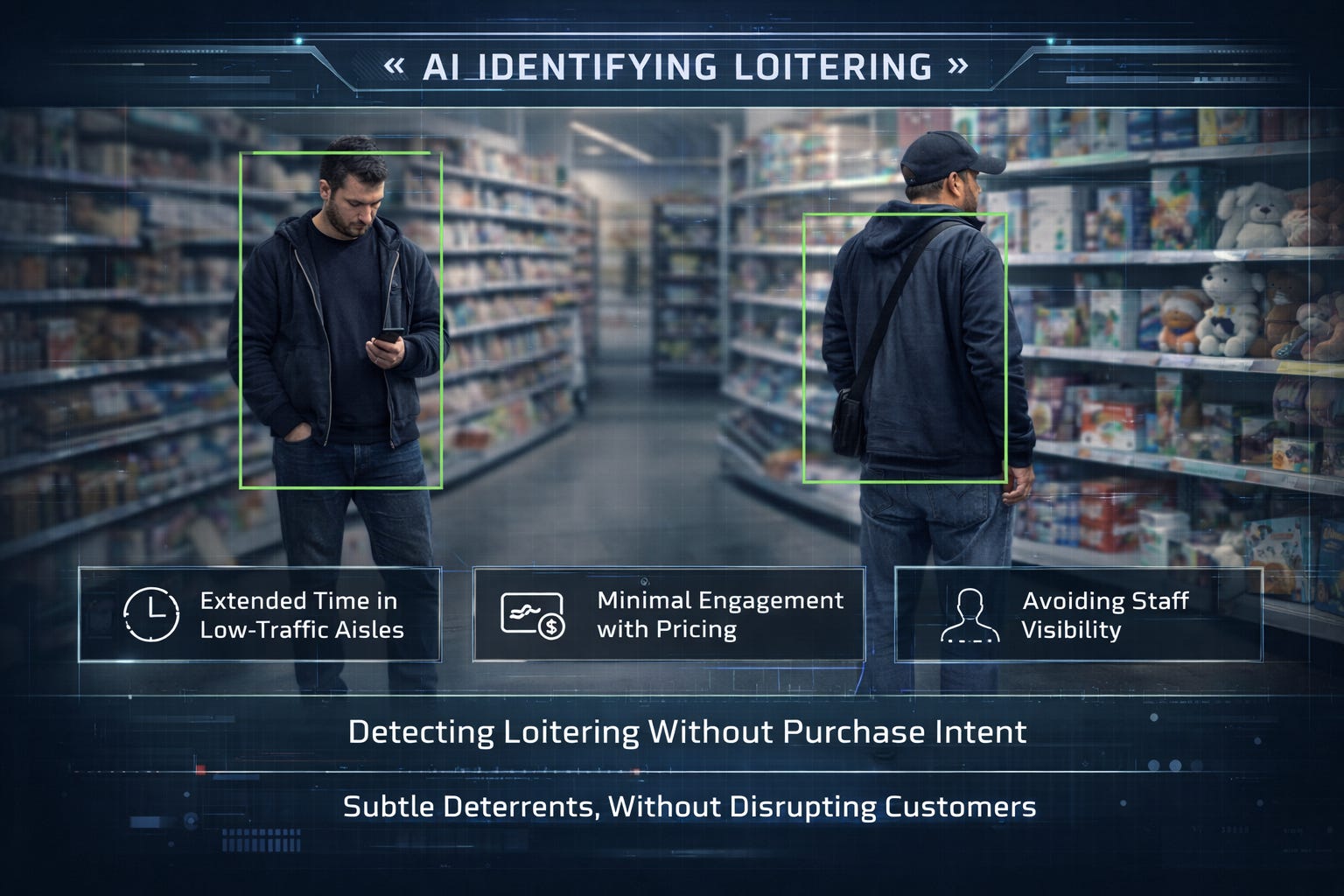
Connect this to the smart cameras already embedded in our streets, our transit systems, our shopping centers, our workplaces. Cameras that do not merely record but analyze, in real time, the faces and bodies of everyone within their field of view. The alert that fires to a police control room does not say this person has committed a crime. It says this person is behaving with seventy percent similarity to the behavioral profile of someone who will. Philip K. Dick imagined this in 1956 and called it science fiction. We have built it and call it public safety.
A Mask Changes Nothing
But facial recognition is, by now, almost the least of it. The more consequential technology is gait recognition, a biometric system that identifies individuals not by their face but by the specific, anatomically determined way they walk. The curvature of the spine, the rotation of the hips, the particular rhythm of a stride, these are as unique as a fingerprint and far harder to disguise. Gait recognition systems currently deployed can identify a person from security footage even when the face is turned away, obscured by a hood, or hidden behind a mask. The protesters who covered their faces at demonstrations believed they were protecting themselves. They were not. The system had already read them from the ankles up.
Gait recognition tells the system who you are, even when you believe you are hidden. What comes next moves deeper. Layer on top of this the emerging field of real-time emotion recognition, AI systems embedded in that same CCTV infrastructure that classify emotional states from facial expression, assigning labels of agitation, hostility, fear, or concealment to the faces of people who have done nothing except exist in a public space.
And the system is getting better.
Accuracy is what billions of dollars of investment buys, and the investment is relentless. The day is approaching — closer than most people understand — when the system reads the thousand markers encoded in your face, your gait, your microexpressions, and states with ninety-five percent certainty that you will commit a murder. That you will commit a rape.
Not that you have. Not that you tried. That you will. And when that threshold of confidence is reached, the pressure to act on it will be overwhelming. Society will accept it as grounds for intervention, for detention, for pre-emptive removal, and pre-crime will stop being a dystopian metaphor and become official state policy. A system that labels your face as hostile does not need to be right today. It only needs to become right. And it is. [...]
Palantir and the Architecture of Control
Palantir is not a hypothetical. It is a company with a current market valuation measured in the hundreds of billions of dollars, deep contractual relationships with the United States military, the CIA, the FBI, the Mossad, MI6, and Immigration and Customs Enforcement, and a product suite specifically designed to do what I have been describing.
Its Gotham platform aggregates data from tax records, DMV files, employment history, educational records, immigration status, subpoenaed social media accounts including private messages and location history, and synthesizes this into individual dossiers that can be searched by tattoo, by neighborhood, by association, by movement pattern. Its immigration enforcement application, called ELITE, populates a map with what it designates as deportation targets and assigns each one a confidence score estimating the probability that a given address is where they currently sleep. The word target is theirs, not mine.
This is not a system built for national security in any meaningful sense of that phrase. National security was the pretext used to build it. What it actually does is make the population legible, sortable, and actionable to whoever holds the contract. Right now, those contract holders include an administration that has already demonstrated its willingness to use these tools against students who attended the wrong protest, academics who signed the wrong letter, immigrants whose only crime was existing without documentation in a country that spent decades depending on their labor.
by Karim, BetBeats Newsletter | Read more:
Images: uncredited