Friday, June 27, 2025

Even Educated Fleas Do It

Finishing the Hat: Collected Lyrics (1954-1981) with Attendant Comments, Principles, Heresies, Grudges, Whines and Anecdotes by Stephen Sondheim

(with help from Let’s Do It: The Birth of Pop Music – A History by Bob Stanley)

People looking to disparage modern literature will often complain that it has changed from an art to a craft. Gone are the days, they say, when writers considered themselves attuned to some outside force, mere channels for the muse, the antennae of the race. Now our novelists and poets consider themselves dutiful little craftsmen, attending Iowa or Columbia or NYU to learn from masters of the trade and going into the world to hammer out finely wrought but uninspired work, losing the wild vitality that animated the romantics and modernists.

Though this is a vast oversimplification, a half-truth at best, a half-truth is still a some-truth. So it is curious to consider that as literature underwent this shift, popular music was transforming in the opposite direction. While modern pop music is the product of many artisans, these days it’s hard to shake off appraising it with a Romantic sensibility; as the uncontaminated expression of one artistic soul. And this is true on all levels, from bedroom producers and coffeehouse strummers to Taylor Swift, whose records involve dozens of producers, co-writers, and musicians, but who is read by her fans on a diaristic, personal level, as though she were Sylvia Plath.

But there was a time, from around the invention of the Gramophone to the late 1950s, when popular music was understood as crafted, by people like Jerome Kern, Irving Berlin, George and Ira Gershwin, and Cole Porter, who would, figuratively if not literally, clock in to an office, roll up their sleeves, and get to work producing songs, most of which were written for musical theatre but which quickly passed into culture via other recordings, often before the shows even closed. This meant that for the first fifty years of pop’s existence, songs were divorced from singers, they were uniquely free-floating and open to interpretation. Hear “Creep” and you think Radiohead, hear “Yesterday” and you think The Beatles, hear “All the Things You Are” and you think – who? Maybe Frank Sinatra, maybe Ella Fitzgerald, maybe John Coltrane, but almost certainly not the forgotten 1939 musical Very Warm for May.

Which brings me to Finishing the Hat, the annotated lyrics, partial autobiography, and opinionated consideration of his predecessors by Stephen Sondheim, the most important theatrical composer and lyricist of the twentieth century’s second half. Like Keith Johnstone’s Impro, which I’ve also written about in these pages, Finishing the Hat is a book seemingly concerning a narrow and oft-maligned branch of theatrical practice that will actually be useful, even revelatory, to anyone involved in any creative pursuit at all. Sondheim says it himself in the indispensable introduction:
The explication of any craft, when articulated by an experienced practitioner, can be not only intriguing but also valuable, no matter what particularity the reader may be attracted to. For example, I don't cook, nor do I want to, but I read cooking columns with intense and explicit interest. The technical details echo those which challenge a songwriter: timing, balance, form, surface versus substance, and all the rest of it. They resonate for me even though I have no desire to braise, parboil or sauté. Similarly, I hope, the specific techniques of lyric-writing will enlighten the cook who reads these pages. Choices, decisions and mistakes in every attempt to make something that wasn't there before are essentially the same, and exploring one set of them, I like to believe, may cast light on another.
It would have been easy to dash off a preface to this book, let the editors arrange the lyrics as they saw fit, and call it a day, but Sondheim, ever the perfectionist, cannot abide the thought. Each set of lyrics is given a long introduction describing the genesis of the production they were written for and then intensely annotated, with ruthless honesty in pointing out what he considers his mistakes, failures, and sloppiness. And interspersed throughout are short essays commentating on his predecessors, the men and women who created the form and canon of American song.

So what is the task of the lyricist, according to Sondheim? It is not the same as the task of the poet, who depends on density and evocation rather than clarity and catchiness (he scorns lyrics by poets like W.H. Auden and Langston Hughes who ventured into theatre, saying they “convey the aura of a royal visit”). Mostly, it’s to get out of your own way. The lyricist must serve both the music and the performer by being easy to sing, comprehensible, and not too overwrought, all while managing to convey the emotional tenor of the song. Despite his work’s reputation for being musically complex and somewhat chilly, on the page Sondheim’s lyrics read as quite simple and straightforward, without a word out of place. And contrary to what the Romantic might assume, he is adamant that attention to craft and detail helps to highlight the emotion of the song rather than smother it, as he writes in his extended defense of the importance of true rhyme (as opposed to near rhyme or slant rhyme).
In fact, pop listeners are suspicious of perfect rhymes, associating neatness with a stifling traditionalism and sloppy rhyming with emotional directness and the defiance of restrictions. [...]The notion that good rhymes and the expression of emotion are contradictory qualities, that neatness equals lifelessness is, to borrow a disapproving phrase from my old counterpoint text, "the refuge of the destitute." Claiming that true rhyme is the enemy of substance is the sustaining excuse of lyricists who are unable to rhyme well with any consistency.

"If the craft gets in the way of the feelings, then I'll take the feelings any day." The point which [the unnamed pop star he is criticizing] overlooks is that the craft is supposed to serve the feeling. A good lyric should not only have something to say but a way of saying it as clearly and forcefully as possible—and that involves rhyming cleanly. A perfect rhyme can make a mediocre line bright and a good one brilliant. A near rhyme only dampens the impact.
Then there’s trying to be too clever, and showing off – a common sin. Here’s the rapture of a critic praising the work of Jerome Kern and his partners Guy Bolton and P.G. Wodehouse (yes, that P.G. Wodehouse), as cited in Bob Stanley’s book Let’s Do It.
Nobody knows what on earth they’ve been bitten by
All I can say is I mean to get lit an’ buy
Orchestra seats for the next one that’s written by
Bolton and Wodehouse and Kern
Not to dig up this long-dead man’s tossed-off verse just to bury it, but recite it and you can see that, despite the superficial cleverness of the rhyme, the third line causes the tongue to trip over itself, the glide from “orchestra” to “seats” is difficult, not to mention the dreadful “next one that’s”. Now compare Cole Porter in the bridge of “Anything Goes,” using the same technique of rhyming the penultimate word while repeating the final one:
The world has gone mad today
And good's bad today,
And black's white today,
And day's night today,
When most guys today
That women prize today
Are just silly gigolos
Mad/bad, white/night, guys/prize – these are as elementary and obvious as it gets, but the recitation could not be sprightlier or easier on the tongue, and this, combined with the music, gives Porter his reputation for effortless wit and elegance rather than labored cleverness.


An aside: I should say that – and you won’t believe this but I swear it’s true – I actually have fairly little interest in musical theatre. I haven’t seen most of the shows described in Finishing the Hat and what affection I might have for the form is generally compromised by its cringier qualities. Truth be told, while I’m happy to listen to Chet Baker or Ella Fitzgerald or even croaky old Bob Dylan singing this stuff, my aesthetic sensibilities generally can’t make the leap to the originals, with their sickly-sweet orchestration and affected Broadway Voice. And as for modern examples of the form like Wicked or Hamilton, forget about it. But you’d have to be crazy not to recognize the unbelievable talent that coalesced around composing popular and theatrical song in the first half of the century. It’s like the peak of classic Hollywood, the Elizabethan stage, or the golden era of Looney Tunes – a marriage of artistic sensibilities and urgent commercial needs that kept a coterie of talented craftsmen churning out masterpieces at an accelerated rate.

The funny thing about Sondheim is that, for all his genius, he represents the final closing of the door on the era that I love. Let me try to explain why.

by Henry Begler, A Good Hard Stare |  Read more:
Image: Reginald Marsh, Twenty Cent Movie; Sondheim and Bernstein rehearsing for West Side Story

John Philip Falter (US 1910 - 1982), Sunday Picnic, Troy, Kansas. Oil on canvas (80.6 x 61 cm). Used as a cover for the Satuday Evening Post

via:

Thursday, June 26, 2025

Bob Dylan and Blind Willie McTell

Most Dylanologists disagree about which is the single greatest song in Bob Dylan’s catalog, but few would deny “Blind Willie McTell” a place high in the running. It may come as a surprise — or, to those with a certain idea of Dylan and his fan base, the exact opposite of a surprise — to learn that that song is an outtake, recorded but never quite completed in the studio and available for years only in bootleg form. “Blind Willie McTell” was a product of the sessions for what would become Infidels. Released in 1983, that album was received as something of a return to form after the Christian-themed trilogy of Slow Train Coming, Saved, and Shot of Love that Dylan put out after being born again.


The sources of that perfection are many, as explained by Noah Lefevre in the new, nearly 50-minute long Polyphonic video below on this “unreleased masterpiece,” whose origin and afterlife underscore how thoroughly Dylan inhabits the musical traditions from which he draws. 

Like most major Dylan songs, “Blind Willie McTell” exists in several versions, but the one most listeners know (officially released in 1991, eight years after its recording) features Mark Knopfler on twelve-string guitar and Dylan himself on piano. Melodically based on the jazz standard “St. James Infirmary Blues” and named after a real, prolific musician from Georgia, its sparse music and lyrics manage to evoke a panoramic view encompassing the blues, the Bible, the ways of the old South, and indeed, the very history of American music and slavery. Though Dylan himself considered the song unfinished, he came around to see its value after hearing The Band work it into their show, and has by now performed it live himself more than 200 times — none, in adherence to the protean character of blues, folk, and jazz, quite the same as the last.  ---  [ed. Lyrics here.]


via: Open Culture: Why Bob Dylan’s Unreleased “Blind Willie McTell” Is Now Considered a Masterpiece

Signs the Frog Has Been Boiled

A large pot sits in plain sight. There’s a frog in it.

Every day, Leader announces his plans to boil the frog. His campaign slogan was “BOIL THAT FROG.”

He has already made at least one run on the stove.

A man stirs the pot with a large stick. “It’s a metaphor,” he says.

The frog is sweating.

The frog is informed that this is due to a natural variation in temperature.

“He’s clearly boiling the frog,” say the other frogs.

All books about frogs have vanished from the library.

You ask the man with the stick about the purpose of the pot. “It’s a melting pot,” he says. “What are you melting?” you say. The man keeps stirring.

You ask about the frog. The man says something about the price of eggs.

A panel on TV debates the ethics of boiling the frog. The panel is composed of twelve herons and no frogs.

The Amphibian Conservation Organization is stripped of government grants. All funding is redirected to the new Department of Frog-Boiling.

The frog treads water. He’s reassured that the water is unfluoridated.

Leader tells other frogs not to worry. Healthy, hard-working frogs are fine. They can climb out of the pot whenever they want.

The US Secretary of Health says that boiling water is actually good for frogs. It keeps them from turning gay.

You ask about the frog. You’re reassured that it’s a nonnative species. (...)

All frogs are encouraged to call their representatives every day to request not to be boiled. They’re told their calls are very important.

You ask to turn off the stove. You’re told, “We can revisit this in four years.”

A panel on TV debates whether the frog is being boiled or merely poached. The herons lick their lips.

You walk by a pond. Every lily pad is empty.

The frog roils and flails in the pot, striking against the walls. Bump. Bump. Bump. The frog is accused of rabble-rousing.

The National Guard is deployed to subdue the frog.

You try to turn off the stove. Twenty masked men in body armor hit you with rubber bullets and tear gas.

The air smells like soup. A timer dings.

The room feels like a sauna. Your ankles are wet. When you open your mouth, out comes a croak.

by Amanda Lehr, McSweeny's |  Read more:
Image: via

Not Made in the USA

The Trump phone was announced last week with a claim that the device would be made entirely in America, and people were rightly skeptical. Trump Mobile's $500 T1 Phone "is a sleek, gold smartphone engineered for performance and proudly designed and built in the United States for customers who expect the best from their mobile carrier," the Trump Organization said in a press release.

But with electronics supply chain experts casting doubt on the feasibility of designing and building an American-made phone in a short span of time, Trump Mobile's website doesn't currently promise an American-made phone. The website says the T1 is "designed with American values in mind," that it is "brought to life right here in the USA," and that there are "American hands behind every device."

The Trump Mobile website previously said, "Our MADE IN THE USA 'T1 Phone' is available for pre-order now." The phone was initially supposed to be available in August, but the date was changed to September, and now the website simply says it will be available "later this year." (...)

Some experts have said the Trump phone appears to be a re-skinned version of the REVVL 7 Pro 5G, made by Chinese company Wingtech. The REVVL 7 Pro 5G is sold by T-Mobile for $250, half the price of the Trump phone.

by Jon Brodkin, Ars Technica |  Read more:
Image: Getty Images/Joe Readle
[ed. Lol. The bullshit/scamming machine continues firing on all cylinders. A+ for creativity. See also: this.]

Why Did the Novel-Reading Man Disappear?

For the first meeting of his book club for men, Yahdon Israel, a 35-year-old senior editor at Simon & Schuster, asked the participants to bring a favorite work of fiction. Not everyone completed the assignment.

One man brought “Watchmen,” a graphic novel. Valid, technically.

Another scoured his home bookshelf and realized he did not own a single novel or short story collection. So he showed up to the meeting with a nonfiction book about emotional intelligence. (Mr. Israel posted a photo of the seven millenial-ish men in the group, each holding his selection, to his Instagram account.)

Mr. Israel, who has hosted another book club for nearly a decade, started this group last December in an effort to inspire heterosexual men to read more fiction. He solicited members over social media. For the second meeting, he assigned a story collection by Jamel Brinkley, “A Lucky Man,” which examines contemporary masculinity. For two hours, the men discussed the book, and the theme. (...)

“I’m doing this because I need it,” he said in an interview.

So do lots of men — at least according to a robust debate unfolding in opinion pages and news articles, on social media platforms and inside the publishing world. By turns a maligned or suspicious figure in decades past — in the case of the “Infinite Jest” lover, for instance — or a fetishized one — consider the enormously popular “Hot Dudes Reading” Instagram — the figure of the literary male reader is now disappearing, some say, and his disappearance is a matter of grave concern.

These articles, which focus explicitly or implicitly on straight men, connect the fact that these men are reading fewer novels to a variety of social maladies, up to and including deleterious effects on American democracy itself. If more men were reading like Mr. Israel, the thinking goes, the country would be a healthier place: more sensitive, more self-aware, less destructive. As more American men fill their hours with the crude talk shows of the “manosphere,” online gambling and addictive multiplayer games, the humble novel — consumed alone, requiring thought and patience — can look like a panacea.

It’s a lot of pressure to put on the reading man, who for many people remains a fittingly prosaic sight, unworthy of deeper thought or further comment. Perhaps he is passing the time on a commute, or taking a break from the stresses of the day. Little does he know, he’s been drafted into a new front in the culture war over the future of men.

On a recent afternoon in June, Jack Kyono, an assistant manager at McNally Jackson, the stalwart New York book chain, walked the floor of the store’s SoHo location. Mr. Kyono was quick to point out that not all men read in the same way. International tourists are buying different books from older American men, who are buying different books from young professionals. But he broadly agreed with the idea that when it came to reading fiction, straight men were followers, not leaders. They might read Sally Rooney or Ocean Vuong, he said, but only after an audience of straight women and queer people had made them cultural touchstones.

Earlier on the phone, he told me he had noticed a gender divide among the stacks: When groups of women wandered into the store, they frequently browsed together, pointing out books they had read and making suggestions for their friends — an act that booksellers call “the handsell.”

Meanwhile, when men came into the bookstore with other men, they typically split up and dispersed to far corners of the store.

“It’s solo browsing time,” he said. (...)

Eventually, Mr. Kyono took me to the front to look at an attractive “customer favorites” display. Here, pastel and vivid colors dominated the covers of books by romance and “romantasy” stalwarts like Carley Fortune and Sarah J. Maas, the author of the popular “A Court of Thorns and Roses” series.

Beyond the bookstore, much of the architecture of book discovery is informally targeted at women. Celebrity book clubs are mostly led by female celebrities and increasingly court women of all ages, from those who are fans of Oprah Winfrey and Reese Witherspoon to those who are more interested in the tastes of Dua Lipa and Kaia Gerber. (Former President Barack Obama, the obvious straight male exception, releases a single list of his favorite books every year.) #BookTok, the vast community on TikTok that has become a best-seller machine, is largely populated by women recommending books by other women, like Colleen Hoover’s “It Ends With Us.”

There are counterexamples that prove the rule. C.J. Box, the author of a long-running series about a Wyoming game warden who solves murders, has expanded his audience to include younger men by appearing on a series of podcasts about hunting, fishing and other outdoors subjects.

But literary novelists — the kind who populate prestigious lists and publish the “big” books of the year — have not seemed to crack the code with straight guys, at least on social media. (...)

These arguments hark back to a midcentury culture of fiction writing dominated by men writing about masculine subjects and the male experience. But it was not always thus. In the 19th century, the most popular novels were written by women for a female audience. Their output was considered “paltry entertainment,” according to Dan Sinykin, a professor of English at Emory University and the author of “Big Fiction: How Conglomeration Changed the Publishing Industry and American Literature.”

Many of these titles were so-called sentimental novels, whose virtuous heroines illustrated proper moral conduct. In 1855, Nathaniel Hawthorne described American novelists to his publisher as “a damned mob of scribbling women, and I should have no chance of success while the public taste is occupied with their trash.”

A century later, the story had changed, and publishing had become a boys club with cultural cachet, according to Mr. Sinykin. Literary form was prized above social instruction.

Starting in the 1980s, a new generation of women came to dominate the publishing industry. The “feminization” of the industry, as Mr. Sinykin called it, resulted in a business that “assumes its primary audience is white women between 30 and 65” and publishes books to suit their tastes. (...)

Book culture is not a monolith. According to BookScan, some 782.7 million books were sold in 2024, and the rapid growth of the self-published book market means that there is fiction to suit almost every taste. In this context, what Mr. Sinykin called the “worst version” of the critique of contemporary fiction — that liberal politics have destroyed the space for male readers — seems like a huge oversimplification. And many people who care about the future of the male fiction reader are keen to avoid it.

Mr. Israel deliberately did not include the words “man” or “men” in the name of his book club. He called it “The Fiction Revival,” to underline the idea that there was a kind of reading experience for men that needed to be resuscitated.

Max Lawton, a translator who frequently works on long European novels, scoffed at the “corny idea of the male reader” who is interested only in stereotypically masculine subjects and austere prose.

“Being a reader is not a two-party system — you can read whatever you want,” he said.

Even Mr. Castro, the novelist, rejected the idea of a countermovement in the name of masculine identity. “Resentment, performing or embodying a self-consciously ‘masculine’ identity at the expense of literary value, is cringe,” he wrote in an email. “‘Identity’ is not a literary value.”

One real challenge at hand is a frenzied attention economy competing for everyone’s time, not just men’s. To present the sorry state of the male reader as having solely to do with the gendered quality of contemporary fiction misses a screen-based culture that presents nearly unlimited forms of entertainment.

“Our competition isn’t other publishers,” said Sean Manning, the publisher of Simon & Schuster. “It’s social media, gaming, streaming. All these other things that are vying for people’s time, attention and financial resources.”

Asked whether the publishing industry needed straight men to read more fiction as a purely economic matter, Mr. Manning focused instead on the social benefits of reading.

“It’s a problem if anyone isn’t taking advantage of an incredible artistic medium,” he said. “It’s hurtful not to be well-rounded.”

by Joseph Bernstein, NY Times |  Read more:
Image:Porsalin Hindsman-Israel
[ed. I read, on average, probably a couple novels a month - always fiction. There's too much non-fiction on the internet as is. I wouldn't have thought this was anything special re: men vs. women, or any kind of trend, because so many reviews by both are on Amazon, Goodreads, in literary journals, etc.; and, of course, there doesn't seem to be any shortage of male writers. But maybe that's an unreliable sample, and overall numbers actually are this bleak. I know in real life (actually, my whole life) I can't think of or recall more than a handful of guys who I'd call avid fiction readers or at least occasional dabblers (my son being one of them). And that was mostly back in college. Pretty sad, since an active imagination (vs. passive screen consumption) is surely one of life's most delightful of human pleasures. One thing I'd definitely agree with: all those pastels and wild book colors scattered across bookstore display tables are definitely a turnoff and should immediately be suspect.]

Wednesday, June 25, 2025

Reconciliation Explained

Ordinarily, a bill would need 60 votes in the Senate to bypass its filibuster rule. But Republicans are advancing the “Big, Beautiful Bill” under a complicated process called reconciliation.

If successful, the process means that a bill can pass with 51 votes, or 50 if it’s supported by the vice president’s tiebreaking vote.

Reconciliation starts when the Senate and House adopt a resolution that says how much they want to spend on the federal budget or change taxes.

Then, the Senate directs its various committees to come up with ways to make spending fit within that resolution, reconciling what the federal government is doing with what Congress planned.

Each Senate committee drafts a proposal for the federal departments that it oversees.

That’s where the Senate process stands right now.

Next, each committee’s work is examined to see whether it follows the Byrd Rule, which sets six tests to see whether an item can be done in reconciliation.

If a particular item fails one of those tests, it gets stripped out. Colloquially, in the Senate, this is known as going through the “Byrd bath.”

When that’s done, what follows is a “vote-a-rama,” where the Senate votes on each committee’s language and senators have a chance to offer amendments.

Because of limits on the time allowed for debate, the votes often proceed quickly.

Once the Senate is done with its work, its version of the budget must be combined and compromised with a different version that has gone through a similar process in the House.

Once the House and Senate have agreed on the same version of the budget, it goes to the president for his signature.

by James Brooks, Alaska Beacon |  Read more:
Image: YouTube via
[ed. The most concise explanation I've read yet. At least its been helpful in killing off this travesty (for now): Republican plan to sell over 3,200 square miles of federal land is found to violate Senate rules. See also: Alaska’s public lands belong to all of us — don’t sell them off (ADN).


via:

Tuesday, June 24, 2025

via:

Anthony Blinken: Trump’s Iran Strike Was a Mistake. I Hope It Succeeds.

Former secretary of state.

The strike on three of Iran’s nuclear facilities by the United States was unwise and unnecessary. Now that it’s done, I very much hope it succeeded.

That’s the paradox for many former officials like me who worked on the Iran nuclear problem during previous administrations. We shared a determination that Iran never be allowed to produce or possess a nuclear weapon. Iran without a nuclear weapon is bad enough: a leading state sponsor of terrorism; a destructive and destabilizing force via its proxies in Lebanon, Syria, Gaza, Yemen and Iraq; an existential threat to Israel. An Iran with a nuclear weapon would feel emboldened to act with even greater impunity in each of those arenas.

So why was the strike a mistake?

First, it never should have come to this. In 2015, the Obama administration, together with Britain, France, Germany, Russia, China and the European Union, reached agreement with Tehran on the Joint Comprehensive Plan of Action, or J.C.P.O.A. The nuclear deal effectively put Iran’s program to make fissile material, the fuel for a nuclear weapon, in a lockbox, with stringent procedures for monitoring Iran’s nuclear program. The deal pushed “breakout” — the amount of time it would take Iran to produce enough weapons-grade uranium for a single nuclear weapon — to at least one year. If Iran reneged on the agreement or refused to extend it when certain provisions expired after 15 years, we would know it and have plenty of time to respond, including, if necessary, militarily.

In 2018, President Trump tore up the agreement and replaced it with … nothing. In response, Iran accelerated its enrichment, quite likely reducing its breakout time to a matter of days or weeks. Mr. Trump, in essence, is now trying to put out a fire on which he poured gasoline.

Second, fissile material is a necessary but insufficient element for a bomb. You also need an explosive weapon. As of now — and there are conflicting messages coming from within the Trump administration — our intelligence agencies believe Iran has not yet made a decision to weaponize. If and when it does, it would take Tehran 18 to 24 months to produce an explosive device, according to some estimates. In other words, there was still time for diplomacy to work, and the situation wasn’t nearly the emergency that Mr. Trump portrayed it to be.

Third, experts I’ve spoken to had real doubts about the ability of the Massive Ordnance Penetrator, or M.O.P. — the 30,000-pound bombs unique to America’s arsenal that were dropped on Iran’s nuclear sites — to fully incapacitate the Fordo site and other deeply buried or fortified components of Iran’s nuclear program. Initial reports suggest that while Iran’s nuclear infrastructure was severely damaged, it was not destroyed.

Fourth, in war-gaming the military option during my time in the Biden administration, we were also concerned that Iran had or would spread its stockpile of uranium already enriched to just short of weapons grade to various secure sites and preserve enough centrifuges to further enrich that stockpile in short order. In that scenario, the Iranian regime could hide its near weapons-grade material, green light weaponization and sprint toward a bomb. Thus, Mr. Trump’s strike has risked precipitating what we want to prevent. In this, it may prove a repeat of Israel’s strike against Iraq’s Osirak reactor in 1981 — after the strike, Saddam Hussein accelerated an underground program.

Finally, while there is no doubt the American strike set back Iran’s nuclear ambitions, Iran could rebuild quickly, in locations and at depths virtually immune to airstrikes, while pursuing weaponization at the same time. So while their program has been significantly disrupted, and buying time is a good thing, it underscores that sticking with the J.C.P.O.A. was the better option. It bought us at least 15 years instead of just a few. And it avoided the risk of Iranian retaliation — such as Monday’s missile attacks directed at our forces in the region — as well as the potential for further escalation, including threatening global oil flows through the Strait of Hormuz, conducting terrorist operations on American soil or carrying out sophisticated cyberattacks.

And, perhaps paradoxically, Mr. Trump’s actions were possible only because of the work of the Obama and Biden administrations.

The Obama administration accelerated development of the M.O.P. and had contingency plans for the type of operation that Mr. Trump authorized. Mr. Biden instructed his team to rehearse, test and refine those plans. We also conducted, in 2023, the largest-ever joint exercise with Israel — something of a dry run for this latest action.

As important, Mr. Biden supported Israel’s successful efforts to grievously weaken Iran and its proxies. Our deployments, deterrence and active defense of Israel when Iran directly attacked it for the first time allowed Israel to degrade Iran’s proxies and its air defenses without a wider war. In so doing, we set the table for Mr. Trump to negotiate the new nuclear deal he pledged years ago to work toward — or to strike. I wish that he had played out the diplomatic hand we left him. Now that the military die has been cast, I can only hope that we inflicted maximum damage — damage that gives the president the leverage he needs to finally deliver the deal he has so far failed to achieve.

by Anthony J. Blinken, NY Times |  Read more:
Image: Kevin Mohatt/Reuters
[ed. If you're going to have opinions, best to have all relevant context and details. See also: Intel Report on Iran Upends Victory Lap Trump Was Hoping for at NATO (NYT):]
***
"As President Trump landed in the Netherlands on Tuesday for the annual meeting of NATO allies, he was desperate to hold together the fragile cease-fire between Israel and Iran, cursing and cajoling to make sure that history would remember him for bombing Iran’s nuclear sites over the weekend and brokering a peace deal days later.

But just hours after he landed, the leak of a new U.S. intelligence report cast doubt on his repeated claim that the American strikes had “obliterated” Iran’s nuclear programs. Mr. Trump started using the word “obliterated” before he received his first battle damage report, and since then, he has closely monitored which members of his administration have used the same language.

The report’s finding, while preliminary, was particularly damaging because it emerged from inside the Pentagon, which had carried out the strikes, and it concluded that the military action had only set Iran’s nuclear program back by a number of months."

Google Rolls Out Street View 'Time Travel'

Celebrating 20 years of Google Earth.

After 20 years, being able to look at any corner of the planet in Google Earth doesn't seem that impressive, but it was a revolution in 2005. Google Earth has gone through a lot of changes in that time, and Google has some more lined up for the service's 20th anniversary. Soon, Google Earth will help you travel back in time with historic Street View integration, and pro users will get some new "AI-driven insights"—of course Google can't update a product without adding at least a little AI.

Google Earth began its life as a clunky desktop client, but that didn't stop it from being downloaded 100 million times in the first week. Today, Google Earth is available on the web, in mobile apps, and in the Google Earth Pro desktop app. However you access Earth, you'll find a blast from the past.

For the service's 20th anniversary, Google was inspired by a social media trend from last year in which people shared historic images of locations in Google Maps. Now, Google Earth is getting a "time travel" interface where you can see historic Street View images from almost any location.

While this part isn't new, Google is also using the 20th anniversary as an opportunity to surface its 3D timelapse feature. These animations use satellite data to show how an area has changed from a higher vantage point. They're just as cool as when they were announced in 2021.

by Ryan Whitwam, Ars Technica |  Read more:
Image: Google
[ed. From 15th anniversary:]

Google is also introducing a new in-house camera built specifically for Street View. The company says it's "roughly the size of a house cat" and weighs less than 15 pounds. The goal is to take "all the power, resolution and processing capabilities that we’ve built into an entire Street View car" and cram it into an ultra-portable package that can be shipped to underserved areas "like the Amazon jungle."

Google already has several versions of a backpack-mounted "Trekker" Street View camera for hiking trailers, so this camera is designed to augment its car fleet. Street View cars are big, rolling computers that are hard to move around the world, while this camera is completely self-contained. It can be easily strapped to the roof racks of a car and is controlled via a smartphone app. There's even a modular system for add-ons like lidar.  ~ Read more:

Seeing Our Future in China’s Cameras

I heard some surprising refrains on my recent travels through China. “Leave your bags here,” a Chinese acquaintance or tour guide would suggest when I ducked off the streets into a public bathroom. “Don’t worry,” they’d shrug when I temporarily lost sight of my young son in the crowds.

The explanation always followed: “Nobody will do anything,” they’d say knowingly. Or, “There’s no crime.” And then, always, “There are so many cameras!”

I can’t imagine such blasé faith in public safety back when I last lived in China in 2013, but on this visit it was true: cameras gawked from poles, flashed as we drove through intersections, lingered on faces as we passed through stations or shops. And that was just the most obvious edge of the ubiquitous, multilayered tracking that has come to define life in China. I came away troubled by my time in some of the world’s most-surveilled places — not on China’s account, but because I felt that I’d gotten a taste of our own American future. Wasn’t this, after all, the logical endpoint of an evolution already underway in America?

There was a crash course on the invasive reality of a functionally cash-free society: credit cards refused and verge-of-extinct paper bills spurned. I had to do the thing I’d hoped to avoid, link a credit card to WeChat. That behemoth Chinese “super app” offers everything from banking to municipal services to social media to shopping, and is required to share data with the Chinese authorities. (Elon Musk, by the way, reportedly wants to turn his own app, X, into an invasive offering modeled after WeChat.) Having resigned myself to all-virtual payments, I knew I was corralled like everyone else into unbroken visibility, unable to spend a single yuan or wander down a forgotten side street without being tracked and recorded.

Crisscrossing China as a chaperone on my son’s school trip, I felt that a country I’d fondly remembered as a little rough-and-tumble had gotten calmer and cleaner. A part of me hated to see it. In my own mind, I couldn’t separate the safe, tidy streets from the repressive system of political control that underpins all those helpful cameras.

The Chinese Communist Party famously uses surveillance to crush dissent and, increasingly, is applying predictive algorithms to get ahead of both crimes and protest. People who screen as potential political agitators, for example, can be prevented from stepping onto trains bound for Beijing. During the Covid pandemic, Chinese health authorities used algorithmic contact tracing and QR codes to block people suspected of viral exposure from entering public spaces. Those draconian health initiatives helped to mainstream invasive surveillance and increase biometric data collection.

It would be comforting to think that China has created a singular dystopia, utterly removed from our American reality. But we are not as different as we might like to think. (...)

As my face was getting scanned all over China, Elon Musk’s minions with the so-called Department of Government Efficiency were ransacking federal agencies to seize Americans’ data and sensitive information. Legal experts maintain that accessing this data is illegal under federal privacy laws, which broadly forbid government agencies from disclosing our personal information to anyone, including other parts of the government, without our written consent. But, in the event, neither the law nor our lawmakers protected us.

Mr. Musk’s team moved to access Social Security Administration data containing medical and mental health records, bank and credit card information, and birth and marriage certificates. This month, the Supreme Court temporarily allowed DOGE to access sensitive Social Security records. That means that DOGE staff, under the vague slogan of eliminating wasteful spending, can peruse files containing the most jealously guarded details of millions of American lives — everything from salary to addiction and psychiatric health records. (...)

The government’s enthusiasm for this emerging technology is disquieting. A.I. could help to supersize the surveillance state, offering the potential to quickly synthesize and draw inferences from massive quantities of data.

“The really powerful thing is when personal data get integrated,” said Maya Wang, associate China director at Human Rights Watch. “Not only am I me, but I like these things, and I’m related to so-and-so, and my friends are like this, and I like to go to these events regularly on Wednesdays at 6:30. It’s knowing relationships, movements and also any irregularities.” 

by Megan K. Stack, NY Times | Read more:
Image: Gilles Sabrié for The New York Times

Monday, June 23, 2025

Studio Ghibli’s Midlife Crisis

Disney, Pixar … Ghibli. For its legions of admirers, the Japanese studio hasn’t just held its own against the American powerhouses, it has surpassed them with the impossible beauty of its hand-drawn animation and its commentary on the ambivalence of the human condition.

Although he would refuse to acknowledge it, much of Studio Ghibli’s success is down to one man: Hayao Miyazaki, a master animator whose presence towers over the studio’s output. Making a feature-length anime the old-fashioned way may require a large and multitalented cast, but Miyazaki is the thread running through Ghibli’s creative genius.


Now, as the studio marks its 40th anniversary, it faces an uncertain future, amid renewed speculation that its figurehead auteur really has wielded his pencil for the last time.

Roland Kelts, a visiting professor at the school of culture, media and society at Waseda University, said Ghibli had failed to anticipate a time when Miyazaki, who is 84, would no longer be at the helm, even after the succession question grew more urgent following the death in 2018 of co-founder Isao Takahata.

Instead, the studio shifted its focus to commercial activities. “The studio failed to produce heirs to Miyazaki and Takahata, and now it’s a merchandising monster,” says Kelts, author of Japanamerica: How Japanese Pop Culture Has Invaded the US.

In 2013, Miyazaki announced that he would no longer make feature-length films, citing the difficulty of living up to his own impossibly high standards.

But four years later, Ghibli said its co-founder had had a change of heart and would make “his final film, considering his age”. The result was The Boy and the Heron, winner of the 2024 Academy Award for best animated film.

While Ghibli performs alchemy on the screen, there is nothing it can do to shapeshift itself clear of the march of mortality: Miyazaki’s main colour designer, Yasuda Michiyo, whose work appeared in most of his films, died two years before Takahata, while another co-founder, producer Toshio Suzuki, is 76.

As a result, the studio is finally looking ahead to a future without its leading creative light, notwithstanding persistent rumours that Miyazaki is not quite done yet. “Miyazaki is 84 and may not have time to make another movie,” says Kelts.

A cultural phenomenon

The studio was formally established by Miyazaki, Suzuki and Takahata in 1985 – a year after it released the post-apocalyptic Nausicaä of the Valley of the Wind. It has since become a cultural phenomenon, winning an Oscar in 2003 for Spirited Away, and a second Oscar in 2024 for The Boy and the Heron.

Told through the prism of the fantastical, and featuring characters and themes that defy the pigeonholing that underpins much of Hollywood’s output, Studio Ghibli’s films are widely considered masterpieces of their genre, earning two Oscars and the devotion of millions of fans across the world.

Watching a Ghibli movie is like reading literature, says Miyuki Yonemura, a professor at Japan’s Senshu University who studies cultural theories on animation. “That’s why some children have watched My Neighbour Totoro 40 times,” she says. “Audiences discover something new every time.”

In some ways, Ghibli shares certain values with Disney, says Susan Napier, a professor of Japanese studies at Tufts University in the US, believes. “Both are family oriented, insist on high production standards and have distinctive worldviews.

“But what is striking about Ghibli is how for the last 40 years the studio has reflected and maintained a set of values and aesthetics that are clearly drawn from its founders and not from a corporate playbook,” adds Napier, author of Miyazakiworld: a Life in Art.

Miyazaki has made no secret of his progressive politics, informed by his experience living through conflict and postwar austerity, and has publicly criticised attempts by conservative politicians to revise Japan’s war-renouncing constitution. His films address the themes of war and the environment, but stop short of distilling the narrative into a simple battle of good versus evil.

The Boy and the Heron, for example, opens with Mahito Maki, the 12-year-old protagonist, losing his mother in the US’s aerial bombardment of Tokyo in March 1945, in which an estimated 100,000 people died.

However, Ghibli’s decades of independence ended in 2023 when the studio was acquired by Nippon TV – a move that the studio conceded came amid uncertainty over its future leadership.

Speculation that Miyazaki’s eldest son, Goro, was heir apparent has dampened since the latter voiced doubt about his ability to run the studio alone, and amid reports that artistic differences had contributed to “strained” relations between father and son.

Now it will be up to Nippon TV to develop a pool of directors to gradually replace the old guard, including those with expertise in computer animation, considered anathema to Ghibli’s fierce commitment to hand-drawn frames. (...)

While computer-generated animation and AI make the painstaking, aesthetically stunning animation that Ghibli is renowned harder than it was a generation ago, Napier is not convinced the octogenarian auteur is ready to retire.

“I can’t imagine someone like Miyazaki, with his intellectual and artistic vivacity, simply being content to sit around, so who knows?”

by Justin McCurry, The Guardian |  Read more:
Images: Studio Ghilbi/Deviant Art; and Chris Pizzello/AP

The Risk of Serialized Reality

When David Lynch died, the internet filled with quotes from him. I usually cringe at these sudden and predictable proliferations of soundbites that become nearly meaningless in their ubiquity. The point in moments like this is to show that you are the kind of person who posts a David Lynch quote, the quote itself is secondary at best, you might as well just post a square with the words “David Lynch Quote.” This time though, there was one quote that made its way through to me, that stuck in my brain, looping. “Ideas are like fish,” David Lynch supposedly said. “If you want to catch little fish, you can stay in the shallow water. But if you want to catch the big fish, you've got to go deeper. Down deep, the fish are more powerful and more pure. They're huge and abstract. And they're beautiful.”

I wrote the quote down. I repeated it to myself. I repeated it to my students. I kept repeating it because Lynch is talking about risk and lately I have been obsessed with the interplay of art and risk. I don’t know exactly when the seed of this obsession began, but I can point to two things I read that brought it into full bloom: Dan Sinykin’s Big Fiction: How Conglomeration Changed the Publishing Industry and American Literature and Shane Denson’s “The New Seriality.” I read Sinykin’s book with the same dread and thrill as a true crime narrative — aha, so this is what killed idiosyncratic literature! And then I read Denson’s article in a similar but even more impulsive way — this is what is continuing to kill idiosyncratic lit, the crime is happening right now as I read.

Sinykin’s Big Fiction tracks the conglomeration of publishing and how editors went from talking jazz and pouring drinks with their writers in the 1950s to poring over profit-and-loss statements and how these shifts were caused by the buying up of independent, often family-owned, publishing houses by companies like RCA and other large corporations, and how the consolidation of these multinational corporations led to a risk-averse model with no room for low-demand commodities. What this means practically is both a refusal to publish books that do not mimic other recent, financially-successful books and the death of the long-range model wherein an editor like Albert Erskine could continue to publish an author like Cormac McCarthy whose pre-Border Trilogy novels never sold more than 2,500 copies each. (...)

I began to be obsessed with risk and art because I felt like it had become so difficult to find new (recently published) books that were utterly unique; in recent years, fewer publications review books at all, and the ones that do tend to prioritize the same few, already well-publicized titles. The books in the windows of stores I pass are all some version of the same trend, and social media repeats the same names on a shrill loop. I am of course far from the only person to note this tendency and even my complaining about a lack of uniqueness is in no way unique. In 2022, there arose a spate of thought pieces on cultural boredom. Literary critic Christian Lorentzen posted to Substack that “boredom is pervasive,” then went on to lay the fault at the feet of the “cult of marketing,” which has led to a scenario where:
. . .books and movies shilled by corporations have started to become indistinguishable from their own marketing campaigns. Indeed, it’s been argued that pop songs are merely advertisements for tours now that albums are dead, movies are advertisements for their sequels, and books are applications for their authors’ teaching gigs or else merely bloated streaming-TV treatments.
Three months later, in the New York Times, Michelle Goldberg complained not only about her own boredom but also about Lorentzen’s boredom and his supposedly misdirected conclusion about the source of his boredom. Goldberg didn’t like that Lorentzen blamed marketing, complaining that the “risk aversion of cultural conglomerates can’t explain why there’s not more interesting indie stuff bubbling up.” I wonder how Goldberg thinks that anything “bubbles up” without marketing of some sort, but the point of her op-ed was really to hail W. David Marx’s Status and Culture: How Our Desire for Social Rank Creates Taste, Identity, Art, Fashion, and Constant Change. Marx himself responded to Goldberg (and the 1,200 or so comments on her piece) by underscoring the role of the internet in Goldberg’s boredom:
In the last few decades, mass culture successfully neutralized the constant aesthetic challenge of indie avant-garde experimentation, either by delegitimizing it as pretentious or quickly absorbing and defusing its innovations. The internet meanwhile promised to be weirder, more niche, and more interesting, and yet the zeitgeist is anchored to mega-moments, rehashed reboots, and lowest common denominator viral content . . . . [The] explanation for this is that (1) status value was always key to the appeal of avant-garde and indie culture, and (2) the internet conspires against providing such content with status value. In the ensuing vacuum, the mass media and elite consumers spend their energy engaging with mass culture, which is more likely than niche content to be conventional.
Goldberg laments the lack of the “truly cool” by complaining about music in coffee shops but what she is, almost inadvertently, pointing out is a trend that threatens not just to deny us groovy café vibes but to remake the ways in which we receive and metabolize all new art. I try not to be too alarmist, but I think this is a time for alarm.

It is not unique to blame the internet. Many others have written about the impacts of the digital age including Lorentzen who, in his 2019 article for Harper’s, outlined the shift in his role as a literary critic, saying that he was “put on notice” that he was now a simple link in capitalist food chain, a purveyor of products to fill the feeds of those who “believe in the algorithm” and to comfort them by demonstrating that “everyone else is watching, reading, listening to the same things.” Blaming the internet for artistic uniformity is nothing new but in reading Big Fiction and “The New Seriality,” I began to conceptualize the overlap between conglomeration and algorithmicity as the perfect storm in the true crime death of the availability of idiosyncratic literature. I am not complaining that distinctive books do not exist, but rather that we are rapidly losing the means of accessing them. (...)

Comparison or “comp” titles are not an entirely new phenomenon, but their importance has risen meteorically as conglomeration and serialization have become the new norms. Comp titles are now often printed right on the cover of new books along with the phrase “for readers of . . . ” and their importance throughout the acquisition process is unparalleled, or as one Big Five editor recently told researcher Laura McGrath, “Comps are king in this business.” McGrath has done extensive research on the impacts of comp titles and the ways in which they reinforce whiteness and other conservative trends in publishing. In her 2021 article for American Literary History, she quoted an agent as saying:
If [editors] can’t find a book that [a potential acquisition] is like [i.e. a comp title] — if it’s really, really original — then they can’t buy it. Which is crazy! Because the whole point is that people should want to read something that they’ve never read before! That’s what publishers were asking for a couple years ago. They said, “We want something new and fresh and different!” So I would say, “Here! Read this! Here you go! On a platter! New, fresh, different!” And they’d say, “But we can’t find the comps!”
McGrath demonstrates that while comp titles have always served a supposedly instructive role (“this book is like that book”), in recent years they “have become prescriptive (‘this book should be like that book’) and restrictive (‘ . . . or we can’t publish it’).” (...)

The term “”literary” has been debated for years. It is not a very useful term at all and I for one would like to see it replaced, although I’m not sure what to replace it with (maybe we should just borrow from Lynch and call them “down deep books”). For me, the word literary is only useful as a way to denote books that are meant to be read on their own, with focus and deliberateness, where the experience of each word and sentence is foregrounded. I don’t want “genre” books to not exist, I just don’t think that anyone benefits from a blurring of the difference between “genre” and “Down Deep.” We do not need to talk about these kinds of books hierarchically, but it is ridiculous and harmful to everyone if we pretend that there are no differences between highly-serialized books and books intended to be interacted with outside of the seriality. I purposely say “intended to be interacted with outside of the seriality” and not “created outside of the seriality” because it is no longer possible to entirely create something outside of algorithmized seriality. As Denson says, our very lives are serialized. There do, however, still exist works of music, art, and books that are intended to be interacted with individually and in a foregrounded way. The problem is, how do we find them? With so much of our lives being lived online and so much of book promotion happening on social media, this is becoming a real problem.

by Mesha Maren, The Metropolitan Review |  Read more:
Image: Rene Magritte, The Beautiful Relations, 1967
[ed. See also: no one told me about proust (Personal Canon).]

Sunday, June 22, 2025

No Increase in Radiation After US Strikes on Iran, Says UN Nuclear Watchdog

The International Atomic Energy Agency said Sunday that there has been no increase in off-site radiation levels after US airstrikes on Iranian nuclear sites.

The UN nuclear watchdog sent the message via the social platform X on Sunday.

The IAEA can confirm that no increase in off-site radiation levels has been reported as of this time, it said. The IAEA will provide further assessments on situation in Iran as more information becomes available.

Iran said early Sunday there were no signs of contamination at its nuclear sites at Isfahan, Fordo and Natanz after US airstrikes targeted the facilities.

by Business Standard |  Read more:
Image: Reuters
[ed. See also: Officials Concede They Don’t Know the Fate of Iran’s Uranium Stockpile (NYT/DNYUZ). And apparently have no obvious contingency plans or long-term strategy for dealing with whatever Iran decides to do. Hmm... sounds familiar.]

Saturday, June 21, 2025

Woody Herman

[ed. Fusion before there was Fusion - this example from the 1970s. A highly regarded bandleader in the 40s and 50s, always evolving. Bio here. ]

Should I Gamble on Music?

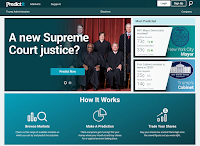
A few weeks ago, I wrote about how pop music was becoming a sport. Some of this transformation was related to the language fans used to describe their favorite artists. Other pieces were connected to new-ish betting markets, like Kalshi and Polymarket, that allow you to gamble on basically anything, music included. In researching that piece, I gambled a few hundred dollars and netted $1.98. Caleb Davies has made a lot more money than that. Hundreds of thousands of dollars more.

Though he initially made a name for himself betting on politics through PredictIt a decade ago, Davies — who has been featured in the Washington Post, Politico, and Bloomberg — has branched out from politics and made thousands of dollars gambling on music and movies in recent years. We hopped on the phone last week to talk about how he chooses what to bet on, why Rotten Tomatoes is more complicated than Spotify, and if all this gambling is good for society.

Do you make all of your money through betting markets?

Nope. I work in IT. I do make more money betting than I do working, but I still work.

How long have you been active in betting markets?

I started in 2015 with some political bets.

Were you always interested in gambling or did you just think you had knowledge that you could make some money with?

The latter. I was pretty interested in politics for a long time. I’d be on forums where I could discuss it for a long time. Then I saw ads for this thing called PredictIt ,and I thought I’d give it a try. Before that, my only experience gambling was some poker when that was super popular in the 2000s.

Over the last few years, so many betting markets have gone mainstream, the two biggest probably being Polymarket and Kalshi. What have been the biggest changes in this space since you got started a decade ago?

The biggest change is that it’s gone from something you can make a little bit of money with to something you can make a living with. When I started on PredictIt, you could only bet $850 at a time. Because of that, you probably couldn’t make six figures. With Kalshi and Polymarket, you can easily drop $100k in a market.

Though your initial interest was politics, you seem to be quite active in cultural markets these days, meaning music and movies. How did you get involved in those?

Same type of thing. I love music. I love movies. When those markets appeared, it gave me an outlet to make money on things that I love.

Recently, I saw you betting on what would be the top song on Spotify on a given day. Can you give me some insight into how you assess a market and size your bets?

There are several music markets on Kalshi. Originally, they were all connected to Billboard. The way Billboard constructs their charts is kind of opaque unless you want to pay a bunch of money for their data. Spotify markets caught my eye because all of their data is public. It’s completely transparent. Because of that, I can analyze the data and identify trends. It’s like 95% math and 5% your gut.

So, you are building statistical models to find an edge?

Yup. Most days I’m analyzing decay rates of the most popular songs and growth rates of viral ones. I then compare those to historical trends. I also look at proxies for performance. None of them are perfect, but Apple Music and iTunes will also give you some insight into how something is doing on Spotify.

Do you manually place bets or are they handled automatically through an API?

I’m 100% manual. I’ll monitor markets throughout the day and just look for a price that I want. I will use limit orders, so I don’t have to watch things continuously, though. But I’m still the guy pressing buttons to execute trades.

You’re also very active in betting on what score a movie will get on Rotten Tomatoes. Is your process there similar?

It’s similar, but the complexity around Rotten Tomatoes is far greater. Spotify is really just a single data drop every day and then monitoring some proxies. Rotten Tomatoes involves more modeling ahead of time. I have to track when new reviews drop and gauge how they will affect things. It’s just more complicated.

Are those the most complex markets you bet on?

I think so.

It’s clear to me that markets provide utility in some cases. For example, some people claim that betting markets on inflation are more accurate than experts. It’s valuable to have accurate inflation forecasts. But the utility of other markets is not clear to me. Like is there any value by having markets to bet on how songs will chart? Or is it just a way to make money?

I think you’ll hear many defenders of prediction markets claim that they are great sources of information. In many cases, they are. But there are also tons of examples where the information from the market provides little to no value. Like does it matter if “Luther” by Kendrick Lamar is going to top Spotify’s daily chart on April 14, 2025? No. It’s not elections or economics data. It’s just a way to gamble. Nothing more.

Over the last few years, gambling markets — especially those around sports — have become very accessible. Everyone is carrying a casino in their pocket. Though I think that people should be able to gamble if they want to, do you think there are downsides to how prevalent gambling has become?

Absolutely. I don't try to fool myself. I've done very well on this stuff, but I don't think the majority of people can control their betting very well. They often lose more than they should be losing. It’s a fairly large problem, and I think it's getting worse with the prevalence of sports betting. It's all over the place. It's so easy for a fun hobby to become a bigger problem. I think it's definitely a societal problem, even though I benefit greatly from it.

by Chris Dalla Riva, Can't Get Much Higher |  Read more:
Image: PredictIt

Honda Rockets

Honda’s hopper suddenly makes the Japanese carmaker a serious player in rocketry.

An experimental reusable rocket developed by the research and development arm of Honda Motor Company flew to an altitude of nearly 900 feet Tuesday, then landed with pinpoint precision at the carmaker's test facility in northern Japan.

The accomplishment may not sound like much, but it's important to put it into perspective. Honda's hopper is the first prototype rocket outside of the United States and China to complete a flight of this kind, demonstrating vertical takeoff and vertical landing technology that could underpin the development of a reusable launch vehicle. (...)

Developed in-house by Honda R&D Company, the rocket climbed vertically from a pedestal at the company's test site in southeastern Hokkaido, the northernmost of Japan's main islands. The vehicle reached an altitude of about 890 feet (271 meters). The vehicle descended to a nearby landing target and settled on its four landing legs just 15 inches (37 centimeters) from its aim point, according to Honda.

What's more, the rocket stood on its four landing legs for liftoff, then retracted the landing gear as it climbed into the sky. At its highest point, the vehicle extended aerodynamic fins akin to those used on SpaceX's reusable Falcon 9 and Super Heavy boosters. Moments before reaching the ground, the rocket folded the fins against its fuselage and deployed its four landing legs for touchdown. The flight lasted approximately 57 seconds.

by Stephan Clark, ArsTechnica |  Read more:
[ed. A company deeply committed to R&D, over short-term shareholder returns, applying its expertise across a variety of platforms. Very impressive.]

American Brownshirts

Trump’s “Big Beautiful Bill” that the House passed is objectionable for many reasons, most obviously because it is the most regressive economic bill of my lifetime, the class war condensed in legislative form. Its tax policies and spending cuts will erode the well being of Americans slowly for decades to come. Its most immediate destabilizing impact, however—the one that has the potential to push our democracy to the brink—is its vast expansion of the Homeland Security budget, which will be used to build ICE into a huge national army of loyalists under Trump’s control. The money to build America’s brownshirts is in the pipeline. Whereas our military-industrial complex is a threat to the rest of the world, this force will be a direct threat to all of us in the USA. This is the Proud Boys, at national scale, with badges. It is a very dangerous prospect.

Everything I am writing about here has been previously reported in the past few weeks since the House sent the bill to the Senate. But, from my vantage point, the public has not quite grasped just how horrifying a precipice we are on. When you consider the scale of protest already unleashed by the ICE raids in LA; Trump and Stephen Miller’s clear intent to double and triple and quadruple down on the ICE raids and crush the protests with military force; Trump’s unhinged declaration yesterday that “we must expand efforts to detain and deport Illegal Aliens in America’s largest Cities, such as Los Angeles, Chicago, and New York” to achieve “the single largest Mass Deportation Program in History”; and then connect this deep well of poisonous intent with the staggering expansion of ICE’s size and scope that will occur if this bill’s funding comes through, what you will see is the setup for not just a mass deportation program, but a violent national clash between a militarized, government-sanctioned army of Trump loyalists and everyone else. (...)

Let’s focus on the most dangerous funding of all: the direct funding for law enforcement agencies. To level-set you here, understand that right now, before this bill passes, the combined funding of the FBI, DEA, ATF, Secret Service, and all other federal law enforcement is only half the size of the federal funding for immigration and border enforcement. So we are already pouring an inordinate amount of money into stalking immigrants. If the new bill passes, we will add $167 billion to immigration enforcement. Cato helpfully produced this chart to illustrate just how insane this would be: (...)


Part of this funding increase would go to hiring 10,000 new ICE agents, and more than 8,000 new Customs and Border Patrol agents. That would give ICE more agents than the FBI has in the field. It goes without saying that this would be a disaster for not only undocumented immigrants, who would be ruthlessly hunted down like fugitives, but also to any brown-skinned person in America, who can expect to be subjected to harassment by agents sent out to please Stephen Miller’s insatiable desire for public displays of racism at all costs.

It’s even worse than that. Think about this expansion of ICE in the context of the entire arc of Trump’s rise to power. This man falsely claimed to win the 2020 election, tried to have his supporters overthrow the government to keep him in power, came back and won again, and pardoned the people who tried to overthrow the government on his behalf. The main thing he learned from his first term was to surround himself only with fanatical loyalists. The entire top level of the federal government is now staffed with a buffet of lunatics, incompetents, and extremists whose defining characteristic is their loyalty to Trump above the law. This includes the military and the federal law enforcement agencies.

Within the ranks of the military and law enforcement, however, absolute loyalty cannot be achieved so quickly. Even though those constituencies are strongly Republican, there is also some significant level of anger at Trump as well. FBI agents have seen colleagues purged just for working on January 6 cases; Army soldiers were forced to march in Trump’s stupid parade; Marines, many of them from immigrant families, have been outrageously deployed to patrol Los Angeles. These things create dissatisfaction in the ranks that is hard to measure, but real.

So how can Trump be sure that the absolute loyalty he demands extends all the way down to his foot soldiers? By hiring new ones. Who do you think those ten thousand fresh new ICE agents will be? Well, one thing we can say for sure is that they will be people who are okay with the proposition of taking a job with ICE as it is run under Donald Trump. This is not a job anyone will take by accident. It’s on the news every day. Hundreds of thousands of people are in the streets protesting against it. This creates a self-selecting pool. It will attract only those who are not repulsed by it. Job applicants will consist of those who see pictures of dudes wearing tactical vests and face coverings jumping out of unmarked trucks and grabbing people and think to themselves, “that looks cool.”

The new and expanded version of ICE will not just be immigration enforcers. They will be the most ideologically reliable armed branch of government for Donald Trump. They will be the 2025 parallel of the brownshirts. They will be the most obvious place for the president to turn for dirty work in the streets. Because of this, I guarantee, once they are in place, you will see their sphere of activities expand. Enforcing immigration laws will be defined to include “going after those who try to impede the enforcement of immigration laws”—a group that, according to Trump and Miller, includes protesters, journalists, and Democratic politicians. The increasingly outrageous expansion of ICE activities will certainly be rubber stamped by a Republican Congress which is already busy trying to make it illegal to report the identities of the masked men who have come to arrest your neighbor.

The question to ask yourself about what is coming is not, “Is that legal?” It is, “With Donald Trump and Stephen Miller fully in control of the government, and with no checks on their power within the government’s three branches, what is the next thing they need to achieve their agenda?” What they need is a loyal private army. And that is what they’re building.

by Hamilton Nolan, How Things Work |  Read more:
Image: Getty