Tuesday, November 11, 2025

Always Watching - 24/7 Edition

When most people think about immigration enforcement, they picture border crossings and airport checkpoints. But the new front line may be your social media feed.

U.S. Immigration and Customs Enforcement has published a request for information for private-sector contractors to launch a round-the-clock social media monitoring program. The request states that private contractors will be paid to comb through “Facebook, Google+, LinkedIn, Pinterest, Tumblr, Instagram, VK, Flickr, Myspace, X (formerly Twitter), TikTok, Reddit, WhatsApp, YouTube, etc.,” turning public posts into enforcement leads that feed directly into ICE’s databases.

The request for information reads like something out of a cyber thriller: dozens of analysts working in shifts, strict deadlines measured in minutes, a tiered system of prioritizing high-risk individuals, and the latest software keeping constant watch.

I am a researcher who studies the intersection of data governance, digital technologies and the U.S. federal government. I believe that the ICE request for information also signals a concerning if logical next step in a longer trend, one that moves the U.S. border from the physical world into the digital.
A new structure of surveillance

ICE already searches social media using a service called SocialNet that monitors most major online platforms. The agency has also contracted with Zignal Labs for its AI-powered social media monitoring system.

The Customs and Border Protection agency also searches social media posts on the devices of some travelers at ports of entry, and the U.S. State Department reviews social media posts when foreigners seek visas to enter the United States.

What would change isn’t only the scale of monitoring but its structure. Instead of government agents gathering evidence case by case, ICE is building a public-private surveillance loop that transforms everyday online activity into potential evidence.

Private contractors would be tasked with scraping publicly available data to collecting messages, including posts and other media and data. The contractors would be able to correlate those findings with data in commercial datasets from brokers such as LexisNexis Accurint and Thomson Reuters CLEAR along with government-owned databases. Analysts would be required to produce dossiers for ICE field offices within tight deadlines – sometimes just 30 minutes for a high-priority case.

Those files don’t exist in isolation. They feed directly into Palantir Technologies’ Investigative Case Management system, the digital backbone of modern immigration enforcement. There, this social media data would join a growing web of license plate scans, utility records, property data and biometrics, creating what is effectively a searchable portrait of a person’s life.

by Nicole M. Bennett, The Conversation |  Read more
Image: Westend61/Westend61 via Getty Images
[ed. Explain to me again why Edward Snowden continues to be banished to Russia, rather than hailed as a true American hero. What he revealed seems almost trivial these days. See also: Always Watching: How ICE’s Plan to Monitor Social Media 24/7 Threatens Privacy and Civic Participation (NC):]

What is SocialNet?

SocialNet is a surveillance tool developed by ShadowDragon, giving OSINT (Open-source intelligence) professionals and governments tools to search and collect publicly available information across more than 200 websites, social networks, and online services simultaneously.

According to recent reporting by 404 Media, the tool creates comprehensive profiles of individuals by aggregating their digital footprints across various platforms, enabling analysts to map connections, track activities, and visualize relationships between people of interest.

Which Platforms Are Being Monitored?


The list of monitored platforms is extensive and includes:
  • Major social networks: Facebook, Instagram, Twitter, LinkedIn, Bluesky
  • Messaging platforms: WhatsApp, Telegram, Discord
  • Content platforms: OnlyFans, JustForFans, TikTok
  • Payment services: PayPal, Cash App, BuyMeACoffee
  • Gaming platforms: Roblox, Chess.com
  • Demographic-specific sites: Black Planet
  • Special interest networks: FetLife, cigar review sites, hobby forums
The danger here is that when one person is flagged, their friends, relatives, fellow organizers or any of their acquaintances can also become subjects of scrutiny. Previous contracts for facial recognition tools and location trackinghave shown how easily these systems expand beyond their original scope. What starts as enforcement can turn into surveillance of entire communities.

Profiles in Cowardice

After forty days. Forty days of the longest government shutdown in American history. Forty days of Democrats saying this is the line—healthcare for twenty-two million Americans. Forty days of holding firm while Republicans bet Democrats would break first.

Chuck Schumer just taught Donald Trump that hostage-taking works.

Not because he had to. Because the framework he operates within cannot imagine doing what this moment requires: actually fighting power instead of managing accommodation to it.

Eight Democratic senators voted to end the shutdown last night. The deal they cut? A “guaranteed vote” next month on ACA subsidies that everyone—including Chuck Schumer—knows won’t pass. They traded their only leverage for a promise they know is worthless. They held the line for forty days, then surrendered for nothing.

The base is in open revolt. Gavin Newsom’s response was one word: “Pathetic.” JB Pritzker called it “an empty promise.” AOC reminded everyone that “working people want leaders whose word means something.” Chris Murphy admitted plainly: “There’s no way to sugarcoat what happened tonight.”

And Ro Khanna did what needed doing: he called for Schumer’s removal as Senate minority leader.

This isn’t just fury at a bad deal. This is recognition that the Democratic establishment is operating within a dead framework that keeps producing the same result: managed decline wrapped in sophisticated justifications.

Schumer’s calculation was pure technocratic management. The shutdown polls badly. Healthcare polls well. Get a vote scheduled, minimize political damage, trust that Republicans will take the blame when premiums skyrocket. Classic establishment thinking: read the focus groups, calculate the risk, optimize for damage control.

What he cannot see—what the framework literally prevents him from seeing—is that the fight itself mattered more than any deal. That people weren’t asking for better negotiating tactics. They were asking for proof that Democrats would hold the line on something. Anything. After Chicago. After ICE raids. After warrantless mass detentions. After watching Trump systematically dismantle constitutional constraints.

This was the test. Forty days to prove Democrats could fight power instead of accommodating it. And Schumer folded.

Symone Sanders got it immediately: “The hostage taking worked.” That’s the lesson Trump learned last night. That’s why Chris Murphy is right to fear Trump gets stronger, not weaker. When you teach authoritarians that threatening to hurt people produces Democratic capitulation, you haven’t minimized damage—you’ve guaranteed more hostage situations.

The establishment will produce sophisticated analysis explaining why this was actually strategic. They’ll point to the guaranteed vote, the federal worker protections, the political positioning for next month. They’ll treat this as a temporary setback in normal political competition.

But this isn’t normal political competition. This is one side attempting regime change while the other pretends it’s just another negotiation requiring careful positioning.

The base understands what Schumer cannot: you cannot manage your way out of authoritarian consolidation. You cannot focus-group your way to resistance. You cannot optimize yourself into fighting power when your entire framework is built on accommodating it.

The governors get it. Newsom fighting homeowner cartels in California. Pritzker calling out empty promises. They’re not waiting for Senate leadership to figure out what time it is. They’re building the alternative: liberal populism that actually fights concentrated power instead of explaining why fighting is unstrategic.

The progressive caucus gets it. AOC reminding everyone that people’s lives depend on Democrats keeping their word. Khanna calling for new leadership. James Talarico declaring “this moment demands fighters, not folders.”

Even establishment voices like Murphy understand something fundamental broke last night. When your own senator has to record a video saying “there’s no way to sugarcoat this” and “I’m angry—like you”—that’s not spin control. That’s recognition that the base has decided the framework is dead.

Forty days was long enough to prove Democrats could fight. Long enough to make Trump pay a political price for hostage-taking. Long enough to show working people that their leaders’ word means something.

Chuck Schumer surrendered all of that for a vote next month that won’t pass.

by Mike Brock, Notes From the Circus |  Read more:
Image:
[ed. For a detailed explanation of SNAP and how we got here, see: November 9, and November, 10 2025 (Letters From an American - Heather Cox Richardson):]

Seven Democrats and one Independent voted with all but one Republican to advance a measure that funds the government through January 30 of next year. It includes funding for military construction and the Department of Veterans’ Affairs, the Department of Agriculture and the Food and Drug Administration, and operations for the legislative branch, or Congress. Tucked within that last appropriation is a measure that allows the eight Republican senators whose phone logs were seized during former special counsel Jack Smith’s investigation of the attack on the U.S. Capitol on January 6, 2021, to sue the government for up to $500,000 apiece. (...)

President Donald J. Trump did not want the shutdown to end this way. He was trying to use the pain he was inflicting on the American people to force Republican senators to end the filibuster and pass a series of measures that would essentially have made him a dictator. The Republican senators were clear they didn’t want to do that. And now, they haven’t. They chose a way out of the shutdown fight that did not support Trump’s ambitions. After nine months in which they appeared to do his bidding, that’s an interesting development.

Trump does not appear to be giving up his position on hurting the country easily. Late last night, three judges from the First Circuit refused to stop the lower court order saying that the administration must pay SNAP benefits in full, and today, the administration went back to the Supreme Court to ask it to freeze those payments.

Trump also posted an attack on air traffic controllers, saying to those who took time off during the shutdown “I am NOT HAPPY WITH YOU. You didn’t step up to help the U.S.A. against the FAKE DEMOCRAT ATTACK that was only meant to hurt our Country. You will have a negative mark, at least in my mind, against your record. If you want to leave service in the near future, please do not hesitate to do so, with NO payment or severance of any kind! You will be quickly replaced by true Patriots, who will do a better job….” In fact, the country has a shortage of air traffic controllers.

Monday, November 10, 2025

Most Expensive Coffee in the World

via:
[ed. Bat Poop Coffee? See also: World's most expensive coffee goes on sale in Dubai at $1,000 a cup. Selling for nearly $1,000 a cup, a cafe in Dubai is offering the world's most expensive coffee, brewed from Panamanian beans sold at a premium price. via.]

Sunday, November 9, 2025

Meta is Earning a Fortune On Fraudulent Ads

Meta internally projected late last year that it would earn about 10% of its overall annual revenue – or $16 billion – from running advertising for scams and banned goods, internal company documents show.

A cache of previously unreported documents reviewed by Reuters also shows that the social-media giant for at least three years failed to identify and stop an avalanche of ads that exposed Facebook, Instagram and WhatsApp’s billions of users to fraudulent e-commerce and investment schemes, illegal online casinos, and the sale of banned medical products.

On average, one December 2024 document notes, the company shows its platforms’ users an estimated 15 billion “higher risk” scam advertisements – those that show clear signs of being fraudulent – every day. Meta earns about $7 billion in annualized revenue from this category of scam ads each year, another late 2024 document states.

Much of the fraud came from marketers acting suspiciously enough to be flagged by Meta’s internal warning systems. But the company only bans advertisers if its automated systems predict the marketers are at least 95% certain to be committing fraud, the documents show. If the company is less certain – but still believes the advertiser is a likely scammer – Meta charges higher ad rates as a penalty, according to the documents. The idea is to dissuade suspect advertisers from placing ads.

The documents further note that users who click on scam ads are likely to see more of them because of Meta’s ad-personalization system, which tries to deliver ads based on a user’s interests.

The details of Meta’s confidential self-appraisal are drawn from documents created between 2021 and this year across Meta’s finance, lobbying, engineering and safety divisions. Together, they reflect Meta’s efforts to quantify the scale of abuse on its platforms – and the company’s hesitancy to crack down in ways that could harm its business interests.

Meta’s acceptance of revenue from sources it suspects are committing fraud highlights the lack of regulatory oversight of the advertising industry, said Sandeep Abraham, a fraud examiner and former Meta safety investigator who now runs a consultancy called Risky Business Solutions.

“If regulators wouldn’t tolerate banks profiting from fraud, they shouldn’t tolerate it in tech,” he told Reuters.

by Jeff Horowitz, Reuters |  Read more:
Image: /Evelyn Hockstein

The Low-Tech Plan to Patch Humanity’s Greatest Weakness

If we can get their cost down to $10, this becomes one of the most cost-effective ways of preventing respiratory transmission. The shelf life is 20 years. That means basically 50 cents per person per year of protection. …

If you’re a government it makes a lot of sense to just stockpile enough to cover your entire population. Right now we spend about $10 billion a year on missile defence. Stockpiling one of these for every single person in the US would be 1% the cost of that.

— Andrew Snyder-Beattie


Conventional wisdom is that safeguarding humanity from the worst biological risks — microbes optimised to kill as many as possible — is difficult bordering on impossible, making bioweapons humanity’s single greatest vulnerability. Andrew Snyder-Beattie thinks conventional wisdom could be wrong.

Andrew’s job at Open Philanthropy is to spend hundreds of millions of dollars to protect as much of humanity as possible in the worst-case scenarios — those with fatality rates near 100% and the collapse of technological civilisation a live possibility.

As Andrew lays out, there are several ways this could happen, including:
  • A national bioweapons programme gone wrong (most notably Russia or North Korea’s)
  • AI advances making it easier for terrorists or a rogue AI to release highly engineered pathogens
  • Mirror bacteria that can evade the immune systems of not only humans, but many animals and potentially plants as well
Most efforts to combat these extreme biorisks have focused on either prevention or new high-tech countermeasures. But prevention may well fail, and high-tech approaches can’t scale to protect billions when, with no sane person willing to leave their home, we’re just weeks from economic collapse.

So Andrew and his biosecurity research team at Open Philanthropy have been seeking an alternative approach. They’re now proposing a four-stage plan using simple technology that could save most people, and is cheap enough it can be prepared without government support. (...)

The approach exploits tiny organisms having no way to penetrate physical barriers or shield themselves from UV, heat, or chemical poisons.

We now know how to make highly effective ‘elastomeric’ face masks that cost $10, can sit in storage for 20 years, and can be used for six months straight without changing the filter. Any rich country could trivially stockpile enough to cover all essential workers.

People can’t wear masks 24/7, but fortunately propylene glycol — already found in vapes and smoke machines — is astonishingly good at killing microbes in the air. And, being a common chemical input, industry already produces enough of the stuff to cover every indoor space we need at all times.

Add to this the wastewater monitoring and metagenomic sequencing that will detect the most dangerous pathogens before they have a chance to wreak havoc, and we might just buy ourselves enough time to develop the cure we’ll need to come out alive.

Has everyone been wrong, and biology is actually defence dominant rather than offence dominant? Is this plan crazy — or so crazy it just might work?

That’s what host Rob Wiblin and Andrew Snyder-Beattie explore in this in-depth conversation. (...)


The interview in a nutshell

Andrew Snyder-Beattie, head of Open Philanthropy’s biosecurity programme, puts the risk of human extinction from a biological catastrophe at 1–3% in our lifetimes.

However, he argues that a concrete, largely low-tech “four pillars” strategy could dramatically reduce this risk by buying us the time needed to survive even the worst-case scenarios.

1. Two primary classes of biological threats could pose an existential risk
  • Engineered pathogens are a growing concern. The historical Soviet bioweapons programme — which employed tens of thousands of scientists to create threats like smallpox-Ebola chimeras and antibiotic-resistant plague — demonstrates the potential scale. With 40 years of technological progress and the rise of AI, the creation of even more dangerous pathogens has become easier.
  • Mirror life represents a novel catastrophic risk. All life on Earth uses molecules with a specific “handedness” (e.g., right-handed DNA). If a “mirror-image” bacterium were created with the opposite handedness, our immune systems — and those of nearly all other organisms — would be unable to recognise or fight it. It could become pervasive in the environment, akin to living without an immune system. Andrew estimates a >10% chance of catastrophe if one were released.
2. The “four pillars” plan offers a robust, defence-in-depth strategy

Andrew’s team has developed a plan focused on physical, scalable, and pathogen-agnostic defences to protect society while medical solutions are developed.

Pillar 1: Personal protective equipment (PPE)

The core idea is to stockpile elastomeric respirators, which are vastly superior to N95s. They have a 20-year shelf life, provide a protection factor of 100 (or 10,000 when two people interact), and can be reused for months.

The cost could be driven down to $5–10 per mask, making it “outrageously cost effective” to protect entire populations for about 50 cents per person per year. A philanthropic effort could realistically stockpile enough for all essential workers.

Pillar 2: Biohardening buildings

To create safe indoor spaces, we can use simple, scalable technologies that are already widely available. Propylene glycol vapour (the same chemical used in fog machines and vapes) is extremely safe for humans but deadly to airborne pathogens, disrupting their membranes. The US already produces enough to cover all industrial and much residential floorspace.

For surfaces, common disinfectants like ethanol and hypochlorous acid (which can be made at home with salt, water, and electricity) are sufficient.

In extreme scenarios, homes could be turned into improvised clean rooms using positive air pressure generated by common appliances like furnace fans or leaf blowers pushing air through HEPA filters made from materials like household insulation.

[ed. More....]

by Robert Wiblin and Andrew Snyder-Beattie, 8000 Hours |  Read more:
Image: YouTube
[ed. Who knew? Bacteria have left and right-handed versions: Mirror Bacteria]

The worst-case scenario: mirror bacteria

Andrew Snyder-Beattie: Many molecules on Earth can exist in one of two forms: a left-handed version and a right-handed version. A common example of this is sugar: glucose can exist in the right-handed version — that’s the version that we eat — as well as a left-handed version that you cannot digest, which is pretty interesting. These two molecules are identical if you put them in a mirror.

So it’s similar to your hands. Your hands in some sense are identical, but they are mirror images of one another. There are lots of properties where it’s the exact same and there are lots of properties where they’re different. For example, you can’t put a left-handed glove on a right hand.

What’s interesting is that many of the molecules in your body — and in fact all of the big, most important molecules — have this chiral property. So if you imagine a strand of DNA, all the little As, Ts, Cs, and Gs use the right-handed version. And all of the proteins in your body, like the bigger molecules that comprise the bigger machines, all use the left-handed version.

So if you’re a scientist in a laboratory, in the same way that you can create the mirror image version of sugar, you can also create the mirror image version of those little As, Ts, Cs, and Gs. And if you put the mirror image version of those little As, Ts, Cs, and Gs, you can create a mirror-image DNA strand that spins in the opposite direction, and it looks like the mirror image of regular DNA.

One interesting thing is that this is not just true of human biology; this is true of basically all life on Earth: bacteria, humans, plants, everything. All animals use right-handed DNA, left-handed proteins.

So a lot of scientists were thinking, “Wouldn’t it be interesting if we could create the mirror-image version of not just DNA or proteins, but an entire mirror-image version of a bacteria, like a whole mirror image organism?” There were a number of labs that were looking into this as a possible exciting project. The NSF even funded about a $4 million grant to look into this.

But there’s a major problem with this: your immune system has been trained on molecules that it recognises. And if you flip that molecule to the mirror-image version, your immune system is not going to be able to detect or break down those molecules. What that means is that if this bacteria were to get into your lungs or get into your bloodstream, there is a decent chance that it would grow on achiral nutrients and it would cause a lethal infection.

Now, you might then be asking, “There are plenty of bacteria that cause lethal infections. What makes this so bad?” The reason that this is bad is because it’s not just true of human immune systems; most immune systems on the planet have been trained on a certain chirality. So this would not just potentially infect and kill humans; it would potentially infect and kill many species of animals, possibly even species of plants. Plant immune systems work in a very similar way.

What that means is that this could be very persistent in the environment. It could be kind of pervasive. This would be a lot less like a human-to-human pandemic, but it would be something that is persisting in the soil, persisting in the environment. If there’s a tree that’s infected outside of your house and the wind blows in, then that would potentially infect you.

So it would be much more akin to living without an immune system. And people that have genetic diseases that have certain receptors broken typically die in childhood. It’s a very nasty disease. This would be like the whole world ending up in that situation.

Friday, November 7, 2025

Mark Grantham (Canadian, born 1966), "In the Rain", n.d.
via:
[ed. Traveling for the next few days so posts are likely to be infrequent.]

Is Social Media Destroying Democracy—Or Giving It To Us Good And Hard?

It’s easier to blame the algorithm than the bewildered herd.

One of our era’s most influential narratives is that social media is destroying democracy and perhaps civilisation itself. For the liberal establishment, this story helps to explain the surging success of right-wing populism, as well as collapsing institutional trust, growing polarisation, and an apparent explosion of misinformation and deranged conspiracy theories.

The standard formulation of this narrative treats social media as a dysfunctional technology. Because algorithms and other platform features are designed to capture people’s attention and keep them scrolling, they amplify content that is sensationalist, bias-confirming, and divisive. This viral content then infects public opinion and political debate, driving large numbers of people to adopt misinformed and hateful ideas hostile to liberal democracy. (...)

I will outline a different and more uncomfortable view: Social media’s democratising nature is the most critical factor in understanding its political effects, including its negative ones. It is precisely because social media has democratised the public sphere that it has contributed to trends liberals (including myself) are so worried about.
***
In some ways, this analysis aligns with Brian Klaas’s excellent article, “The Democratization of Information Production is Killing Democracy.” However, Klaas’s argument focuses on how media fragmentation and engagement-maximising algorithms increase the production and consumption of “bad” information, which dupes voters into supporting Trump and other populists.

The story that I find plausible is different. For the most part, social media doesn’t manipulate “good” people into accepting “bad” information. It simply reveals popular perspectives on reality that elites previously excluded from mainstream discourse, often for good reason. It is this public revelation and normalisation of popular ideas that explain social media’s most dramatic and dangerous impacts, including its connection to right-wing populism.

The Case for Democratic Pessimism

“Democracy,” said H.L. Mencken, “is the theory that the common people know what they want, and deserve to get it good and hard.”

The quote expresses a pessimistic view about democracy that is politically incorrect these days, but it was the norm among elites and intellectuals throughout most of history.

Although part of this hostility to democracy was undoubtedly self-serving, it was also driven by the recognition that democracy is absurd on its face. A political system that gives everyone an equal say conflicts with the reality that not everyone has equally valuable things to say. People differ in their wisdom and virtue. A large number of people possess neither of these traits.

Such differences are especially salient in politics, where it’s been known for a long time that most voters are shockingly ignorant and misinformed, with many approaching politics more in the manner of sports hooligans and religious fanatics than the rational deliberators of liberal fantasies.

One reason for this is that politics brings out the worst in us. People are typically fairly rational when it comes to issues of immediate practical importance. But modern politics involves distant, abstract, and complex issues. It is challenging to form accurate opinions in most cases, and there are few incentives to do so. Given this, many people treat politics symbolically, embracing facile slogan-based worldviews that resonate with pre-scientific intuitions and help them signal their tribal allegiances and demonise people they dislike.

As Joseph Schumpeter observed,
“The typical citizen drops down to a lower level of mental performance as soon as he enters the political field. He argues and analyzes in a way which he would readily recognize as infantile within the sphere of his real interests. He becomes a primitive again.”
Lippmann’s “Mental Barbarians"

For these reasons and more, the prophetic journalist Walter Lippmann published two highly influential critiques of democracy in the early twentieth century, first in Public Opinion (1922) and then in The Phantom Public (1925). Although Lippmann was a liberal and progressive, he argued that for liberal societies and progressive policies to succeed, “the public must be put in its place [...] so that each of us may live free of the trampling and the roar of a bewildered herd.”

Part of Lippmann’s argument involved a sophisticated analysis of why even intelligent and well-meaning citizens will inevitably form distorted political opinions. But he was also sensitive to the large number of citizens who, for want of a better term, are complete write-offs.

In a passage that is outrageous to modern sensibilities, he observed,
“The mass of absolutely illiterate, of feeble-minded, grossly neurotic, undernourished and frustrated individuals, is very considerable… Thus a wide popular appeal is circulated among persons who are mentally children or barbarians, people whose lives are a morass of entanglements, people whose vitality is exhausted, shut-in people, and people whose experience has comprehended no factor in the problem under discussion.”
You don’t have to go quite this far or use this language to acknowledge that there are more than a few grains of truth here. And you can’t understand many pathologies of social media without confronting the fact that its ruthlessly democratising character has given all such people a voice.

The Problems and Positives of Elite Gatekeeping

Elite gatekeeping sounds bad. In many ways, it is bad. The central problem with elitism, including elitist critiques of democracy, is that elites are also human. They might dress up their self-interest, prejudice, and unreason in fancy language, but even the highest-quality punditry and legacy media are biased by propaganda, groupthink, and worse.

These days, right-wing populists draw attention to how much of establishment discourse is subtly and often not-so-subtly biased by progressive (“woke”) values, and they have a point. But this is just one bias among many economic, social, cultural, and political forces that corrupt elite opinion and news media, both today and throughout history.

At the same time, a fair-minded analysis must also acknowledge that elite gatekeeping has many benefits. Outlets like the BBC and the New York Times might subtly select, omit, frame, contextualise, and package reality in misleading ways. But they also typically impose basic standards of professional journalism and exclude many people who have nothing of value to contribute.

Social media welcomes such voices into the conversation. More precisely, platforms that have relaxed “content-moderation” (i.e., elite-gatekeeping) policies do. The result? Deranged conspiracy theories about Jews, medieval discourse about demons and occult forces, the most hyperbolic forms of bigotry imaginable, and countless other popular ideas that were previously excluded from mainstream discourse. More concretely: some of the biggest stars of the social media age, including Tucker Carlson, Andrew Tate, Candace Owens, and Tommy Robinson.

When highly educated, liberal professionals encounter such content on social media platforms, they often assume that there must be something dysfunctional about the platforms. As Francis Fukuyama puts it,
“There is an internal dynamic to online posting that explains the rise of extremist views and materials. Influencers are driven by their audiences to go for sensational content. The currency of the internet is attention, and you don’t get attention by being sober, reflective, informative, or judicious.”
There is a grain of truth here, but also wishful thinking. The more fundamental reason social media features a vast amount of unsober, unreflective, uninformative, and injudicious content is that it gives a platform to large numbers of shockingly unsober, unreflective, uninformed, and injudicious people who were previously excluded from mainstream discourse.

by Dan Williams, Conspicuous Cognition |  Read more:
Image: Thomas Chan on Unsplash
[ed. See also (on cringe and cool): Zohran Mamdani is Hot (CN).]

Thursday, November 6, 2025

Why America Builds AI Girlfriends and China Makes AI Boyfriends

On September 11, the U.S. Federal Trade Commission launched an inquiry into seven tech companies that make AI chatbot companion products, including Meta, OpenAI, and Character AI, over concerns that AI chatbots may prompt users, “especially children and teens,” to trust them and form unhealthy dependencies.

Four days later, China published its AI Safety Governance Framework 2.0, explicitly listing “addiction and dependence on anthropomorphized interaction (拟人化交互的沉迷依赖)” among its top ethical risks, even above concerns about AI loss of control. Interestingly, directly following the addiction risk is the risk of “challenging existing social order (挑战现行社会秩序),” including traditional “views on childbirth (生育观).”

What makes AI chatbot interaction so concerning? Why is the U.S. more worried about child interaction, whereas the Chinese government views AI companions as a threat to family-making and childbearing? The answer lies in how different societies build different types of AI companions, which then create distinct societal risks. Drawing from an original market scan of 110 global AI companion platforms and analysis of China’s domestic market, I explore here shows how similar AI technologies produce vastly different companion experiences—American AI girlfriends versus Chinese AI boyfriends—when shaped by cultural values, regulatory frameworks, and geopolitical tensions.

Sexy AI girlfriends: Made in America, for the world

In my team’s recent market scan of the 110 most popular AI companion platforms as of April 2025, we turned Similarweb and Sensor Tower upside down to gather data on traffic, company profiles, and user demographics. At the expense of one teammate developing an Excel sheet allergy and the shared trauma of viewing many NSFW images, we discovered that American AI girlfriends rule the roost in the global market for romantic AI companions: Over half (52%) of these AI companion companies are headquartered in the U.S., drastically ahead of China (10%) in the global market.1 These products are overwhelmingly designed around heterosexual male fantasies: another similar market report this year shows that 17% of all the active apps have “girlfriends” in names, compared to 4% of those with “boyfriends.”

We estimated that dating-themed AI chatbots, designed specifically for romantic or sexual bonding, capture roughly 29 million monthly active users (MAU) and 88 million monthly visits globally across platforms. For comparison, Bluesky has 23.2 million total users and 75.8 million monthly visits as of early 2025. And our estimation is very conservative: We did not count the traffic of platforms containing other kinds of companionships, such as Character AI, which offers AI tutors, pets, and friends, though we think many people go there to use AI boy/girlfriends. We did not count AI companion app downloads, which have reached 220 million since 2022. Nor did we include parasocial engagement with general-purpose AI like GPT-4o, which some people apparently have also fallen in love with.

Behind the explosive popularity of AI companions are two main engagement models. On one side are community-oriented platforms like Fam AI, where users create and share AI companions, such as customizable “girlfriends” in anime or photorealistic styles. These platforms thrive on user-generated content, offering adjustable body types, personalities, and voice/video modes to deepen connections. Users can create new AI characters with just a few paragraphs instructing the model how to act, similar to personalizing a copy of ChatGPT. Many of these platforms use affiliate programs — for example, craveu.ai pays users $120–180 for creating high-engagement characters. The abundance of options and the competition for attention encourage users to frequently switch between different AI companions, creating more transient digital relationships.


In contrast, product-oriented platforms like Replika offer a single evolving AI partners with deeper and longer emotional ties. On Replika’s subreddit, many users report using Replika for years, and some seriously consider themselves “bonded” and “married” to their Replika partner. People also grieve for the loss of their Replika when they sense a subtle personality change and suspect the system behind had reset their chatbots.

A Reddit user sharing her grief when she sensed a personality change in her Replika.

Despite differences in engagement style, both models seek to capitalize on sexuality to attract and retain users. The monetization of sexuality is done mainly through “freemium” models, offering a few free basic functions while charging for advanced features or additional services. Among the top ten most-visited AI companion platforms in our scan, 8 opt for freemium models, with only one currently free and one choosing advertising and in-app currency. Premium accounts typically offer unrestricted interaction and access to unblurred explicit images. They also allow the user to have longer conversations and improve memory capacity for previous conversations. Many mating companion platforms promote explicit ‘NSFW’ (not safe for work) companions, images, and roleplay features as part of the premium features.


Dynamic AI boyfriends: Made in China, for China

On the other side of the Great Firewall, AI is also probing the emotional boundaries of humans. While the underlying LLMs may not differ drastically from their English-speaking counterparts, the fictional worlds and characters that users build around them are strikingly distinct.

One of the most notable contrasts lies in gender dynamics. In the Chinese AI companion market, male characters dominate: most trending products are marketed as AI boyfriends, and leading platforms prominently feature male characters on their main displays, while female characters occupy a more marginal space.

Main website page for Xingye

But looks are not everything that makes humans appealing–the same holds for AI characters. While many platforms still follow the community-oriented model where users create and share AI characters, apps like MiniMax’s Xingye (星野), Tencent-backed Zhumeng Dao (Dream-Building Island 筑梦岛), and Duxiang (独响), built by a startup, go beyond the basics. In addition to customizing AI companions’ personalities, users can generate themes, plots, and side stories, deepening immersion for themselves and others. Conversations are no longer limited to 1:1 exchanges: users can participate in group chats with multiple AI companions (1:N), and AI characters may even send messages to users when they are not using the app, similar to app notifications.

These AI companion products also draw insights from existing popular gaming cultures in China, such as card-drawing games that already have million-dollar markets. For example, Xingye allows users to generate 18 cartoon cards for one fictional character, adapting Japan’s popular gacha game mechanics and trading card culture for AI companions. In gacha games, players pay to randomly draw digital cards or characters, with rare editions commanding premium value. Chinese livestreamers have imported this model, streaming card draws on social media while viewers pay to test their luck for limited-edition collectibles tied to major intellectual properties. Similar to gacha games, AI-generated cards add an element of mystery and excitement when revealed. Users can also create and trade AI character photos on the platform, mimicking real-world card-collecting transactions. (...)

Users: Who is longing for AI’s love?

Young men. This is the most common user base for English-speaking AI companion products, according to our market scan. SimilarWeb data shows the top 55 AI companion platforms globally attract predominantly male users (7:3 ratio), with 18-24-year-olds representing the largest demographic at an even more skewed 8:2 male-to-female ratio. Social media metrics again reinforce this gender pattern, with Reddit’s AI girlfriend community (r/AIGirlfriend) having 44k members compared to fewer than 100 in male-focused AI companion subreddits. Moreover, roughly one-third of the children falsely declared a social media age of 18+, so it is possible that a significant portion of the reported 18-24 users are underage.

A recent Reuters-covered report from an AI girlfriend platform further supports our findings: 50% of young men prefer dating AI partners due to fear of rejection, and 31% of U.S. men aged 18–30 already chat with AI girlfriends. Behind the fear of human rejection lies the manosphere. The “manosphere” is a network of online forums, influencers, and subcultures centered on men’s issues, which has become increasingly popular among young men and boys as their go-to place for advice on approaching intimacy. While the manosphere originated primarily in Western contexts, its discourses have increasingly spread to, and been adapted within, countries across Africa and Asia through social media. In these online spaces, frustrations over dating and shifting gender norms are common, often coupled with narratives portraying women as unreliable or rejecting. AI companions offer a controllable, judgment-free alternative to real-life relationships, aligning with manosphere ideals of feminine compliance and emotional availability. On the subreddit r/MensRights (374k members), users largely endorse the findings of the Reuters report and even celebrate the shift from human to AI relationships.

The desire for a controllable relationship is further illustrated through the many Japanese aesthetics and anime-inspired avatars on AI companion platforms. Even Grok’s Ani bears striking similarity to Misa Amane from the 2006 anime Death Note. These designs often present highly idealized forms of femininity, historically marketed to heterosexual male audiences. In Western contexts, anime-inspired aesthetics intersect with techno-orientalist fantasies, reinforcing the image of East Asia as a hyper-technological land and East Asian femininity as exotic, compliant, and unthreatening. This imagination extends to hypersexualized representations of AI and robots in East Asian forms. The orientalist fantasy of female partners who are cute, devoted, exotic, and endlessly available mirrors the appeal of AI girlfriends celebrated on many “men’s rights” subreddit forums. In essence, the combination of East Asian aesthetics + AI creates a perfect bundle for men who fear rejection or resist the demands of real-life relationships.

In China, however, AI companions have a markedly different user demographic: adult women. Although comprehensive user data for China’s AI companion market remains limited, many market analysts believe domestic AI companion products are primarily female-oriented. Many product managers also set their user portrait as women aged between 25 and 35, with some reaching 40+.

Why are adult women believed to be the main drivers of AI companionship? To answer this, we need to understand three trends: 1. Marriage rates have continued to fall to record lows, with 2024 experiencing a 20% decrease from 2023; 2. There are more males than females in China (1.045:1 in 2024, compared to 0.97:1 in the US); 3. There are millions of unmarried rural Chinese men, while their female peers get better education and move to the city. This has created a social landscape in which many unmarried people are unmarried educated women in the city and less-educated men, with fewer pathways for forming traditional romantic bonds.

While the two groups are both arguably longing for relationships, unmarried, educated women in cities are more likely to encounter and adopt new technologies like AI companionship. In contrast, less-educated rural men, despite also similarly longing for relationships, have fewer resources, less exposure to AI, and limited familiarity with parasocial interactions, making AI companions less immediately appealing. Influenced by the strong patriarchal culture in rural areas, most men prioritize finding a real-life partner to marry, have children, and continue the family line.

The gender imbalance, combined with growing resistance in China to traditional patriarchal family structures — driven by concerns over rising domestic abuse or feminist ideals — has led many urban, educated women to seek parasocial forms of romance. AI companions are not the first ones to profit from this demand. Originating in Japan, otome games (乙女ゲーム in Japanese or 乙女游戏/乙游 in Chinese) are storyline-based romance games targeted at women, where players interact with multiple fictional male characters through plots and events.

That said, demand and supply are a classic chicken-and-egg problem. While trends in AI boyfriends or girlfriends suggest some gendered differences in interest, these preferences are also shaped by what products are available. Historically, women’s sexual desires have often been overlooked, and men’s longing for subtle companionship is sometimes dismissed as “too feminine,” which could also explain the scarcity of hypersexual AI boyfriends and dynamic AI girlfriends. Thus, the two different markets may reflect not only inherent differences in demand but also the constraints and biases of what’s offered.

by Zilan Qian, China Talk | Read more:
Images:Luvy.ai’s creation page; nsfwlover.com; Xingye

Getting Jacked Is Simple

It’s actually really simple to get jacked. That’s not to say it’s easy- just that the complexity of the challenge is trivial, requiring only time and energy to succeed.

Now, you’re probably raising your eyebrows at this claim. Everywhere you look, there are personal trainers, fitness influencers, nutritionists, and even exercise scientists with conflicting information. Go to any gym, and you’ll see different people doing wildly different exercise routines. Surely, that implies building muscle is a complicated subject? Well, no. For 2 reasons:

1. The fitness industry thrives on misinformation, because all the money is made in selling supplements, accessories, and ‘personal training expertise’ that have no scientific legitimacy

2. Most people are cognitive misers who actively avoid mentally demanding tasks and refuse to read anything academic

The result is a very large proportion of fitness enthusiasts have essentially no idea what they’re doing, and even the somewhat knowledgeable ones are still full of misinformation. So, how do we cut through the noise?

Getting Jacked

Think of getting jacked as something like this formula:

GettingJacked = Time * (0.6x + 0.3y + 0.1z)

X is your adherence to primary concepts, y is your adherence to secondary concepts, and z is your adherence to tertiary concepts. Primary and secondary concepts are a collection of just a handful of relatively simple ideas that require little financial investment. If you just focused on these, you would find getting jacked to be relatively straightforward. But tertiary concepts, predominantly supplements, are innumerable, complex, and require tons of money.

The entire fitness industry is built around obfuscation such that the tertiary concepts can be promoted and sold. And it works wonderfully for making money- but terribly for our motivation to actually get into the gym and train properly.
The paradox of choice is a concept introduced by psychologist Barry Schwartz which suggests that the more options we have, the less satisfied we feel with our decision. This phenomenon occurs because having too many choices requires more cognitive effort, leading to decision fatigue and increased regret over our choices.
The sheer amount of conflicting information out there certainly makes it difficult to know who to listen to, but it also actively discourages people from getting into fitness at all. And even if you were able to expertly navigate this whole industry of tertiary concepts to find the absolute optimal program, that would still represent just 10% of your results! Nearly everyone should be ignoring Z entirely and instead focusing their efforts on the simple stuff in X and Y.

But what is this simple stuff, you might be wondering? Fortunately, unlike in decades past, we no longer have to rely on the ‘bro-science’ of anecdotes and dubiously extrapolated study conclusions. On the contrary, in the age of information we now have robust research data on what actually matters for getting jacked.

Primary Concepts (60% of Results)

1. Progressive Overload

The most important concept is progressive overloading, which is simply increasing your weight resistance over time as your body adapts. Muscle growth is a continuous cycle: the body adapts to a given stress, and to continue improving, that stress (e.g., weight, reps, sets) must be gradually increased, forcing the body to adapt again. No matter what exercises you’re doing, or for how long, or with what intensity, the most important thing is that you need to constantly be increasing the challenge. Going to the gym every week for 3 years curling the same 20lb dumbbell isn’t going to do anything. But if you’re curling 30lb at the end of year 1, 40lb at the end of year 2, and 50lb at the end of year 3, guess what- you’re getting jacked.

2. Train to Failure (1 RIR)

You also need to be really pushing yourself hard in the gym, because it’s specifically the last few reps right before your muscles fail that seem to drive results. Modern studies have consistently shown that training to 1 rep-in-reserve (RIR)- continuing a set until you have only enough strength left to complete 1 more final rep- maximizes strength gains and muscular hypertrophy while limiting risk of injury. Basically, keep lifting until you have doubts about whether or not you can complete another rep. If you can squat 100lb for 10 reps, for 3 sets in a row, then that first set was almost certainly not being trained to 1 RIR. What those 3 sets should look like is something like 10 reps, 8 reps, 6 reps- despite you giving it maximum effort on every set. This indicates that you were indeed pushing yourself close to failure and fatiguing yourself in the process.

3. Consume Sufficient Protein

It’s a trope that gym bros are obsessed with protein, but this is for good reason. Muscle growth cannot occur without sufficient protein. And relatively high amounts of protein are required in order to optimize muscle growth. Studies suggest increasing protein has a significant impact on muscle growth up to about 1.6-2.2g/kg (0.7-1g/lb) of body weight with substantially diminishing returns after that. The International Society of Sports Nutrition currently suggests consuming a slightly lower range of 1.4-2.0 g/kg. In other words, if you’re hitting anywhere close to 1g/lb of body weight of daily protein, you’re getting the full benefits. It doesn’t matter much where the protein comes from, though great sources include grilled chicken, Greek yogurt, and protein powder. It also doesn’t matter much how you split this protein up throughout the day, though there is some evidence that protein intake of no more than 40g per meal is optimal. But, in general, just focus on hitting the absolute numbers and the rest will follow.

4. Abs are made in the gym, and revealed in the kitchen

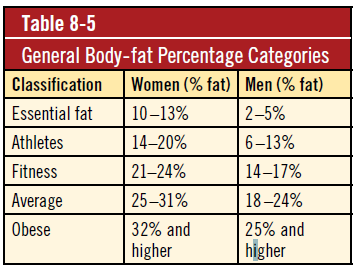
The final basic concept is that nobody can admire your muscle if you’re fat.9 Building muscle mass is step 1, but step 2 is cutting down to a low enough body fat to reveal that muscle. Overall appearance even at the same leanness can vary depending on individual skeletal structure, body fat distribution, and muscle mass- but nonetheless this is what fairly muscular men and women look like at various body fat percentages.


The American Council on Exercise (ACE) has the following classifications for body fat %.


Today’s beauty standards for ‘jacked’ tends to fall somewhere around 12% for men and 20% for women- just making it into the ‘athletes’ category. Most amateur fitness enthusiasts dramatically overestimate how lean they actually are. At 12% body fat for men, you should be seeing:
  • Defined abs visible when flexed, with a noticeable “V-cut” above the hips
  • Clear separation between muscle groups, such as rear delts to side delts
  • Increased vascularity with prominent and visible veins on the arms and shoulders
  • Sharper facial features, particularly noticeable around the jawline

And at 20% body fat for women:
  • Muscle definition pops when flexed, particularly in shoulders and quads
  • Flat stomach (but without sharply segmented abs)
  • Little excess fat, mostly in hips, thighs, and buttocks- with a smaller waist
  • Sharper facial features, noticeable around the jawline and cheekbones
Secondary Concepts (30% of Results)

If you’re following the above concepts perfectly, it literally does not matter what else you will do- you will get jacked. But if you really want to optimize your routine, here are a few other concepts to consider.

by Dylan, Chaotic Neutral |  Read more:
Image: uncredited

Socialism 101


via: Substack

Wednesday, November 5, 2025

Seth Armstrong, (American b.1983), Hillside, 2019
via:

Toshihiko Okuya, 210106
via:
[ed. First date.]

When Helicopter Parents Touch Down—At College

On an August Sunday 35 years ago, I moved into my freshman-year college dorm. My parents, who had traveled with me from Southern California to New England, took me to buy my first winter coat and snow boots, along with a houseplant that the store clerk described as “hard to kill,” and then we made our way to campus. My new roommate invited me to go shopping for Blu Tack so that we could hang posters in our room. I hugged my parents goodbye and headed out.

This was a fairly typical beginning to 1980s college life. Parents waved from the curb, cried in the parking lot, and maybe sent a care package two weeks later. I scheduled weekly calls with my parents for Sunday evenings, phoning from our room’s landline before heading to dinner. The college experience was marked by rupture, the sometimes messy yet necessary transition from dependence to independence.

These days, the break looks different. And in some cases it doesn’t look like a break at all.

A new term has entered the lexicon of college administrators: the trailing parent. These are the mothers and fathers who follow their children to campus—not just metaphorically, with daily texts about grades, outfits, or friendship drama, but physically. They rent an apartment in Atlanta, Austin, or Boston for four years, a pied-à-terre to facilitate frequent visits. They buy a condo in Washington, D.C., or Los Angeles so that their sophomore can have a place to crash—and so that they can drop by their kid’s place with soup when the sniffles arrive. Some parents trail their study-abroad kids across the world, moving for a semester to Florence or Barcelona to be close by “just in case.”

College administrators and other education colleagues in my circle have told me that although such stories used to be noteworthy, they’re now so common as to barely raise an eyebrow. One recalled that the mom of an Ole Miss first-year stayed in the family’s new campus-adjacent apartment last fall to provide logistical and moral support during sorority rush, lending her daughter a hand in fixing hair or nursing a hangover. A Colorado couple whose daughter had a rocky freshman year told the Associated Press that they bought an apartment in Portland, Oregon, and moved there to live with their daughter while she attended college.

The paradigmatic helicopter parent hovered from a distance and in most cases didn’t follow their child to college. The trailing parent touches down. Danielle Lico, who spent two decades working in student affairs at George Washington University, told me about a mom who several years ago rented a downtown-D.C. condo near campus to live with her daughter, whom she even walked to class. “We had to tell the mom that she wasn’t actually permitted to sit next to her kid in class,” Lico said. “She would sit outside of the classroom, and then they would walk back to the apartment together every day for four years.”

Not all college students love having their parents close by. The administrator of a study-abroad program told me about a mom who moved to France for proximity to her daughter. For weeks, the mother phoned the program’s office, asking to arrange a visit. The daughter refused and didn’t return her mother’s calls. Eventually, the mother gave up and flew home to the United States. Reddit is full of similar accounts: One commenter shared an anecdote about a kid who transferred colleges to get away from his parents, after they bought a home next to his campus.

Some colleges appear to be subtly trying to head off parental overengagement. Brie McCormick, who runs residential life at Northeastern University, told the campus publication Northeastern Global News that she encourages families not to let their kids visit home early in the school year. An overseas-study program on whose board I serve asks moms and dads not to visit until the winter holidays, explaining that children need to establish roots in their new country, uninterrupted. Jason Campbell-Foster, the dean of students at Boston University, wrote in a school publication that he urges parents to trust the scaffolding they’ve built, to “have confidence that you’ve chosen a place that cares for your child, that wants them to be successful, and that will give them the space and support that they need to learn from mistakes.” (...)

Every generation finds new ways to parent, and every generation frets about it. Maybe the trailing parent is simply the next logical step in an era when adolescence stretches longer. Or maybe it’s something more worrisome: an inability to let go, to allow children the gift of separation. An important step toward adulthood is the experience of stumbling—sometimes badly—and discovering that you can stand on your own. It might be hard for an undergraduate to develop independence if their parents are constantly available, helping them navigate every crisis. “We would certainly have parents call anytime we did sorority or fraternity rush and somebody didn’t get into the chapter they wanted,” Danielle Lico told me, and parents would hire “high-powered lawyers to get their kids out of trouble.” If a student is in a spat with a roommate or doesn’t get into a class they want to take, that’s a chance for them to learn to cope with conflict and setbacks—which they won’t get to do if they jump to asking for direction from home. (...)

An unspoken message from the trailing parent is: We don’t think you can handle college on your own. A 20-year-old who grows accustomed to dropping off laundry with a parent each weekend might conclude that they’re not yet ready for the world. But college is, among other things, an exercise in independence. As much as it’s important for students to learn Russian history and statistics, it’s even more important for them to learn to be adults.

by Russell Shaw, The Atlantic |  Read more:
Image: Jon Lovette / Getty
[ed. This was a significant issue in my last relationship before the term "helicopter parent" ever existed. I couldn't understand why my partner couldn't see how she was creating a sense of learned helplessness in her child, and an impediment to her fledging. When her daughter eventually left for college it only took a couple weeks before she started complaining about her roomate and rooming issues (like smoke outside her window aggravating her asthma) so my partner (the girl's mother) somehow convinced the administration to allow a freshman off-campus exemption (I don't know how she did it), then set her up in an apartment of her own, furnished it, and even bought her a cat. So there she sat, alone, totally divorced from college life. She lasted two sememesters. The girl, who's probably now in her mid-thirties, is still living at home with her mother as far as I know, and both are probably completely happy with that.]

Raymond Depardon, Glasgow, 1980
via:

Machines of Loving Grace

I think and talk a lot about the risks of powerful AI. The company I’m the CEO of, Anthropic, does a lot of research on how to reduce these risks. Because of this, people sometimes draw the conclusion that I’m a pessimist or “doomer” who thinks AI will be mostly bad or dangerous. I don’t think that at all. In fact, one of my main reasons for focusing on risks is that they’re the only thing standing between us and what I see as a fundamentally positive future. I think that most people are underestimating just how radical the upside of AI could be, just as I think most people are underestimating how bad the risks could be.

In this essay I try to sketch out what that upside might look like—what a world with powerful AI might look like if everything goes right. Of course no one can know the future with any certainty or precision, and the effects of powerful AI are likely to be even more unpredictable than past technological changes, so all of this is unavoidably going to consist of guesses. But I am aiming for at least educated and useful guesses, which capture the flavor of what will happen even if most details end up being wrong. I’m including lots of details mainly because I think a concrete vision does more to advance discussion than a highly hedged and abstract one. (...)

Basic assumptions and framework

To make this whole essay more precise and grounded, it’s helpful to specify clearly what we mean by powerful AI (i.e. the threshold at which the 5-10 year clock starts counting), as well as laying out a framework for thinking about the effects of such AI once it’s present.

What powerful AI (I dislike the term AGI) will look like, and when (or if) it will arrive, is a huge topic in itself. It’s one I’ve discussed publicly and could write a completely separate essay on (I probably will at some point). Obviously, many people are skeptical that powerful AI will be built soon and some are skeptical that it will ever be built at all. I think it could come as early as 2026, though there are also ways it could take much longer. But for the purposes of this essay, I’d like to put these issues aside, assume it will come reasonably soon, and focus on what happens in the 5-10 years after that. I also want to assume a definition of what such a system will look like, what its capabilities are and how it interacts, even though there is room for disagreement on this.

By powerful AI, I have in mind an AI model—likely similar to today’s LLM’s in form, though it might be based on a different architecture, might involve several interacting models, and might be trained differently—with the following properties:
  • In terms of pure intelligence, it is smarter than a Nobel Prize winner across most relevant fields – biology, programming, math, engineering, writing, etc. This means it can prove unsolved mathematical theorems, write extremely good novels, write difficult codebases from scratch, etc.
  • In addition to just being a “smart thing you talk to”, it has all the “interfaces” available to a human working virtually, including text, audio, video, mouse and keyboard control, and internet access. It can engage in any actions, communications, or remote operations enabled by this interface, including taking actions on the internet, taking or giving directions to humans, ordering materials, directing experiments, watching videos, making videos, and so on. It does all of these tasks with, again, a skill exceeding that of the most capable humans in the world.
  • It does not just passively answer questions; instead, it can be given tasks that take hours, days, or weeks to complete, and then goes off and does those tasks autonomously, in the way a smart employee would, asking for clarification as necessary.
  • It does not have a physical embodiment (other than living on a computer screen), but it can control existing physical tools, robots, or laboratory equipment through a computer; in theory it could even design robots or equipment for itself to use.
  • The resources used to train the model can be repurposed to run millions of instances of it (this matches projected cluster sizes by ~2027), and the model can absorb information and generate actions at roughly 10x-100x human speed5. It may however be limited by the response time of the physical world or of software it interacts with.
  • Each of these million copies can act independently on unrelated tasks, or if needed can all work together in the same way humans would collaborate, perhaps with different subpopulations fine-tuned to be especially good at particular tasks.
We could summarize this as a “country of geniuses in a datacenter”.

Clearly such an entity would be capable of solving very difficult problems, very fast, but it is not trivial to figure out how fast. Two “extreme” positions both seem false to me. First, you might think that the world would be instantly transformed on the scale of seconds or days (“the Singularity”), as superior intelligence builds on itself and solves every possible scientific, engineering, and operational task almost immediately. The problem with this is that there are real physical and practical limits, for example around building hardware or conducting biological experiments. Even a new country of geniuses would hit up against these limits. Intelligence may be very powerful, but it isn’t magic fairy dust.

Second, and conversely, you might believe that technological progress is saturated or rate-limited by real world data or by social factors, and that better-than-human intelligence will add very little. This seems equally implausible to me—I can think of hundreds of scientific or even social problems where a large group of really smart people would drastically speed up progress, especially if they aren’t limited to analysis and can make things happen in the real world (which our postulated country of geniuses can, including by directing or assisting teams of humans).

I think the truth is likely to be some messy admixture of these two extreme pictures, something that varies by task and field and is very subtle in its details. I believe we need new frameworks to think about these details in a productive way.

by Dario Amodei, Anthropic |  Read more:
Image: via:
[ed. See also: What's up with Anthropic predicting AGI by early 2027? (Redwood Research); and, Machines of Loving Grace: A Thought-provoking Essay by Dario Amodei, CEO of Anthropic (AI Spectator).]

The Trillion-Dollar Space Race

Check-in on NASA (1:28)

The Chinese tend to do what they say they’re going to do on the timeline that they say they’re going to do it. That said, they haven’t gone to the moon . . . It’s really hard.

Pethokoukis: As someone — and I’m speaking about myself — who wants to get America back to the moon as soon as possible, get cooking on getting humans to Mars for the first time, what should I make of what’s happening at NASA right now?

They don’t have a lander. I’m not sure the rocket itself is ready to go all the way, we’ll find out some more fairly soon with Artemis II. We have flux with leadership, maybe it’s going to not be an independent-like agency anymore, it’s going to join the Department of Transportation.

It all seems a little chaotic. I’m a little worried. Should I be?

Davenport: Yes, I think you should be. And I think a lot of the American public isn’t paying attention and they’re going to see the Artemis II mission, which you mentioned, and that’s that mission to send a crew of astronauts around the moon. It won’t land on the moon, but it’ll go around, and I think if that goes well, NASA’s going to take a victory leap. But as you correctly point out, that is a far cry from getting astronauts back on the lunar surface.

The lander isn’t ready. SpaceX, as acting NASA administrator Sean Duffy just said, is far behind, reversing himself from like a month earlier when he said no, they appear to be on track, but everybody knew that they were well behind because they’ve had 11 test flights, and they still haven’t made it to orbit with their Starship rocket.

The rocket itself that’s going to launch them into the vicinity of the moon, the SLS, launches about once every two years. It’s incredibly expensive, it’s not reusable, and there are problems within the agency itself. There are deep cuts to it. A lot of expertise is taking early retirements. It doesn’t have a full-time leader. It hasn’t had a full-time leader since Trump won the election. At the same time, they’re sort of beating the drum saying we’re going to beat the Chinese back to the lunar surface, but I think a lot of people are increasingly looking at that with some serious concern and doubt. 

For what it’s worth, when I looked at the betting markets, it gave the Chinese a two-to-one edge. It said that it was about a 65 percent chance they were going to get there first. Does that sound about right to you?

I’m not much of a betting man, but I do think there’s a very good chance. The Chinese tend to do what they say they’re going to do on the timeline that they say they’re going to do it. That said, they haven’t gone to the moon, they haven’t done this. It’s really hard. They’re much more secretive, if they have setbacks and delays, we don’t necessarily know about them. But they’ve shown over the last 10, 20 years how capable they are. They have a space station in low earth orbit. They’ve operated a rover on Mars. They’ve gone to the far side of the moon twice, which nobody has done, and brought back a sample return. They’ve shown the ability to keep people alive in space for extended periods of times on the space station.

The moon seems within their capabilities and they’re saying they’re going to do it by 2030, and they don’t have the nettlesome problem of democracy where you’ve got one party come in and changing the budget, changing the direction for NASA, changing leadership. They’ve just set the moon — and, by the way, the south pole of the moon, which is where we want to go as well — as the destination and have been beating a path toward that for several years now.

Losing the Space Race (5:49)

. . . the American flags that the Apollo astronauts planted, they’re basically no longer there anymore. . . There are, however, two Chinese flags on the moon

Have you thought about what it will look like the day after, in this country, if China gets to the moon first and we have not returned there yet?

Actually, that’s a scenario I kind of paint out. I’ve got this new book called Rocket Dreams and we talk about the geopolitical tensions in there. Not to give too much of a spoiler, but NASA has said that the first person to return to the moon, for the US, is going to be a woman. And there’s a lot of people thinking, who could that be? It could be Jessica Meir, who is a mother and posted a picture of herself pregnant and saying, “This is what an astronaut looks like.” But it could very well be someone like Wang Yaping, who’s also a mother, and she came back from one of her stays on the International Space Station and had a message for her daughter that said, “I come back bringing all the stars for you.” So I think that I could see China doing it and sending a woman, and that moment where that would be a huge coup for them, and that would obviously be symbolic.

But when you’re talking about space as a tool of soft power and diplomacy, I think it would attract a lot of other nations to their side who are sort of waiting on the sidelines or who frankly aren’t on the sidelines, who have signed on to go to the United States, but are going to say, “Well, they’re there and you’re not, so that’s who we’re going to go with.”

I think about the wonderful alt-history show For All Mankind, which begins with the Soviets beating the US to the moon, and instead of Neil Armstrong giving the “one small step for man,” basically the Russian cosmonaut gives, “Its one small step for Marxism-Leninism,” and it was a bummer. And I really imagine that day, if China beats us, it is going to be not just, “Oh, I guess now we have to share the moon with someone else,” but it’s going to cause some national soul searching.

And there are clues to this, and actually I detail these two anecdotes in the book, that all of the flags, the American flags that the Apollo astronauts planted, they’re basically no longer there anymore. We know from Buzz Aldrin‘s memoir that the flag that he and Neil Armstrong planted in the lunar soil in 1969, Buzz said that he saw it get knocked over by the thrust in the exhaust of the module lifting off from the lunar surface. Even if that hadn’t happened, just the radiation environment would’ve bleached the flag white, as scientists believe it has to all the other flags that are on there. So there are essentially really no trace of the Apollo flags.

There are, however, two Chinese flags on the moon, and the first one, which was planted a couple of years ago, or unveiled a couple of years ago, was made not of cloth, but their scientists and engineers spent a year building a composite material flag designed specifically to withstand the harsh environment of the moon. When they went back last summer for their farside sample return mission, they built a flag, — and this is pretty amazing — out of basalt, like volcanic rock, which you find on Earth. And they use basalt from earth, but of course basalt is common on the moon. They were able to take the rock, turn it into lava, extract threads from the lava and weave this flag, which is now near the south pole of the moon. The significance of that is they are showing that they can use the resources of the moon, the basalt, to build flags. It’s called ISR: in situ resource utilization. So to me, nothing symbolizes their intentions more than that. (...)

SpaceX and the Falcon 9, the reusable rocket, has dropped launches down. It used to be if you got 10, 12 orbital rocket launches in a year, that was a good year. SpaceX is launching about every 48 hours now. It’s unprecedented what they’ve done. You’re seeing a lot of new players — Blue Origin, Rocket Lab, others — driving down the cost of launch.

That said, the main anchor tenant customer, the force driving all of this is still the government, it’s still NASA, it’s still the Pentagon. There is not a self-sustaining space economy that exists in addition or above and beyond the government. You’re starting to see bits of that, but really it’s the government that’s driving it.

by James Pethokoukis and Christian Davenport, Faster, Please | Read more:
Image: uncredited
[ed. Weaving lava on the moon?! Launches every 48 hrs?!]