Saturday, December 23, 2017

Smartphones Have an Unexpected New Rival

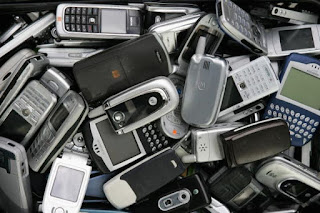
Last week, an Indian government official announced that iPhones will start rolling off an assembly line in Bangalore by the end of April, targeted at local customers. It's a big moment for Apple Inc., which is counting on India's emerging middle class to make up for slowing sales in other markets. But don't bet on the iPhone conquering India, or any other emerging market, just yet.

That's because smartphones of all kinds are facing stiff competition from an unlikely new challenger: feature phones. With simple handsets and small screens intended mostly for calls and text messages -- similar to the Nokia or Motorola you probably owned years ago -- a new generation of feature phones is suddenly looking like a threat to Apple and its rivals.

For a technology long ago left for dead, feature phones have lately made some impressive gains. After years of almost continuous decline, global shipments have grown for two consecutive quarters. Growth in emerging markets has been especially impressive: In Africa, feature-phone shipments surged 32 percent year-over-year in the second quarter of 2016, compared to a decline of 5.2 percent for smartphones. Expect that trend to continue, for a few reasons.

One obvious advantage is price. At the end of 2016, the average global price of a smartphone was $256, compared to $19.30 for a feature phone. In emerging markets, where even educated urbanites typically earn less than $10,000 a year (in India, they average $5,385), that doesn't leave much in the way of consumer choice. But even if a buyer has $256 to spare, the booming secondhand market offers far better options than a smartphone. In Ghana, where I recently spent a few weeks, $256 will buy a used Pentium III desktop computer, a flat-screen monitor, a satellite dish and a decoder box to pirate satellite television broadcasts.

Another factor is battery life. In many emerging markets, where electricity service can be intermittent, smartphones that have to be recharged each day can't compete against feature phones that can now go for weeks on a single charge. In West Africa, it's the rare smartphone owner who doesn't also carry a feature phone as a hedge against missing calls and messages due to battery depletion. Equally important, most emerging-market customers prepay for voice and data, making smartphones that passively eat up bandwidth a major inconvenience.

by Adam Minter, Bloomberg |  Read more:
Image: Chris Jackson/Getty Images

Can These Seabirds Adapt Fast Enough to Survive a Melting Arctic?

On Cooper Island, there aren’t many rules. But one rule that is wordlessly respected is you never look directly at South Beach, because South Beach is the designated bathroom, sited on a gravel sandbar so flat you can take a headcount of all inhabitants from a mile away, no lenses required.

Another rule is you shouldn’t go out alone, but if you do, you should take a walkie-talkie and a shotgun, because you never know when a polar bear might show up, and if one does, you don’t want the polar bear between you and the cabin, the only structure on the island that might sustain a clawed assault.

Not that I know how to fire a shotgun, much less how to disable a starving bear keen on making me its meal. But rules are rules, so I carry one anyway.

When camping on an island a short boat ride from the northernmost point of Alaska, it’s difficult not to fixate on the bears, one of the few remaining animals that make humans prey. When bears do visit, though, they’re still not the most charismatic megafauna on Cooper Island. That distinction goes to George Divoky, a septuagenarian who’s spent nearly 11 cumulative years here. By the time I reach Cooper Island on August 7, Divoky has been here for two months. Between his mop of gray hair and unkempt beard—there are no mirrors in the South Beach bathroom—shine bright darting eyes that don’t miss much. He wears what you might expect of an Arctic field ornithologist: rain pants and a parka flecked with splatters of bird poop and undergirded with wool-sweater strata.

But few remember Divoky for his appearance; it’s the words that pour from his mouth like water from a burst dam that define him. Any object in his periphery can inspire a story, told in fractal spurts and with oppressive detail, and if he’s interrupted—by a question, a task, another thought—he’ll return to his story minutes later, as if the world paused in wait of his next word.

His lingual floodwaters can be disorienting and, to some, off-putting. A lifelong outsider in self-imposed exile, Divoky commands a conversation and is prone to unwittingly drowning out its more subdued participants with his contrarian convictions. But it’s hard to blame him, for you, the conversant, are the odd one here on Cooper Island, a mere visitor in his world. For the past 43 years, he’s spent every summer here, usually in a tent, and usually by himself.

Even so, the island’s other seasonal inhabitants—the colony of Black Guillemots that nest here every summer—hold a greater claim to Cooper than Divoky. They are the reason he’s here, and their progenitors were here first. It was July 6, 1972, when a Coast Guard icebreaker dropped him off for a seabird survey, that he discovered 10 pairs of the handsome seabirds nesting under scattered debris—ammo boxes, floorboards, and innumerable wood planks—abandoned by the U.S. Navy after the Korean War. His find was a northern range expansion for the species in Alaska.

Like a kid flipping rocks to find salamanders, a 26-year-old Divoky flipped boards and boxes to search for eggs and create new nesting crevices. By the end of the summer, his nest count for the island was up to 18. When he returned to Washington, D.C., for a fellowship at the Smithsonian, he couldn’t stop thinking about Cooper Island. He was struck by the scientific potential of its accessible nest sites and seduced by the opportunity to indulge himself in solitary nature. He soon relocated to Fairbanks, Alaska, and by 1975 got his hands on enough funding to return to Cooper Island for an entire summer. He hasn’t missed one since, serially sacrificing employers and girlfriends who demanded he choose between them and the guillemots.

“You have to be careful what you fall in love with in your twenties,” he says, unprompted, one evening. “I fell in love with this island.”

Divoky returned each summer to watch the colony mature, collecting meticulous data—growth, breeding, feeding, kinship—on every nesting pair and chick, and banding every adult and fledgling. The colony thrived, and grew to 200 breeding pairs by 1989. Since then, it’s taken a turn for the worse, slowly at first and then into free-fall, and Divoky now cares for an island and its birds in decline. “I used to see chicks hatch, and I’d see them grow, and they had an 85 to 90 percent chance of flying away,” he says. This year 85 pairs bred on the island, fledging just 45 chicks out of 120 hatched—not enough to maintain the colony’s population.

Nearly all the causes for this decline—changes in food, competitors, and predators—track the warmer air, warmer ocean water, and retreat of sea ice near Cooper Island, all symptoms of global climate change caused by carbon dioxide. These molecules build up in the atmosphere and trap heat, like the layers of blankets required to sleep through the night on a sandbar on the Beaufort Sea. Somewhat ironically, if it weren’t for climate change, guillemots may never have nested on Cooper in the first place: Until the late 1960s, snow blanketed the ground for too much of the summer.

“During my research lifetime, Cooper Island will no longer be able to support this species,” Divoky says. “It went from too cold to too warm. It should have taken centuries, not decades.”

And yet he keeps coming back to watch his beloved island decline, collecting as much data as he can along the way. Through his ruthless devotion, Divoky has created one of the few ecological studies with enough long-term, rigorously collected data to illuminate how climate change will force populations through an evolutionary bottleneck unlike any seen since the last ice age. And the only reason we have even this glimpse is because of Divoky, a rare bird indeed. (...)

His study also has particular power because of dumb luck: It happens to cover a period of rapid atmospheric warming. Most scientists studying the biological impacts of climate change can’t define “normal” for a given species or ecosystem, and now it’s too late; the effects are manifest. But Divoky spent his first 28 years following individual birds, individual chicks, their partners, their offspring, through their entire lives—surely enough data to describe a normal, functioning Mandt’s Black Guillemot colony. “At one point, he had the whole story told in his mind,” says Stan Senner, vice president of bird conservation for Audubon’s Pacific Flyway and Divoky’s long-time friend. “The birds are there, the ice is near shore, the cod are associated with the ice, the birds don’t have to go very far, they get the cod. Life is good.”

Then everything changed. For the first 28 years of Divoky’s study, chicks ate cod almost exclusively. But in 2003 parents began serving fourhorn sculpin, an ugly fish with a lumpy head and spiny fins. Divoky would find chicks choked dead with enormous sculpin lodged in their throats. Parents eventually learned to catch smaller sculpin, but chicks still suffered. “It takes a long time to break down all that cartilaginous mass” in sculpin fins, Divoky says. Just one fish is enough to fill a chick’s stomach. “It’s like, ‘I can’t get anything else down, I’ve still got the last sculpin head in my stomach.’"

The ensuing hunger makes siblings turn aggressive: In many nests the larger chick bullies the smaller one, sometimes to starvation. As we examine one nest, Divoky points to matted, thin feathers on the back of one beta’s neck—physical evidence of aggression. Under the sculpin regime, chicks grow more slowly and fledge at less than 300 grams. Nearly one quarter starve in their nests.

It’s an ugly scene, but the parents are doing their best as they face a novel Arctic landscape. The sea ice that previously drifted and persisted near the island through the summer is now melted and effectively gone—sometimes hundreds of miles away—by August or even July. Arctic cod can’t survive in warm water south of the ice, and guillemot parents can’t fly fast enough to make additional trips to the edge every day. So they’ve decided that more sculpin, for all its faults, is a better bet than fewer cod. “This is a pivotal time,” Divoky says. “You can see the size of the chicks now. They need all the energy they can get. And the primary prey is gone.” (...)

If seabirds are barometers of ocean health, then Arctic birds are screaming that there’s a major shift in the system, a shift so extreme the barometers themselves are now changing. Make no mistake: These seabirds, and other species across the Arctic, are entering a period of rapid natural selection that will lead to either their extinction or evolution.

by Hannah Waters, Audubon |  Read more:
Image: Peter Mather
[ed. I met George back in the early 80s when we were both involved with OCSEAP, a massive multi-disciplinary research effort designed to provide baseline environmental information for making informed oil and gas decisions in Alaska (studies which no one seems to remember nowadays, even currrent scientists working in Alaska). He contributed the research, I took the data and developed state policy on federal lease sales, which came to encompass the entire Alaskan coastline and all offshore federal waters (an accelerated process under President Reagan and his then Secretary of the Interior, James Watt). Stan Senner was a good friend and colleague as well. Nice to see those guys still at it. I wish I were still there sometimes.]

Collings Guitars


[ed. Sad I am today. I just learned that Bill Collings died last July and somehow I missed it. I've owned several Collings guitars over the years and have played probably a couple hundred others. Every one was fantastic. A few were other-worldly.  Rest in peace, Bill... ya did good. Bill Collings: 1948–2017]

Bussed Out

Quinn Raber arrived at a San Francisco bus station lugging a canvas bag containing all of his belongings: jeans, socks, underwear, pajamas. It was 1pm on a typically overcast day in August.

An unassuming 27-year-old, Raber seemed worn down: his skin was sun-reddened, he was unshaven, and a hat was pulled over his ruffled blond hair. After showing the driver a one-way ticket purchased for him by the city of San Francisco, he climbed the steps of the Greyhound bus.

He traveled 2,275 miles over three days to reach his destination: Indianapolis.

Cities have been offering homeless people free bus tickets to relocate elsewhere for at least three decades. In recent years, homeless relocation programs have become more common, sprouting up in new cities across the country and costing the public millions of dollars.

But until now there has never been a systematic, nationwide assessment of the consequences. Where are these people being moved to? What impact are these programs having on the cities that send and the cities that receive them? And what happens to these homeless people after they reach their destination?

In an 18-month investigation, the Guardian has conducted the first detailed analysis of America’s homeless relocation programs, compiling a database of around 34,240 journeys and analyzing their effect on cities and people.

A count earlier this year found half a million homeless people on one night in America. The problem is most severe in the west, where rates of homelessness are skyrocketing in a number of major cities, and where states like California, Nevada, Oregon and Washington have some of the highest rates of per capita homelessness.

These are also the states where homeless relocation programs are concentrated. Using public record laws, the Guardian obtained data from 16 cities and counties that give homeless people free bus tickets to live elsewhere.

The data from these cities has been compiled to build the first comprehensive picture of America’s homeless relocation programs. Over the past six years, the period for which our data is most complete, we are able to track where more than 20,000 homeless people have been sent to and from within the mainland US. (...)

Some of these journeys provide a route out of homelessness, and many recipients of free tickets said they are grateful for the opportunity for a fresh start. Returning to places they previously lived, many rediscover old support networks, finding a safe place to sleep, caring friends or family, and the stepping stones that lead, eventually, to their own home.

Nan Roman, head of the National Alliance to End Homelessness, said bus programs can be a “positive”, although not a panacea, in part because most people are homeless in places they are from.

That is far from the whole story, however.

While the stated goal of San Francisco’s Homeward Bound and similar programs is helping people, the schemes also serve the interests of cities, which view free bus tickets as a cheap and effective way of cutting their homeless populations.

People are routinely sent thousands of miles away after only a cursory check by authorities to establish they have a suitable place to stay once they get there. Some said they feel pressured into taking tickets, and others described ending up on the streets within weeks of their arrival.

Jeff Weinberger, co-founder of the Florida Homelessness Action Coalition, a not-for-profit that operates in a state with four bus programs, said the schemes are a “smoke-and-mirrors ruse tantamount to shifting around the deck chairs on the Titanic rather than reducing homelessness”.

“Once they get you out of their city, they really don’t care what happens to you.”

by Outside in America Team, The Guardian | Read more:
Image: The Guardian

Friday, December 22, 2017


Arteluce, Wall Applique (Attributed), Circa 1965.
via:

Why Bitcoin’s $10,000 Price Doesn’t Reflect Its True Value

Bitcoin finally hits $10,000! — The Economist, Nov. 28th, 2017

Bitcoin surpasses the $10,000 milestone! — CNBC, Nov. 28th, 2017

BITCOIN SOARS ABOVE $11,000! — The Guardian, Nov. 29th, 2017

News outlets haven’t even had 24 hours to let the “10K” news simmer and it already climbed to $11,500. By the time they published the “11K” piece, it already dropped back to $9,000. Then, as soon as they entered the last word on their “Bitcoin is crashing!” article, it’s back at $11,000 per BTC.

Amazing! But this is not unprecedented.

We’ve seen this before, back in 2013, a media frenzy when Bitcoin was approaching $1,000 that fueled that year’s bubble. In January of that year, one bitcoin was trading at around $15.00, rocketed to $266 by April, and then crashed back to $50 really quick. By November, it had already broken $1,000, peaking at $1,242 on Mt.Gox. That’s an almost 100-fold increase in 11 months, an order of magnitude larger than this year’s (2017) 10-fold run up.

Funny thing is, the charts then are almost identical to the ones today, and news articles look exactly the same. Just add one zero.

The media gobbles this up because people are fascinated by this stuff. Stories of people finding 5000 BTC in an old hard drive that they bought for $25 in 2009, a man throwing away 7500 BTC by accident and scouring a landfill to try and find it, a man buying pizzas for 10,000 BTC — It’s the sizzle to the steak and it sells.

The Other Side

People love it when things go up, but what goes up must come down, and Bitcoin is not immune to this. History shows three major “Bitcoin Bubbles”, and a LOT of volatility in between. Swings of 20–30% in one day are not uncommon in the Bitcoin world, but to most people this can be quite terrifying. For example, in the same day when Bitcoin broke $11,500 a couple of days ago, Bitcoin crashed back to $9,600, and lost 20% of its value overnight.

It isn’t just that, there are more. There’s that time it crashed from $260 to $50. Bitcoin was declared dead. (...)

The Bitcoin Hype-Cycle

The peculiar thing about Bitcoin’s price is that it has these cycles. First, a slow and steady accumulation by people who understand the tech and buy it when it is ignored as worthless. This is usually after the price had just “crashed”. Then it starts to reach a point where the media picks up its growth. And then, a parabolic buying frenzy where even your grandma starts buying Bitcoins. Finally, after reaching a dramatic peak, it finally pops and drops, leaving only those who believe in the tech and support it even after a crash. Back to square one,with a bigger base price and a larger user base. Rinse, repeat.

The Obsession with the Price While Overlooking the Value

Price is not equal to value. The price of water is cheap, but it is pretty valuable. We will die without it! If water suddenly became scarce, its market price would skyrocket. In a zombie/nuclear holocaust apocalypse scenario, your gold would bet worth much less than water, guaranteed. Today, simple bottled water is, in a lot of places, more expensive than gasoline per liter, when two decades ago the idea of buying water at all was considered crazy. The market decides on the price, but the value of something lies outside its price.

In the same way, the value of Bitcoin has nothing to do with its exchange rate.

When Bitcoin was worth exactly zero dollars, it already essentially solved the previously unsolvable 30-year old computer science problem called the Byzantine General’s problem — how to reach agreement with other agents over an untrusted network of communication. That value proposition was there from day zero, even if the price of one Bitcoin was zero.

“A lot of people automatically dismiss e-currency as a lost cause because of all the companies that failed since the 1990s. I hope it’s obvious it was only the centrally controlled nature of those systems that doomed them. I think this is the first time we’re trying a decentralized, non-trust-based system.” Satoshi Nakamoto, 2009

Because of Bitcoin, we don’t need middlemen to transact — hell, we eliminated the need for trust. We can transfer value over the internet without asking permission from a gatekeeper. The internet did this for the transfer of information, whereas before, we had to go to the post office to send mail, through a telephone operator to call someone overseas, or a publisher to let the world read about our stories and ideas. Bitcoin is doing this today, letting us store value like never before and transfer value from one owner to another without permission, globally, and instantly.

Just like how the value of your paper money is not in the paper itself but in the government or authority that issues this paper, the value of Bitcoin is not in the tokens used to exchange with each other, but in the network that allows this exchange to happen.

The price of Bitcoin is the least interesting thing about it. The value of Bitcoin is in its ability to do what it set out to do, and do it best. When you truly understand the technology, you’ll realize it’s true value.

by Miguel Cuneta, Medium |  Read more:

Tokyo Ska Paradise Orchestra


[ed. For some inscrutable reason (money, probably) you have to click over to YouTube's site to view this video (or use this link). You won't be disappointed.]

A Dissent from Judis’ Dissent

Let me gently dissent from John Judis’s argument that we’re missing the impact the GOP tax bill will have over public opinion over the next year.

First, points of agreement.

Deficits, debt and inequality in the abstract have seldom been major political drivers of opinion about big legislation. The 2001 Bush tax cut is a good example. It was wildly weighted toward benefits to the wealthiest Americans. That was bad policy, set the country up for fiscal problems later in the decade and deepened the trend to greater income and wealth inequality. But it also did give small but still meaningful tax relief to ordinary families. It wasn’t terribly popular but it almost wasn’t terribly unpopular. That made it hard to mount any significant or effective opposition to it. By and large voters, not surprisingly, are much more focused on what they are getting than whether someone else is getting something more. The fact that some super wealthy person was getting a lot more than you were was a distant and not terribly compelling reality or lever of opposition.

It is also true that wealth and wage inequality, articulated in the ways progressives usually discuss it, doesn’t have a huge or immediate political traction, even though it is a hugely influential subtext and driver to our entire politics.

John argues that just because the bill is terrible big picture doesn’t mean its near and medium term politics will be bad for Republicans. Democrats are ignoring the fact that it does provide significant, if short-term tax relief for many middle income earners, specifically through expanding the child tax credit and nearly doubling the standard deduction. Yes, those are temporary and they disappear in 2025 or whenever. But you’ve got to be pretty deep into politics to think in those terms. If you are, you likely have settled partisan opinions already.

But if these are all the case, why is the bill at present so deeply unpopular?

Remember, it’s one thing for a big tax increase to be unpopular. Even when it’s good policy very few people want to pay higher taxes. The same applies when you’re doing something like Obamacare which upsets lots of apple carts, even if many people are helped. Big tax cuts should be popular, even if they’re bad policy. But this bill is far more unpopular than any major tax cut bill in the last half century. Indeed, it is more unpopular than the last generation’s two major tax hike bills. That’s kind of amazing. It’s substantially less popular than Obamacare was just after it was passed. Perhaps that’s a funny analogy for Democrats to make. But remember, the passage of Obamacare preceded a massive wave election in 2010.

So again, why is this bill so deeply unpopular?

I think there are essentially three reasons.

One is partisan affiliation and identification. Donald Trump and the GOP are behind it. And they’re both deeply unpopular. So voters, not unreasonably, apply that negativity to a bill they favor.

The second factor, somewhat more substantively, is that Democrats have been successful at painting the bill as essentially a giveaway to the wealthiest Americans. This isn’t just a paint job. That’s what it is. They have been helped by an endless stream of news about the details of what the plan does.

We also need to take account of the last 10 months in which the Trump GOP tried repeatedly to take health care coverage from 10s of millions of Americans. They went at it so hard they pretty much gave up arguing that this would not be the consequence of what they were doing. They just wanted to do it. In doing so, they actually made Obamacare a lot more popular. Trump and Republicans have spent almost a year trying to take benefits from ordinary people to give money back to people who are either very wealthy or extremely wealthy. This reality (combined with other confirming events over the last year) has become deeply embedded in the public psyche. And it is the prism through which voters are viewing this bill. That is key.

There’s a more specific factor that has taken hold in part because of the Obamacare repeal fights, in part because of Trump himself and the plutocrats he’s surrounded himself with. The point I made about the Bush tax cuts above is that people care how things affect them. If I get some tax relief that’s my focus not the fact that someone richer did too, even if maybe they got more than they really needed. But polling shows that a majority of Americans think the big payoffs to the wealthy in this bill are coming at their expense. That is a significant difference from the Bush 2001 tax cut bill and the Reagan one twenty years earlier. Whether that is because of the substance of the bill itself or the Trump prism through which voters are viewing it is uncertain. But it’s a major difference, a highly significant one and not one I expect to see change.

In other words, set aside that it is largely a major giveaway to the wealthiest Americans. The last year has cued the public up to assume that’s what it does.

The third factor has to do with specific ways this law actually hurts significant segments of the population which may not be the most needy but are politically vocal. Start with the end of the SALT deductions, the severe restriction on your ability to deduct what you pay in state and local taxes. This is a huge attack on relatively high tax blue states which will dramatically increase the already severe disparity in how much money blue states send to the federal government versus what they get back. This may not be terrible for poor and lower middle class taxpayers. But in states like California, New York, New Jersey, Pennsylvania and other comparable states it will actually hit upper middle class and wealthy tax payers pretty hard. And those are people who tend to make their voices heard politically. Those changes will also affect more affluent homeowners.

Beyond this there are a number of changes down in the bill that hit various groups of tax payers because the bill writers needed to get the money for those corporate tax breaks. Those stories will start coming out in the coming months too.

Of course, socking it to blue states is a feature of the bill rather than a bug. But there’s a problem. There are a lot of Republican Reps in blue states. 14 in California. 9 in New York. 5 in New Jersey. 12 in Pennsylvania. In what looks to be a very challenging midterm election already, supporting that big a tax hike on your own constituents will be a tough vote to explain. In special elections to date, aside from differential turnout, the biggest area of Republican erosion has been in affluent and educated suburbs which lean Republican. In a lot of blue states those are just the places likely to be hit by these changes. A number of Reps voted against the bill for just that reason. But history suggests voters punish the party in power in these cases regardless of how their own Rep voted.

Now, the reply to all this is that whatever the bill’s unpopularity now, starting next year people are going to start seeing more money in their paychecks. They’ll see that it really was a tax cut for them too and their opinions will change.

Is that probable?

Not really.

We have a recent example, the legislation Obama and the Democrats passed in the midst of the financial crisis included temporary middle income tax cuts larger than the current cuts in this bill. Politically speaking it made no difference at all. Indeed, most people didn’t even realize they’d gotten a tax cut.

Some of that may have been that the Democrats did a poor job selling the bill. I do think that’s part of the equation. The bigger factor, however, is that the overriding narrative of the Democrats first two years of complete control of the federal government was that they’d raised some taxes and spent a lot of money on new programs and stimulus relief. The tax cuts the great majority of people got just didn’t change that equation, certainly not for people already inclined to see what the Democrats were doing in negative terms. What all of that comes down to is that there’s little reason to think that small but non-trivial changes in the amount of take home pay will make an unpopular bill popular. We have evidence for this. It’s recent and I think pretty on-point.

What does tend to drive election opinion is the broader economy. There’s a lot of historical support for that. But that raises another problem, or really a mystery. The US economy has actually been doing quite well this year. Yet President Trump remains historically unpopular and big majorities of voters want Democrats to take over Congress. Maybe that will change next year. But it’s not clear why. Trump appears to be so divisive and so bad a President that the normal tendency to support incumbents during periods of good economic news does not appear to be working. Again, I would suggest this is a reason to question whether small changes in take home pay will change the public verdict on this bill.

The tax cut bill is unpopular first because its authors are very unpopular. It is also unpopular because of the disorderly and chaotic process in which it was constructed in which it was quite clear that the overriding goal was tax cuts for the wealthiest Americans. A lot of the maneuvering was to find ways not to raise taxes too much on ordinary people so that it became impossible to pass. The overriding goal, however, was clear. So it is both the popular mood, the unpopularity of the President and the substance of the bill itself that is driving its low numbers. Recent evidence suggests that the relatively marginal short term benefits to middle income earners are not ones that will change anyone’s opinions. They’ll mainly confirm opinions of people already committed to supporting the President. Republicans are heading into a midterm election year with a historically unpopular president, coupled with polling which suggests wave-like numbers of people want the Democrats to take over Congress. Republicans have added to this by passing an extremely unpopular bill. Maybe it will start to get more popular and that will improve the position of congressional Republicans. But contrary to John’s claims about Democratic wish-fulfillment, this strikes me as magical thinking.

We shall see.

by Josh Marshall, Talking Points Memo |  Read more:

Thursday, December 21, 2017


photo: markk

photo: markk

Chick Corea, Steve Gadd


[ed. The best jazz pianist and drummer alive. Check out the original version of this classic. See also: Al Jarreau's amazing vocal interpretation.]

Congrats to the Top 1%, Your Struggle Has Not Been in Vain

Congrats to the Top 1% who have waited so long, tirelessly and unendurably funneling millions of dollars into Republican Super PACs, to make this day a reality. Your struggle has not been in vain, my friends. You have achieved your dreams through hard work, lobbyists, Super PACs, donations, threats, and lining Republican pockets.

Kudos as well to all my friends, who have really been corporations this whole time. You knew that the money you saved in untaxable off-shore accounts was not enough. You knew there was more you could have. You knew you deserved to pay less than regular people while still not paying a livable wage to many of your employees. Walmart, we salute you. Amazon, you beautiful bastard, you did it!

But most of all, congrats to those fearless #MAGA lovers. You showed up to rallies, you purchased overly expensive red caps, you cried and cheered and hated immigrants, all for achieving your ultimate goal — tax cuts for rich people.

The road has not been easy. You have met struggle, you have faced hardship, but you persevered. Through moral reasoning, ignoring blatant sexual assault, mocking handicapped people, and destroying libtards, your friends no longer need to worry about having their private jet usage taxed. You did that and you should be damned proud. You knew the 1% needed 83% of the tax cuts and you weren’t afraid to get it done.

by Dayna McTavish, McSweeny's |  Read more:
Image: AP/REX/Shutterstock

Estonia, the Digital Republic


Estonia, The Digital Republic
Its government is virtual, borderless, blockchained, and secure.
Image: Eiko Ojala

Facebook Job Ads Raise Concerns About Age Discrimination

A few weeks ago, Verizon placed an ad on Facebook to recruit applicants for a unit focused on financial planning and analysis. The ad showed a smiling, millennial-aged woman seated at a computer and promised that new hires could look forward to a rewarding career in which they would be “more than just a number.”

Some relevant numbers were not immediately evident. The promotion was set to run on the Facebook feeds of users 25 to 36 years old who lived in the nation’s capital, or had recently visited there, and had demonstrated an interest in finance. For a vast majority of the hundreds of millions of people who check Facebook every day, the ad did not exist.

Verizon is among dozens of the nation’s leading employers — including Amazon, Goldman Sachs, Target and Facebook itself — that placed recruitment ads limited to particular age groups, an investigation by ProPublica and The New York Times has found.

The ability of advertisers to deliver their message to the precise audience most likely to respond is the cornerstone of Facebook’s business model. But using the system to expose job opportunities only to certain age groups has raised concerns about fairness to older workers.

Several experts questioned whether the practice is in keeping with the federal Age Discrimination in Employment Act of 1967, which prohibits bias against people 40 or older in hiring or employment. Many jurisdictions make it unlawful to “aid” or “abet” age discrimination, a provision that could apply to companies like Facebook that distribute job ads.

“It’s blatantly unlawful,” said Debra Katz, a Washington employment lawyer who represents victims of discrimination.

Facebook defended the practice. “Used responsibly, age-based targeting for employment purposes is an accepted industry practice and for good reason: it helps employers recruit and people of all ages find work,” said Rob Goldman, a Facebook vice president.

The revelations come at a time when the unregulated power of the tech companies is under increased scrutiny, and Congress is weighing whether to limit the immunity that it granted to tech companies in 1996 for third-party content on their platforms.

Facebook has argued in court filings that the law, the Communications Decency Act, makes it immune from liability for discriminatory ads.

Although Facebook is a relatively new entrant into the recruiting arena, it is rapidly gaining popularity with employers. Earlier this year, the social network launched a section of its site devoted to job ads. Facebook allows advertisers to select their audience, and then Facebook finds the chosen users with the extensive data it collects about its members.

The use of age targets emerged in a review of data originally compiled by ProPublica readers for a project about political ad placement on Facebook. Many of the ads include a disclosure by Facebook about why the user is seeing the ad, which can be anything from their age to their affinity for folk music.

The precision of Facebook’s ad delivery has helped it dominate an industry once in the hands of print and broadcast outlets. The system, called microtargeting, allows advertisers to reach essentially whomever they prefer, including the people their analysis suggests are the most plausible hires or consumers, lowering the costs and vastly increasing efficiency. (...)

Other tech companies also offer employers opportunities to discriminate by age. ProPublica bought job ads on Google and LinkedIn that excluded audiences older than 40 — and the ads were instantly approved. Google said it does not prevent advertisers from displaying ads based on the user’s age. After being contacted by ProPublica, LinkedIn changed its system to prevent such targeting in employment ads.

The practice has begun to attract legal challenges. On Wednesday, a class-action complaint alleging age discrimination was filed in federal court in San Francisco on behalf of the Communications Workers of America and its members — as well as all Facebook users 40 or older who may have been denied the chance to learn about job openings. The plaintiffs’ lawyers said the complaint was based on ads for dozens of companies that they had discovered on Facebook. (...)

‘They Know I’m Dead’

Age discrimination on digital platforms is something that many workers suspect is happening to them, but that is often difficult to prove.

Mark Edelstein, a fitfully employed social-media marketing strategist who is 58 and legally blind, doesn’t pretend to know what he doesn’t know, but he has his suspicions.

Mr. Edelstein, who lives in St. Louis, says he never had serious trouble finding a job until he turned 50. “Once you reach your 50s, you may as well be dead,” he said. “I’ve gone into interviews, with my head of gray hair and my receding hairline, and they know I’m dead.”

Mr. Edelstein spends most of his days scouring sites like LinkedIn and Indeed and pitching hiring managers with personalized appeals. When he scrolled through his Facebook ads on a Wednesday in December, he saw a variety of ads reflecting his interest in social media marketing: ads for the marketing software HubSpot (“15 free infographic templates!”) and TripIt, which he used to book a trip to visit his mother in Florida.

What he didn’t see was a single ad for a job in his profession, including one identified by ProPublica that was being shown to younger users: a posting for a social media director job at HubSpot. The company asked that the ad be shown to people aged 27 to 40 who live or were recently living in the United States.

“Hypothetically, had I seen a job for a social media director at HubSpot, even if it involved relocation, I ABSOLUTELY would have applied for it,” Mr. Edelstein said by email when told about the ad.

A HubSpot spokeswoman, Ellie Botelho, said that the job was posted on many sites, including LinkedIn, The Ladders and Built in Boston, and was open to anyone meeting the qualifications regardless of age or any other demographic characteristic.

She added that “the use of the targeted age-range selection on the Facebook ad was frankly a mistake on our part given our lack of experience using that platform for job postings and not a feature we will use again.”

For his part, Mr. Edelstein says he understands why marketers wouldn’t want to target ads at him: “It doesn’t surprise me a bit. Why would they want a 58-year-old white guy who’s disabled?”

by Julia Angwin, Noam Scheiber, and Ariana Tobin, NY Times |  Read more:
Image: Whitney Curtis
[ed. I've often wondered how companies (especially tech companies) circumvent the Age Discrimination Act (other than slave-labor wages and hours that only a desperate young person would accept). This article is about job postings. If an older person were to actually get an interview I imagine it would mainly be because HR metrics require at least some token effort to address non-discrimination (before a younger person is hired).]

Wednesday, December 20, 2017

In Praise of the Deep Cold

For 15 years now, I have lived in Homer, Alaska, a small coastal town with a local economy fueled by summer tourists and commercial fishing. Although Homer is in Alaska’s “banana belt,” winters last for six months and summers are always cool and damp. We wear wool sweaters and down jackets year-round, and on summer’s sunniest days, a sharp wind whips off the 50-degree bay on which I live and finds me everywhere.

I wasn’t consciously seeking cold when I decided to move to Alaska a few years after graduating from college, instead I sought the things that cold so often brings: vast stretches of wilderness, undeveloped coastlines, rich ocean waters you can eat out of, and dark starry skies. I took my decision to move lightly, even as I mailed change of address postcards to friends and family, indicating I was relocating to nearly the farthest point I could while still within in the US, and began amassing the kinds of possessions I would need in Alaska: heavy down parka, rubber boots, field guides to western birds. I was too young to see the ways in which a single decision can lead to the next and to the next until the course of your life has been shifted without you really understanding how or why.

What is it to live in such a cold place? It means that the world around you is drowned for half a year under a sea of snow and ice. You won’t see your backyard for months. It means a winter so cold it’s devoid of smells and even of color. Nothing is blooming, the leaves have dropped, all of the colorful birds have flown south, and the spruce trees—blue-green during the summer months—seem to turn black against the snowy drop cloth. On the most frigid days, the fabric of your jacket becomes stiff and noisy. Skis squeak across snow so cold and dry it has no glide. In the middle of winter, the sun—if it appears at all—is barely higher than eye level above the horizon. Even at noon, the light is lean, casting long shadows across the frozen ground. And during our few midwinter thaws, each a brief respite from the regular deep freeze, we are not warm. Rain pelts the snow, partially melting the entire town until everything is lacquered in ice. Broken collarbones, fractured arms, cracked pelvises—these are some of the side effects of this warmth.

To live in a cold place like this, you forget what real warmth is. We often have to turn on the heat inside the house during the summer to take away the chill. We lose muscle memory of the wonderful full-body ease that true warm weather brings. Until we travel elsewhere, we forget the feeling of walking outside in a T-shirt and shorts and feeling absolutely, profoundly, just right.

Before I moved here, I didn’t realize that the cold—preparing for it, insulating from it, warding it off, and reacting to it—would be the focus of life. Fall is the season of gearing up for winter, and spring the season of cleaning up after it. Summer—those light-drenched months that pass in the blink of an eye—is the season when you can finally coax green things out of the garden that are winter crops for people in the rest of the country: cabbage, broccoli, kale.

Paradoxically, summer is what brought many Alaska residents here, but winter is why so many of us have stayed. People who don’t live here think winter must shut Alaskans inside for half the year. But it is the time of ice and snow when this—and other cold parts of the world—are their most accessible. A blanket of snow in the hills behind town smoothes out miles of tangled willow shrubs and untraversible hummocks, creating limitless skiing and snowmobiling terrain. In the northern part of Alaska, frozen rivers become marked highways connecting remote villages otherwise only reachable by slow-going boat or bush plane. Winter there means that cab service to a village of three hundred people is possible, as is pizza delivery. And since much of the state is sliced by rivers, bogged down in wetlands, and serrated by frilled coastline, the freeze turns the soggy expanse solid, making it navigable. Thank goodness, because we have to get out—to work, to eat, to play.

Unlike scurvy, cabin fever can’t be cured by a daily pill. A few winters ago, when I was pregnant with my second daughter, a cold front plunged us into a spell of frigid weather for weeks, and the temperature rarely broke five degrees. I bundled my toddler to go out anyway. First the inside clothing, then fleece overalls and a fleece jacket, a heavy-duty snowsuit over that, thick mittens, thick socks, a hat, hood, and boots. Even then, we could only stay out for half an hour—25 minutes to be safer. An extra five minutes and she’d be bawling, hands and feet cold and red beneath her layers and unable to get warm.

Cold kills far more people in Alaska each year than bears, wolves, and bush planes combined. Winter here plucks people from life, by avalanche, car accident, broken-down snowmobile far from help, or errant wave across the deck of a Bering Sea crab boat. Living here can sometimes feel like a list of “don’ts”: don’t tip your kayak into the bay; don’t drop your car keys in the snow; don’t go boating, hiking, or skiing without telling friends of your plan; don’t go snowmobiling alone.

Even in summer, a simple afternoon fishing trip gone awry can mean drowning in frigid water within the first five minutes of being immersed. In whatever form, too much cold can make you lose your mind. You stumble, mumble, and lose your connection to reality. This is why people suffering from hypothermia often take off their clothes, insisting that they’re hot. (...)

People assume that to choose to live in a cold place is to choose austerity and a life without comfort. Because, of course, to escape the cold—to winter in the tropics, retire under the sun, take off for the islands at Christmas—has always meant you had achieved a certain level of success. But a cold life is not without its own riches. There are clear winter days when the surface of the snow glitters like diamonds. We have access to silence, one of the rarest commodities. And cold ocean waters make for extravagant dinners: salmon hooked minutes before, clams and mussels gathered into buckets by cold hands, oysters slurped raw so that you can feel the ocean dribbling deliciously down your throat.

Living here means we have the opportunity to see how cold can shape a place. The terrain out my living room windows was under ice until about ten thousand years ago, and the landscape—a mash-up of rounded hills, sharp mountains, steep fjords, and a four-and-a-half-mile gravel spit that pokes out into the middle of the bay—are remnants the ice left behind. Relatively low tree line makes for not only endless hiking opportunities and vast expanses of low-growing blueberries, but a tundra landscape that blazes red in autumn. (...)

Even so, the benefits of the cold can be hard to remember in the face of ice cleats, May snowstorms and frozen pipes. Not to mention our cultural bias against the cold. There’s no comfort in cold comfort, no welcoming from a cold shoulder. A killer is made even worse by being cold-blooded, an enemy by being cold-hearted. There is nothing cathartic or healthful about breaking a cold sweat, and a cold fish is not attractive as entrée or lover.

In spite of it all, being cold makes me feel alive. I’m not sure who I would be if I moved back to the comfortable life—if I swapped rubber boots that are always getting mucky for sleek sandals that knew only pavement. How would I fill all of the hours I now spend with my children, dressing and undressing them? Whom would I relate to if I could no longer commiserate with those around me about the cold?

And yet, between our frequent laments about the cold, my friends and I breezily discuss our half-formed plans to leave: one considers moving back to her small, Iowan hometown near her parents, where you can bike everywhere year-round, and the kids can spend the summer in the local pool. Another friend applied for a school counselor job elsewhere—where summers promise tank top weather and extended family is only a two-hour drive away. I scan online want ads from towns within a day’s road trip of my parents. But beneath the seemingly flippant exchanges among my friends, there is something tender and vulnerable: Are our friends going to abandon us in this cold place? If we left, would we realize that we’ve been wrong about everything all along, wrong about the correlations between proximity and intimacy, isolation and connection, cold and contentment?

I am more than 3,000 miles from where I grew up and where my parents still live in suburban Maryland. We are four time zones, three airplanes, and more than a day of travel apart. My husband and I take our girls to visit my parents at least twice a year—I can’t imagine seeing them any less. But for my parents, coming to visit us is like traveling to Japan. They don’t need their passports or a foreign language pocket dictionary, but the hours of travel and the tricky airplane itineraries, the necessity to pack for a climate not their own—forcing them to drag winter clothes up from the basement even when they come in the middle of summer—and the brain-addling time change make the journey particularly arduous and the destination feel foreign to them. Without the ability to fly, call, email and video chat, I would never live here, so far away. (...)

“Do you like all of that snow and ice?” my mother asks me every time I visit her. It’s a funny question to try to answer. “No,” I often say, “I hate it.” Or, No, but I put up with it. No, I sometimes want to say, but it is attached to certain things I do like, things I even love, things I may now not just desire in my life, but need. It’s too long an answer to describe empty cross-country ski trails a ten-minute drive from my house. Or how we feel that the stars have magically aligned when the lakes freeze with solid, clear ice and we can skate across them, marveling at the silver, dinner-plate-sized bubbles trapped inches below our blades. Or the thrill of seeing the tracks of wild animals in the snow—moose, hare, lynx, wolves—and the way they are tangible proof of the beautiful, unruined landscape in which we live. “I could never live there. I could never stand all of that snow and ice,” she says.

by Miranda Weiss, LitHub | Read more:
Image: markk
Grit, Gus, and Glory

Of the “Original Seven” Mercury astronauts, Gus Grissom, the runt of the litter, has also gotten the shortest shrift in the public mind. Regarded at the time of his death in the January 1967 Apollo 1 fire as a prime candidate to be the first man to walk on the Moon, Grissom was posthumously eviscerated by Tom Wolfe in The Right Stuff, as Wolfe created a foil for his heroic portrait of all-star test-pilot Chuck Yeager. There, and in the movie made from Wolfe’s bestseller, Grissom was transformed in the public mind into “Little Gus” or “Gruff Gus,” the plodding, Hoosier-dull, slightly incompetent antithesis of superhero Yeager.

Wolfe’s caricature did both history and the memory of Gus Grissom a terrible disservice. Thus the best thing to be said about George Leopold’s book Calculated Risk is that it corrects Wolfe’s numerous historical errors and, in doing so, restores Grissom to where he belongs: in the first rank of the pantheon of heroes of manned space exploration.

After an unexceptional boyhood in Mitchell, Indiana, Virgil I. Grissom took off, as a man and a pilot, when his adolescent fascination with aviation led him into the U.S. Army Air Corps during World War II and then to Purdue University, one of the great engineering schools in the world (and to this day one of the institutions of higher education that produces the most astronauts). As a junior officer in the newly created U.S. Air Force, Grissom flew a hundred combat missions in Korea before graduating in 1957 from the Air Force’s Test Pilot School and testing one new aircraft design after another at Ohio’s Wright-Patterson Air Force Base.

Grissom excelled as a test pilot and later, after his two missions into space, reflected in an indirect way on just how competent an engineer he had become through his flight-test experience: “They don’t hand out PhDs in test piloting,” he wrote, “but you pick up a tremendous amount of scientific and engineering knowledge along the way. After all, when you take up a brand new plane and put it through its paces to see if it will hang together, you are really flying somebody’s theory. You have to understand that theory pretty well to check it out fully. Every new plane, every test flight, is a brand new challenge.”

Which, among other things, gives the lie to Wolfe’s suggestion, in The Right Stuff, that the Mercury Seven astronauts were somehow second-stringers in the flight-test fraternity — “Spam in a can” who wouldn’t be doing any real flying. On the contrary, and notwithstanding the invaluable contributions made to the Mercury, Gemini, and Apollo programs by a diverse group of scientists and engineers, Calculated Risk makes it clear that the astronaut corps played a significant role in the development of spaceflight. From the beginning, they were most certainly not just passengers, chosen merely because they could take the pressures of high-G flight environments.

After volunteering and making it through the screening process, Grissom accepted NASA’s invitation to join the Mercury program because he understood that this was “where the future of test piloting lay.” He had always wanted to go higher and faster, and Project Mercury and its follow-ons, Gemini and Apollo, were the tickets to achieve that ambition. That Gus Grissom made the first cut in a contest involving some of the most competitive men on the planet suggests that his Hoosier grit was wedded to professional competence of a high order.

George Leopold, a technology journalist and science writer, is at his best in vindicating Grissom’s conduct during the mission of Liberty Bell 7, the second human suborbital spaceflight by an American, in July 1961. As Leopold puts it pungently (and accurately), Tom Wolfe “fictionalized” Grissom’s mission, suggesting that a panicky astronaut had “screwed the pooch” by inadvertently firing the mechanism that blew open the capsule’s hatch while the spacecraft bobbed in the Atlantic Ocean — an emergency in which Liberty Bell 7 was lost and Grissom almost drowned. Leopold demonstrates that the blown hatch was the result of a faulty design and an electrostatic discharge from the recovery helicopter; that Grissom maintained his cool throughout the ordeal, risking his life to try to save the sinking spacecraft; and that the incident did not do permanent damage to Grissom’s reputation for either courage or competence within NASA — as evidenced by his commanding the first two-man Gemini mission (making him the first human being to be in space twice) and then getting the command pilot assignment on the first Apollo flight.

In fact, if Grissom had been listened to more carefully, the Apollo 1 launch-pad fire disaster that cost Grissom his life and killed crewmates Ed White and Roger Chafee might not have happened. Grissom, the highly competent engineer and veteran test pilot, strongly suspected that the Block 1 Apollo spacecraft designed by North American Aviation was a lemon: a death-trap in which various engineering tradeoffs involving a pure-oxygen internal spacecraft atmosphere had created a tinder box in which a single spark from faulty and exposed wiring would cause an instant and catastrophic conflagration. Moreover, North American was ill-organized to build the Apollo spacecraft, its management structure so diffuse that there was no one to respond to the astronauts’ concerns about the machine they were to take into Earth’s orbit and beyond. Thus Grissom was not sardonically joking, Yeager-style, when he said, at a pre-flight press conference, that a “successful flight” of Apollo 1 would be one in which “all three of us get back.” The press completely missed the point, but Grissom was signaling his deep concern that the Block 1 Apollo spacecraft was unfit to fly.

by George Weigel, New Atlantis | Read more:
Image: Wikipedia

Tuesday, December 19, 2017