Thursday, September 7, 2023

Tam-O’-Shanter

The Children’s Hospital was cheery enough, thought Gordon—as far as hospitals went. Still, there was no way they could get rid of that antiseptic smell, and the alien trappings of childhood irritated him and made him uncomfortable. High voices, pop music, bright murals of cartoon creatures that he didn’t recognize: teapots with dotty faces? Ogling crabs and tuna fish? Medical apparatus lined the chill, windowless corridors, which echoed like the corridors of a ship in deep space. A young nurse, young enough to be his granddaughter—maybe a doctor she was, with the trousers and the stethoscope; he had never got used to lady doctors—walked humming past him, a bouquet of lollipops blooming from the breast pocket of her white coat.

The first film he’d ever been in, half a century before—“Our Mutual Friend,” Joan Fontaine, Larry Olivier, 1936—there had been a scene in a children’s hospital. Gordon was seven years old, an extra, lying in an iron bed on a set in Twickenham with black circles painted under his eyes. He and Dolores had stayed up late to watch it on television about six months ago. Sitting there in the curtained sunroom with his decaf coffee and his low-salt popcorn, and seeing the little face—plump and healthy even under the makeup—which had somehow, unbelievably, once been his own, all he could remember was how he had stealthily attempted to flatten a wad of chewing gum against the roof of his mouth as the arc lights blazed red through his closed eyelids. Later, between takes, he’d watched some of the older kids pretend to get drunk off the dregs of a bottle of Scotch that they said they’d stolen from Miss Fontaine but that actually had come from the makeup man; he and a girl his own age, annoyed at being excluded, had turned their attention to pinching a smaller boy until he cried. It was to be the most prestigious film Gordon would appear in in his entire career, though he would not become aware of this for another twenty years or so. And it was a fine film; it stood up, even now. Alec Guinness had done an excellent job as the old Jew.

The garish cartoon faces on the wall—green-armored space creatures, with slitted bandit kerchiefs tied around their eyes—goggled down at him; with a sinking feeling, he became aware of the first, timorous lurch of the now familiar nausea. Fried eggs didn’t sit so well with the roentgens. They’d tasted good in the coffee shop but he’d known he’d be sorry later.

He’d been in the States for fifty years, had almost completely lost his accent, though even when he was a kid it had all been largely phony, all those Geordie MacTavish phrases like “wee braw lassie” and “och the noo.” His real name was Gordon Burns, but in the pictures he’d been Geordie MacTavish for six years. Geordie MacTavish the Highland Lad: Geordie rescuing hurt animals, Geordie breaking up smugglers’ rings and fighting the Nazis, Geordie sent away to public school. Twelve years old and skipping around in a bloody kilt like Bonnie Prince Charlie, sneaking smokes between takes with the cameramen. Then the contract with Paramount, bit parts in costume dramas. He hadn’t been in a film in thirty-five years. For the past thirty, he’d lived in Burbank with Dolores, in the same little pink stucco bungalow they’d bought when they were newlyweds, working on his golf game and doing public relations for one of the big production companies. He’d never been all that fond of P.R., had never been particularly crazy about his colleagues or the work that he did, but since he’d had to retire (it had got to be too much for him, he tired so easily, he just couldn’t do it anymore), he missed it desperately. Away from the camaraderie of the shared routine, the office acquaintances had begun to slip, and he didn’t see too many other people on a regular basis, not even in the neighborhood where he had lived for so long—moving vans always in the driveways, strange dogs, unfamiliar kids, faces changing all the time.

He was definitely feeling ill now; he wished Dolores were with him; he wanted to turn around and go back home. But how could you refuse a request like this? His doctor had told him about the little girl. Down at the Cancer Center in San Diego, he’d said, a bit of a drive, but it would mean so much; old stills of Gordon all over the walls and even a Dandie Dinmont terrier—named, of course, Bobbie, after Gordon’s sidekick in the series. Nine years old and dying of leukemia—some chromosomal kind, nearly always fatal. “She watches your movies before she goes into chemo,” the doctor had said. “Says Geordie’s never afraid and neither is she.” What a rotten world, thought Gordon.

He wouldn’t mind it so much if he stood any chance of actually cheering the poor kid up. But no matter how their parents tried to prepare them, warned them again and again that the films had been made fifty years before, children were always disappointed not to see another child. Sometimes the younger ones didn’t understand. They asked him where the real Geordie was, was he Geordie’s grandpa. But the older ones could scarcely conceal their dismay. He would never forget the afternoon several years before when a little girl—grandchild of a colleague at the production company—had been brought to meet him. Gamely, he had pulled out the old red tam-o’-shanter; gamely, he had answered the door, bending low to greet the little girl and booming: “Aye, then! And who’s this wee lassie?” He would never forget the look on the little girl’s face. It was a look of shocked recognition, then of dawning horror: as if it were her own death she saw, leaning down so close to greet her; as if she could see the ruin of the boy he had been—destroyed now, lost forever—buried deep beneath his sagging cheeks. (...)

He paused outside the door. It stood partly open, waiting for his arrival. He fumbled in his coat pocket for the tam and—glancing at the ghost of his reflection illumined in the chill glass of a reception area opposite—placed it at a jaunty, Geordie-like angle on his bald head. The dim outline of his face shocked him. Dentures; flaccid cheeks; ghastly pouches under the eyes. His nose was as pinched as a dead man’s. Maybe it’ll be a comfort to the poor kid after all, he thought crossly. To see what she’d have to look forward to, to die and to know what she’s not missing.

He nudged the door open. Instantly, a couple of anxious parents—young, kids themselves, really—rose nervous and smiling from their bedside chairs, but his fleeting impression of them was broken by a welcoming bark, a small gray blur dashing recklessly to meet him: Bobbie, he thought incredulously, Bobbie, and was knocked nearly breathless by a wild, mysterious surge of joy.

He glanced up. Everywhere he looked, his own lost face stared back at him, from rain-swept piers and rocky landscapes, from the thundery dark of the artificial skies: magical, defiant, impossibly young.

Then, with a jolt, he became aware of the little girl. She was sitting up in bed, propped on pillows and looking at him attentively. Tiny hands, like bird claws, rested on the edge of the coverlet; her face was mottled with broken capillaries, lurid purple blotches the color of grape jelly; she was as ugly and as fragile as a new-hatched chick. But there was a composure, a sweet intelligence about the eyes that regarded him calmly from the grotesque little face; on her head, as bald as his own, was perched a little red tam-o’-shanter.

Suddenly he was struck hard, disoriented, by a shudder of nausea: barking dog, chorus of photographs, the stare of his own heartless young eyes. The little girl—cruel plastic butterfly, which hid the needle of her I.V., perched bright on the tender veins of her wrist—was looking at him with a good-humored, impartial, open-ended welcome, as if he were a stranger whose eyes she had chanced to meet on a railroad platform while she was scanning the unfamiliar faces for the face of a long-awaited loved one. And then she smiled, as though he were the best thing she’d ever seen, as though she’d been waiting for him all her life: “Hello, Geordie,” she said in a high, clear voice.

by Donna Tartt, New Yorker |  Read more:
Image: David Sacks/Getty

A Diamond Pricing Puzzle

In our textbook, Modern Principles of Economics, Tyler and I predicted that lab grown diamonds would break the DeBeers cartel. Well, it’s finally happening.
Bloomberg: One of the world’s most popular types of rough diamonds has plunged into a pricing free fall, as an increasing number of Americans choose engagement rings made from lab-grown stones instead.

…the scale and speed of the pricing collapse of one of the diamond industry’s most important products has left the market reeling.

…De Beers has cut prices in the category by more than 40% in the past year…The impact on De Beers was clear…first half profits plunged more than 60% to just $347 million, with its average selling price falling from $213 per carat to $163 per carat.
The puzzle, however, is why has it taken so long? The diamond market does have some peculiar features. Buyers of engagement rings don’t necessarily benefit from lower-prices per se as a diamond ring is a signal. If the cost of the signal goes down, people need to spend more to send the same message. An inexpensive engagement ring is thus something of a contradiction in terms, so price shopping is less intense. Nevertheless, the early buyers of lab-grown diamond rings should still benefit because the rings can’t be distinguished by the naked eye. Neither the bride, nor her friends, have to know the $10,000 ring only cost $5,000, right? Right?

Well maybe not right. DeBeers also produces lab-grown diamonds and they have a very strange pricing strategy:
De Beers started selling its own lab-grown diamonds in 2018 at a steep discount to the going price, in an attempt to differentiate between the two categories. The company expects lab-grown prices to continue to tumble, in what it sees as a tsunami of more supply coming on to the market, Rowley said. That should create an even bigger delta in prices between natural diamonds and lab grown, helping differentiate the two products, he said.
What? Ordinarily, the bigger the price between a competitor and its substitute the greater pressure on the competitor to lower prices! Yet DeBeers is gambling that the bigger the difference in price between natural and lab grown diamonds the bigger the demand for natural diamonds! Strange. The only way I see this working is if the fiancée knows the price of the ring, which maybe they do! In that case, the buyer still has to spend 10k and doesn’t care whether it’s 10k on synthetic diamonds or 10k on natural grown diamonds. But 10k on synthetic diamonds will get you more carats so we need an equilibrium in which a smaller diamond signals more expensive. But that runs against hundreds of years of expectations! And remember natural and lab grown diamonds are indistinguishable by the naked eye. It’s one thing for the fiancée to know the price of the diamond but surely her friends judge by what they can see, namely the size of the ring. Which signal is the most important to send?

by Alex Taborrok, Marginal Revolution |  Read more:
Image: Maciej Frolow
[ed. Don't have Bloomberg, so here's an economic analysis.  But... they can print perfect diamonds now?]

Tuesday, September 5, 2023

Steely Dan


[ed. Crazy. This stuff has been in the vault all these years. Walter Becker was greatly underappreciated as a guitarist - understandable given the talent they surrounded themselves with. Don't miss the last minute of the credits.]

Pandemic Journal: April 13, 2020

During the early days of quarantine, back when I was still trying to keep straight which Tolstoy princess had the mole and which had the mustache, and was still forcing my family to gather before the hearth every evening, as our forebears had, to hear the patriarch read poems aloud; before, that is, the fear of becoming very ill, or of losing our home, had really kicked in, I opened The New York Review of Books and turned to the classifieds. Twentieth-century artifacts still gamely chugging along, these notices offer all kinds of enticements: a farmhouse in the Dordogne or Tuscany, a kit for constructing a geodesic dome, a massage of uncertain propriety. I read the following ad:
A CHARISMATIC, AGING FRENCH rock star will compose and record an original song for you, your mom, your lover, or your pet in French, English or Franglais (recommended). US$200. Contact: lodbrogsagent@gmail.com; imrelodbrog.com
The classifieds in the Review tend to be written to a high standard, but there was something unusual about this one that I couldn’t quite describe—since, in fact, I didn’t yet fully detect it. I’d seen offers for commissioned artistic work over the years; this ad seemed quite consciously to offer not only the product itself, but an irresistible narrative. I wouldn’t have bit if I’d encountered it online, or if the singer hadn’t been French, or aging, or charismatic. Imagining that I would need stories to tell after the pandemic passed, I decided that $200 was a small price to pay for one. The song would be almost extra—it would be received as I suspected it was offered, as a kind of prop.

That morning I wrote to the email address listed in the ad:
Bonjour Monsieur, 
I am a US professor and I wonder if you would record a song for my two classes which have been suspended, English 120 and English 357? Something sentimental, using those names? I just posted your ad to Twitter and hope you get lots of business!!
Within an hour or so, the rock star’s agent—who identified herself only as “Lodbrog’s Agent”—wrote back from New York City, where the two of them were holed up. Imre Lodbrog would be delighted to compose a song for my classes, if I would send some additional instructions. So I sent a poem, Emily Dickinson’s “I’m Nobody,” and made just one request: that he use my course numbers in the refrain. I was amused by the idea of asking a charismatic French rock star to sing a heartbroken tune to a most unlikely amant: the catalog numbers of my classes. I proposed that Lodbrog—whose moody, gravelly songs I had, by that point, discovered online—also record a video, for an additional $200. Lodbrog’s Agent accepted my pitch, and we were off to the races.

By this point, I had begun to suspect that, in orchestrating my stunt, I had also become entangled in one. This wasn’t the story I imagined; it was not even, apparently, mine to tell. On Lodbrog’s website, under the section labeled “The Man,” I found, instead of a short bio, a mirror image of my curiosity, slightly intensified as though I’d arrived there after a years-long quest: “Who the hell is Imre Lodbrog,” it read: “Somebody said, ‘He’s like Serge Gainsbourg on ’shrooms.’” It seemed that the construction “Imre Lodbrog” had been designed, in part, as a ruse. But by whom, and why? A longer version of his classified appears under the section “Hired Gun,” describing him as “a softy and a socialist,” and offering his services on a sliding fee scale—as though $200 weren’t already an insane bargain. Beyond those scant details, nothing—except for a link to a book about Lodbrog that “we wrote.”

Last week the song arrived, a twangy, jangly number, utterly infectious, called “Cyrano”; today, the video appeared in my inbox, filmed in a New York desolated by the pandemic. Images of what looked to me like an intersection in the East Village—empty except for a few masked pedestrians—fade to archival footage of the same spot filled with dancers and revelers. The multiple fades of the video suggest the ghost lives we are now living. Both song and video give off a faint whiff of serioludere, with their intentionally broad gestures toward rock-star preening. And yet both are, to me, indescribably beautiful. Lodbrog’s Agent had written to ask if I was OK with his incorporating the story of Cyrano de Bergerac, because, as she put it, “he’s French.” I happily consented. It was a lark. But when I listened to the lyrics, I realized that Lodbrog had assumed the mantle of professor, teaching his own lesson to a group of captivated strangers, my students:

ENGLISH 120 ENGLISH 357
I AM NOBODY WHO ARE YOU?
NOBODY TOO AH PLEASED TO MEET YOU

DO YOU KNOW CYRANO
WHO SPOKE SOMEBODY’S LOVE THROUGH HIS HEART
OH MAN HOW DREARY TO BE
SOMEBODY

I AM HERE YOU ARE THERE
SO LET ME SING THIS LITTLE TUNE TO YA ALL
AND KEEP IT WARM UNTIL THE LIVELONG JUNE

The song continues in this vein for several more verses, adapting Dickinson’s existentially amiable little poem to this new scenario, where Lodbrog—a “nobody”—greets his fellow nobodies, me and my students. The beautifully open-hearted question, “Do you know Cyrano,” is Lodbrog’s own moment of pedagogy. If you don’t know him, I told my students, you should get to know him.

Lodbrog and his agent—whom I have discovered to be none other than Barbara Browning, the distinguished scholar of Brazilian music, and a dancer and performance artist who teaches at NYU—co-authored their quite wonderful book, Who the Hell Is Imre Lodbrog. I wouldn’t dare spoil their story, since it’s such a good one. As for this story, I have no idea how to tell it: Am I its author or its protagonist? Who the hell is Dan Chiasson?

“Cyrano” ends with a lovely conjuring of our current, frightening hiatus, and of some of the ways human connection might be reconceived in the time of Covid-19. Let’s hope Lodbrog is right about “the sunny livelong June”:

I AM THERE YOU ARE HERE
AND THAT’S THE MAGIC OF THE TRICK
A FEW WORDS AND A LITTLE TUNE
A TINY FLAME TO LIGHT UP THE GLOOM
UNTIL THE SUNNY LIVELONG JUNE
TO KEEP US ALL TOGETHER IN THIS EMPTY
CLASSROOM

by Dan Chiasson, NYRB | Read more:


[ed. Delightful. Update: My metrics tell me this has gotten a lot of attention recently - no doubt re-posted somewhere out in internet land. I'd forgotten about it, but with the start of the new school year thought it might be appropriate to revisit. Enjoy.]

Monday, September 4, 2023

Not All Psychological Problems Are Thinking Problems

Trying to solve them purely cognitively, with CBT, won’t help us mature

Valerie is a 25-year-old graduate student. She is compassionate, giving, and devoted to local volunteer work with refugees. She always seems to have a smile on her face. But since she was a teenager, Valerie has experienced excruciating periods of depression. When depressed, she is plagued by self-critical thoughts, and struggles to get out of bed. In these moments, she sometimes thinks of her troubled childhood – a time when her mother had also been bedridden with depression. Forced to become the ‘parent’ of the family, Valerie had to emotionally care for her mother and look after her younger sister. This upbringing affected the entire course of Valerie’s emotional development. By the time she had become an adult, she had a feeling of emptiness that was hard to shake. She felt that she had lost herself when she was young. Searching for help, Valerie decided to visit her university’s mental health centre and, after several sessions of cognitive behavioural therapy (CBT), learned new ways of thinking about her mood. But she still felt lost. Something was missing. For her, CBT couldn’t develop the submerged aspects of herself that had been pushed aside when she was young.

Valerie is not a real person, but I have seen many patients like her in my practice who have found that CBT doesn’t resonate with them. Yes, research consistently shows that patients who receive this form of therapy are more likely to experience an improvement in symptoms than those receiving no treatment at all (or receiving placebos). And yes, CBT is one of the most widely used, well-researched and well-funded forms of therapy in the world, accessible through mental health clinics, online therapists, or even apps. But it is not perfect.

Patients like Valerie come looking for an alternative, but often they can’t pinpoint what went wrong. I believe their concerns can be best understood if we acknowledge that not all adult emotional problems ultimately stem from failures in thinking and reasoning, as CBT maintains. Not all problems can be solved quickly through what CBT practitioners call ‘cognitive restructuring’. Understanding the limits of this popular form of therapy requires us to ask a difficult question: can CBT ever help us to fully develop psychologically?

To answer this question, we need to consider the conceptual scaffolding of CBT. Its philosophical roots go all the way back to ancient Greece, to the age of the Stoics. A faith in the power of reason can be found in most ancient Greek philosophy – and in much philosophy since. When we suffer, the logic goes, it’s because we’re letting our emotions get the better of us, pulling us away from seeing reality. Reason, these early philosophers argued, allows us to learn about things that truly matter, including how to be happy, live a good life, and free ourselves from negative emotions including depression, worry, anger, envy and jealousy.

If the patient’s faulty reasoning makes them depressed, they can avoid being depressed by learning to correct this and other failures in reasoning

One of CBT’s founders, the American psychiatrist Aaron Beck, acknowledged this intellectual inheritance in his influential book Cognitive Therapy and the Emotional Disorders (1976) – an early manual for CBT therapists. Beck wrote that the philosophical underpinnings of CBT ‘go back thousands of years, certainly to the time of the Stoics, who considered man’s conceptions (or misconceptions) of events rather than the events themselves as the key to his emotional upsets.’

Learning to think differently about events is what CBT therapists call ‘cognitive restructuring’. Changing thinking patterns is what CBT therapists do when they teach their patients to avoid errors in reasoning and to view reality more accurately. In one of Beck’s clinical examples from his co-authored 1979 book on depression, he presents material from a session with a depressed patient. The patient is a student who has just failed a university exam. The therapist questions him about why failing would make him depressed. Failing, according to the student, means he’ll never get into law school. It means he’s ‘just not smart enough’ and ‘can never be happy’. After discussing this, the therapist provides the take-home message for the patient:
So it is the meaning of failing a test that makes you very unhappy. In fact, believing that you can never be happy is a powerful factor in producing unhappiness. So, you get yourself into a trap ­– by definition, failure to get into law school equals ‘I can never be happy.’
According to Beck, the student’s problem is an error in reasoning: it’s illogical to believe that being rejected by law schools means a person can never be happy. If the patient’s faulty reasoning makes them depressed, they can avoid being depressed by learning to correct this and other failures in reasoning. Even today, according to the CBT model, psychological disorders generally fit this mould: the patient is committing cognitive errors that lead to negative emotional states. Helping the patient reason more accurately is key to helping them feel better.

CBT has also relied on behavioural methods, including ‘exposure’. This happens, for example, when someone with a fear of dogs attempts to conquer their fear by spending increasing amounts of time around dogs. From the point of view of CBT therapists like Beck, the point of exposure is to teach the patient to think more rationally by giving them direct evidence that shows why their thoughts don’t align with reality.

The world of CBT has developed since Beck wrote those books in the 1970s. A suite of new techniques has been added, including mindfulness and acceptance. But, ultimately, CBT is still based on the idea that psychological disorders are rooted in problems of thinking. For CBT advocates, this is a virtue – a unified explanation of psychological problems. (...)

This idea of mental problems as thinking problems is based on the Stoics’ highly plausible insight: we must learn to see reality. Most of the patients I have seen in my practice – and indeed most human beings – can benefit from cultivating clearer thinking. It’s not helpful to falsely interpret situations in our lives as highly threatening or catastrophic when they are not. We can find happiness if we stop attending only to the negative aspects of situations, and understand life as a combination of good and bad. This shift in thinking happens to some degree even in most non-CBT therapies as patients engage in dialogue with a neutral listener. But attempting to explain a person’s psychological suffering as stemming entirely from how they think isn’t always useful. Most people are complex, and this reductive view of mental problems doesn’t meet everyone’s needs.

Before CBT’s rise, there was another leading psychotherapeutic treatment: psychoanalysis. Psychoanalytic therapies are what many people still think of when they conjure up the idea of talk therapy; and, even today, this family of therapies remains one of the key alternatives to CBT. Classical psychoanalysis normally occurs several times per week, typically with the patient lying on a couch. Psychodynamic therapy is a less intensive form of therapy derived from psychoanalysis. Unlike CBT, which will often be just a few weekly sessions, psychoanalytic or psychodynamic therapies can last several months to several years. Unfortunately, publicly funded mental health programmes don’t often incorporate these treatments, which means that those who want to pursue psychoanalysis must make a greater financial commitment than those using CBT. For many people, this can make the cost of treatment prohibitive. (Psychoanalytic training institutes are often the best places to seek out treatment at a reduced fee.)

The differences between CBT and psychoanalysis are striking. Whereas the structure of CBT sessions is meant to be directed by the therapist – who will assign homework at the end of the session – the structure of a psychoanalytic session is left open-ended by the therapist. The patient is encouraged to gain comfort over time speaking whatever comes to mind. Whereas CBT emphasises using a set of tools to form new habits of thinking and behaving, psychoanalysis involves an ongoing, collaborative and transformative process involving therapist and patient. During this process, the therapist notes ways in which the patient might, in the here-and-now of the therapy itself, unconsciously experience repetitions of situations from the past. These repetitions, known as ‘transference’, can indicate core psychological conflicts from childhood or adolescence – often moments when needs went unmet while growing up. But perhaps the major difference between CBT and psychoanalysis is that psychoanalytic therapy does not view all psychological problems as problems of thinking. There is no expectation that these problems can be resolved merely by helping the patient think more carefully and accurately. (...)

But CBT continues to dominate. Seeking to increase access to mental health care, many publicly funded services now focus on providing CBT at the expense of other therapies. Clinicians and public health administrators worldwide are understandably excited by the promise of a treatment that can be delivered so efficiently. And many patients will find CBT appealing right from the first session, recognising it as offering plausible explanations of their problems. But for patients like Valerie, the approach is too structured and educational to foster the kind of maturation and development they desire. It would be heartbreaking if these patients were made to feel like failures just because their concerns do not fit the CBT model. Not all psychological problems are thinking problems, and not all problems require correcting through cognitive restructuring. Given the chance, people like Valerie can learn to address their submerged selves, forgotten or ignored by therapies that focus on cognitive tools for viewing reality more accurately. 

by Bradley Murray, Psyche | Read more:
Image: Nocturne: Blue and Silver - Chelsea (1871) by James McNeill Whistler
[ed. Pretty much my overall impression of the process despite upbringing, genetics, social interactions, real physical trauma, etc. Plus, don't underestimate the power of insurance to pre-select your options.]

What Social Change Movements Can Learn From Fly Fishing: The Value of a Care-Focused Message

Summer and fall are prime times for getting outdoors across the U.S. According to an annual survey produced by the outdoor industry, 55% of Americans age 6 and up participated in some kind of outdoor recreation in 2022, and that number is on the rise.

However, the activities they choose are shifting. Over the past century, participation has declined in some activities, such as hunting, and increased in others, like bird-watching.

These shifts reflect many factors, including demographic trends and urbanization. But outdoor activities also have their own cultures, which can powerfully affect how participants think about nature.

As scholars who think about organizational theory, management and entrepreneurship, we are interested in understanding effective ways to promote social change. In a recent study, we analyzed the work of the nonprofit group Trout Unlimited, which centers on protecting rivers and streams across the U.S. that harbor wild and native trout and salmon.

We found that since its founding in 1959, Trout Unlimited has pursued a unique type of social change. Historically, people fished to obtain food – but Trout Unlimited has reframed the sport as a vehicle for environmental conservation. It did this by gradually shifting members from catch and keep practices to catch and release, with fish carefully returned to the water. In our view, this strategy offers a powerful example of energizing social change through care, rather than disruptive strategies that emphasize power, anger and fearmongering.

by Brett Crawford, Erica Coslor, Madeline Toubiana, The Beacon via The Conversation | Read more:
Image: Shane Anderson / Swiftwater Films via
[ed. Ducks Unlimited is another example. There are many more.]

Sunday, September 3, 2023

Are There Any Rules About Going Braless?

I find bras totally uncomfortable, hot and itchy, for both work and leisure. But looking around, I seem to be in the minority. What are the rules for going braless? Is it OK to show my nips, or is it rude? — Eddye, Madison, Wis.

You are not the only one having an anti-bra moment. When many dressing mores went out the window during the pandemic lockdowns, the no-bra movement, which has resurfaced regularly since the 1960s, once again began picking up steam (led, in part, by Florence Pugh, above).

Still, when it comes to the question of “to bra or not to bra,” especially as we return to offices and summer draws to a close, there are really three kinds of issues: the literal one, the physical one and the sociocultural one.

First things first: There are literally no rules, which is to say laws, that govern women’s underwear. Instead, laws focus on body parts, and what can be shown and not shown. Indiana, for example, prohibits public indecency and then defines it partly as “the showing of the female breast with less than a fully opaque covering of any part of the nipple.”

However, a number of states, including New York, Utah and Oklahoma, and many more cities (including Madison) allow women to go topless in public. Which also means braless.

This gets a little more complicated when it comes to workplace dress codes, according to Susan Scafidi, the founder of the Fashion Law Institute. New York City was, she said, the first jurisdiction to insist on “full gender neutrality,” meaning an employer can “require an individual identifying as female to wear a bra or hide her nipples, but only if the same rule applies to a male employee.”

It is possible to imagine “S.N.L.” having a field day with that. But the current situation is better than it was back in 2010, when the investment bank UBS issued a 44-page dress code, which, among other things, dictated that its female employees wear flesh-toned lingerie.

When it comes to federal law, Ms. Scafidi said, “it only requires that dress codes have gender parity with regard to burdens such as cost.” Whether bras constitute an extra financial burden has not yet been addressed.

As to the notion that bras are necessary for women’s health, Cassann Blake, chair of the breast services department at a Cleveland Clinic hospital in Weston, Fla., told its health blog that there is no particular medical reason to wear a bra (and that bras don’t prevent sagging) — though women with especially large breasts may find a sports bra eases back strain.

Which brings me to the elephant — or catcall — in the room. After all, abandoning the bra isn’t just about changing mores when it comes to underwear. It’s about gender norms, the reality (and historical fear) of women’s bodies, power struggles and sexual stereotypes.

To be faced with freed breasts, whether or not nipples are visible, is to be forced to confront deep-seated prejudices about all of this, and that is both upsetting and distracting to a lot of people.

by Vanessa Friedman, NY Times | Read more:
Image: Jacopo Raule/Getty Images
[ed. I'd imagine at least 50%, probably a lot more, in support of less support.]

Olivia Rodrigo

[ed. Posted Billie Ellish's engaging song a few posts below. I need to honor our younger viewers a bit more, and I think Olivia's great. See official video here. Also: Get Him Back  and All American Bitch.]

Jordana

[ed. Summer's over...]

Billie Ellish

[ed. Beautiful. See also: Anxiety in the Age of Barbie (NYT); and how the video above was conceived and shot (with a lot of thought behind the scenes). Also, isn't it interesting that a very similar popular song was also about a non-real person?]
I used to float, now I just fall down
I used to know but I'm not sure now
What I was made for
What was I made for? 
Takin' a drive, I was an ideal
Looked so alive, turns out I'm not real
Just something you paid for
What was I made for? 
'Cause I, I
I don't know how to feel
But I wanna try
I don't know how to feel
But someday, I might
Someday, I might
 

When did it end?
All the enjoyment
I'm sad again, don't tell my boyfriend
It's not what he's made for
What was I made for?
'Cause I, 'cause I
I don't know how to feel
But I wanna try
I don't know how to feel
But someday I might
Someday I might 
Think I forgot how to be happy
Something I'm not, but something I can be
Something I wait for
Something I'm made for

Saturday, September 2, 2023

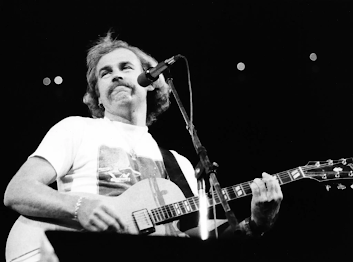
Jimmy Buffett - 60 Minutes Special Documentary

Jimmy Buffett, Roguish Bard of Island Escapism, Is Dead at 76 (NYT)
Image: Chris Walter/WireImage, via Getty Images
[ed. Probably a lot of people feeling sad and a little shocked today. See also (one my first and everlasting favorites): Come Monday; and, this excellent retrospective: Jimmy Buffett Does Not Live the Jimmy Buffett Lifestyle (NYT):]


"Mr. Buffett came into the national imagination in the 1970s, just in time to become a counterpoint to what would end up being called the Yuppie generation. What if you didn’t work that hard?, he dared to ask. What if your ambition was not for success or money but for the in-betweens: the vacations, the frozen cocktail and joint in the evening? His emphasis was on the essentially Buffettian notion that we’d all spend our lives on the beach splayed out on a towel, our lips caked with salt, if we could. “I don’t know anyone who wouldn’t spend a week on the beach,” he said. In his songs, Mr. Buffett imagined himself as a pirate, always plundering toward treasure. The treasure wasn’t wealth, though; the treasure was a destination; it was the ville in Margaritaville."

Thursday, August 31, 2023

So You Want to Learn Physics…

Introduction to the Second Edition

Nearly six years ago, I sat down at my desk and typed up a detailed guide for anyone who wanted to learn physics on their own. At the time, I had no idea how many people would read it and use it — my only goal was to put the information out there in a clear and straightforward way so that anyone who wanted to learn physics would have the self-study curriculum they needed. Since then, over six hundred thousand people have turned to this guide to study physics.
 
According to the emails I’ve received from readers, many of you have gone on to get undergraduate degrees in physics after following the curriculum in this guide (some of you are even now in graduate programs!), but the majority of those who have bookmarked and followed this guide — even all the way to the end! — have done so out of pure curiosity and for the sheer joy of understanding the incredible universe we inhabit.

The success of this guide is, I believe, a testament to two things.

First, that one of the most impactful things you can do is to share what you know with others, even if it doesn’t seem like a lot. I wasn’t able to become a professional physicist, but I was able to use my knowledge of undergraduate and graduate-level physics to type up a comprehensive and accessible curriculum that has helped hundreds of thousands of people learn physics. That’s pretty remarkable. If you are wondering what you have to offer the world, I hope you will think of this guide and consider what you might know that you can share with others.

Second, that there are so many people in the world who want to understand physics but are unable to study it formally in a university setting for any number of reasons. These same people are very serious about learning physics, and not for any career purposes but simply because they want to understand the universe, and they are and have been dreadfully underserved and underestimated by the academic physics community (who do not take them seriously because they aren’t studying at colleges and universities) and by the authors of contemporary and popular physics books and the publishers of those same books (who mostly just sell them books that assume most readers can never and will never really understand physics). When I wrote the first edition of this guide, I was pretty sure there were a lot more people out there who really wanted to learn physics — real physics — than academic physicists and publishers believed, and those were the people I wanted to help. As it turns out, there were even more of you than I could ever have imagined!

Well, after almost six years and lots of reader feedback, I decided that it was finally time to make a (lightly) updated version of this guide. I went back through the emails and comments I’ve received over the years, and then made a list of the most popular requests. I skimmed through all the books in the curriculum and a few new ones as well. I updated textbook editions, added more undergraduate-level electives, added a section of graduate-level electives, and made a few other small changes — all in the hope that this new version will be even more useful than the first.

As I wrote in the first edition: “Remember that anyone can learn physics…Whether you turn it into a hobby or a career, the pure joy of understanding the universe around us is one of the most beautiful experiences you can ever have in life.”

Godspeed!

You can still find the first edition here, on my old website:

Introduction to the First Edition

Over the past few years, ever since writing a blog post called “If Susan Can Learn Physics, So Can You,” I've been contacted by people from all backgrounds who are inspired and want to learn physics, but don't know where to start, what to learn, what to read, and how to structure their studies. I've spoken with single mothers who want to go back to school and study physics, tenured philosophy professors who want to learn physics so that they can make significant and informed contributions to philosophy of physics, high school students who want to know what they should read to prepare for an undergraduate education in physics, and people in dozens of various careers who want to really, really learn and understand physics simply for the joy of it.

This post is a condensed version of what I've sent to people who have contacted me over the years, outlining what everyone needs to learn in order to really understand physics.

The general physics education given in U.S. universities is divided into what is learned at the undergraduate level and what is covered in graduate courses, and I've divided my list in a similar way. Because each subject is built upon the previous subjects and the mathematics becomes more complex and difficult, it's important to learn each topic in the order presented below.

If you work through the all of the textbooks in the Undergraduate Physics list of this post, and master each of the topics, you'll have gained the knowledge equivalent of a Bachelor's Degree in Physics (and will be able to score well on the Physics GRE). If you work through the graduate core of the Graduate Physics textbooks, you'll have the equivalent knowledge of obtaining a Master's Degree in Physics. A PhD in Physics requires the graduate coursework as well as several years of research and a thesis, and the experience involved in a PhD isn't something that can be gained independently of a PhD program.

Remember that anyone can learn physics. It's no different from learning programming, from learning a musical instrument, from reading great literature. Whether you turn it into a hobby or a career, the pure joy of understanding the universe around us is one of the most beautiful experiences you can ever have in life.

by Susan Rigetti | Read more:
Image via:

We're in a Behavioral Sink

Back in the 1950s, this guy named John B. Calhoun built a rat paradise. Actually, he built several. He gave the rats everything they needed to live in peace and harmony. Then he sat back and watched.

He wanted to see what they'd do.

They didn't disappoint.

Or, I guess, they did.

Every single time, the rats ruined everything for themselves and each other. They never reached their carrying capacity, not even close. They overcrowded each other on purpose. They started competing for resources and fighting for no reason. It didn't matter how much food Calhoun gave them. It didn't matter how comfortable or how sanitary he made it. The rats always hit a social or psychological tipping point. After that, everything went to hell in a handbasket.

Calhoun's greatest failure was rat paradise 25.

It grew to about 2,000 rats and then fell all the way down to 27 before the end of the experiment. The nondominant beta rats started attacking each other, even when they had plenty of food and even girlfriends.

The females ran away.

They hid.

Even the dominant females started wounding their own babies and kicking them out of their nests before they were old enough to survive on their own. The mere presence of a dominant male triggered violent behavior. Eventually, the population became completely unproductive.

Nobody wanted to work anymore...

Their social bonds disintegrated. The rats became dysfunctional, violent, and withdrawn. Only a handful survived.

Those rats made it by cutting ties with civilization. They moved to remote areas of the paradise. They didn't do much except eat, sleep, and groom. They wandered around the edges, I guess for exercise.

Calhoun called them the beautiful ones.

After rat civilization collapsed, the beautiful ones kept their distance from each other. They didn't try to mate or rebuild.

They left each other alone.

Calhoun called these events behavioral sinks. It wasn't exactly a failure, either. He gained insights that we can learn from.

We're living through a behavioral sink right now.

Look around...

Corporations have been nurturing our worst impulses for a hundred years. They've conditioned generations of Americans to chase happiness through consumption. We even have a name for it:

Retail therapy.

When we discover the lie at the heart of consumerism, they throw a bunch of mindfulness seminars at us. They tell us we'd be happier living on a ranch or a farm, then they buy up all the farms. They tell us to spend more time with family, then they berate us for working from home.

No wonder we're going crazy. (...)

Look at how we're acting. We're voluntarily crowding into the least habitable cities and states. Look at the population growth in places like Texas, Arizona, and Florida. People should be trying to get out.

Instead, they're packing in.

We've got a big problem with angry young men who think they're doomed to spend the rest of their lives as incels. They're driving away women with their own crappy attitudes, but they don't see it. Young women are giving up. Some of them are just trying to get through one day at a time. Others think they can solve their problems by wearing seventeen friendship bracelets.

As a society, we’re not okay…

We're actually doing worse than the rats. We've created a handful of rich rats and allowed them to hoard all of our cheddar.

by Jessica Wildfire, Ok Doomer |  Read more:
Image: ShotPrime Studio
[ed. Note: Not the Rat Park study by Bruce K. Alexander in the late 70s that focused on addiction. This one is by John P. Calhoun looking at overcrowding and population densities. See also: The War for Normal (OD).]

Nutpicking

”If the best evidence of wackjobism you can find is a few anonymous nutballs commenting on a blog, then the particular brand of wackjobism you're complaining about must not be very widespread after all."
                                                                                                              —Kevin Drum


Nutpicking is the fallacious tactic of picking out and showcasing the nuttiest member(s) of a group as the best representative(s) of that group — hence, "picking the nut".

This fallacy is committed when an arguer cherry picks a poor representative of a group to use as an ad hominem against them. For example, anti-feminists frequently paint people who support feminism as "feminazis" by highlighting examples of ridiculous or cringeworthy behavior from select individuals, rather than critiquing points addressed in mainline feminist writings.

In other words: every movement has crazies, but not every movement is crazy. The proper questions are: "Does this movement promote crazies?" and "Does this movement have proportionately more crazies?"

The word is, cleverly, both a variation on the word "cherry picking" and a portmanteau of "nut" and "nitpicking" coined by Mother Jones blogger Kevin Drum (and is thus sometimes called Kevin's Law or Drum's Law).

In scholarly circles, "nutpicking" is called the weak-man fallacy.  (...)

Basis

Nutpicking combines elements of several other fallacies; it primarily relies on guilt by association, as it seeks to tarnish a group's reputation by associating it with what the "nut" is saying or doing, knowing that their statements or actions are generally considered to be unacceptable, if not outright reprehensible. Secondly, it is a type of ad hominem, as it attacks an opponent's character (via the negative association), rather than countering the opponent's actual views or arguments.

The advent of the Internet (especially in conjunction with Sturgeon's Law) has made nutpicking far easier due to the massive expansion of recorded, publicly available and searchable material. Similar to Skarka's Law, it's practically always possible to find some random whackjob whose opinions can be associated with your opponent's school of thought, and it's certainly much easier than it would have been in ancient Greece.

Politics

The practice of nutpicking is employed most frequently in political debates as a method of invoking a false equivalence or tu quoque, where one side sifts through the blogs of people "on the other side" to hold up a nutty comment to say "You guys do it too!".

by RationalWiki |  Read more:
[ed. Hadn't heard this one before. Certainly widespread.]

I Would Prefer Not To

I’d prefer not to write about the future course of the economy, because who knows what comes next.

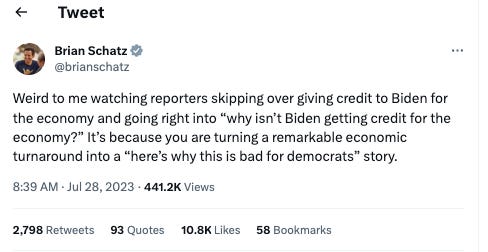
And I don’t need to write about the coverage, because a U.S. Senator has made the point so concisely and well. Brian Schatz, a Democrat of Hawaii, used the vestigial Xitter to make this point yesterday:


What is he referring to? An endless series of stories, most frequently in the New York Times but also in the WaPo and public broadcasting, which follow the following narrative arc:
  • Report: Latest figures show things getting better for the economy. (Unemployment, inflation, supply chain, stock values, you name it). [ed. Medicare drug pricing reform]
  • Economic “analysis”: But things probably will get worse.
  • Political “analysis”: Why do people feel so bad about the economy? And why that’s a problem for Biden.
Here is how this shows up in news play. A headline this past week from the NYT: 


And one the week before:


One from Politico this month:


And one from The Atlantic:


For whatever reason, the Wall Street Journal’s news—not editorial—pages have been much better in this regard.

Why do people feel so “bad” about an economy that by all measurable indicators is getting so much better? Gee, I dunno.

by James Fallows, Breaking the News |  Read more:
Images X, NYT, Politico, The Atlantic
[ed. Glad to see Mr. Fallows has a Substack now (see also: the post following this one, about flight safety). Another post worth reading: Forgotten Americans (of a different type), and the essay it references: The Media Still Doesn’t Get Biden Voters (The Bulwark):]

Conservative and mainstream media don’t agree on much, but one point of consensus is that everyone should work harder to understand Trump supporters. The implicit message: You don’t have to agree with the populist right, but you should be listening to, empathizing with, and engaging them more.

A common style of this coverage is the safari to “Trump Country,” in which journalists from various outlets, most of whom live in big metropolitan areas, go to a rural community or Rust Belt town and talk to Trump voters, often white, working-class men in diners. The resulting articles are often tautological—basically “Trump Supporters Support Trump”—and framed as if explaining to liberals who might think that Trump’s failures will cause some voters to abandon him that they won’t. A great example is a May 2019 New York Times story titled “There’s No Boom in Youngstown, but Blue-Collar Workers Are Sticking With Trump.” It’s such a well-trod trope that it’s inspired parodies and running jokes.  (...)

Reporters don’t do safaris to “Biden Country,” seeking to understand the voters who put him in the White House. (...)

Wednesday, August 30, 2023

As Bad as It Gets Without Body Bags

Two days ago I wrote about the latest airline “close call.” It happened before dawn this past Saturday, in near zero-visibility conditions, at the Bergstrom Airport in Austin.

—A Boeing 767 flown by FedEx was cleared to land, on a “Cat III” approach that allows an airliner to touch down safely even if the pilots cannot see the runway. Meanwhile a Boeing 737 flown by Southwest was cleared to take off from that same runway, directly in the descending airplane’s path.

—It appears that quick action and situational awareness by the FedEx crew prevented a mass-casualty disaster.

I’m writing today to highlight two online assessments of the incident. The first one greatly clarifies what happened and how things went wrong. The second argues that this should be seen not as an isolated mishap but as a warning sign.

1) ‘Confirming we are cleared to land?’ Who said what at Austin.

The aviation site VASAviation has a useful YouTube animation that matches radio transmissions with an approximation of where the two planes were. You can watch it on the embedded version above (used with permission) or at this link.

Here is a viewer’s guide to what you’re seeing and hearing. The three voices you’ll hear are:

Austin Tower, the controller clearing the planes to land and take off.
FedEx 1432 Heavy, the Boeing 767 getting ready to land.
Southwest 708, the Boeing 737 getting ready to take off.
  • Time 0:11, FedEx: The FedEx plane makes its inbound call. The crucial information it conveys is that it is on a “Cat III ILS” approach to Runway 18 Left in Austin. Cat III is essentially an auto-land procedure. Precise signals from beacons on the runway guide the plane (via its autopilot) all the way down, even through fog so thick that pilots never see the ground.
  • Time 0:20, Tower: The Austin controller clears the FedEx plane to land. He gives them “RVR” readings — Runway Visibility Range. They indicate that visibility is very poor.
  • Time 0:38, Southwest: Southwest announces that it is holding short of the same runway, and “we’re ready.” In aviation parlance this would mean: We’ve been through all the checklists and procedures, we’re all set to give it the gas and go.
  • Time 0:42, Tower: The controller reads the same RVR information to Southwest. This takes until time 0:56. Then the controller says there’s a “heavy 767” three miles out for landing, and clears Southwest for takeoff.
I don’t know exact 767 approach speeds for this stage of flight, but it would cover 3 miles in hardly any time.
This transmission is sure to be the focus of attention. Why not add the familiar terms “cleared for immediate takeoff” or “cleared for takeoff, no delay”? (I have heard both of these phrases hundreds of times.) Why not tell Southwest “hold for landing traffic”, which I’ve also heard countless times? Why didn’t Southwest itself request a hold? Investigators will ask.
  • Time 1:15, FedEx: The FedEx crew asks, “confirming we are cleared to land Runway 18 Left?” Meaning: “You know you’ve just put a plane in front of us, right?”
  • Time 1:20, Tower: Confirms FedEx is cleared to land, lets them know that a 737 will be departing “before your arrival.”
  • Time 1:54, Tower: “Southwest 708, confirm on the roll?” Note that this comes 34 seconds after the previous transmission, and nearly a minute after the tower cleared Southwest for takeoff. In that minute, the FedEx plane has covered most of the distance to the airport. Presumably the visibility is so bad that the tower can’t even see the Southwest plane sitting on the runway. So the tower controller is asking: Hey, are you moving?
Southwest immediately replies, “rolling now.”
Investigators will also want to find out what the Southwest crew was doing through this time, in the minute after saying “we’re ready” and while knowing that another plane was about to land.
  • Time 2:14, FedEx: “SOUTHWEST, ABORT!” This is the most unusual transmission in the series, because it involves one air crew (rather than the controllers) giving instructions to another.
Presumably at just this instant the FedEx crew has glimpsed the runway and seen the Southwest airliner directly ahead. On the chance that Southwest is not yet going fast enough for takeoff, FedEx is apparently hoping the other plane can slam on its brakes and stay on the runway. That way the Southwest plane would not fly up into their immediate path. FedEx is already beginning their “missed approach” climb away from danger.
  • Time 2:21, FedEx: “FedEx is on the go.” This immediately follows the “abort!” call to Southwest. The FedEx crew is avoiding the collision by aborting their own landing. This message indicates that they are executing the standard “missed approach” procedures, starting with a rapid climb.
Up to this point the FedEx crew has taken total responsibility for the situation: asking about the danger with its earlier “confirming cleared to land” call; trying to warn Southwest once that plane came into view; immediately climbing away from the airport. At this point neither the tower nor Southwest has weighed in. It’s not clear that the tower controller has any idea where the Southwest plane is or what it is doing.
  • Time 2:29, Tower: “Southwest 708, you can turn right when able.” The tower controller has heard the “abort” request; apparently he thinks that Southwest is still on the ground (and presumably he cannot see it); and he means for Southwest to get off the runway and turn onto a taxiway.
Southwest instantly replies “Negative.” Usually the aviation lingo would be “unable.” But aviation protocol also dictates this priority-list in emergencies: Aviate, navigate, communicatein that order. Southwest is climbing out, and the planes are on a course to collide — though perhaps neither Southwest nor the controllers realize that. Niceties of terminology don’t matter.
  • Time 2:50, Tower: Finally the controller starts giving the two planes instructions to keep them out of the other’s way. You can listen through the end of the tape. The FedEx crew is The Right Stuff-style unflappable the whole time.
What went awry here? That will be for investigators to work out. But based on current info, the group that did everything it could and more was that cockpit crew for FedEx. Admiration to them.

2. ‘Safety Systems Gone Wrong’

I’ve written countless times about the amazing safety record of modern U.S. airlines, about the redundant “what if?” protocols that keep problems from becoming disasters; about the relentless aviation-world commitment to learn from errors.

On his site “WWVB: What Would Vannevar Blog?”, a retired air traffic controller argues that these recent runway incursions are signs of deeper and more dangerous problems.

I encourage you to read the whole thing. But the gist is below. The “Tenerife” he refers to is the deadliest disaster in aviation history, when one 747 ran into another on a foggy runway.
This Austin situation is awful. As bad as it gets without body bags….

This was a total system failure. These airplanes were not separated by any good fortune of serendipitous timing. The only thing preventing another Tenerife was the FedEx crew's situational awareness and the breath of god.

American aviation is a system with different parts and priorities, checks and balances, and really quite a bit of public transparency. This system, like all systems, can be studied and improved. The people who study the American ATC system have been shouting for at least twenty years that the next major airplane disaster will look like a particular scenario.
by James Fallows, Breaking the News |  Read more:
Image: YouTube
[ed. See also: In the Air, on Thin Ice? (BtN); also, Bad Breaks? Or a System That's Breaking? (BtN); and, America has the world’s safest air travel but sucks so bad at car safety (Vox).]

Tuesday, August 29, 2023

What Consumers Earn in Interest Income vs. What they Pay in Interest Expense

Treasury bills up to six month all yield over 5.5%. One-year T-bills yield around 5.4%. This is money that is deemed to have no credit risk, and minuscule duration risk. Lots of FDIC-insured brokered CDs (sold through a broker), and some CDs sold directly by banks are offered at around 5.5%. Money-market funds yield over 5%. FDIC-insured high-yield savings accounts yield over 4%. Consumers have many trillions of dollars in these investments, especially older consumers that are more conservative with their nest egg.

And after having gotten ripped off for years by the Fed’s interest-rate repression and QE, and after having gotten screwed by their banks that pay 0.2%, they’re taking their money where the income is, and this movement of funds has forced banks to pay more or lose deposits and collapse, and interest income has surged.

Consumers, lots of consumers, with many trillions of dollars in these instruments are finally breathing a sigh of relief, and they’re spending some of this money, which is in part why consumer spending has grown, despite the higher interest rates.

On the other side are the consumers that are paying higher interest rates on money they borrow. But 70% of household debt is in mortgages, and after the refinancing boom in 2020 through 2021, the typical mortgage is a 30-year with a fixed rate of about 3% or even less. Those rates won’t change: 70% of the consumer debt won’t get higher interest rates until the homeowner sells the home, and the buyer has to get a 7.2% mortgage, but purchases of previously owned homes have plunged; or unless the homeowner refinances the loan, but refis have collapsed.

With the biggest portion of household debt just about locked in at these 3% rates, only new auto loans, interest-bearing credit-card debt, personal loans, etc. have seen higher interest rates and higher interest payments.

So how much more interest income did consumers earn from higher interest rates on their interest-bearing assets, and how much more in interest payments did they make due to these higher rates on their debts?

Interest income earned by consumers on their assets jumped to $1.82 trillion seasonally adjusted annual rate in Q2, according to data from the Bureau of Economic Analysis. Note, this is their interest income on tens of trillions of dollars in interest-paying assets. This income was up by $175 billion since the beginning of 2022, when the Fed started hiking interest rates (red in the chart below).

Interest payments on consumer debt rose to $462 billion seasonally adjusted annual rate in Q2, up by $180 billion since the Fed started hiking interest rates (green): (...)


In other words: higher interest rates are not constraining consumer spending in aggregate: they constrain the spending of some consumers, and are filling the wallets of other consumers.

This additional spending power is particularly important for retirees who are on a fixed income, such as Social Security or a pension. If they have $300,000 in savings, two years ago they earned nearly nothing from it, and now they’re earning $15,000 in interest income a year, and they’re plowing some of that interest income back into the economy, creating new demand.

by Wolf Richter, Wolf Street |  Read more:
Image: Wolf Street
[ed. Finally, all us risk averse chickens may be getting a break. Even one month CDs are going for 5.40% now. See also: Entire Housing Market, Buyers and Sellers, May Have Shrunk by 20% to 25% because of the 3% Mortgages; and, The Most Splendid Housing Bubbles in America, August Update:]

Jazz Kissa

We Need More Jazz Vinyl Cafés (HB):
"If you’re unfamiliar with the jazz vinyl café concept, don’t feel bad. They don’t get a lot of attention outside of Japan—where they are known as jazz kissa (ジャズ喫茶)."
Images: uncredited
[ed. A favored occupation of many of Haruki Murakami's protagonists.]

Loyalty-Test

Would your partner cheat? These ‘Testers’ will give you an answer. Loyalty-Test, a paid online service, was created to help you trap your partner. But what is it actually testing?

Caden Redmond, a college student in West Palm Beach, Fla., was on TikTok in April flirting with a woman living in South America. While writing to her via direct message, he told her he had never been to her home country but was planning a trip soon.

The conversation was going smoothly. He asked if she would show him around when he arrived; she said that would be cool. He called her cute, and she called him cute back. At one point, she said she “can’t wait” for him to get there.

Moments later, he took screenshots of their conversation, blocked the woman’s account and sent the images to her boyfriend.

“I just texted him and was like, ‘Hey, she said she wants to go out,’” Mr. Redmond said in a phone interview. “I sent him screenshots and he said, ‘OK, that’s enough, thank you.’”

Mr. Redmond, 19, was hired by the man to test his girlfriend’s loyalty, and according to him, she failed, leading her boyfriend to dump her. All the arrangements to lay the trap were made through Loyalty-Test, a service that allows people to hire “testers” to flirt with their significant others online to see whether they respond to the romantic advances or remain faithful.

Mr. Redmond charges $100 a test and has conducted five since joining the site this spring. Sometimes it takes just one DM exchange; other times it’s two to three days of online conversation: He determines what is included in his flat fee on a case-by-case basis. He only tests women, he said, and he doesn’t share any sexually explicit messages or private information of his customers and wouldn’t conduct tests on behalf of anyone he knows personally.

“I don’t aim to make people cheat,” said Mr. Redmond, who is a running back for Keiser University’s football team and a TikTok and Instagram creator. “I just do it because I’ve been cheated on, and I feel like if someone wants to know, they should know from someone who is actually not going to take their girlfriend.”

“That’s part of the job: Never follow through,” he added.

Since beginning in January, Loyalty-Test has brought aboard 30 testers — like ride-share drivers, they are free to take on as many or as few clients as they wish — and has been used by roughly 1,000 anxious customers who are unsure about their partners’ loyalty, according to Brandan Balasingham, 27, the website’s founder. (...)

To get people to sign up as testers and customers, Mr. Balasingham posted listings on job sites like Indeed, Handshake and Backstage. He also searched for microinfluencers to promote the service. He offered a $20 signing bonus to anyone who signed up as a tester, he said, and ran ads on Google with terms like “how can I test my husband?”

It doesn’t take much to be approved to be a tester: just an active Instagram account (it doesn’t have to use a real name) and an agreement to abide by Loyalty-Test’s terms. (...)

“We have a huge variety of testers,” he said. “And on the website, you can filter it down to whatever your partner would be interested in.”

by Gina Cherelus, NY Times |  Read more:
Image: Getty
[ed. Liars, lying to liars for liars. Little wonder dating has become such a minefield these days.]

Martin Scorsese - You Gotta Be Serious

American Express Commercial
via: YouTube